by Tom Gurney
Tom Gurney BSc (Hons) is an art history expert with over 20 years experience
Published on July 14, 2026 / Updated on July 16, 2026
Email: tomgurney1@gmail.com / Phone: +447429011000
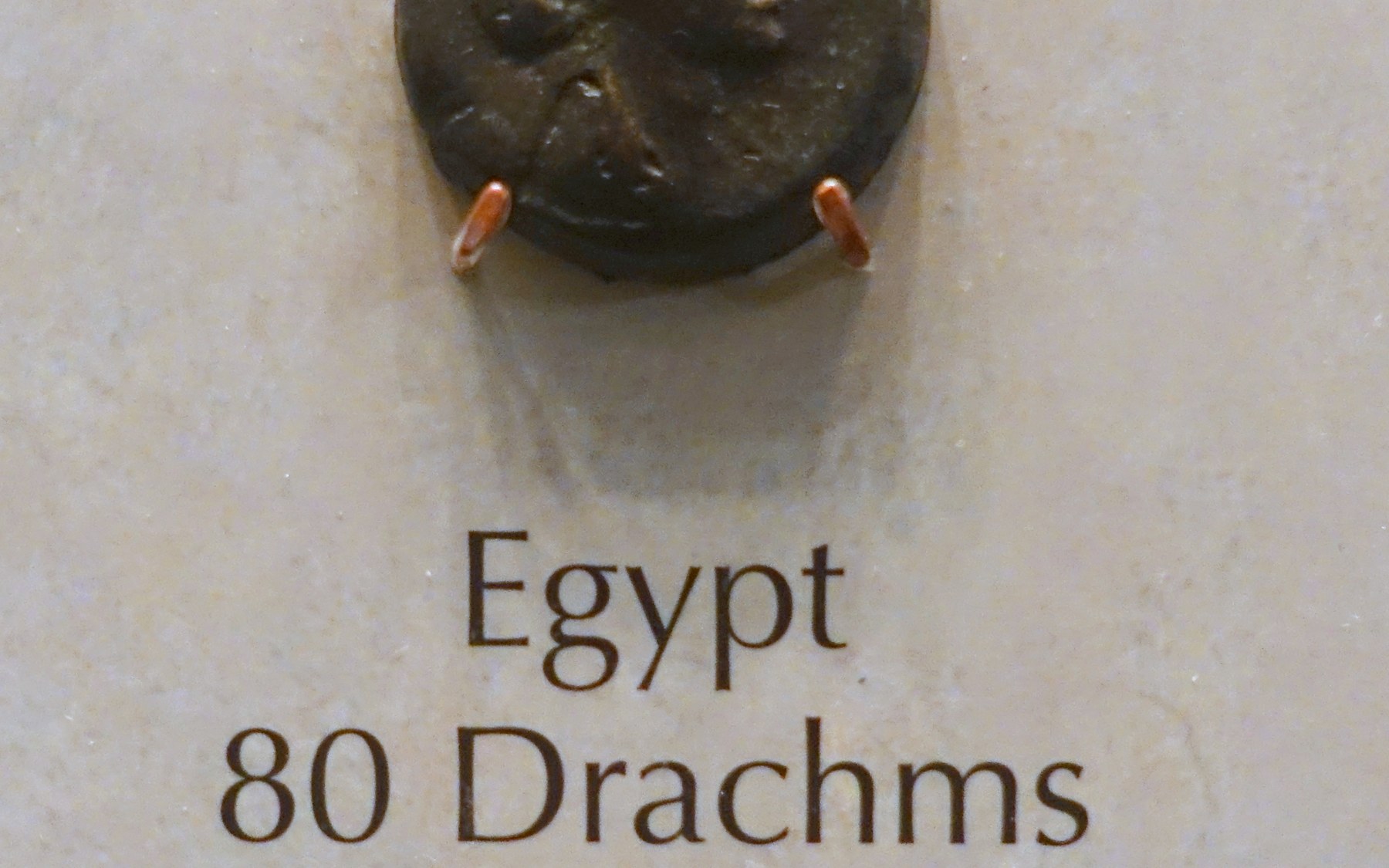
80 Drachms, Egypt, Cleopatra VII, 51-30 BC - National Museum of American History - DSC00277.jpg by Daderot; CC0 via Wikimedia Commons. Cropped for TheHistoryOfArt.org. · Image source
What to expect
Crime Scene Ephesus: Cleopatra and Rome is an upcoming Kunsthistorisches Museum Vienna exhibition, scheduled from 20 October 2026 to 29 March 2027. KHM presents it at the Neue Hofburg in Vienna, which is important for visitors because the subject belongs to the museum's antiquities and Ephesos Museum route rather than to the Picture Gallery alone. This is a useful second KHM page for the section: after Canaletto & Bellotto introduced Habsburg collecting and city views, this exhibition opens the ancient-world side of the institution.
The official KHM page frames the exhibition around a historical case with the structure of an investigation. Cleopatra's sister Arsinoe was murdered and buried in Ephesus, one of the most important cities of the ancient world. Around a century ago, Austrian archaeologists discovered an octagonal tomb there containing a skeleton, but the identity of the person buried in the so-called Octagon remains uncertain. The exhibition uses that unresolved problem to connect archaeology, ancient history, scientific research and the political drama of the first century BCE and early Roman imperial period.
The named figures give the show immediate narrative force: Cleopatra, Julius Caesar, Mark Antony and Augustus appear not as isolated legends but as actors in a world of dynastic rivalry, imperial ambition and changing cultural codes. KHM's framing makes the exhibition sound less like a simple Cleopatra display and more like a study of power. Murder, burial, portraiture, political messaging and archaeological evidence all become part of the same historical question: how did images and objects help people recognise authority in a world shifting from Hellenistic kingdoms to Roman rule?
Why go
The strongest reason to go is that the exhibition promises to slow down a story that is often reduced to famous names. Cleopatra can easily become a mythic figure detached from material evidence. Here the route begins from Ephesus, from Arsinoe, and from the difficulty of proving who was buried in a specific ancient monument. That makes the page valuable for readers who want to see how art history and archaeology handle uncertainty. A portrait head, a tomb, an inscription or a relief does not simply deliver an answer; it gives evidence that has to be compared, dated, interpreted and sometimes left unresolved.
The KHM anchor object is especially useful for this kind of looking. The official page illustrates a larger-than-life female portrait head, identified cautiously as Arsinoe III (?), Greek, Hellenistic, third century BCE. KHM's description notes the wavy hair parted at the centre and put up at the back of the neck, and traces of a tiara that point toward a Hellenistic, presumably Ptolemaic queen, possibly Arsinoe III Philopator, Queen of Egypt. That chain of wording matters. It shows how museum interpretation balances close visual detail with cautious identification.
The exhibition should also be rewarding because it connects Vienna to a wider archaeological history. Austrian work at Ephesus has been central to the site for generations, and the Neue Hofburg setting places the subject inside a Viennese museum landscape rather than treating Ephesus as a distant backdrop. For readers building an Austria route, this gives KHM a different rhythm from Old Master painting: sculpture, antiquities, ancient urban history and the afterlife of excavation.
What to look for
Begin with portraiture as evidence. Ancient portrait heads can look authoritative because they seem to present a face directly, but identity is rarely simple. Hair, scale, surface, dress, diadem or tiara traces, findspot, comparison with coins, and later damage all affect interpretation. If the Arsinoe-type head is part of the display, the question is not only whether it is "really" Arsinoe. It is how a museum explains probability, status and political image-making through surviving form.
Then follow the Octagon problem. A tomb can be both architecture and argument. Its plan, location, contents, date, decoration and later excavation history all shape what it can mean. The official KHM text is careful: the Octagon contained a skeleton, but the identity of the individual remains unknown. That uncertainty is not a weakness of the exhibition. It is the point. Visitors should watch for how the display distinguishes between fact, hypothesis and persuasive historical reconstruction.
Objects such as sculpture, inscriptions, funerary reliefs and manuscripts can open the wider world around the case. Inscriptions make public claims durable. Reliefs can turn family, office, death or status into readable form. Manuscripts preserve later knowledge and interpretation. Sculpture and portraiture carry ideals of rule, ancestry, divinity and memory. Together these media can show why political power in antiquity was not only military. It was visual, textual, ritual and urban.
The famous names should be approached through that material lens. Cleopatra, Caesar, Mark Antony and Augustus are familiar from literature, theatre, cinema and popular history, but the exhibition is likely to be strongest when it makes them part of networks: Egypt and Rome, Alexandria and Ephesus, dynasty and empire, propaganda and commemoration. Ask how each object makes authority visible, and what kind of audience it might have addressed.
How it fits KHM and Vienna
This page strengthens the KHM museum record because it shows that the institution is not only an Old Master destination. The museum's wider identity includes Egyptian and Near Eastern material, Greek and Roman antiquities, the Ephesos Museum, the Kunstkammer and the Habsburg collection system. Crime Scene Ephesus gives that breadth a public exhibition route with a clear story and a lower underlying copyright risk than modern material.
For Vienna planning, readers should note the Neue Hofburg setting and check KHM's official source before travelling for access, tickets, opening hours and any room changes. This may not behave like a quick add-on to the main Picture Gallery visit. It belongs naturally with the Hofburg and Weltmuseum area, and it may pair well with a day focused on imperial collections, ancient material and the museum geography around Heldenplatz.
The page also creates useful future internal-link territory. It can later connect to glossary or feature pages on ancient portraiture, funerary monuments, inscriptions, archaeological evidence, Egypt and Rome, mythology and power, and cross-border influence in the ancient Mediterranean. It also helps the Vienna location page avoid becoming only a story of Baroque palaces and Old Master painting.
Image and rights note
The underlying works and antiquities are ancient, so the artist-life copyright risk is low. The practical image risk is photographic and institutional. KHM press images, object photographs and catalogue imagery still need source and credit review before any lead image is attached. Likely later candidates include the Arsinoe III (?) portrait head or other ancient objects highlighted by KHM, but this page remains image-free until Tom approves the source and usage route.
How to use this page
Because Crime Scene Ephesus: Cleopatra and Rome is upcoming, the page should help a reader decide whether to plan a future trip or watch for reviews and final venue details. The most reliable fixed details are the venue, dates, broad subject, media and official source link. The interpretive notes help place the exhibition in art-historical context: what kind of show it is, why it may matter, and which artists or topics are worth exploring next.
It is marked as a major exhibition in this guide, so it should be useful for readers choosing between several possible museum visits.
Looking notes
For a visitor, the most useful approach is to look for patterns rather than isolated highlights. With Cleopatra, Arsinoe III, Ephesus, Ptolemaic Egypt, Julius Caesar, Mark Antony, Augustus, Roman Empire, Austrian archaeology, Octagon tomb, ask how the exhibition frames the subject: as biography, period survey, focused theme, collection display or reassessment. With media such as sculpture, archaeology, inscriptions, funerary reliefs, manuscripts, antiquities, ancient portraiture, pay attention to changes of scale, surface, lighting, material and display sequence, because those details are often lost in online listings.
The guide avoids over-specific claims where the public source does not yet support them. If a museum has not published a full object list, it is better to stay clear about what is confirmed than to imply certainty.
Who it is best for
Crime Scene Ephesus: Cleopatra and Rome is most likely to help readers who are already interested in Cleopatra, Arsinoe III, Ephesus, Ptolemaic Egypt, Julius Caesar, Mark Antony, Augustus, Roman Empire, Austrian archaeology, and Octagon tomb, but it may also be useful for visitors building a wider route around Kunsthistorisches Museum Vienna in Vienna. If time is limited, use this page to decide whether the subject fills a gap in your knowledge, whether it connects to artists you already follow, and whether the official venue information makes the visit practical.