


 by Tom Gurney
Tom Gurney BSc (Hons) is an art history expert with over 20 years experience
Published on July 14, 2026 / Updated on July 16, 2026
Email: tomgurney1@gmail.com / Phone: +447429011000
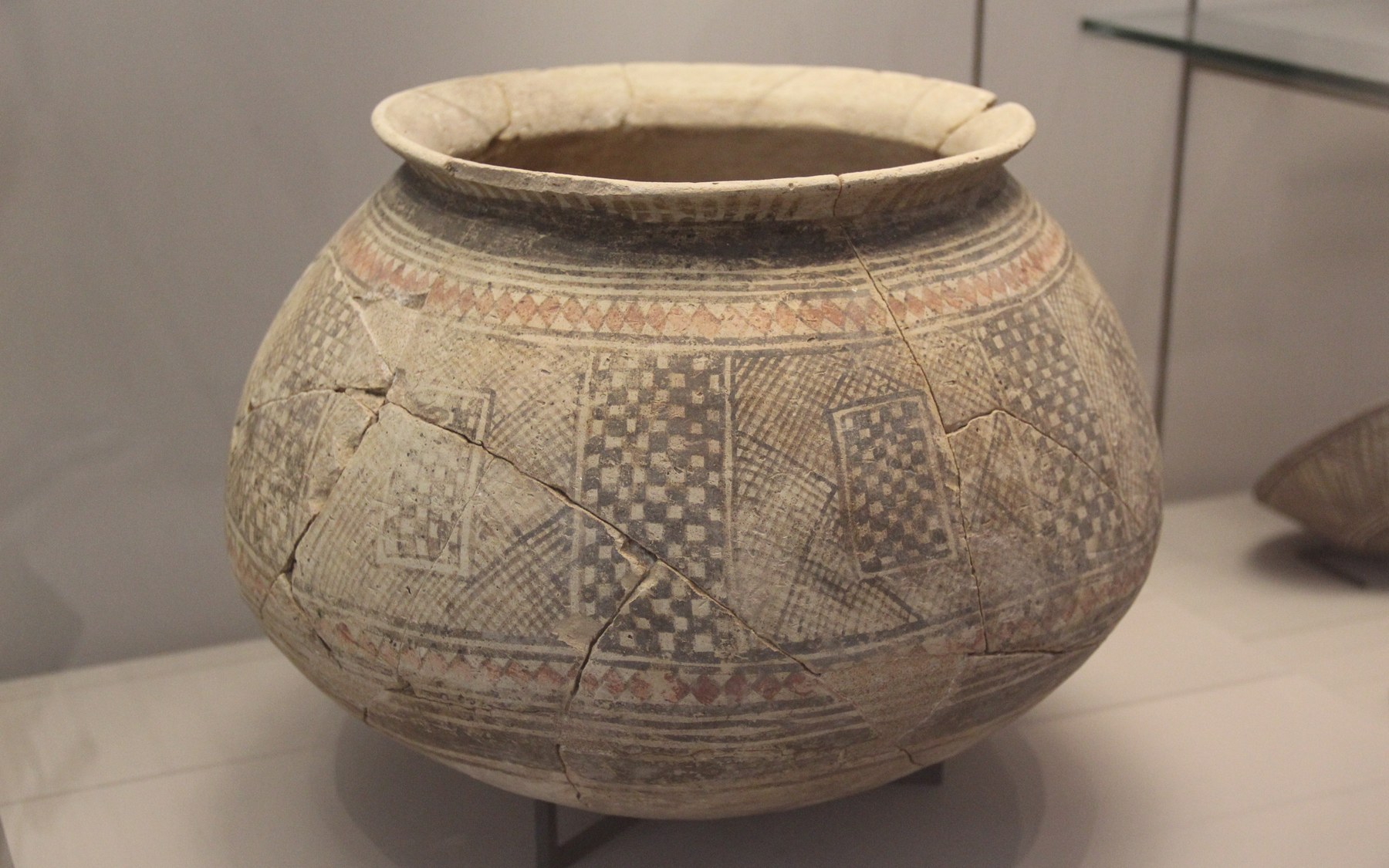
Pottery Bowl from Prehistoric Mesopotamia (28185134302).jpg by Gary Todd from Xinzheng, China; CC0 via Wikimedia Commons. Cropped for TheHistoryOfArt.org. · Image source
What to expect
Primeval Waters: Lessons from Mesopotamia is a current Louvre spotlight exhibition about water, ancient Mesopotamia and environmental history. It is staged in the Richelieu wing, room 230, and continues as a water-and-environment trail through the Department of Near Eastern Antiquities in the Sully and Richelieu wings. That structure matters. The show is not only a single room of ancient objects; it asks visitors to carry one theme through a larger department and to read the Louvre’s Near Eastern collections through rivers, irrigation, power, myth and ecological memory.
The official Louvre page frames Mesopotamia as a river civilisation shaped by the Tigris and Euphrates, by the mythic imagination of flood and paradise, and by some of the earliest known experiments in hydraulic engineering. The press material gives the page useful scale: 100 Mesopotamian works are displayed in the dedicated room, with a further 27 selected works forming the trail. That makes the exhibition substantial enough for a standalone guide while still compact enough for a practical Louvre visit.
Why go
The exhibition is valuable because it makes antiquity feel intellectually alive without forcing the objects into a modern slogan. Water appears here as source, threat, resource, boundary, transport route, sign of authority and cause of conflict. Ancient canals, bridges, aqueducts, pipe systems and artificial lakes are not just technical achievements; they are evidence of societies remaking the natural environment and then living with the consequences.
For a reader used to thinking of Mesopotamia through writing, kingship or archaeology, this is a useful shift of emphasis. The exhibition asks how a civilisation’s material culture records its relationship with landscape. It also makes the Louvre’s Near Eastern antiquities less remote. A cuneiform object, relief, vessel or architectural fragment can become part of a story about food, movement, divine favour, administration, labour and environmental risk.
What to look for
Begin with the simplest question: where is the water, and what does it do? Sometimes it may be represented directly. At other times it may be implied by the object’s use, by the city or region it came from, by a divine or royal subject, or by the infrastructure that made urban life possible. The best visit will probably come from noticing how the same element shifts meaning. Water can create abundance and social order, but it can also destroy, divide, or become a weapon when controlled by rulers and states.
Then look for scale. Mesopotamian water management was not only a matter of individual survival; it depended on collective labour, planning and power. The exhibition’s strongest art-historical value is likely to sit in that tension between object and system. A small object can point to a large administrative world. A mythic image can preserve real fears about flood, drought and instability. A royal or sacred object can turn practical water control into political and religious legitimacy.
How it fits the Louvre
The Louvre is often entered through a few famous images: the Mona Lisa, the Venus de Milo, the Winged Victory of Samothrace, Delacroix, David and the grand route through European painting. This exhibition usefully pulls the visitor away from that familiar route. It gives the Louvre page a stronger ancient-world foundation and reminds readers that the museum is not only a painting destination. It is also one of the great public collections for antiquities, archaeology, material culture and the long history of civilisations.
For Paris planning, this is a sensible exhibition to pair with a focused Louvre visit rather than a whole-museum sprint. The official page notes that some rooms may close on particular maintenance days, so the practical advice is simple: check the Louvre source before travelling, especially if the Near Eastern galleries are the main reason for the visit. Because the exhibition is included with museum admission, it can work as a thematic route within a broader museum day.
Image and rights note
This exhibition has a favourable image profile compared with modern and contemporary shows, because the subject is ancient and the previously shortlisted candidate is a Mesopotamian context image with a clearer open-license route. Even so, the page should not attach a final lead image until Tom confirms the chosen crop and publication approval. Until then, the image-free version is acceptable and keeps the page text complete without relying on an unreviewed reproduction.
How to use this page
Because Primeval Waters: Lessons from Mesopotamia is current, the page should help a reader decide whether it deserves time before the closing date, not merely record that it exists. The most reliable fixed details are the venue, dates, broad subject, media and official source link. The interpretive notes help place the exhibition in art-historical context: what kind of show it is, why it may matter, and which artists or topics are worth exploring next.
It is marked as a major exhibition in this guide, so it should be useful for readers choosing between several possible museum visits.
Looking notes
For a visitor, the most useful approach is to look for patterns rather than isolated highlights. With Mesopotamia, water, irrigation, Near Eastern antiquities, environmental history, ask how the exhibition frames the subject: as biography, period survey, focused theme, collection display or reassessment. With media such as antiquities, sculpture, relief, cuneiform objects, archaeological objects, pay attention to changes of scale, surface, lighting, material and display sequence, because those details are often lost in online listings.
The guide avoids over-specific claims where the public source does not yet support them. If a museum has not published a full object list, it is better to stay clear about what is confirmed than to imply certainty.
Who it is best for
Primeval Waters: Lessons from Mesopotamia is most likely to help readers who are already interested in Mesopotamia, water, irrigation, Near Eastern antiquities, and environmental history, but it may also be useful for visitors building a wider route around Musée du Louvre in Paris. If time is limited, use this page to decide whether the subject fills a gap in your knowledge, whether it connects to artists you already follow, and whether the official venue information makes the visit practical.
.jpg)