by Tom Gurney
Tom Gurney BSc (Hons) is an art history expert with over 20 years experience
Published on July 14, 2026 / Updated on July 16, 2026
Email: tomgurney1@gmail.com / Phone: +447429011000
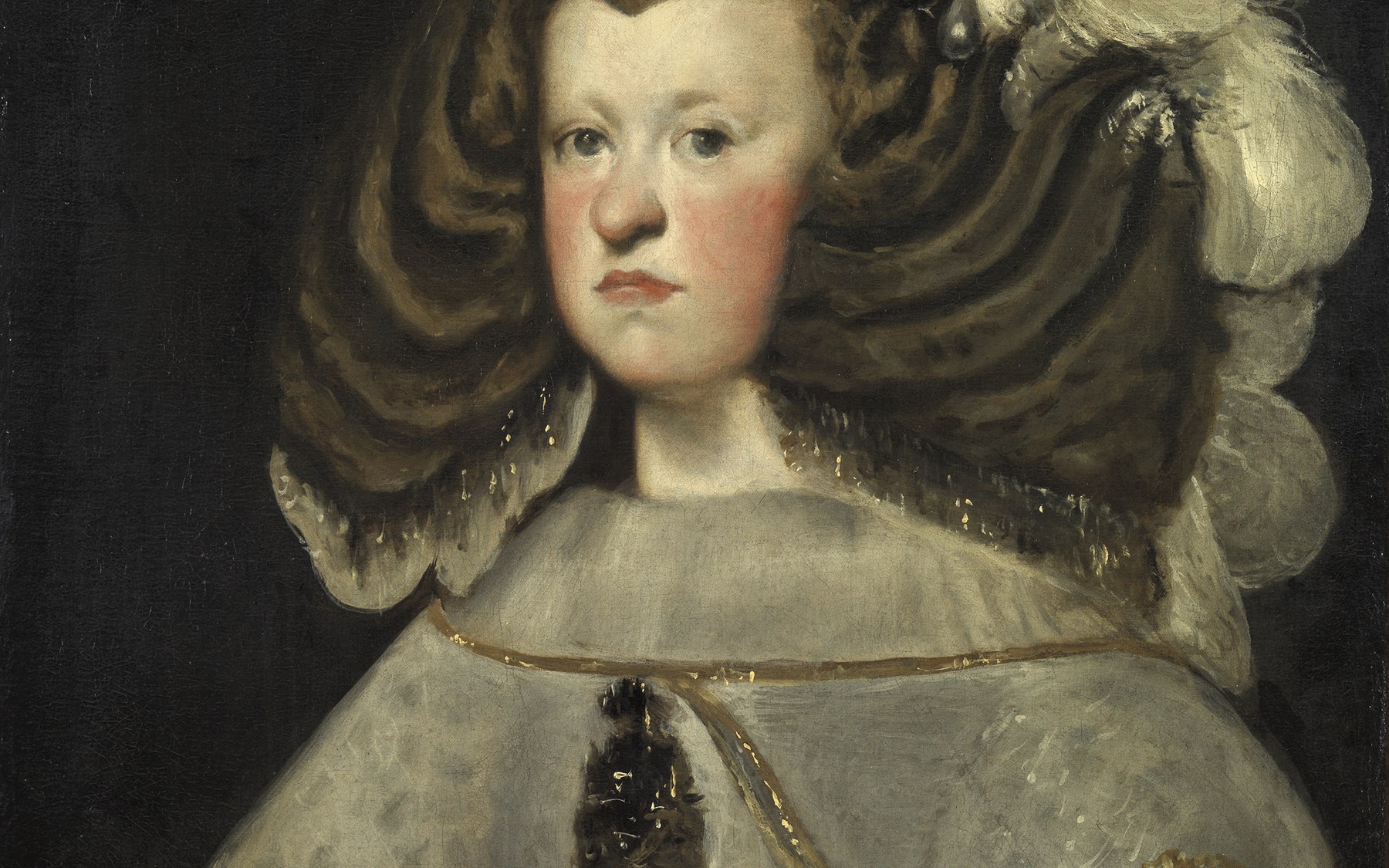
Diego Velázquez, Portrait of Mariana of Austria, c. 1652; public-domain image via Wikimedia Commons · Image source
What to expect
Mariana of Austria is an upcoming Museo Nacional del Prado exhibition devoted to the seventeenth-century Habsburg queen and regent. The official Prado programme gives the dates as 1 December 2026 to 28 March 2027 and places the exhibition in Rooms A-B of the Jerónimos Building, the museum's main temporary-exhibition space. The subject is not simply a royal biography. Prado frames the show as the first exhibition at the museum devoted to a female art patron, which makes it a useful addition to the museum's wider work on women, collecting and the formation of the Prado's holdings.
Mariana of Austria entered Spanish court history as queen consort of Philip IV and later as regent for Charles II. In art-historical terms, her importance lies in the way royal women could shape visual culture through commissioning, collecting, gift exchange, dynastic display and the management of court image. The Prado's programme connects the exhibition to its project on female patrons, described in English as The Female Perspective. That context matters because the show is likely to ask visitors to look beyond the familiar list of male rulers, painters and ministers who usually structure the Habsburg story.
The official Spanish exhibition listing uses a detail from Juan Carreño de Miranda's portrait of Mariana as queen regent, painted around 1670, as its visual anchor. That does not mean the final checklist should be assumed from a single image, but it gives the page a clear starting point: court portraiture as political language. A portrait of Mariana is never only a likeness. It can stage widowhood, regency, dynastic continuity, maternal authority and the burden of rule during one of the most fragile phases of Spanish Habsburg history.
Why go
The strongest reason to go is that the exhibition shifts the Prado's court-culture story toward patronage. Many Prado visits are built around masterpieces by Velázquez, Goya, El Greco, Bosch, Titian and Rubens. That route is still essential, but it can make the museum feel as though history was made only by artists and kings. A show on Mariana of Austria should open a different question: who enabled, commissioned, preserved, redirected or legitimised the objects that later became museum history?
Female patronage is especially valuable as a Prado subject because the museum grew from royal collections. If royal women contributed decisively to those collections, then their role is not decorative background. It belongs near the centre of the institution's origin story. Mariana's position as regent also sharpens the issue. She was not a marginal court figure whose portrait merely records costume or status. She stood at the intersection of monarchy, diplomacy, motherhood, religious obligation and political representation.
The exhibition should also help readers look again at Spanish Baroque portraiture. Habsburg portraits can seem rigid if approached only through dress, rank and dynastic formula. But rigidity is often the point. Court portraits use costume, pose, curtain, chair, jewellery, veil, hand gesture and spatial distance to make authority legible. In Mariana's case, those signs have to negotiate gender and power at once. The sitter must be recognisably queen, widow, mother and regent, while still fitting the visual grammar of a monarchy under pressure.
What to look for
Begin with the language of regency. A visitor should ask how images make temporary or delegated power look stable. Does the portrait stress continuity with Philip IV, the future of Charles II, dynastic lineage, Catholic piety, court ceremony or personal authority? The most interesting works may be those where the image has to carry several messages at once. A black dress, a veil, a jewel, a document or a restrained gesture can become political evidence.
Then look for the patron rather than only the sitter. An exhibition about an art patron should not be read as a sequence of portraits alone. It may include paintings, documents, devotional works, collection history, court records or objects connected to artistic promotion. The key question is agency: what did Mariana make possible, and how did her choices affect artists, collections and institutional memory?
It will also be worth watching how the Prado handles absence. Women patrons often appear in historical records unevenly, mediated through marriage, dynasty, confession, diplomatic duty or later museum catalogues. A strong exhibition can make those conditions visible without overstating the surviving evidence. Readers should expect careful scholarship rather than a simple recovery narrative. The point is not to replace one heroic story with another, but to show the mechanisms through which royal women shaped art.
For visitors who know the Prado well, the show can be paired with the permanent collection. Velázquez helps explain the court world that preceded Mariana's regency. Carreño de Miranda and later Habsburg portraiture show how royal image-making continued under different pressures. Rubens and Titian point to earlier models of dynastic splendour. Goya, much later, shows how Spanish royal portraiture could become psychologically and politically unstable in a different age.
How it fits the Prado and Madrid
This page strengthens the Prado cluster because it sits between the museum's permanent-collection identity and its current research agenda. In the Italian Manner extends the Prado back into medieval Mediterranean exchange. The Famine Painting reconsiders a nineteenth-century political image and its museum history. Mariana of Austria adds women patrons, Habsburg power and collection formation. Together, those pages make the Madrid route more than a highlights tour.
For Madrid planning, the exhibition opens after the current 2026 Prado shows and runs through 28 March 2027. It should appeal most to visitors interested in court portraiture, women patrons, Spanish Habsburg history, museum origins and the politics of representation. Readers should check the official Prado source before travelling for final title details, ticketing, room access, opening arrangements and any checklist updates.
The page also creates useful future internal-link territory. It can later connect to Velázquez, Rubens, Goya, Spanish Baroque portraiture, women patrons, collection history, royal imagery and portraiture as political language. Those links should be added only where existing destination pages are verified and useful, not as automatic keyword matching.
Image and rights note
The existing lead image is a public-domain Velázquez portrait used as a representative image for Mariana of Austria, not as a claim about the Prado exhibition checklist. Other Mariana portraits may also be suitable because the underlying works are historic. Prado object photography, press material and images of loans may carry specific terms, so any future replacement image should use a reviewed source and credit path.
How to use this page
Because Mariana of Austria is upcoming, the page should help a reader decide whether to plan a future trip or watch for reviews and final venue details. The most reliable fixed details are the venue, dates, broad subject, media and official source link. The interpretive notes help place the exhibition in art-historical context: what kind of show it is, why it may matter, and which artists or topics are worth exploring next.
It is marked as a major exhibition in this guide, so it should be useful for readers choosing between several possible museum visits.
Looking notes
For a visitor, the most useful approach is to look for patterns rather than isolated highlights. With Mariana of Austria, Habsburg patronage, female art patrons, Spanish Habsburg court, Juan Carreño de Miranda, court portraiture, El Prado en femenino, ask how the exhibition frames the subject: as biography, period survey, focused theme, collection display or reassessment. With media such as painting, court art, portraiture, collection history, patronage research, pay attention to changes of scale, surface, lighting, material and display sequence, because those details are often lost in online listings.
The guide avoids over-specific claims where the public source does not yet support them. If a museum has not published a full object list, it is better to stay clear about what is confirmed than to imply certainty.
Who it is best for
Mariana of Austria is most likely to help readers who are already interested in Mariana of Austria, Habsburg patronage, female art patrons, Spanish Habsburg court, Juan Carreño de Miranda, court portraiture, and El Prado en femenino, but it may also be useful for visitors building a wider route around Museo Nacional del Prado in Madrid. If time is limited, use this page to decide whether the subject fills a gap in your knowledge, whether it connects to artists you already follow, and whether the official venue information makes the visit practical.