by Tom Gurney
Tom Gurney BSc (Hons) is an art history expert with over 20 years experience
Published on July 14, 2026 / Updated on July 16, 2026
Email: tomgurney1@gmail.com / Phone: +447429011000
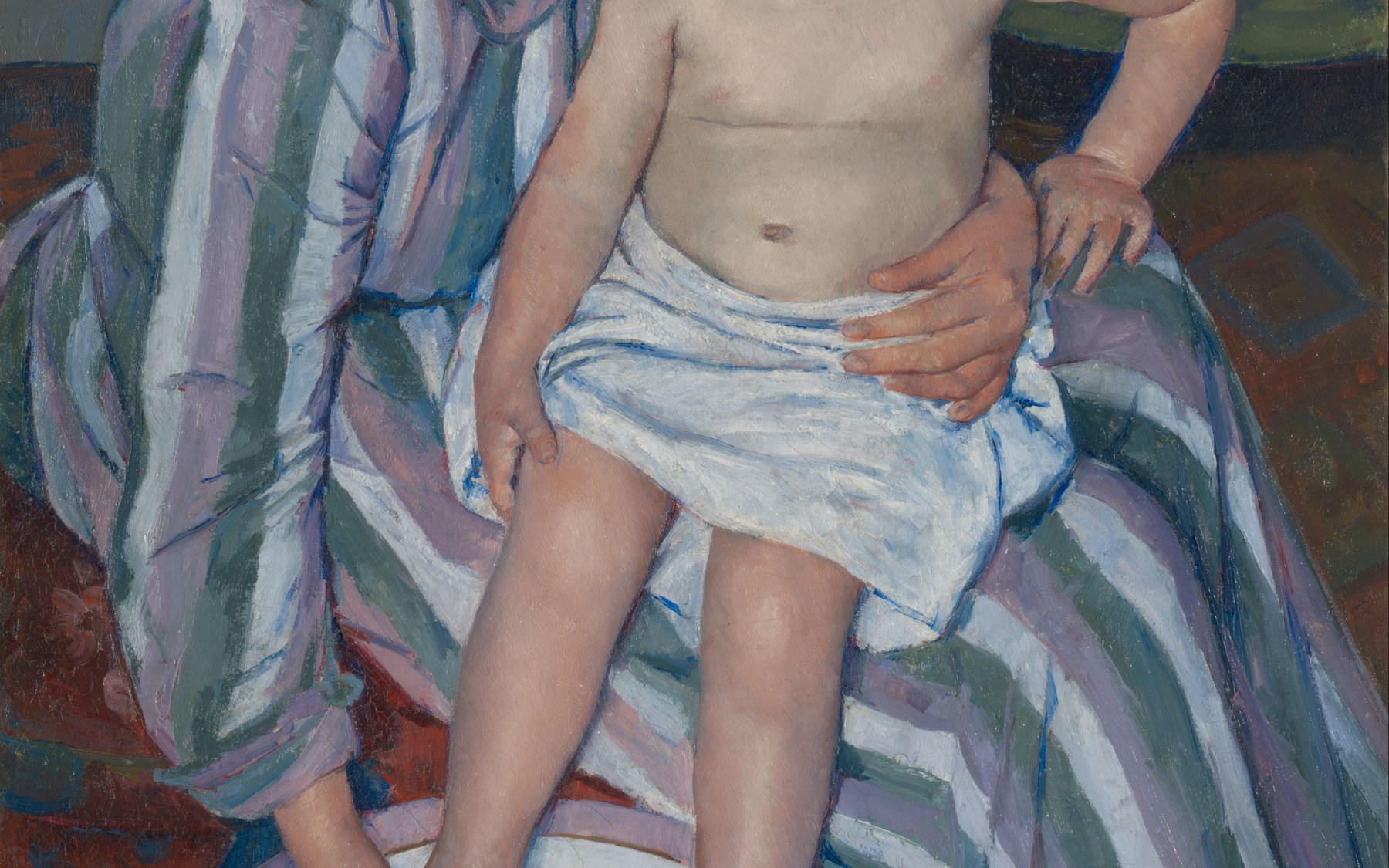
Mary Cassatt, The Child's Bath, 1893; public-domain image via Wikimedia Commons · Image source
What to expect
Mary Cassatt: After Impressionism is an upcoming ticketed exhibition at the Art Institute of Chicago, shown in Galleries 182-184 from 6 September 2026 to 3 January 2027. The official page frames the exhibition around the years after the eighth and final Impressionist group show in 1886, when Cassatt moved into some of her most ambitious and experimental work. That makes the title precise: this is not simply “Cassatt the Impressionist”, but Cassatt after Impressionism had stopped being her main institutional setting.
The exhibition marks the centennial of Cassatt’s death and is the Art Institute’s first exhibition dedicated to her in more than 25 years. It features more than 75 paintings, pastels, prints and ephemera connected to her now-unlocated mural for the 1893 World’s Columbian Exposition in Chicago. That combination gives the page a strong reason to exist: it is a Cassatt exhibition, a Chicago exhibition and a reassessment of what her late nineteenth-century modernity actually looked like.
Why go
The exhibition is valuable because it moves Cassatt away from the softest version of her reputation. Mother-and-child subjects are central, but the Art Institute’s framing makes clear that Cassatt was not simply repeating sentimental domestic themes. In the late 1880s through the early 1900s she pursued complex colour prints, ambitious compositions, works on paper and a major mural commission. The better question is not whether her subjects are familiar, but how forcefully she redesigned those subjects.
That matters because Cassatt’s independence was both personal and formal. She trained in Philadelphia, travelled in Europe largely on her own, joined the French Impressionists as the only American to exhibit with them, and then pushed her work in new directions after the group exhibitions ended. A visitor should expect the show to make that later phase visible: women reading, bathing, caring, dressing, writing, holding children, or inhabiting domestic space in ways that are compositional, modern and psychologically alert.
What to look for
Begin with structure, not sweetness. In works such as The Child’s Bath, the subject can look intimate, but the composition is carefully built: tilted viewpoints, patterned surfaces, compressed space, repeated curves and controlled colour. Cassatt’s domestic scenes can feel close and tender, but they are also experiments in design. A good visit should ask how she turns touch, gaze and everyday care into modern pictorial problems.
Then compare paintings and prints. Cassatt’s colour prints of 1890-91, including works such as The Fitting, The Letter and Woman Bathing, are central to understanding how experimental she became. They draw on Japanese printmaking, flat colour, cropping and decorative pattern without losing the social intelligence of her figures. The exhibition’s catalogue material highlights this printmaking achievement, and the Art Institute page names complex colour prints as one of the main subjects of the show.
The mural material is another important looking route. Cassatt’s Modern Woman, made for the Woman’s Building at the 1893 World’s Columbian Exposition in Chicago, is now unlocated and presumably destroyed. That absence matters. Ephemera around the mural can help visitors understand the scale of Cassatt’s ambition and the fragility of women’s public art histories. A lost mural can still shape an exhibition if the surviving documents reveal what was imagined, commissioned and later allowed to disappear.
How it fits the Art Institute of Chicago
This exhibition strengthens the Art Institute page because Cassatt is already a major Chicago collection figure. The museum’s holdings and Impressionist reputation make it a natural place to reassess her, but the exhibition also pushes beyond the easy Impressionism label. It connects the collection to print culture, American women artists, transatlantic modernism and the history of Chicago’s 1893 exposition.
For Chicago planning, the show is upcoming and ticketed, with tickets expected in late spring 2026 and member previews on 4-5 September. Readers should check the Art Institute source before travelling for ticket release, gallery access, member arrangements and any changes. Because the run lasts until 3 January 2027, it can anchor an autumn or winter visit rather than a short closing-soon dash.
Image and rights note
The image prospects are good because Cassatt died in 1926 and public-domain image options exist, including works associated with the Art Institute. The page should still wait for Tom’s final source and credit approval before any image change. A representative Cassatt image should not be described as included in the exhibition unless the official page, object record or checklist supports that claim.
How to use this page
Because Mary Cassatt: After Impressionism is upcoming, the page should help a reader decide whether to plan a future trip or watch for reviews and final venue details. The most reliable fixed details are the venue, dates, broad subject, media and official source link. The interpretive notes help place the exhibition in art-historical context: what kind of show it is, why it may matter, and which artists or topics are worth exploring next.
It is marked as a major exhibition in this guide, so it should be useful for readers choosing between several possible museum visits.
Looking notes
For a visitor, the most useful approach is to look for patterns rather than isolated highlights. With Mary Cassatt, ask how the exhibition frames the subject: as biography, period survey, focused theme, collection display or reassessment. With media such as painting, pastel, print, works on paper, mural ephemera, pay attention to changes of scale, surface, lighting, material and display sequence, because those details are often lost in online listings.
The guide avoids over-specific claims where the public source does not yet support them. If a museum has not published a full object list, it is better to stay clear about what is confirmed than to imply certainty.
Who it is best for
Mary Cassatt: After Impressionism is most likely to help readers who are already interested in Mary Cassatt, but it may also be useful for visitors building a wider route around Art Institute of Chicago in Chicago. If time is limited, use this page to decide whether the subject fills a gap in your knowledge, whether it connects to artists you already follow, and whether the official venue information makes the visit practical.