by Tom Gurney
Tom Gurney BSc (Hons) is an art history expert with over 20 years experience
Published on July 14, 2026 / Updated on July 16, 2026
Email: tomgurney1@gmail.com / Phone: +447429011000
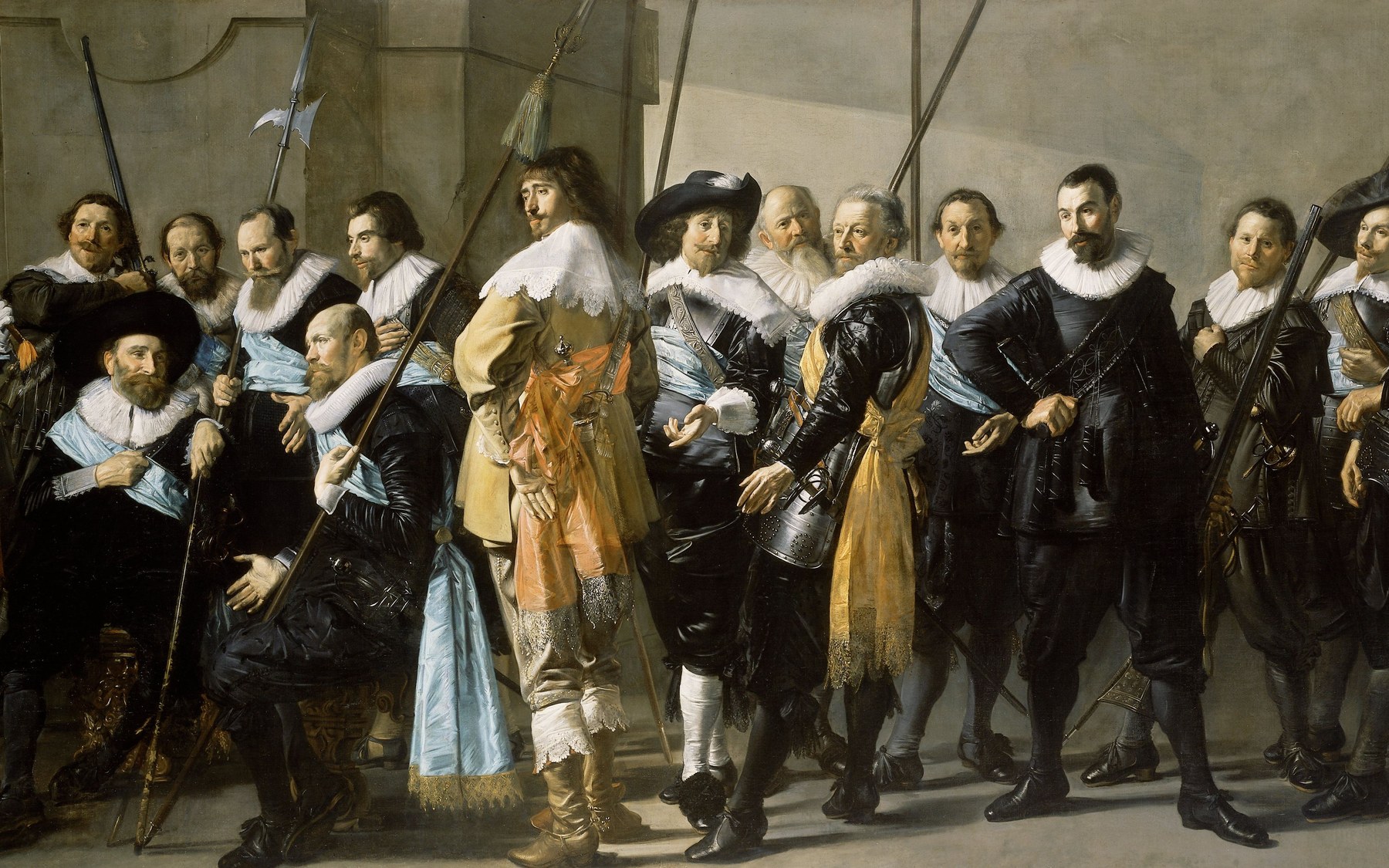
Frans Hals, De magere compagnie.jpg by Frans Hals / Pieter Codde; Public domain via Wikimedia Commons. Cropped for TheHistoryOfArt.org. · Image source
What to expect
Frans Hals and genre painting is a focused Mauritshuis presentation in Room 13, centred on two recent acquisitions: Girl Singing and Boy Playing the Violin by Frans Hals. The Mauritshuis describes them as important examples of genre painting and as a way to show another side of Hals. The museum already held portraits and a tronie by him, but these musician children open a route into everyday-life subjects, performance, humour and moral suggestion.
This is a smaller exhibition than the Mauritshuis–Thyssen exchange, and the page should not pretend otherwise. Its value is concentration. The official page lists the two Hals acquisitions alongside works including Judith Leyster’s A Young Woman Being Harassed by a Man, Hals’s Laughing Boy, merry-company scenes and the five senses. That makes the presentation a compact lesson in Haarlem genre painting and in the way seventeenth-century artists turned ordinary behaviour into lively, ambiguous pictures.
Why go
The strongest reason to go is that the two Hals works change the museum story. The paintings were bought jointly by the Mauritshuis and the Frans Hals Museum, and the Mauritshuis notes that the pair will remain together while being displayed alternately at the two museums. That gives the presentation a living collection-history angle: visitors are not just seeing familiar works rearranged, but watching a new acquisition enter public interpretation.
The subject is also useful for readers because genre painting can seem simple until one starts looking closely. These are scenes of children making music, people drinking, laughing, flirting, performing, listening, tasting or touching. Yet the Mauritshuis rightly warns that appearances can deceive. Seventeenth-century genre scenes often carry hidden meanings, moral jokes, social observation or playful warnings. A laughing face may be a portrait-like study, a tronie, a comic type, or a lesson in expression. A merry company may celebrate sociability while hinting at excess.
What to look for
Begin with Hals’s brushwork. The Mauritshuis artist page describes him as a painter of lively, confident strokes, and that matters here because genre pictures often depend on immediacy. A singing child or violin-playing boy needs to feel momentary. The viewer should sense breath, sound, posture and absorption. Hals’s loose handling can make a figure feel caught in action, even though the painting was carefully made in the studio rather than dashed off in front of a spontaneous scene.
Then compare expression and behaviour. The exhibition is not only about Hals in isolation; it places him among artists in Haarlem who worked with him, knew him or were influenced by him. Judith Leyster is especially important for that wider route, because she shows how genre painting could be witty, sharp and socially alert. Looking across the room, ask how each painter handles the everyday: with comedy, moral pressure, charm, discomfort, rhythm or theatrical staging.
The five senses are another useful looking prompt. Taste, smell, hearing, sight and touch turn ordinary experience into an organised theme. That helps explain why genre painting was more than casual observation. It could classify behaviour, invite recognition and make viewers think about appetite, pleasure and judgment. In a small room, those themes can be easier to grasp than they would be in a huge survey.
How it fits the Mauritshuis
The Mauritshuis is ideal for this kind of focused presentation because it rewards slow looking. A visitor may arrive for Vermeer, Rembrandt or Fabritius, but a Room 13 display around Hals and genre painting can make the museum feel less like a list of masterpieces and more like a network of related seventeenth-century problems: expression, social type, laughter, music, domestic behaviour and painterly speed.
For The Hague planning, the exhibition runs until 5 November 2026 and can be treated as a current reason to revisit the Mauritshuis before the larger Thyssen-Bornemisza exchange opens. The practical advice is straightforward: check the Mauritshuis source before travelling, especially because the two Hals works are intended to alternate between the Mauritshuis and the Frans Hals Museum over time.
Image and rights note
This is a promising image case because Hals died in the seventeenth century and the Mauritshuis provides downloadable images for non-commercial use with stated credit requirements. The page still stays image-free until Tom chooses and approves a final lead image and credit route. If a Mauritshuis collection image is used later, the credit line and publication terms should be handled carefully.
How to use this page
Because Frans Hals and genre painting is current, the page should help a reader decide whether it deserves time before the closing date, not merely record that it exists. The most reliable fixed details are the venue, dates, broad subject, media and official source link. The interpretive notes help place the exhibition in art-historical context: what kind of show it is, why it may matter, and which artists or topics are worth exploring next.
It is listed as a recommended exhibition rather than a headline major show, so the main value is a focused subject, strong venue context or a useful route into related artists.
Looking notes
For a visitor, the most useful approach is to look for patterns rather than isolated highlights. With Frans Hals, Judith Leyster, Haarlem genre painting, Dutch Golden Age, ask how the exhibition frames the subject: as biography, period survey, focused theme, collection display or reassessment. With media such as painting, genre painting, portraiture, tronie, pay attention to changes of scale, surface, lighting, material and display sequence, because those details are often lost in online listings.
The guide avoids over-specific claims where the public source does not yet support them. If a museum has not published a full object list, it is better to stay clear about what is confirmed than to imply certainty.
Who it is best for
Frans Hals and genre painting is most likely to help readers who are already interested in Frans Hals, Judith Leyster, Haarlem genre painting, and Dutch Golden Age, but it may also be useful for visitors building a wider route around Mauritshuis in The Hague. If time is limited, use this page to decide whether the subject fills a gap in your knowledge, whether it connects to artists you already follow, and whether the official venue information makes the visit practical.