by Tom Gurney
Tom Gurney BSc (Hons) is an art history expert with over 20 years experience
Published on July 14, 2026 / Updated on July 16, 2026
Email: tomgurney1@gmail.com / Phone: +447429011000
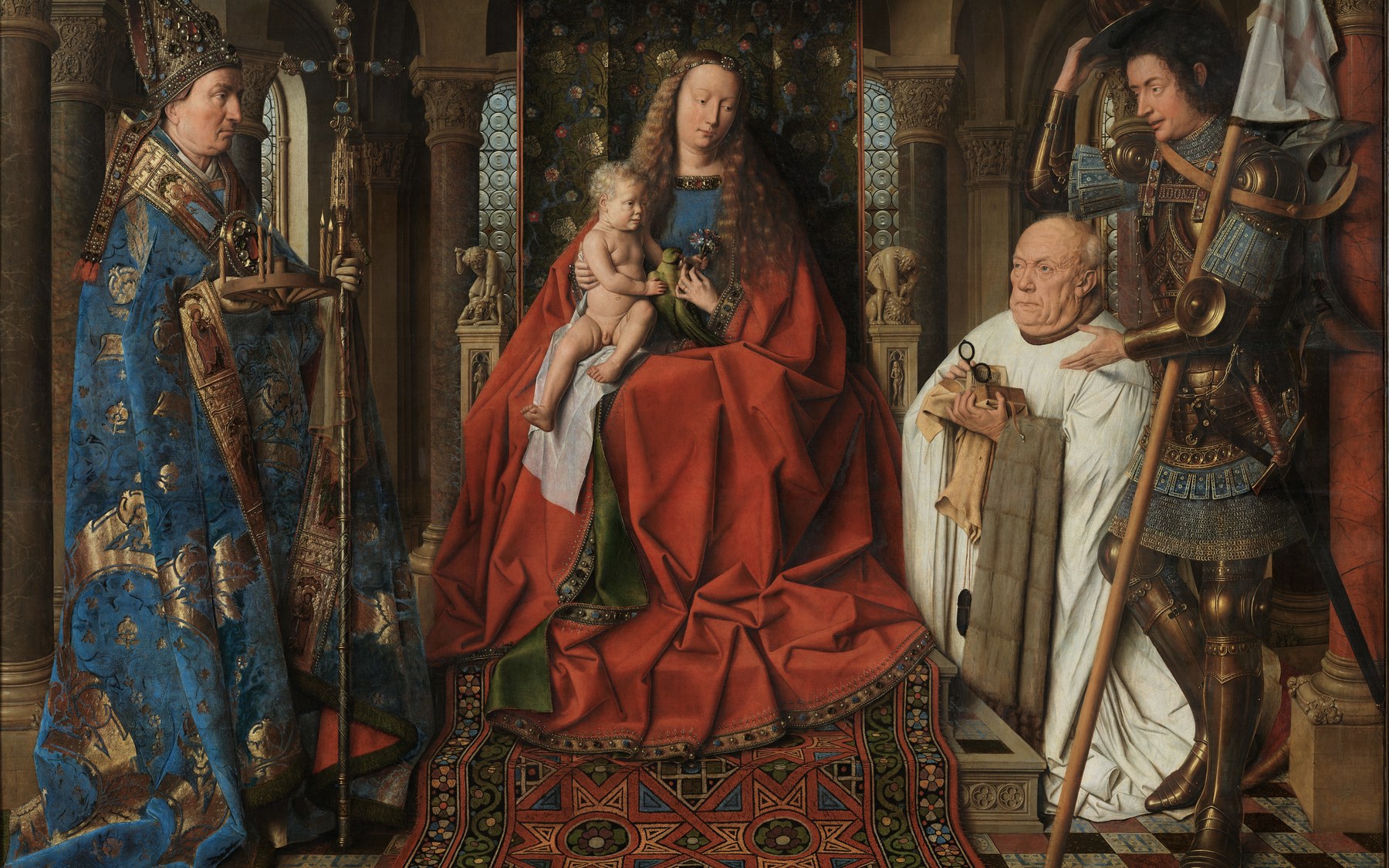
Eyck, Jan van - Madonna with Canon van der Paele.jpeg by Jan van Eyck; Public domain via Wikimedia Commons. Cropped for TheHistoryOfArt.org. · Image source
What to expect
Thyssen-Bornemisza loves Mauritshuis: Masterpieces from Madrid is an upcoming exchange exhibition between the Mauritshuis in The Hague and the Museo Nacional Thyssen-Bornemisza in Madrid. The Mauritshuis presents it as the first exchange of this kind between the two museums: 25 masterpieces from Madrid come to The Hague, while 25 Mauritshuis works travel to Madrid at the same time.
The premise is unusually clear. This is not a broad survey of European painting, nor a standard loan exhibition assembled from several institutions. It is a dialogue between two compact but highly recognisable Old Master collections, built around mutual trust, selective borrowing and the theme of love. The Mauritshuis highlights artists including Jan van Eyck, Albrecht Dürer, El Greco, Bronzino, Antonello da Messina and Piero della Francesca, with many paintings described as rarely seen outside Spain and now on view in the Netherlands after a long absence.
Why go
The value lies in rarity and comparison. The Mauritshuis is already a museum of close encounters: Vermeer, Rembrandt, Fabritius, genre painting and portraiture are seen in a relatively intimate setting rather than across an encyclopedic maze. Bringing 25 Thyssen-Bornemisza paintings into that environment should make the exhibition feel concentrated. A visitor is not being asked to absorb hundreds of objects. The task is to compare faces, gestures, devotional feeling, courtly presence, Northern precision and Southern intensity across a carefully chosen group.
The love theme could easily sound decorative, but it has a genuine interpretive use if handled carefully. The Mauritshuis describes love broadly: falling in love, connection, intimacy, longing, grief, loss and forbidden feeling. That gives a reader a useful route through paintings from the fifteenth and sixteenth centuries without flattening them into modern sentiment. It also suits portraiture and devotional art, where emotion is often carried through pose, gaze, hand, surface, costume and scale.
What to look for
Begin with pairs and echoes. The official Dutch page mentions a visual relationship between Michiel Sweerts’s Boy with a Turban from Madrid and Vermeer’s Girl with a Pearl Earring, not as a literal side-by-side pairing but as a dialogue through colour and composition. That is a useful model for the whole exhibition. Look less for one masterpiece beating another, and more for resonances: faces turned toward or away from the viewer, fabric catching light, religious feeling made visible, or Northern and Southern artists solving similar problems differently.
Then pay attention to museum identity. The Thyssen-Bornemisza collection is broad, European and historically layered, while the Mauritshuis is smaller, more concentrated and closely associated with Dutch painting. The exchange works because each museum temporarily borrows the other’s strengths. In The Hague, that means seeing artists rarely present in Dutch museums inside a building whose scale encourages slow looking.
For readers interested in Old Master painting, this is also a good reminder that national-school labels are useful but incomplete. Van Eyck and Dürer, El Greco and Bronzino, Antonello and Piero do not belong to one simple story. Their presence in a Dutch museum invites comparison across geography, patronage, technique and feeling. A good visit should leave room for that friction.
How it fits the Mauritshuis and The Hague
This exhibition gives the Mauritshuis page a strong opening reason to exist in the guide. The museum is small enough for a first visit to feel coherent, but important enough to carry major evergreen content around Vermeer, Rembrandt, Fabritius and Dutch Golden Age painting. Adding The Hague also broadens the Netherlands cluster beyond Amsterdam, which is helpful for future city and country pages.
For planning, the dates matter: the exhibition runs from 15 October 2026 to 17 January 2027. It is upcoming, so readers should use this page as a watch-and-plan record rather than treating it as a same-week visit prompt. Before travelling, they should check the Mauritshuis source for tickets, display details and any loan or conservation updates.
Image and rights note
This is a comparatively promising image case because the exhibition centres on Old Master painting and Tom has already selected an image candidate for later review. The final lead image should still wait for Tom’s crop, source and publication approval. Until then, the page works in image-free form and avoids making unsupported claims about whether a representative image is included in the final display.
How to use this page
Because Thyssen-Bornemisza loves Mauritshuis: Masterpieces from Madrid is upcoming, the page should help a reader decide whether to plan a future trip or watch for reviews and final venue details. The most reliable fixed details are the venue, dates, broad subject, media and official source link. The interpretive notes help place the exhibition in art-historical context: what kind of show it is, why it may matter, and which artists or topics are worth exploring next.
It is marked as a major exhibition in this guide, so it should be useful for readers choosing between several possible museum visits.
Looking notes
For a visitor, the most useful approach is to look for patterns rather than isolated highlights. With Jan van Eyck, Albrecht Dürer, El Greco, Bronzino, Antonello da Messina, Piero della Francesca, ask how the exhibition frames the subject: as biography, period survey, focused theme, collection display or reassessment. With media such as painting, old masters, portraiture, european painting, pay attention to changes of scale, surface, lighting, material and display sequence, because those details are often lost in online listings.
The guide avoids over-specific claims where the public source does not yet support them. If a museum has not published a full object list, it is better to stay clear about what is confirmed than to imply certainty.
Who it is best for
Thyssen-Bornemisza loves Mauritshuis: Masterpieces from Madrid is most likely to help readers who are already interested in Jan van Eyck, Albrecht Dürer, El Greco, Bronzino, Antonello da Messina, and Piero della Francesca, but it may also be useful for visitors building a wider route around Mauritshuis in The Hague. If time is limited, use this page to decide whether the subject fills a gap in your knowledge, whether it connects to artists you already follow, and whether the official venue information makes the visit practical.