by Tom Gurney
Tom Gurney BSc (Hons) is an art history expert with over 20 years experience
Published on July 14, 2026 / Updated on July 16, 2026
Email: tomgurney1@gmail.com / Phone: +447429011000
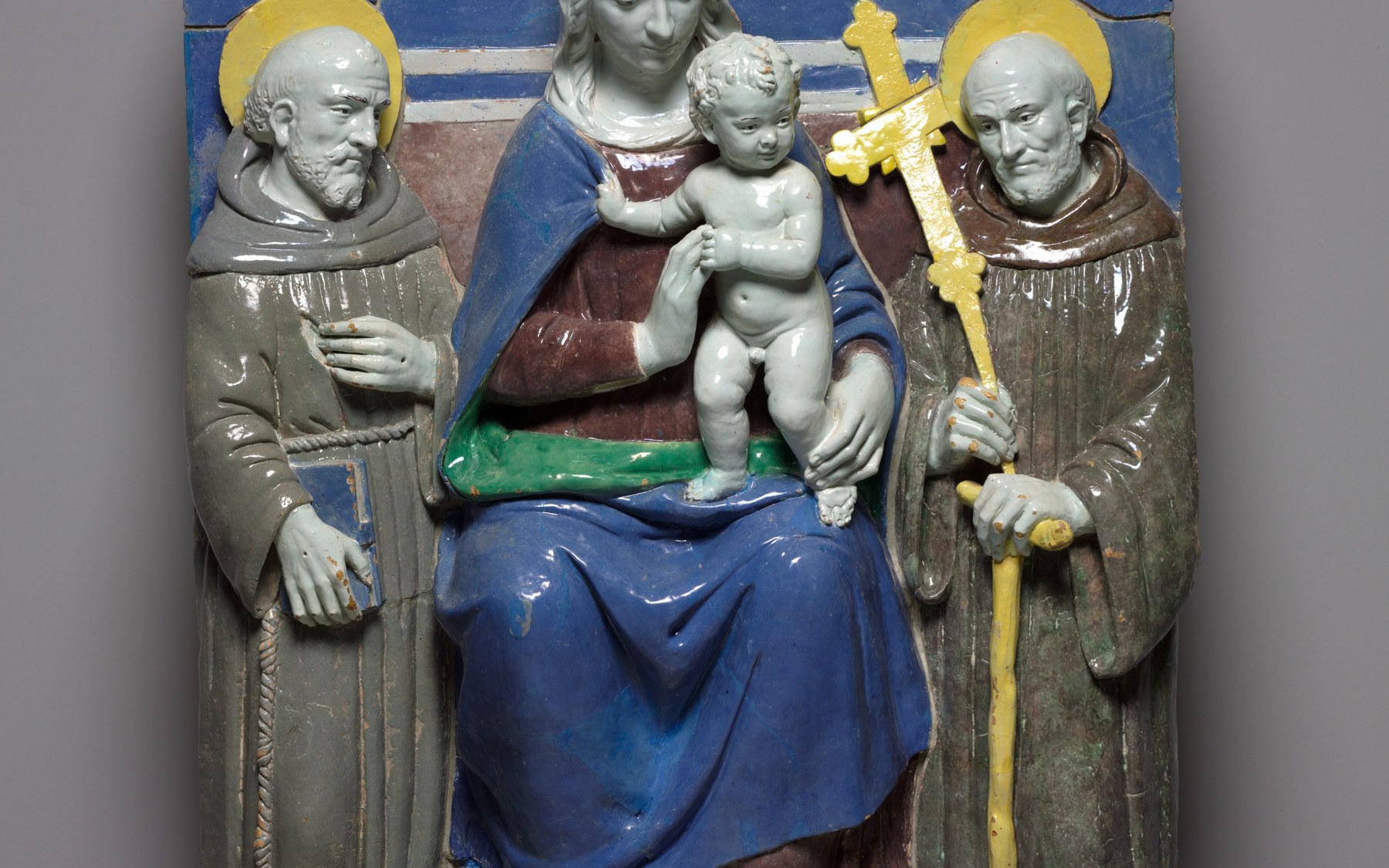
Clevelandart 1921.1180.jpg by Benedetto Buglioni; CC0 via Wikimedia Commons. Cropped for TheHistoryOfArt.org. · Image source
What to expect
Rediscovering Della Robbia at The Met is an upcoming Renaissance sculpture exhibition in Gallery 521 at The Met Fifth Avenue. The Met’s official page frames the show around Luca della Robbia’s development of glazed terracotta sculpture in Florence around 1440, and the way Luca, Andrea, Giovanni and the family workshop turned clay and coloured glaze into luminous, durable reliefs and statuary.
The exhibition is especially useful because it is built from the museum’s own collection history. The Met states that it has the largest and most significant collection of Della Robbia glazed terracottas in America, but that most have remained in storage for decades. This show brings eleven of the Museum’s masterworks by three generations of the family into a single gallery, joined by two important loans from a private collector and two promised gifts from the Dick Wolf Collection.
Why go
The appeal is material as much as stylistic. Della Robbia sculpture can look startlingly fresh because the glazed surfaces still gleam centuries after firing. Renaissance viewers praised these works as almost eternal, and that phrase is useful because it points to the technical ambition of the workshop. Clay is humble, but glaze changes it: white figures, blue grounds, garlands, flesh, drapery and devotional subjects gain a clarity and luminosity that marble or bronze could not produce in the same way.
The exhibition is also a conservation story. The Met describes works rescued from storage, revived through conservation and re-attributed through fresh research. Its centrepiece features 32 newly conserved interlocking pieces of a 10-foot-tall altarpiece that has been off view for 70 years. A large animated virtual reconstruction, made with 3D-scanning technology, suggests how the entire altar was originally assembled. That gives visitors a rare chance to see Renaissance sculpture as both art and technical puzzle.
What to look for
Begin with surface. The Della Robbia workshop’s achievement depends on the relationship between modelling, firing and glaze. Look for the contrast between bright white figures and coloured settings, for the way light catches raised surfaces, and for the legibility of forms at a distance. These objects were not only precious indoor sculptures; the technique could make sacred figures vivid, durable and public-facing.
Then look for workshop identity. Luca, Andrea and Giovanni della Robbia are individual names, but the exhibition’s subject is also collaboration across generations. The Met notes that the family workshop fostered innovation. A visitor should therefore ask what remains consistent and what changes: how devotional subjects are repeated, how garlands and frames become more elaborate, how small statuettes differ from monumental multi-part reliefs, and how attribution changes when conservators and curators re-examine objects after decades in storage.
The reconstruction is likely to be one of the most useful parts of the exhibition for non-specialists. A fragmented altarpiece can be hard to understand as a complete object. Digital reconstruction can help visitors imagine scale, assembly and original visual impact without pretending that the surviving fragments are less important. The best looking route will move between the object in front of you and the larger structure it once helped create.
How it fits the Met
This exhibition strengthens the Met page because it highlights European sculpture and decorative arts rather than the usual painting-led route. The Met can easily become a list of Rembrandt, David, Sargent, American art and major temporary shows, but Della Robbia makes a different case for the museum: conservation, material research, Renaissance workshop practice and the depth of objects held out of view.
For New York planning, the long run from 10 August 2026 to 17 January 2028 makes this less urgent than short exhibitions, but it is a strong reason to revisit the Met over time. It is included with museum admission, though readers should still check the Met source for current access, hours and gallery information before travelling.
Image and rights note
The image prospects are comparatively good because the works are Renaissance objects and The Met often provides clear object records and image information. The page remains image-free until Tom chooses and approves a source and credit path. If a Met object image is added later, it should be credited from the reviewed Met record and not assumed from the exhibition thumbnail alone.
How to use this page
Because Rediscovering Della Robbia at The Met is upcoming, the page should help a reader decide whether to plan a future trip or watch for reviews and final venue details. The most reliable fixed details are the venue, dates, broad subject, media and official source link. The interpretive notes help place the exhibition in art-historical context: what kind of show it is, why it may matter, and which artists or topics are worth exploring next.
It is marked as a major exhibition in this guide, so it should be useful for readers choosing between several possible museum visits.
Looking notes
For a visitor, the most useful approach is to look for patterns rather than isolated highlights. With Luca della Robbia, Andrea della Robbia, Giovanni della Robbia, Italian Renaissance sculpture, ask how the exhibition frames the subject: as biography, period survey, focused theme, collection display or reassessment. With media such as glazed terracotta, sculpture, relief, conservation, 3d reconstruction, pay attention to changes of scale, surface, lighting, material and display sequence, because those details are often lost in online listings.
The guide avoids over-specific claims where the public source does not yet support them. If a museum has not published a full object list, it is better to stay clear about what is confirmed than to imply certainty.
Who it is best for
Rediscovering Della Robbia at The Met is most likely to help readers who are already interested in Luca della Robbia, Andrea della Robbia, Giovanni della Robbia, and Italian Renaissance sculpture, but it may also be useful for visitors building a wider route around The Metropolitan Museum of Art in New York. If time is limited, use this page to decide whether the subject fills a gap in your knowledge, whether it connects to artists you already follow, and whether the official venue information makes the visit practical.