by Tom Gurney
Tom Gurney BSc (Hons) is an art history expert with over 20 years experience
Published on July 14, 2026 / Updated on July 16, 2026
Email: tomgurney1@gmail.com / Phone: +447429011000
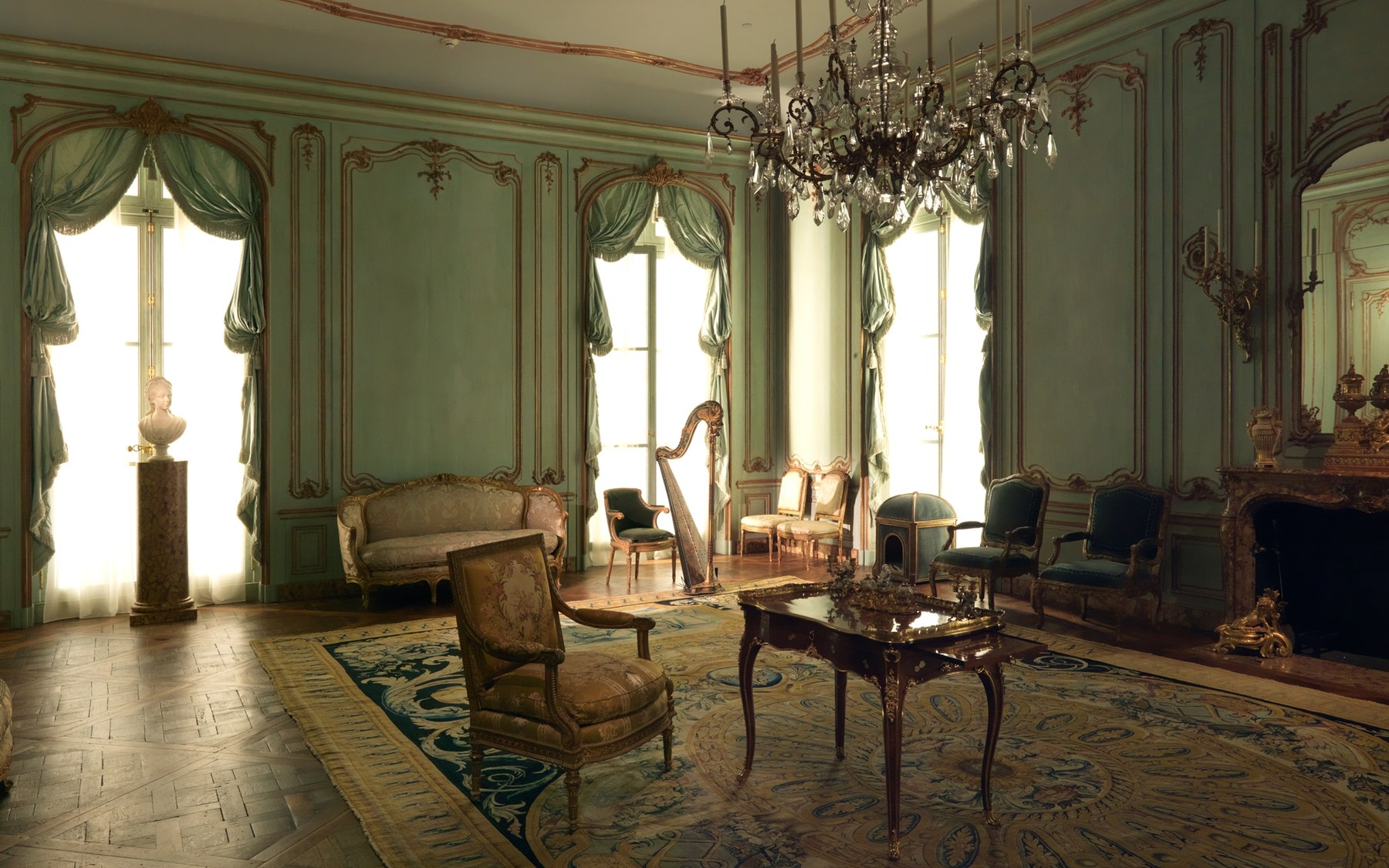
Carpet with Fame and Fortitude MET DP158810.jpg by Savonnerie manufactory; CC0 via Wikimedia Commons. Cropped for TheHistoryOfArt.org. · Image source
What to expect
A King's Carpet: Louis XIV and the Savonnerie is an upcoming Met exhibition about one of the most extravagant textile commissions of the French Baroque. The official Met page explains that in 1668 Louis XIV commissioned the Paris-based Savonnerie manufactory to create the largest carpet ever woven: a sequence of 92 individual pieces intended to cover the full 440-metre span of the Grande Galerie of the Louvre.
The exhibition is the first in the United States devoted to the Savonnerie. It is held in the Wrightsman Galleries, Galleries 524-528, and runs from 8 September 2026 to 5 March 2028. The Met’s press material says it will present four complete carpets from the Louvre project, together with fragments and a trial weave, while also letting visitors observe textile conservators working in a temporary in-gallery conservation studio.
Why go
The exhibition is valuable because it makes decorative art politically legible. A carpet can sound domestic or secondary if one thinks only in terms of paintings and sculpture, but Louis XIV’s Grande Galerie scheme was a vast image of power. It was designed for dignitaries walking through royal space, under their feet a continuous field of heraldry, ornament, colour and controlled luxury. The project was not simply decoration. It was monarchy made textile.
The story is also full of contradiction. The Met notes that the 92 carpets were never rolled out in the Louvre space for which they were intended, because Louis XIV shifted attention away from the Louvre toward Versailles. The carpets were later stored, dispersed after the French Revolution, stripped of royal emblems in some cases, sold, adapted and eventually collected by figures such as J. P. Morgan and Alva Vanderbilt. That gives the exhibition a long afterlife: royal ambition, workshop labour, revolutionary dispersal and American collecting all meet in one object history.
What to look for
Begin with scale. Even one complete Savonnerie carpet can be monumental; the original project imagined 92 of them filling a gallery six times the length of the Hall of Mirrors at Versailles. Look for how design manages that scale. Repeated motifs, borders, heraldic devices, floral ornament and symbolic emblems had to work both up close and as part of a nearly impossible architectural scheme.
Then look at labour. The Met press release is unusually direct about the harsh realities of production: massive Paris workshops, oversize looms, technical innovation and an expendable workforce that included orphans, young children and adolescents. That should shape the visit. These carpets are luxurious, but they are also records of organised work, state ambition and human cost. The beauty of the pile, colour and pattern does not cancel the conditions that made it possible.
The conservation studio should be one of the strongest features for readers who like process. Seeing conservators repair and strengthen a monumental textile can change the way a visitor understands the object. A carpet is flexible, vulnerable and physically demanding in ways that a panel painting or bronze is not. Conservation makes those pressures visible: weight, wear, tension, fibre, dye, repair and the challenge of display.
How it fits the Met
This exhibition strengthens the Met page by giving European decorative arts a headline role. The Met is often approached through painting, antiquities, sculpture or fashion, but its period rooms and decorative-arts holdings can explain power, taste and material culture with unusual force. A Savonnerie carpet is not a background furnishing. It is a designed environment compressed into textile form.
For New York planning, the long run makes the exhibition less urgent than short seasonal shows, but it is likely to be worth building into a Met visit for anyone interested in French court culture, Louis XIV, Baroque design, textiles or conservation. It is listed as free with museum admission, but readers should still check the Met source for current access, hours and gallery information before travelling.
Image and rights note
The image prospects are promising because the carpets are historic and The Met has object records and exhibition image credits, but the page remains image-free until Tom chooses and approves a source and credit path. A final image should come from a reviewed Met or public-domain source, with the credit line checked against the object record rather than copied loosely from publicity material.
How to use this page
Because A King's Carpet: Louis XIV and the Savonnerie is upcoming, the page should help a reader decide whether to plan a future trip or watch for reviews and final venue details. The most reliable fixed details are the venue, dates, broad subject, media and official source link. The interpretive notes help place the exhibition in art-historical context: what kind of show it is, why it may matter, and which artists or topics are worth exploring next.
It is marked as a major exhibition in this guide, so it should be useful for readers choosing between several possible museum visits.
Looking notes
For a visitor, the most useful approach is to look for patterns rather than isolated highlights. With Louis XIV, Savonnerie Manufactory, Charles Le Brun, Jean-Baptiste Colbert, French Baroque decorative arts, ask how the exhibition frames the subject: as biography, period survey, focused theme, collection display or reassessment. With media such as carpet, textile, decorative arts, conservation, baroque design, pay attention to changes of scale, surface, lighting, material and display sequence, because those details are often lost in online listings.
The guide avoids over-specific claims where the public source does not yet support them. If a museum has not published a full object list, it is better to stay clear about what is confirmed than to imply certainty.
Who it is best for
A King's Carpet: Louis XIV and the Savonnerie is most likely to help readers who are already interested in Louis XIV, Savonnerie Manufactory, Charles Le Brun, Jean-Baptiste Colbert, and French Baroque decorative arts, but it may also be useful for visitors building a wider route around The Metropolitan Museum of Art in New York. If time is limited, use this page to decide whether the subject fills a gap in your knowledge, whether it connects to artists you already follow, and whether the official venue information makes the visit practical.