by Tom Gurney
Tom Gurney BSc (Hons) is an art history expert with over 20 years experience
Published on July 14, 2026 / Updated on July 16, 2026
Email: tomgurney1@gmail.com / Phone: +447429011000
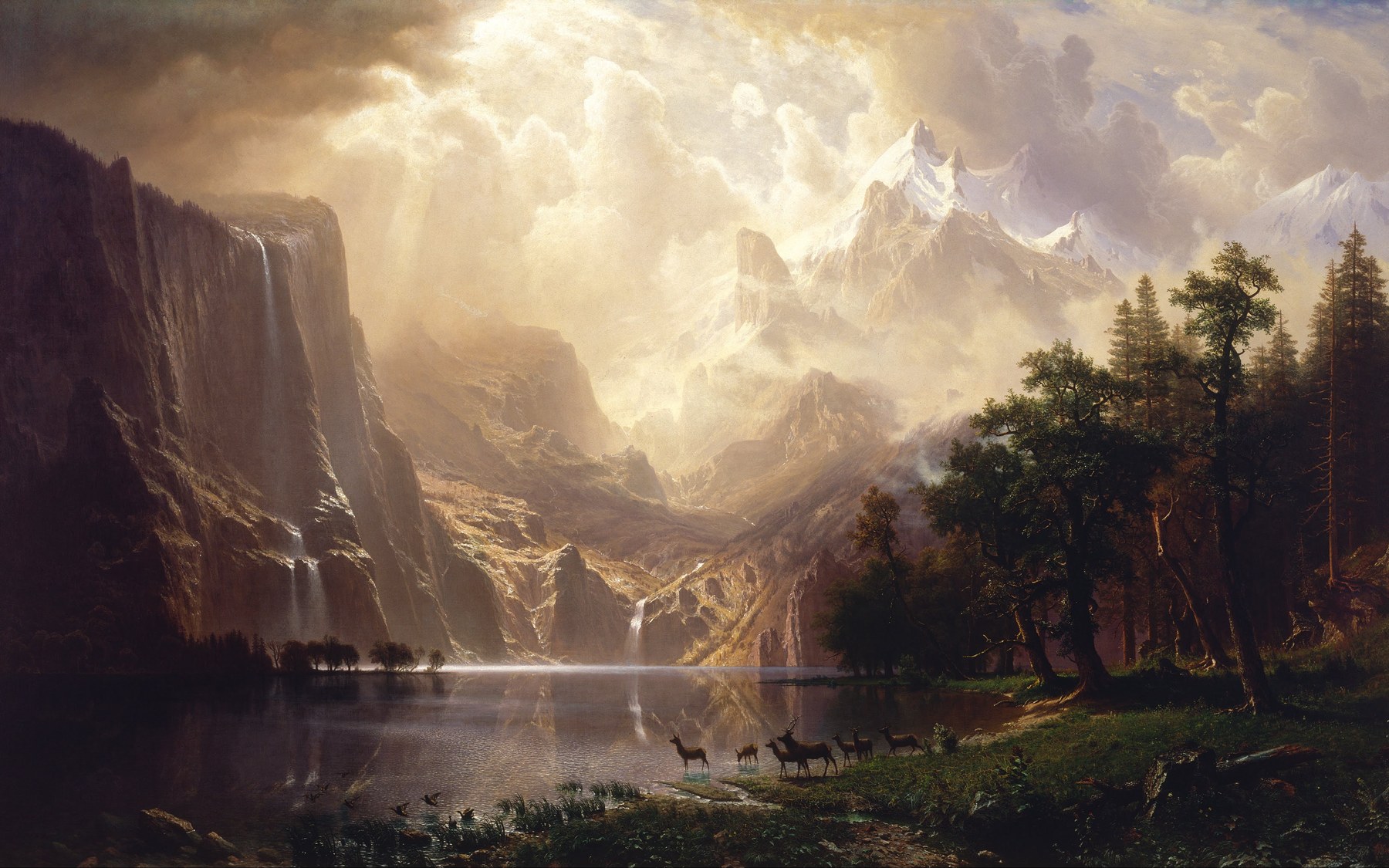
Albert Bierstadt - Among the Sierra Nevada, California - Google Art Project.jpg by Albert Bierstadt; Public domain via Wikimedia Commons. Cropped for TheHistoryOfArt.org. · Image source
What to expect
A Nation of Artists is a current Philadelphia Museum of Art exhibition in the Main Building's American Art Galleries, on view through 5 July 2027. The official PMA page describes it as a three-century account of American creativity, built from the museum's own holdings and the Middleton Family Collection, one of the country's most significant private holdings of American art. The exhibition is free with museum admission and belongs to Philadelphia's wider celebration of the United States' 250th anniversary.
The PMA presentation is part of a larger two-museum project with the Pennsylvania Academy of the Fine Arts. Across PMA and PAFA, the project features more than 1,000 works, including more than 120 iconic paintings and decorative arts from the Middleton Family Collection. This page focuses on the Philadelphia Museum of Art version, which PMA presents as a chronological display of American art from about 1700 to 1960. The linked PAFA presentation has its own thematic structure and a longer run, so visitors should treat the two venues as related but distinct experiences.
At PMA, the official page names Charles Willson Peale, Mary Cassatt, Thomas Eakins, Horace Pippin and Mark Rothko among the artists included. It also stresses that the exhibition is not only a painting route. Ceramics, wood carving, fashion, furniture, metals, textiles, architectural elements and other decorative arts are part of the story. That breadth matters because the title's "artists" should be read generously: painters, makers, artisans, designers and communities all shape visual culture.
Why go
The strongest reason to go is scale with purpose. American art can easily become a row of national highlights: a Peale portrait, an Eakins figure, a Cassatt, a Hopper, a Rothko. A Nation of Artists offers a broader structure. It asks how creativity in the United States was shaped by cultural exchange, historical events, economic change, regional identity, natural environments, migration, conflict and imagination. That makes it a better page than a simple anniversary listing.
The Middleton Family Collection also changes the stakes. Private collections can disappear from public view, or appear only briefly before being dispersed, sold or lent elsewhere. PMA and PAFA's collaboration brings major private holdings into dialogue with public museum collections. For readers, that means the exhibition can show works that are not normally part of an everyday museum route while still grounding them in the long institutional history of Philadelphia art.
The decorative-arts emphasis is especially valuable. American art history is often introduced through easel painting, but the PMA page explicitly includes furniture, ceramics, metals, textiles, fashion and architectural elements. Those objects show how identity is made through homes, bodies, rooms, workshops, trades and technologies. A carved object or garment can reveal social aspiration and material intelligence as strongly as a painted canvas.
What to look for
Begin with chronology, but do not let chronology do all the work. A display running from 1700 to 1960 will inevitably move through colonial portraiture, early national identity, expansion, industrial change, modernism and postwar abstraction. The useful question is what changes from section to section: who is allowed to represent the nation, which materials carry status, and how the idea of American creativity expands or narrows over time.
Then look for crosscurrents. PMA's official description points to Indigenous, African American and historically underrepresented artists as part of the exhibition's account of visual culture. A good visit should pay attention to where those presences are placed. Are they integrated into the chronology or isolated into special moments? Do objects by underrepresented makers change the story, or merely add examples to an existing frame? The answer will shape how persuasive the exhibition feels.
Compare painting with decorative arts whenever possible. A portrait by Charles Willson Peale, the realism of Thomas Eakins, the elegance of Mary Cassatt, the intensity of Horace Pippin and the colour fields of Mark Rothko each ask for different kinds of looking. But furniture, ceramics, metalwork, textiles and fashion can complicate the same themes: labour, taste, class, technology, gender, regional identity and global influence. The best route will move between fine and decorative arts without treating one as background for the other.
Finally, pay attention to the anniversary frame. The United States' 250th anniversary could produce a celebratory exhibition only, but the stronger version of this subject should hold pride and difficulty together. American art was shaped by invention, exchange and aspiration, but also by exclusion, inequality, displacement and conflict. Look for how the labels handle that tension. A useful national exhibition should make the story larger and less comfortable, not merely more patriotic.
How it fits Philadelphia
This page gives the Philadelphia Museum of Art cluster a clear purpose. PMA can otherwise seem broad but slightly hard to summarise: European galleries, American art, modern art, decorative arts, Duchamp, Asian art, architecture and the famous building itself. A Nation of Artists makes the museum's American holdings and national-history role legible, especially in a city where the 250th anniversary will bring unusual visitor attention.
For planning, this is a long-running exhibition, so it can anchor Philadelphia visits through summer 2027 rather than acting as a closing-soon dash. It pairs naturally with PMA's American Art Galleries, Early American Galleries, decorative arts displays and broader museum route. Visitors who have more time should also consider the PAFA presentation, but the two venues require separate planning and should not be collapsed into one stop.
The page also creates future internal-link territory for American portraiture, women artists, African American artists, decorative arts, fashion, ceramics, furniture, museum collecting, public/private collections and anniversary exhibitions. It broadens the current batch beyond European Old Masters while staying anchored in a substantial pre-1950 and historical collection base.
Image and rights note
Image selection needs extra caution. Many works in the exhibition are historic, but the official PMA page uses a detail from Edward Hopper's The Lee Shore, which is rights-sensitive because Hopper died in 1967. Mark Rothko and other twentieth-century works also require modern-rights caution. This page therefore remains image-free until a source and credit route is explicitly approved. The future image review should prefer older public-domain American works or clearly open museum assets, and should avoid treating PMA press images as reusable without review.
How to use this page
Because A Nation of Artists is current, the page should help a reader decide whether it deserves time before the closing date, not merely record that it exists. The most reliable fixed details are the venue, dates, broad subject, media and official source link. The interpretive notes help place the exhibition in art-historical context: what kind of show it is, why it may matter, and which artists or topics are worth exploring next.
It is marked as a major exhibition in this guide, so it should be useful for readers choosing between several possible museum visits.
Looking notes
For a visitor, the most useful approach is to look for patterns rather than isolated highlights. With American art, Middleton Family Collection, US 250th anniversary, Charles Willson Peale, Mary Cassatt, Thomas Eakins, Horace Pippin, Mark Rothko, ask how the exhibition frames the subject: as biography, period survey, focused theme, collection display or reassessment. With media such as painting, sculpture, decorative arts, ceramics, wood carving, fashion, furniture, textiles, architectural elements, pay attention to changes of scale, surface, lighting, material and display sequence, because those details are often lost in online listings.
The guide avoids over-specific claims where the public source does not yet support them. If a museum has not published a full object list, it is better to stay clear about what is confirmed than to imply certainty.
Who it is best for
A Nation of Artists is most likely to help readers who are already interested in American art, Middleton Family Collection, US 250th anniversary, Charles Willson Peale, Mary Cassatt, Thomas Eakins, Horace Pippin, and Mark Rothko, but it may also be useful for visitors building a wider route around Philadelphia Art Museum in Philadelphia. If time is limited, use this page to decide whether the subject fills a gap in your knowledge, whether it connects to artists you already follow, and whether the official venue information makes the visit practical.