by Tom Gurney
Tom Gurney BSc (Hons) is an art history expert with over 20 years experience
Published on July 14, 2026 / Updated on July 16, 2026
Email: tomgurney1@gmail.com / Phone: +447429011000
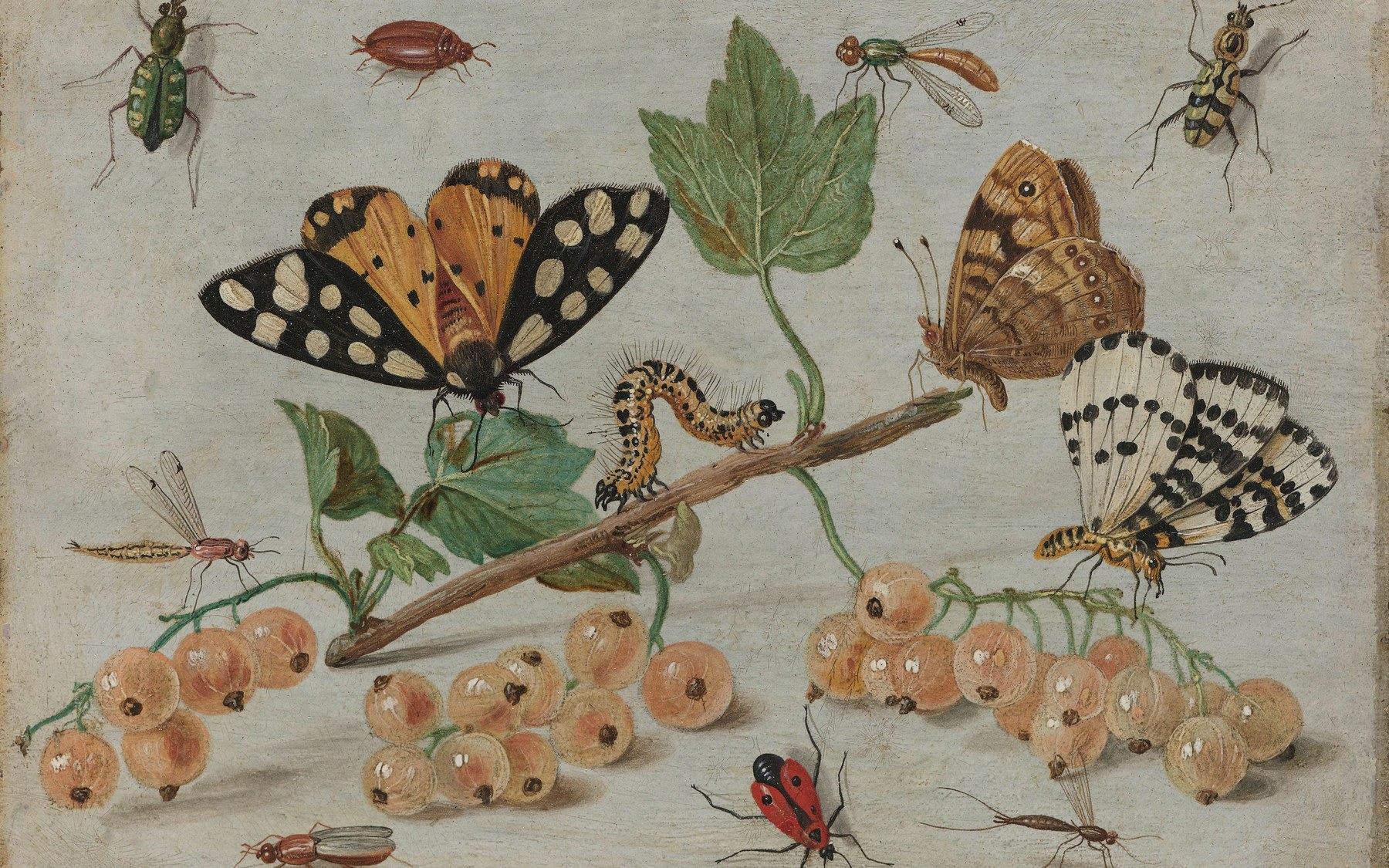
Insecten en vruchten Rijksmuseum SK-A-793.jpeg by Jan van Kessel the Elder; Public domain via Wikimedia Commons. Cropped for TheHistoryOfArt.org. · Image source
What to expect
Little Beasts: Art, Wonder, and the Natural World was a National Gallery of Art exhibition in Washington DC, shown in the West Building from 18 May to 2 November 2025. Because it has already closed, this page should be used as an archive record rather than as visit-planning advice for a live show. Its value is still strong: the subject gives the guide a clear way to connect art, natural history, close looking, collecting, scientific curiosity and seventeenth-century image-making.
The official National Gallery of Art page framed the exhibition around artists looking closely at insects and other animals, with works of art displayed alongside real specimens. The museum described the show as a collaboration with the Smithsonian National Museum of Natural History, and the press release gave the scale as nearly 75 paintings, prints and drawings shown with about 60 objects from the Smithsonian. That combination is the reason this page deserves more than a short archive listing. The exhibition was not simply about animals in art; it was about how images helped make nature knowable.
The NGA's own materials place the exhibition at the dawn of European natural history in the sixteenth and seventeenth centuries. Developments in scientific technology, trade and colonial expansion brought attention to creatures that were newly encountered, newly classified or newly valued by European collectors and naturalists. Artists such as Joris Hoefnagel, Jacob Hoefnagel and Jan van Kessel made small creatures visually compelling through drawings, prints and paintings that combined accuracy, delight, curiosity and display.
Why it mattered
The strongest art-historical reason to preserve this page is that it makes observation feel active. A painted insect or tiny animal can seem decorative at first, but in this context it becomes part of a larger intellectual shift. The image records a creature, but it also organises attention. It asks the viewer to compare wings, shells, legs, scales, surfaces and movement. That habit of comparison sits close to natural history, but it also belongs to art. Line, colour, composition and scale shape what can be noticed.
Jan van Kessel the Elder's Insects and a Sprig of Rosemary, used prominently in NGA material, is a useful anchor because it turns minute creatures into a demanding act of looking. The point is not only that the painting is small or precise. It is that the viewer has to slow down enough for difference to matter. Beetles, moths, butterflies and other insects are not generic background detail. They become the subject, and the subject depends on patient description.
The exhibition also mattered because it put artworks beside natural-history specimens. That can change the visitor's sense of both. A specimen may seem to promise scientific fact; an artwork may seem to promise imagination or style. Seen together, the boundary becomes more interesting. Artists had to select, stage, exaggerate, order and translate living creatures into durable images. Naturalists and collectors relied on images to circulate knowledge. The two practices were not identical, but they were intertwined.
What to look for in the archive record
Begin with scale. Many of the works connected to this subject reward attention precisely because their scale is modest. A tiny creature can become monumental in attention if the artist gives it enough descriptive force. That makes the page useful for readers interested in miniatures, works on copper, manuscript traditions, prints and the history of close observation. It also gives the wider site a future bridge into materials and techniques: copper supports, fine brushes, printed natural-history books and the relation between art object and scientific illustration.
Then look for ordering. Natural-history imagery often depends on arrangement. Creatures may be scattered as if discovered by chance, set out like specimens, framed by plants, or arranged as a visual catalogue. Each choice changes the meaning. A page like this should encourage readers to ask whether the artist is creating wonder, evidence, possession, comparison, moral symbolism or sheer visual pleasure.
The Dutch word beestjes, used in NGA material, is especially useful because it keeps the subject small, lively and slightly resistant to grand art-historical categories. These are not heroic bodies or monumental landscapes. They are little beings that force the museum visitor to lower the register of attention. That is a good corrective for a site often built around famous painters and canonical masterpieces.
How it fits the National Gallery of Art
This archive page strengthens the National Gallery of Art cluster because it shows the museum's works on paper, Old Master painting and cross-institutional research interests alongside the larger American-landscape route already represented by Niagara Falls. The NGA page should not be only a highlights guide for Leonardo, Rembrandt, Renoir, Degas and Frederic Edwin Church. It should also show how the museum can build focused scholarly exhibitions from smaller works, drawings, prints and interdisciplinary loans.
For Washington DC, the Smithsonian connection matters. A National Gallery visit already sits within the wider National Mall and museum ecosystem; this exhibition made that relationship literal by bringing NGA art together with material from the National Museum of Natural History. Even as an archived record, it gives the Washington page a useful planning idea for later content: the city can be read across institutions, not only through one museum at a time.
The page also points toward future evergreen features: colour and observation, art materials, brushes and miniature technique, natural-history illustration, art and science, collecting, colonial trade networks and themes in art. It is exactly the kind of exhibition archive that can later feed a broader thematic article without requiring the temporary show to remain open.
Image and rights note
The image prospects are good because the central historical material is mainly seventeenth-century and earlier, and the NGA has open-access object records for many collection works. The safest future image review should start with an official NGA object image such as Jan van Kessel the Elder's Insects and a Sprig of Rosemary, then confirm download terms, credit wording, crop suitability and whether the image is being used as an exhibition-related anchor rather than as a claim about the full checklist. This page remains image-free until that review is complete.
How to use this page
Because Little Beasts: Art, Wonder, and the Natural World has ended, the page should function as an archive record and a route into related artists, works and venues. The most reliable fixed details are the venue, dates, broad subject, media and official source link. The interpretive notes help place the exhibition in art-historical context: what kind of show it is, why it may matter, and which artists or topics are worth exploring next.
It is marked as a major exhibition in this guide, so it should be useful for readers choosing between several possible museum visits.
Looking notes
For a visitor, the most useful approach is to look for patterns rather than isolated highlights. With Jan van Kessel the Elder, Joris Hoefnagel, Jacob Hoefnagel, natural history, Smithsonian National Museum of Natural History, ask how the exhibition frames the subject: as biography, period survey, focused theme, collection display or reassessment. With media such as painting, print, drawing, natural-history specimen, works on paper, pay attention to changes of scale, surface, lighting, material and display sequence, because those details are often lost in online listings.
The guide avoids over-specific claims where the public source does not yet support them. If a museum has not published a full object list, it is better to stay clear about what is confirmed than to imply certainty.
Who it is best for
Little Beasts: Art, Wonder, and the Natural World is most likely to help readers who are already interested in Jan van Kessel the Elder, Joris Hoefnagel, Jacob Hoefnagel, natural history, and Smithsonian National Museum of Natural History, but it may also be useful for visitors building a wider route around National Gallery of Art in Washington DC. If time is limited, use this page to decide whether the subject fills a gap in your knowledge, whether it connects to artists you already follow, and whether the official venue information makes the visit practical.