by Tom Gurney
Tom Gurney BSc (Hons) is an art history expert with over 20 years experience
Published on July 14, 2026 / Updated on July 16, 2026
Email: tomgurney1@gmail.com / Phone: +447429011000
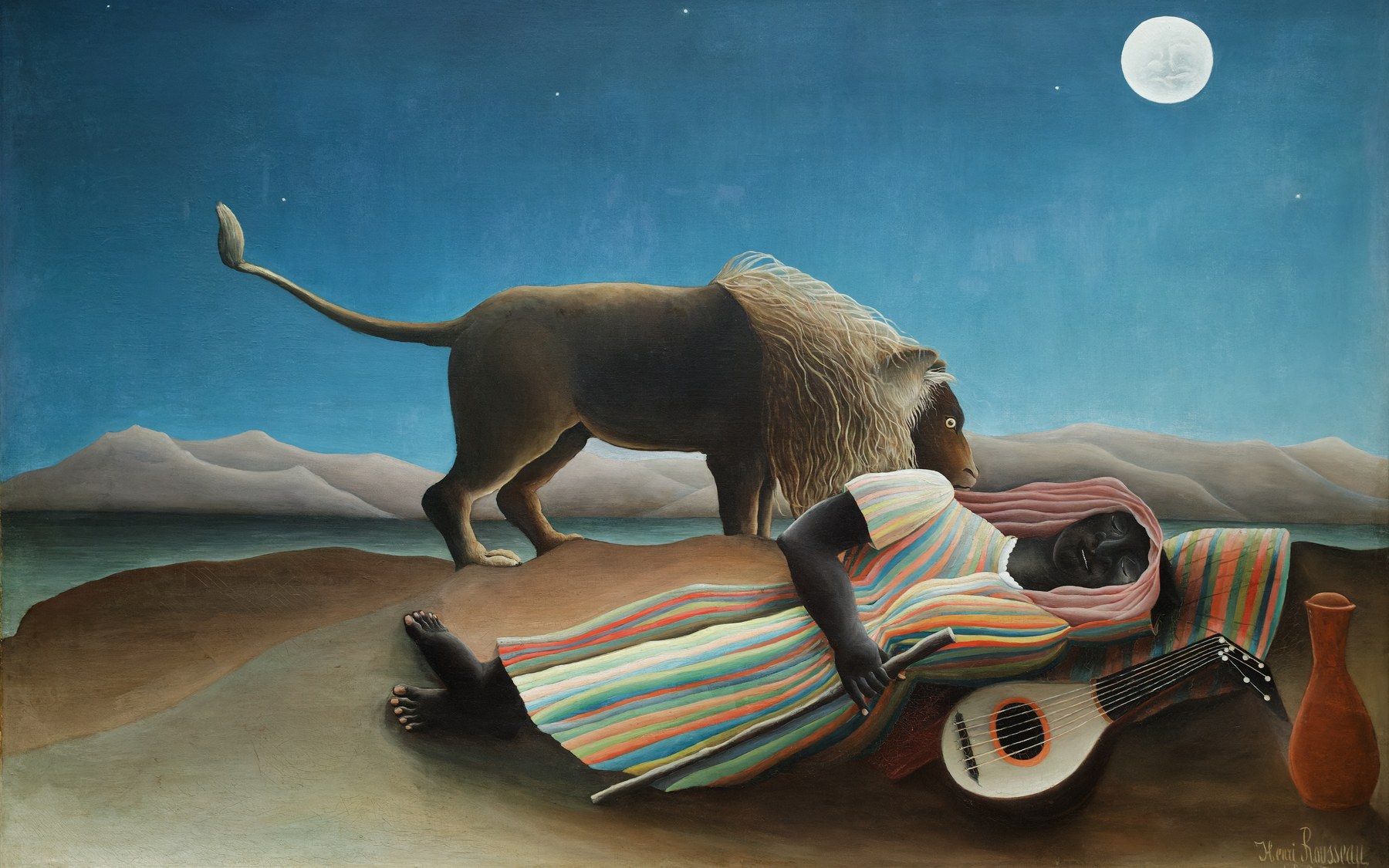
La Bohémienne endormie.jpg by Henri Rousseau; Public domain via Wikimedia Commons. Cropped for TheHistoryOfArt.org. · Image source
What to expect
Picasso, Miró, Dalí: Unbound is an upcoming Museum of Fine Arts Boston exhibition, scheduled from 1 August 2026 to 24 January 2027 in the Lois B. and Michael K. Torf Gallery, Gallery 184. MFA frames the exhibition around livres d'artiste, or artists' books: ambitious printed books in which image, text, typography, paper, binding and collaboration become part of the artwork. The title names Pablo Picasso, Joan Miró and Salvador Dalí, but the exhibition is really about a form rather than only a list of famous modernists.
The official MFA schedule describes these books as bold, experimental, extravagant and unbound, both physically and imaginatively. It places them at the turn of the twentieth century, when the book could be reinvented as an art form rather than treated as a neutral container for images or words. The exhibition introduces this world through extraordinary works by Spanish artists, asking visitors to look at how image, text and typography intersect in ways that resist easy categories.
MFA names two examples that give the page a clear route. Dalí's 1974 illustrations for Sigmund Freud's Moses and Monotheism show one model, where an artist interprets a foundational text. Juan Gris and the French poet Pierre Reverdy's Au Soleil du Plafond from 1955 show another, where artist and writer work in closer harmony from the outset. That distinction matters because an artist's book can be illustration, collaboration, interpretation, object, sequence, argument and performance at once.
Why go
The strongest reason to go is that artists' books change the scale of modernism. Picasso, Miró and Dalí are usually approached through paintings, drawings, sculptures, prints, Surrealist images or major museum icons. A book asks for a different tempo. It unfolds page by page. It depends on sequence, pacing, paper, spacing, type, binding and the relation between reading and looking. That makes the exhibition useful even when the visitor already knows the headline names.
The show is also valuable because it makes collaboration visible. MFA's description stresses that authors, publishers, designers and printmakers played essential roles in bringing livres d'artiste to life. That is a useful corrective to the solitary-genius version of modern art. A printed book may carry the name of Picasso, Miró or Dalí, but its final form depends on technical and editorial labour: paper choice, presswork, layout, type, sequencing, editioning and binding.
The Spanish-artist focus gives the exhibition another route. Picasso, Miró, Dalí and Gris worked in international modernist networks, often between Spain, France and wider European publishing circles. Their books can therefore show modern art crossing languages, media and national boundaries. A visitor should expect the exhibition to feel quieter than a blockbuster painting show, but potentially more revealing about how modernism moved through print and literary culture.
What to look for
Begin with the page as a designed field. In an artist's book, a page is not just a support. It can be a stage for image and word, a pause in a sequence, a visual rhythm, or a deliberate collision between typography and drawing. Look at margins, blank space, scale and placement. Ask whether the image serves the text, resists it, interrupts it or creates a parallel reading.
Then think about sequence. A painting can often be encountered as a single composition, but a book asks the viewer to move. Turning pages creates before and after, surprise, repetition, delay and return. That movement is especially important for Surrealist and modernist artists because sequence can make association feel unstable. One image may not explain the next; the reader has to inhabit the jump.
Material details matter too. Paper texture, ink density, plate mark, binding, folding, typography and edition format can all shape meaning. If the installation allows close viewing, notice whether the book is shown open to a single spread, displayed in a case, represented by multiple openings, or supported by digital facsimile. Exhibition display always changes a book: the museum must choose which moment in the sequence becomes visible.
Finally, watch for the difference between illustration and collaboration. Dalí responding to Freud is not the same kind of project as Gris working with Reverdy. One may feel like interpretation after the fact; another may feel like a shared construction of image and poem. The best visit will ask how the book distributes authority among artist, writer, printer, publisher and reader.
How it fits MFA Boston
This page completes the current MFA Boston cluster by adding modern works on paper and book culture to the Rembrandt/Judaica and Renoir exhibition routes. Together, the three records make MFA Boston more than a broad encyclopedic museum page. It now has a Dutch research-gallery route, a major Impressionist painting route and a modern artist-book route. That gives readers several reasons to return to the same museum across different visits.
For practical planning, this exhibition opens before the Renoir show and overlaps with other MFA 2026-27 programming. It is likely to work best for visitors interested in prints, books, typography, Surrealism, Spanish modernism and the relationship between art and literature. Readers should check MFA's official schedule before travelling for ticketing, gallery access, rotations, related talks and any updates, especially because rare books and works on paper may have display sensitivities.
The page also supports future evergreen content around mixed media, books as artworks, printmaking, typography, artist-publisher collaborations, Surrealism, Freud and modern art, and cross-border influence among Spanish and French modernist circles. It is the most rights-sensitive MFA page in this trio, but it is also one of the best thematic bridges into future material on how art leaves the wall and enters printed form.
Image and rights note
This page remains image-free. Picasso died in 1973, Miró in 1983 and Dalí in 1989, so the named artists and most relevant book images require high modern-rights caution. MFA installation photographs, book spreads, publisher images and artist estate-controlled material should not be reused without explicit source and credit approval. The safest future image review may need either a no-image release choice or a carefully reviewed non-checklist contextual image that does not imply exhibition inclusion.
How to use this page
Because Picasso, Miró, Dalí: Unbound is upcoming, the page should help a reader decide whether to plan a future trip or watch for reviews and final venue details. The most reliable fixed details are the venue, dates, broad subject, media and official source link. The interpretive notes help place the exhibition in art-historical context: what kind of show it is, why it may matter, and which artists or topics are worth exploring next.
It is marked as a major exhibition in this guide, so it should be useful for readers choosing between several possible museum visits.
Looking notes
For a visitor, the most useful approach is to look for patterns rather than isolated highlights. With Pablo Picasso, Joan Miró, Salvador Dalí, Juan Gris, Pierre Reverdy, Sigmund Freud, Spanish artists, livres d'artiste, ask how the exhibition frames the subject: as biography, period survey, focused theme, collection display or reassessment. With media such as artists' books, print, typography, illustrated books, collaborative publishing, works on paper, pay attention to changes of scale, surface, lighting, material and display sequence, because those details are often lost in online listings.
The guide avoids over-specific claims where the public source does not yet support them. If a museum has not published a full object list, it is better to stay clear about what is confirmed than to imply certainty.
Who it is best for
Picasso, Miró, Dalí: Unbound is most likely to help readers who are already interested in Pablo Picasso, Joan Miró, Salvador Dalí, Juan Gris, Pierre Reverdy, Sigmund Freud, Spanish artists, and livres d'artiste, but it may also be useful for visitors building a wider route around Museum of Fine Arts Boston in Boston. If time is limited, use this page to decide whether the subject fills a gap in your knowledge, whether it connects to artists you already follow, and whether the official venue information makes the visit practical.