by Tom Gurney
Tom Gurney BSc (Hons) is an art history expert with over 20 years experience
Published on July 14, 2026 / Updated on July 16, 2026
Email: tomgurney1@gmail.com / Phone: +447429011000
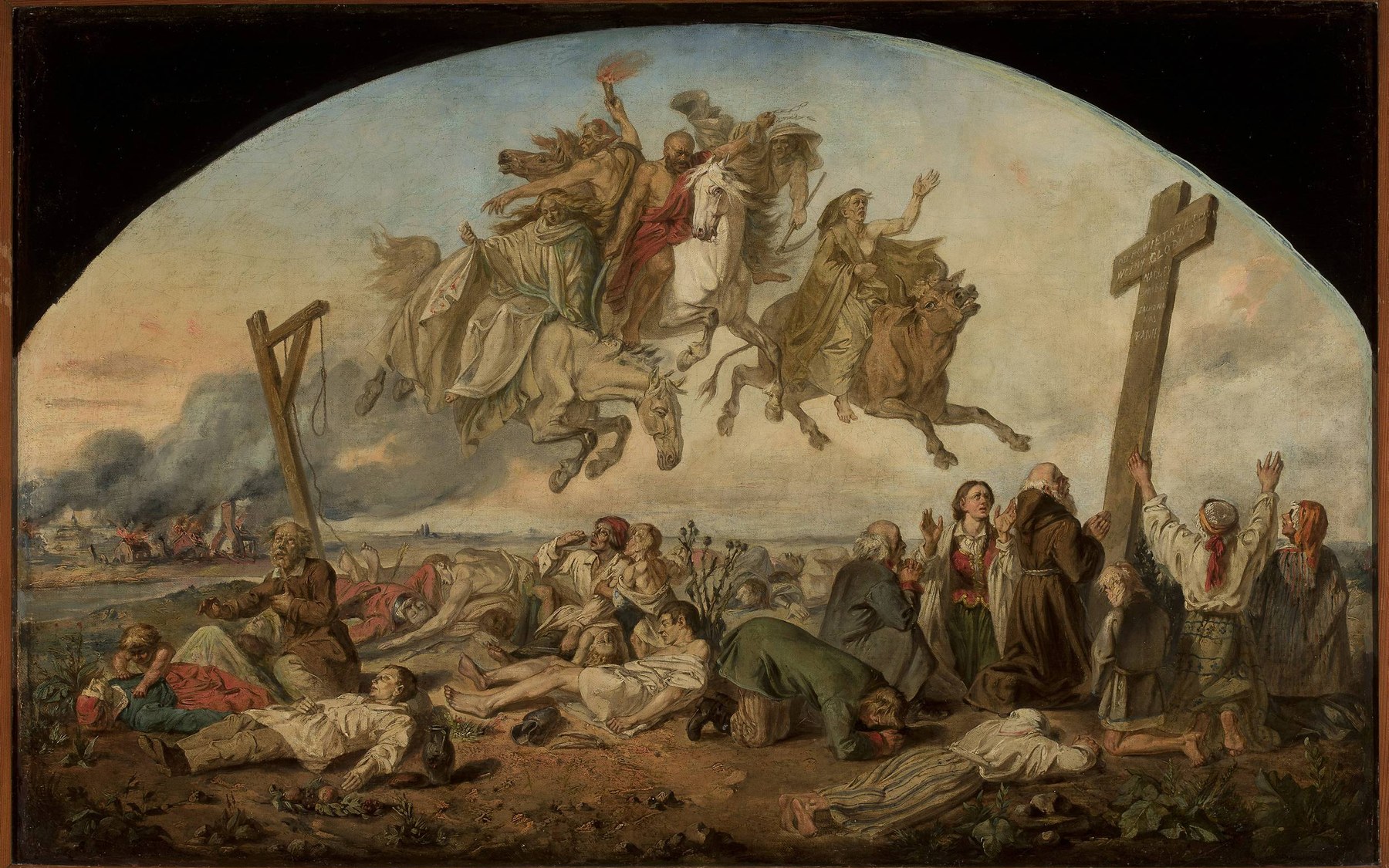
Ignacy Gierdziejewski - Lord deliver us from air, fire, war, famine and sudden death - MP 566 MNW - National Museum in Warsaw.jpg by Ignacy Gierdziejewski; Public domain via Wikimedia Commons. Cropped for TheHistoryOfArt.org. · Image source
What to expect
The Famine Painting is a Prado exhibition in the museum’s “A work, a story” format, centred on José Aparicio’s The Year of Hunger in Madrid from 1818. It is a one-painting exhibition, but not a small subject. The canvas is enormous, measuring 315 x 437 cm, and the Prado frames it as a once-famous work whose reputation, politics and display history reveal how museums create and lose icons.
The painting depicts the Madrid famine of 1811-12, a catastrophe still close to living memory when the work was shown at the Prado in 1819. The official exhibition page explains that it was once one of the museum’s most discussed works, even eclipsing pictures by Francisco de Goya and José de Madrazo during the reign of Ferdinand VII. Today it is largely unknown to the general public. That rise and fall is the exhibition’s central drama.
Why go
The exhibition is valuable because it asks visitors to look at the mechanics of fame. A painting can be praised, reproduced, sung about, politicised and treated as a national image, then later become an embarrassment, curiosity or storage-room object. The Prado describes Aparicio’s painting as a major artistic milestone of its day, publicised in the press and circulated through prints, songs and poems. It also served as a political tool under Ferdinand VII’s absolutism.
That combination makes the exhibition especially useful for readers interested in museums themselves. The question is not simply whether Aparicio is “good” or whether the painting deserves to be famous again. The better question is how taste, power and display produce value. Why did this painting matter in 1819? What did it allow the restored monarchy to say about suffering, order and national memory? Why did later viewers stop seeing it the same way?
What to look for
Begin with scale. At more than four metres wide, the painting was designed to dominate a room and persuade a public. It should not be read only as an image in reproduction. Its size is part of its argument: tragedy becomes spectacle, memory becomes history painting, and the viewer is placed before suffering organised into a political picture.
Then look for the tension between humanitarian subject and ideological use. The famine of 1811-12 was real, but the painting’s later fame depended on how that suffering was framed. The Prado notes the ideological toll imposed by Ferdinand VII’s absolutism and reconstructs the painting’s original location in the museum’s “third room” in 1819. That display history matters because it reminds visitors that museums are not neutral containers. A room arrangement can make a painting central, patriotic, moral or authoritative.
The restoration angle is also important. The Prado says the painting’s temporary return has been accompanied by an ambitious restoration programme that improved its stability and legibility. For a visitor, that means the exhibition is not only about reputation. It is also about material survival: how a large nineteenth-century canvas is conserved, made readable again and returned to public argument.
How it fits the Prado
This exhibition strengthens the Prado page because it shifts attention away from the usual masterpiece route. A visitor may come to Madrid for Velázquez, Goya, Bosch or Titian, but The Famine Painting asks a different question: how did the Prado itself become a place where certain works were made visible, others became canonical, and still others slipped out of public memory?
For Madrid planning, this is a current exhibition with a closing date of 13 September 2026, earlier than In the Italian Manner. It should therefore be treated as time-sensitive. Readers should check the official Prado source before travelling, especially for room access in Room 66, ticketing and any restoration or display updates.
Image and rights note
The image prospects are promising because Aparicio’s painting dates from 1818 and the Prado object record is directly tied to the exhibition. The page remains image-free until Tom chooses and approves a final source and credit path. If an image is added later, it should use the Prado object context carefully and avoid implying broader image permissions beyond the reviewed source.
How to use this page
Because The Famine Painting is current, the page should help a reader decide whether it deserves time before the closing date, not merely record that it exists. The most reliable fixed details are the venue, dates, broad subject, media and official source link. The interpretive notes help place the exhibition in art-historical context: what kind of show it is, why it may matter, and which artists or topics are worth exploring next.
It is listed as a recommended exhibition rather than a headline major show, so the main value is a focused subject, strong venue context or a useful route into related artists.
Looking notes
For a visitor, the most useful approach is to look for patterns rather than isolated highlights. With José Aparicio, The Year of Hunger in Madrid, Ferdinand VII, 19th-century Spanish history painting, ask how the exhibition frames the subject: as biography, period survey, focused theme, collection display or reassessment. With media such as history painting, oil on canvas, restoration, museum display history, pay attention to changes of scale, surface, lighting, material and display sequence, because those details are often lost in online listings.
The guide avoids over-specific claims where the public source does not yet support them. If a museum has not published a full object list, it is better to stay clear about what is confirmed than to imply certainty.
Who it is best for
The Famine Painting is most likely to help readers who are already interested in José Aparicio, The Year of Hunger in Madrid, Ferdinand VII, and 19th-century Spanish history painting, but it may also be useful for visitors building a wider route around Museo Nacional del Prado in Madrid. If time is limited, use this page to decide whether the subject fills a gap in your knowledge, whether it connects to artists you already follow, and whether the official venue information makes the visit practical.