by Tom Gurney
Tom Gurney BSc (Hons) is an art history expert with over 20 years experience
Published on July 14, 2026 / Updated on July 16, 2026
Email: tomgurney1@gmail.com / Phone: +447429011000
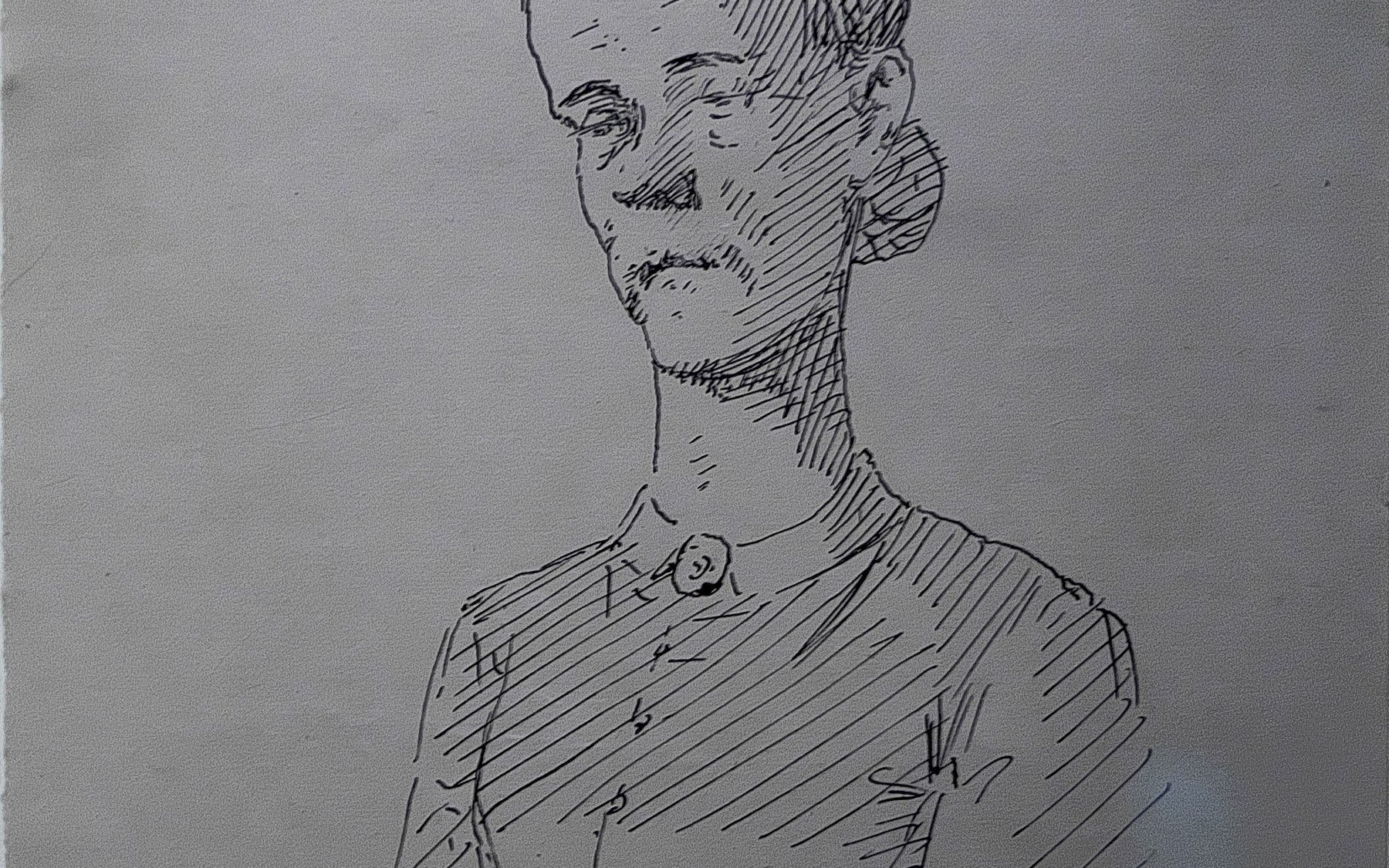
Retrato de una señora, Ricardo de Madrazo y Garreta.jpg by Ricardo de Madrazo y Garreta; Public domain via Wikimedia Commons. Cropped for TheHistoryOfArt.org. · Image source
What to expect
Ricardo de Madrazo (1852-1917): drawings and watercolours is an upcoming Museo Nacional del Prado exhibition in Room 60 of the Villanueva Building, scheduled on the dedicated Prado listing from 13 October 2026 to 17 January 2027. It is a focused works-on-paper exhibition rather than a large survey of nineteenth-century Spanish painting. That focus is exactly what makes it useful for the guide: sketchbooks, drawings and watercolours can show the artist thinking, travelling, copying and testing ideas in ways that finished oil paintings often conceal.
Prado describes the exhibition as the first show devoted exclusively to Ricardo de Madrazo, the youngest son of Federico de Madrazo and the least known member of the Madrazo family of artists. The museum explains that recent acquisitions have made this presentation possible. That gives the page a collection-history angle as well as an artist biography. A museum does not simply inherit a fixed nineteenth-century story; it can reshape that story when new works enter the collection and make a quieter artist newly visible.
The subject range is broad even though the format is compact. Prado states that the works will reveal the diversity of Ricardo de Madrazo's practice, from copies after Old Master paintings to Orientalism and genre scenes, shaped by his many journeys through Spain, Europe and North Africa. That combination makes the exhibition more than a family-footnote display. It opens questions about travel, training, cultural encounter, copying, costume, everyday subjects and the role of works on paper in a painter's career.
Why go
The strongest reason to go is that the exhibition brings attention to an artist normally overshadowed by his family name. The Madrazo dynasty is important in Spanish nineteenth-century art, but that importance can also flatten individual careers into genealogy. Ricardo's position as Federico de Madrazo's youngest son helps explain his artistic environment, but it should not be the only reason to look. A focused Prado exhibition can ask what he actually did on paper: how he observed, selected, remembered and transformed the subjects he encountered.
Works on paper also ask for a slower kind of visit. A sketchbook page may be unfinished, but that does not make it minor. It can preserve a first encounter, a compositional problem, a copied figure, a costume detail, a travel memory or an experiment in tone. Watercolour can carry speed and delicacy; drawing can show structure, hesitation or concentration. A visitor who comes expecting only polished salon painting may find the paper material more intimate and more revealing.
The travel element is especially important. Prado's summary names Spain, Europe and North Africa as the routes behind many of the works. That geography places Ricardo de Madrazo inside nineteenth-century habits of artistic mobility, where artists copied in museums, travelled for subjects, encountered local costume and architecture, and converted observation into marketable or exhibition-ready imagery. The exhibition can therefore help readers think about how travel shaped both knowledge and fantasy.
What to look for
Begin with the difference between copying and invention. Copies after Old Master paintings were not merely exercises for students who lacked originality. They were a way to learn composition, gesture, light, figure type and historical authority. In the Prado, copying also has a special meaning because the museum itself is one of the great sites for studying earlier painting. Ricardo's copies should be read as evidence of training, ambition and museum culture.
Then look at sketchbooks as sequences. A single sheet may be attractive, but a sketchbook can show movement through time: a journey, a room, a set of figures, a recurring motif or a changing interest. If the installation keeps pages in cases, notice what the museum chooses to show open. The visible page becomes an argument about the whole book, even though many other pages remain unseen.
Orientalism needs particular care. Nineteenth-century European artists often turned North Africa and the broader idea of the "Orient" into scenes of colour, costume, exoticism and difference. Some works record real travel and close observation; others participate in stereotypes and market expectations. The useful question is not whether the images are simply accurate or inaccurate, but how they transform encounter into pictorial subject. Look at pose, costume, setting, light and the relation between observation and theatrical display.
Genre scenes offer another route. Everyday-life subjects can look modest, but they often carry sharp information about social type, dress, work, leisure, regional identity or performance. A small watercolour or drawing can turn a fleeting scene into a repeatable image. Ask whether Ricardo treats these subjects as ethnographic detail, anecdote, picturesque charm, social observation or studio material for later works.
How it fits the Prado and Madrid
This page strengthens the Prado cluster by adding a nineteenth-century works-on-paper route alongside the museum's larger painting and court-culture stories. The Famine Painting shows how a major political canvas can become famous and then forgotten. Mariana of Austria opens royal female patronage. Hans Baldung Grien brings German Renaissance painting and restoration into focus. Ricardo de Madrazo adds acquisition history, family networks, sketchbooks and travel imagery.
For Madrid planning, this is likely to be a more intimate Prado stop than the major Jerónimos exhibitions. That can be an advantage. A visitor can pair Room 60 with the nineteenth-century painting collection, with Goya, with the museum's Old Master copying culture, or with the temporary exhibitions running in the same season. Readers should check the dedicated Prado source before travelling, especially because the dedicated listing gives 13 October as the opening date while earlier programme material used 19 October.
The page also supports future evergreen content around sketchbooks, watercolour, copying from Old Masters, Orientalism, the Madrazo family, nineteenth-century Spanish art, travel drawing and the role of recent acquisitions in changing a museum's public story. Those links should be added only where the destination page already gives the reader a useful next step.
Image and rights note
The underlying works are historic, so public-domain options may be possible, especially if a stable Prado object record or other reviewed source is available. Works on paper and museum photography still need careful credit handling, and Orientalist imagery should be contextualised rather than used as decorative exotic colour. This page remains image-free until a reviewed source and credit route is selected.
How to use this page
Because Ricardo de Madrazo (1852-1917): drawings and watercolours is upcoming, the page should help a reader decide whether to plan a future trip or watch for reviews and final venue details. The most reliable fixed details are the venue, dates, broad subject, media and official source link. The interpretive notes help place the exhibition in art-historical context: what kind of show it is, why it may matter, and which artists or topics are worth exploring next.
It is listed as a recommended exhibition rather than a headline major show, so the main value is a focused subject, strong venue context or a useful route into related artists.
Looking notes
For a visitor, the most useful approach is to look for patterns rather than isolated highlights. With Ricardo de Madrazo, Federico de Madrazo, Madrazo family, Spanish 19th-century art, sketchbooks, Orientalism, genre scenes, North Africa, Old Master copies, travel drawing, ask how the exhibition frames the subject: as biography, period survey, focused theme, collection display or reassessment. With media such as drawing, watercolour, sketchbook, works on paper, genre scene, orientalist painting, travel study, pay attention to changes of scale, surface, lighting, material and display sequence, because those details are often lost in online listings.
The guide avoids over-specific claims where the public source does not yet support them. If a museum has not published a full object list, it is better to stay clear about what is confirmed than to imply certainty.
Who it is best for
Ricardo de Madrazo (1852-1917): drawings and watercolours is most likely to help readers who are already interested in Ricardo de Madrazo, Federico de Madrazo, Madrazo family, Spanish 19th-century art, sketchbooks, Orientalism, genre scenes, North Africa, Old Master copies, and travel drawing, but it may also be useful for visitors building a wider route around Museo Nacional del Prado in Madrid. If time is limited, use this page to decide whether the subject fills a gap in your knowledge, whether it connects to artists you already follow, and whether the official venue information makes the visit practical.