by Tom Gurney
Tom Gurney BSc (Hons) is an art history expert with over 20 years experience
Published on July 14, 2026 / Updated on July 16, 2026
Email: tomgurney1@gmail.com / Phone: +447429011000
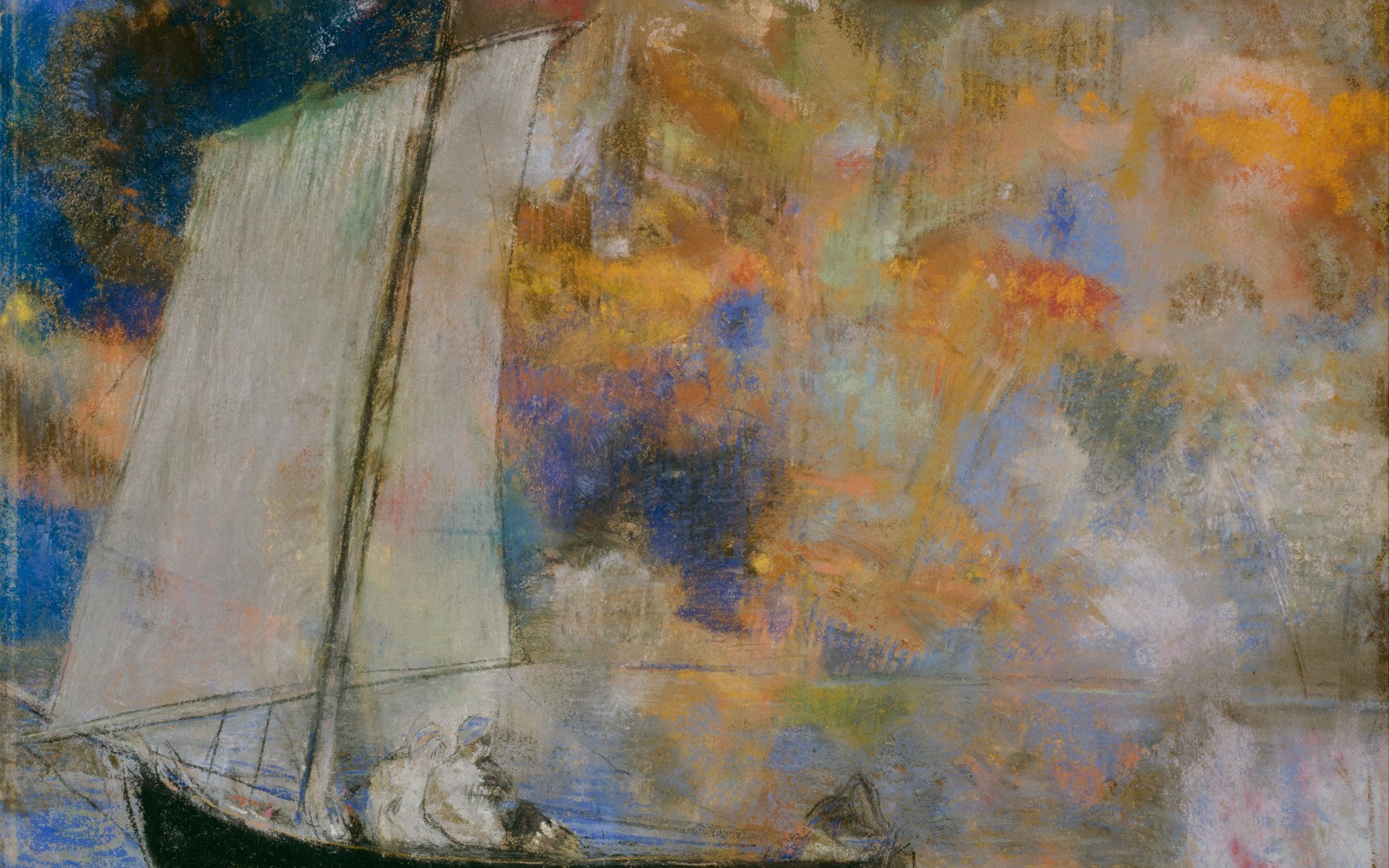
Odilon Redon - Flower Clouds - Google Art Project.jpg by Odilon Redon; Public domain via Wikimedia Commons. Cropped for TheHistoryOfArt.org. · Image source
What to expect
Odilon Redon: Otherworldly Visions is a current Getty Center exhibition, running from 14 July to 18 October 2026 in the Museum West Pavilion on the Plaza Level. Getty presents the exhibition in English and Spanish and includes it with the free timed-entry reservation to the Center, while noting the separate parking fee. The show explores Redon's fantastical world through charcoal drawings, lithographs and pastels from Getty's collection, joined by loans from other institutions.
Getty frames Redon as an artist who moved between haunting darkness and luminous colour. That gives the page a strong structure: the early noirs, made in charcoal and other black media; the lithographs and print portfolios that turned literary and symbolic visions into reproducible images; and the later pastels and paintings in which Redon shifted toward vivid colour without abandoning dream, myth, apparition or inner life.
The official exhibition page names selected works including Baronne de Domecy, Light, Everywhere Eyeballs Are Aflame, Apparition, Head within an Aureole, The Battle of Bones, the hybrid Flaubert-inspired print Then There Appears a Singular Being, Having the Head of a Man on the Body of a Fish, and Orpheus. That range is useful because it prevents Redon from being reduced to a single strange image. The show is about a whole imaginative system.
Why go
The strongest reason to go is that Redon makes the boundary between looking and imagining feel unstable. His works can contain faces, eyes, skeletons, floating heads, mythic figures, flowers, shadowy spaces and colours that seem to detach from ordinary description. Yet the images are not random fantasies. Getty's press material points to religion, mythology, literature and modern science as sources of inspiration, and that mixture helps explain why Redon mattered to Symbolism and later dream-led modern art.
For readers used to painting-led museum routes, this exhibition is also valuable because it foregrounds works on paper. Charcoal, lithography and pastel behave differently from oil painting. Charcoal can create deep atmospheric blacks, erased light and unstable edges. Lithography can circulate strange images through portfolios and books. Pastel can make colour feel powdery, luminous and almost immaterial. A visit should therefore be as much about medium as subject.
The exhibition also gives the Getty Center a current page that feels different from the Reynolds, Holy Family and Joseph Wright entries. Those pages build the Getty's historic painting route; Redon adds drawings, prints, Symbolism, literature, science and the nineteenth-century imagination. That makes the museum page broader and gives Los Angeles a time-sensitive current exhibition before the autumn Getty cluster opens.
What to look for
Begin with black. Redon's noirs are not simply colourless works. Black becomes atmosphere, depth, pressure and possibility. In charcoal and lithography, shadow can hide form, produce apparitions or make a small mark feel psychologically large. Look for how a face or creature emerges from darkness rather than sitting cleanly on top of it.
Then look at eyes and heads. Redon often separates perception from ordinary bodies: an eye may float, a head may appear in a halo, or a face may seem more like a vision than a portrait. These motifs ask what it means to see. Is the viewer looking at an object, a dream, a thought, a fear or a symbol? Redon's strength lies in keeping those categories open.
The literary sources are another route. Getty's press material highlights Redon's response to Gustave Flaubert's The Temptation of Saint Anthony. The point is not direct illustration. Redon used texts as imaginative triggers, creating images that feel related to literature without being locked into narrative explanation. That makes the works useful for future site content around mythology, Christianity, Symbolism and the crossing of art and literature.
Finally, compare darkness with colour. Redon's later pastels can look like a complete break from the earlier black works, but Getty's framing suggests continuity as well as change. The subjects may become more floral, radiant or luminous, but the sense of inwardness remains. Colour does not make the work less mysterious; it changes the emotional temperature of the mystery.
How it fits the Getty and Los Angeles
This page strengthens the Getty Center cluster by adding a current exhibition that is active now, not only upcoming. It also gives the museum a works-on-paper and Symbolist route. The Getty Center should not read only as architecture, gardens and European painting; its drawings and prints programme can carry serious art-historical content too.
For Los Angeles planning, the exhibition is time-sensitive because it closes on 18 October 2026. It can be paired with the Getty's drawings galleries, current talks, the GettyGuide audio tour, the publication attached to the show and the wider Center visit. Readers should still check Getty's source before travelling for reservations, events, access details and any schedule changes.
Image and rights note
Redon died in 1916, so the underlying historical works are promising from a public-domain perspective, but Getty installation, press and collection images still need source and credit review. Getty's selected works include strong candidates such as The Battle of Bones, Baronne de Domecy and Everywhere Eyeballs Are Aflame. This page remains image-free until a lead image is explicitly approved, and any later image should avoid implying checklist completeness beyond the official source.
How to use this page
Because Odilon Redon: Otherworldly Visions is current, the page should help a reader decide whether it deserves time before the closing date, not merely record that it exists. The most reliable fixed details are the venue, dates, broad subject, media and official source link. The interpretive notes help place the exhibition in art-historical context: what kind of show it is, why it may matter, and which artists or topics are worth exploring next.
It is marked as a major exhibition in this guide, so it should be useful for readers choosing between several possible museum visits.
Looking notes
For a visitor, the most useful approach is to look for patterns rather than isolated highlights. With Odilon Redon, Symbolism, noirs, Gustave Flaubert, mythology, literature, modern science, ask how the exhibition frames the subject: as biography, period survey, focused theme, collection display or reassessment. With media such as charcoal drawing, lithograph, pastel, works on paper, print portfolio, pay attention to changes of scale, surface, lighting, material and display sequence, because those details are often lost in online listings.
The guide avoids over-specific claims where the public source does not yet support them. If a museum has not published a full object list, it is better to stay clear about what is confirmed than to imply certainty.
Who it is best for
Odilon Redon: Otherworldly Visions is most likely to help readers who are already interested in Odilon Redon, Symbolism, noirs, Gustave Flaubert, mythology, literature, and modern science, but it may also be useful for visitors building a wider route around Getty Center in Los Angeles. If time is limited, use this page to decide whether the subject fills a gap in your knowledge, whether it connects to artists you already follow, and whether the official venue information makes the visit practical.