by Tom Gurney
Tom Gurney BSc (Hons) is an art history expert with over 20 years experience
Published on July 14, 2026 / Updated on July 16, 2026
Email: tomgurney1@gmail.com / Phone: +447429011000
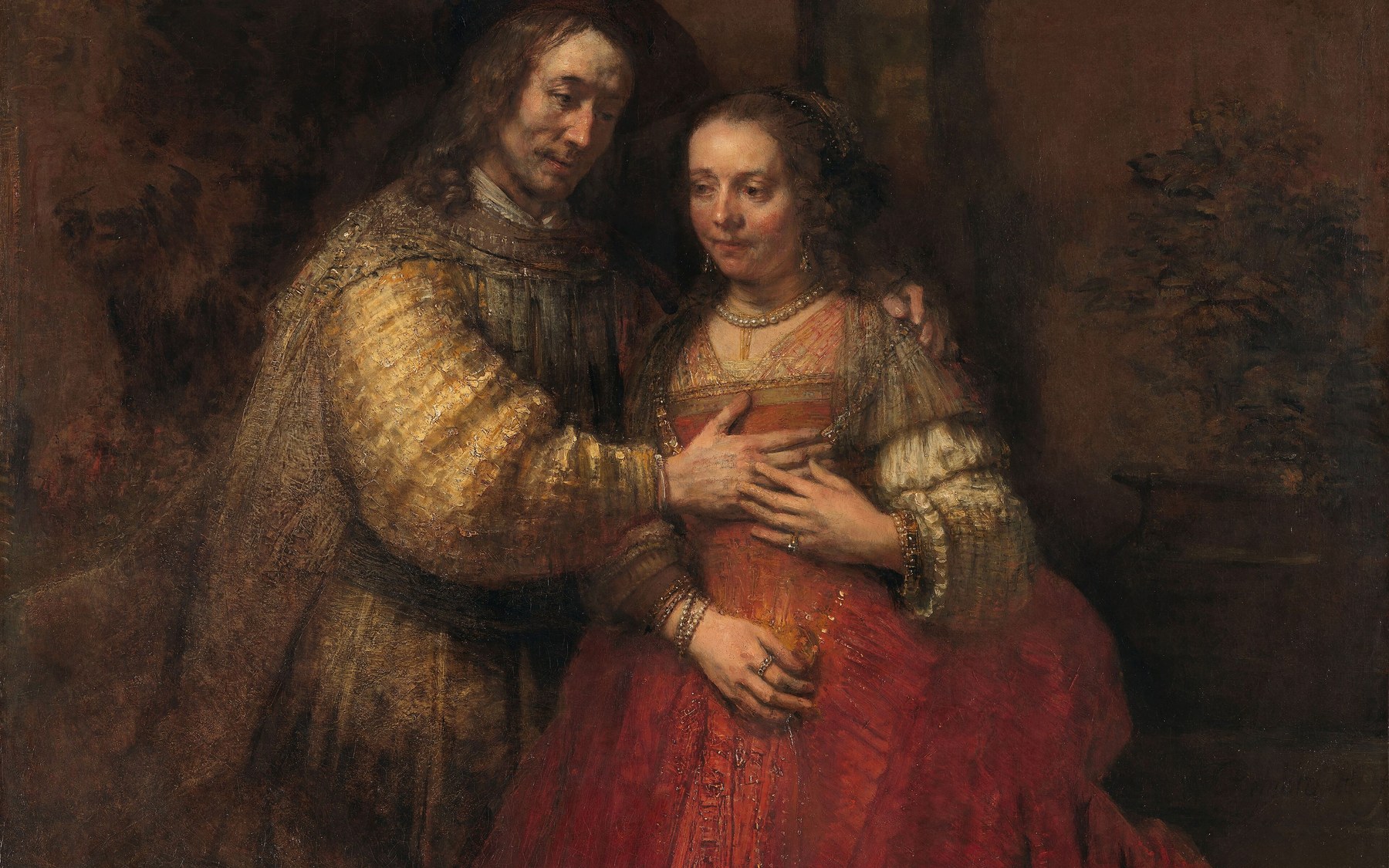
Rembrandt, The Jewish Bride, c. 1665; public-domain image via Wikimedia Commons · Image source
What to expect
Reality and Imagination: Rembrandt and the Jews in the Dutch Republic is a current MFA Boston exhibition in the William A. Coolidge Gallery, the Center for Netherlandish Art's Gallery for Innovative Scholarship, Gallery 243A. The exhibition is centred on the visual culture of the Dutch Republic in the seventeenth century, with Rembrandt van Rijn and his circle used as a route into a wider subject: Jewish patrons, collectors, neighbours, subjects and ritual objects in and around Amsterdam.
The official MFA page describes Jews as critical participants in the Dutch Republic's artistic culture. It notes that Rembrandt lived in the heart of Amsterdam's Jewish district, received commissions from Jewish neighbours, incorporated Jewish figures into biblical scenes and depicted Jewish sitters or character types in studies. That framing is important because it moves the page beyond the familiar single-artist question. The exhibition is not only about what Rembrandt imagined. It is also about the people, objects, religious practices and collecting habits that shaped a mixed urban culture.
The display is organised by the MFA's Center for Netherlandish Art in collaboration with a Boston University seminar of undergraduate and graduate students. That gives the exhibition a research-gallery character rather than a large retrospective structure. MFA identifies material from its Dutch art and Judaica holdings, including paintings and prints by Rembrandt and his school and one of the oldest surviving pairs of Dutch silver Torah finials, or rimonim. Readers should therefore expect a focused display where paintings, prints and ritual objects carry the argument together.
Why go
The strongest reason to go is that the exhibition makes seventeenth-century Dutch art feel socially specific. Rembrandt can become an isolated genius in popular art history, detached from the streets, households, religious communities and markets around him. This exhibition works against that isolation. It asks how a painter in Amsterdam encountered Jewish neighbours, how biblical subjects could be informed by living models and local knowledge, and how Jewish collectors and patrons belonged to the same visual economy as other inhabitants of the Dutch Republic.
That social frame is especially useful because Dutch Golden Age art often appears in museum routes through genre scenes, still lifes, portraits and landscapes. Those categories are helpful, but they can flatten religious diversity if they are treated as neutral everyday life. The MFA's framing reminds visitors that the Dutch Republic included Sephardic and Ashkenazi Jewish communities whose public visibility, legal position, commerce, scholarship and ritual life helped shape the urban world in which art was made and collected.
The Judaica material matters just as much as the Rembrandt name. Torah finials are not supporting props for paintings; they are ritual objects with their own materials, functions and community histories. Placing silver rimonim near paintings and prints should encourage visitors to think across categories. A museum object can be devotional, ceremonial, artistic, historical and social at the same time. That is exactly the kind of cross-disciplinary route that makes a small gallery display worth a standalone guide page.
What to look for
Begin with the difference between reality and imagination. The title is a useful warning. Some works may reflect actual Jewish neighbours, patrons, collectors or ritual objects; others may show biblical figures, imagined types or studio character studies shaped by artistic convention. A careful visitor should ask what kind of evidence each object offers. Is it a portrait, a study, a print, a ritual object, a biblical scene, a later attribution, or a work by Rembrandt's school?
Then look at faces and costume without rushing to identify them. Rembrandt's biblical and character studies often depend on expressive heads, textured clothing, ageing skin, shadow and inwardness. When Jewish identity enters the discussion, the stakes become higher. The exhibition should help readers distinguish between documented Jewish sitters or patrons and broader seventeenth-century pictorial conventions. That distinction prevents the page from turning visual shorthand into overconfident biography.
Prints are another important route. Rembrandt's prints circulated differently from paintings: they could be collected, compared, handled and studied by a wider network of viewers. Etching also allowed Rembrandt to test light, line, texture and narrative concentration with unusual flexibility. In a display about Jewish participation in Dutch visual culture, prints can show how images moved through markets and scholarly circles, not only how paintings hung in rooms.
Finally, give the Judaica time. Silver Torah finials carry questions of craft, ritual use, patronage, inscription, synagogue life and survival. Their presence can make the exhibition less painter-centred in the best way. Look for how the museum labels connect object function to community visibility. A pair of rimonim should not be reduced to decorative silver; they belong to the lived religious culture that the exhibition is trying to recover.
How it fits MFA Boston
This page strengthens the MFA Boston cluster because it gives the museum a distinctive scholarly route. The museum is broad enough to risk sounding generic: European painting, American art, Asian art, prints, textiles, antiquities and more. A focused Rembrandt-and-Judaica exhibition gives the Boston page sharper identity. It shows that the MFA can support specialised Dutch and Flemish art history while also bringing Judaica and academic collaboration into the same public gallery.
For readers already using the site for Rembrandt, this exhibition connects naturally to future internal routes around portraiture, biblical subjects, etching, Dutch Golden Age collecting and Jewish themes in art history. It also supports the museum page's practical route planning: someone visiting MFA Boston for European painting can pair Gallery 243A with the wider Dutch and Flemish holdings, Judaica displays and other collection galleries rather than treating the exhibition as a detached stop.
For travel planning, the exhibition is current and time-sensitive, with MFA public listings placing it on view into late November 2026. Because MFA pages visible around the exhibition present date wording in more than one form, readers should check the official source before making a special trip, especially for holiday hours, gallery access, ticketing, talks and any late schedule changes.
Image and rights note
The image prospects are comparatively good because Rembrandt and seventeenth-century Dutch Judaica are historic subjects, but the most relevant MFA installation, object and collection images still need source and credit review. A future image review should separate public-domain Rembrandt or school-of-Rembrandt images from MFA-specific photographs and should avoid implying that a representative image appears in the exhibition unless the official page, object record or checklist supports it. This page remains image-free until a lead image is explicitly approved.
How to use this page
Because Reality and Imagination: Rembrandt and the Jews in the Dutch Republic is current, the page should help a reader decide whether it deserves time before the closing date, not merely record that it exists. The most reliable fixed details are the venue, dates, broad subject, media and official source link. The interpretive notes help place the exhibition in art-historical context: what kind of show it is, why it may matter, and which artists or topics are worth exploring next.
It is listed as a recommended exhibition rather than a headline major show, so the main value is a focused subject, strong venue context or a useful route into related artists.
Looking notes
For a visitor, the most useful approach is to look for patterns rather than isolated highlights. With Rembrandt, Dutch Golden Age, Amsterdam Jewish district, Dutch Judaica, Center for Netherlandish Art, ask how the exhibition frames the subject: as biography, period survey, focused theme, collection display or reassessment. With media such as painting, print, judaica, torah finials, works on paper, pay attention to changes of scale, surface, lighting, material and display sequence, because those details are often lost in online listings.
The guide avoids over-specific claims where the public source does not yet support them. If a museum has not published a full object list, it is better to stay clear about what is confirmed than to imply certainty.
Who it is best for
Reality and Imagination: Rembrandt and the Jews in the Dutch Republic is most likely to help readers who are already interested in Rembrandt, Dutch Golden Age, Amsterdam Jewish district, Dutch Judaica, and Center for Netherlandish Art, but it may also be useful for visitors building a wider route around Museum of Fine Arts Boston in Boston. If time is limited, use this page to decide whether the subject fills a gap in your knowledge, whether it connects to artists you already follow, and whether the official venue information makes the visit practical.