by Tom Gurney
Tom Gurney BSc (Hons) is an art history expert with over 20 years experience
Published on July 14, 2026 / Updated on July 16, 2026
Email: tomgurney1@gmail.com / Phone: +447429011000
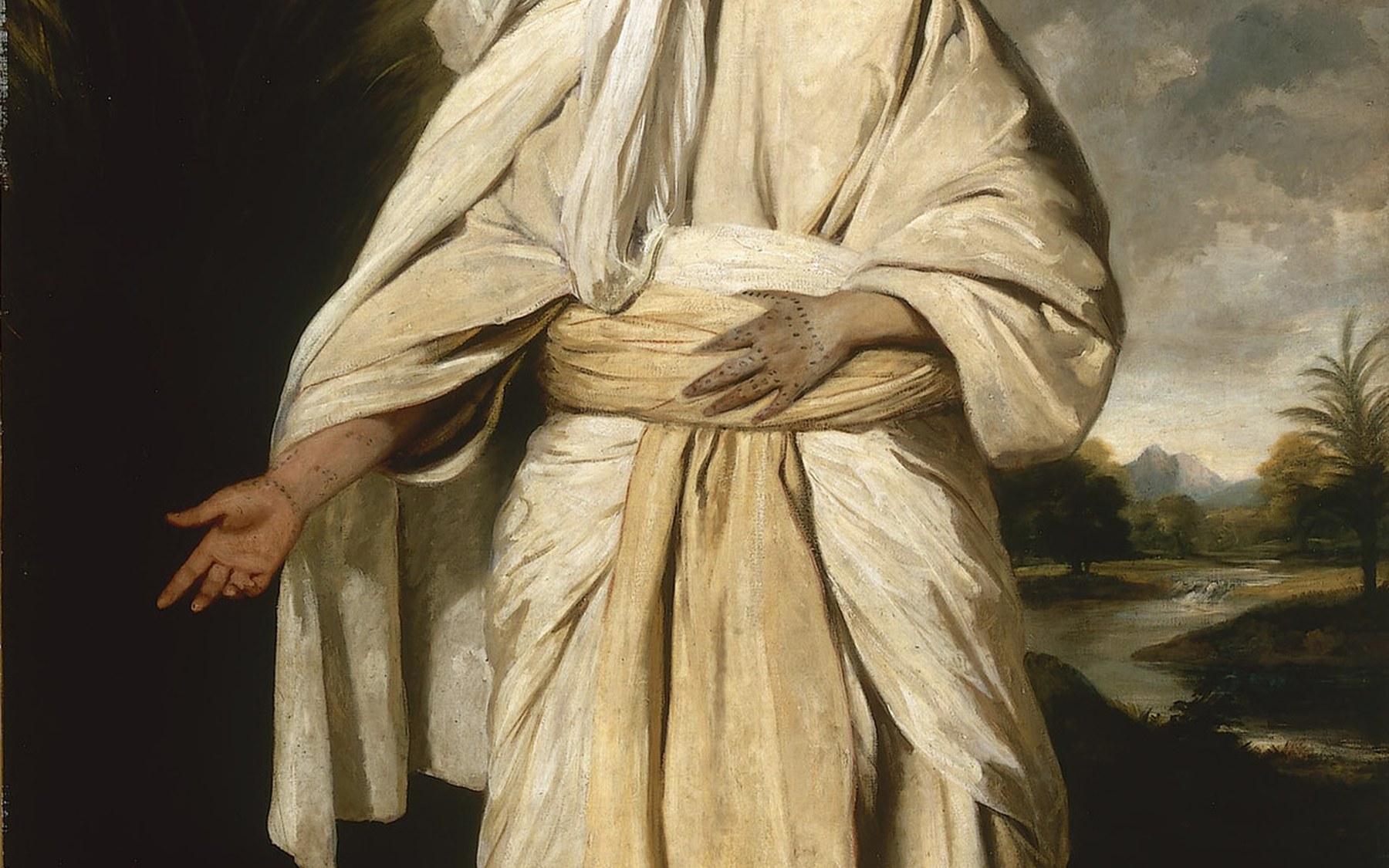
Joshua Reynolds, Portrait of Omai, c. 1776; public-domain image via Wikimedia Commons · Image source
What to expect
Joshua Reynolds's Portrait of Mai and 18th-Century Portraiture is an upcoming Getty Center collection-highlights exhibition, scheduled from 15 September 2026 to 14 March 2027 in the Museum West Pavilion on the Plaza Level. Getty lists it as free with a timed-entry reservation to the Center, while noting the separate parking fee. The exhibition is presented in English and Spanish and marks the US debut of Sir Joshua Reynolds's Portrait of Mai, a work jointly acquired by the J. Paul Getty Trust and the National Portrait Gallery, London.
The official Getty page describes the display as a selection of painted and sculpted portraits by artists including Gainsborough, Goya and David. Its subject is the interplay of status, character and identity in an age of global encounter. That phrase matters because Portrait of Mai is not only a celebrated British portrait. It is a painting made within eighteenth-century systems of travel, empire, celebrity, collecting and social display.
Mai, also known historically in Britain as Omai, was the first Polynesian visitor to Great Britain. Getty describes Reynolds's full-length portrait as a compelling image of him and notes that the format was traditionally reserved for the European elite. Reynolds therefore used a convention associated with aristocratic status while representing a Pacific visitor whose presence in London was shaped by exploration, colonial contact and public fascination. The result is both visually commanding and historically complicated.
Why go
The strongest reason to go is that the exhibition turns one major portrait into a broader question about portraiture itself. What does a portrait do when it gives status? What happens when a sitter is presented through European conventions that were not designed for his world? How does pose, costume, scale, gesture and setting shape the viewer's understanding of identity?
The painting's history makes those questions sharper. Getty's acquisition material states that Mai travelled from Tahiti to England with Captain James Cook, spent 1774 to 1776 in London, was received by royalty and intellectual circles, returned to his homeland in 1777 and died two years later. Reynolds painted him at the height of his powers, and the portrait was exhibited at the Royal Academy in 1776. Those facts make the work more than a likeness. It is an image made at a moment when Britain was imagining the Pacific through travel, science, collecting, empire and spectacle.
The exhibition's comparative frame should also be useful. Gainsborough, Goya and David each bring different approaches to eighteenth-century portraiture: elegance, psychology, political theatre, public identity and the relation between individual likeness and social role. Mai's portrait can sit among those works not as an isolated curiosity, but as a challenge to the conventions they share.
What to look for
Begin with scale. Getty's earlier acquisition statement describes the painting as nearly eight feet high. Full-length portraiture at that scale was a language of power, rank and public presence. Reynolds gives Mai the bodily command of a grand portrait, which means the viewer should ask how dignity is constructed: through size, pose, gesture, drapery, background and the way the figure occupies space.
Then look at the pose. Getty's acquisition statement notes that Mai's pose and hand gestures were probably inspired by the Apollo Belvedere, one of the most admired antique sculptures of the period. That classical reference is important. It means Reynolds was not simply recording a visitor from the Pacific; he was filtering Mai through European ideals of nobility, beauty and antique authority. The portrait therefore asks the viewer to hold admiration and caution together.
Costume is another key route. Getty notes flowing robes, a tapa bark-cloth sash and a headdress, while also observing that Mai is known to have worn British clothes while in London. That makes the costume a pictorial construction rather than a neutral document. A visitor should ask what the clothing is doing: making Mai legible as exotic, noble, classical, Pacific, theatrical or all of those at once.
Finally, compare the surrounding portraits. If the display includes Gainsborough, Goya and David, look for the different ways eighteenth-century portraiture manages status. Does a sitter command by birth, by intellect, by costume, by military or political role, by beauty, or by the painter's ability to make an individual seem historically significant? Mai's portrait is powerful because it exposes those mechanisms while also depending on them.
How it fits the Getty and Los Angeles
This page strengthens the Getty Center cluster because it gives the museum a major eighteenth-century portraiture anchor alongside the Joseph Wright and Holy Family pages. Together, those Getty pages cover portraiture, light, devotion and the museum's European painting route, while also making Los Angeles feel like a serious Old Master destination rather than only a modern or contemporary art city.
For practical planning, this is the earliest of the three upgraded Getty exhibitions, opening on 15 September 2026. It can be paired naturally with the Center's paintings galleries and with the museum's architecture, gardens and views, but readers should still check Getty's official source before travelling for timed-entry reservations, access information, gallery changes and any related talks or tours.
Image and rights note
The existing representative lead image is a public-domain Commons version of Reynolds's Portrait of Omai. Getty's official page uses the preferred title Portrait of Mai and credits the joint Getty/National Portrait Gallery acquisition with a National Portrait Gallery photograph. The current image can remain as a cautious historic subject anchor, but any Getty/NPG image should wait for source and credit approval. Copy should also preserve the title distinction between the historic "Omai" usage and Getty's preferred "Mai" wording.
How to use this page
Because Joshua Reynolds's Portrait of Mai and 18th-Century Portraiture is upcoming, the page should help a reader decide whether to plan a future trip or watch for reviews and final venue details. The most reliable fixed details are the venue, dates, broad subject, media and official source link. The interpretive notes help place the exhibition in art-historical context: what kind of show it is, why it may matter, and which artists or topics are worth exploring next.
It is marked as a major exhibition in this guide, so it should be useful for readers choosing between several possible museum visits.
Looking notes
For a visitor, the most useful approach is to look for patterns rather than isolated highlights. With Joshua Reynolds, Mai, Gainsborough, Goya, David, 18th-century portraiture, global encounter, ask how the exhibition frames the subject: as biography, period survey, focused theme, collection display or reassessment. With media such as painting, pay attention to changes of scale, surface, lighting, material and display sequence, because those details are often lost in online listings.
The guide avoids over-specific claims where the public source does not yet support them. If a museum has not published a full object list, it is better to stay clear about what is confirmed than to imply certainty.
Who it is best for
Joshua Reynolds's Portrait of Mai and 18th-Century Portraiture is most likely to help readers who are already interested in Joshua Reynolds, Mai, Gainsborough, Goya, David, 18th-century portraiture, and global encounter, but it may also be useful for visitors building a wider route around Getty Center in Los Angeles. If time is limited, use this page to decide whether the subject fills a gap in your knowledge, whether it connects to artists you already follow, and whether the official venue information makes the visit practical.