by Tom Gurney
Tom Gurney BSc (Hons) is an art history expert with over 20 years experience
Published on July 14, 2026 / Updated on July 16, 2026
Email: tomgurney1@gmail.com / Phone: +447429011000
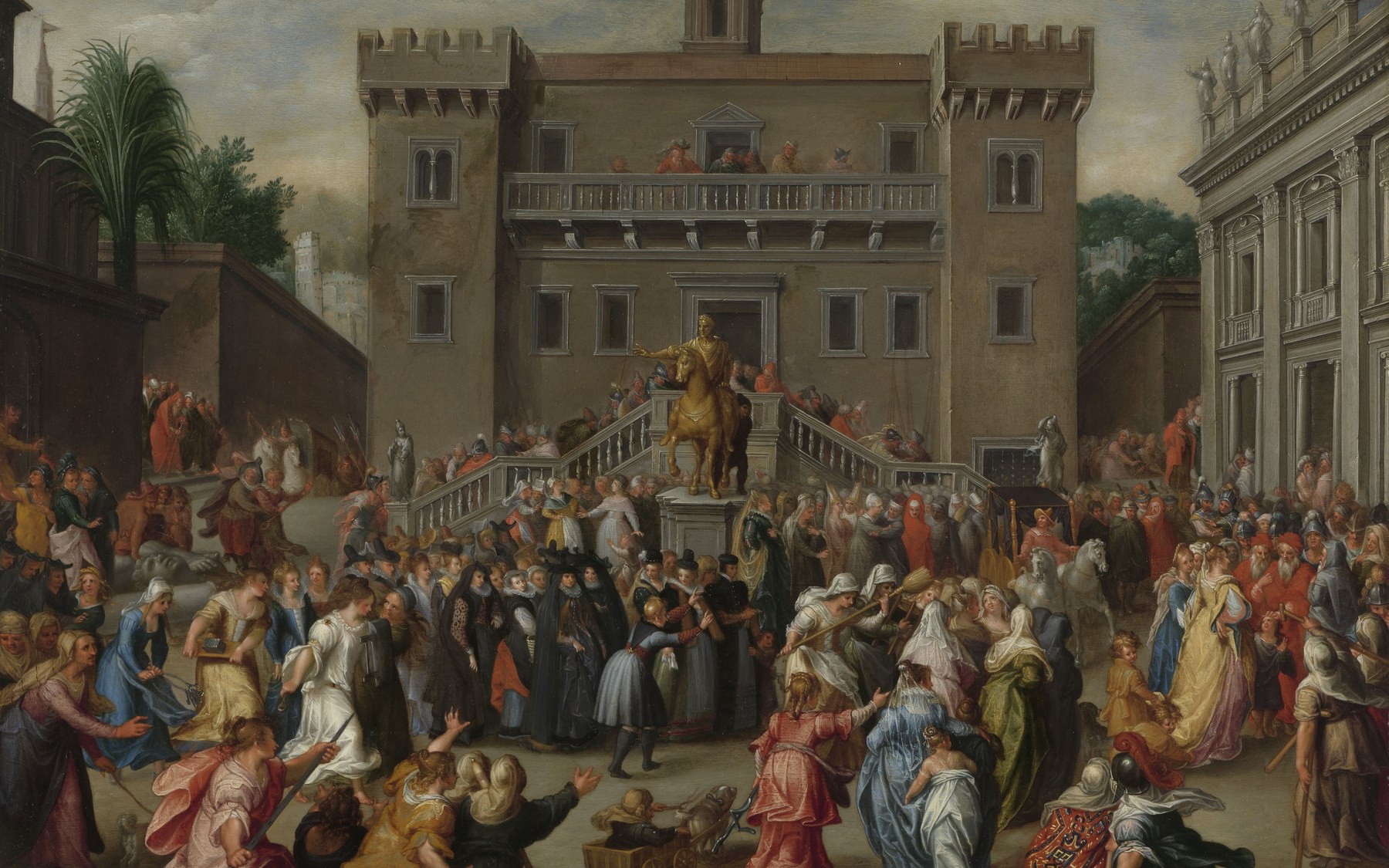
De oploop van de Romeinse vrouwen op het Capitool in Rome De oploop der Romeinse vrouwen op het Kapitool te Rome na het optreden van de kleine Papirius, SK-A-1720.jpg by Pieter Isaacsz; CC0 via Wikimedia Commons. Cropped for TheHistoryOfArt.org. · Image source
What to expect
Women of the Rijksmuseum was a March 2026 Rijksmuseum programme rather than a conventional single-gallery loan exhibition. That distinction is important. The official Rijksmuseum page describes a month filled with workshops, guided tours and talks, all designed to bring women in Dutch art and history to the foreground. For this guide, the page is worth preserving as an archived exhibition-programme record because it connects museum visiting, collection interpretation, public research and the wider question of how major museums rewrite their own inherited narratives.
The programme named figures including Rachel Ruysch, Judith Leyster, Kenau Hasselaar and Thérèse Schwartze, and invited visitors to think about women in history, on the canvas and behind the work. It also linked to the Rijksmuseum's broader Women of the Rijksmuseum working group, which researches, publishes, acquires and interprets material connected to women in the collection. That makes this record different from an object-count blockbuster. Its importance lies in the way a national museum uses tours, talks, workshops and audio interpretation to change what visitors notice in familiar rooms.
The official page gave practical examples. Visitors could join a talk with authors and scholars Janina Ramirez and Jacqueline Klooster about women in history and mythology, take part in figure-drawing workshops in the museum's Main Hall at weekends, or use the Rijksmuseum app for the Women in art and history audio tour. The programme also pointed out how easily famous collection stories can hide women in plain sight: Maria van Reigersbergh and Hugo de Groot's escape, Rachel Ruysch's unusually high earning power, and the long under-recognition of women artists and historical actors.
Why keep the archive
Although the March 2026 programme has ended, it belongs in the archive because it records a durable change in how the Rijksmuseum presents itself. The museum is best known internationally through Rembrandt, Vermeer, Frans Hals, the Gallery of Honour and the Dutch Golden Age. Those routes remain essential, but a women-focused programme asks readers to look again at the same institution from a different angle. Who made art? Who collected it? Who paid for it? Who preserved it? Who appears in pictures, and who was left unnamed?
The strongest value for readers is methodological. A museum can alter public understanding not only by acquiring a masterpiece or mounting a major exhibition, but also by changing labels, guided routes, teaching, research priorities and the stories attached to existing objects. Women of the Rijksmuseum shows that interpretation itself is a museum activity. It makes the collection less static and gives visitors a way to move through familiar rooms with different questions.
It is also useful for the Amsterdam and Netherlands clusters because it gives the Rijksmuseum page a human-history route, not just a famous-painting route. Rachel Ruysch opens questions about women artists, scientific looking, flower painting and the market for still life. Judith Leyster opens Haarlem painting, genre scenes and the problem of attribution. Thérèse Schwartze opens nineteenth-century portraiture, professional ambition and visibility. Kenau Hasselaar and Maria van Reigersbergh widen the scope from artists to women acting in civic, political and domestic history.
What to look for
If using this archived page to plan a future Rijksmuseum visit, start with the permanent collection rather than looking for a single vanished installation. The point is to ask how women appear across the museum. Are they makers, sitters, donors, collectors, patrons, family members, political actors, workers, mythological figures, saints, consumers, historians or conservators? One object may show a woman as subject; another may have been made, owned or preserved by a woman whose role is easier to miss.
Then look for the difference between visibility and agency. A woman can be highly visible in a painting without controlling the terms of her representation. A woman artist can be less visible on the wall while having shaped a genre, market or workshop practice. The best route through the Rijksmuseum will keep those questions separate. Being depicted is not the same thing as making, commissioning, collecting or interpreting art.
Works connected to Rachel Ruysch and Judith Leyster are especially strong anchors because they resist the assumption that women were peripheral to early modern art. Ruysch's flower paintings combine botanical knowledge, commercial skill and visual brilliance. Leyster's reputation was long distorted by attribution problems and the dominance of male names in Dutch painting. Seeing them inside the Rijksmuseum can sharpen how readers think about the mechanisms of canon formation.
The programme also encourages attention to museum labour. Behind the work can mean conservation, research, education, archives, acquisition committees and the long administrative effort that makes public display possible. That is a useful reminder for a museum guide. A visit is shaped by the artworks, but also by the people who frame them for visitors.
How it fits the Rijksmuseum and Amsterdam
This page strengthens the Rijksmuseum record by balancing the existing de Kooning route with a less image-rights-risky and more collection-wide route. The museum's current page already points readers toward Rembrandt and Vermeer; this archived programme asks them to open the same building through gender, representation and research. That makes Amsterdam feel less like a list of famous highlights and more like a city where collection histories are actively being revised.
For practical use, readers should treat this as an archive and a route-builder. The March 2026 events have passed, so official booking details no longer apply in the usual way. The lasting value is the Rijksmuseum app tour, women-focused research pages, collection records and future programming connected to the Women of the Rijksmuseum project. Before travelling, readers should check the museum's current What's On pages to see whether related tours, talks or displays are still available.
The page also has strong future reader interest. It can later connect to Rachel Ruysch, Judith Leyster, Dutch flower painting, Haarlem genre painting, women artists, patronage, art education, collection history, and Amsterdam as a centre of artistic and scientific publishing. It also supports future improvements around art schools, master-to-apprentice systems, themes in art and how international ideas move across borders.
Image and rights note
This page remains image-free. The safest later image route is likely a reviewed public-domain or Rijksmuseum-licensed work by a historic woman artist, such as a Rachel Ruysch or Judith Leyster object record, rather than programme photography or workshop imagery. Any modern event photograph, app screenshot or contemporary programme image needs separate source and credit approval. A representative image should be captioned carefully so it supports the Women of the Rijksmuseum theme without claiming to document a specific March 2026 event unless the official source confirms it.
How to use this page
Because Women of the Rijksmuseum has ended, the page should function as an archive record and a route into related artists, works and venues. The most reliable fixed details are the venue, dates, broad subject, media and official source link. The interpretive notes help place the exhibition in art-historical context: what kind of show it is, why it may matter, and which artists or topics are worth exploring next.
It is listed as a recommended exhibition rather than a headline major show, so the main value is a focused subject, strong venue context or a useful route into related artists.
Looking notes
For a visitor, the most useful approach is to look for patterns rather than isolated highlights. With Women of the Rijksmuseum, Rachel Ruysch, Judith Leyster, Kenau Hasselaar, Thérèse Schwartze, Maria van Reigersbergh, women artists, women in Dutch history, ask how the exhibition frames the subject: as biography, period survey, focused theme, collection display or reassessment. With media such as talks, guided tours, workshops, audio tour, collection programme, research, pay attention to changes of scale, surface, lighting, material and display sequence, because those details are often lost in online listings.
The guide avoids over-specific claims where the public source does not yet support them. If a museum has not published a full object list, it is better to stay clear about what is confirmed than to imply certainty.
Who it is best for
Women of the Rijksmuseum is most likely to help readers who are already interested in Women of the Rijksmuseum, Rachel Ruysch, Judith Leyster, Kenau Hasselaar, Thérèse Schwartze, Maria van Reigersbergh, women artists, and women in Dutch history, but it may also be useful for visitors building a wider route around Rijksmuseum in Amsterdam. If time is limited, use this page to decide whether the subject fills a gap in your knowledge, whether it connects to artists you already follow, and whether the official venue information makes the visit practical.