


 by Tom Gurney
Tom Gurney BSc (Hons) is an art history expert with over 20 years experience
Published on July 14, 2026 / Updated on July 16, 2026
Email: tomgurney1@gmail.com / Phone: +447429011000
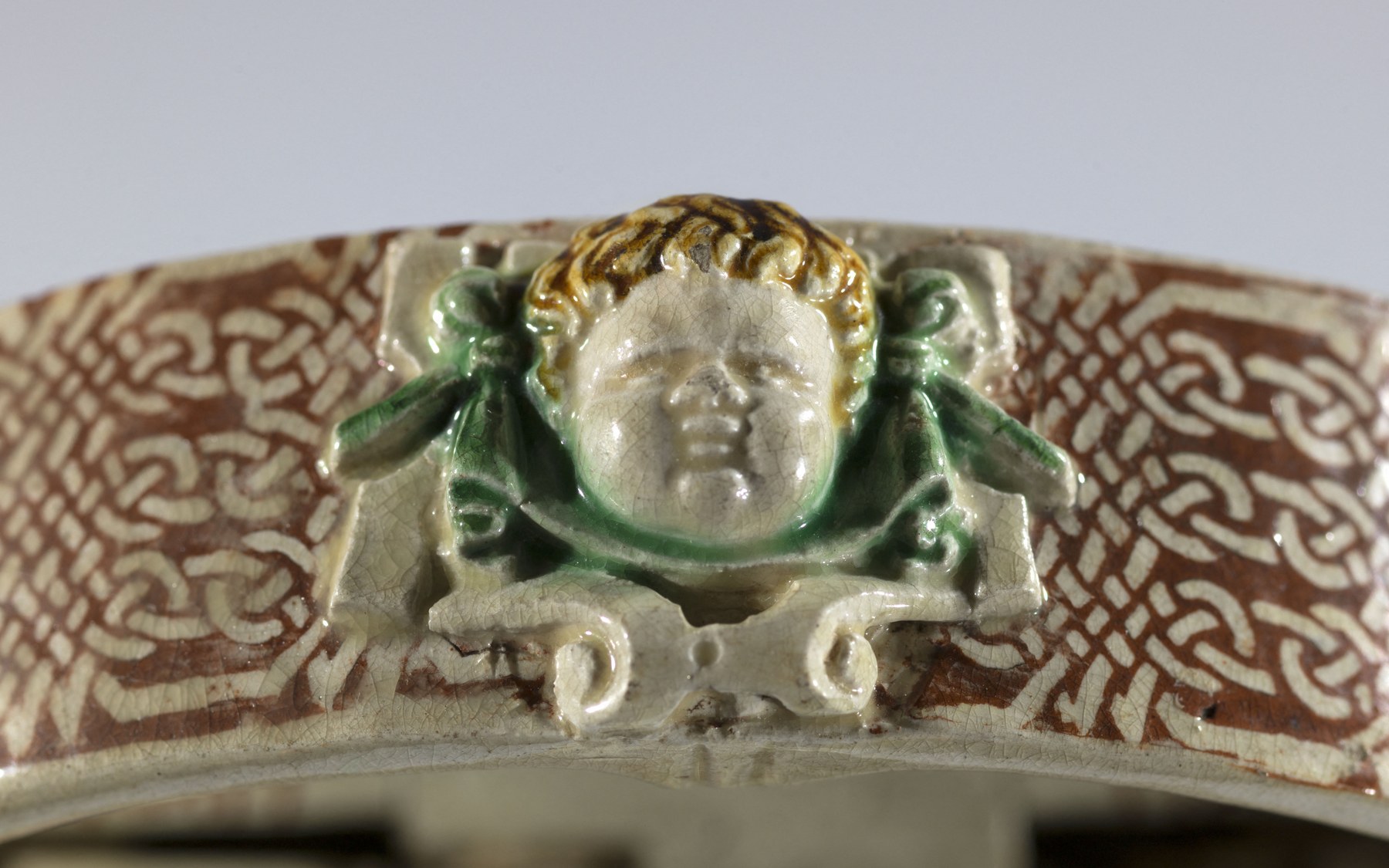
Aiguière, dite biberon, ODUT1127(5).jpg by Anonyme, céramiste; CC0 via Wikimedia Commons. Cropped for TheHistoryOfArt.org. · Image source
What to expect
Saint-Porchaire Ceramics: Rediscovered Treasures of the French Renaissance is a current Art Institute of Chicago special loan installation, running from 28 March to 15 November 2026 in Gallery 238. The official Art Institute page places it in the Deering Family Galleries of Medieval and Renaissance Art, Arms, and Armor and describes an exceptional group of Saint-Porchaire ceramics from a private collection, shown with related French Renaissance ceramics from the museum's own collection.
The subject is small in object count but large in rarity. The Art Institute states that only around 70 examples of Saint-Porchaire ceramics are known worldwide. These works were made between about 1520 and 1570 and are closely associated with the French royal courts of François I and Henri II. That combination gives the installation a strong reason to exist as a full guide page: it is not just a decorative-arts stop, but a chance to look closely at some of the most elusive luxury objects of the French Renaissance.
Saint-Porchaire ceramics are made from lead-glazed earthenware, but the effect is far from ordinary pottery. Their forms can echo precious metalwork, and their surfaces carry intricate ornament drawn from textiles, bookbinding and other luxury arts. The Art Institute highlights courtly emblems of power, prestige and desire, including the interlaced cipher of Henri II and Diane de Poitiers. Visitors should therefore expect objects that sit between ceramic, sculpture, jewellery-like refinement, courtly display and historical puzzle.
Why go
The strongest reason to go is rarity. A large Renaissance painting exhibition can usually be supported by familiar names and visible masterpieces, but Saint-Porchaire ware is different. Its makers are not securely known, surviving examples are few, and many of the objects have complicated collection histories. That scarcity changes the kind of looking required. A visitor is not moving through a broad survey; the task is to slow down in front of small, concentrated objects whose importance depends on detail.
The installation is also valuable because it makes the decorative arts feel central to Renaissance culture. Painting and sculpture often dominate public accounts of the period, but courts also communicated status through vessels, table objects, textiles, bindings, armour, metalwork and ceramics. Saint-Porchaire ware belongs to that refined environment. Its patterns and forms suggest a world in which technical ingenuity, court emblem, personal desire and luxury taste all worked together.
The Diane de Poitiers connection gives the exhibition an especially useful historical route. Her association with Henri II and the French court has often been read through architecture, portraiture, emblems and patronage. Seeing her cipher or courtly symbols on ceramic objects reminds readers that Renaissance identity was not carried only by portraits. It could be embedded in initials, devices, materials and repeated ornamental systems that circulated through elite objects.
What to look for
Begin with scale. Saint-Porchaire ceramics can be physically modest but visually dense. A nef-shaped cup, ewer or covered vessel may need slow looking from several angles. The Art Institute's own page shows how interiors can matter as much as exteriors, including an interior view with the royal arms of France. Do not treat these works as silhouettes only. The inside, underside, handle, lip, foot, stem and joins may all carry important information.
Then look at ornament as structure. The decoration is not merely surface prettiness. Interlaced bands, stamped patterns, strapwork, heraldic devices and repeated marks help organise the object. They can make ceramic seem like metalwork, bookbinding or textile translated into another material. Ask whether the decoration follows the form, resists it, divides it into zones or makes the object feel deliberately jewel-like.
Material is another key route. Lead-glazed earthenware is not inherently prestigious in the way gold or silver is, yet Saint-Porchaire ceramics transform ceramic into a courtly luxury. That transformation is part of the fascination. The maker's skill lies in making clay behave as if it belongs to the world of precious objects, while still retaining the particular possibilities of ceramic modelling, glaze and fine surface work.
Finally, look for mystery without romanticising it. The Art Institute describes Saint-Porchaire ceramics as shrouded in mystery, and that is fair: questions remain around production, workshop location and patronage. But mystery should not become vagueness. The best visit will separate what is known from what is inferred: approximate dates, French court associations, surviving examples, private-collection histories, material evidence and stylistic comparisons.
How it fits the Art Institute of Chicago
This page broadens the Art Institute cluster beyond Impressionism, Cassatt and the best-known nineteenth-century route. That matters structurally. The Art Institute is not only a museum of French modernism and American icons; it also has serious holdings in medieval and Renaissance art, arms, armour and decorative arts. A Saint-Porchaire installation gives the Chicago page a compact but distinctive Renaissance materials route.
For practical planning, this is a small installation rather than a ticketed blockbuster. It should work best as part of a wider Art Institute visit: Gallery 238, the Deering Family Galleries, nearby arms and armour, Renaissance objects, and the museum's broader European collection. Readers visiting for Cassatt, Seurat, American art or Impressionism can use Saint-Porchaire as a change of scale: from painted modern life to small, courtly, technically exacting objects.
The page also supports future evergreen content. It connects naturally to ceramics, glazes, workshop mysteries, court patronage, emblems, luxury materials, Renaissance France, bookbinding patterns, metalwork influence and the relationship between decorative arts and power. Those themes fit the wider content-growth plan because they are pre-1950, image prospects are comparatively safer, and the art-historical material remains useful after the exhibition closes.
Image and rights note
The underlying objects are sixteenth-century and therefore promising from a historical-rights perspective, but the most relevant Art Institute exhibition photographs include private-collection objects and specific credit requirements. This page remains image-free until a lead image is explicitly approved. A future image review should prefer a reviewed public-domain or open institutional source where possible, and should not reuse private-collection installation images without source and credit approval.
How to use this page
Because Saint-Porchaire Ceramics: Rediscovered Treasures of the French Renaissance is current, the page should help a reader decide whether it deserves time before the closing date, not merely record that it exists. The most reliable fixed details are the venue, dates, broad subject, media and official source link. The interpretive notes help place the exhibition in art-historical context: what kind of show it is, why it may matter, and which artists or topics are worth exploring next.
It is listed as a recommended exhibition rather than a headline major show, so the main value is a focused subject, strong venue context or a useful route into related artists.
Looking notes
For a visitor, the most useful approach is to look for patterns rather than isolated highlights. With Saint-Porchaire ceramics, French Renaissance, François I, Henri II, Diane de Poitiers, court culture, ask how the exhibition frames the subject: as biography, period survey, focused theme, collection display or reassessment. With media such as lead-glazed earthenware, ceramics, decorative arts, luxury arts, metalwork-inspired forms, pay attention to changes of scale, surface, lighting, material and display sequence, because those details are often lost in online listings.
The guide avoids over-specific claims where the public source does not yet support them. If a museum has not published a full object list, it is better to stay clear about what is confirmed than to imply certainty.
Who it is best for
Saint-Porchaire Ceramics: Rediscovered Treasures of the French Renaissance is most likely to help readers who are already interested in Saint-Porchaire ceramics, French Renaissance, François I, Henri II, Diane de Poitiers, and court culture, but it may also be useful for visitors building a wider route around Art Institute of Chicago in Chicago. If time is limited, use this page to decide whether the subject fills a gap in your knowledge, whether it connects to artists you already follow, and whether the official venue information makes the visit practical.

.jpg)