


 by Tom Gurney
Tom Gurney BSc (Hons) is an art history expert with over 20 years experience
Published on July 14, 2026 / Updated on July 16, 2026
Email: tomgurney1@gmail.com / Phone: +447429011000
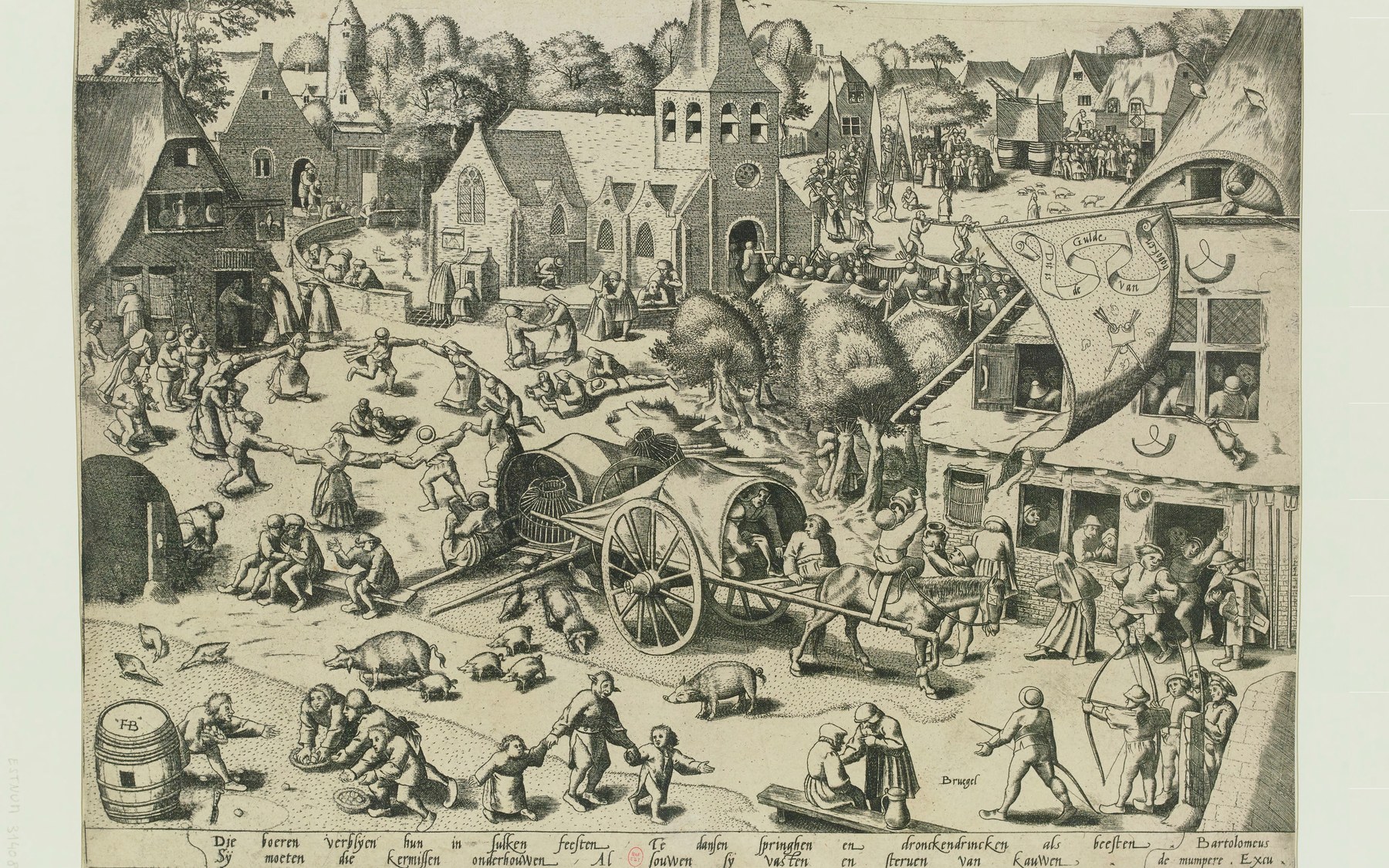
Bruegel, Pieter 1 (drawing) - Hogenberg (engraver) - Kermis at Hoboken.jpg by Pieter Brueghel the Elder / Frans Hogenberg; Public domain via Wikimedia Commons. Cropped for TheHistoryOfArt.org. · Image source
What to expect
Bruegel. Printed is a current Städel Museum exhibition in Frankfurt focused on Pieter Bruegel the Elder as a designer of prints. The Städel newsroom places it in the Exhibition Hall of the Department of Prints and Drawings from 18 June to 20 September 2026. That location matters: this is not a painting blockbuster, but a works-on-paper exhibition about how Bruegel’s imagination circulated through printmaking.
The official press text says the exhibition brings together around 45 exceptional prints based on Bruegel’s drawings. Although Bruegel is often remembered first as a painter, he made his reputation early through print designs made in collaboration with the Antwerp publisher Hieronymus Cock and Cock’s wife, Volcxken Diericx. The Städel’s own Dutch print holdings form the foundation of the display, with additional loans from the Albertina in Vienna and the Staatliche Graphische Sammlung in Munich.
Why go
The exhibition is valuable because it treats printmaking as central, not secondary. Bruegel’s printed inventions travelled widely and helped build his reputation beyond the reach of individual painted panels. A visitor who knows The Hunters in the Snow or the peasant paintings can use this show to meet a different Bruegel: the storyteller whose images could be multiplied, sold, collected, interpreted and passed through European visual culture.
Prints also suit Bruegel’s intelligence. His images often reward close looking because they are crowded with incident, humour, proverb, landscape, moral tension and odd detail. The Städel names subjects ranging from broad landscapes to secular and religious allegories and scenes of everyday life. That range gives the page a strong art-history reason to exist: it connects Bruegel to publishing, collaboration, replication and the public life of images.
What to look for
Begin with the relation between invention and execution. Many of the prints are based on Bruegel’s drawings but were etched or engraved by other hands, including Jan and Lucas van Doetecum, Pieter van der Heyden and Philipp Galle. That means the image is not simply “by Bruegel” in the modern painterly sense. It is a collaborative object: designed, translated, engraved, printed, published and circulated.
Then slow down over detail. In a Bruegel print, the joke or meaning may sit in a corner, a gesture, a tiny figure or an unexpected relation between foreground and background. Works such as The Big Fish Eat the Little Fish, Everyman, Sloth, Temperance and Patience show how moral ideas could be made visual without becoming dry diagrams. Allegory and everyday comedy are often entangled.
The landscape prints are another route. Bruegel’s reputation as a pictorial inventor depends partly on how he made space feel broad, populated and psychologically alive. A print can carry an enormous world on a small sheet. That compression is part of the pleasure: the eye moves between tiny events and large structures, between comic human behaviour and a landscape that seems to keep unfolding.
How it fits the Städel and Frankfurt
This gate adds Germany and Frankfurt to the museums and exhibitions cluster, which is useful for the broader international plan. The Städel is an especially good first German venue because its collection spans Old Masters, modern art and a major Department of Prints and Drawings. A Bruegel print exhibition lets the museum enter the guide through a historic, lower-rights-risk subject rather than through contemporary material.
For Frankfurt planning, the exhibition is current and time-sensitive, closing on 20 September 2026. The Städel ticket pages indicate that regular timed tickets cover current special exhibitions and the permanent collection, but readers should still check the Städel source before travelling for current admission, access, opening hours and any changes.
Image and rights note
The image prospects are promising because the subject is sixteenth-century printmaking and several official press images identify individual public-domain works. The page remains image-free until Tom chooses and approves a source and credit path. Städel press images carry editorial-use and no-editing restrictions, so any final lead should use a reviewed open or otherwise publication-safe source rather than relying casually on press downloads.
How to use this page
Because Bruegel. Printed is current, the page should help a reader decide whether it deserves time before the closing date, not merely record that it exists. The most reliable fixed details are the venue, dates, broad subject, media and official source link. The interpretive notes help place the exhibition in art-historical context: what kind of show it is, why it may matter, and which artists or topics are worth exploring next.
It is marked as a major exhibition in this guide, so it should be useful for readers choosing between several possible museum visits.
Looking notes
For a visitor, the most useful approach is to look for patterns rather than isolated highlights. With Pieter Bruegel the Elder, Hieronymus Cock, Volcxken Diericx, Dutch prints, Antwerp publishing, ask how the exhibition frames the subject: as biography, period survey, focused theme, collection display or reassessment. With media such as print, engraving, etching, works on paper, allegory, landscape, pay attention to changes of scale, surface, lighting, material and display sequence, because those details are often lost in online listings.
The guide avoids over-specific claims where the public source does not yet support them. If a museum has not published a full object list, it is better to stay clear about what is confirmed than to imply certainty.
Who it is best for
Bruegel. Printed is most likely to help readers who are already interested in Pieter Bruegel the Elder, Hieronymus Cock, Volcxken Diericx, Dutch prints, and Antwerp publishing, but it may also be useful for visitors building a wider route around Städel Museum in Frankfurt. If time is limited, use this page to decide whether the subject fills a gap in your knowledge, whether it connects to artists you already follow, and whether the official venue information makes the visit practical.
_-_Hogenberg_(engraver)_-_Kermis_at_Hoboken.jpg)