by Tom Gurney
Tom Gurney BSc (Hons) is an art history expert with over 20 years experience
Published on July 14, 2026 / Updated on July 16, 2026
Email: tomgurney1@gmail.com / Phone: +447429011000
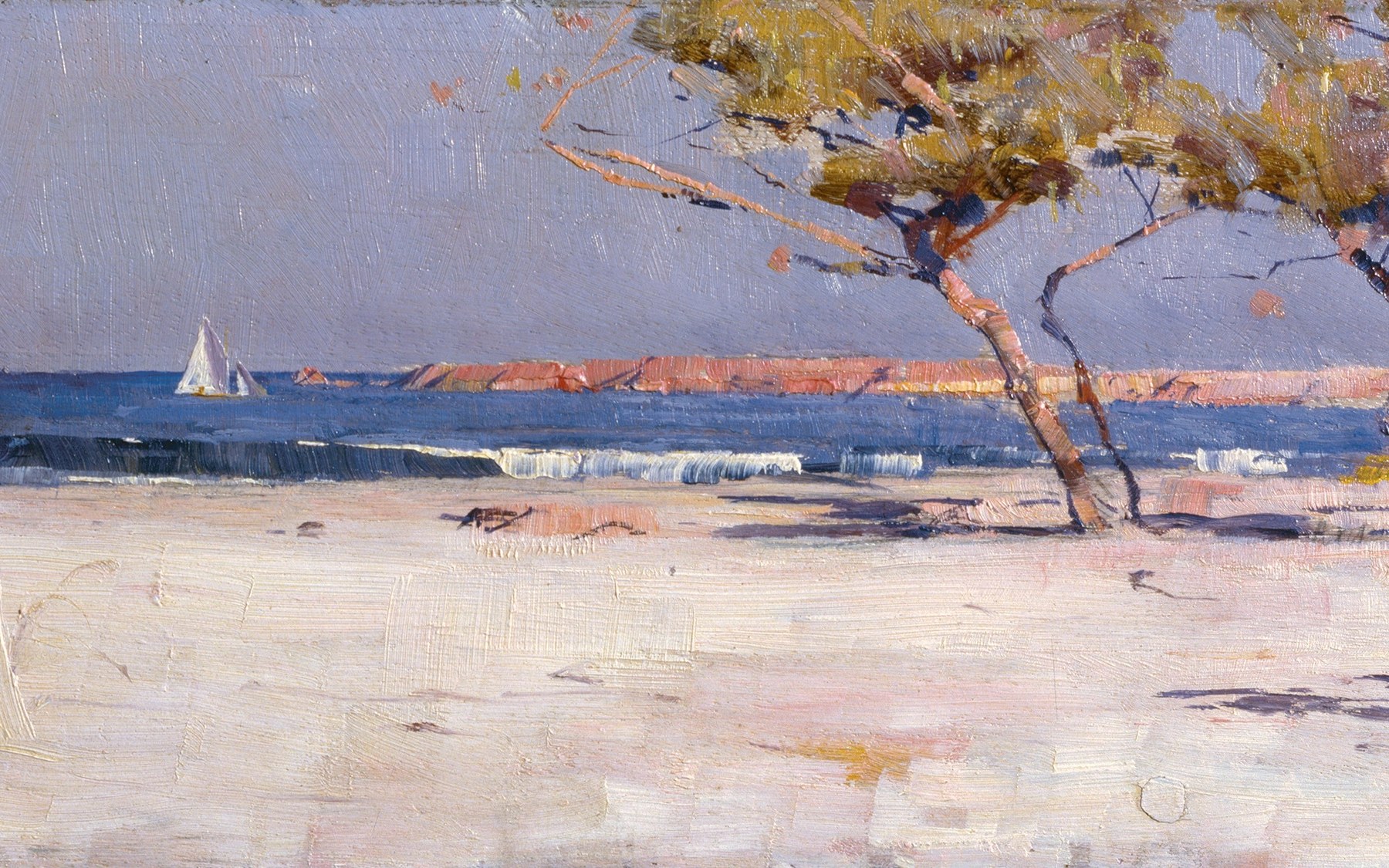
Arthur Streeton Ariadne 1895.jpg by Arthur Streeton; Public domain via Wikimedia Commons. Cropped for TheHistoryOfArt.org. · Image source
What to expect
Streeton was an Art Gallery of New South Wales exhibition in Sydney, shown from 7 November 2020 to 14 February 2021. Because it has now closed, this page is an archive record rather than a current visit page. It is included because the official AGNSW record describes it as the first Arthur Streeton retrospective in 25 years and the most comprehensive since his lifetime survey at the Art Gallery of New South Wales in 1931.
The official page states that the exhibition presented more than 150 works from 42 public and private collections, including some works not exhibited for more than a century. That scale gives the page a strong reason to sit beside the NGV Australia Impressionism records already in the guide. Melbourne gives the Australian Impressionism cluster its movement-history and national-school context; Sydney adds a major single-artist retrospective centred on Streeton, harbour light, Australian landscape, international travel and environmental concern.
Streeton is often remembered through sunlit landscape: blue distances, heat, water, beaches, harbour views and the shimmer of open air. AGNSW's framing kept those qualities visible while widening the story. It looked at his sun-drenched Impressionist landscapes from the 1880s, joyful depictions of Sydney beaches and harbour in the 1890s, expansive pastoral scenes from the 1920s and 1930s, and works made during 25 years of international painting in Egypt, England, Italy and on the battlefields of France during the First World War.
Why it mattered
The strongest reason to preserve this archive page is that it gives Streeton the scale of a life rather than the shorthand of a style. A visitor who knows him only through Australian Impressionism can miss how long, varied and mobile his career was. The AGNSW exhibition appears to have treated the familiar early landscapes as one part of a larger career, not as the whole achievement.
That wider view matters because Streeton helped create images that still shape how many Australians imagine environment, light and place. AGNSW's own wording says his paintings continue to shape an image of Australia's unique environment for many Australians. That influence is powerful, but it needs careful reading. Streeton's landscapes can feel open, radiant and national, yet they also belong to histories of settlement, land use, tourism, urban growth and environmental change. The page should help readers admire the paintings while asking what kind of Australia they made visible.
Sydney is central to that question. Streeton's paintings of beaches, harbour and coastal life are not just pleasant scenes. They form part of a modern image of Sydney as water, leisure, distance and light. When seen from an AGNSW perspective, the retrospective makes the city more than a location for display. Sydney becomes part of Streeton's subject and part of the way the museum tells Australian art history.
The environmental thread is especially important. AGNSW notes that in the last two decades of his life Streeton expressed deep concern for the preservation of the natural environment, including paintings that lament the logging of old-growth forests. That gives the retrospective contemporary force. It prevents the sunlit landscape from becoming pure nostalgia and connects Streeton's late work to conservation issues that remain unresolved.
What to look for in the archive record
Begin with light, but do not stop there. Streeton's great gift was his ability to make distance, heat, glare and air feel pictorially active. In early Australian Impressionist works, light is not simply illumination; it is structure, mood and argument. It changes how land and water are perceived. A good archive reading should ask how Streeton builds space through colour, horizon, shadow and tonal compression.
Then compare Sydney with inland and pastoral subjects. Beaches and harbour scenes can feel social and modern, shaped by leisure, movement and changing urban life. Pastoral scenes can appear more expansive and national, but they also involve labour, land ownership and the transformation of environment. Streeton's art often moves between lyricism and possession, pleasure and claim. That tension is part of why the work remains compelling.
The international section is another key route. AGNSW emphasises Streeton's 25 years painting internationally in Egypt, England, Italy and France. Those works complicate the idea of him as a purely Australian landscape painter. They show an artist moving through empire, war, travel and European art worlds. The First World War material in particular changes the emotional register: light and land no longer mean only leisure or national optimism.
The retrospective's online resources also matter. AGNSW preserved exhibition labels, curator audio, a documentary and a 360-degree virtual visit. Those resources make the archive page unusually useful, even after the exhibition closed. They allow readers to follow themes, hear curatorial voices and understand why specific works mattered in the hang. For this guide, that makes the page a genuine research and planning record rather than just a date entry.
How it fits Sydney and Australia
This page adds Sydney to the Australia cluster through the Art Gallery of New South Wales. That broadens the section in a useful way. Melbourne currently carries NGV International, NGV Australia and several Australian Impressionism archive records. Sydney now has its own anchor through Streeton, whose work links Australian Impressionism, Sydney Harbour, beach culture, pastoral vision, international travel, war art and conservation.
For current planning, the exhibition has ended and should not be used for tickets or opening hours. Its value is archival and connective. It shows why AGNSW is a natural future venue for Australian art coverage, and it gives the Sydney page a serious first route rather than a generic city overview. Future AGNSW pages can expand into Aboriginal and Torres Strait Islander art, Asian art, contemporary Australian practice, the Archibald Prize and broader collection highlights.
The page also creates internal-link opportunities for Arthur Streeton, Australian Impressionism, Tom Roberts, Charles Conder, Frederick McCubbin, Sydney Harbour, 9 by 5 Impression Exhibition, Heidelberg School, war art, environmental conservation, old-growth forests and the relationship between landscape painting and national identity.
Image and rights note
Streeton died in 1943, so many underlying works are promising from an artist-copyright perspective. However, AGNSW photography, private loans, virtual-tour imagery, media stills, exhibition documentation and collection images may carry specific reuse conditions. This page remains image-free until a reviewed source and credit route is selected.
How to use this page
Because Streeton has ended, the page should function as an archive record and a route into related artists, works and venues. The most reliable fixed details are the venue, dates, broad subject, media and official source link. The interpretive notes help place the exhibition in art-historical context: what kind of show it is, why it may matter, and which artists or topics are worth exploring next.
It is marked as a major exhibition in this guide, so it should be useful for readers choosing between several possible museum visits.
Looking notes
For a visitor, the most useful approach is to look for patterns rather than isolated highlights. With Arthur Streeton, Australian Impressionism, Sydney Harbour, Sydney beaches, Hawkesbury River, Egypt, England, Italy, First World War, environmental conservation, old-growth forests, Art Gallery of New South Wales, Wayne Tunnicliffe, Still glides the stream and shall for ever glide, ask how the exhibition frames the subject: as biography, period survey, focused theme, collection display or reassessment. With media such as painting, landscape painting, seascape, pastoral scene, war art, oil painting, exhibition labels, audio guide, virtual exhibition, pay attention to changes of scale, surface, lighting, material and display sequence, because those details are often lost in online listings.
The guide avoids over-specific claims where the public source does not yet support them. If a museum has not published a full object list, it is better to stay clear about what is confirmed than to imply certainty.
Who it is best for
Streeton is most likely to help readers who are already interested in Arthur Streeton, Australian Impressionism, Sydney Harbour, Sydney beaches, Hawkesbury River, Egypt, England, Italy, First World War, environmental conservation, old-growth forests, Art Gallery of New South Wales, Wayne Tunnicliffe, and Still glides the stream and shall for ever glide, but it may also be useful for visitors building a wider route around Art Gallery of New South Wales in Sydney. If time is limited, use this page to decide whether the subject fills a gap in your knowledge, whether it connects to artists you already follow, and whether the official venue information makes the visit practical.