


 by Tom Gurney
Tom Gurney BSc (Hons) is an art history expert with over 20 years experience
Email: tomgurney1@gmail.com / Phone: +44 7429 011000
Overview
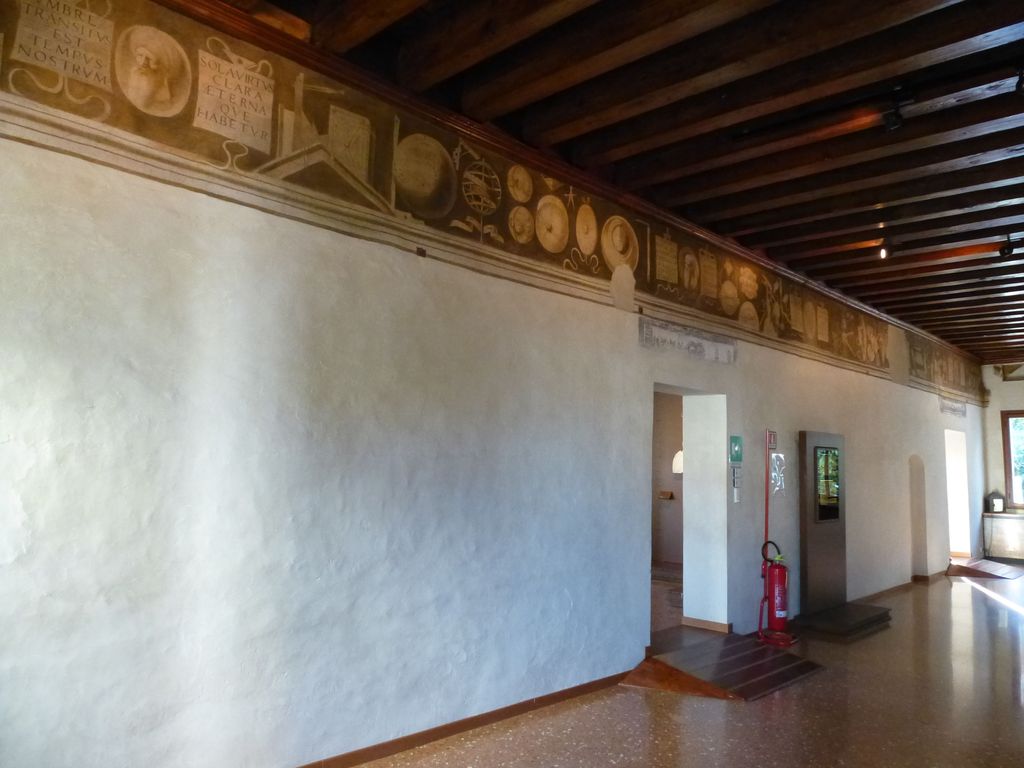
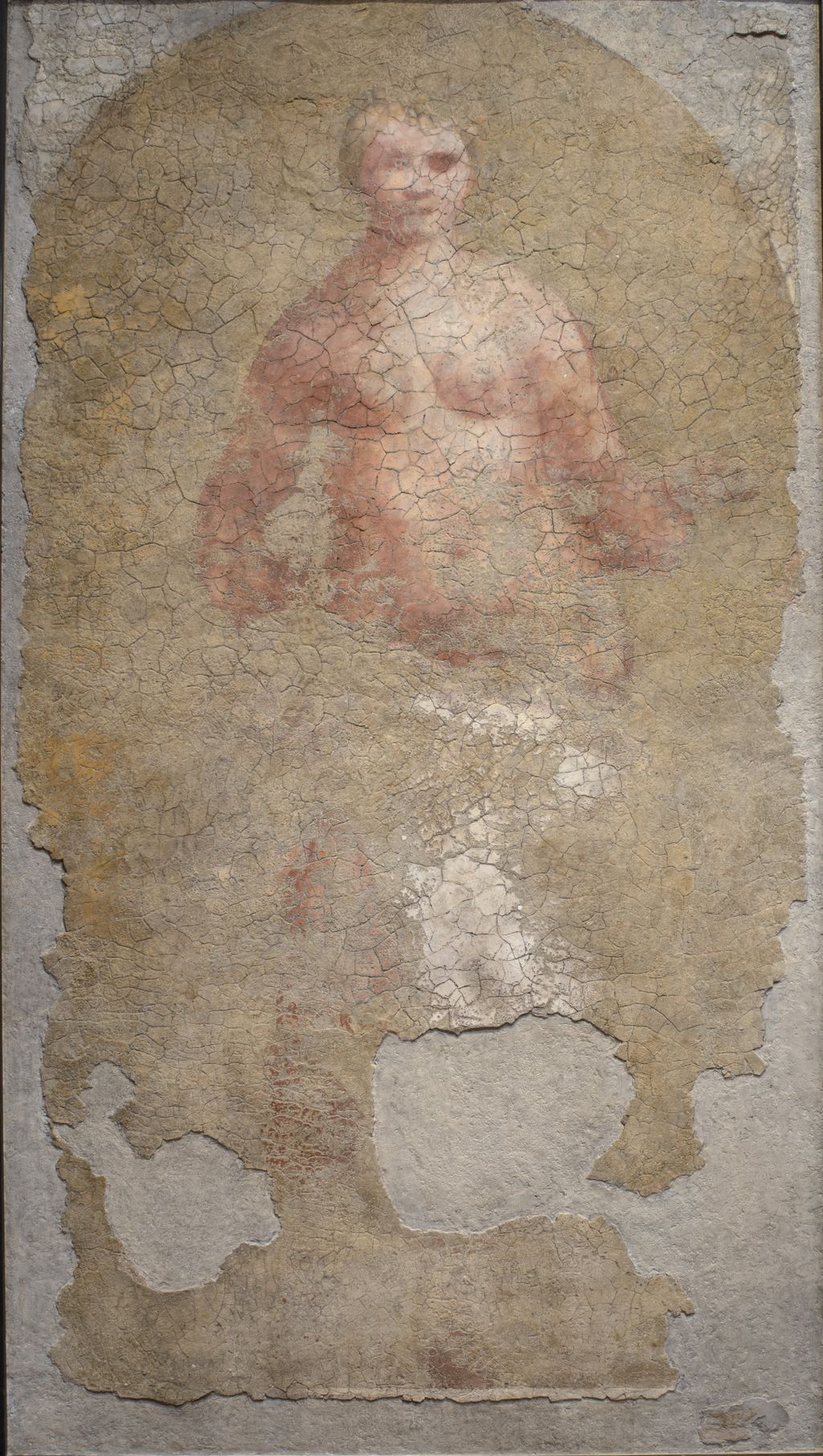
Above eye level in a room at Castelfranco Veneto, a measuring instrument, a heap of armour and a silent lute share the same narrow strip of wall. The domestic setting makes it possible to walk past the objects and come back to them from the other side of the room. The Frieze of the Liberal and Mechanical Arts occupies the two long walls of the main upstairs room of Casa Marta-Pellizzari, now the Museo Casa Giorgione. The east strip, traditionally associated with Giorgione, runs for 15.88 metres and is about 77 centimetres high. The west strip is nearly as long. A difference in the plaster supports the museum's view that the west wall was a later addition by another hand. The east wall is generally associated with Giorgione and usually placed around 1502–03, with both date and authorship debated. [1] [2] [3]
At a Glance
- Datec.1502–03 proposed
- CollectionMuseo Casa Giorgione, Castelfranco Veneto
- AttributionEast wall associated with Giorgione; west wall later
Seeing two walls in one room
Across the east wall there are objects that appear to have been set down within reach. Books lie open, pointed implements turn at angles, and musical instruments look as if they have just been left in a corner. Roundels with heads and cartouches with words provide an intermittent punctuation. From across the room it is easy to think of the whole thing as a continuous architectural strip. Stand closer and crane up at the objects and you see that the painter was just as interested in discrete encounters. A book, a pair of dividers and a cartouche can occupy the same stretch without becoming part of a continuous scene populated with figures. [1] [2]
The narrow height of the strip also makes the use of colour important. The municipality describes yellow earth, highlights in lead white and brown strokes of shading. Light and dark allow one object to look as if it projects from the wall and another to seem tucked behind it. Their textures and the way they cast painted shadows have to do the work that separate colours might have done. The effect can recall the inlaid woodwork of Renaissance rooms, where a door or cupboard painted or inlaid in perspective could seem to offer an unexpected depth. The wall at Castelfranco can suggest the contents of a whole study while making use of less than a metre beneath the ceiling. [2] [3]
The west strip answers the east with its own accumulation of armour, musical instruments, a water clock, a funerary mask, the head of Medusa and a horse's skull. It also includes objects associated with riding, navigation and metalwork. The same methods of grouping recur in a different programme. The plaster distinction noted by the museum matters because a visual rhyme between the walls cannot establish a common author. The known history begins much later than we might want. The museum identifies the eighteenth-century local historian Nadal Melchiori as the first to attribute the frieze to Giorgione. The house's name commemorates the artist and a local tradition. It cannot settle whether he lived here or why the room was decorated. [1] [2]
Arithmetic
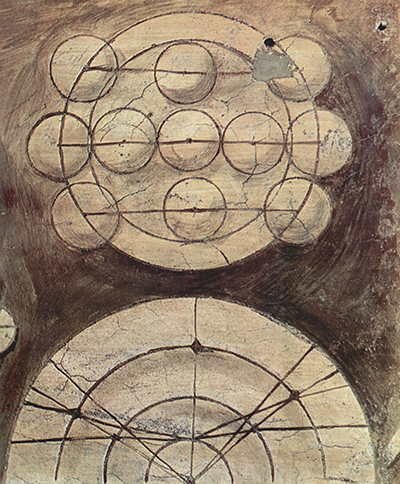
Arithmetic belongs to the traditional quadrivium alongside geometry, music and astronomy. One surviving detail shows several circles fitted together within wider curved lines, with further arcs in the figure below. On the east wall, the painted books and diagrams suggest study while compasses, squares and rules suggest how a reader could put some of that knowledge to work. The instruments were also useful far outside the classroom. A length divided on a rule could be carried over into a drawing. Dividers could transfer measured intervals from one surface to another. The frieze puts these tools next to open pages and astronomical signs, so that moving from looking at an object to imagining what someone could do with it is part of the experience. The surviving decoration offers no separate, securely titled personification of Arithmetic. It makes number and measure visible through the objects. [1] [2] [3]
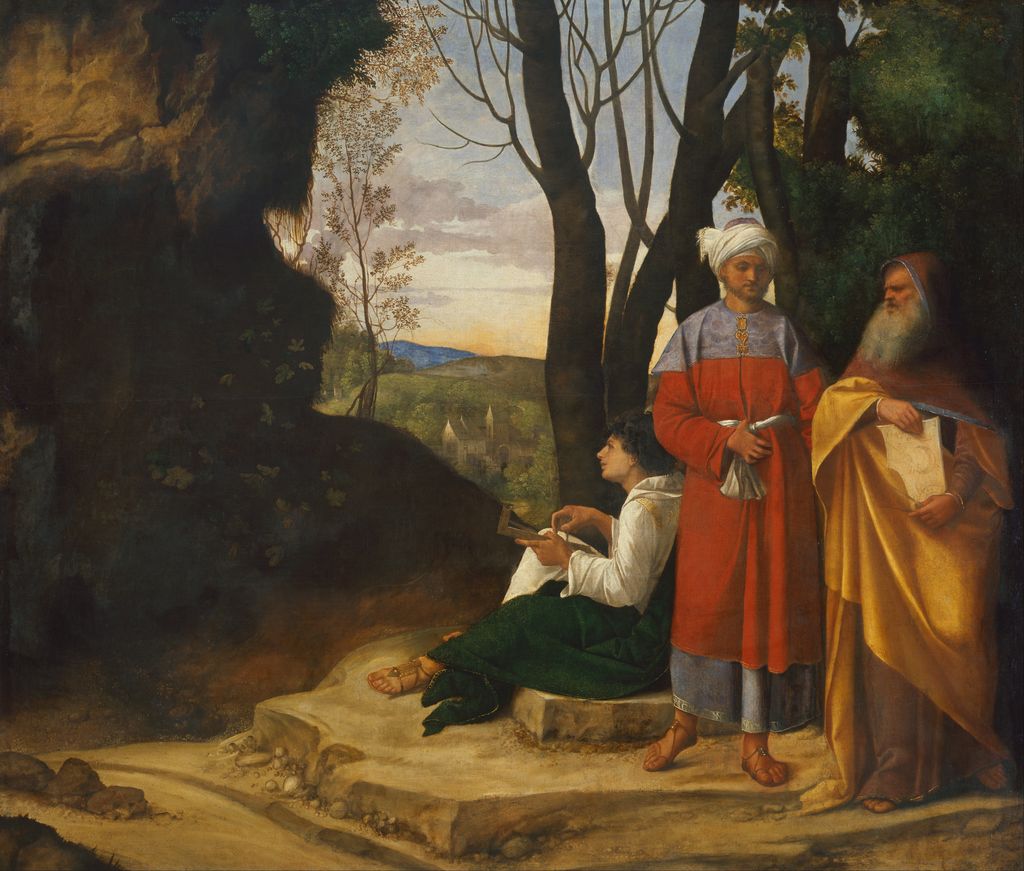
The museum's account emphasises a sequence of books, instruments and geometrical diagrams. In this view, celestial prediction requires learned interpretation as well as material evidence, and the tools are important precisely because they might let a person test or illustrate a theory. Book, sphere and dividers share space. They can suggest the relationship between knowledge in print and knowledge worked out with the fingers. In the Three Philosophers a page and other means of observation contribute to differences between the people holding them. The Castelfranco frieze has very few people involved in the use of its tools, which gives the spectator unusual freedom to inspect their placement before deciding which activity they imply. [1] [2] [4]

Armour
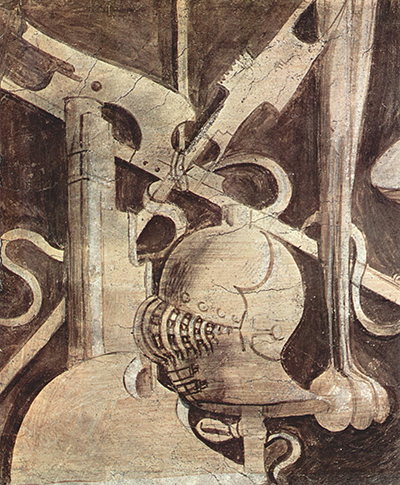
The east wall brings together two trophies of discarded arms and armour. Consider the change from a square or a compass laid out for a person to take up to the equipment that makes a soldier recognisable at a distance. A selection of such things can form an emblem of victory. Here the fact that the pieces are vacant or set aside introduces a more troubled possibility. The museum's interpretation reads their combination with nearby moral sayings as a turn away from straightforward celebration of war and toward the struggle to master oneself. A different line of enquiry takes them as part of a predicted period of conflict. Both approaches have to account for the decision to show the implements as trophies without supplying a clearly identifiable victor. [1] [2] [5]
The weapons on the later west wall help test the relation. They bring armour back into view amid other forms of work and equipment, closer to harness and the hardware of travel or construction. A painted figure with a helmet would give those objects an immediate social meaning. The portrait in Vienna associated with Francesco Maria della Rovere lets us compare a person taking on the weight of military rank with the pared-down presentation of an empty helmet or armour. A loose object on the Castelfranco wall can be a reference to making, ownership or military ambition without committing us to a specific campaign. [1] [2] [6]
Globe, Moon and Sun
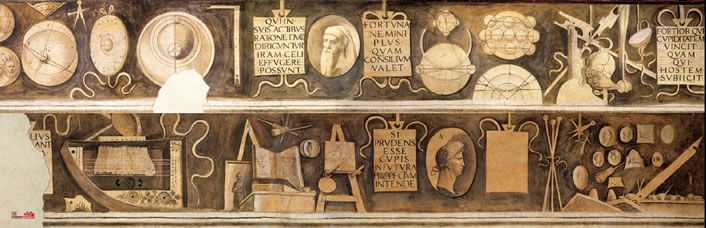
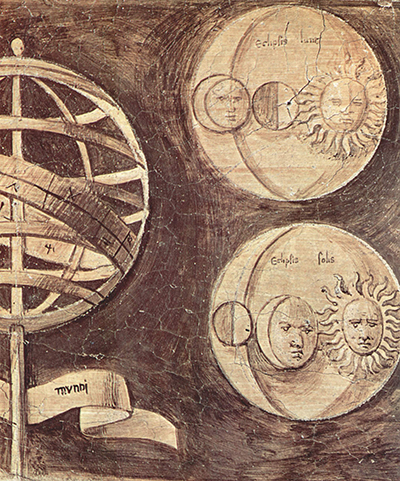
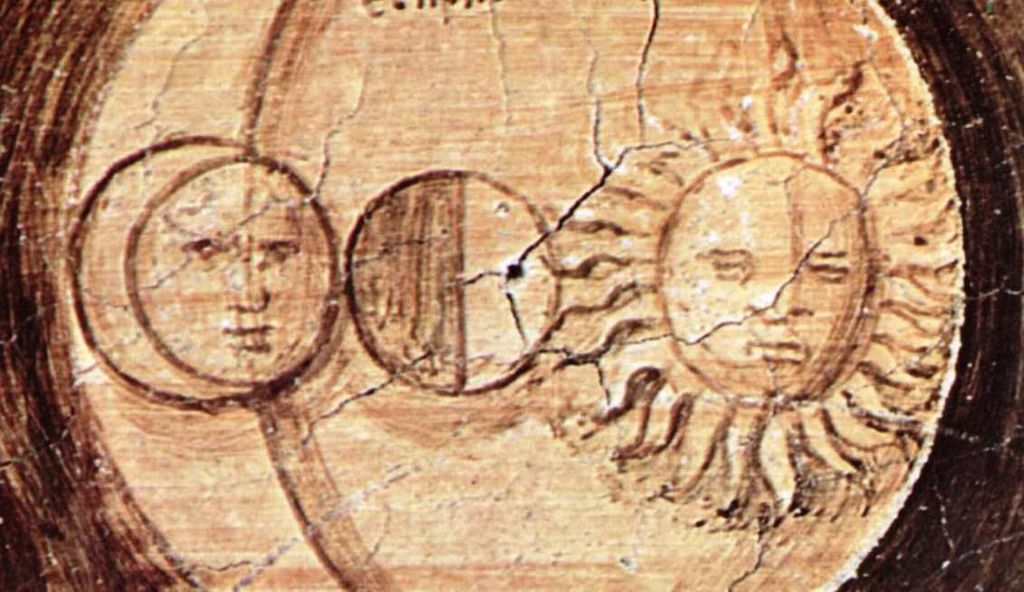
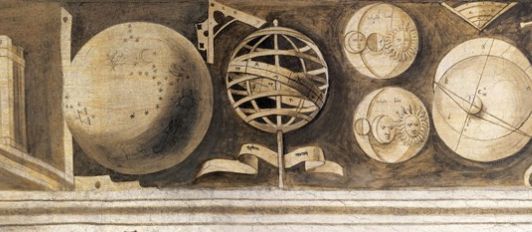
A star-filled sphere includes signs for the Sun and Moon and several zodiacal figures. There are also pictorial treatments of eclipses and planetary motion, an armillary sphere, a sextant and a drawn astrolabe. They sit among objects that a viewer could use to count, measure or give a visible shape to a part of the celestial order. The cosmological reading of the wall gives the sphere special force. The municipality links its signs to a conjunction of Saturn, Jupiter and Mars in Cancer across 1503–04, with separate signs associated with a solar eclipse in 1502 and a lunar eclipse in 1504. These suggested allusions provide one rationale for dating the frieze around 1502–03. A proposed reference to a future event in a painted design is an argument about intention, not a date written on the wall. [1] [2] [5]
One proposed context is the activity of the physician and astrologer Giovan Battista Abioso, whose work was known in the Veneto. Manlio Pastore Stocchi related him to the broader astrological interpretation in 1978 and Augusto Gentili developed the reading. Francesco De Santis traces a particularly close analogue for the frieze's armillary sphere to illustrations of the Sphaera mundi of Johannes de Sacrobosco. The links with published instruments matter because a painting rich in astronomical detail can be informed by print without standing as a precise record of any one observation. Lorenzo Finocchi Ghersi proposes an additional source for the programme in the Dream of Scipio as transmitted by Macrobius, pointing to a printed edition from Brescia in 1483. Both lines of enquiry find a place for learned readers in the same room as the painted objects. [1] [5] [7]
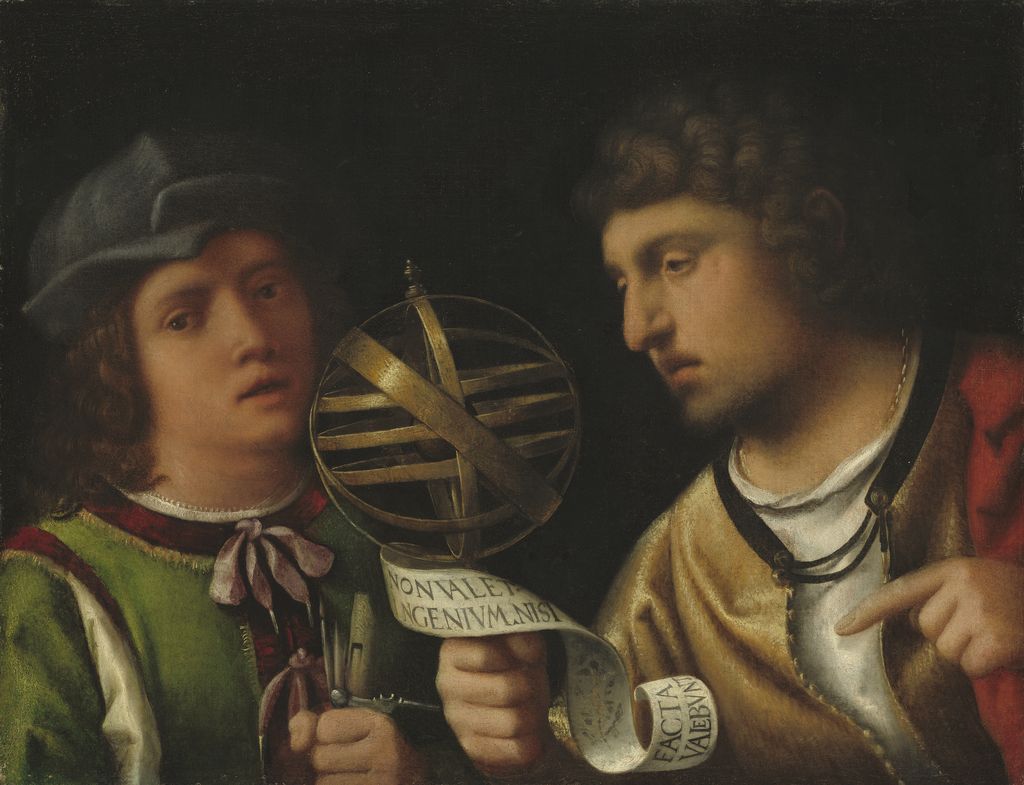
One can see the usefulness of the distinction between a solid celestial globe and an armillary model by looking at the portrait of Giovanni Borgherini and his tutor. The man in the Washington painting can point through and around the rings to demonstrate a relation. A painted sphere marked with signs can instead hold the eye at the surface and give a viewer a design to read. The wall brings together pictorial functions that a portable portrait has to choose between. Here one can move along the room to compare the apparently solid globe and the thin ring structure in succession. [2] [5] [8]
Musical instruments
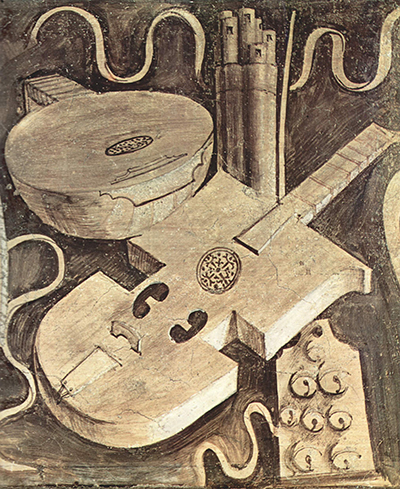
The musical section gathers a lute, a bowed viella, flutes, a rattle, a hurdy-gurdy and keyboard instruments described as clavichords, along with a tambourine and more winds. The outlines can attract close attention from someone who knows how an instrument would sit against the body or respond to a hand. At the same time some instruments appear without their expected strings. The museum takes that detail in a darker reading of the whole frieze, suggesting that music mirrors an unstable order and its instruments have fallen silent. The condition and paint of each object matter, since surviving marks are thinner in some passages than in others. A general response to the musical grouping can allow both the delight of recognition and the sense of a concert withheld. [1] [2]
Older European teaching places music beside arithmetic partly because of the ratios underlying intervals. The painter's interest in tools and their results also shows in the neighbouring cluster given to painting and medicine. Brushes, compasses, vessels and pages open to images of perspective appear in a programme that makes thinking material. The Pastoral Concert at the Louvre imagines instruments in use inside a spacious landscape. The Castelfranco objects have been put to a different end. The lute belongs to whoever looked at the room and could imagine taking it down. On its painted wall it can only suggest the sound of an instrument once somebody thinks through the gesture by which it would be played. [1] [2] [9]
Two ways of reading the room
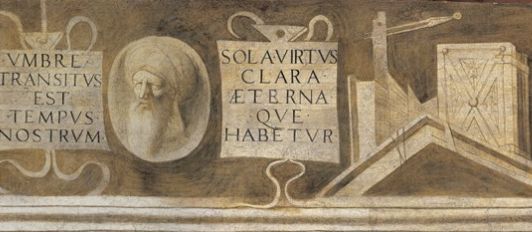
Adriano Mariuz put the survival of virtue and reason against the passage of time at the heart of his 1966 study. The Latin sayings and the simulated supply of books give that idea a solid place in the design. The municipality connects their wording to the Bible, Sallust and the maxims attributed to Publilius Syrus. A humanist reader could pass from a learned line to a tool, a musical object or a hint of mortality. The astrological reading gives the threatened order of the cosmos a more precise relation to the weapons and silent instruments. These interpretations can give weight to different objects in the same stretch without making either a fully documented statement of the patron's purpose. [1] [2] [5]
The room remains decisive. Starting at one end of a photographic panorama encourages a reader to make every successive object part of a single unbroken message. A person entering the original room could pause beneath one cluster, see something across the way and move toward it. Those departures and returns are part of a painting constructed as decoration rather than a page meant to be read in sequence. The surviving plasters let us see the choices of scale, material and relation to an upstairs room directly. The disagreements about what those choices meant also bring us closer to the culture that made such a room possible. [1] [2] [3]
Annotated Details from the Castelfranco east-wall frieze
Select a point to see its detail.

1. Inscribed tablets · 2. Armillary sphere
Details from THE CASTELFRANCO EAST-WALL FRIEZE
Detail crops from the same image.
Inscribed tablets
The mottoes sit on flat painted rectangles beside a profile head.
Armillary sphere
A framework of painted rings makes an instrument for representing the heavens recognisable in the narrow band.
Detail of the Castelfranco frieze, east wall Giorgione (attributed), listed creator. Image source. CC BY-SA 4.0. Resized for display.
Giorgione’s career
Castelfranco Madonna
Early 1500sFondaco dei Tedeschi
1507–08Three Philosophers
1508–09Death in Venice
1510Discussion
Share what you noticed and how you arrived at your reading.
Reader Insights
Which detail would you point out to somebody seeing Frieze of the Liberal and Mechanical Arts for the first time?
How does two ways of reading the room change how you read the work?
Join the Conversation
Share a detail, comparison or question about Frieze of the Liberal and Mechanical Arts below.
References
- Museo Casa Giorgione, Il Fregio delle Arti Liberali e Meccaniche. View source.
- Comune di Castelfranco Veneto, Museo Casa Giorgione, frieze and object notes. View source.
- Diego Suárez Quevedo, Arte y Astronomía-Astrología de mediados del Quattrocento a Peruzzi y Rafael. View source.
- Kunsthistorisches Museum, Die drei Philosophen. View source.
- Francesco De Santis, Astrologia, Storia e Virtus in Giorgione e Giulio Campagnola. View source.
- Kunsthistorisches Museum, Bildnis des Francesco Maria I. della Rovere. View source.
- Lorenzo Finocchi Ghersi, La via Lattea di Giorgione a Castelfranco, Bollettino d'Arte. View source.
- National Gallery of Art, Washington, Giovanni Borgherini and His Tutor, 1974.87.1. View source.
- Musée du Louvre, Le Concert champêtre. View source.