


 by Tom Gurney
Tom Gurney BSc (Hons) is an art history expert with over 20 years experience
Published on November 6, 2026 / Updated on November 6, 2026
Email: tomgurney1@gmail.com / Phone: +44 7429 011000
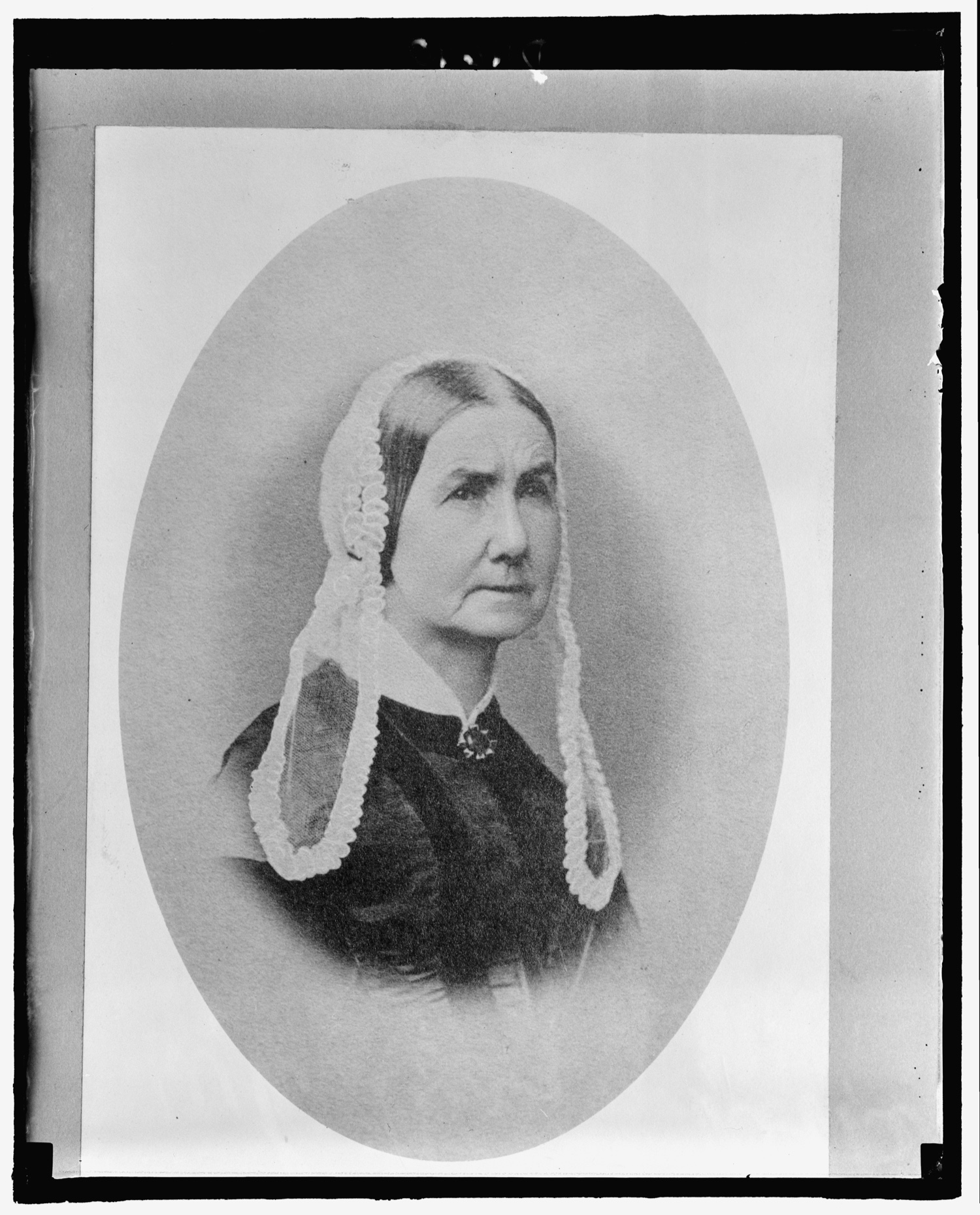
Anna Matilda Whistler became one of the most recognizable mothers in art while remaining largely unknown as a person. James McNeill Whistler's 1871 portrait fixed her in profile, seated in black against a grey wall. Its popular title replaced her first name, and later reproductions turned one particular American widow into a general emblem of maternal patience, sacrifice and moral steadiness.[3][6][7]
Her own writings reveal a more complicated life. Anna was born in North Carolina, grew up partly in New York, managed households in the United States, Russia and London, endured the deaths of three young children and her husband, and negotiated widowhood with limited money. She was a prolific correspondent, a strict Protestant, a charity worker, an advocate for her children's futures and, for a period, an American agent for James's etchings.[1][2][10]
The same archive resists idealization. Anna embraced restrictive ideas about women's domestic role and expressed paternalist, racist beliefs about slavery. Her religious charity did not cancel those positions. Recovering her from the portrait does not require turning her into a modern heroine; it requires keeping agency, dependency, faith, prejudice, labour and mobility in one historical account.[1][2][4]
Anna also understood art better than the silent-sitter stereotype suggests. She had visited museums and exhibitions across continents, presented her son's prints to possible supporters, corresponded with patrons and helped sustain his Chelsea household. Her account of the famous portrait records the physical difficulty of standing and the decision to sit. It gives the model a voice without claiming that she controlled Whistler's canvas.[1][6][8]
At a Glance
- Born27 September 1804, Wilmington
- Birth nameAnna Matilda McNeill
- MarriageGeorge Washington Whistler, 3 November 1831
- RussiaSt Petersburg household from 1843
- Widowed1849
- FamilyThree stepchildren and five biological children
- Art-market roleAmerican agent for James's prints
- LondonMoved in 1864
- Portrait sitting1871, aged sixty-six
- Died31 January 1881, Hastings
Contents
- From Wilmington to a blended family
- Russia and the engineer's household
- Cholera, widowhood and financial strain
- Directing James without controlling him
- An American agent for Whistler's prints
- Faith, charity and racial contradiction
- Moving to London in 1864
- Helping in the Chelsea studio
- Sitting for the 1871 portrait
- Anna's interpretation and James's arrangement
From Wilmington to a blended family
Anna Matilda McNeill was born in Wilmington, North Carolina, on 27 September 1804. Her parents were Dr Daniel McNeill and Martha Kingsley. She spent parts of her childhood in North Carolina and New York, moving within family networks that later remained essential to her material and emotional survival.[1][3][5]
The geography matters. Later use of the portrait as an American icon can flatten Anna into a timeless national type, while discussions of slavery can fix her as solely Southern. Her experience crossed regional cultures before it became international. That mobility did not free her from inherited racial and religious ideas, but it prevents birthplace from functioning as a complete explanation.[1][2][3]
On 3 November 1831 she married George Washington Whistler, an engineer and West Point graduate who had worked with her brother William Gibbs McNeill. George was a widower. He brought three children from his first marriage—George William, Joseph Swift and Deborah Delano—into the household.[1][6][13]
Anna bore five children: James Abbott in 1834, William McNeill in 1836, Kirk Boott in 1838, Charles Donald in 1841 and John Bouttatz in 1845. Kirk, Charles and John died in childhood. These deaths entered Anna's religious understanding of family and heaven, but her letters did not consist only of bereavement. They also record schooling, clothes, servants, meals, visits, money and the constant organization of kin.[1][2][3]
Blended-family responsibility made motherhood a practical network rather than a single sentimental bond. Anna maintained relations with stepchildren and their descendants as well as her surviving sons. The correspondence connects households separated by travel and marriage, demonstrating that writing itself was part of family management.[1][2]
The children's different legal and emotional positions also shaped resources. A stepdaughter married abroad, sons entered military or medical training, and bereaved branches of the family made claims on attention. Anna's maternal identity was produced through these particular relationships, not through an abstract instinct shared uniformly with all women. The later public icon suppresses precisely this negotiated, uneven quality of kinship.[1][2][3]
Russia and the engineer's household
George's career repeatedly moved the family. From 1843 he served as a chief engineer for Tsar Nicholas I on the railway between St Petersburg and Moscow. Anna and the children joined him for most of the Russian period. Their expatriate life brought them into wealthy Russian, American and British circles.[1][3][13]
Anna managed a high-status household under unfamiliar conditions. She oversaw children's education, servants, social obligations and her husband's domestic needs while preserving family ties abroad through letters. This was managerial labour shaped by rank and supported by other workers. It should be neither romanticized as effortless femininity nor described as if she performed every task herself.[1][2][4]
Her Protestant practice regulated the family day. Scripture, prayer and moral instruction supplied continuity, and she resisted some activities, including dancing, that she considered unsuitable. Yet strict religion did not make her frightened of cosmopolitan society. She observed elite life, visited art collections and adapted to an international environment whose sophistication she could appreciate and judge.[1][2][4]
Anna wrote diaries and long letters during and around these years. She later composed an account of her husband. These are authored historical texts, not merely sources mined for information about the men in her family. They describe how an American woman understood engineering prestige, domestic duty, transatlantic relations and the costs of maintaining appearances.[1][2][11]
The surviving archive is incomplete. Anna sometimes asked recipients to destroy letters, a common attempt to control private circulation. What remains reflects preservation decisions by relatives, collectors and editors. Her apparent openness on one subject and silence on another cannot automatically be treated as the exact measure of what she thought.[2][11][12]
Engineering determined much of the household's mobility while remaining officially George's profession. Railway appointments set addresses, income, status and the timing of removal; Anna converted those conditions into a functioning home. Her work involved the human consequences of technical employment—finding suitable routines, maintaining health and education, and representing the family socially when a large infrastructure project absorbed her husband.[1][2][13]
Cholera, widowhood and financial strain
George Washington Whistler died of cholera in St Petersburg in 1849. Anna was forty-four and approaching her forty-fifth birthday. She returned to the United States with surviving children and a financial position dramatically reduced from the Russian years.[1][3][13]
Widowhood joined grief to administration. With no secure independent fortune, Anna depended on relatives and friends for housing and living costs. Her letters describe bills, worn clothing and the effort to remain neat within poverty. “Respectability” was not a superficial concern: for a nineteenth-century widow it affected credit, hospitality, family standing and access to help.[1][2][9]
Dependency did not make her passive. Anna negotiated invitations, arranged education, cultivated old connections and decided which claims on small resources could be met. She extended assistance to poor neighbours and correspondents even while acknowledging what she could not afford. The household budget was a moral and social instrument as well as arithmetic.[1][2][8]
Religious faith helped her interpret repeated loss. Heaven, providence and reunion gave a structure to deaths that had removed children and husband. Faith could steady action, but it also reinforced an ideal in which a woman's virtue was demonstrated through patient domestic sacrifice. Anna both inhabited and exercised authority through that role.[2][4]
Her widowhood therefore cannot be narrated as a fall from luxury followed by saintly endurance. It was a long condition of constrained choice. Family support protected her from destitution while limiting independence, and her own networking helped convert relationships into education, housing and professional opportunities for her sons.[1][2][5]
Letters made financial strain visible without providing a complete ledger. Anna might mention an unpaid bill or worn garment because a recipient could offer help, share worry or understand why a gift was impossible. Such statements were factual and relational at once. They reveal how genteel poverty was communicated through indirection, apology and comparison rather than through a modern statement of income and expenditure.[2][9]
Directing James without controlling him
Anna expected James to uphold his father's name at the United States Military Academy. In 1853 she urged him to succeed and framed poor conduct as an injury to family duty. The emotional pressure was real, but it belonged to a widow trying to secure a future for a son through an institution closely associated with his father.[1][2][9]
James was dismissed from West Point after academic failure. Anna then used influential relations to seek other positions for him. A parent with limited cash could still mobilize social credit. Her interventions demonstrate initiative but also their limit: James did not remain in the posts obtained and continued toward art.[1][9]
The later legend of the rebellious artist and puritan mother exaggerates a simple opposition. Anna questioned aspects of bohemian life and desired moral discipline, yet she supported James after he moved to Paris. He could ignore advice while relying on affection, money, contacts and correspondence. Their relationship contained conflict, indulgence and practical alliance.[1][2][4]
James's letters often sought sympathy or explained crises after the fact. Anna's replies moved between encouragement, admonition, religious counsel and requests that he write more regularly. Neither controlled the epistolary relationship completely. Long silences and delayed information were part of transatlantic family life.[2][9]
Reading only his later public persona makes Anna the conventional force from which avant-garde freedom escaped. Reading only her maternal language makes James a wayward child. The documents show two adults whose unequal needs changed over time, repeatedly negotiating what support and obedience meant.[1][2][3]
An American agent for Whistler's prints
In the late 1850s and early 1860s Anna acted as an American agent for James's etchings. She kept prints safely, showed sets to family contacts and potential supporters, and tried to place or sell them. This was cultural and commercial work, even if it did not resemble a modern dealer contract.[1][10]
Her letters distinguish several actions that later shorthand can merge. Custody protected fragile sheets. Presentation introduced the work to viewers whose approval might create reputation or sale. A gift, prospective transfer and completed purchase were not the same transaction. Calling Anna an agent should preserve those differences rather than claim a volume of sales the records do not establish.[2][10]
The activity required judgment. Etchings had to be identified, handled and discussed; recipients had to be selected; James's expectations had to be managed across distance. Anna's family position opened doors, but kinship did not make the labour automatic.[1][2][10]
Her engagement also challenges the idea that she first entered art history by sitting in 1871. Before moving to Chelsea she had experienced museums and exhibitions in several countries and had already worked to circulate James's art. She did not need to share all his aesthetic claims to recognize professional stakes.[1][3]
The archive does not make her an independent art dealer with a broad client list. Her activity was tied to her son and embedded in family networks. It nonetheless belongs to the material history of his early career, where prints travelled through relatives before a stable international market existed.[1][10]
Presentation also created interpretation. When Anna gathered acquaintances to examine a set, she chose a social occasion in which viewers could compare impressions and connect the absent artist to a trusted family. A print's route to attention depended on hospitality, conversation and follow-up as well as on paper and ink. Her drawing room temporarily performed functions later associated with a dealer's viewing room.[1][2][10]
Faith, charity and racial contradiction
Anna's Christianity structured daily practice rather than appearing only in solemn language. She read scripture, prayed with children, wrote religious consolation, supported clergy and linked charity to duty. Bereavement and poverty were interpreted through providence, which gave suffering meaning and required continued action.[1][2][4]
The same faith sustained hierarchical ideas. Anna praised domestic womanhood and often measured women through unobtrusive household care. These beliefs restricted imagined possibilities while giving her a socially accepted form of authority over children, servants and moral relationships. “Private sphere” did not mean absence of power.[2][4]
Her writing about slavery requires direct language. Anna said she was not an advocate of slavery, then defended supposedly humane Christian slaveholders and repeated a biblical racial ideology. This was a paternalist racist position that obscured coercion by focusing on the claimed care of owners.[1][2]
Charitable acts toward Black people or the poor do not undo that belief. Indeed, charity could fit the same hierarchy: the giver retained authority to classify a recipient as deserving and dependent. Anna could recognize individual suffering while defending a social order that produced and enforced racial domination.[1][2]
The contradiction should neither be hidden to preserve the maternal icon nor used to claim that nothing else about her matters. It locates her within American Protestant and family cultures whose moral language could support care and bondage simultaneously. Historical recovery has to keep the discomfort visible.[1][3][4]
Language of benevolence was especially dangerous because it displaced the enslaved person's experience with the owner's claimed intentions. Anna's denial that she advocated slavery did not challenge ownership, forced labour or white authority. Recording that logic precisely matters more than assigning her a simple label of kindness or cruelty; it shows how moral self-understanding could coexist with defence of an immoral institution.[1][2][3]
Moving to London in 1864
Anna moved to London in 1864. The American Civil War formed part of the background, but she was not simply fleeing it. Her stepdaughter Deborah was established in London, James was building his career there, and William, a physician, would also practise in the city. She moved toward her children.[1][2]
Her arrival altered James's Chelsea household. Anna's expectations of unmarried sexuality, class behaviour and domestic order could not easily accommodate Joanna Hiffernan's position as his partner. Household arrangements changed during Anna's visit. This reveals the force of Victorian respectability without making Anna the sole cause of every later change in James and Joanna's relationship.[1][4]
Joanna's biography belongs on her own page. From Anna's perspective, the episode shows how maternal authority travelled into an adult son's home. She could depend financially and residentially on family while also setting moral terms through which cohabitation became difficult.[1][2]
Anna remained useful to James's practice. She corresponded with patrons, trained or supervised servants, maintained rooms and adapted to unpredictable studio work. The artist's bursts of inspiration required other people to provide food, order, supplies and social explanation around them.[1][2][4]
Domestic labour here was not necessarily peaceful. James's finances and conflicts brought uncertainty, and Anna sometimes disapproved of the people or habits around him. Yet she stayed involved. Their household was a site of negotiation between her disciplined routines and his carefully performed artistic irregularity.[1][2]
Servants occupied a crucial but unequal place in this system. Anna's wish to train them records expertise in household standards, while also documenting her authority over paid workers whose voices survive less often. Identifying domestic management should therefore expose the hierarchy supporting the studio, not celebrate the middle-class household as a self-contained family achievement.[1][2][4]
Helping in the Chelsea studio
Anna's letter of 3–4 November 1871 records a revealing episode. After a riverside drive, James responded to the evening light by hurrying upstairs to paint. Anna carried the tubes he requested and watched the picture develop. Current scholarship connects the account with Nocturne: Blue and Silver—Chelsea.[8][14][15]
The act should be credited at its proper scale. Bringing materials and accommodating immediate work was material participation in a studio household. It does not make Anna co-painter of the nocturne. James selected and applied the colours; she supplied practical help and recorded the process from beside him.[8][14]
Her account is valuable because it describes artistic production from a household participant's viewpoint. Inspiration did not float directly onto canvas. Someone fetched equipment, made space and absorbed a change in the day's plan. The letter captures both Whistler's quick visual response and the infrastructure that allowed it.[2][8]
It also demonstrates Anna's attention to colour and setting. She described the river, transparency, sunset and moon in order to convey why the event mattered. Her language need not be judged as art criticism to show cultivated looking.[1][8]
The full object history of the Chelsea nocturne belongs to its dedicated page. On Anna's page, the episode establishes a role that the seated portrait alone cannot show: mobile, observant and practically engaged in the studio's rhythm.[14][15]
Sitting for the 1871 portrait
Anna was sixty-six when she posed for Arrangement in Grey and Black, No. 1: Portrait of the Painter's Mother. Whistler made it at 2 Lindsey Row in Chelsea during 1871. The Musée d'Orsay now records the work as oil on canvas, RF 699, measuring 144.3 by 163 centimetres.[6][7]
Anna's own letter supplies the most reliable account of the change in pose. She initially stood through several sessions whenever James was ready to study her. The effort became too great, so painter and sitter adopted the seated profile. Later tales of a different model failing to arrive are less secure than this first-person testimony.[6][8][18]
The sequence restores duration and negotiation. Anna tried to meet James's working demands without complaining, but her body imposed a limit. Sitting “at ease” was a practical accommodation that became the composition known worldwide. Age and stamina shaped form without determining every aesthetic decision.[6][8]
Several sessions also complicate the notion of a single decisive encounter. James worked according to changing concentration, and Anna waited until he was ready. The sitter's schedule was therefore subordinated to the painter's, even inside a family home. Her willingness mattered, but so did the eventual refusal of physical capacity. The seated format emerged from a process in which bodily endurance could redirect artistic intention.[6][8][18]
Her black dress, white bonnet, handkerchief and footstool belonged to a carefully ordered studio arrangement. The etching on the wall, grey field and hanging patterned fabric relate the figure to Whistler's art and interior. These objects should not be read as an inventory of Anna's entire character.[6][7]
The portrait appeared at the Royal Academy in 1872. Early viewers debated Whistler's musical title and the recognizability of maternal character. Friends described peace or holiness, and a critic invoked Protestant character. Those statements are evidence of reception, not objective diagnoses extracted from her profile.[6][18]
Anna's interpretation and James's arrangement
Anna regarded the picture as a likeness. She saw family resemblance and understood its expression through prayer, gratitude and maternal feeling. She reported approving responses from relatives and visitors with a mixture of pride, modesty and religious framing. Her account shows active investment in what the portrait communicated.[6][8]
James later insisted that the public should care about arrangement rather than the sitter's identity. His formulation distinguished private interest in his mother from the picture's public organization of grey and black. That claim did not erase the subtitle or stop viewers from responding to motherhood.[3][6]
The two interpretations need not be forced into a winner. Anna sat as a historically specific person and valued resemblance; Whistler constructed a tonal arrangement and defended aesthetic independence. Portraiture can operate through both identity and form, even when artist and sitter give them different emphasis.[3][6][7]
Nor does Anna's prayer for an appealing expression mean the painted face is a transparent record of piety. A sitter can intend a presentation, an artist can translate it, and viewers can assign meanings neither fully controls. The resulting profile is evidence of collaboration and reception, not direct access to private consciousness.[3][4][6]
The portrait influenced the structure of Whistler's later seated image of Thomas Carlyle. That connection belongs to object history and should not turn Anna into a formal prototype only. Her page retains what the comparison often leaves out: the life before and after the sitting.[6][20]
Correspondence as a life practice
Anna's letters were a technology of relationship. They carried news, requests, religious counsel, family memory and practical coordination between households. She adjusted tone and emphasis to the recipient, so no one letter can function as an unfiltered statement of permanent personality.[1][2][19]
The surviving material includes correspondence from 1830 to 1876 and an 1850 diary in the Pennell-Whistler Collection at the Library of Congress, described through the Smithsonian's Archives of American Art. Glasgow's edited correspondence adds searchable texts, annotations and family connections. Repository and edition should be named because the archive did not preserve itself.[2][11][12]
Anna's instructions to burn letters make absence part of the evidence. Privacy was a form of authorship control, even when recipients did not comply. The surviving voice is extensive but not total; it reflects what she wrote, what others retained and what later collectors gathered.[2][19]
Her prose repeatedly turns domestic detail into social knowledge. Bills expose widowhood economics; clothing reveals respectability; servant problems reveal hierarchy; visits reveal networks; illness shapes travel; art shipments show early market pathways. “Family letter” is not a lesser source category.[1][2]
Spelling, punctuation and emotional intensity in correspondence can tempt readers to treat Anna's writing as unprocessed personality. Letters were composed performances shaped by available time, postal opportunity and anticipated response. Editorial annotation identifies people and events that a family recipient needed no explanation to understand. Historical reading depends on that mediation without making the editor a silent co-author.[2][12][19]
The archive also resists the silence of the portrait. Anna had opinions, changed tactics, solicited replies and narrated her own usefulness. Returning her words to the visual icon does not tell us exactly what she thought during every sitting. It proves that one still profile cannot stand for the whole person.[2][3]
Hastings, death and immediate memory
Ill health led Anna to retire to Hastings in 1875. She lived there for the remaining six years of her life. Distance from London reduced daily participation in James's household, but correspondence continued to maintain family and friendship networks.[1][2][3]
The move should not be narrated as serene retirement simply because the portrait looks composed. Illness, loneliness, dependency and affection appear in the documentary record. Letter writing allowed Anna to request news, give counsel and remain socially present when travel narrowed.[1][2]
She died at Hastings on 31 January 1881. The famous portrait was then almost a decade old but had not yet acquired the universal familiarity it would gain in the twentieth century. Its exhibition and ownership history continued through Whistler's decisions after the sitter could no longer respond.[3][6]
James sometimes treated the painting as intensely personal and at other moments used it within loans, security and exhibition negotiations. The apparent contradiction belongs to the object's later history. It should not be projected backward as proof that Anna understood herself as a future national symbol.[6]
Her immediate historical legacy remained distributed among children, stepchildren, friends and papers. The picture eventually became the dominant public memory because it condensed a life into an easily reproducible posture. The letters preserve what condensation excluded.[2][3][11]
Death also changed the status of private testimony. Family letters written for a known circle became material for biographies of a celebrated artist, where Anna could be quoted mainly to explain James. Reading them around her own chronology reverses that priority. His career remains important, but it becomes one strand in a correspondence concerned with many households, illnesses, journeys and obligations.[2][5][11]
From Anna to an American motherhood icon
In 1891 the French state bought the portrait for the Musée du Luxembourg; it later entered the Musée d'Orsay collection. Acquisition helped establish its international status. The painting became one of the most famous works by an American artist outside the United States, even though artist and sitter had both lived internationally.[6][7]
Popular culture increasingly called it Whistler's Mother. The phrase preserves relation while deleting Anna Matilda Whistler's name. Viewers who knew nothing of her Russian household, widowhood or letters could recognize a general idea of elderly motherhood.[3][17]
The 1934 United States Mothers of America postage stamp made that transformation literal. At Franklin D. Roosevelt's suggestion, the Post Office used the painting for a three-cent stamp issued on 2 May. The design cropped the original composition and added flowers so the mother figure would read clearly at miniature scale.[16]
The alteration produced controversy among people who objected to changing Whistler's art. Its purpose, however, was not primarily to reproduce the painting faithfully. It converted Anna's image into a celebration of American mothers in general. A specific sitter became public shorthand through cropping, caption and circulation.[16]
Later international exhibitions have called the painting an American icon and tracked its extraordinary afterlife. That reception deserves full treatment on the object page. Here its significance is biographical: fame amplified Anna's visibility while obscuring her writing, travel, prejudice, work and name.[3][17]
The word “icon” describes repetition and cultural recognition, not agreement about meaning. The same seated figure has supported religious, national, commercial, comic and sentimental uses. Those transformations tell us what later audiences wanted motherhood to signify. They cannot be returned to 1871 as evidence that Anna personally embodied every value attached to her image.[3][16][17]
Frequently Asked Questions
Its quiet seated figure had already become a general motherhood emblem. In 1934 President Roosevelt suggested it for the Mothers of America stamp. The Post Office cropped the composition and added flowers, transforming the portrait into a miniature public tribute to mothers.[16]
Anna Matilda Whistler was neither the mute ideal preserved by popular culture nor simply the oppressive mother required by an artist-rebel story. She was a mobile, literate and forceful nineteenth-century woman who used domestic authority and correspondence to hold a far-flung family together under conditions she did not fully control.[1][2][4]
Her faith sustained charity, bereavement and responsibility while also reinforcing gender hierarchy and racist paternalism. Her work on behalf of James extended from American etchings to Chelsea household and studio support. These facts do not resolve into moral simplicity, and responsible biography should not make them do so.[1][2][10]
The portrait remains vital evidence, especially when Anna's account of its demanding sittings is heard. But its seated calm is one constructed moment. Her letters restore movement: between regions and countries, poverty and elite society, admonition and affection, private faith and public action.[2][3][6]
They also restore sequence, showing that motherhood changed through migration, bereavement, adult children's choices, physical illness and the practical demands of age.[1][2]
Discussion
What becomes visible when Anna Matilda Whistler is read through her correspondence rather than only through the famous portrait?
Keep household labour, religious practice, financial management, art-market agency and racial contradiction in the same historical account.
Reader Insights
Which parts of Anna's life survive in her own writing?
Where did she manage resources, networks and James's work?
How did a named sitter become a generic emblem of motherhood?
Join the Conversation
Share a source-specific observation or question.
References
- University of Glasgow, “Anna Matilda Whistler, 1804–1881,” biographical entry, The Correspondence of James McNeill Whistler, https://www.whistler.arts.gla.ac.uk/correspondence/people/biog/?bid=Whis_AM&initial=
- Georgia Toutziari, ed., The Correspondence of Anna McNeill Whistler, 1829–1880, University of Glasgow online edition, within https://www.whistler.arts.gla.ac.uk/correspondence/
- Margaret F. MacDonald, ed., Whistler's Mother: An American Icon, Lund Humphries, 2003.
- Sarah Burns, “Whistler and His Mother,” in Margaret F. MacDonald, ed., James McNeill Whistler in Context, Smithsonian Institution, 2003, https://asia.si.edu/wp-content/uploads/2023/04/Glazer-Whistler-in-Context.pdf
- Elizabeth Mumford, Whistler's Mother: The Life of Anna McNeill Whistler, Houghton Mifflin, 1939.
- University of Glasgow, Arrangement in Grey and Black: Portrait of the Painter's Mother, YMSM 101, The Paintings of James McNeill Whistler, https://www.whistlerpaintings.gla.ac.uk/catalogue/display/?mid=y101
- Musée d'Orsay, Arrangement in Grey and Black No. 1, RF 699, https://www.musee-orsay.fr/en/artworks/arrangement-en-gris-et-noir-ndeg1-974
- Anna Matilda Whistler to Catherine Jane Palmer, 3–4 November 1871, GUW 10071, University of Glasgow, https://www.whistler.arts.gla.ac.uk/correspondence/recno/display/?cid=10071
- University of Glasgow, Anna Whistler's West Point, early employment and Paris correspondence, The Correspondence of James McNeill Whistler, https://www.whistler.arts.gla.ac.uk/correspondence/
- Anna Whistler's American etching-agency correspondence, including GUW 06516, University of Glasgow, https://www.whistler.arts.gla.ac.uk/correspondence/
- Smithsonian Archives of American Art, “Selected papers from the Pennell-Whistler collection in the Library of Congress,” https://www.si.edu/object/archives/sova-aaa-whisjapw
- Library of Congress, Pennell-Whistler Collection, Manuscript Division, Anna Mathilda Whistler correspondence and diary.
- University of Glasgow, George Washington Whistler and family biographical records, The Correspondence of James McNeill Whistler, https://www.whistler.arts.gla.ac.uk/correspondence/
- University of Glasgow, Nocturne: Blue and Silver—Chelsea, YMSM 103, The Paintings of James McNeill Whistler, https://www.whistlerpaintings.gla.ac.uk/catalogue/display/?mid=y103
- Tate, Nocturne: Blue and Silver—Chelsea, N03420, https://www.tate.org.uk/art/artworks/whistler-nocturne-blue-and-silver-chelsea-n03420
- Smithsonian National Postal Museum, “FDR and Mother's Day,” https://postalmuseum.si.edu/exhibition/american-art-on-postage-stamps-ordinary-citizens-celebrating-motherhood/fdr-and-mothers
- Musée d'Orsay, Art Institute of Chicago and National Gallery of Victoria exhibition records for Whistler's Mother as an international and American icon.
- Royal Academy reviews and Emilie Venturi correspondence concerning YMSM 101, collated in the University of Glasgow paintings catalogue.
- University of Glasgow, correspondence editorial and copyright guidance, https://www.whistler.arts.gla.ac.uk/correspondence/
- University of Glasgow, Thomas Carlyle and Whistler family-circle records, The Paintings and Correspondence of James McNeill Whistler, https://www.whistlerpaintings.gla.ac.uk/catalogue/biog/?mid=y050&nid=CarlT&xml=sub


