 by Tom Gurney
Tom Gurney BSc (Hons) is an art history expert with over 20 years experience
Published on June 19, 2020 / Updated on July 19, 2026
Email: tomgurney1@gmail.com / Phone: +44 7429 011000
Brigadier Archibald Campbell Douglas by John Singer Sargent: Introduction
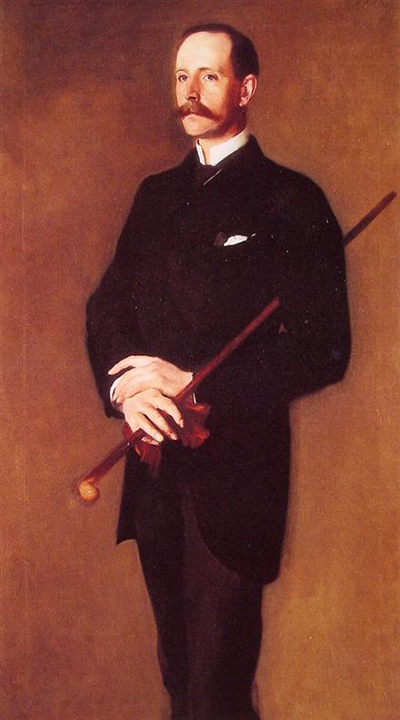
John Singer Sargent's Brigadier Archibald Campbell Douglas belongs to the quieter edge of his portrait career: not a scandalous society image, not a theatrical star turn, and not a large public war painting, but a compact military portrait organized around name, rank, and public identity. The Smithsonian inventory record gives the work under the fuller title Brigadier Archibald Campbell Douglas Dick [1]. That title is the safest starting point, because it tells us what the portrait asks viewers to recognize first: a named sitter and the authority carried by military office.
The painting matters because it widens the picture of Sargent's portrait practice. Sargent is often introduced through society women, artists, performers, children, and famous public figures. A brigadier sits within that same portrait world, but under different pressure. Here the sitter's identity is already shaped by rank before the painter begins. The work asks how a portrait can make official status visible without reducing a person to a label.
At a Glance
- ArtistJohn Singer Sargent [1]
- Title commonly used hereBrigadier Archibald Campbell Douglas [1]
- Fuller title in the Smithsonian recordBrigadier Archibald Campbell Douglas Dick [1]
- Typeportrait painting [1]
- Sitter identificationa brigadier named Archibald Campbell Douglas Dick, as indicated by the Smithsonian title [1]
- Best use for readersa concise military portrait study within Sargent's broader portrait career [1]
- Closest comparison in this Sargent groupColonel Ian Hamilton, another military portrait concerned with rank, bearing, and public image [1]
Contents
- Introduction
- A Compact Military Portrait
- Rank, Name And Public Image
- Uniform As Portrait Language
- Beside Sargent's Other Public Sitters
- Related Works And Where To Go Next
A Compact Military Portrait
Sargent's military portraits should not be treated as campaign histories in disguise. Their subject is not battle action but the public presentation of a person through the signs of command. In Brigadier Archibald Campbell Douglas, the title itself does much of the framing. "Brigadier" is not a neutral social prefix. It identifies the sitter through military hierarchy and asks the viewer to see him as a person whose public meaning is inseparable from rank.
That makes the portrait different from Sargent's images of society sitters, even when the formal tools overlap. A society portrait may depend on dress, gesture, chair, room, and gaze. A military portrait depends on many of the same elements, but the stakes change. Clothing becomes official dress. Bearing becomes discipline. A name becomes a service identity. The sitter is not merely dressed for taste or fashion; he is being recognized through a structure of office.
Sargent was well suited to that problem because his portrait art was always alert to performance. He understood that people appear through roles, whether social, theatrical, artistic, political, or military. The brigadier's portrait belongs to that larger question: how does a painter make a role convincing while still leaving room for a human presence?
Rank, Name And Public Image
The Smithsonian record's fuller title is important because it preserves the sitter's name as Archibald Campbell Douglas Dick [1]. The shorter form used for the artwork title in many reading contexts can make the final surname less visible, but the inventory title keeps the identification intact. For a portrait with limited public documentation, that naming is not a small matter. It is the main factual anchor.
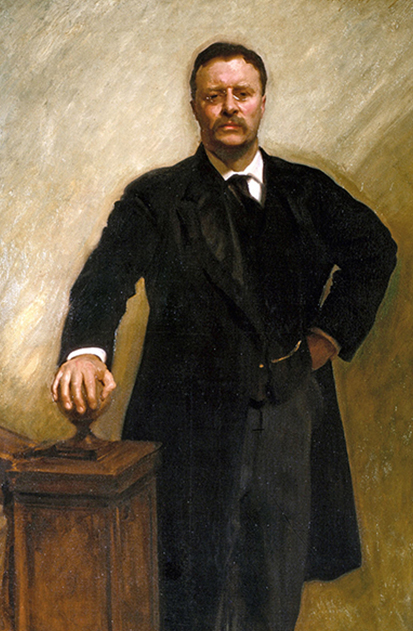
Military rank also affects how the name is read. "Brigadier" places the sitter within an institution before any personal story is told. It signals command and hierarchy rather than private life. Sargent's portrait world often turns on this tension between individual and role. In Theodore Roosevelt, the sitter is an individual man, but the painting also carries the presidency. In Colonel Ian Hamilton, the sitter is a named officer, but uniform, sword, medals, and stance organize him as a military figure. Douglas belongs to the same field of public identity.
The lesson is not that all public portraits are alike. Roosevelt's authority is political, Hamilton's is military and ceremonial, and Douglas's is known here through a more compact record. What connects them is Sargent's interest in visible authority. He does not need a long narrative to begin the problem. The title, rank, and portrait format already place the sitter before the viewer as someone to be recognized in public terms.
Uniform As Portrait Language
Military portraiture gives clothing unusual force. In Sargent's society portraits, fabric can flatter, dazzle, expose, or stage a sitter. In theatre portraits, costume can transform the sitter into a role. In military portraits, dress can become institutional language. It tells viewers how to read rank, service, discipline, and public expectation.
That does not mean the person disappears. The danger of any military portrait is that the official signs can overwhelm the sitter. A painter who merely records rank produces an image of office rather than a portrait. A painter who ignores rank loses the reason the portrait exists. Sargent's strongest public portraits work by holding those pressures together. The role is visible, but it has to be inhabited by a body, a face, a stance, and a painted presence.
This is where Douglas is best read beside Colonel Ian Hamilton. Hamilton's portrait shows how Sargent could make military identity feel concentrated rather than theatrical: title, uniform, sword, medals, hands, and a dark setting all contribute to the image of controlled command. Douglas occupies a related category. The comparison helps define the type without forcing the two works into the same story.
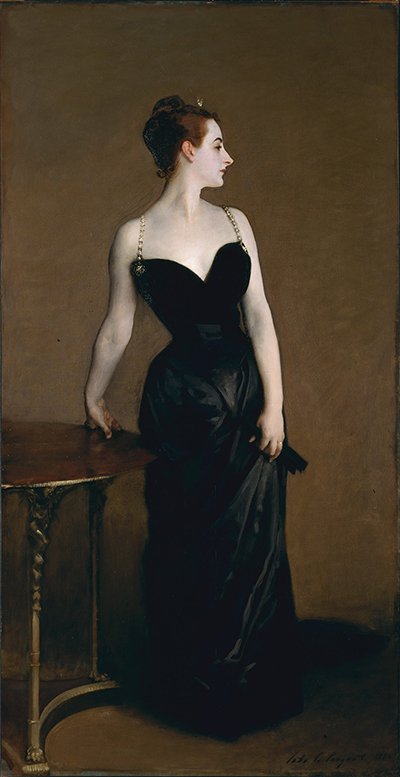
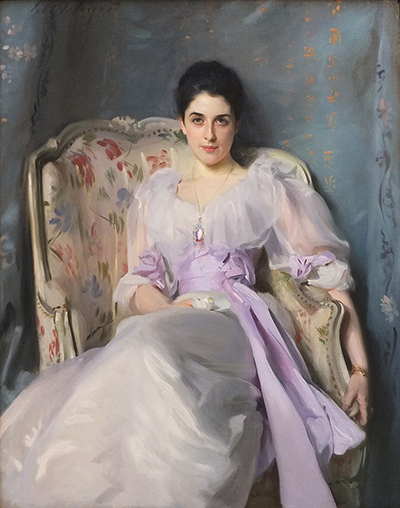
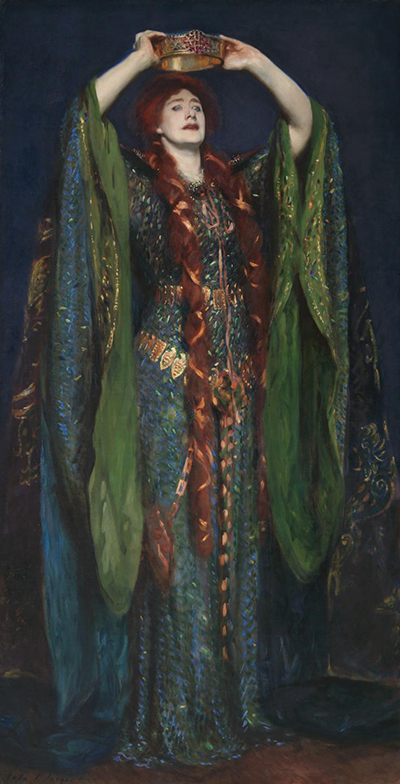
Sargent's broader portrait practice confirms the point. He used clothing as a form of meaning across his career. Lady Agnew's white dress and Chinese silk help construct aristocratic ease. Ellen Terry's green Lady Macbeth costume turns theatrical role into public spectacle. Roosevelt's dark civilian suit refuses military costume while still projecting command. A brigadier's portrait belongs in that sequence because military identity is also a visual language.
Beside Sargent's Other Public Sitters
Douglas is useful because he prevents a narrow view of Sargent as only a painter of glamour. Sargent did paint glamour brilliantly, but his sitters also included officers, presidents, patrons, artists, writers, performers, and children. Each group required a different answer to the same question: what kind of visibility does this person need?
For a military sitter, visibility is partly ceremonial. The portrait has to acknowledge rank. It also has to resist becoming only a record of rank. That balance gives the category its interest. Military identity can seem fixed, but a portrait is never only a label. It is a negotiation among title, body, painter, and viewer.
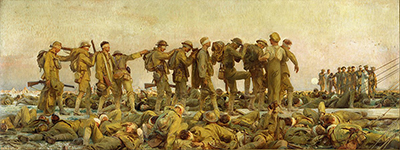
Douglas also sits in an important relation to Sargent's later war imagery. Gassed is not a portrait of a brigadier or colonel; it is a monumental painting of soldiers made vulnerable by injury. Yet the contrast is revealing. In military portraits, Sargent could show authority arranged for recognition. In Gassed, he showed bodies whose military identity had been overtaken by shared suffering. Looking across the career, uniformed life is not one subject for him. It can mean rank, office, ceremony, damage, or memory, depending on the work.
That range is why even a concise portrait deserves attention. Douglas helps complete the map of Sargent's portraiture by showing him working with male public identity, a category that belongs beside society portraits, theatre portraits, artist-friend portraits, presidential portraiture, and the military image of Ian Hamilton.
Related Works And Where To Go Next
For Sargent's larger portrait practice, start with Portraits. That essay places military sitters among society figures, artists, performers, children, patrons, and public officials.
The closest individual comparison is Colonel Ian Hamilton, which has a fuller object record and shows how Sargent handled military rank through pose, uniform, sword, medals, and controlled presence. Theodore Roosevelt Portrait is useful for another kind of public authority, where Sargent builds command through civilian dress, a stairway setting, and a charged hand on the banister.
For the wider life and career, use Biography. For Sargent's transformation of military subject matter into collective wartime memory, continue to Gassed.
Discussion
Brigadier Archibald Campbell Douglas asks a compact but important portrait question: when rank is the first thing a title announces, how does the painter keep the sitter from becoming only rank? Sargent's career repeatedly returns to that tension between person and public role.
Reader Insights
What is the first detail that shapes your reading of Brigadier Archibald Campbell Douglas by John Singer Sargent: pose, setting, light, costume, brushwork or historical context?
Which small visual decision begins to matter more after a longer look, and how does it change the mood of the page?
Which comparison helps most: another Sargent portrait, a travel subject, a public commission, or a work by one of his contemporaries?
Join the Conversation
Share a thoughtful comment below about what you notice, question or compare when looking at this page.
References
- Smithsonian Institution, *Brigadier Archibald Campbell Douglas Dick* https://www.si.edu/object/brigadier-archibald-campbell-douglas-dick-painting%3Asiris_ari_215223