 by Tom Gurney
Tom Gurney BSc (Hons) is an art history expert with over 20 years experience
Published on June 19, 2020 / Updated on July 19, 2026
Email: tomgurney1@gmail.com / Phone: +44 7429 011000
John Singer Sargent Quotes: Introduction
John Singer Sargent is quoted best when he is treated as a working artist, not as a dispenser of polished maxims. Many sayings attached to famous painters travel without firm attribution, and Sargent is especially vulnerable to that problem because his reputation invites memorable one-line judgments about brilliance, speed, society, and portraiture. A responsible Sargent quotes page has to begin with restraint.
The safest evidence comes from letters, archive records, and museum-cited correspondence. The Museum of Fine Arts, Boston preserves the John Singer Sargent Archive, a body of papers, correspondence, photographs, inventories, scrapbooks, and research material connected with the artist and his circle. The Smithsonian Archives of American Art also identifies a group of Sargent letters. The Metropolitan Museum of Art preserves an especially vivid letter-and-drawing record connected with Virginie Gautreau, the sitter for Portrait of Madame X. [1], [2]
Those records do not support a large decorative anthology. They support something more useful: a small guide to how Sargent's words should be read, attributed, and kept near the circumstances that produced them.
At a Glance
- Best evidenceletters, archive records, and museum-cited correspondence [1]
- Main archive sourcesthe MFA Boston Sargent Archive and Smithsonian Archives of American Art letters [1], [2]
- Key artwork-related examplethe Met record for Madame Gautreau Peering over the Top of a Piano [3], [4]
- Best reader approachprefer dated, attributed statements over familiar sayings that float without a reliable record [1]
- Main cautiondo not treat a phrase as Sargent's just because it appears often in quotation lists [1]
Contents
- Introduction
- What Counts As A Verified Sargent Quote?
- Sargent In Letters
- The Madame Gautreau Letter And Drawing
- Why Context Matters More Than A Quote List
- Related Works And Where To Go Next
What Counts As A Verified Sargent Quote?
A verified Sargent quotation needs more than a name attached to a sentence. It should have a traceable record: a letter, a diary entry, an archive catalogue, a museum publication, or a scholarly note that identifies where the words come from. Ideally the record gives the correspondent, date, place, object, or collection context.
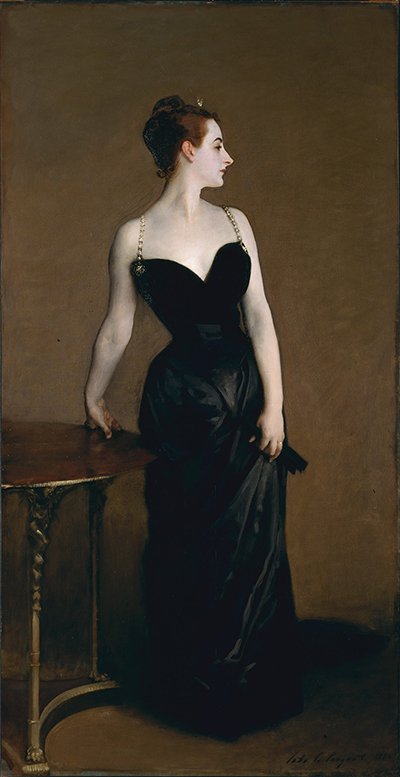
That standard matters because Sargent's art makes him easy to mythologize. Viewers see fast brushwork and assume he must have spoken in crisp aphorisms about speed. They see society portraits and assume he must have left sharp remarks about sitters. They see Madame X and expect dramatic confessions. Some of those expectations may feel plausible, but plausibility is not evidence.
The MFA Sargent Archive is important because it shifts attention from legend to documentation. Letters and papers do not merely supply quotable lines. They show the daily structures around the art: patrons, family, travel, studios, exhibitions, props, photographs, inventories, and works in progress. A sentence taken from that world should remain attached to that world. [1], [2]
Sargent In Letters
Sargent's surviving correspondence is valuable because it returns a human scale to an artist often remembered through grand surfaces. The MFA's archive material emphasizes that behind the paintings are letters, photographs, sketches, props, and studio records. The title Yours Sincerely, John S. Sargent captures the ordinary social form of correspondence: not a grand artistic manifesto, but the written voice of a person maintaining relationships. [1], [2]
That ordinary form is exactly why the letters matter. A letter can show impatience, tact, humor, business, friendship, family feeling, or practical concern. It may discuss a work of art directly, but it may also reveal the network that allowed the work to happen. Sargent's paintings were made through sittings, travel, introductions, materials, exhibition plans, purchases, gifts, and institutional decisions. Correspondence keeps those pressures visible.
For readers looking for "Sargent quotes," this is a useful correction. The best phrase is not always the most dramatic phrase. Sometimes the strongest evidence is a practical statement about a painting, an archive note that places a letter with a drawing, or a museum record that connects words to a specific object.
The Madame Gautreau Letter And Drawing
The Met's Madame Gautreau Peering over the Top of a Piano is one of the best examples of Sargent's words and images meeting in the same record. The work is not a finished portrait. It is an ink drawing within a letter to Albert Millbank, connected with the period when Sargent was circling Virginie Gautreau as a subject. [3], [4]
The record matters because it pulls Madame X away from pure legend. The finished painting can seem cold, monumental, and distant. The letter drawing is slighter, wittier, and more immediate. Gautreau appears not as the severe museum icon, but as someone glimpsed through the lively, sometimes comic process of looking. The familiar crescent ornament helps connect the informal drawing to the final portrait's self-fashioned image.
This is the kind of Sargent "quote" context that can be trusted: not a loose saying about art in general, but a documented trace of the artist thinking and joking around a real work, a real sitter, and a real correspondent. The value lies in the connection among word, drawing, person, and painting.
Why Context Matters More Than A Quote List
Sargent's art was built from relationships, and his words should be read the same way. A sentence about a painting may change meaning if it was written before exhibition, after criticism, during sale negotiations, or years later when the artist was shaping a work's afterlife. A phrase from a family letter is not the same kind of evidence as a museum acquisition letter or a comic note to a friend.
This is especially true around Portrait of Madame X. The painting's history includes ambition, scandal, revision, retention, and eventual acquisition by The Met in 1916. Sargent's documented decisions around the title and placement of the work are more useful than invented drama. They show an artist still managing the meaning of a painting decades after its first hostile reception. [3], [4]
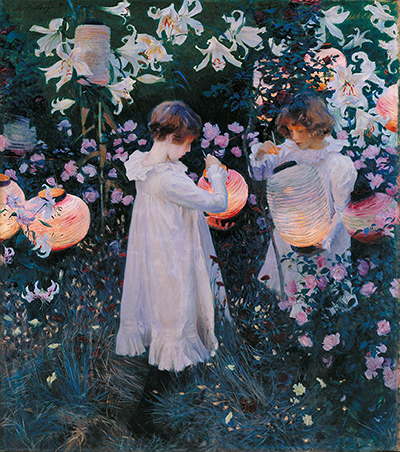
The same principle applies across Sargent's career. A note about Carnation, Lily, Lily, Rose, a correspondence record around Boston, or a letter attached to a sketch should not be flattened into an inspirational line. The words belong to the work.
Related Works And Where To Go Next
For the life behind the correspondence, start with Biography. It places the letters within Sargent's movement from Florence to Paris, London, Boston, travel, public commissions, and war art.
For the kind of portrait world that generated many of the best documents, use Portraits. Sargent's sitters, patrons, friends, actors, artists, presidents, and military figures all depended on social exchange as well as paint.
For the clearest letter-and-drawing example, continue to Portrait of Madame X and Drawings. The Madame Gautreau materials show how a famous oil portrait can be surrounded by sketches, humor, frustration, and repeated looking.
For the working method behind Sargent's words, use Style and Technique. It explains how studies, materials, letters, conservation evidence, and brushwork all change the idea of effortless brilliance.
Discussion
Sargent's most reliable words ask readers to slow down. They do not turn him into a slogan machine. They return him to letters, studios, sitters, friends, archives, and works of art still carrying the pressure of their making.
Reader Insights
What is the first detail that shapes your reading of John Singer Sargent Quotes: pose, setting, light, costume, brushwork or historical context?
Which small visual decision begins to matter more after a longer look, and how does it change the mood of the page?
Which comparison helps most: another Sargent portrait, a travel subject, a public commission, or a work by one of his contemporaries?
Join the Conversation
Share a thoughtful comment below about what you notice, question or compare when looking at this page.
References
- Museum of Fine Arts, Boston, John Singer Sargent Archive finding aid https://www.mfa.org/collections/americas/the-john-singer-sargent-archive/finding-aid
- Museum of Fine Arts, Boston, *Yours Sincerely, John S. Sargent* https://www.mfa.org/news/yours-sincerely-john-s-sargent
- Metropolitan Museum of Art, *Madame Gautreau Peering over the Top of a Piano* https://www.metmuseum.org/art/collection/search/919018
- Metropolitan Museum of Art, *Madame X (Virginie Amelie Avegno Gautreau)* https://www.metmuseum.org/art/collection/search/12127