by Tom Gurney
Tom Gurney BSc (Hons) is an art history expert with over 20 years experience
Published on June 19, 2020 / Updated on July 19, 2026
Email: tomgurney1@gmail.com / Phone: +44 7429 011000
John Singer Sargent Drawings: Introduction
John Singer Sargent's drawings are not a quiet footnote to the famous oil paintings. They are one of the best ways to see how his art worked before it became dazzling. In graphite, charcoal, watercolor over graphite, sketchbooks, figure studies, portrait drawings, and mural studies, Sargent tested pose, light, rhythm, likeness, travel memory, and composition. Drawing was his workshop, his travel diary, his portrait alternative, and sometimes a finished public image in its own right.
The drawings matter because they interrupt the myth of effortless brilliance. Sargent could seem to pull a face, dress, hand, or figure from paint with startling speed, but the works on paper show repeated looking. They reveal him studying flowers for Carnation, Lily, Lily, Rose, dancers and musicians for El Jaleo, figure poses for Madame X, body groups for murals, and hundreds of late sitters in charcoal after he stepped away from many formal oil portrait commissions.
They also show a different Sargent: younger, faster, more private, more experimental, and sometimes more searching than the painter of public masterpieces. A sketchbook page may carry a mountain, a ship, a figure, a hand, a travel note, or the first idea for a major work. A charcoal portrait may replace the grand oil portrait with something swifter, quieter, and psychologically sharp. To study Sargent's drawings is to watch the painter thinking with line.
Contents
- Introduction
- Early Sketchbooks And Training
- Drawing Beyond The Portrait Studio
- Preparatory Studies For Major Paintings
- Charcoal Portraits After 1907
- Drawings, Watercolors And Mixed Media
- Mural And Public-Work Studies
- Archive, Catalogues And Research Value
- How To Read Sargent Drawings
- Key Drawing Paths
Early Sketchbooks And Training
Sargent's drawing practice began early. The Met's Beyond the Portrait Studio exhibition included early drawings from sketchbooks made in 1869 and 1870 during family travel in Switzerland. These sheets show a precocious young artist already using drawing to record place and form. Before Sargent became a Salon painter, he was a child of travel making visual notes. [1], [2]
His training strengthened that habit. The National Gallery of Art's artist record notes that Sargent received early instruction in Rome, attended the Accademia delle Belle Arti in Florence at intervals, and entered Carolus-Duran's Paris atelier in 1874. He also attended drawing classes at the Ecole des Beaux-Arts. Drawing was therefore both informal and formal: a travel practice and an academic discipline. [3]
Copying was another part of the education. The NGA record notes that Sargent copied Velazquez at the Prado during his 1879 Spain trip and copied Hals in connection with travel to Belgium and Holland. Copying taught him more than outline. It taught him how old masters organized bodies, light, edges, and gesture. This would later matter for oil paintings, but the discipline began with looking and drawing. [3]
The Met exhibition also included youthful copies after antiquities and after old and modern masters such as Michelangelo and Jean-Francois Millet. These copies show Sargent building a visual memory bank. He was not only learning how to draw a body or drapery fold; he was learning how artistic authority had been constructed before him. [1], [2]
Early drawing therefore has two functions in Sargent's career. It records movement through Europe, and it trains the eye through museums, schools, and copying. Both functions remain active later. The adult artist never stops using drawing as a way to absorb the world.
The sketchbook format matters here. A sketchbook is not a single exhibition picture. It is a sequence of looking. One page may solve a small problem while the next moves on to another subject. The Met's holdings of four Sargent sketchbooks, catalogued page by page, are valuable because they let viewers see drawing as habit rather than exception. [1], [2]
Drawing Beyond The Portrait Studio
The Met's Beyond the Portrait Studio exhibition is especially useful because it frames drawing as part of Sargent's larger escape from narrow portrait expectations. It notes that, although he was internationally recognized for society portraits by the mid-1880s, he had been attracted from the start to subjects of everyday life. After about 1905, he declined many commissions and devoted more energy to travel and mural-related work. [1], [2]
Drawing supported that movement outward. The Met exhibition included more than one hundred paintings, drawings, and watercolors that showed Sargent studying subjects beyond the portrait studio. His works on paper recorded travel, architecture, figure groups, performers, and landscape effects. They helped him gather material quickly and return to visual problems outside the demands of a sitter. [1], [2]
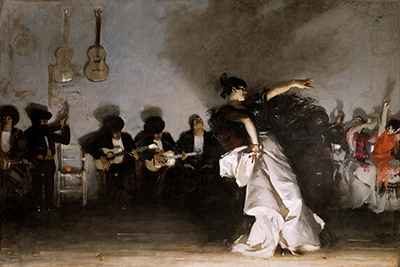
Spain and Morocco were central. The Met exhibition notes that Sargent's 1879-80 trip is represented by sketches of Spanish musicians and dancers, including studies related to El Jaleo, as well as architectural views such as Moorish buildings and courtyards in Tetuan. These drawings are not casual souvenirs. They are the seedbed for major paintings and for Sargent's larger Spanish imagination. [1], [2]
Venice, the Alps, North Africa, the Near East, Florida, and the Rocky Mountains also entered his works on paper. Some of these belong more directly to watercolor, but many combine graphite with watercolor, gouache, or other media. The boundary between drawing and watercolor is therefore porous in Sargent. A line can be the foundation of a wash; a travel sheet can be both drawn structure and color event.
Drawing gave Sargent speed. A travel painting in oil required more setup, but a drawing could seize a posture, doorway, mountain edge, boat, costume, or architectural rhythm. That speed matters because Sargent was a restless traveler. Works on paper let him keep pace with looking.
Travel drawing also changes the idea of finish. A sketch may not need polished completion if it records the essential problem: a musician's angle, the tilt of a roof, a mountain contour, the pattern of a facade, or the relation between figure and shadow. Sargent's drawings often look alive because they stop when the necessary observation has been secured.
Preparatory Studies For Major Paintings
Sargent's major paintings often depend on drawing and study. The finished canvases may look fluid, but the drawings reveal how carefully he solved problems of pose, placement, action, and detail.
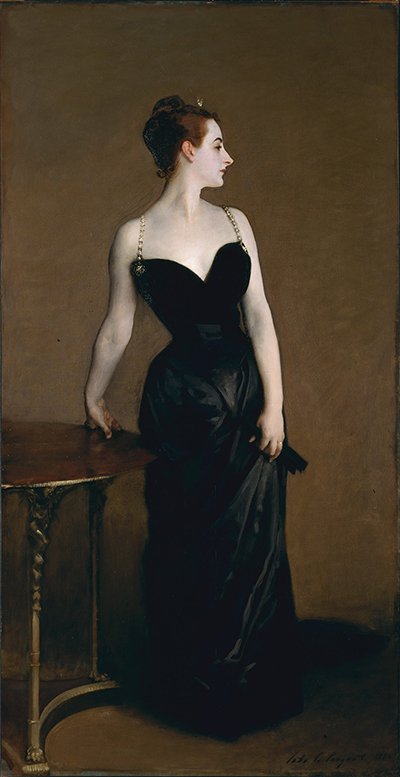
The studies for Madame X are a clear example. The Met holds Virginie Amelie Avegno Gautreau, Study for "Madame X", a graphite sheet from 1883-84. The British Museum also holds graphite portrait studies of Gautreau connected to the painting. These drawings show Sargent testing the sitter's body, profile, seated or standing attitude, and the relation between pose and display before the famous oil portrait took its final severe form. [1], [2]
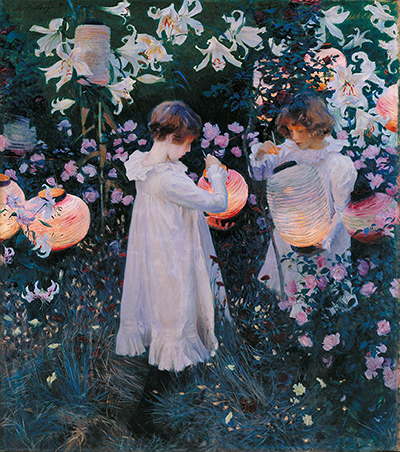
For Carnation, Lily, Lily, Rose, British Art Studies provides unusually rich evidence of process. The article notes that Sargent made many studies and sketches for the picture, including figure studies, flower studies, and compositional experiments. A letter to Emily Sargent included a small compositional sketch. Met lily studies and other flower drawings show that the garden was built through close study, not decorative guessing. [4]
The same article shows how drawing and painting worked together. Sargent adjusted the relation of the girls, the format of the canvas, and the flowers and lanterns over time. Drawing did not merely precede painting; it helped him think through a painting that itself changed during execution.
El Jaleo offers another comparison. The Gardner Museum holds Study for El Jaleo: Seated Musicians, a charcoal and graphite drawing from 1881. The Met holds After "El-Jaleo", a graphite and watercolor work from about 1882. These works show Sargent isolating the performance structure: musicians, seated bodies, rhythm, and the dancer's energy. The final painting may feel like a burst of sound, but it is rooted in drawn observation. [1], [2]
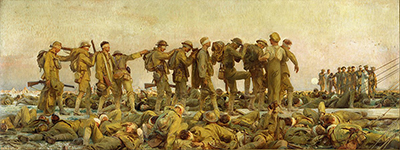
Drawings also mattered for Gassed. The National Gallery of Art holds Studies for "Gassed", and the Cleveland Museum of Art holds a study of a soldier drinking connected with the final painting. These works show Sargent working through bodily support, hands, posture, and the practical facts of wounded men before making a monumental war image. [3]
Preparatory drawing is therefore not merely technical backup. It is the place where Sargent decides what a painting can become.
These studies also teach readers how to look at finished paintings. A viewer who has seen the Gautreau graphite studies will notice more sharply how Madame X depends on profile, shoulder line, and arm placement. A viewer who has seen the Carnation studies will understand that each lily and lantern belongs to a chain of decisions. A viewer who has seen El Jaleo studies will recognize how much music and movement had to be solved through seated bodies as well as through the central dancer.
Charcoal Portraits After 1907
Sargent's late charcoal portraits form a major body of work. The National Portrait Gallery Smithsonian exhibition John Singer Sargent: Portraits in Charcoal states that in 1907, at the height of his success as a portraitist, Sargent stopped painting portraits in oil and turned to charcoal, producing several hundred portraits of people known for accomplishments in art, music, literature, theatre, politics, and society. [5]
The Morgan Library & Museum describes the same shift: Sargent largely ceased painting portraits in 1907 and used charcoal drawings to satisfy portrait commissions. These portraits demonstrate immediacy, psychological sensitivity, and mastery of light and dark similar to what animated his sitters on canvas.
This late charcoal practice changes the meaning of Sargent as a portrait artist. He did not simply abandon portraiture. He changed its medium and pressure. Charcoal allowed him to work faster and with less of the burden attached to large oil commissions. The sitter could be captured through head, shoulders, tone, and expressive economy rather than the full machinery of costume, props, and painted surface.
The sitters also matter. The Smithsonian exhibition describes a network of trailblazing men and women who helped define twentieth-century Anglo-American culture. The image gallery includes figures from theatre, poetry, fashion, politics, diplomacy, and civil rights. Sargent's late drawings therefore extend the portrait network mapped by the oil portraits. They show him still engaged with public people, but in a different register. [5], [3]
Charcoal gave Sargent strong contrasts and soft transitions. A face could emerge from dark paper tone or broad shadows. A collar, hair mass, cheek, eye, or hand could be suggested with remarkable economy. Compared with the oil portraits, the charcoal portraits often feel stripped down. They rely less on fabric and environment, more on head, gaze, and tonal presence.
This makes them essential, not secondary. They reveal what remains when Sargent removes much of the theatrical apparatus of oil portraiture. The answer is still likeness, but also speed, character, and controlled incompletion.
The late charcoal portraits also widen the social record of Sargent's art. The Smithsonian exhibition included sitters known for theatre, poetry, fashion, politics, diplomacy, and reform. These drawings show that Sargent remained close to the cultural elite of his time, but the medium changes the encounter. The sitter does not need to be embedded in a large painted setting. A head and shoulders, if handled with enough tonal intelligence, can carry public identity. [5]
The NPG exhibition's claim that this was the first major exhibition of Sargent's portrait drawings in more than fifty years helps explain why the charcoal works can be overlooked. They are numerous and important, but they do not sit in the popular imagination as firmly as Madame X or Lady Agnew. A drawings hub gives them the structural place they deserve. [5]
Drawings, Watercolors And Mixed Media
Sargent's drawings often overlap with watercolor. Many works on paper combine graphite with watercolor, gouache, wax resist, or other materials. The Met's exhibition photo gallery includes examples such as Schreckhorn, Eismeer from an early mountain sketchbook, watercolor and graphite travel sheets, and later works where drawing underlies color. [1], [2]
This overlap is important because drawing is not always a separate category in Sargent. A graphite line may establish architecture before color defines light. A travel sheet may begin as contour and become atmosphere. A watercolor may preserve the speed of drawing even when color dominates.
The watercolors essay carries the fuller account of Sargent's watercolor practice. The drawings hub focuses on the underlying act: line as decision. In Sargent, line can measure a figure, secure a pose, map a building, test a flower stem, or hold a face before tone and color arrive.
This overlap also helps explain why some museum records describe works with multiple media rather than a single category. A sheet may be graphite and watercolor, charcoal and graphite, or watercolor over graphite. Sargent did not always separate media according to later page structures. He used what the subject required.
Mixed media also suited travel. A pencil could record quickly; watercolor or gouache could be added to catch light, weather, or surface. This flexibility explains why Sargent's works on paper are so central to his later career. They allowed him to keep moving.
Mural And Public-Work Studies
Drawing was also essential to Sargent's mural and public work. The NGA artist page lists late studies from the Corcoran Collection, including Study for "The Danaides", Study for "Phaethon", Study for "Philosophy", and Studies of Notus for "The Winds". These are charcoal and graphite studies from 1922-25 connected to large figure and allegorical projects. [3]
Such drawings show Sargent thinking in bodies at a different scale from portraiture. A mural study may require a falling figure, a draped body, a group of hands, or a mythological pose. The task is not likeness but structure, motion, and legibility at public scale.
The same skills connect back to earlier work. Sargent's knowledge of hands, shoulders, drapery, and body weight in portraits could be redirected toward allegory. His ability to make a figure read quickly in a large painting depended on drawing.
For the public-commissions essay, these studies are especially valuable. They show that murals were not simply grand designs executed in paint. They were built from figure problems, tested and refined on paper.
The NGA late studies also show that drawing remained active at the end of his career. Sargent was not drawing only as a student or as a preparer of early Salon pictures. In the 1920s, he was still using charcoal and graphite to test large bodies, symbolic gestures, and decorative movement. Drawing stayed with him from youth to late public ambition. [3]
Archive, Catalogues And Research Value
The survival of Sargent's drawings has transformed scholarship. The MFA Sargent Archive finding aid describes a collection of written papers, correspondence, inventories, photographs, scrapbooks, and research materials. It also notes related works of art in the MFA's Department of Prints and Drawings and Art of the Americas. [6], [7]
The MFA's Yours Sincerely, John S. Sargent material emphasizes that behind the famous paintings lies another legacy: letters, photographs, sketches, props, studio material, and documentation of the artist's world. Sketches and photographs of studios reveal the spaces of his labor. This matters because drawings are not only beautiful objects; they are evidence. [6], [7]
The Met's Sargent drawings and watercolors catalogue is another foundation. It catalogues all 337 Sargent sheets in the museum and every page from four sketchbooks, analyzing them within his work as a whole. Such catalogues make it possible to see patterns across what might otherwise look like scattered studies. [1], [2]
The archive and catalogue context also protects against an over-polished view of Sargent. The drawings show starts, trials, travel notes, unfinished thoughts, and alternatives. They restore difficulty to an artist often remembered for ease.
They also connect the studio to the world beyond the studio. The MFA exhibition material points to props, photographs, sketches, correspondence, and studio spaces. Drawings sit among those materials as evidence of labor. They show what Sargent looked at, what he kept, what he changed, and what he needed to remember. [6], [7]
How To Read Sargent Drawings
Begin with line pressure. Is the line faint, searching, dark, blunt, or decisive? Sargent's drawn marks often reveal how sure he was about a form. A tentative contour may show discovery; a heavy charcoal edge may show final emphasis.
Then look at what he leaves out. Sargent often omits more than he describes. A hand, head, shoulder, or flower may be enough to carry the study. The blank paper is not empty failure. It is part of the economy.
Pose is crucial. In studies for portraits and figure paintings, the body often matters before the face. Notice where weight falls, how arms are placed, how a head turns, or how a hand completes an action. These details often become the core of later paintings.
In charcoal portraits, watch the balance between light and dark. Sargent can build a sitter from a few major tonal decisions. The face may seem to emerge from shadow rather than sit inside a fully described room.
For travel drawings, ask what caught his eye: architecture, costume, movement, landscape, or light. The answer usually reveals the problem he wanted to solve, not just the place he visited.
For preparatory studies, compare the drawing with the final painting if possible. Look for what changed. A figure may shift, a gesture may sharpen, a flower may move, or an entire composition may tighten. The difference between drawing and painting often reveals the artistic decision.
Key Drawing Paths
For preparatory drawing, start with the studies for Madame X, Carnation, Lily, Lily, Rose, El Jaleo, and Gassed. These show how major paintings develop through paper.
For portrait drawing, use the late charcoal portraits and the portraits hub. They show Sargent's shift after 1907 and his continued engagement with notable sitters. [3]
For travel works on paper, move between the drawings and watercolors pages. Sargent's graphite often supports watercolor, and his travel eye works across both media.
For public work, connect drawings to the public-commissions page and late mural studies. These reveal the figure discipline behind large decorative projects.
For method, use style and technique. Drawing is one of the clearest ways to see Sargent's decisions before paint conceals the struggle.
Browse Sargent Drawings
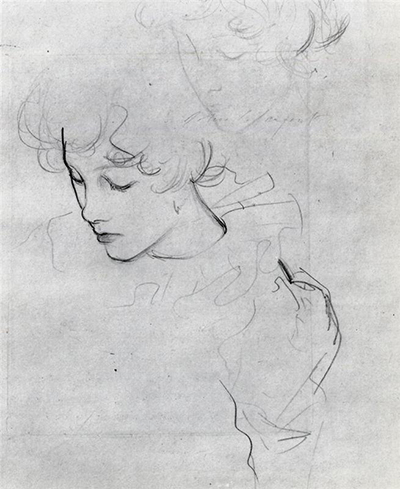
Polly Barnard
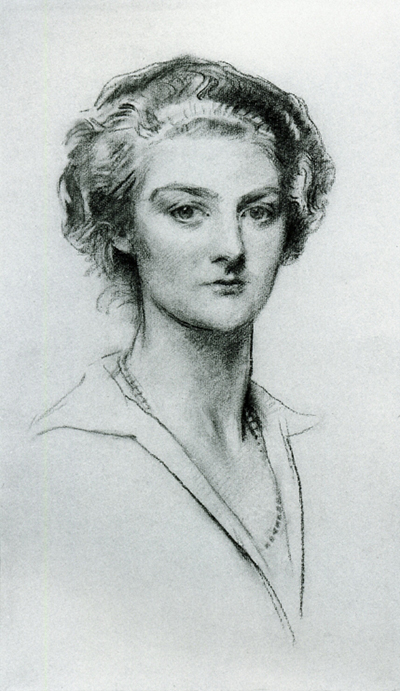
Miss Elizabeth Williamson
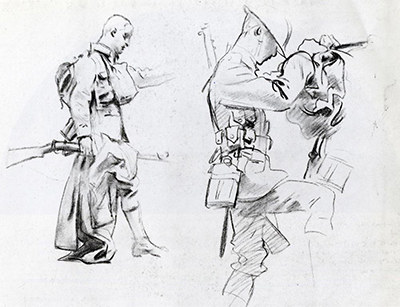
Two Studies for Soldiers of Gassed
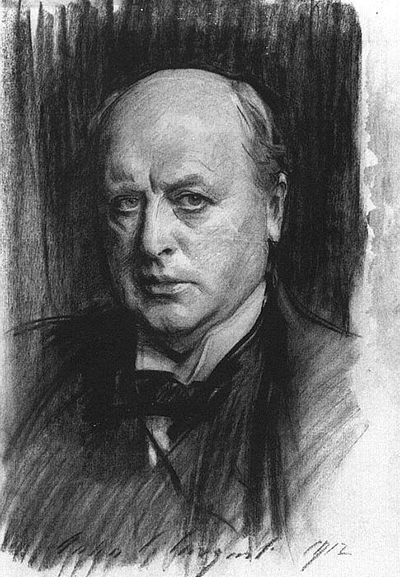
Portrait of Henry James
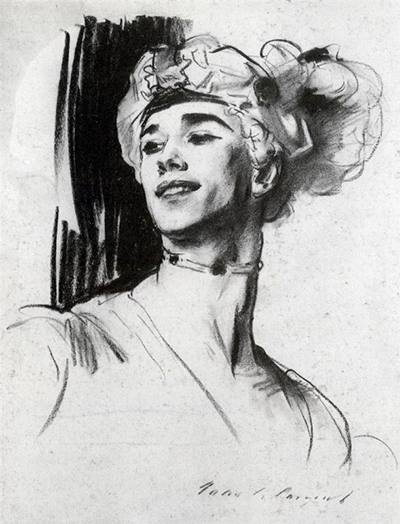
Vaslav Nijinsky in Le Pavillon d'Armide
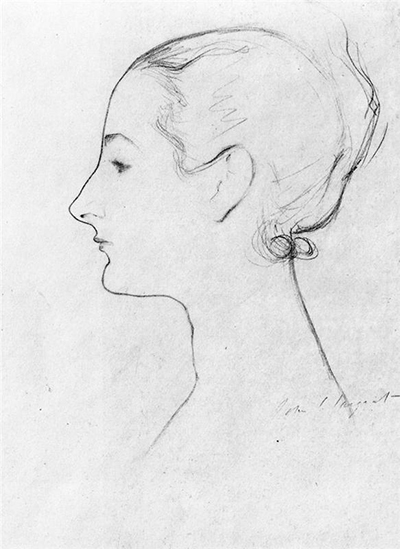
Study for Madame X
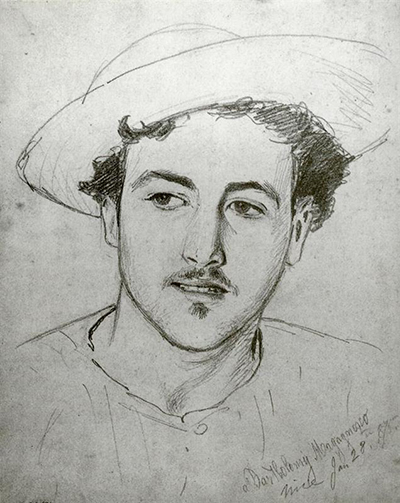
Bartholomy Magagnosco
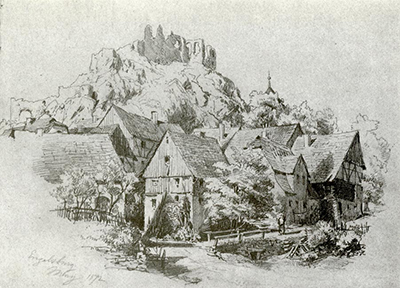
Engelsburg
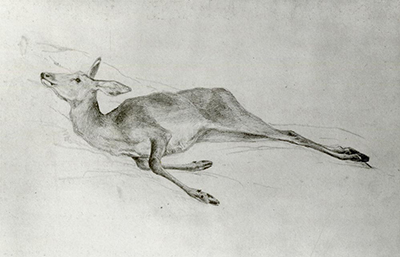
Deer
Frequently Asked Questions
Yes. Sargent made drawings throughout his life. The Met catalogue covers 337 sheets and four sketchbooks in that museum alone, while the MFA describes his total output as including countless sketches. [1], [2]
He made childhood sketchbook drawings, student copies, travel sketches, figure studies, preparatory studies for paintings, charcoal portraits, and mural studies.
Yes. Studies for works such as Madame X, Carnation, Lily, Lily, Rose, El Jaleo, and Gassed show him solving pose, figure, flower, music, and composition problems before or around the final paintings.
After 1907, Sargent moved away from many formal oil portrait commissions but continued making portrait drawings in charcoal. These drawings allowed him to capture sitters with speed, economy, and psychological force.
Major holdings include The Metropolitan Museum of Art, the Museum of Fine Arts, Boston, the Morgan Library & Museum, the Smithsonian National Portrait Gallery, the National Gallery of Art, the British Museum, and other public and private collections. [1], [2]
The categories often overlap. Drawings emphasize line, tone, pose, and structure, while watercolors add color and light. Many Sargent travel sheets use graphite as the basis for watercolor.
Look for line pressure, omitted areas, pose, hands, head angle, tonal contrast, and the relation between a quick mark and a later finished work.
Discussion
Sargent's drawings ask whether a quick mark can reveal more about artistic thought than a finished masterpiece. Often, the answer is yes.
Reader Insights
What is the first detail that shapes your reading of John Singer Sargent Drawings: pose, setting, light, costume, brushwork or historical context?
Which small visual decision begins to matter more after a longer look, and how does it change the mood of the page?
Which comparison helps most: another Sargent portrait, a travel subject, a public commission, or a work by one of his contemporaries?
Join the Conversation
Share a thoughtful comment below about what you notice, question or compare when looking at this page.
References
- The Metropolitan Museum of Art, *John Singer Sargent Beyond the Portrait Studio* https://www.metmuseum.org/exhibitions/listings/2000/john-singer-sargent
- Stephanie L. Herdrich and H. Barbara Weinberg, *American Drawings and Watercolors in The Metropolitan Museum of Art: John Singer Sargent* https://www.metmuseum.org/fr/met-publications/american-drawings-and-watercolors-in-the-metropolitan-museum-of-art-john-singer-sargent
- National Gallery of Art, John Singer Sargent artist record https://www.nga.gov/artists/1858-john-singer-sargent
- Rebecca Hellen and Elaine Kilmurray, "Carnation, Lily, Lily, Rose and the process of painting" https://britishartstudies.ac.uk/issues/02/sargent-conservation
- Smithsonian National Portrait Gallery, *John Singer Sargent: Portraits in Charcoal* https://npg.si.edu/exhibition/john-singer-sargent-portraits-charcoal
- Museum of Fine Arts, Boston, John Singer Sargent Archive finding aid https://www.mfa.org/collections/americas/the-john-singer-sargent-archive/finding-aid
- Museum of Fine Arts, Boston, *Yours Sincerely, John S. Sargent* https://www.mfa.org/exhibitions/yours-sincerely-john-s-sargent