 by Tom Gurney
Tom Gurney BSc (Hons) is an art history expert with over 20 years experience
Published on June 19, 2020 / Updated on July 19, 2026
Email: tomgurney1@gmail.com / Phone: +44 7429 011000
John Singer Sargent Prints: Introduction
John Singer Sargent is not usually introduced through printmaking, but his lithographs deserve a careful place inside the larger story of his works on paper. They show an artist known for oil portraits, watercolors, murals, and charcoal drawings thinking in a medium where drawing could become a multiple image. The result is not a large separate career as a printmaker. It is a small, revealing body of work that clarifies how much Sargent could do with line, tone, posture, and omission.
Prints matter for Sargent because they reduce the familiar spectacle. The viewer is not first overwhelmed by satin, lantern light, red drapery, Spanish shadow, or the full social theatre of a portrait. Instead, a lithograph asks what remains when the image is carried by a drawn mark and printed tone. In Sargent's case, what remains is still unmistakably alert: a figure held by pose, a robe shaped by dark and light, a body placed with economy, and the artist's confidence in leaving parts unresolved.
The Metropolitan Museum of Art's essay on Sargent as a lithographer places his printmaking in the 1890s and links it to transfer lithography, Frederick Goulding, and the renewed late nineteenth-century interest in lithography as an original artistic medium [1]. Institutional records for Study of Young Man in a Robe, Standing at the Met and Study of a Young Man, Seated at the National Museum of Western Art give concrete examples of the kind of figure study through which Sargent's printmaking can be understood [2], [3]. These works do not overturn the story of Sargent's career. They sharpen it.
At a Glance
- ArtistJohn Singer Sargent [1]
- Focuslithographs and printmaking within Sargent's works on paper [1]
- Key moment1895 transfer lithographs discussed by the Metropolitan Museum of Art [1]
- Printer and collaboratorFrederick Goulding, central to the Met's account of Sargent's lithographs [1]
- Public contexta Paris lithography exhibition connected with the 1895 group of works [1]
- Object examplesStudy of Young Man in a Robe, Standing at the Metropolitan Museum of Art and Study of a Young Man, Seated at the National Museum of Western Art [2], [3]
- Best comparison pagesdrawings, watercolors, style and technique, paintings, portraits, biography, and the main Sargent overview [1]
Contents
- Introduction
- Why Prints Matter In A Sargent Career
- Lithography And The 1895 Moment
- Figure Studies In Print
- Prints Beside Drawings And Watercolors
- Reproduction And Artistic Afterlife
- Related Works And Where To Go Next
Why Prints Matter In A Sargent Career
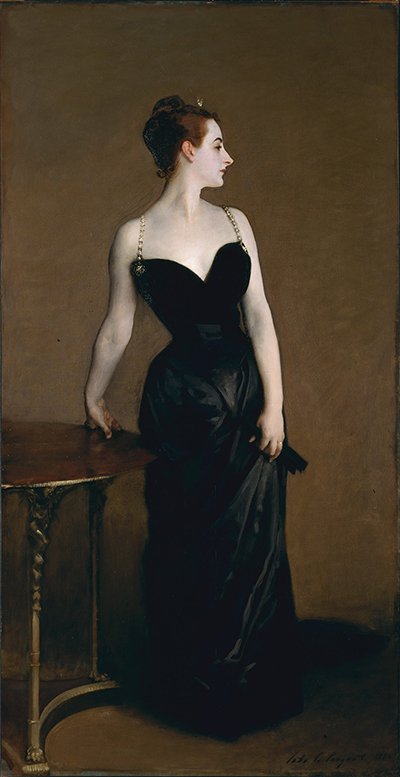
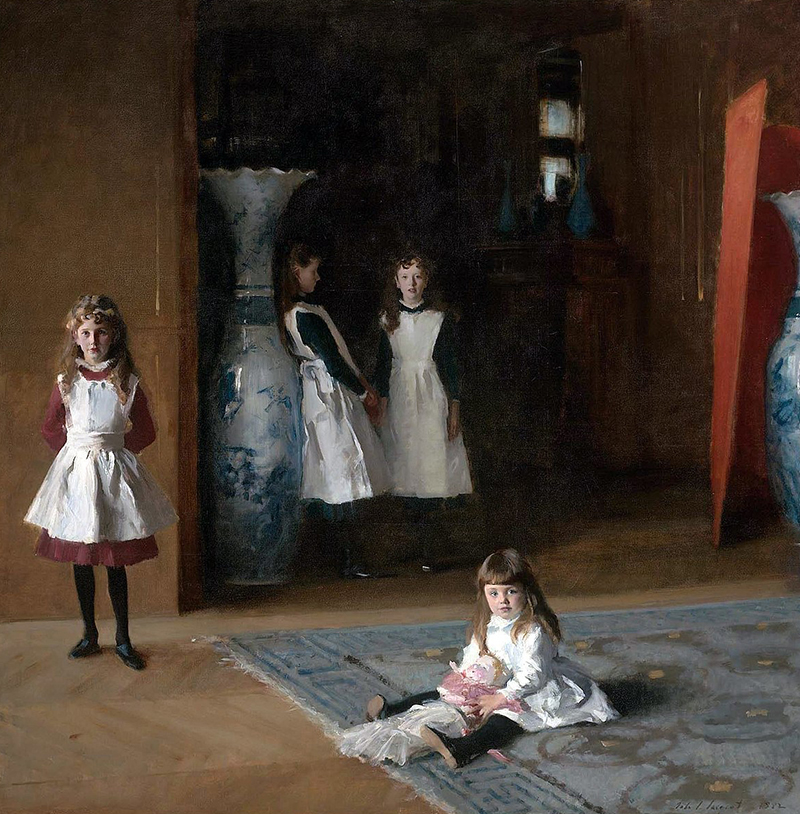
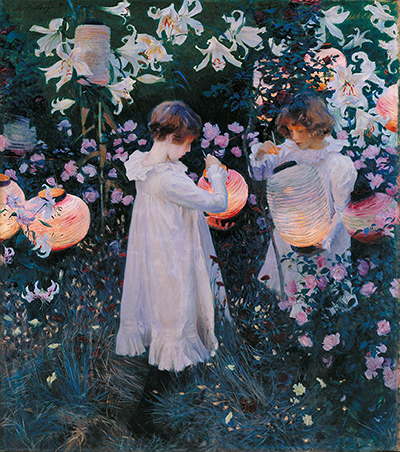
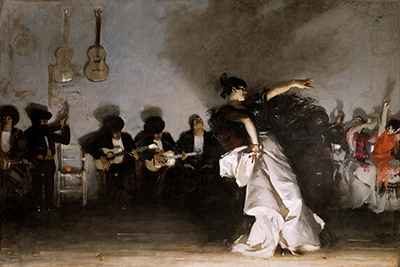
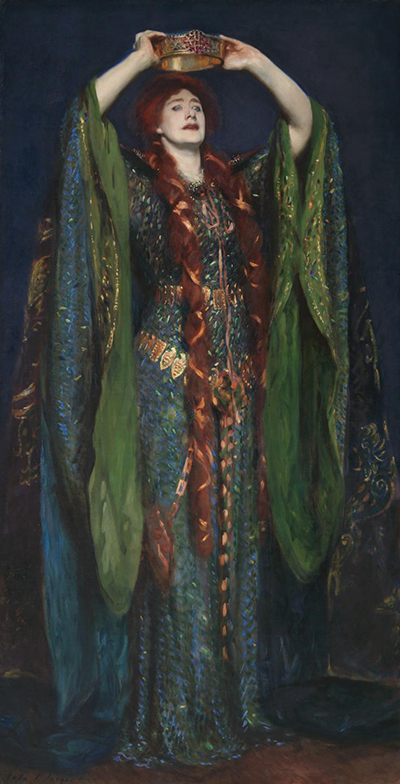
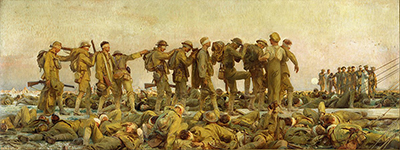
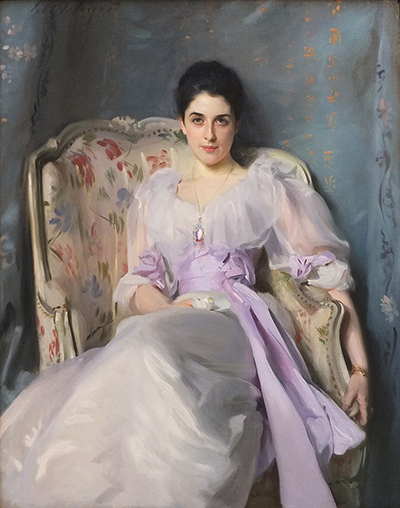
Sargent's reputation usually rests on singular works. Portrait of Madame X, The Daughters of Edward Darley Boit, Carnation, Lily, Lily, Rose, El Jaleo, Lady Agnew of Lochnaw, and Gassed all depend on the aura of an individual object. They are paintings with presence, scale, surface, and institutional identity. A lithograph works differently. It is made through a process that allows more than one impression, and that shift changes the viewer's sense of what Sargent is doing.
The prints ask us to think less about public display and more about translation. A drawn idea has to survive its passage into another medium. The pressure of the hand, the weight of the dark, the summary of a garment, and the relation between figure and blank paper all become central. This is why the prints belong near the drawings and style pages. They are not decorative extras. They are evidence for how Sargent organized a figure when color and painterly bravura were reduced.
They also complicate the simple portrait-painter label. The biography and overview pages frame Sargent as an artist of portraits, murals, watercolors, drawings, prints, travel subjects, and war art. The printmaking part of that list is small, but it prevents the career from narrowing too far. Sargent's art moved across surfaces and functions. Some works had patrons and sitters. Some recorded travel. Some prepared major paintings. Some, like the lithographs, explored how a drawn image could enter a culture of printed multiples.
That does not mean Sargent became a print specialist. The point is more precise. His lithographs reveal the same habits that make his paintings and drawings powerful: selection, pose, tonal force, and an instinct for when the image has said enough.
Lithography And The 1895 Moment
The Met's lithography essay identifies 1895 as the key moment for Sargent's printmaking and describes a group of transfer lithographs made in that period [1]. Transfer lithography matters because it lets an artist draw on a prepared surface or paper and have that drawing transferred for printing. For Sargent, whose authority often begins in a confident mark, the medium offered a way to preserve the character of drawing while producing impressions.
Frederick Goulding is central to this story. The Met essay names Goulding in connection with Sargent's lithographs, placing the artist's experiment within a professional printing context [1]. That collaboration matters because prints are made through skill on both sides: the artist's mark and the printer's knowledge of how that mark will behave in production. The lithograph is not simply a drawing copied by mechanical means. It is an object shaped by the practical intelligence of printmaking.
The Paris exhibition context is equally important. The Met places Sargent's lithographs in relation to a Paris lithography exhibition, which situates them inside a wider revival of interest in lithography as an art medium rather than only a tool of reproduction [1]. Sargent was not working in isolation. He was participating, briefly and selectively, in a moment when artists, printers, collectors, and museums were thinking about original prints with new seriousness.
This helps explain why the prints are best understood as original works, not merely as copies after paintings. Later reproduction would become central to Sargent's fame, as photographs, books, posters, and printed images carried his paintings far beyond their museums. But the lithographs discussed here belong to the artist's own works on paper. They are part of his making, not only the later circulation of his reputation.
That distinction is crucial. A reproduction after Madame X or Lady Agnew spreads an already finished image. A Sargent lithograph is itself the image Sargent made for the printed medium. It has its own economy, its own surface, and its own decisions about what to describe.
Figure Studies In Print
The two strongest object examples are figure studies. The Met record for Study of Young Man in a Robe, Standing and the National Museum of Western Art record for Study of a Young Man, Seated both point toward the body as Sargent's central print subject [2], [3]. That is fitting. Sargent's art often begins with the figure: how a body stands, turns, sits, carries fabric, rests weight, or holds attention.
In Study of Young Man in a Robe, Standing, the title alone tells us several important things. The figure is young. He stands. He wears a robe. The problem is therefore not narrative but pose and drapery. A robe gives Sargent a broad field of tone and fold. A standing body gives him vertical structure. The print can be read as a test of how much presence can be built from the relation between the body and the garment.
This is close to Sargent's larger portrait intelligence. He was a painter who understood that costume is never merely costume. In the oil portraits, a black dress, red robe, military coat, actress's costume, or white sleeve can organize the sitter's whole public image. In a lithographic study, that social theatre is stripped down, but the structural problem remains. Fabric carries the body. Tone gives weight. The figure has to stand convincingly before any story can begin.
Study of a Young Man, Seated shifts the problem from vertical stance to seated arrangement [3]. Sitting is one of Sargent's great portrait challenges. In the paintings, a seated figure can become relaxed, tense, formal, bored, theatrical, or commanding depending on the angle of the torso, the placement of hands, and the relation between body and chair. In a lithograph, the same issue becomes more economical. The seated body must be made legible through fewer means.
Seen together, the standing and seated studies make Sargent's printmaking feel less like a detour and more like a concentrated exercise in figure design. They are close to the world of drawing because they depend on line and tone. They are close to portraiture because the body is being arranged for looking. They are close to style and technique because they reveal hierarchy: what is emphasized, what is softened, and what is left for the viewer to complete.
Prints Beside Drawings And Watercolors
Sargent's prints belong naturally beside his drawings, but they are not the same thing. A drawing usually remains a single sheet. A lithograph enters the logic of impressions. That difference matters because it changes the status of the mark. The line still feels immediate, but it has been prepared for repetition.
The drawings page gives the larger context. Sargent drew throughout his life: sketchbooks, student studies, travel sheets, portrait drawings, figure studies, studies for paintings, charcoal portraits, and mural work. The prints sit inside that paper world. They are one way of seeing how his drawn intelligence could cross into another form.
The watercolors create a different comparison. Watercolor forced Sargent to act quickly and decide what to reserve, wash, define, or omit. Lithography also rewards selection. A print can become dull if it tries to imitate every effect of painting. Its strength lies in accepting the medium's limits: a reduced range, a disciplined tone, a figure carried by essentials.
That is why Sargent's prints should not be judged by asking whether they provide the color or dazzle of the oils. They do something else. They clarify the skeleton of his seeing. If a painting shows the full performance, a lithograph shows the artist testing how much of the performance can survive as line, mass, and printed tone.
This also explains why the print page needs to stay linked to drawings rather than swallowed by them. The drawing connection is essential, but printmaking adds questions of transfer, printing, impressions, and circulation. Those questions give the works their particular historical interest.
Reproduction And Artistic Afterlife
Prints also open a wider question: how did Sargent's images move through the world? During his life and after it, his paintings became known not only to people who saw them in person but also to readers, collectors, students, and museum audiences encountering them through printed images. That broader reproduction history is not the same as Sargent's own lithography, but the two topics touch.
An artist-made lithograph begins with Sargent's hand and a printmaking process. A later reproduction after a painting begins with an existing work and aims to transmit its appearance. Confusing the two would flatten the story. Keeping them distinct makes the story richer. Sargent's lithographs show him entering print as a maker. Reproductions after his paintings show how his fame traveled once the works had become landmarks.
The prints therefore help us think about artistic afterlife without reducing Sargent to celebrity. A painter of society portraits depended on direct presence: the sitter, the studio, the painted canvas, the exhibition, the patron's home, the museum wall. A print belongs to a different rhythm. It can exist in impressions, collections, portfolios, and study rooms. It carries the image into a more dispersed field of looking.
For modern viewers, that may be one of the most useful things about the lithographs. They slow down the Sargent myth. Instead of asking only how he dazzled, they ask how he structured. Instead of focusing only on the famous sitter, they return attention to the body, the mark, and the printed surface. They make Sargent smaller in scale and larger in implication.
Related Works And Where To Go Next
For the closest medium context, go to Drawings. That essay gives the broader account of Sargent's works on paper, including studies, sketchbooks, charcoal portraits, travel sheets, and preparatory drawings.
For the handling of mark, omission, paper, and controlled freshness, Style and Technique is the best next step. The lithographs make sense beside Sargent's decisions about line, tone, pose, edges, and finish.
For color and travel practice on paper, use Watercolors. For oil painting as the public center of the career, use Paintings. For sitter identity, pose, clothing, and public image, use Portraits.
The full career frame sits at John Singer Sargent and Biography. Those pages keep the prints in proportion: small in number, but important for understanding the range of Sargent's art.
Frequently Asked Questions
Yes. Sargent made lithographs, with the Met's account emphasizing a group of transfer lithographs from 1895 [1]. Printmaking was not the largest part of his career, but it was a real part of his works-on-paper practice.
The main printmaking evidence concerns lithographs. The Met essay discusses transfer lithographs, while the Met and National Museum of Western Art records provide examples of figure studies in lithographic form [1], [2], [3].
Frederick Goulding was the printer connected with Sargent's lithographs in the Met's account [1]. His role matters because lithography depends on both the artist's drawing and the printer's technical skill.
No. Sargent's lithographs are artist-made prints. Reproductions after his paintings are later images that transmit an existing painting. Both relate to circulation, but they are not the same kind of object.
They reveal Sargent's figure sense in a reduced medium. Without the color and surface of the famous oils, the lithographs emphasize line, tone, posture, drapery, and the discipline of omission.
Start with the drawings and style-and-technique pages. They explain the works-on-paper practice and the visual decisions that make the lithographs meaningful.
Discussion
Sargent's prints ask what happens when the painter of dazzling surfaces accepts a quieter test: can a figure live through line, tone, and a printed mark?
Reader Insights
What is the first detail that shapes your reading of John Singer Sargent Prints: pose, setting, light, costume, brushwork or historical context?
Which small visual decision begins to matter more after a longer look, and how does it change the mood of the page?
Which comparison helps most: another Sargent portrait, a travel subject, a public commission, or a work by one of his contemporaries?
Join the Conversation
Share a thoughtful comment below about what you notice, question or compare when looking at this page.
References
- The Metropolitan Museum of Art, "Now on View: Lithographs by John Singer Sargent" https://www.metmuseum.org/perspectives/john-singer-sargent-as-lithographer
- The Metropolitan Museum of Art, *Study of Young Man in a Robe, Standing* https://www.metmuseum.org/en/art/collection/search/392816
- The National Museum of Western Art, *Study of a Young Man, Seated* https://collection.nmwa.go.jp/G.2017-0117.html