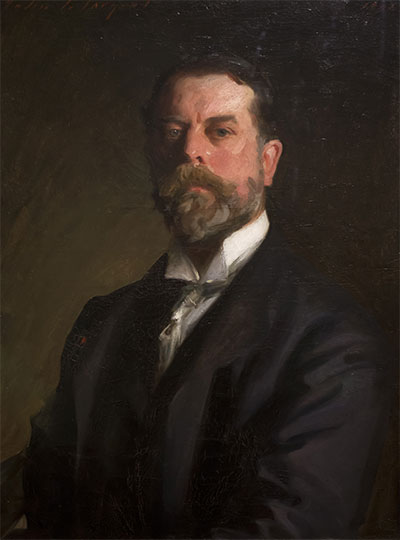
 by Tom Gurney
Tom Gurney BSc (Hons) is an art history expert with over 20 years experience
Published on June 19, 2020 / Updated on July 19, 2026
Email: tomgurney1@gmail.com / Phone: +44 7429 011000
John Singer Sargent: Introduction
John Singer Sargent was one of the great painters of modern presence. He could make a sitter seem to arrive in the room through a turn of the head, a hand on a hip, a white sleeve, a black dress, a loosened brushstroke or a sudden flare of light. That gift made him one of the most sought-after portraitists of his age, but it also made his work more dangerous and more interesting than simple elegance. Sargent understood that a portrait was never only a face. It was a public event, a negotiation among sitter, painter, costume, social ambition, exhibition culture and the viewer's own act of looking.
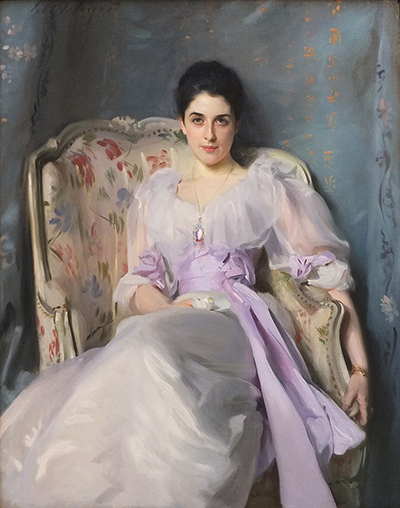
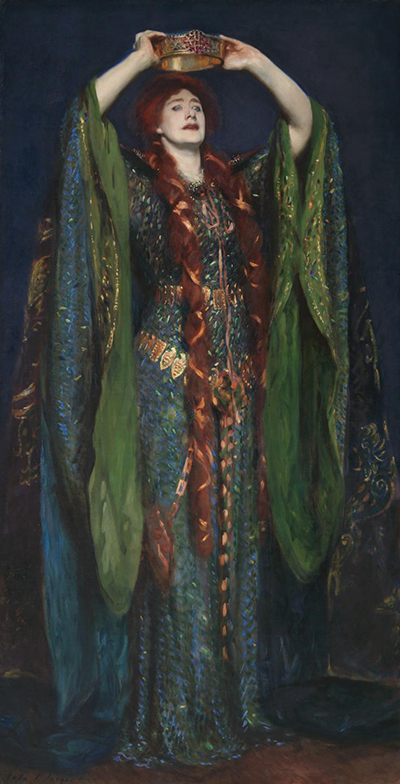
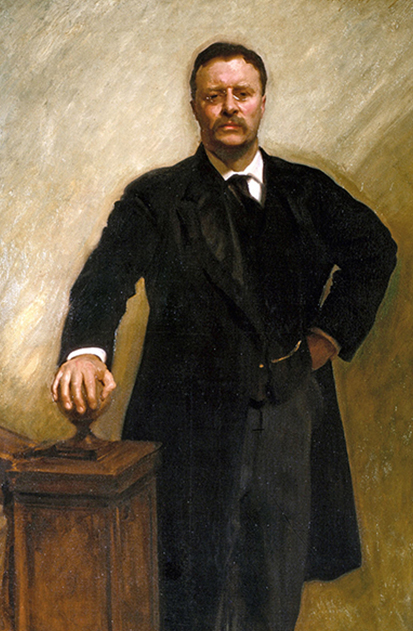
His fame still often begins with Portrait of Madame X, the 1884 Salon picture that made Virginie Gautreau's image and Sargent's reputation inseparable from scandal. The painting matters enormously, but it is not enough to explain him. Sargent also painted the separated children and shadowed interior of The Daughters of Edward Darley Boit, the dusk-lit garden of Carnation, Lily, Lily, Rose, the Spanish performance space of El Jaleo, the theatrical authority of Ellen Terry as Lady Macbeth, the aristocratic directness of Lady Agnew of Lochnaw, the artist-at-work intimacy of Claude Monet Painting by the Edge of a Wood, the political presence of Theodore Roosevelt and the monumental wartime procession of Gassed.
That range is the real Sargent. He was an American born in Florence, trained in Paris, professionally remade in London and deeply tied to Boston. He painted society portraits, artist friends, children, performers, military figures, presidents, murals, watercolors, drawings, prints, travel subjects and war art. His career belongs to the late nineteenth-century world of salons, museums, expatriates, wealthy patrons, transatlantic travel, public institutions and modern celebrity. His surfaces can dazzle, but the best paintings do not end at surface. They show how people, places and historical moments arranged themselves to be seen.
At a Glance
- Born12 January 1856, Florence [1]
- Died14 April 1925, London [1]
- NationalityAmerican, born abroad and active in Europe and the United States [1]
- TrainingParis, especially with Carolus-Duran [1]
- Known forportraits, society paintings, public murals, watercolors, travel subjects, drawings, prints and war art [1]
- Key worksPortrait of Madame X, The Daughters of Edward Darley Boit, Carnation, Lily, Lily, Rose, El Jaleo, Lady Agnew of Lochnaw, Ellen Terry as Lady Macbeth, Theodore Roosevelt, Claude Monet Painting by the Edge of a Wood and Gassed [1]
- Major sourcesMuseum of Fine Arts Boston, Metropolitan Museum of Art, Imperial War Museums, Isabella Stewart Gardner Museum, National Gallery of Art, National Galleries of Scotland, Tate and National Portrait Gallery [1], [2]
Contents
- Introduction
- An American Artist Formed Abroad
- Paris, Carolus-Duran And The Salon
- Portraiture As Public Performance
- Madame X And The Geography Of A Career
- London, Patronage And Anglo-American Society
- Major Paintings Beyond The Society Portrait
- Sargent Among Artists And Friends
- Watercolors, Travel And The Freedom Of Looking
- Drawings, Prints And The Work Behind Ease
- Boston, Murals And Public Ambition
- Reputation, Modernism And Reassessment
- Themes That Connect The Works
- Main Paths Through His Work
- Gassed And The Late Public Image
- How To Read Sargent
- Where To Start With Sargent
An American Artist Formed Abroad
Sargent's identity begins with movement. He was born in Florence to American parents, FitzWilliam Sargent and Mary Newbold Singer Sargent, who lived much of their lives in Europe. The Museum of Fine Arts Boston emphasizes this mobile expatriate formation as central to the artist's biography [1]. Sargent was American by family and citizenship, but his education, professional language and early artistic ambitions were formed in European cities, museums and studios.
This background gave him a career without a single national center. Florence mattered as birthplace and early environment. Paris mattered as training ground and exhibition stage. London became the place where he rebuilt and consolidated his professional portrait career. Boston mattered through patrons, collections, murals and institutional memory. Venice, Spain, North Africa and other travel sites mattered as subjects and as visual laboratories.
The result was not rootlessness in the weak sense. It was fluency. Sargent learned to move among cultures, languages, patrons and artistic expectations. He understood American clients abroad and European aristocratic circles. He could study old masters in museums, court Salon attention in Paris, work for British and American patrons, and later connect his art to Boston institutions and British war memory. Few major painters of his generation were so thoroughly transatlantic in formation and career.
This helps explain why Sargent resists simple labels. Calling him an American painter is accurate, but incomplete. Calling him a European painter misses the family and patron networks that tied him to the United States. Calling him a society portraitist describes a major part of his work, but not his watercolors, public commissions, travel subjects or war painting. Sargent is best understood as an artist of mobility: geographic, social, technical and professional.
Paris, Carolus-Duran And The Salon
Sargent's serious training unfolded in Paris, where he studied with Carolus-Duran. That training mattered because it encouraged direct painting, strong tonal relationships and confidence before the model. Sargent's later brushwork can look effortless, but its authority came from discipline. He learned how to build a figure through large relations of light and dark, then sharpen the details that carried the sitter's presence.
Paris also meant the Salon, one of the most important public exhibition arenas of the period. To succeed there was to enter a competitive public world in which paintings did not remain private objects. They were seen, discussed, praised, mocked and measured against the ambitions of other artists. Sargent's early career developed inside that pressure.
Old-master study deepened the training. Spanish painting, especially Diego Velazquez, gave Sargent a model for portraiture that could be grand without stiffness and painterly without confusion. The National Gallery of Art's material on Sargent and Spain helps place Spanish art and culture among the recurring forces in his imagination [3]. Velazquez mattered not as a pattern to copy, but as proof that status, atmosphere, tonal breadth and painterly freedom could coexist.
Sargent's Paris years gave him more than technique. They gave him a sense of artistic risk. A portrait could win attention, but attention could become dangerous when the sitter was recognizable and social reputation was at stake. That lesson would define the turning point of his early career.
Portraiture As Public Performance
Sargent's portraits are often admired for surfaces: satin, skin, hair, glass, velvet, lace, uniforms and flowers. The admiration is fair, but surface in Sargent is never merely decorative. Surface is where public identity happens. A gown, a chair, a shadowed room, a shoulder strap, a raised arm, a military coat or a child's distance from her sisters can reveal how a sitter occupies the world.
This is why Sargent's portraits can feel alive even when the sitter is still. He understood that pose is social information. A hand on a table may steady a figure or display command. A turned head may withhold or invite attention. A direct gaze may feel intimate, challenging or professionally staged. Clothing can flatter, but it can also discipline the body into an image.
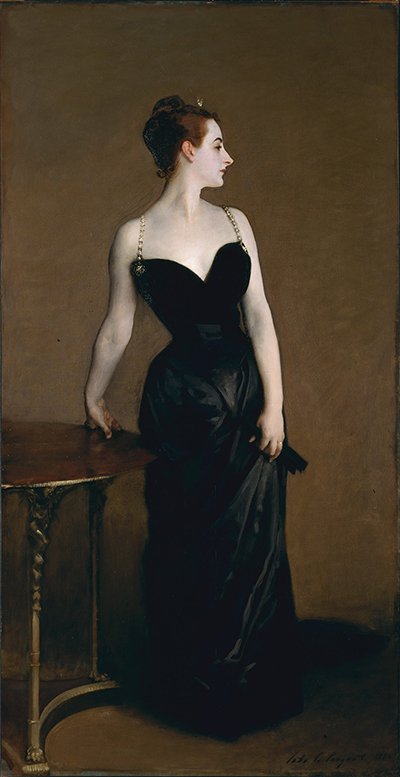
Portrait of Madame X is the most famous example of portraiture becoming public performance. Sargent's image of Virginie Gautreau was not simply a likeness. It was a constructed social presence, made from black dress, pale profile, tension, exhibition and risk. Lady Agnew of Lochnaw offers another kind of public performance: seated ease turned into authority. Ellen Terry as Lady Macbeth makes performance explicit by showing an actor inside a role. Theodore Roosevelt asks how political force should appear in a presidential portrait.
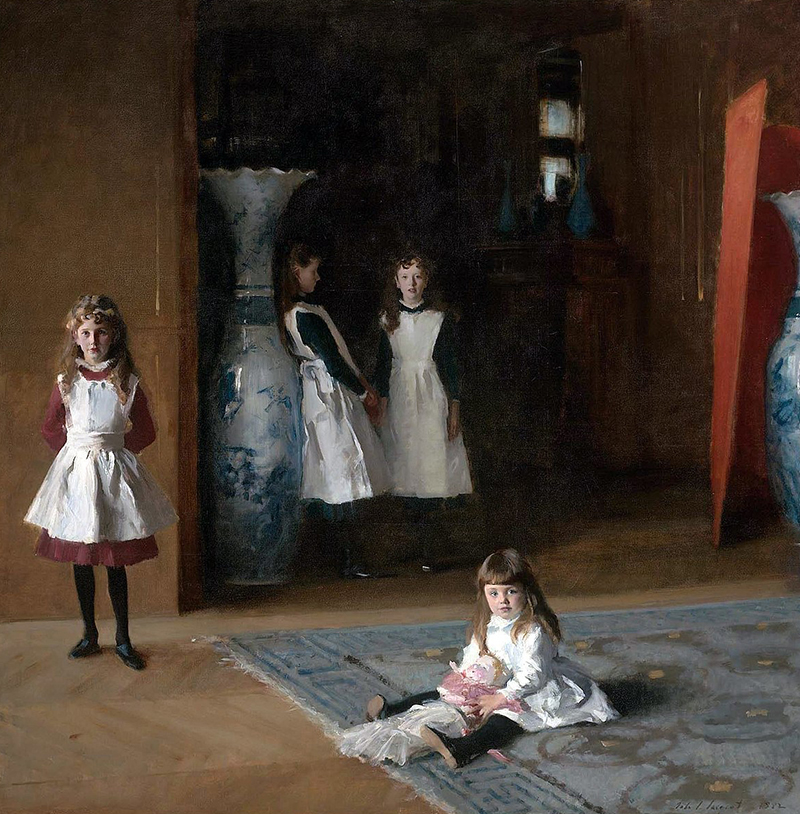
Sargent's child portraits complicate the pattern. The Daughters of Edward Darley Boit is not a simple image of family affection. The four girls occupy different parts of a large room, separated by distance, scale and shadow. Beatrice Townsend and Garden Study of the Vickers Children belong to the same broader question of how to paint childhood without reducing young sitters to charm.
Seen this way, portraiture is one of Sargent's great modern subjects. He painted people in an age when social identity was increasingly public, mobile and performative. His sitters were not merely recorded. They were staged, tested and made memorable.
Madame X And The Geography Of A Career
Portrait of Madame X was shown at the Paris Salon of 1884. The sitter, Virginie Amelie Avegno Gautreau, was known in Parisian society for her beauty and distinctive appearance. Sargent painted her in a black dress, pale profile and severe pose. In the version first exhibited, one shoulder strap slipped from the sitter's right shoulder. Sargent later repainted the strap in a more conventional position. The revised painting is now in the Metropolitan Museum of Art [4].
The scandal around the painting has often been retold as melodrama, but the deeper issue is more interesting. Sargent had made a portrait too powerful for its first social setting. The painting did not merely flatter Gautreau. It turned her public image into a stark, commanding, almost theatrical object. In the Salon, where recognizable sitters and reputations were exposed to public judgment, that power became volatile.
The Met's essay on the painting's history helps explain how the scandal remained attached to the picture even after the strap was repainted [5]. The revision changed the visible painting but did not erase the memory of the original exhibition. The work now exists in two forms: the canvas viewers see and the story they bring to it.
For Sargent, the episode altered career geography. His Paris prospects suffered, and he increasingly turned toward London. That move is sometimes described as retreat, but it also reveals the flexibility of his career. Sargent did not disappear after Madame X. He rebuilt his position through British and American patronage, eventually becoming one of the dominant portraitists of the age.
The painting therefore belongs at the center of Sargent's career, but not because it explains everything. It shows the danger inherent in his gifts. He could make public identity so vivid that it escaped the control of sitter, painter and social expectation.
London, Patronage And Anglo-American Society
London gave Sargent a new stage. After the Paris crisis, he had to rebuild trust and opportunity, and British and American patrons helped him do it. The world he entered was full of sitters who wanted images of rank, taste, cultural authority and modern presence. Sargent's skills were perfectly suited to that need, but his best portraits still resisted mere flattery.
He painted aristocratic women, artists, children, actors, military figures and public officials. He could turn a seated portrait into a study of composure, as in Lady Agnew of Lochnaw, or a stage role into a public image, as in Ellen Terry as Lady Macbeth. He could paint an artist at work, as in Claude Monet Painting by the Edge of a Wood, or an American president as an embodied political force.
The portraits made Sargent famous and wealthy, but they also constrained him. Demand for likenesses could become a trap. The more successful he became as a portraitist, the more the public and patrons risked reducing him to that role. His later turn toward murals, watercolors and travel subjects was not an abandonment of ambition. It was a way of protecting a larger identity as an artist.
This tension is important. Sargent's portrait career was not a simple story of commercial success. It was a negotiation between opportunity and fatigue, mastery and repetition, social obligation and artistic range.
Major Paintings Beyond The Society Portrait
Sargent's painted work becomes richer when the famous portraits are placed beside subject paintings and family interiors. The Daughters of Edward Darley Boit, painted in 1882 and now in the Museum of Fine Arts Boston, is one of the most important examples [6]. It is a portrait of four children, but also a painting of space, separation and ambiguity. The girls are not arranged into a conventional family group. The large room and tall vases become active presences in the picture.
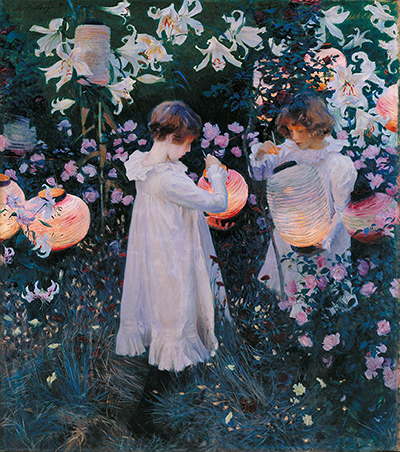
Carnation, Lily, Lily, Rose shows another side of Sargent's ambition. Children light lanterns in a garden at dusk, surrounded by flowers and fading light. British Art Studies' conservation research helps show how carefully Sargent pursued the fragile twilight effect [7]. The painting looks gentle, but its making required patience, timing and technical control.
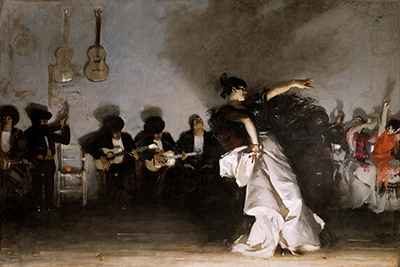
El Jaleo, now at the Isabella Stewart Gardner Museum, brings Sargent's Spanish interests into a large theatrical composition [8]. A dancer moves before musicians and spectators in a long, shallow space. The painting is about performance, rhythm, shadow and light. It shows Sargent thinking on a scale that cannot be reduced to portrait commission.
Claude Monet Painting by the Edge of a Wood is quieter but equally revealing. Sargent paints Monet as an artist at work outdoors. The subject is not only Monet's likeness but the act of painting from nature. The picture places Sargent in conversation with Impressionism without making him simply an Impressionist.
These works show why Sargent's range matters. Portraiture gave him public fame, but subject pictures, garden scenes, artist portraits and performance paintings show an artist continually testing what painted presence could mean.
Sargent Among Artists And Friends
Sargent's portraits of artists are an important counterweight to the society images. They show him not only as a painter serving patrons, but as a painter moving among other makers. Claude Monet Painting by the Edge of a Wood is especially revealing because Sargent presents Monet in the act of painting outdoors. The subject is not a formal seated likeness. It is an image of artistic work itself. Monet's identity appears through action: looking, painting, standing before a motif.
That painting helps clarify Sargent's relationship to Impressionism. He was not simply an Impressionist painter, and his career cannot be folded into that movement without distortion. Yet he shared with Impressionist artists a serious interest in light, outdoor work, modern subjects and the act of direct observation. Sargent's painting of Monet is therefore a portrait of a person, a friendship and a method. It shows one artist studying another artist's way of being in the world.
Auguste Rodin belongs to a different kind of artistic relationship. Rodin was a sculptor, famous for bodies, surfaces and expressive form. When Sargent painted him, he was not painting rank or fashion in the ordinary society sense. He was painting artistic authority. A portrait of Rodin asks how creative force can be made visible in a body and head. That problem is related to Sargent's portraits of patrons and politicians, but the kind of authority is different.
These artist portraits also help explain Sargent's own self-portraits. The 1886, 1892 and 1906 self-portraits show him applying portrait intelligence to his own image at different career moments. A portraitist who spent decades constructing other people's public presence also had to decide how the painter himself should be seen. Those self-images do not confess a hidden interior life. They show professional self-presentation, shaped by the same awareness of pose, gaze and public reception that appears throughout his work.
Seen through artist portraits and self-portraits, Sargent becomes less isolated. He belongs to a network of painters, sculptors, performers, patrons and collectors. His career was not only a sequence of commissions. It was a social and artistic world.
Watercolors, Travel And The Freedom Of Looking
Sargent's watercolors and travel subjects offer a different rhythm from commissioned portraiture. In Venice, Spain, North Africa and other places, he could respond to architecture, street life, reflections, costume, movement and heat without the same obligation to satisfy a sitter. The results often feel freer, but they are not casual. Watercolor demands decision. A wash, an exposed sheet of paper, a quickly placed figure or a sharp architectural edge can carry the whole image.
Venice was especially important. Sargent looked not only at monuments but at streets, canals, thresholds and figures moving through narrow spaces. Works such as Street in Venice show how a place can be built from people, walls, shadow and movement rather than from a famous view. The RISD Museum and Metropolitan Museum of Art records for Venetian works help connect Sargent's travel practice to specific objects [9].
Spain gave Sargent old-master study and living performance. El Jaleo belongs to that world, but so do watercolors, travel sketches and the broader Spanish imagination documented by the National Gallery of Art [3]. Spain was not merely a destination. It was a way for Sargent to think about art, music, dance, bodies, darkness and light.
North African subjects, including A Street in Algiers, require special care. They belong to Sargent's travel practice, but they also belong to a nineteenth-century European visual culture shaped by colonial power and Orientalist expectations. A responsible reading can admire Sargent's observation while still recognizing the historical structures through which such subjects were pictured and consumed.
Travel gave Sargent freedom from the studio, but it did not remove history. His travel art is strongest when seen as both visual discovery and cultural encounter.
Drawings, Prints And The Work Behind Ease
Sargent's quickness has always been part of his legend. The danger is that viewers mistake quick appearance for shallow method. Drawings, studies, prints and materials evidence show the work behind the ease. The Met's studies connected to Portrait of Madame X make clear that the final painting was built through testing and revision [10], [11]. Sargent worked through pose, line, silhouette and presentation before the public image existed.
The same is true of studies for Gassed. The final painting's monumental procession depended on observation and organization. Sargent's ability to arrange bodies in space did not come from theatrical instinct alone. It came from drawing, looking and choosing.
The National Portrait Gallery's research on Sargent's suppliers of artists' materials adds another layer [12]. Style is not only personality. It is also made from pigments, brushes, supports, papers, suppliers and studio practice. Sargent's brushwork and drawing are physical acts, not abstract signs of genius.
Prints form a smaller but useful part of this story. The Met's essay on Sargent as lithographer places printmaking within his works-on-paper practice [13]. Lithography shows how his drawn marks could move into a reproducible medium. It also confirms that Sargent's art cannot be understood only through oil portraits. Paper was one of the places where he thought.
Boston, Murals And Public Ambition
Boston was one of the crucial American settings for Sargent's career. The Museum of Fine Arts Boston's material on his ties to the city shows how important Boston patrons, institutions and collections were to his legacy [14]. The city connects Sargent to portraits, archives, public commissions and the later study of his work.
Murals and public commissions mattered because they answered a problem in Sargent's career. Portraiture brought success, but it also narrowed him. Public work offered a different scale and a different audience. Instead of one sitter or family, a mural belonged to architecture, institution and repeated public viewing.
This ambition should not be treated as a side note. Sargent wanted more than the endless cycle of commissioned likenesses. Public commissions allowed him to work with symbolic subjects, large spaces and civic expectation. They also connected his art to institutions rather than only private patrons.
Boston also became a place where Sargent's archive and reputation could be studied. The MFA's Sargent Archive points to the documentary life behind the paintings: letters, relationships, working arrangements and the networks through which art survives [1]. The city is therefore both part of Sargent's career and part of his afterlife.
The Boston connection also changes the balance between Europe and America in Sargent's story. He was trained in Europe and worked for many European and British sitters, but Boston helped turn his career into an American institutional legacy. Paintings such as The Daughters of Edward Darley Boit, archive holdings, public commissions and later scholarship give the city a special role in how Sargent is now understood.
That matters because Sargent's American identity can otherwise seem abstract. He was not an American painter who simply stayed home and painted American scenes. He was an American expatriate artist whose work returned to American institutions, patrons and collections in powerful ways. Boston is one of the places where that return becomes visible.
The MFA's Sargent materials also remind viewers that art history is made from preservation as well as production. Paintings survive in collections. Letters survive in archives. Murals remain tied to buildings and institutions. Exhibition histories and publications shape how later viewers read an artist. Sargent's afterlife is therefore not separate from his career. It is part of the larger story of how an artist who moved so widely became anchored in particular museums and cities. [1], [2]
Reputation, Modernism And Reassessment
Sargent's reputation has moved through several phases. During his lifetime, he was admired for technical command and sought after by sitters who wanted the authority of his eye. Afterward, especially as modernist values hardened around experiment, rupture and abstraction, his success could work against him. A painter of society portraits, dazzling surfaces and elite patrons could appear too polished, too fashionable or too comfortable beside artists who seemed to break more visibly with the past.
That dismissal now looks too narrow. Sargent's art is not radical in the same way as Cubism, abstraction or other modernist movements, but it is intensely modern in its understanding of public identity. He painted people in a world shaped by exhibition culture, celebrity, transatlantic wealth, performance, professional self-fashioning, public institutions and mass war. His sitters are not timeless types. They belong to a modern social world in which being seen had become a form of power.
His technique also looks different when separated from the accusation of mere virtuosity. Sargent's painterly freedom was not an empty display of skill. It was a way of deciding where attention should go. In a portrait, he might leave a passage broad or unresolved because the face, hand, dress edge or posture carried the meaning. In watercolor, he might let untouched paper become light. In Gassed, he used order and scale to make injury visible without turning it into spectacle.
The renewed interest in Sargent is therefore not just nostalgia for elegance. It comes from recognizing how complex his best works are. The Daughters of Edward Darley Boit now looks psychologically and spatially strange. Portrait of Madame X still unsettles because it turns social display into risk. Carnation, Lily, Lily, Rose reveals patience beneath freshness. Gassed stands as a public image of modern war. The watercolors show a mind working with speed and selection. Together, they make Sargent harder to dismiss.
Themes That Connect The Works
Several themes run through Sargent's career and help connect works that otherwise seem very different.
The first is visibility. Sargent repeatedly asks how a person, place or event becomes visible to others. In portraits, visibility is social. In watercolors, it is often optical and immediate. In murals and war art, it becomes public and institutional.
The second is performance. Some performances are literal, as in Ellen Terry as Lady Macbeth and El Jaleo. Others are social, as in Madame X, Lady Agnew and Theodore Roosevelt. Even a self-portrait involves performance, because the artist chooses how to appear.
The third is movement between control and accident. Sargent's art often looks spontaneous, but the compositions are controlled. He loved effects that seem to happen in an instant: a flicker of twilight, a gust of wind, a turn of the head, a dancer's posture, soldiers moving in a line. His art holds those moments without making them dead.
The fourth is travel. Sargent's career and subjects move across places: Florence, Paris, London, Boston, Venice, Spain, North Africa and the Western Front. Travel is not simply background. It is part of his way of seeing. Different places gave him different problems of light, architecture, costume, performance and historical context.
The fifth is the tension between private and public. A portrait may begin with a sitter, but once exhibited or collected, it becomes public image. A mural belongs to a public site. Gassed belongs to public memory. Even letters and archives eventually become part of how a public artist is understood. Sargent's work lives in that tension.
Main Paths Through His Work
Sargent is easiest to approach through overlapping paths rather than a single chronological line.
The portrait path begins with Portrait of Madame X, then moves through Lady Agnew of Lochnaw, Ellen Terry as Lady Macbeth, Ada Rehan, Theodore Roosevelt, Charles Deering, Colonel Ian Hamilton, Brigadier Archibald Campbell Douglas, Auguste Rodin, Claude Monet Painting by the Edge of a Wood and the self-portraits. This path shows Sargent adapting portraiture to society, theater, politics, military rank, artistic friendship and self-presentation.
The family and childhood path begins with The Daughters of Edward Darley Boit, then includes Beatrice Townsend and Garden Study of the Vickers Children. These works show that Sargent's images of children could be serious, spatially complex and resistant to sentiment.
The travel path runs through Venice, Spain, Paris and Algiers. Street in Venice, A Street in Algiers, A Parisian Beggar Girl, A Gust of Wind, watercolors and Spanish subjects all belong here. This group needs especially careful modern viewing because travel art can carry historical problems as well as visual excitement.
The technique path connects drawings, studies, materials, prints and conservation evidence. The studies for Madame X, Sargent's lithographs, the materials research and the technical study of Carnation, Lily, Lily, Rose all show how much thought sits behind the apparently effortless mark.
The public art path includes Boston commissions and Gassed. It shows Sargent trying to work at a scale beyond private likeness, with institutions and collective memory as part of the audience.
Those paths overlap constantly. The same artist who studied Velazquez also painted Monet outdoors; the same portraitist who gave society sitters memorable surfaces also made studies, watercolors and lithographs; the same painter who knew how to stage a single body later arranged blinded soldiers into a public image of war. Sargent's range is not a set of separate careers. It is one long argument about how paint can make presence visible.
Gassed And The Late Public Image
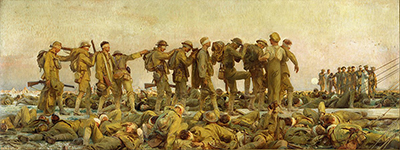
The First World War gave Sargent one of his most serious public subjects. Gassed, now in the collection of Imperial War Museums, shows soldiers affected by gas moving in a line with bandaged eyes [15]. It is far from the world of satin gowns and society interiors, yet it depends on skills Sargent had used throughout his career: bodies in procession, light, gesture, fabric, rhythm and scale.
The painting does not present war as heroic action. It shows aftermath. The soldiers are vulnerable, dependent on touch and guidance. Other figures lie or sit around them. The composition has a monumental order, but the order intensifies the injury rather than disguising it.
Gassed is important because it changes the moral weight of Sargent's public art. In a portrait, public image belongs to a sitter. In Gassed, public image belongs to collective memory. The painting asks how a nation and later viewers remember harm, not victory. IWM's conservation and display material also shows how the physical painting has become part of the public history of the war. [15], [16]
Late Sargent therefore cannot be dismissed as the fading career of a society painter. Gassed proves that his command of scale and bodies could serve a grave historical subject. It also gives the whole career a different shape. The painter of social presence became, at least in this work, a painter of public vulnerability.
How To Read Sargent
Sargent rewards slow looking, even when the brushwork looks fast. A useful way to begin is with five questions.
First, what is the body doing? Sargent's figures rarely occupy space accidentally. A shoulder, hand, lean, step or gaze often carries the meaning of the work. Madame Gautreau's profile, Lady Agnew's seated ease, Ellen Terry's raised arms and the blinded soldiers in Gassed all depend on bodily arrangement.
Second, what is the surface doing? Fabric in Sargent is not only fabric. A black dress can become a social structure. A white dress can become a field of light. A uniform can turn a sitter into public role. A lantern can make twilight visible.
Third, what kind of audience does the work imagine? A private portrait, a Salon picture, a museum object, a public mural and a war painting ask for different kinds of viewing. Sargent moved among all of them.
Fourth, what has been left out? His looseness is often selective. He may leave a background unresolved because the face, hand or line of the body needs to carry the attention. The unfinished-looking passage may be exactly as complete as the painting requires.
Fifth, what kind of history surrounds the subject? Sargent's travel scenes, society portraits, war paintings and images of poverty or performance all belong to specific social worlds. The paintings are more powerful, not less, when those contexts are visible.
Where To Start With Sargent
Start with Portrait of Madame X for Sargent's most famous portrait and the clearest example of portraiture as social risk. Then look at The Daughters of Edward Darley Boit for a family portrait that turns interior space into psychological and compositional drama. Move to Carnation, Lily, Lily, Rose to see patient attention to light, and to El Jaleo for Spanish performance and theatrical scale.
For portraiture, compare Lady Agnew of Lochnaw, Ellen Terry as Lady Macbeth, Theodore Roosevelt, Ada Rehan, Charles Deering, Auguste Rodin and the self-portraits. Together they show how many forms public identity could take.
For travel and works on paper, look at Street in Venice, A Street in Algiers, the drawings connected to Madame X, Sargent's lithographs and the watercolors. These works show the eye at work outside the formal portrait studio.
End, or begin again, with Gassed. It is the strongest reminder that Sargent's art was not only about elegance. His career begins in expatriate mobility and Salon ambition, rises through portraiture and public success, widens into murals and watercolors, and reaches one of its most serious public statements in a painting of wartime injury.
Frequently Asked Questions
Sargent is best known for portraits, especially Portrait of Madame X, but his work also includes family portraits, public murals, watercolors, drawings, prints, travel subjects, garden paintings, artist portraits and the First World War painting Gassed.
Yes. Sargent was an American citizen, born in Florence to American parents. His career was deeply international, with major work in Paris, London, Boston, Venice, Spain and other European and American settings.
Sargent trained in Paris, most importantly with Carolus-Duran. He also studied old masters closely, especially Spanish painting and Velazquez.
Portrait of Madame X was controversial at the Paris Salon of 1884 because of the sitter's pose, dress and public presentation. One shoulder strap originally slipped from the sitter's right shoulder; Sargent later repainted it in a more conventional position.
No. Wealthy and prominent sitters were central to his career, but Sargent also painted artists, performers, children, travel subjects, murals, watercolors, studies, prints, public commissions and war art.
Important works include Portrait of Madame X, The Daughters of Edward Darley Boit, Carnation, Lily, Lily, Rose, El Jaleo, Lady Agnew of Lochnaw, Ellen Terry as Lady Macbeth, Claude Monet Painting by the Edge of a Wood, Theodore Roosevelt and Gassed.
Sargent matters because he made modern public identity visible. His paintings show how people, roles, costumes, institutions, travel and historical memory were staged in paint at the turn of the twentieth century.
Discussion
Sargent's career raises a question that runs through modern portraiture: when a painter makes a sitter look memorable, is he revealing the person, constructing the public image, or doing both at once?
Reader Insights
What is the first detail that shapes your reading of John Singer Sargent: pose, setting, light, costume, brushwork or historical context?
Which small visual decision begins to matter more after a longer look, and how does it change the mood of the page?
Which comparison helps most: another Sargent portrait, a travel subject, a public commission, or a work by one of his contemporaries?
Join the Conversation
Share a thoughtful comment below about what you notice, question or compare when looking at this page.
References
- Museum of Fine Arts Boston, John Singer Sargent biography https://www.mfa.org/news/sargent-bio
- Museum of Fine Arts Boston, John Singer Sargent gallery https://www.mfa.org/gallery/john-singer-sargent
- National Gallery of Art, Sargent and Spain https://www.nga.gov/research/publications/sargent-and-spain
- Metropolitan Museum of Art, Madame X https://www.metmuseum.org/art/collection/search/12127
- Metropolitan Museum of Art, Where Is Madame X? https://www.metmuseum.org/exhibitions/listings/2015/sargent-portraits-of-artists-and-friends/blog/posts/where-is-madame-x
- Museum of Fine Arts Boston, The Daughters of Edward Darley Boit https://collections.mfa.org/objects/31782
- British Art Studies, conservation essay on Carnation, Lily, Lily, Rose https://britishartstudies.ac.uk/issues/02/sargent-conservation
- Isabella Stewart Gardner Museum, El Jaleo https://www.gardnermuseum.org/experience/collection/13259
- RISD Museum, Rio di Santa Maria Formosa, Venice https://risdmuseum.org/art-design/collection/rio-di-santa-maria-formosa-venice-42223
- Metropolitan Museum of Art, Study for Madame X https://www.metmuseum.org/art/collection/search/12328
- Metropolitan Museum of Art, Madame Gautreau study/letter/drawing record https://www.metmuseum.org/art/collection/search/919018
- National Portrait Gallery, John Singer Sargent's suppliers of artists' materials https://www.npg.org.uk/collections/research/programmes/artists-their-materials-and-suppliers/john-singer-sargents-suppliers-of-artists-materials
- Metropolitan Museum of Art, Now on View: Lithographs by John Singer Sargent https://www.metmuseum.org/perspectives/john-singer-sargent-as-lithographer
- Museum of Fine Arts Boston, Ties that Bind: Boston and John Singer Sargent https://www.mfa.org/news/sargent-boston-ties
- Imperial War Museums, Gassed object record https://www.iwm.org.uk/collections/item/object/23722
- Imperial War Museums, Gassed by John Singer Sargent https://www.iwm.org.uk/gassed-by-john-singer-sargent
- Metropolitan Museum of Art, Sargent: Portraits of Artists and Friends https://www.metmuseum.org/exhibitions/listings/2015/sargent-portraits-of-artists-and-friends