 by Tom Gurney
Tom Gurney BSc (Hons) is an art history expert with over 20 years experience
Published on June 19, 2020 / Updated on October 2, 2026
Email: tomgurney1@gmail.com / Phone: +44 7429 011000
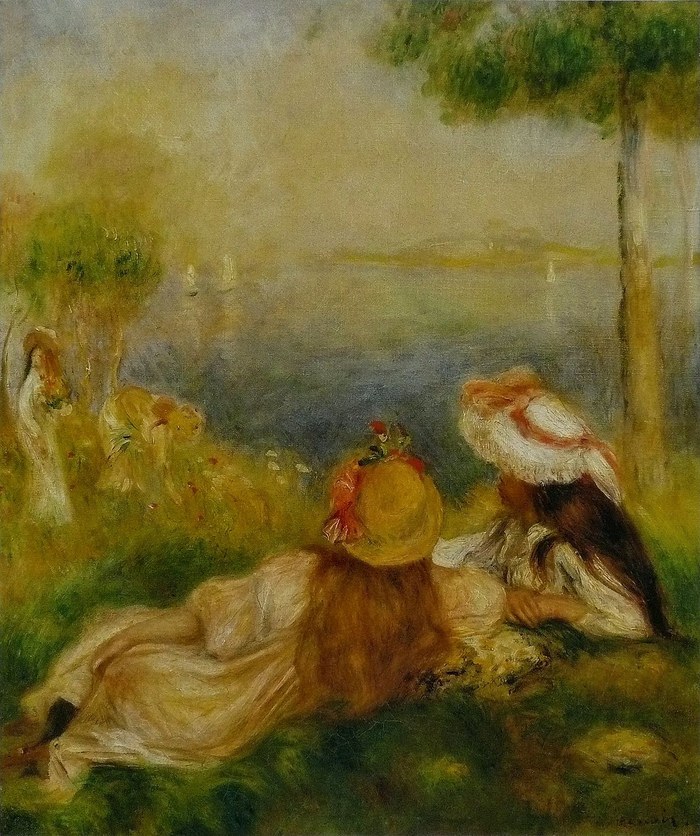
Two young women rest on a grassy bank above blue water. One reclines in the foreground with her back to us, her yellow hat bright against long reddish hair. The other leans on her elbows at the right, wearing a pale hat edged with pink. Two smaller figures stand or bend among flowers at the left, and tiny white sails appear across the bay. Pierre-Auguste Renoir’s Jeunes filles au bord de la mer, presented here as Girls on the Seashore, is the exact composition illustrated by Christie’s in its 2026 Durand-Ruel collection feature. [1]
Christie’s catalogues the oil on canvas circa 1890–94, 56 × 46.2 cm. As of 28 September 2026, the work is announced for its 22 October 2026 Paris sale, Durand-Ruel, Generations of Vision. That sale is still in the future: the listing documents an offering and estimate, not a result or a new owner. The local image has been visually compared with Christie’s larger reproduction and matches its two prominent figures, two smaller figures, tree and sailboats.
Contents
- The painting at a glance
- The two near figures
- The farther girls and the sea
- Soft edges and strong accents
- A painting in the Durand-Ruel collection
- Similar names, separate works
- Looking again
Watch: Pierre-Auguste Renoir
Explore a Montmartre dance, a gathering beside the Seine and the drawings behind Renoir’s paintings.
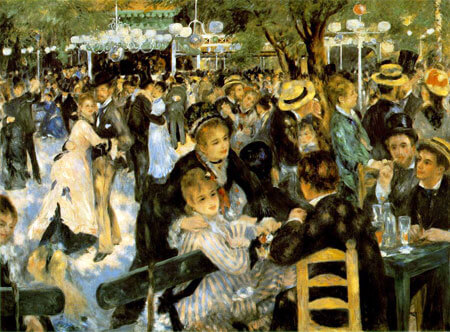
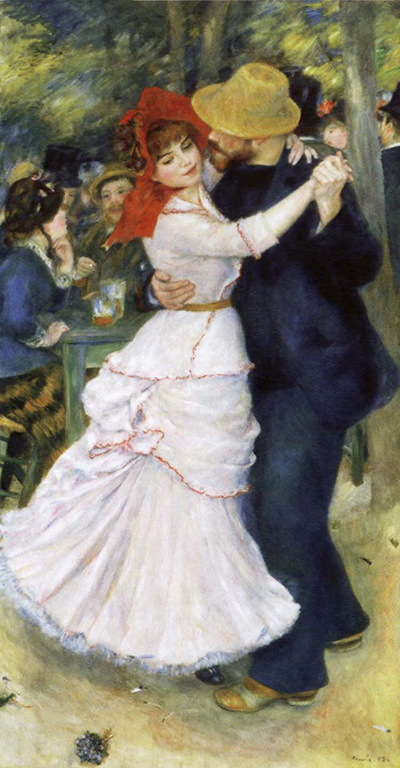
Renoir, Bal du moulin de la Galette
Dr. Beth Harris and Dr. Steven Zucker discuss Renoir’s 1876 Montmartre dance scene, its light and its crowds.
Watch on YouTubeAt a glance
- ArtistPierre-Auguste Renoir (1841–1919)
- French titleJeunes filles au bord de la mer
- Local English titleGirls on the Seashore
- DateCirca 1890–94, in Christie’s September 2026 feature
- MediumOil on canvas
- Size56 × 46.2 cm (22 × 18⅛ in.), in Christie’s feature
- Documented ownership at listingDurand-Ruel family collection
- Upcoming sale as at 28 September 2026Christie’s Paris, 22 October 2026
- Present displayNo permanent public display established by the sources consulted
The Christie’s article [1] supplies an illustrated exact-work record and describes the family collection from which the canvas is offered. A Christie’s press notice [2] also identifies it as one of the planned sale’s major works. Older general listings sometimes give 1894 alone and slightly rounded dimensions. Here the current auction house’s date range and measurements are preferred, with the source and date made explicit.
The two near figures
The foreground woman lies diagonally across the lower part of the canvas. Her white dress follows the slope of the grass, and her long hair falls toward the lower edge. The round yellow hat, with red and green accents, is the strongest warm shape near the centre. We cannot see her face. Renoir makes her position and hat the main cues to her presence, allowing the view across the water to become part of what she seems to watch.
The second woman sits more upright at the right, supported by her elbows. Her pale hat is a cluster of white, pink and coral strokes. It partly hides her face and catches light against the darker blue sea. Her body and hat echo the foreground woman’s pose without repeating it exactly. Both are turned away from us, so the painting encourages attention to their shared outlook rather than to portrait identities.
The two figures make an angled foreground enclosure. Their bodies meet near the lower centre, while their hats stand apart. Between and beyond them is open blue water. The tree at the right edge adds another vertical boundary. From this sheltered bank, the bay appears broad even though the canvas itself is modest in size.
The farther girls and the sea
At the left, two small figures interrupt the green slope. One stands near the edge, in a light dress and hat. The other bends toward the ground. A few red and pale marks suggest flowers among the grass. The scene offers no certain account of what the girls are picking or saying. Their small scale and active poses contrast with the stillness of the two figures close to us.
Several sails punctuate the distant water. They are only small white triangles, but they establish a horizon and suggest a bay with activity beyond the bank. A narrow yellowish band near the far shore separates water and sky. Renoir keeps that border soft, letting atmospheric colour do more work than a sharp line.
The image does not identify a named beach. Christie’s title specifies the seashore, but the illustrated feature does not establish an exact geographical viewpoint. Claims about a particular town or the identity of the four figures would require evidence beyond what is visible and documented here.
Soft edges and strong accents
The grass, dresses and hats are built from colours that cross into one another. Pale pink strokes in the nearer dress meet warm brown in hair and green in the bank. The right figure’s hat blends white, rose and orange, while dark hair separates it from the sea. Renoir uses a few clear colour anchors—the yellow hat, the pink-white hat, the deep blue water—to keep a soft scene from becoming indistinct.
The surface changes with distance. The foreground figures are broad and layered, although their outlines remain loose. The two smaller figures are given fewer marks. Sailboats are nearly abbreviations. This uneven level of detail helps the eye move outward and back again. A literal inventory of every plant, sail and garment is less important than the sense of looking across space from behind the women.
The composition also keeps faces out of reach. It offers enough posture to suggest companionship, but no fixed story. The women could be looking outward together; the painting does not prove what each sees. Their hats and clothing carry much of the expressiveness that a conventional portrait might put in facial detail.
A painting in the Durand-Ruel collection
Paul Durand-Ruel was Renoir’s dealer and a major supporter of Impressionist artists. The Christie’s collection feature [1] explains that works held by his descendants are being brought to auction in Paris in October 2026. It illustrates this Renoir as one of them. The auction announcement [3] gives the scheduled sale and preview dates. Those are current plans as of 28 September 2026 and should be refreshed after the sale.
Christie’s says the picture has been lent to exhibitions in several cities, including Amsterdam, Tokyo, Seoul, Munich, London and Rome. That establishes a history of public loans in broad outline, but the short press account does not list individual exhibition titles, dates or catalogue numbers. It would overstate the evidence to assign a specific museum accession or current display from those city names alone.
The date also deserves care. Christie’s describes the canvas as circa 1890–94 rather than a securely signed 1894 work in the source available here. That wider interval belongs in the main facts. A later exact lot record may provide more provenance and exhibition detail when the sale catalogue is fully accessible.
Similar names, separate works
The seaside title can create confusion. Christie’s 2022 record for Deux jeunes filles au bord de la mer [4] concerns a pastel and charcoal on paper, approximately 42.2 × 31.9 cm, not this oil canvas. The French titles overlap, and both involve young figures by the sea, but medium, format and recorded image distinguish them.
There is also a famous Jeunes filles au bord de la mer by Pierre Puvis de Chavannes in the Musée d’Orsay. [5] It is a different artist and a different composition. The shared title should not pull the Orsay accession or the Puvis painting’s 1879 date onto Renoir’s page.
The inherited thumbnail cut off much of the sky and foreground. This page now uses a full-work public-domain reproduction from Wikimedia Commons; Christie’s illustrated listing supports the object identification and catalogue details.
Looking again
Start with the yellow hat at centre, then follow the foreground woman’s dress towards the bottom left. Return to the second pale hat and trace the line of her arms. Only then look past them to the girls among the flowers and the distant sails. The painting shifts between a close shared resting place and a wide, indistinct bay.
Its quiet comes from that movement. The women are large enough to make the scene intimate, while the open water leaves room beyond them. Renoir gives the viewer their vantage without asking us to invent their names or their conversation.
Renoir artworks directory
Questions about Girls on the Seashore
Christie’s illustrated 2026 feature dates the exact oil on canvas circa 1890–94. It does not require a single-year 1894 date.
Christie’s gives 56 × 46.2 cm (22 × 18⅛ inches).
The Christie’s September 2026 material presents it from the Durand-Ruel family collection, scheduled for sale in October. It records loans to museums but does not identify a permanent public museum home.
As of this article’s 28 September 2026 research date, no. Christie’s schedules Durand-Ruel, Generations of Vision for 22 October 2026 in Paris. Check the later lot record for the result and any ownership change.
No. The Musée d’Orsay’s Jeunes filles au bord de la mer is by Pierre Puvis de Chavannes. This page shows Renoir’s oil with two large figures in hats before a blue bay.
Discussion
What do you notice when you return to this Renoir seaside scene?
How do the two foreground hats guide your eye across the bay?
Reader Insights
How do the two foreground hats guide your eye across the bay?
Christie’s identifies this exact oil as circa 1890–94, 56 × 46.2 cm, in its 2026 Durand-Ruel sale preview.
Where do you find the two smaller figures and the distant sails?
Join the Conversation
Share a close observation or a source-backed question about Renoir’s seashore view.
References
- Christie’s, Durand-Ruel collection feature, 1 September 2026: exact image, circa 1890–94 date, oil medium, 56 × 46.2 cm size and planned October sale View source.
- Christie’s press office, Durand-Ruel collection notice: the work’s place in the planned sale and its announced estimate View source.
- Christie’s, Durand-Ruel, Generations of Vision sale announcement: scheduled 22 October 2026 sale and viewing dates, current as at 28 September 2026 View source.
- Christie’s, Deux jeunes filles au bord de la mer, 2022: a distinct pastel and charcoal work with a near-identical title View source.
- Musée d’Orsay, Puvis de Chavannes, Jeunes filles au bord de la mer: a distinct artist and object sharing the French title View source.
- Whole-work image: Wikimedia Commons, Jeunes Filles au bord de la mer, a reduced copy of its 2,070 × 2,473 faithful reproduction marked Public Domain; the listed source is a 2001 Taschen book reproduction View source.