by Tom Gurney
Tom Gurney BSc (Hons) is an art history expert with over 20 years experience
Published on June 19, 2020 / Updated on October 2, 2026
Email: tomgurney1@gmail.com / Phone: +44 7429 011000
The word “print” can describe two different things on an art website. An original print is an artwork made through a printmaking process, such as lithography or etching, in which the artist's image is transferred from a prepared surface to paper. A reproduction print is a modern copy of an existing painting or drawing. Renoir made original prints, and reproductions of his paintings are also sold today. Their shared name should not hide the difference.
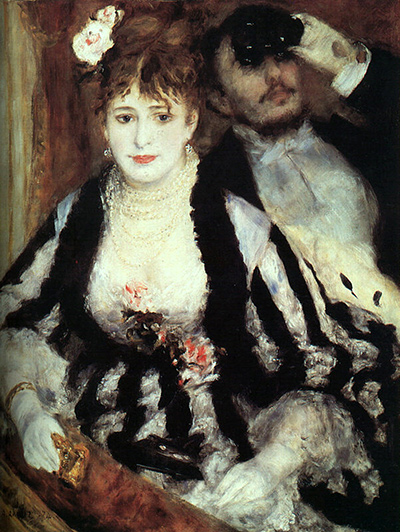
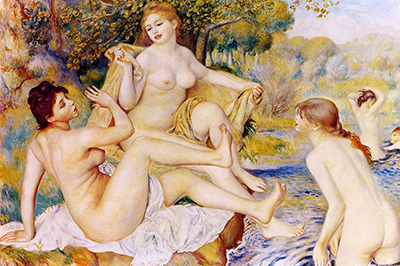
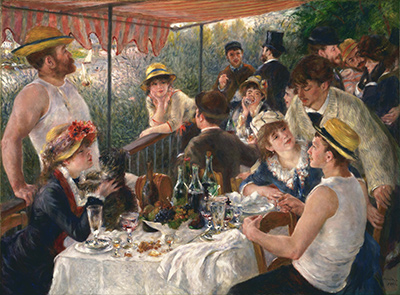
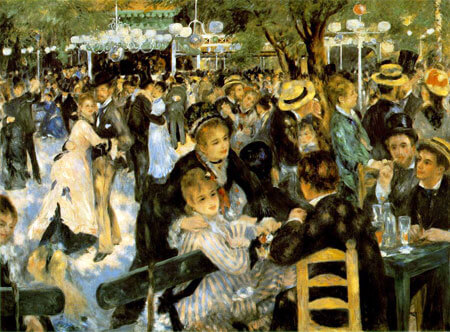
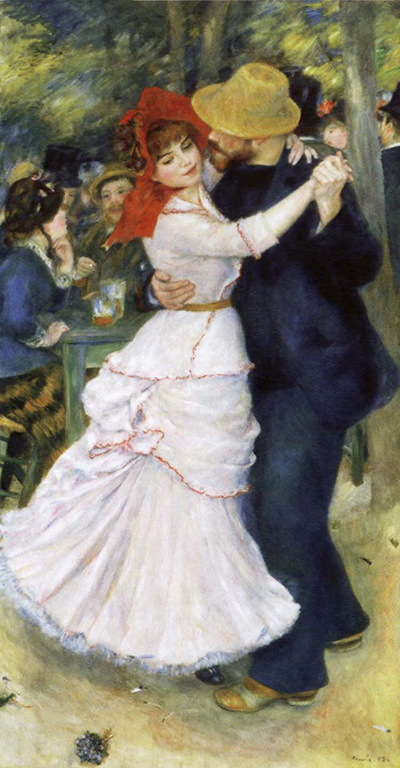
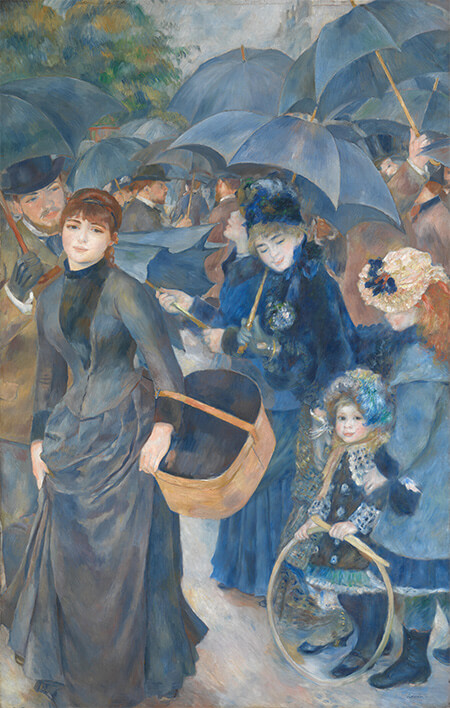
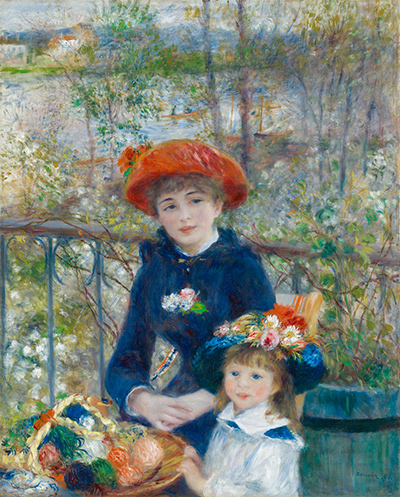
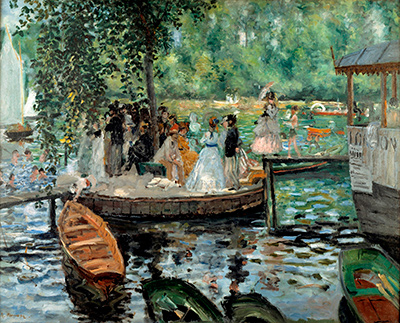
The image gallery lower on this page is a route to reproductions of well-known Renoir paintings: Luncheon of the Boating Party, Dance at Le Moulin de la Galette, The Umbrellas and others. Those pictures were made in oil; the gallery cards are reproductions of paintings, not nine original Renoir prints. The essay here introduces Renoir's actual work on paper and helps readers understand why a museum might describe one sheet as a lithograph, another as an etching and a third as a proof.
Contents
- Printmaking within Renoir's work
- What is a lithograph?
- Etching and the meaning of a state
- People, publishers and prints
- Browse reproductions of Renoir paintings
Watch: Pierre-Auguste Renoir
Explore a Montmartre dance, a gathering beside the Seine and the drawings behind Renoir’s paintings.
Renoir, Bal du moulin de la Galette
Dr. Beth Harris and Dr. Steven Zucker discuss Renoir’s 1876 Montmartre dance scene, its light and its crowds.
Watch on YouTubePrintmaking within Renoir's work
Renoir drew throughout his life, though relatively few early sheets survive. The Musée d'Orsay's Renoir dessinateur exhibition includes etchings and lithographs in its account of his graphic work. These were ways to translate a line or a figure into an image that could be impressed more than once. Printmaking also gave artists and publishers another way to circulate art beyond one painting on a wall. Musée d'Orsay, Renoir dessinateur. [1]
The National Gallery of Art's records show Renoir using several print media around the turn of the twentieth century. They identify Children Playing Ball of 1900 as a colour lithograph, Seated Bather of about 1905 as a soft-ground etching and Female Nude Reclining of 1906 as a colour etching. These are three individual objects, not a complete list of everything he made. Their precise media come from the museum's records rather than an assumption based on their appearance. National Gallery of Art, Children Playing Ball [2]; Seated Bather [3]; Female Nude Reclining. [4]
The Orsay account places Renoir's first etching in 1888, in an illustration project for the poet Stéphane Mallarmé. He later tried drypoint and soft-ground etching. The museum makes a useful distinction: Renoir did not pursue printmaking as a central independent medium in the way some other Impressionists did, yet his experiments remained part of a wider practice of drawing, illustration and reworking figures across media. This is why a printed portrait or bather can resemble a painted subject without being a reproduction of a particular canvas. Musée d'Orsay, Renoir dessinateur, “Renoir and engraving”. [5]
His magazine illustrations show a third route from drawing to paper. The Musée d’Orsay counts fifteen illustrations for La Vie Moderne over seven years and says they were reproduced by a photomechanical process, rather than the wood engraving then familiar in the illustrated press. Renoir supplied images to be reproduced for readers; the printed magazine pages were not necessarily impressions pulled from a plate or stone he had worked himself. This distinction helps explain why a period illustration, an original etching and a modern reproduction of a painting may all be called “Renoir prints” while being different kinds of objects. The museum’s overview does not identify every magazine sheet or its exact production sequence, so the process should not be assigned to a particular page without its own record. Musée d’Orsay, Renoir dessinateur, “Sketching modern life”. [5]
What is a lithograph?
In lithography, the design is drawn onto a flat surface prepared so that the image and non-image areas accept ink and water differently. The printer can then transfer the image to paper. That basic principle distinguishes it from an etching, where recessed lines in a plate carry ink. The methods can both reproduce a design, but they permit different marks and colour decisions.
The Metropolitan Museum of Art owns Renoir's Standing Bather, dated 1896, as a colour lithograph on off-white laid paper. It records a particular paper impression, not the oil-painted bathers made in different decades. The museum also catalogues The Hat Pinned with Flowers of 1897 as a lithograph on off-white laid paper and notes that Renoir signed and dated the image in the stone. A signature printed from the stone is part of the image; it does not mean that every surviving impression was separately signed by hand. Met, Standing Bather, 31.79.4 [6]; Met, The Hat Pinned with Flowers, 31.82.4. [7]
A second Met entry shows why the title by itself is not enough. Its The Hat Pinned with Flowers 31.82.5 is dated 1898 and catalogued as a colour lithograph; the 1897 object 31.82.4 is catalogued simply as a lithograph. Both are original Renoir prints, but they are distinct museum objects with different media descriptions and dimensions. The record does not invite a buyer to treat any modern poster bearing that title as one of those impressions. Met, 1898 colour lithograph, 31.82.5 [8]; Met, 1897 lithograph, 31.82.4. [7]
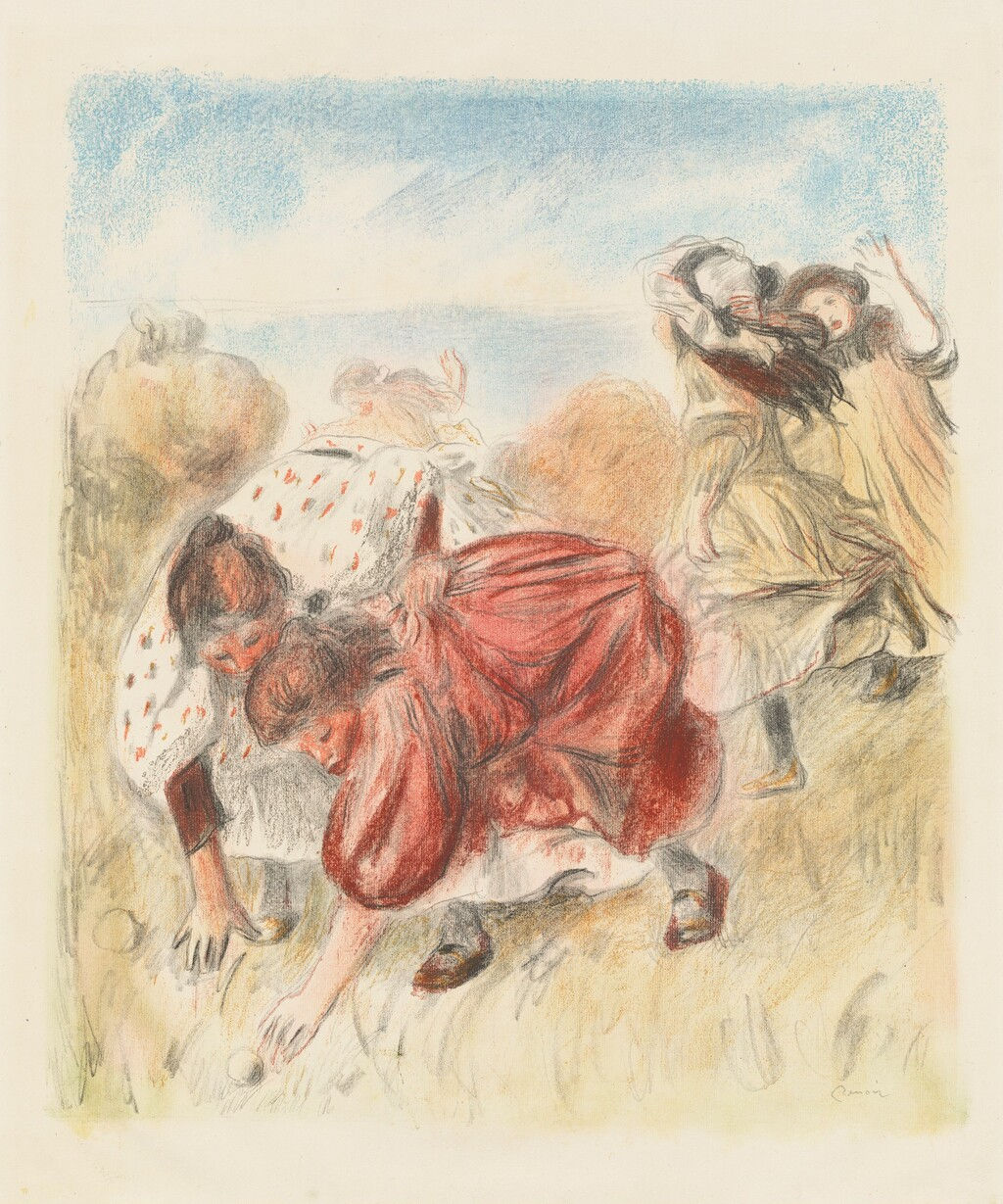
Children Playing Ball shows another scale of ambition in colour lithography. The National Gallery dates its impression to 1900, gives an image area of 58.5 × 51.1 cm, and catalogues it as Delteil no. 32, only state. The museum identifies the sheet separately from the printed image, since a print can leave a broad border of paper. Its institutional record is a firmer way to identify the work than a cropped web thumbnail. The subject also belongs to the wider Renoir interest in figures at leisure, but it is not a copy of any painting merely because the theme feels familiar.
The Gallery's photograph of the sheet helps explain why the paper matters. Several figures bend into the foreground, their skirts and arms crossing in loose curves; two more figures stand farther back. Pale blue across the upper part of the image and warmer reds, browns and yellows among the clothes keep the busy group readable. The unprinted margin around the scene is part of the object's presentation. A close crop might make the print look more like a painting and conceal the difference between image and sheet.
The NGA gives two measurements for this particular impression: the printed image is 58.5 × 51.1 cm, while the paper sheet is 90.6 × 62.1 cm. That extra paper is not a second picture; it is the support around the image. The same record's 1950.16.214 is the museum's number for its held object, whereas Delteil no. 32 identifies the design in a print catalogue. Neither number tells us how many impressions were pulled. Keeping image, sheet, accession and catalogue number separate is a practical way to read a print record without mistaking a crop or a catalogue reference for a new artwork. NGA, Children Playing Ball. [2]
Etching and the meaning of a state
Etching begins with a plate covered in a resistant ground. The artist's lines expose the metal, and acid bites the exposed areas. Ink held in those recessed marks transfers to paper under pressure. A soft-ground etching, the medium given for NGA's Seated Bather, uses a softer coating that can register marks with a different character from hard-ground line. The technique label is an object fact; one should not claim exactly how Renoir or a printer handled a particular plate without a technical account of that object.
The NGA also holds The Two Bathers, dated 1895, as an etching, accession 1946.21.319. Its record describes a scene of two figures, one adjusting a large hat, and lists Delteil no. 9, only state. That sheet belongs to Renoir's earlier printmaking experiments; it is not the large oil painting called The Bathers made at the end of his life. Similar subject words can conceal differences of decades, technique, size and collection. The museum title, date, medium and accession together identify the print. NGA, The Two Bathers. [9]
The NGA's Female Nude Reclining is a colour etching on Japan paper. The phrase names both the process and the support. Its catalogue entry also gives “state only.” A state is a distinct stage of a printing matrix after a change to its image. “Only state” means the catalogue does not identify a changed version of the design for that work. It does not mean there was only one sheet printed, or that every surviving sheet has the same condition or colour.
An impression is one pull from the matrix onto a sheet. Two impressions from the same state are therefore still two physical objects. A proof is an impression considered outside or before a regular edition; the term needs the exact museum context. The NGA calls its 1904 Claude Renoir, turned left a trial proof on Japan paper. That label belongs to the held sheet, accession 1943.3.7354. It should not be applied to every image of Renoir's son with a similar title. NGA, Claude Renoir, turned left. [10]
That Claude sheet is also catalogued as Delteil no. 40, only state. The two labels can coexist: “only state” describes the known design of the lithographic matrix, while “trial proof” describes this particular impression's place in the printing process. A reader should not turn either label into an edition size. The NGA's separately held Seated Bather is likewise “state only,” but is a soft-ground etching, while the Claude proof is a lithograph. Medium, state and the status of one impression answer different questions. NGA, Claude proof [10]; NGA, Seated Bather. [3]
People, publishers and prints
Original prints are also objects of publishing. A dealer or publisher might select artists, commission images, work with printers and distribute the finished sheets. Ambroise Vollard's role in the Paris art market extended to prints and illustrated books. The National Gallery of Art's exhibition Vollard, Connoisseur included Renoir's Children Playing Ball among prints by multiple artists. That association is useful context, although the exhibition summary alone does not establish who printed or sold the particular NGA impression. NGA, Vollard, Connoisseur. [11]
The Musée d'Orsay identifies Auguste Clot among the printers who helped Renoir approach lithography around 1900, when publishers including Vollard sought original prints. It also describes Renoir returning to earlier portraits of Cézanne and Wagner as lithographic subjects, alongside new portraits of Vollard and the painter Louis Valtat. Those examples show that the relation between a print and an earlier image can vary: a subject may be reinterpreted, rather than mechanically copied. The museum's overview does not assign Clot to every individual Renoir lithograph, so a printer should be named for a specific sheet only when its object record supports that attribution. Musée d'Orsay, Renoir dessinateur, “Renoir and engraving”. [5]
One concrete publisher record is the Metropolitan Museum's Ambroise Vollard, dated about 1904, a lithograph on wove paper from L'Album des Douze Lithographies Originales de Pierre-Auguste Renoir. Its catalogue names Renoir as artist, Vollard as both publisher and sitter, and lists the held sheet as object 25.70.1. This is evidence about that print and album, rather than proof that Vollard published every Renoir print. Met, Ambroise Vollard, 25.70.1. [12]
Renoir's original prints did not all depict the same kind of subject. The examples above move from a bather to children playing and a portrait of Claude. In an original print, the artist is solving a new problem in marks and transfer. A modern copy of The Umbrellas solves a different problem: making the appearance of an oil painting available as a purchased image. Both can be valued, but only the first is an original print made through Renoir's printmaking process.
Browse reproductions of Renoir paintings
The established gallery below links to paintings available as modern reproduction prints. Its nine cards are retained as a shopping and artwork-navigation feature. For the object's date, medium, holder and a closer reading, follow the individual painting page.
For actual works on paper, see the drawings page. For the oil pictures reproduced in the gallery, use the paintings directory.



Renoir artworks directory
Discussion
Look closely at Prints and use the questions below to compare what you see with the documented history.
Reader Insights
What changes when a painted composition becomes a print or reproduction?
Distinguish Renoir’s original printmaking from modern prints of his paintings.
Which original print would most help explain a state or collaborative process?
Join the Conversation
Share a close observation or a source-backed question about Prints. The prompts above are starting points for discussion.
References
- Musée d'Orsay, Renoir dessinateur View source.
- National Gallery of Art, Children Playing Ball View source.
- National Gallery of Art, Seated Bather View source.
- National Gallery of Art, Female Nude Reclining View source.
- Musée d'Orsay, Renoir dessinateur, English exhibition account View source.
- The Metropolitan Museum of Art, Standing Bather View source.
- The Metropolitan Museum of Art, The Hat Pinned with Flowers (1897) View source.
- The Metropolitan Museum of Art, The Hat Pinned with Flowers (1898) View source.
- NGA, The Two Bathers View source.
- National Gallery of Art, Claude Renoir, turned left View source.
- National Gallery of Art, Vollard, Connoisseur View source.
- The Metropolitan Museum of Art, Ambroise Vollard View source.
- Lead image credit. Image: Auguste Renoir, Children Playing Ball, 1900, colour lithograph. National Gallery of Art, 1950.16.214; public-domain image.