by Tom Gurney
Tom Gurney BSc (Hons) is an art history expert with over 20 years experience
Published on June 19, 2020 / Updated on October 2, 2026
Email: tomgurney1@gmail.com / Phone: +44 7429 011000
Renoir faces St Mark’s Basilica across a sunlit Venetian square. The domes shine above a deep blue central arch; below, a few small figures and pigeons interrupt the open paving. The city is recognisable, but Renoir has not drawn every carved detail of its most famous church. Broad blue strokes pull the eye from the foreground towards the doorway, while ochre and rose touches make the façade flicker. This is The Piazza San Marco, Venice, painted in 1881 and held by the Minneapolis Institute of Art. Minneapolis Institute of Art object record [1]; museum-supplied Google Arts & Culture record. [2]
The painting belongs to Renoir’s journey through Italy. The Minneapolis text places him in Venice in late October 1881 and describes this canvas as a sketch-like view left without studio reworking. That account helps explain the open, quickly placed marks, but it does not turn the work into an accidental snapshot. Renoir selected a frontal view, gave the Basilica a strong central axis and let the broad plaza carry light toward it. Minneapolis Institute of Art text via Google Arts & Culture. [2]
At a glance
- ArtistPierre-Auguste Renoir
- Owner titleThe Piazza San Marco, Venice
- Date1881
- Medium and sizeOil on canvas, 65.4 × 81.3 cm
- CollectionMinneapolis Institute of Art, 51.19
- Acquisition creditThe John R. Van Derlip Fund
- SubjectPiazza San Marco and the Basilica in Venice
Watch: Pierre-Auguste Renoir
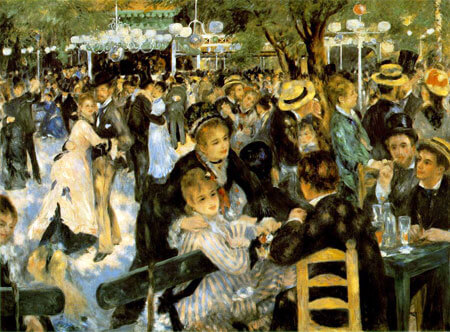
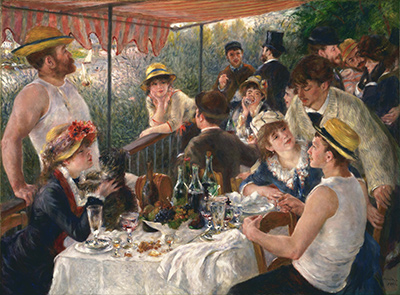
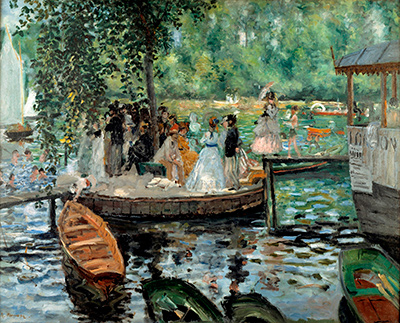
Explore a Montmartre dance, a gathering beside the Seine and the drawings behind Renoir’s paintings.
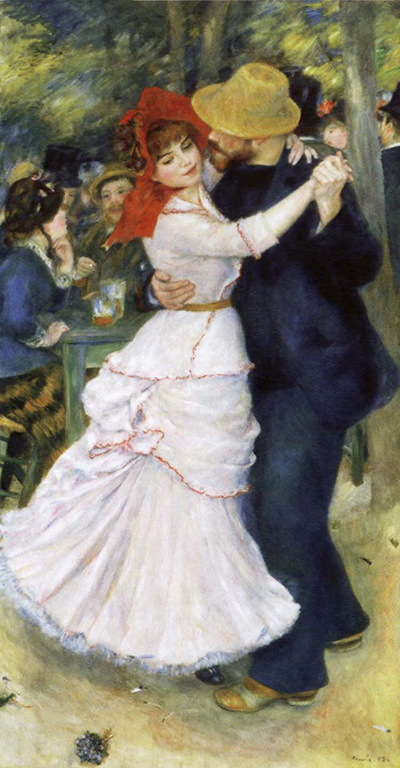
Renoir, Bal du moulin de la Galette
Dr. Beth Harris and Dr. Steven Zucker discuss Renoir’s 1876 Montmartre dance scene, its light and its crowds.
Watch on YouTubeThe owner’s full title adds Venice to the name of the square, useful because Renoir made several separate Venetian views in 1881. The accession number identifies this particular square scene. The Minneapolis record gives the canvas size as 25¾ × 32 inches, equivalent to approximately 65.4 × 81.3 cm, and distinguishes it from the larger framed size. Museum-supplied object details [2]; exact-object Commons catalogue entry. [3]
Looking through the square
The Basilica fills much of the upper middle of the canvas. Renoir sets a large gold and blue dome above the main portal, then repeats smaller arches across the façade. The architecture is not perfectly symmetrical in its handling: features loosen and merge as they move towards the sides. Even so, the repeated arches create a rhythm that makes the church readable at a glance. The dark blue recess above the central doorway gives the eye a place to rest among the bright stone and gilded forms.
The near half of the painting is mostly paving. Its long strokes run inward toward the building, making the distance feel larger than the canvas’s modest size. On the left, blue marks gather near the edge of a sunlit area. Some indicate people; others read as pigeons or shadows on the ground. Renoir does not give each form a firm outline. Instead, the changes of scale and placement let us understand a busy public square without counting everyone in it. The Minneapolis account likewise identifies people and pigeons in the scene. Minneapolis Institute of Art interpretation. [2]
The surrounding buildings are cut by the picture’s edges. At left, a narrow passage and the upright line of a mast or pole open a way beyond the square. At right, a strip of reddish façade stops the Basilica from seeming detached from its urban setting. Renoir’s viewpoint brings the viewer into the piazza rather than placing it at the end of a remote scenic panorama. There are people in the image, but none becomes a main character. The public space itself is the subject.
Colour instead of architectural inventory
St Mark’s is famous for its complex exterior, but Renoir records its effect in light more than its individual carvings. Warm orange and gold accents appear around the arches and domes. Pale blue and lavender pass through the shadows and sky. The plaza picks up both families of colour, so the building and ground feel connected. The Minneapolis account describes bold, hurriedly applied strokes of bright, relatively unmixed colour and says the canvas remained sketch-like. The visible surface supports that description. Minneapolis Institute of Art text. [2]
“Sketch-like” does not mean that nothing is resolved. The dark centre of the church is carefully positioned over a pale wedge of paving. Its strong contrast holds the composition together even when individual details are loose. Looking closely, some marks that first read as stone seem to change into light or shadow. That ambiguity is part of how Renoir communicates seeing a complicated building in the glare of midday. The museum specifically identifies the domes as gleaming in the midday sun; the account does not give an exact hour of painting or a documented record of weather. Museum-supplied description. [2]
The lower right is especially spare. Long blue and violet strokes travel down the paving, leaving light ground visible between them. This section has little independent subject matter, yet it sets the distance and keeps the eye moving. It is one of the clearest places to see Renoir letting painted marks do the work that a more finished city view might assign to careful drawing.
Venice in Renoir’s Italian journey
Renoir’s Italian travels of 1881–82 exposed him to old-master painting and to several cities. The Minneapolis text places this Venice stop in late October 1881. It is tempting to treat the square as a report of a single spontaneous moment; the owner’s wording supports a sketch-like result but does not document the precise duration of a sitting. The lasting fact is the unusual combination of a celebrated monument and an open, visibly worked painting surface. Minneapolis Institute of Art record [2]; National Gallery of Victoria, MFA Boston exhibition labels on Renoir’s Italian trip. [4]
The Kreeger Museum’s Venice—Fog offers a useful contrast among Renoir’s Venetian subjects. That separate 1881 canvas looks across the lagoon towards San Marco through mist, with gondoliers in the foreground. The Minneapolis painting stands in the piazza and faces the Basilica directly. Similar words such as “Venice” and “San Marco” in catalogues can therefore point to different pictures, settings and collections. Kreeger Museum, Venice—Fog. [5]
Renoir also painted the Doge’s Palace from the water in a canvas now held by the Clark Art Institute. Again, the important distinction is viewpoint: the Minneapolis canvas is a landward square view, where pedestrians and pigeons move across the paving. Its central church, open plaza, warm façade and blue foreground strokes separate it clearly from the lagoon pictures. Clark Art Institute catalogue, Venice, the Doge’s Palace. [6]
A public painting in Minneapolis
The picture is in the Minneapolis Institute of Art, accession 51.19. Its credit line, The John R. Van Derlip Fund, records the fund associated with its acquisition. A credit line alone does not establish every earlier owner, price or transfer, so those details should not be guessed. The museum’s object record is the reliable anchor for the present collection and title. Minneapolis Institute of Art [1]; museum-supplied object details. [2]
A close view of the painting reveals the texture of Renoir’s strokes. The upper façade has many warm and cool touches without an even finish. The foreground alternates raw light with blue marks that seem to skim the ground. Viewing the painting as a whole, these loose passages keep the square bright and spacious. Enlarging them shows decisions about direction, colour and emphasis rather than a precise map of paving stones.
Looking again
Start at the blue central arch, then follow the domes upward. Return to the bottom edge and trace the long strokes across the piazza. The same loose paint that makes the figures hard to separate from their shadows gives the scene its movement. Renoir lets Venice remain recognisable while asking the viewer to experience how light breaks a famous building into colour.
Renoir artworks directory
Questions about Renoir’s Piazza San Marco
The Minneapolis Institute of Art dates it 1881 and places Renoir in Venice in late October of that year.
It faces St Mark’s Basilica across Piazza San Marco. People and pigeons appear as small marks in the square.
No. The Kreeger Museum’s Venice—Fog is a separate 1881 canvas looking across the water. This Minneapolis painting faces the Basilica from the piazza.
It belongs to the Minneapolis Institute of Art, accession 51.19, with a credit line to The John R. Van Derlip Fund.
Discussion
What do you notice when you return to Renoir’s view of Piazza San Marco?
How do the blue foreground strokes lead your eye toward the Basilica?
Reader Insights
How do the blue foreground strokes lead your eye toward the Basilica?
The Minneapolis Institute of Art places this sketch-like canvas in Renoir’s late-October 1881 Venice visit.
Where do people and pigeons become hard to distinguish from painted light and shadow?
Join the Conversation
Share a close observation or a source-backed question about Renoir’s Piazza San Marco.
References
- Minneapolis Institute of Art object record, The Piazza San Marco, Venice: owner identity and collection View source.
- Minneapolis Institute of Art text and object details on Google Arts & Culture: date, size, Venice setting and curatorial description View source.
- Image: exact-object 5,251 × 4,214-pixel Google Art Project reproduction via Wikimedia Commons, marked there with the Public Domain Mark and resized for this page View source.
- National Gallery of Victoria, MFA Boston exhibition labels on Renoir’s Italian trip View source.
- Kreeger Museum, Kreeger Museum, Venice—Fog View source.
- Kreeger Museum, Clark Art Institute catalogue, Venice, the Doge’s Palace View source.