


 by Tom Gurney
Tom Gurney BSc (Hons) is an art history expert with over 20 years experience
Seven ready-to-print art activities
Preview each worksheet below, then choose A4 or US Letter. Every activity includes a matching answer or completed reference. Each free PDF download opens directly with no signup.
Browse the seven printablesAt a glance
- 7 art activities
- 4 activity types
- Easy, intermediate and difficult choices
- A4 and US Letter PDFs
- Answer or completed reference included
Find an activity
Filter this seven-item collection by activity or difficulty. All activities are shown when the page opens.
7 printables shown
No activity matches both filters. Choose All in either group to see more.
Choose a printable
Each preview is paired with direct A4 and US Letter PDF downloads. Check the difficulty, materials and activity details before printing.
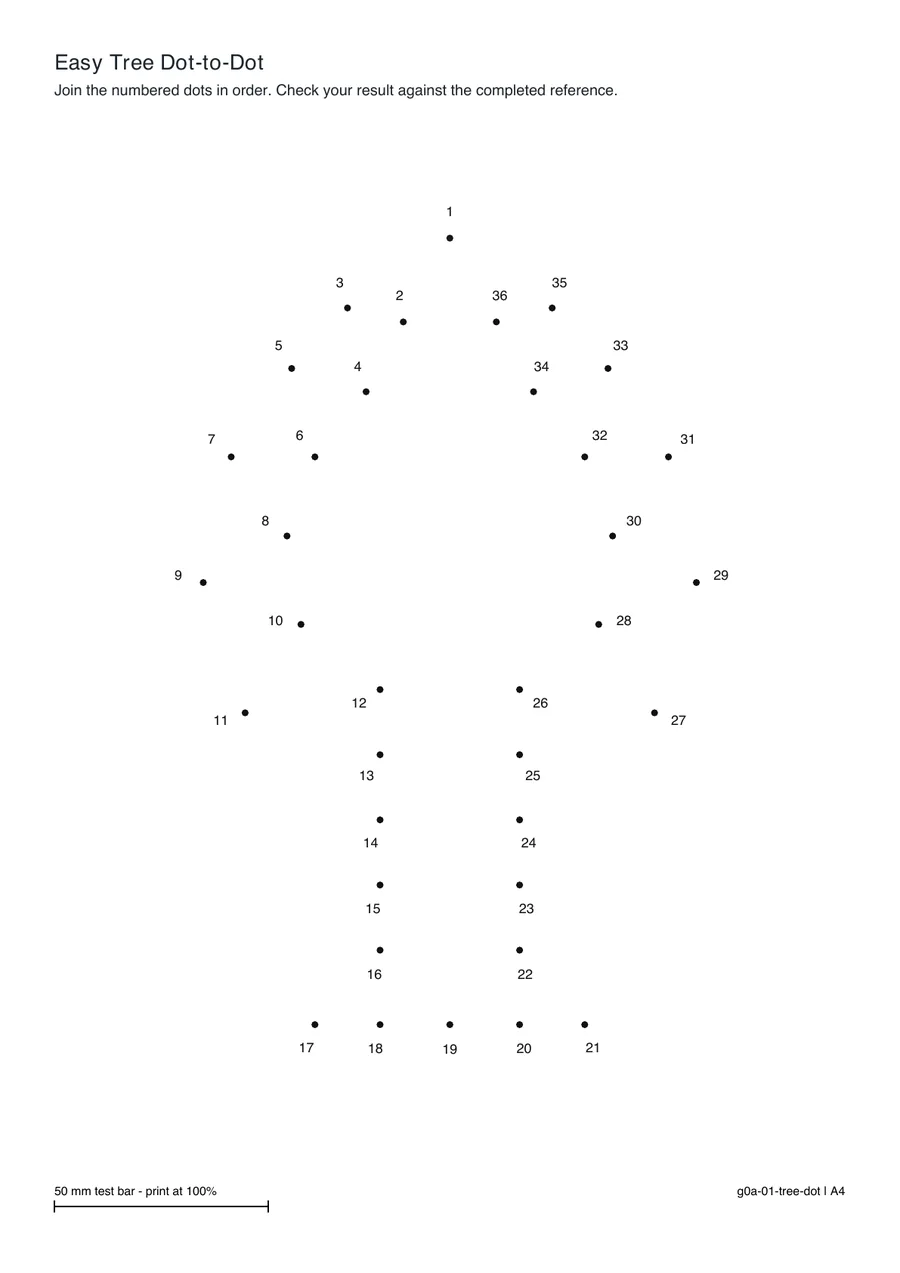
Easy Tree Dot-to-Dot
Join 36 numbered points to complete a balanced tree silhouette.
- Activity
- Connect 1–36 in order, then join the last point back to the first to close the outline.
- Materials
- Pencil and eraser.
- Practice focus
- Practises number sequence, careful line control and recognising a contour from spaced points.
Original deterministic design by TheHistoryOfArt.org.
Free PDF download. Print at 100% scale; choose Actual size and do not use Fit.
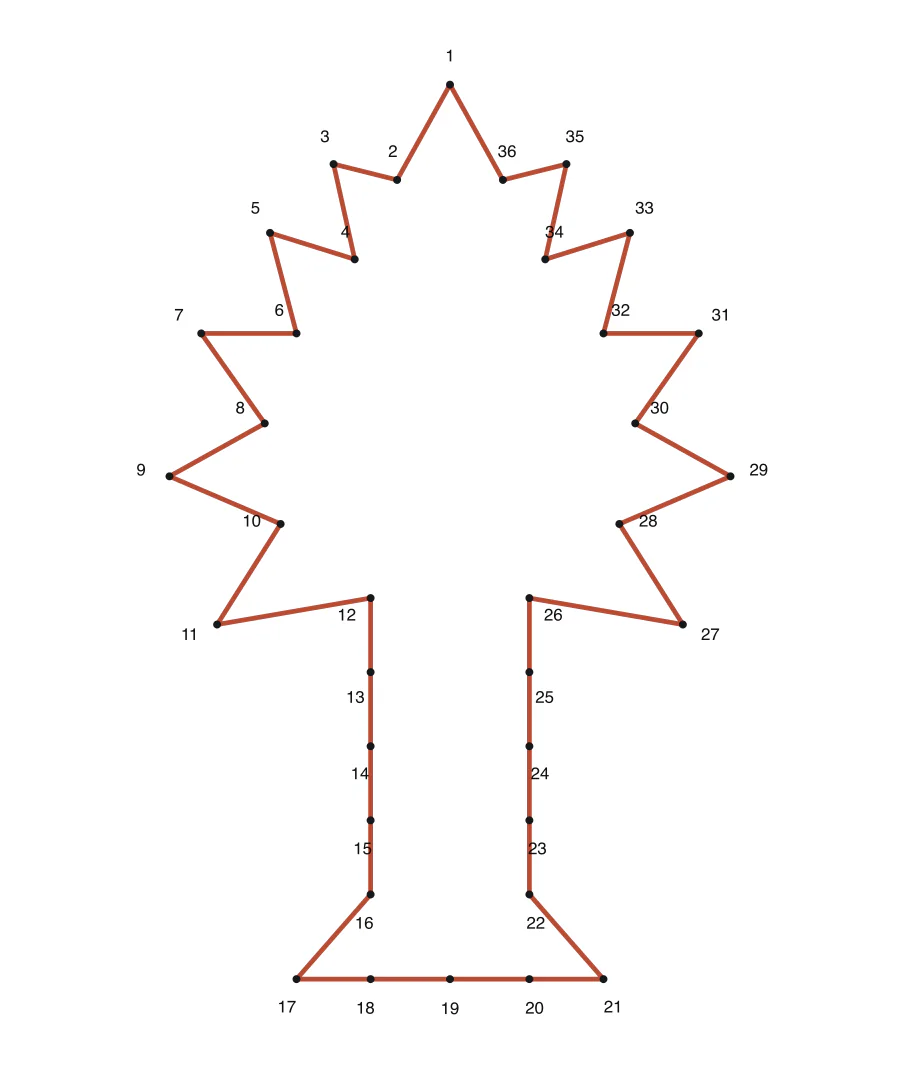
View completed answer
The completed answer connects the same 36 points and shows the closed tree outline.
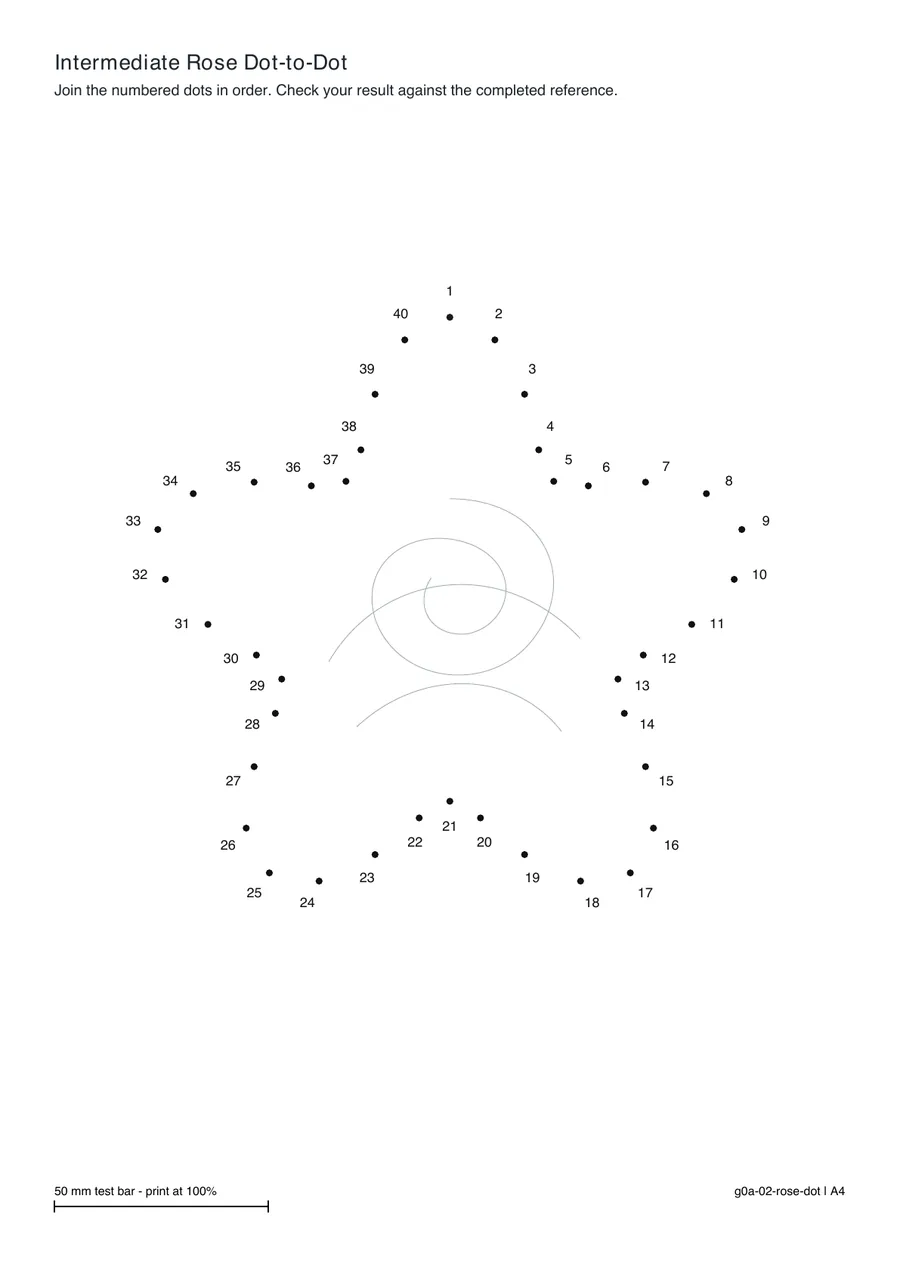
Intermediate Rose Dot-to-Dot
Follow 40 points around a rose with layered, turning petals.
- Activity
- Connect 1–40 in order and close the path by joining the last point to the first.
- Materials
- Pencil and eraser.
- Practice focus
- Practises controlled curves, sequence tracking and reading symmetry within a botanical contour.
Original deterministic design by TheHistoryOfArt.org.
Free PDF download. Print at 100% scale; choose Actual size and do not use Fit.
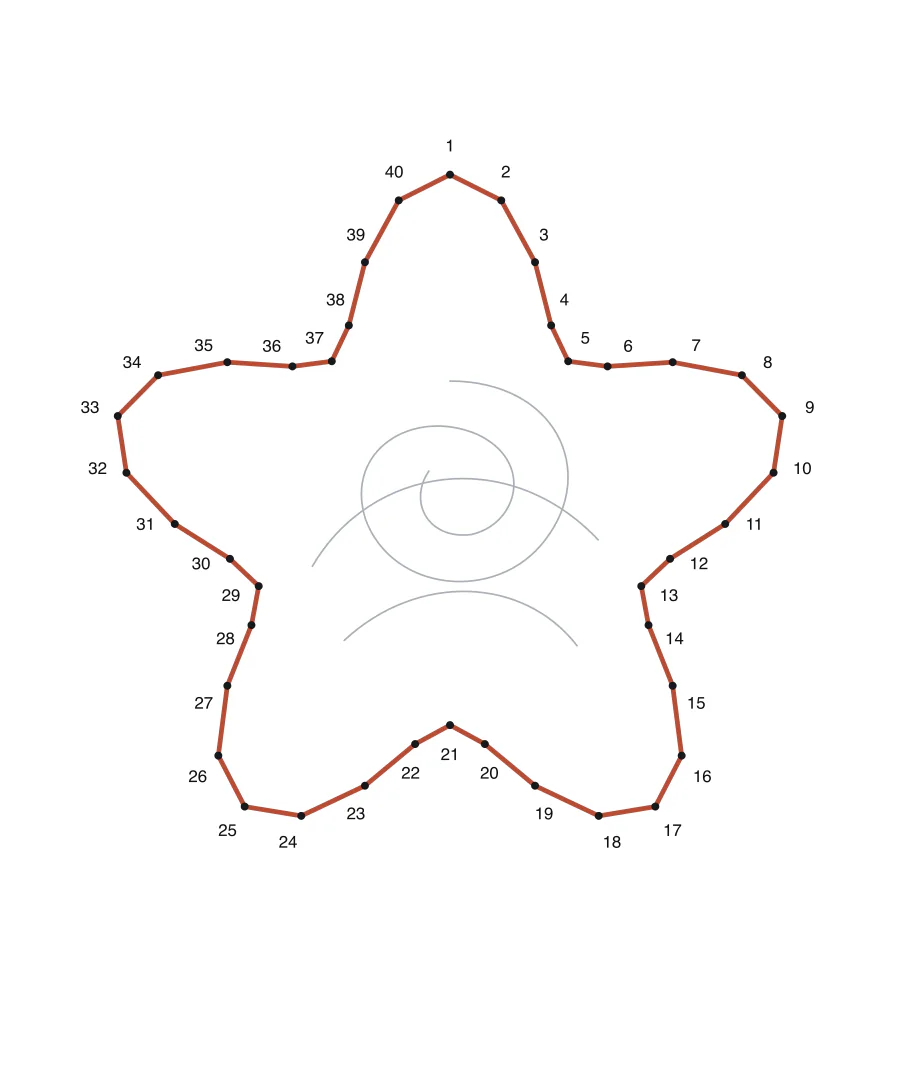
View completed answer
The completed answer connects the same 40 points and shows the closed rose path.
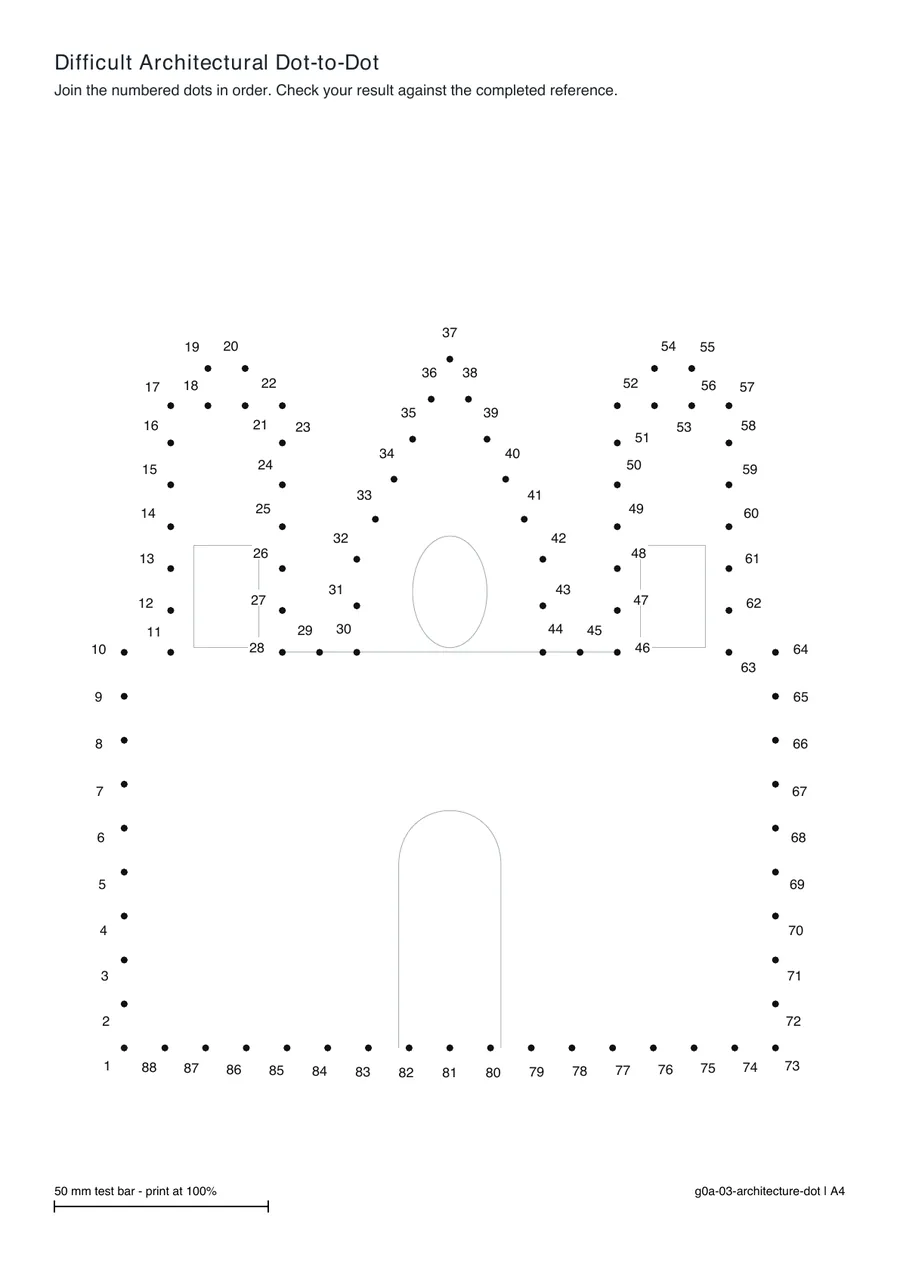
Difficult Architectural Dot-to-Dot
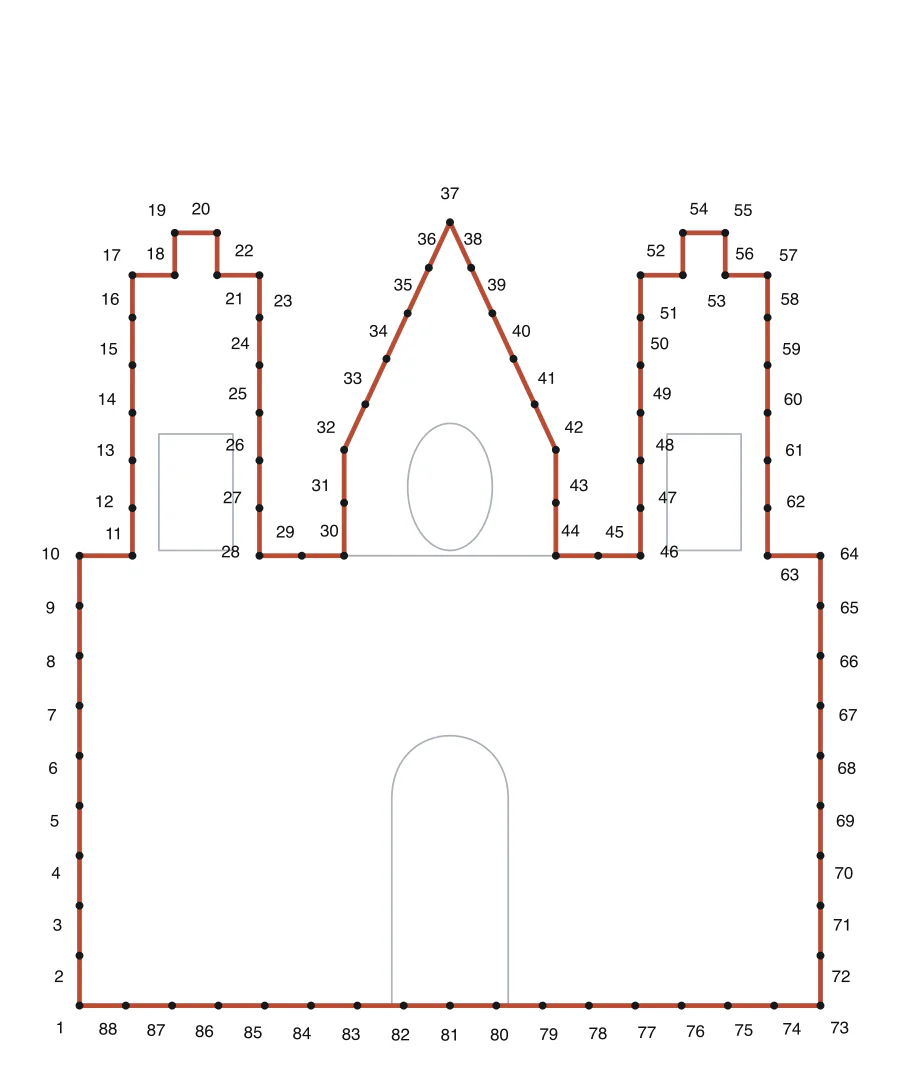
Work through 88 points to reveal a symmetrical architectural façade.
- Activity
- Connect 1–88 in order, checking each two-digit label carefully, then close the outline from the last point to the first.
- Materials
- Pencil and eraser; a ruler is optional for the longer straight sections.
- Practice focus
- Practises sustained sequence tracking, precise joins and observation of symmetry in a façade.
Original deterministic design by TheHistoryOfArt.org; it does not depict a named building or architect's work.
Free PDF download. Print at 100% scale; choose Actual size and do not use Fit.
View completed answer
The completed answer connects the same 88 points and shows the closed architectural outline.
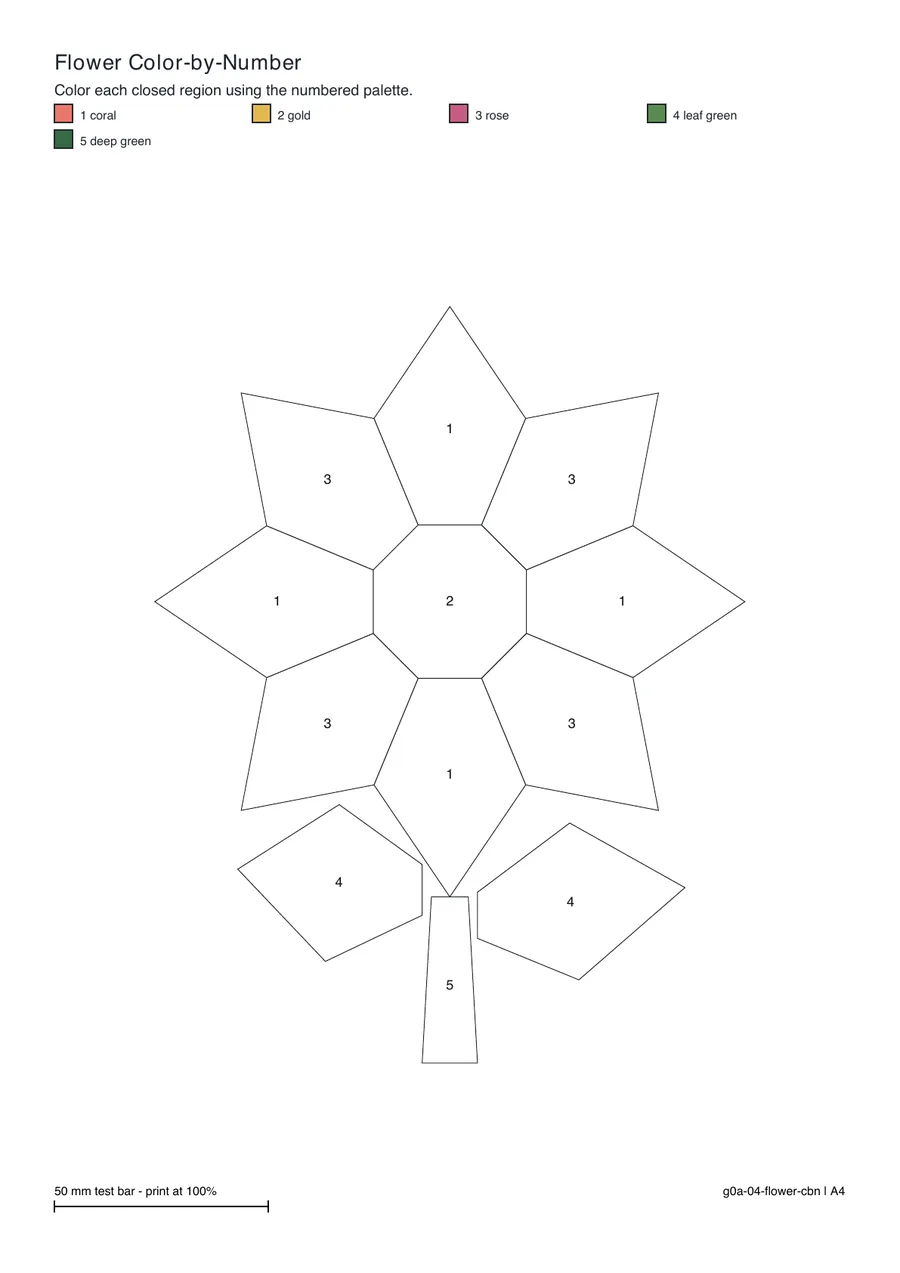
Flower Color-by-Number
Fill 12 closed flower regions using the five named colors in the key.
- Activity
- Match each region number to its named color and fill every region while keeping the dark boundaries visible.
- Materials
- Colored pencils or markers.
- Practice focus
- Practises matching a limited palette to numbered regions and recognising radial repetition in a flower.
Original deterministic design by TheHistoryOfArt.org.
Free PDF download. Print at 100% scale; choose Actual size and do not use Fit.
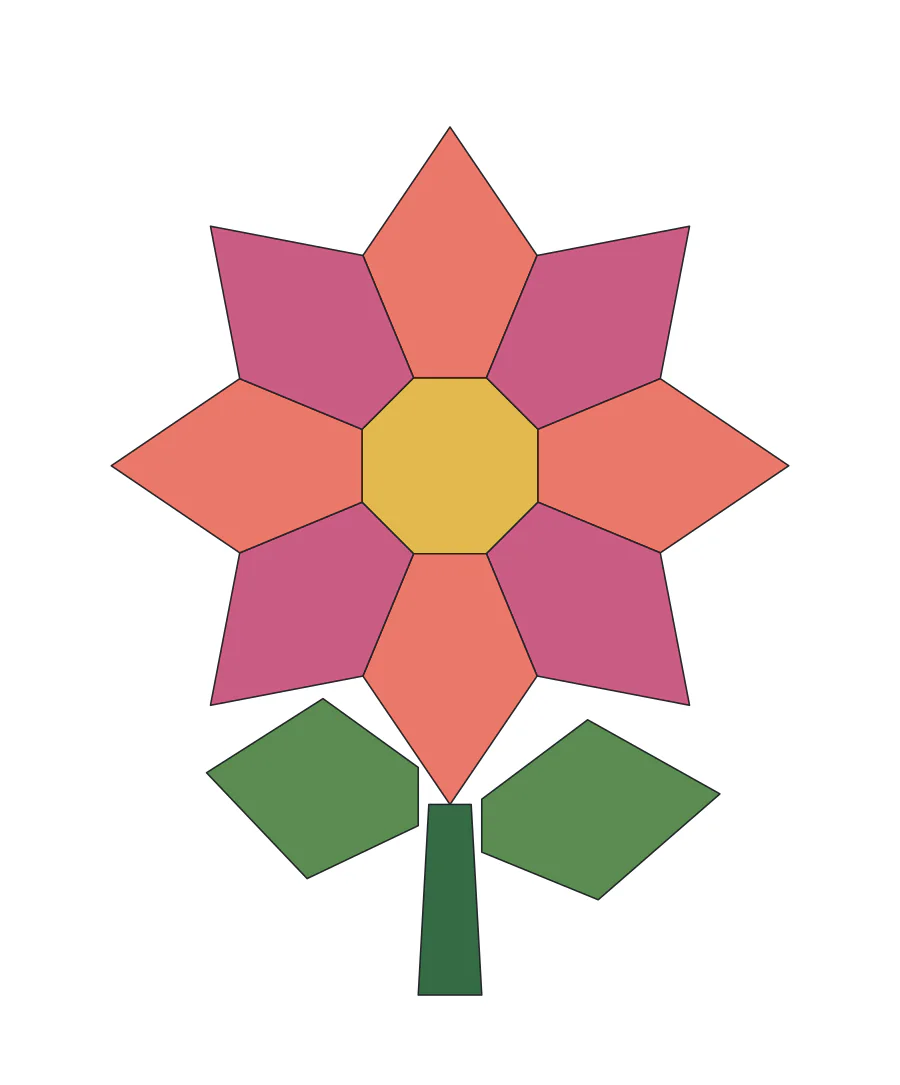
View completed color reference
The completed reference uses the same 12 regions and the same five-color mapping as the worksheet.
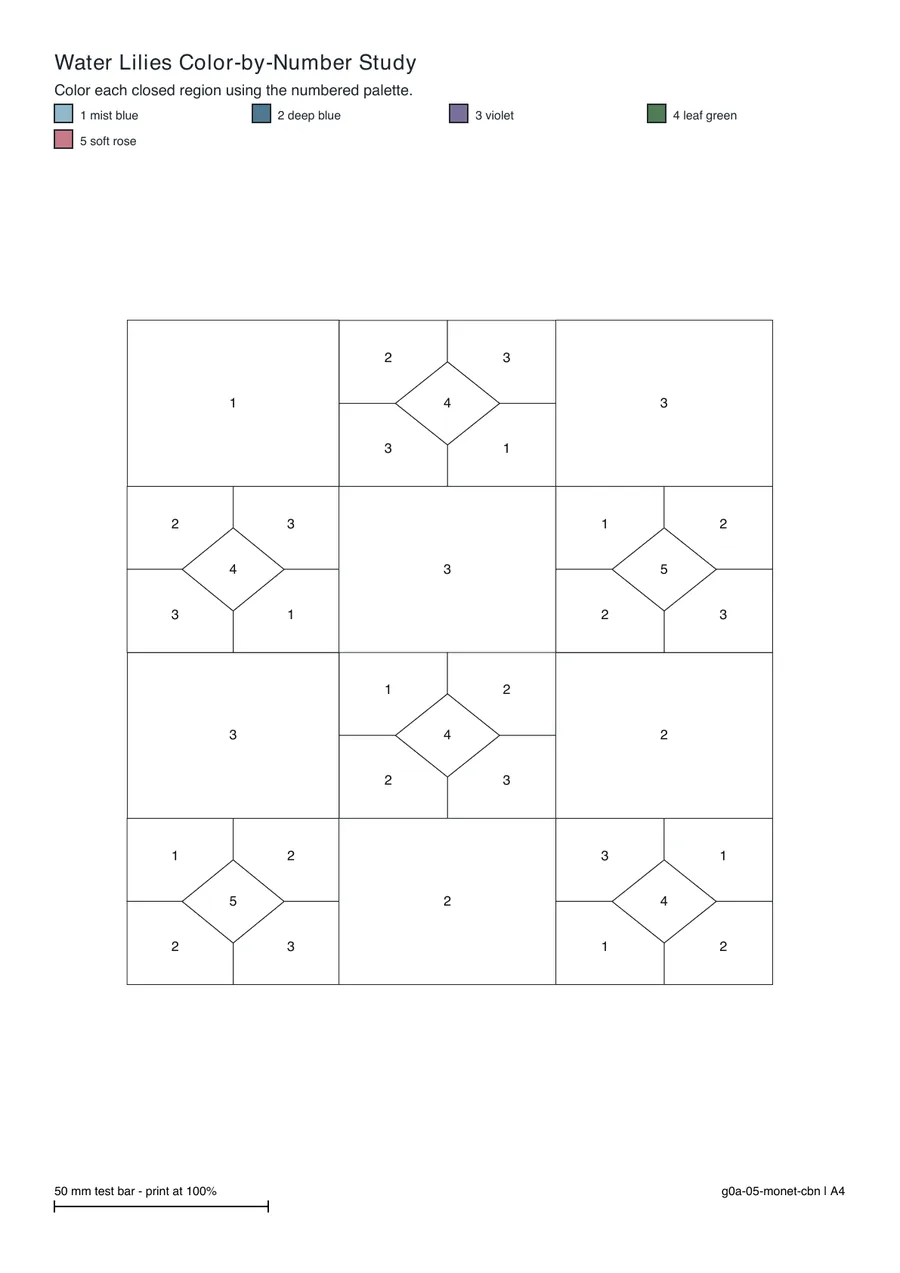
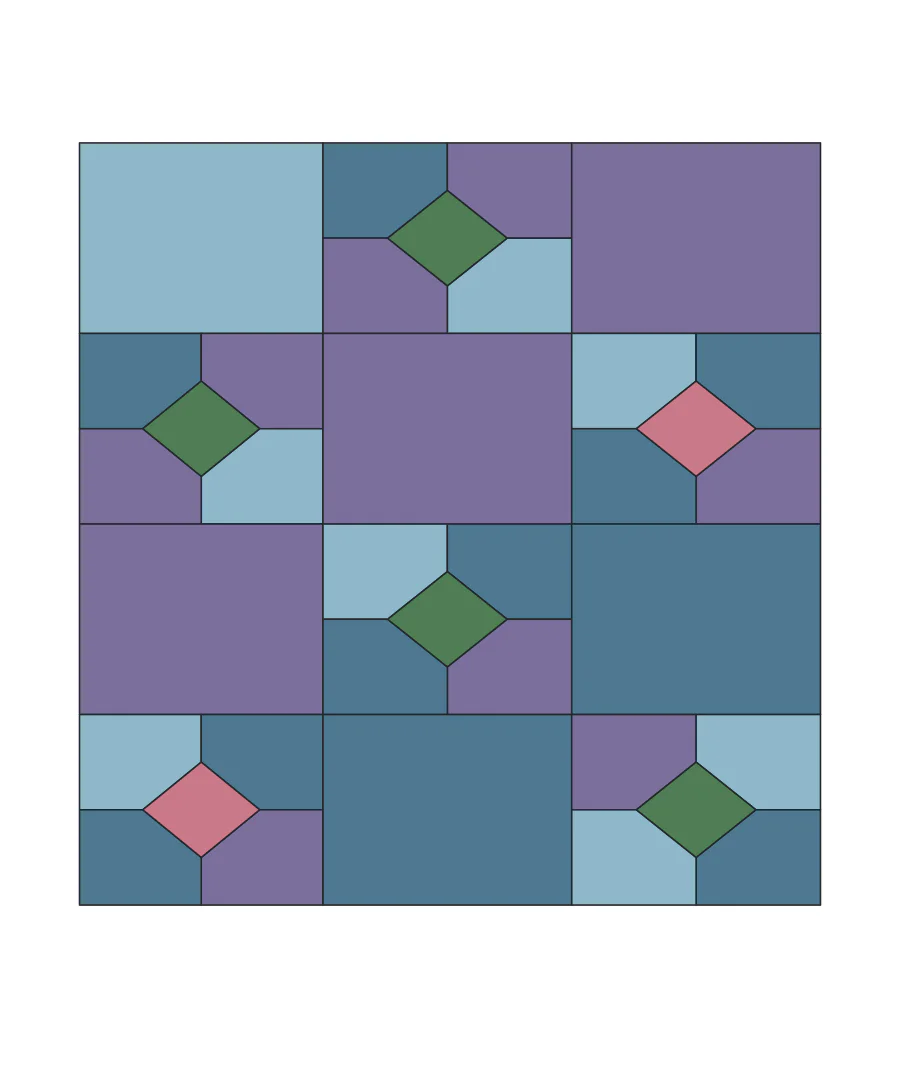
Water Lilies Color-by-Number Study
Use five named colors across 36 regions in a simplified study after Monet's Water Lilies.
- Activity
- Match every region number to the five-color key, fill all 36 regions and keep the dark boundaries visible.
- Materials
- Colored pencils or markers.
- Practice focus
- Practises limited-palette decisions and noticing how repeated horizontal color areas can suggest water, reflections and floating forms.
Claude Monet returned to the water-lily pond at Giverny across many paintings. This activity reduces one 1906 composition to broad, numbered color regions so its layered horizontal structure is easier to examine.
After Claude Monet, Water Lilies, 1906. Art Institute of Chicago, Mr. and Mrs. Martin A. Ryerson Collection, 1933.1157. The Art Institute of Chicago marks the source work as public domain. This worksheet is a simplified deterministic color study after the work, not a reproduction.
Free PDF download. Print at 100% scale; choose Actual size and do not use Fit.
View completed color reference
The completed reference uses the same 36 regions and the same five-color mapping as the worksheet.
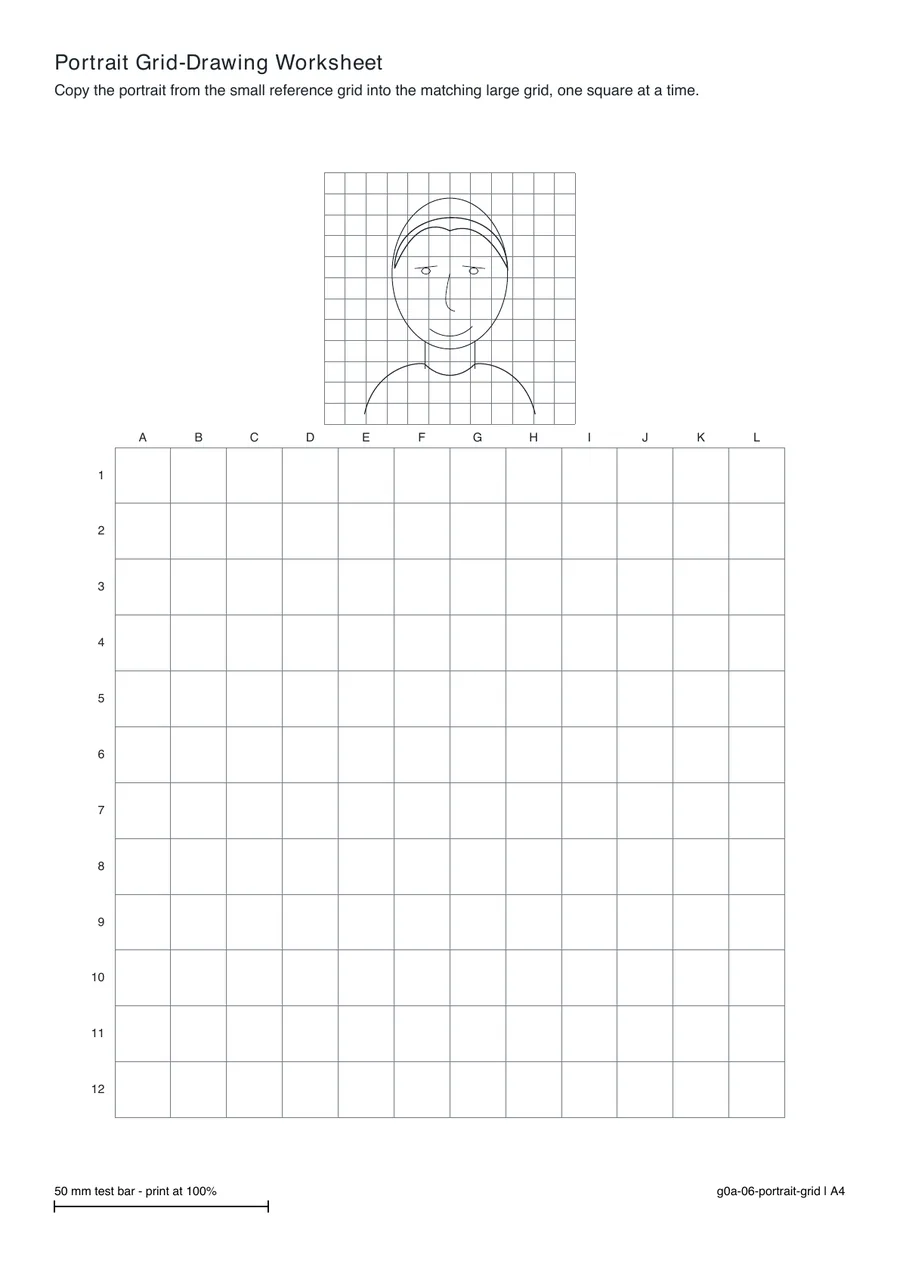
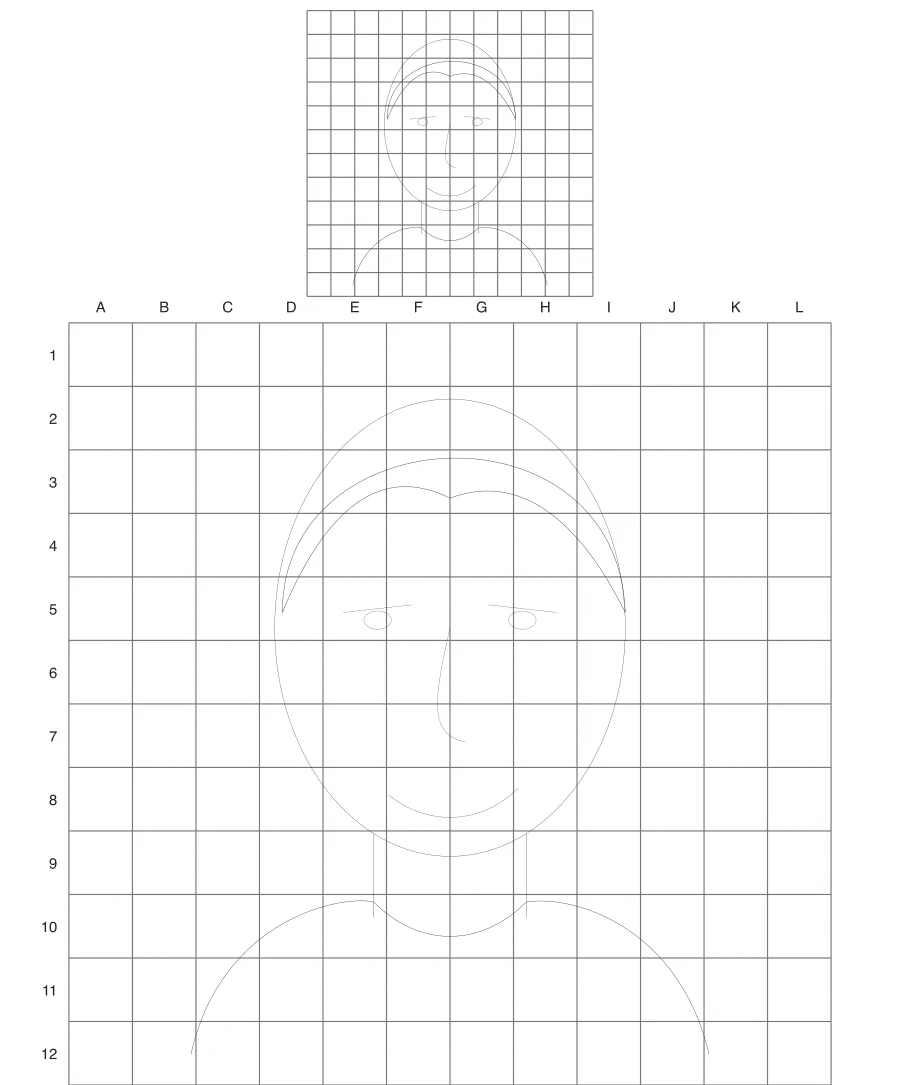
Portrait Grid-Drawing Worksheet
Copy a small portrait into a larger matching 12×12 grid, one square at a time.
- Activity
- Use labels A–L and 1–12 to compare corresponding cells, placing each part of the portrait in the same relative position on the larger grid.
- Materials
- Pencil and eraser; a ruler is optional for checking alignment.
- Practice focus
- Practises proportion, relative placement and breaking a complex portrait into manageable cell-by-cell observations.
Original deterministic design by TheHistoryOfArt.org.
Free PDF download. Print at 100% scale; choose Actual size and do not use Fit.
View completed reference
The completed reference places the same portrait shapes in their corresponding cells on the larger 12×12 grid.
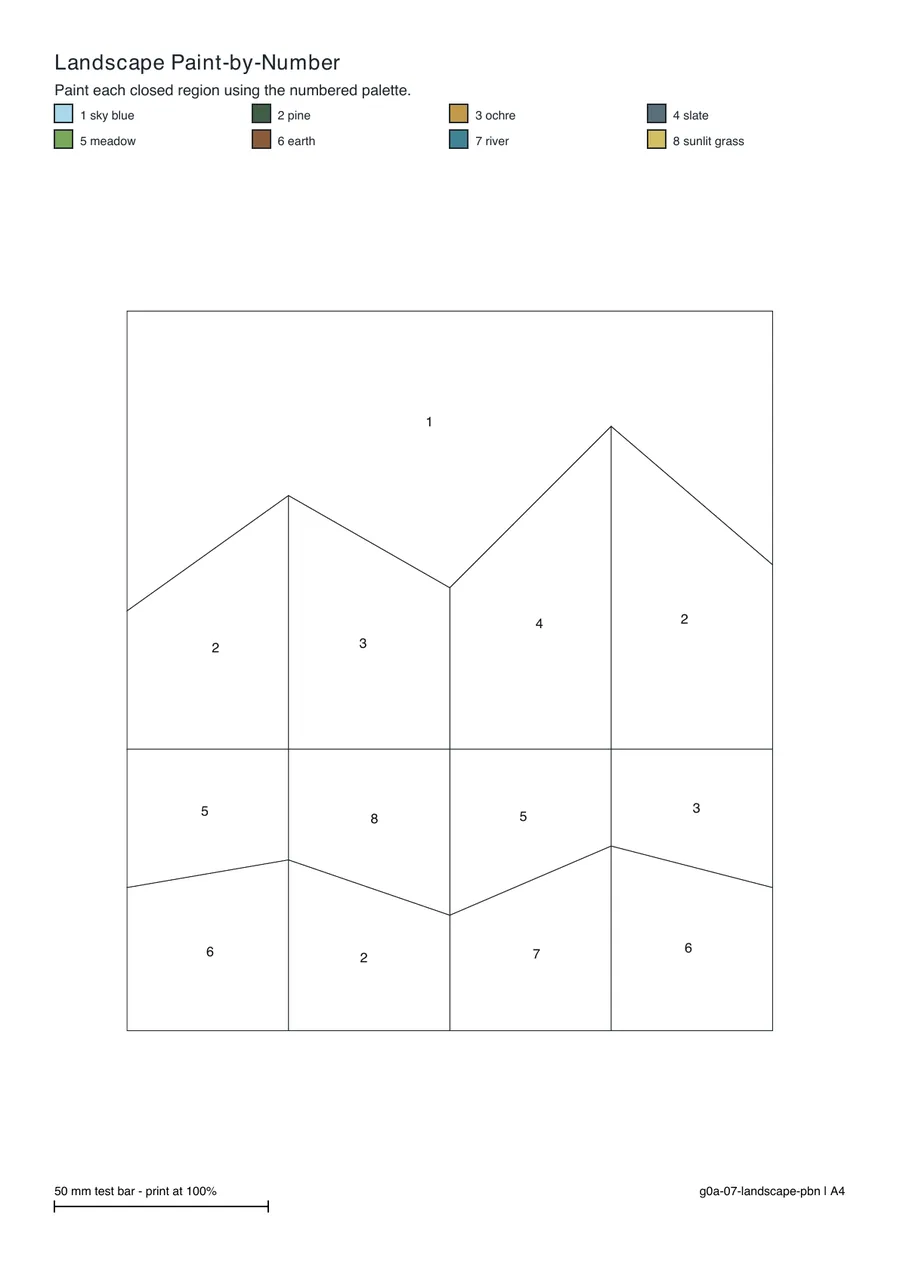
Landscape Paint-by-Number
Fill 13 landscape regions using the eight named colors in the key.
- Activity
- Match every region number to the eight-color key, filling each closed area while keeping its boundary visible.
- Materials
- Use colored pencils for a dry version, or apply gouache or acrylic sparingly on printer-compatible heavyweight paper or cardstock. Avoid wet watercolor on ordinary copier paper.
- Practice focus
- Practises mapping a palette to closed shapes and reading a landscape as spatial bands from foreground to distance.
Original deterministic design by TheHistoryOfArt.org.
Free PDF download. Print at 100% scale; choose Actual size and do not use Fit.
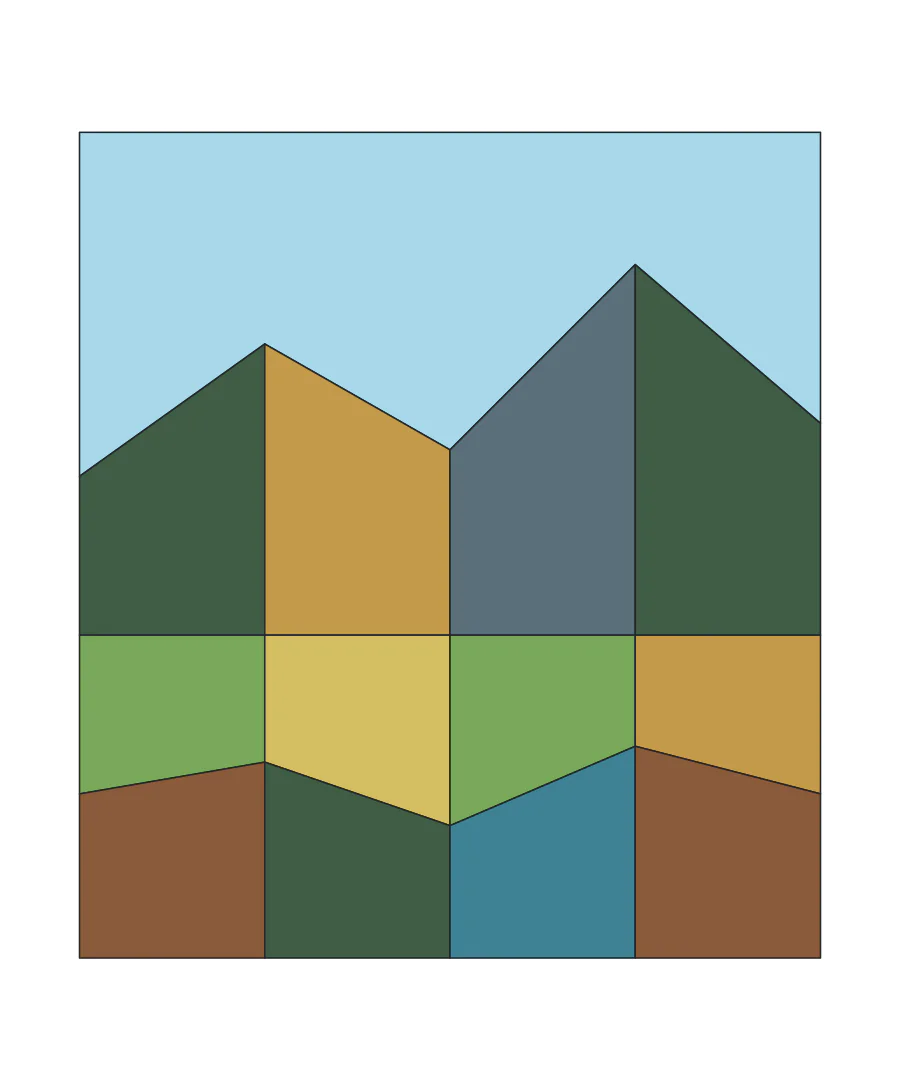
View completed color reference
The completed reference uses the same 13 regions and the same eight-color mapping as the worksheet.
How to print the PDFs accurately
Choose the PDF that matches your paper, then print it at Actual size or 100% scale. Do not choose Fit, Shrink or Scale to page.
- Open the A4 or US Letter PDF for the selected activity.
- In the print dialog, choose Actual size or enter 100% for scale.
- Print one page and measure the test bar. It should be 50 mm long.
- If the bar is not 50 mm, check that automatic page fitting is switched off before printing again.
Ordinary copier paper is suitable for pencil, colored pencil and light marker work. For paint, use printer-compatible heavyweight paper or cardstock and apply gouache or acrylic sparingly. Avoid wet watercolor on ordinary copier paper.
Rights: Files are provided as free PDF downloads. Copyright remains All Rights Reserved. No permission to redistribute, repost, alter or sell these files is granted.
Continue practising
Use these existing guides to extend the observation, line, color and subject skills used in the activities.