


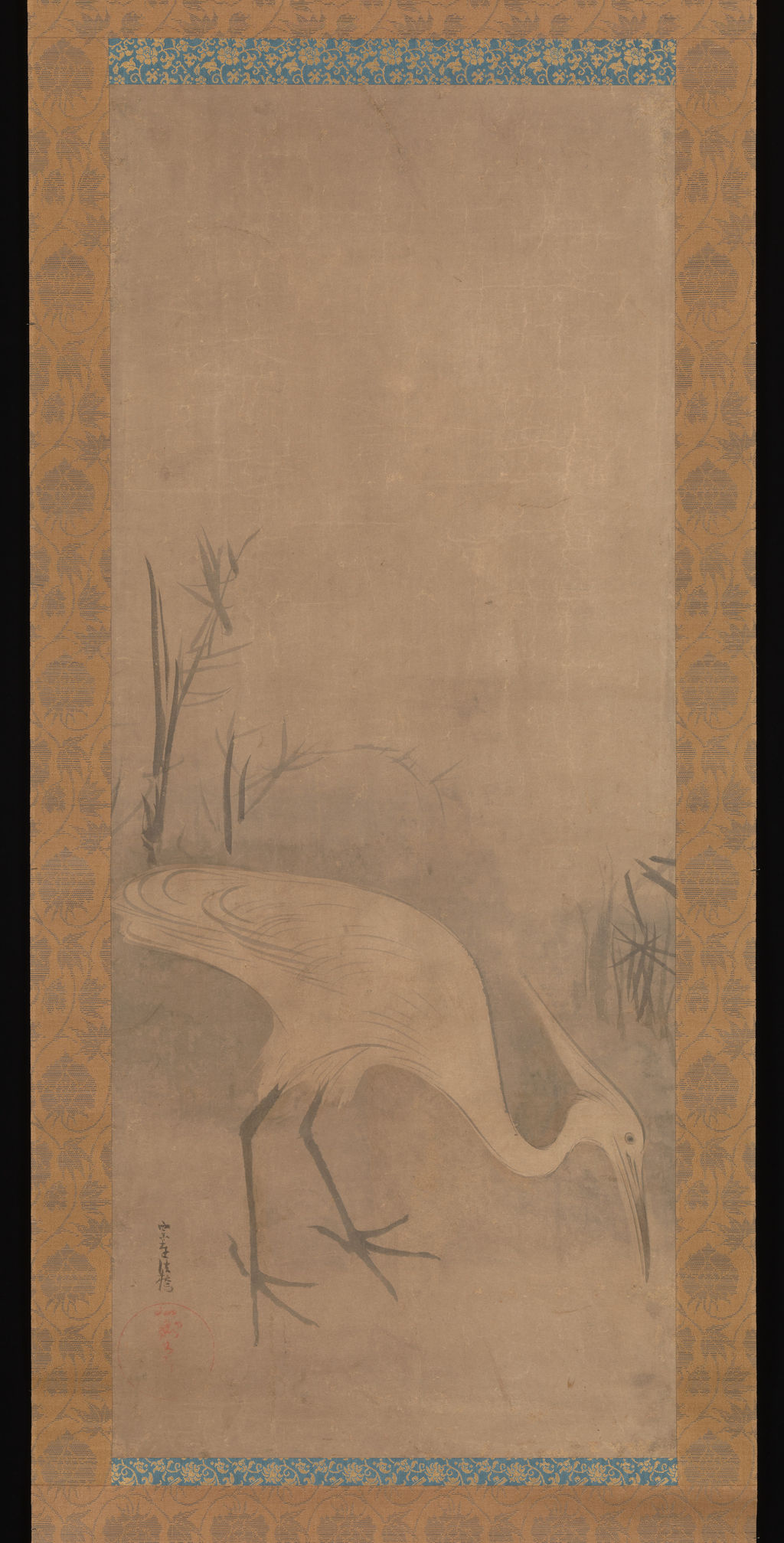
Tawaraya Sōtatsu, White Heron, early seventeenth century. The Metropolitan Museum of Art, 2018.853.13.
 by Tom Gurney
Tom Gurney BSc (Hons) is an art history expert with over 20 years experience
Published on June 19, 2020 / Updated on September 23, 2026
Email: tomgurney1@gmail.com / Phone: +44 7429 011000
The life that the documents do not give us
Tawaraya Sōtatsu (俵屋宗達) is not a painter for whom a birth certificate, apprenticeship story and series of dated self-portraits can be assembled into a conventional life. His birth and death years are unknown. The Smithsonian's Sōtatsu chronology says the same of his family and teachers, and Japanese collections that know particular works intimately still describe his lifespan with question marks or estimates. The facts that carry weight concern a Kyoto enterprise called Tawaraya, works dated through their inscriptions or circumstances, and people who commissioned, wrote on, used or later preserved them. A biography can follow that trail closely. It cannot fill its gaps by turning an approximate museum label such as “c.1570–c.1640” into an independently proved pair of dates. [1] [2] [3]
The evidence also comes in different strengths. A poem card bearing a day in 1606, a 1630 scroll with a named patron and colophon, and a diary entry about screens are closer to the events than a painting whose date is inferred from style. A temple rebuilt in 1621 is securely dated as a building; the painting on its doors need not have been completed that year. A seventeenth-century seal may identify a workshop practice, but it does not automatically identify the painter of every surviving surface. This page marks these differences openly, because otherwise Sōtatsu's scarce records become a smooth, invented story. [4] [5] [6]
Contents
- The life that the documents do not give us
- A Kyoto shop before an individual artist appears in the record
- 1602: repairing an older treasure
- 1606: a collaboration with a named date
- Courtly work was also workshop work
- The disputed date of the Yōgen'in paintings
- A title we can document by 1630
- The court correspondence and the Genji screens
- What can be said of his final years?
- How the biography itself was made
- Dated evidence at a glance
- Books on Japanese Art
A Kyoto shop before an individual artist appears in the record
The name Tawaraya first needs to be understood as a working enterprise. It made and sold decorated fans, cards and papers in Kyoto. James T. Ulak's checked introduction to the Smithsonian catalogue describes a fan shop associated with Gojō-dōri in a piece of contemporary fiction. It held ready-made stock and accepted commissions. This is a valuable picture of the sort of business from which Sōtatsu emerged, but a fictional description is not a land register or a daily account book for his own premises. The Japanese scholar Okudaira Shunroku places such eya, or picture-making shops, among urban craftsmen able to prepare not just fans but decorated sheets, screens and other painted surfaces. Their customers ranged beyond townspeople to elite writers and the court. That breadth helps explain how one workshop could make an inexpensive, portable image and also take part in work intended for a grand interior. [2] [6]
At a glance
- ArtistTawaraya Sōtatsu (俵屋宗達)
- ActivityEarly 17th century; birth and death unknown
- CentreKyoto and the Tawaraya workshop
- Strongest date1630 Life of Saigyō colophon
Nothing in those accounts proves what Sōtatsu's parents did, whether he inherited the shop, or where he trained. Even “founder” can be misleading if it suggests an incorporation document or a master-to-pupil succession chart. What is defensible is that he headed the Tawaraya operation during the first four decades of the seventeenth century. Kyoto National Museum describes him as the maker associated with a shop serving court nobles, religious institutions and prosperous townspeople. That three-way clientele is more informative than the image of a lone painter who moved suddenly from obscurity to imperial favour. Social position mattered: fan design, the preparation of a calligrapher's paper, and painting a room required contacts, materials and other skilled hands. The enterprise was part of his career, not background scenery. [1] [8] [6]
An especially revealing record is later than Sōtatsu's earliest work. Okudaira cites a court diary for 13 March 1616 in which Emperor Go-Mizunoo showed “Tawaraya pictures” to another painter, Matsuya or Kanō Kōi, as a model for a fan design. The diarist does not say Sōtatsu was in the room. Nevertheless, the reference shows that imagery identified with the shop had become useful at court. Its name, rather than Sōtatsu's personal biography, was the point of reference. The same scholar notes the favourable mention of Tawaraya fans in the early-seventeenth-century fiction Chikusai. That suggests recognition beyond a single elite customer, though literary popularity cannot be turned into a sales ledger or an estimate of the shop's turnover. [6]
1602: repairing an older treasure
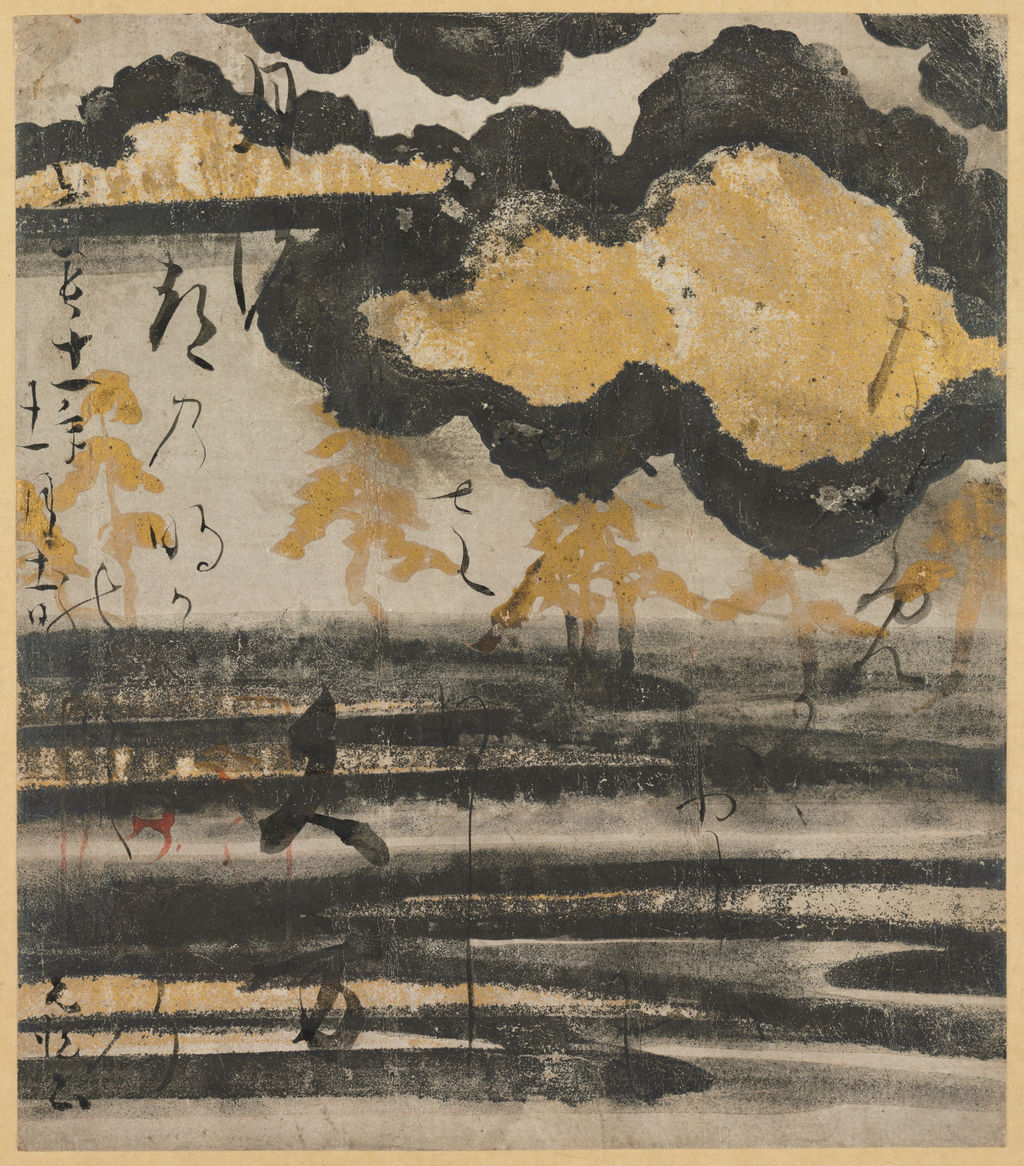
The earliest prominent date in most Sōtatsu chronologies is 1602, when the twelfth-century Heike nōkyō scriptures at Itsukushima Shrine underwent repairs. These lavishly decorated Buddhist texts had their own much older origin and history. Tokyo National Museum's 2008 Rinpa publication names the covers and frontispieces of the Vow, Parable of the Phantom City and Entrustment volumes as painting associated with Sōtatsu. Crucially, the museum says these particular additions are regarded as his on stylistic grounds. The repair campaign is dated; the judgement about his hand on specified surfaces is an art-historical attribution. A simple sentence saying that “he restored the entire Heike nōkyō in 1602” would make both the scale and the evidence too certain. [9] [10]
Even with that qualification, the assignment is consequential. It places an artisan associated with decorated paper in contact with a famous, centuries-old complex of calligraphy, image and material. The new surface could answer the old without mechanically repeating it. It also explains why a later reader should not imagine Sōtatsu's poetry papers as a sudden invention. He worked in a Kyoto culture interested in historical courtly forms and in techniques for making them usable again. Ulak reads the sutra work as an early glimpse of the painter, while Tokyo National Museum's more exact wording reminds us that a glimpse is not a signed contract. The identity of the shrine's original twelfth-century work, the 1602 repair, and the attribution of individual renewed leaves should remain three separate facts. [2] [9]
No photograph of those shrine leaves is reproduced here. The object link serves research, while the page's images come from files with verified commercial reuse rights and exact accession records. Using an unrelated gold poem card as an illustration of a Heike nōkyō leaf would erase precisely the object distinction on which this chronology rests. [9]
1606: a collaboration with a named date
The 1606 poetry cards make Sōtatsu's social and artistic work easier to see. The Cleveland Museum of Art holds a card from the Shinkokin wakashū with a pine-and-beach design. It gives Sōtatsu the decoration and Hon'ami Kōetsu the calligraphy. The recorded date belongs to the retirement of imperial regent Konoe Nobutada, and the Smithsonian exhibition relates the card to a larger group made for that occasion. Here the collaborators had different visible jobs. Kōetsu's writing was not a label beneath a finished painting; the words and the prepared pattern shared a single surface. An account of the card as “a painting by Sōtatsu” alone omits the writer and the event that help date and explain it. [4] [11]
Their working relationship reached beyond one commemorative group. Ulak describes decorated handscrolls, papers and involvement in Saga-bon publication projects supported by Suminokura Soan during the years before Kōetsu established an artists' settlement at Takagamine in 1615. That account links Sōtatsu to a network of calligraphers, makers and patrons. It does not establish that the two celebrated men designed every sheet without assistance. Ulak's summary of Okudaira's research highlights the possible role of a papermaker, Kamiya Sōji, on the famous Crane Scroll and suggests that making and writing might sometimes have been performed in close coordination. The Kyoto National Museum identifies Sōtatsu's cranes and Kōetsu's poems on its long scroll; the contribution of a prepared support and the exact timing of each gesture require a more careful account than a romantic story of two friends painting together at a table. [2] [12]
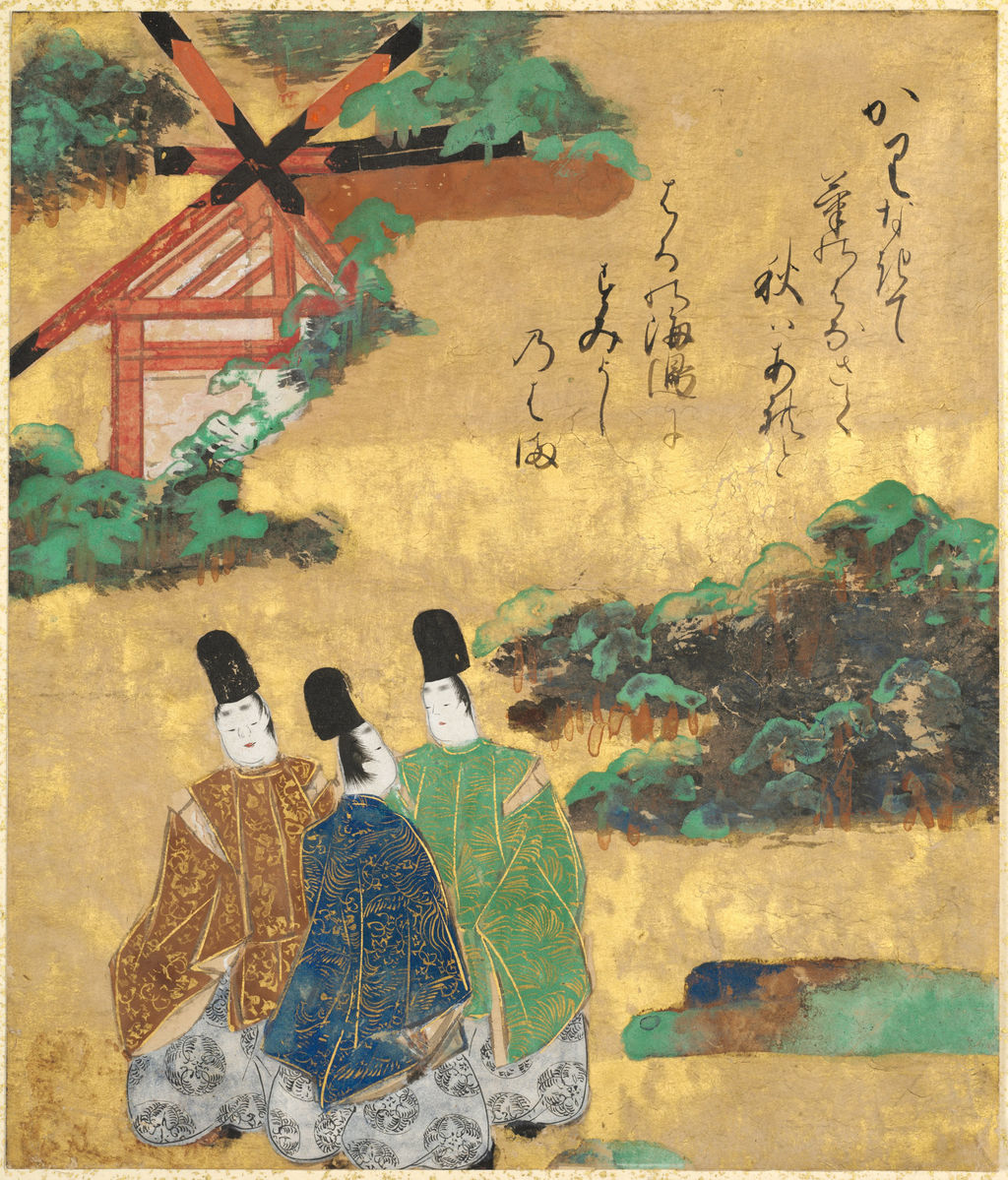
By the early 1600s, this combination of sheet design and courtly writing reached readers and viewers who recognised older poetry while enjoying new variations. It is tempting to call every gold-and-silver pattern a joint Kōetsu–Sōtatsu commission. Museum catalogues do not do that. Some underpaintings are attributed rather than direct; some sheets have later mounts; other hands prepared or printed paper. A biography needs the named collaboration because it explains Sōtatsu's access and working method, but it also needs the object's specific credit line before it assigns a particular brushstroke to him. [2] [4] [14]
Courtly work was also workshop work
The screens of fans in the Museum of the Imperial Collections offer unusually tangible evidence for a group at work. The Smithsonian's study describes forty-eight fan paintings mounted on a pair of eight-panel screens and traces them in imperial holdings close to their period of making. A conservation examination found the name Tawaraya Tōshichirō behind a fan bearing the Tatō seal; seventeen more fans use that mark. Other fans carry versions of the I'nen seal. Themes range from military narratives to The Tales of Ise and flowers. The inscription identifies a colleague with his own standing in the shop and blocks the easy assumption that a screen associated with Sōtatsu was painted uniformly by one person. It tells us little, however, about the painter's family relationship to Tōshichirō; “disciple” in a museum account is not proof of a bloodline. [5] [15]
The object's several dates must also be kept apart. The Smithsonian places its making in the early seventeenth century, with evidence for a high-ranking patron by the 1620s. It does not bear a convenient autograph note stating a single date on which all forty-eight paintings were executed or the screens assembled. One fan has seams showing it was once folded for use; others may have been prepared as pictures from the start. The finished screen therefore holds a history of production and remounting within one frame. Such practical details explain both Sōtatsu's reach and the limitations of an individual biography. He organised a productive visual language, but a conservation discovery can shift the attribution of a particular painted fan toward another named hand. [5]
There is a separate pair titled Screens with Scattered Fans in Tokyo National Museum with sixty fans on six-panel screens. Its Japanese cultural-heritage record qualifies the work as traditionally attributed to Sōtatsu. It is not the forty-eight-fan Imperial Collections pair with Tōshichirō's name discovered on the reverse. The two pairs are valuable evidence for a market in portable pictures remade as room-sized displays, but combining their counts, holdings or attributions would create a false biographical document. Neither photograph has passed this site's production image gate, so this passage links the records rather than showing a misleading substitute. [15] [16]
The disputed date of the Yōgen'in paintings
Yōgen'in in Kyoto is often introduced as Sōtatsu's great career turn “in 1621.” The temple's history explains why: it was rebuilt in that year after a 1619 fire. Kyoto's city museum guide and official visitor account describe large paintings on sliding and cedar doors associated with him—pines, white elephants, lions and fantastic creatures. Their setting differs sharply from a card held in the hand. Painted doors face a person crossing a room; the surface can open or close, and the architecture controls the encounter. The paintings are therefore essential to a life that moved from specialised shop products toward substantial commissions. Yet 1621 securely dates the rebuilding, not necessarily the application of the paint. The Agency for Cultural Affairs calls the interior works traditionally attributed, and their exact completion date has been disputed. [17] [18] [19]
Okudaira Shunroku's Japanese study of the building's conservation evidence makes the problem unusually concrete. He sets out proposals for the paintings at the time of rebuilding, around 1626 or later, and argues that 1629–30 is plausible. Examination reported in his paper found no image beneath the already attached pulls on a cedar door; at an elephant's white edge, paint appears to have been applied around a pull. Ordinarily a painted surface would precede fitting the hardware. The pine-painted sliding doors are also wider than the opening requires, so part of the composition disappears whichever way they close. Okudaira treats these as signs of a pressured production or installation rather than as a neat proof of the exact year. Physical evidence can establish sequence and constraint even when it cannot by itself tell us a calendar date. [6]
His possible explanation for Sōtatsu's selection belongs in the same qualified category. Yōgen'in was founded to memorialise Azai Nagamasa and later rebuilt under the patronage of his daughter Gō, wife of Tokugawa Hidetada. Okudaira asks whether Gō's daughter Tōfukumon'in and Emperor Go-Mizunoo may have been influential in bringing the painter to the project, especially amid crowded official building work and political tension. The article identifies these points as hypotheses, not a recovered commission letter signed by the couple. A temple account proposes a route through the Ogata family and Kōetsu; that, too, is a possible reconstruction rather than evidence that we can put words in a patron's mouth. A responsible biography can describe the political and familial setting while declining to choose an undocumented intermediary as fact. [6] [20]
The image gate matters here as well. Kyoto institutional pages establish the location and titles, and Okudaira's study supplies photographs for a scholarly publication. Neither makes those photographs an automatically reusable commercial website asset. The Cleveland God of Thunder reproduced later on this page is a different, studio of Sōtatsu work. It cannot illustrate the Yōgen'in elephants or a detail of the temple doors. The distinction is visible in the caption rather than being left to a reader to infer from a link. [6] [21]
A title we can document by 1630
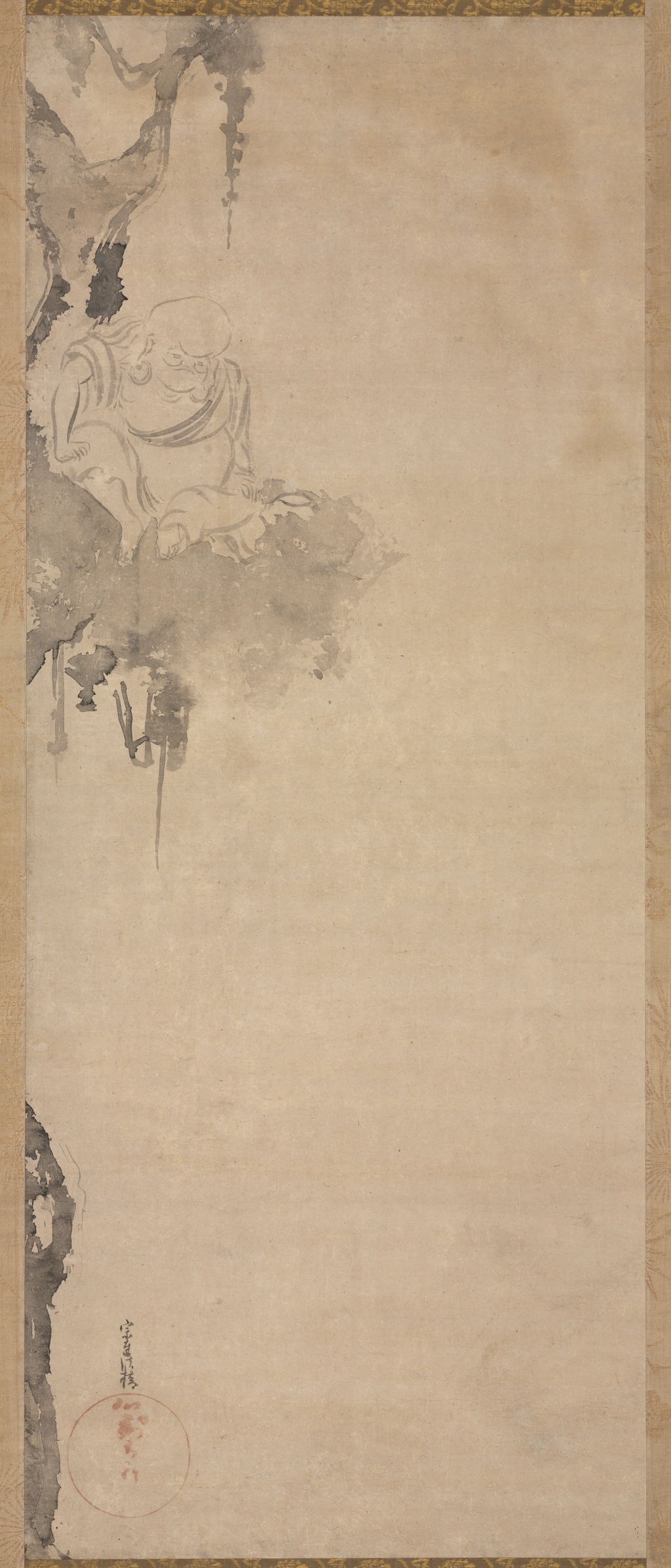
The title Hokkyō, often rendered “Bridge of the Dharma,” appears beside Sōtatsu's name in later records and signatures. The Smithsonian timeline puts its conferral at 1621, close to the Yōgen'in rebuilding. Other institutions are more cautious about the date: what can be demonstrated securely is that he held it by 1630. The distinction matters because a professional honorific says something about recognition, but its supposed award ceremony is not a scene a biographer can reconstruct from a later label. Nor did receiving a Buddhist-derived title turn him into a monk living a monastic life. It was a mark used in the status system of painters and other accomplished practitioners. [1] [23]
The decisive document is tied to a surviving work. Idemitsu Museum of Arts holds volumes of the Life of Saigyō picture scroll. The colophon written by courtier Karasumaru Mitsuhiro says that, at the request of Honda Tominari, he had “Hokkyō Sōtatsu” copy a picture scroll kept by the imperial house, while Karasumaru himself supplied the text. It is dated to early autumn 1630. Idemitsu calls this the one Sōtatsu work whose date is clear in the object itself. The original imperial model he copied has been lost. This record gives an unusually precise set of roles—requester, intermediary/calligrapher, painter and source collection—without giving a birth year or recording how the men first met. [23]
The scroll also complicates an easy opposition between copying and invention. Sōtatsu was asked to reproduce an older narrative image, yet the surviving work must be judged as a new made object: figures, transitions and painted surfaces made for the 1630 commission. Idemitsu notes the lively use of pooled ink and colour. MOA Museum holds a fragment in which Sōtatsu's painting and Karasumaru's text are likewise separated in the credit. A fragment and a complete museum scroll cannot silently be treated as one continuous photograph, and the lost model cannot be described as though it were still available to compare line for line. The documentary strength here lies in the dated colophon and named labour; questions of precisely how the composition changed remain scholarly questions. [23] [24]
The court correspondence and the Genji screens
A second 1630 record shows Sōtatsu's name moving through courtly discussion. Okudaira cites correspondence involving retired Emperor Go-Mizunoo and his brother Ichijō Ken'itsu about three pairs of screen underpaintings, one already prepared with gold. The exact motive for the gift is argued; Okudaira suggests it could have been thanks for the Hokkyō title. The letter is not a receipt proving that three finished pairs, identical to surviving screens, were delivered on that day. Still, it reveals the stages of a commission: designs, gold preparation, elite inspection and the expectation that the pictures would be recognised as “Sōtatsu screens.” That is more informative about how his professional reputation worked than the unsupported assertion that he became an official court painter at a precisely dated ceremony. [6]
The following year supplies another powerful object anchor. Seikadō Bunko Art Museum dates its National Treasure pair of The Tale of Genji screens, Sekiya and Miotsukushi, to 1631 and records the signature “Hokkyō Sōtatsu.” Okudaira cites a contemporary diary for their delivery to Daigoji Sanbōin on 13 September 1631. The temple received a pair, not a generic “Genji painting” without a location or subsequent history. Seikadō records that the screens remained at Daigoji until entering the Iwasaki family's collection around 1896. That ownership path helps explain why a work commissioned or delivered for a Kyoto temple can now be seen in a Tokyo museum. It must be distinguished from Tokyo National Museum's different, traditionally attributed Sekiya screen, whose title alone could lure an image researcher into choosing the wrong object. [6] [26] [27]
This is the point at which the career becomes more visible than the private person. There is a dated scroll with a named commissioner and intermediary; court correspondence about screen designs; a signed and dated Genji pair; important temple paintings, though their completion date is argued. None of these records says how Sōtatsu looked, whom he married, or which teacher stood behind him. They do show a painter whose work could pass between stories, religious and literary patrons, shop associates and the interiors of leading institutions. Calling him merely a “decorator” understates that range, but calling him an isolated genius would hide the social process by which the works were requested and made. [2] [6] [23]
What can be said of his final years?
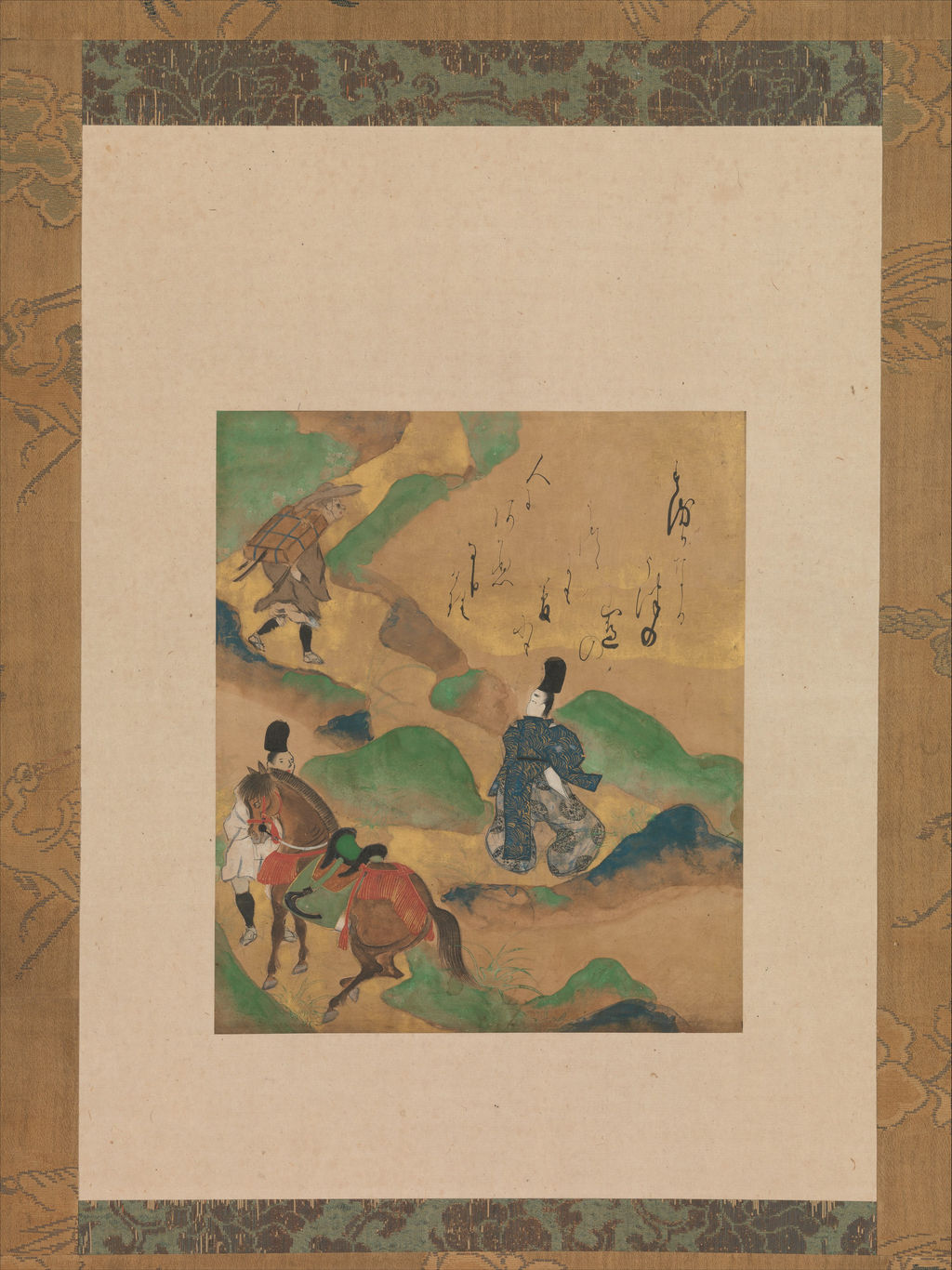
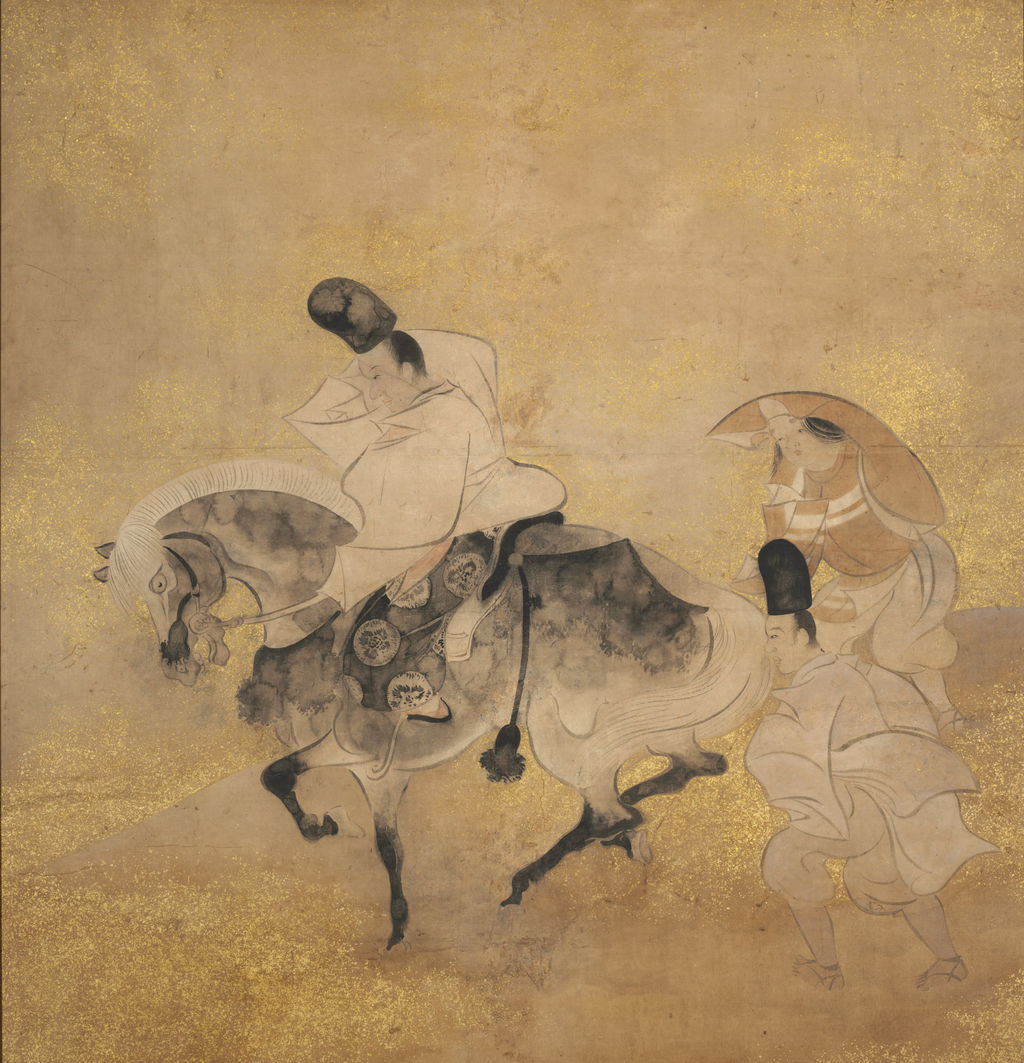
The years after the securely dated 1630 and 1631 works do not give us a continuous diary. Sōtatsu continued to be associated with painting on different scales and with a workshop whose designs outlived his hand. A directly credited work such as the Met's White Heron has a signature and seal that the museum treats as important evidence for authorship, but the scroll is assigned broadly to the early seventeenth century. It cannot be pinned to a particular month after the Genji screens. Two literary pictures, Cleveland's Beach at Sumiyoshi and the Met's Mount Utsu, are catalogued about 1634; that is a museum date for works, not proof of a journey to either place or a schedule for the painter's final decade. The biographies sometimes built from a string of famous titles can look far more precise than the works' own dating permits. [7] [13] [25]
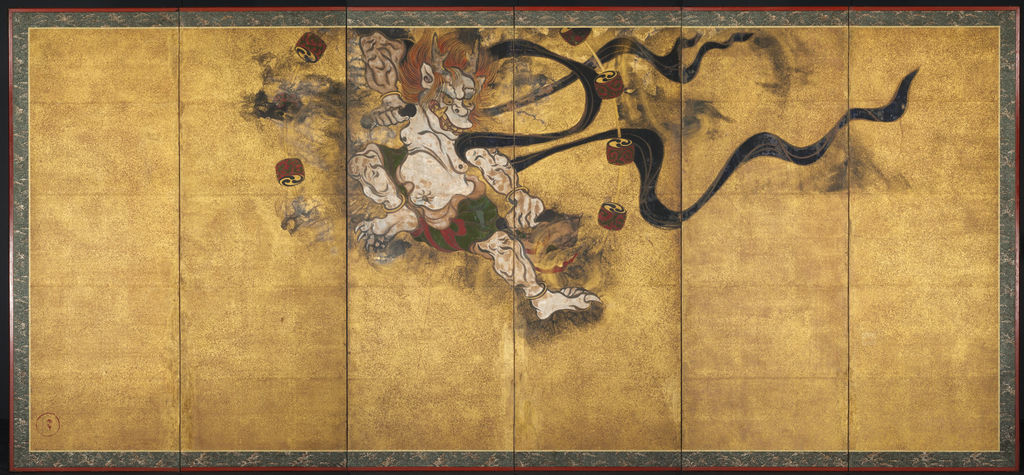
The I'nen seal also becomes a tempting false clock. Ulak's Smithsonian introduction describes its appearance on work associated with Sōtatsu himself, studio members and painters continuing the manner after his death. Cleveland's God of Thunder carries that kind of shop association but is explicitly catalogued studio of Tawaraya Sōtatsu. A signature, a seal, a repeated god and a familiar wash all answer different questions. Museum qualifiers are therefore part of the life story: they show where the named artist's role becomes less certain and where the institution sees a continuing practice rather than a single hand. The famous Kyoto Wind God and Thunder God Screens are yet another, separate pair, attributed by Kyoto National Museum to Sōtatsu despite lacking his signature. They cannot be reproduced here from a Cleveland studio screen simply because the figure of Raijin looks related. [2] [21] [28]
The question of his death must be handled even more carefully. Idemitsu Museum, which holds the dated 1630 scroll, gives his birth and death years as unknown. Seikadō's collection record describes him as dying before 1642; the British Museum artist authority offers a tentative 1643; the Smithsonian says he is presumed deceased by 1642. Okudaira provides the reasoning behind one inference: a diary of 29 November 1642 refers to Tawaraya Sōsetsu, regarded as the workshop's successor, already holding the Hokkyō title. That makes Sōtatsu's death by then plausible. It is not a death entry for him and supplies no day, cause or age. The honest end to the timeline is a range of documentary limits, not a firm “1640” written as though a burial record had been found. [23] [26] [3] [1] [6]
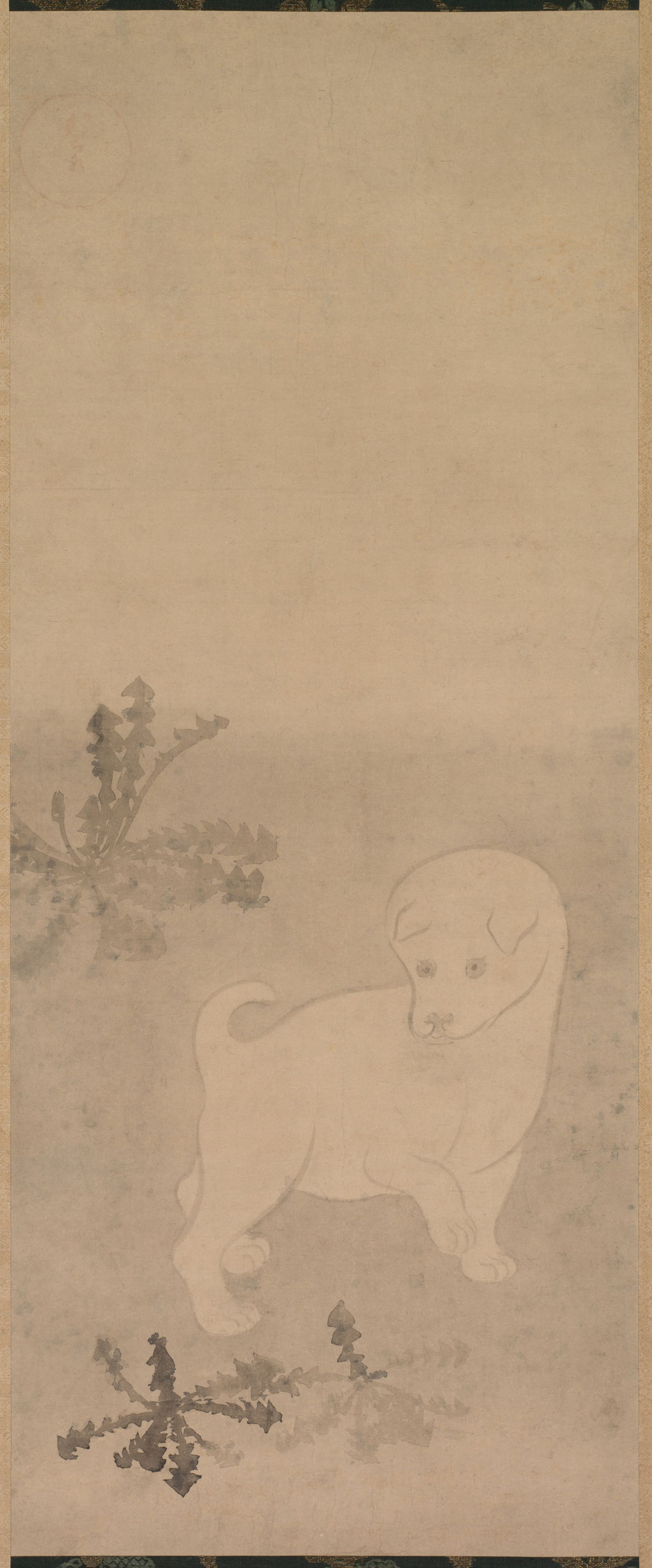
The studio's continuation is easier to observe than his personal ending. Cleveland's Crossing at Sano and Puppy with Dandelions are catalogued as studio of Sōtatsu. They carry subjects and visual choices associated with the Tawaraya orbit but cannot be inserted into an autograph list or used as dated evidence that the master remained alive when they were painted. A successful shop could retain designs, methods and customers across a change of hands. This is why later works are relevant to a biography without extending the biography's secure chronology. They show what others could do with a way of organising stories, ink and open space after the individual painter disappears from the dated record. [29] [30]
How the biography itself was made
Modern writers have not simply inherited one stable seventeenth-century biography. Ulak describes the slow identification of Sōtatsu's works as Charles Lang Freer and Japanese scholars compared objects in the late nineteenth and early twentieth centuries. A 1913 Japanese exhibition helped concentrate attention on the artist, and some later writers sought a complete personal narrative, even pointing to a supposed grave in Kanazawa. Those are events in the history of his reputation, not newly discovered proof of where he was born or buried. A painter who had worked through a shop and alongside calligraphers became especially attractive to modern accounts centred on individual genius. The collections themselves often resist that simplification through qualified attributions, multiple hands and evidence of remounting. [2]
The strongest biography therefore has an unusual shape. It begins with a shop rather than a birthplace, becomes specific where dates survive, and ends where the documents end. A 1602 campaign is linked to him through stylistic attribution; a 1606 card brings a dated collaboration into focus; a 1616 diary shows the Tawaraya name circulating at court; conservation of fan screens identifies Tōshichirō beside the master; Yōgen'in preserves large paintings whose year of execution is disputed; the Saigyō colophon proves he was called Hokkyō in 1630; a 1631 Genji delivery provides another dated anchor. Taken together, they show an extraordinarily adaptable Kyoto maker and organiser. They do not require a fabricated childhood, a precise title ceremony or a documentary death in 1640. For the images themselves, continue to the Sōtatsu overview, where cards, scrolls and screens can be compared at their own scale. [6] [23] [26]
Dated evidence at a glance
| Date | What the evidence establishes | Confidence |
|---|---|---|
| 1602 | The Heike nōkyō repair campaign; specified renewed leaves attributed to Sōtatsu by style. | Dated campaign; qualified personal attribution. |
| 1606 | A poem card for Konoe Nobutada's retirement, decorated by Sōtatsu with Kōetsu's writing. | Dated object and collaboration. |
| 1616 | A court diary mentions “Tawaraya pictures” shown as a fan-design model. | Dated report of shop imagery at court, not a meeting with Sōtatsu. |
| 1621 | Yōgen'in was rebuilt; the date of its paintings is debated. | Secure building date; disputed painting date. |
| 1630 | The Life of Saigyō colophon names “Hokkyō Sōtatsu,” patron and calligrapher. | Strong dated documentary object. |
| 1631 | The signed Genji screens were delivered to Daigoji Sanbōin. | Dated delivery and identified object. |
| 1642 | A successor is mentioned as Hokkyō; Sōtatsu's death by then is inferred. | Inference, not a death record. |
Frequently Asked Questions
Neither date is documented securely. Museums use approximate ranges and differing proposed death limits. A 1642 reference to a likely successor helps explain the inference that Sōtatsu had died by then; it does not provide the date of his death. [1] [6]
The temple was rebuilt in 1621, but its painted doors are not securely dated to that year. Conservation evidence discussed by Okudaira supports further consideration of a later, possibly 1629–30 painting campaign. That date is a scholarly proposal, not a signed inscription on the doors. [6] [17]
Hokkyō is an honorific used by accomplished artists. A 1630 colophon for the Life of Saigyō scroll names him that way. Exactly when he received the title remains uncertain. [23] [1]
Discussion
Use the dated records to test which parts of Sōtatsu’s life can be stated firmly and which remain proposals.
Reader Insights
How does the 1630 Saigyō colophon tell a different kind of story from a painting dated by style?
What changes when Yōgen’in’s 1621 rebuilding is separated from the debated date of its painted doors?
What does Tōshichirō’s name on a fan add to a screen long associated with Sōtatsu?
Join the Conversation
Share a documented example or a reliable source below, keeping observation separate from inference.
References
- National Museum of Asian Art, Sōtatsu: Making Waves chronology, working dates, dated events and explicitly unknown personal details.
- James T. Ulak, “Introduction,” Sōtatsu: Making Waves, Smithsonian Institution, 2015, printed pp. 10–17. The full chapter was checked in the original catalogue PDF.
- British Museum, Tawaraya Sōtatsu artist authority, tentative life date and attribution distinctions.
- Cleveland Museum of Art, Poem-card from the Shinkokin wakashū with Design of Pine on a Beach, 1987.60, named artists and date.
- National Museum of Asian Art, Painted Fans Mounted on a Screen, forty-eight-fan Imperial Collections pair, conservation findings and Tōshichirō inscription.
- Okudaira Shunroku, “Yōgen'in no Sōtatsu: What Restoration Revealed” / 養源院の宗達―修理によってわかったこと―, Bulletin of the Kyoto City Cultural and Tourism Resources Preservation Foundation 135, December 2022, pp. 2–5; checked in full from the Japanese PDF. The local research copy is
sotatsu/research-pdfs/okudaira-yogenin-conservation-2022.pdf. - The Metropolitan Museum of Art, White Heron, 2018.853.13, directly credited work and signature/seal discussion.
- Kyoto National Museum, Rinpa: The Aesthetics of the Capital, Japanese account of the Tawaraya shop and client networks.
- Tokyo National Museum, 2008 Rinpa exhibition publication, 1602 Heike nōkyō repair and stylistic attribution of specified renewed leaves.
- Tokyo National Museum, 2008 Rinpa exhibition checklist, listing of the three 1602 Heike nōkyō volumes and other exact works.
- National Museum of Asian Art, Sōtatsu: Making Waves exhibition text, date and group context for the 1606 retirement poem cards.
- Kyoto National Museum, Crane Scroll / 鶴下絵三十六歌仙和歌巻, A甲364, maker roles and physical extent; images remain rights-gated.
- Cleveland Museum of Art, The Beach at Sumiyoshi from the Tales of Ise, 1951.398, c.1634, exact sheet and mount.
- Cleveland Museum of Art, Kokin wakashū scroll with pines along the shore, 1972.67, Kōetsu's writing and attributed-to Sōtatsu underpainting.
- Museum of the Imperial Collections, Sannomaru Shōzōkan, 扇面散屏風, 48 fans on eight-panel pair, maker descriptions and dimensions.
- Agency for Cultural Affairs, 扇面散屏風, different Tokyo National Museum 60-fan pair, six panels each, traditionally attributed.
- Kyoto City museum guide, Yōgen'in, temple history, reopening and interior painting subjects.
- Kyoto official tourism record, Yōgen'in, twelve sliding-door and eight cedar-door paintings associated with Sōtatsu.
- Agency for Cultural Affairs, Yōgen'in guest hall, 1621 reconstruction and traditionally attributed interior paintings.
- Yōgen'in temple, Sōtatsu account, temple's interpretation of its patron relationships; treated as a proposed route, not a documentary commission letter.
- Cleveland Museum of Art, God of Thunder (Raijin), 2004.86, studio of Sōtatsu and I'nen seal.
- Cleveland Museum of Art, The Bird's Nest Patriarch, 1958.289, direct object attribution.
- Idemitsu Museum of Arts, Life of Saigyō / 西行物語絵巻, dated 1630 colophon, patron, calligrapher, painter, Hokkyō title and lost imperial model.
- MOA Museum of Art, Fragment of the Life of Saigyō Scroll, Sōtatsu/Karasumaru roles in a separate fragment.
- The Metropolitan Museum of Art, “Mount Utsu” from The Tales of Ise, 2015.300.88, c.1634 poem card mounted as a scroll.
- Seikadō Bunko Art Museum, Sekiya and Miotsukushi National Treasure screens, 1631, Hokkyō Sōtatsu signature and later provenance.
- Agency for Cultural Affairs, Sekiya screen at Tokyo National Museum, a separate traditionally attributed work.
- Kyoto National Museum, Wind God and Thunder God Screens, Kennin-ji pair and accepted Sōtatsu attribution despite no signature or seal.
- Cleveland Museum of Art, Crossing at Sano, 1949.554, studio attribution.
- Cleveland Museum of Art, Puppy with Dandelions, 1992.382, studio attribution.