


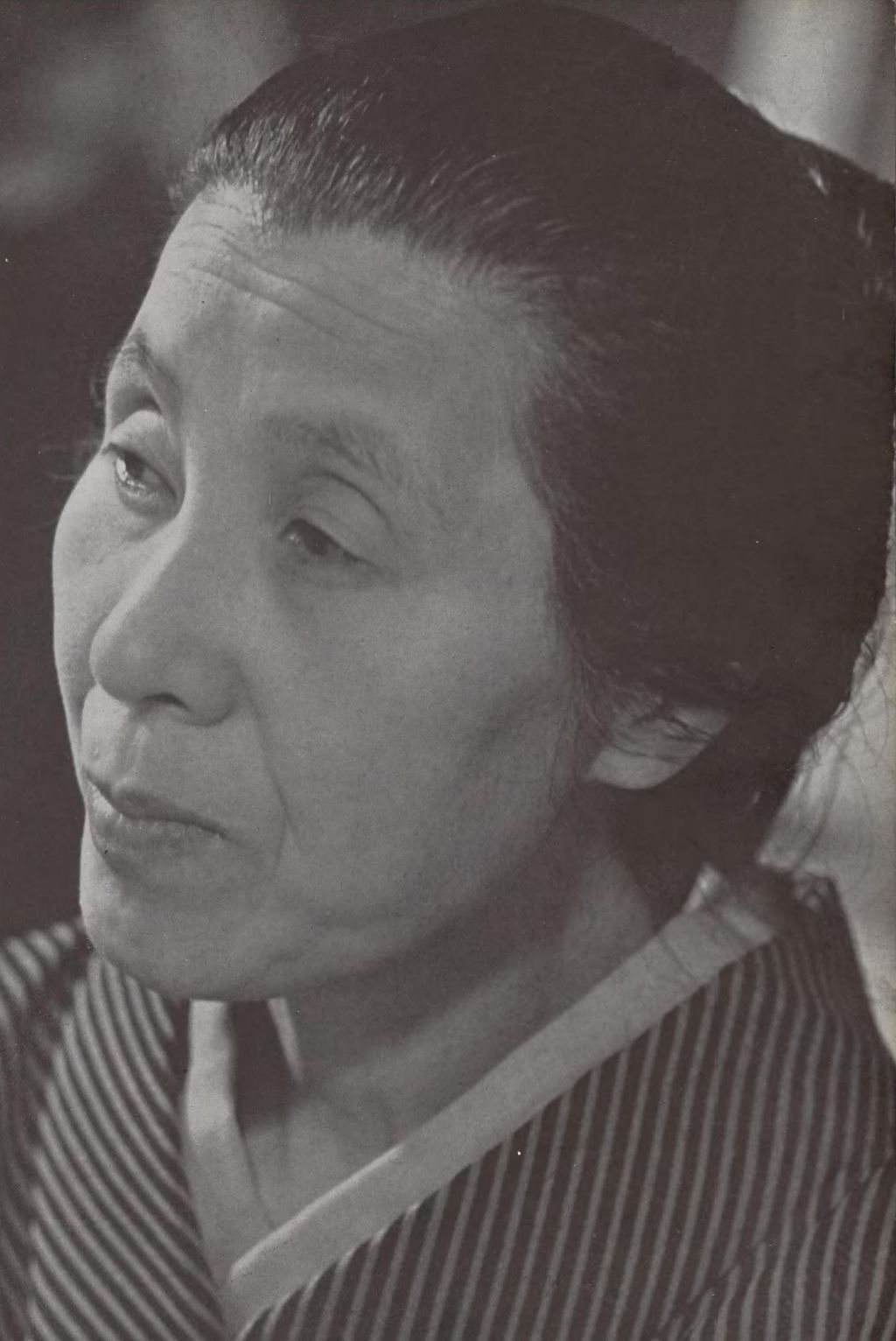
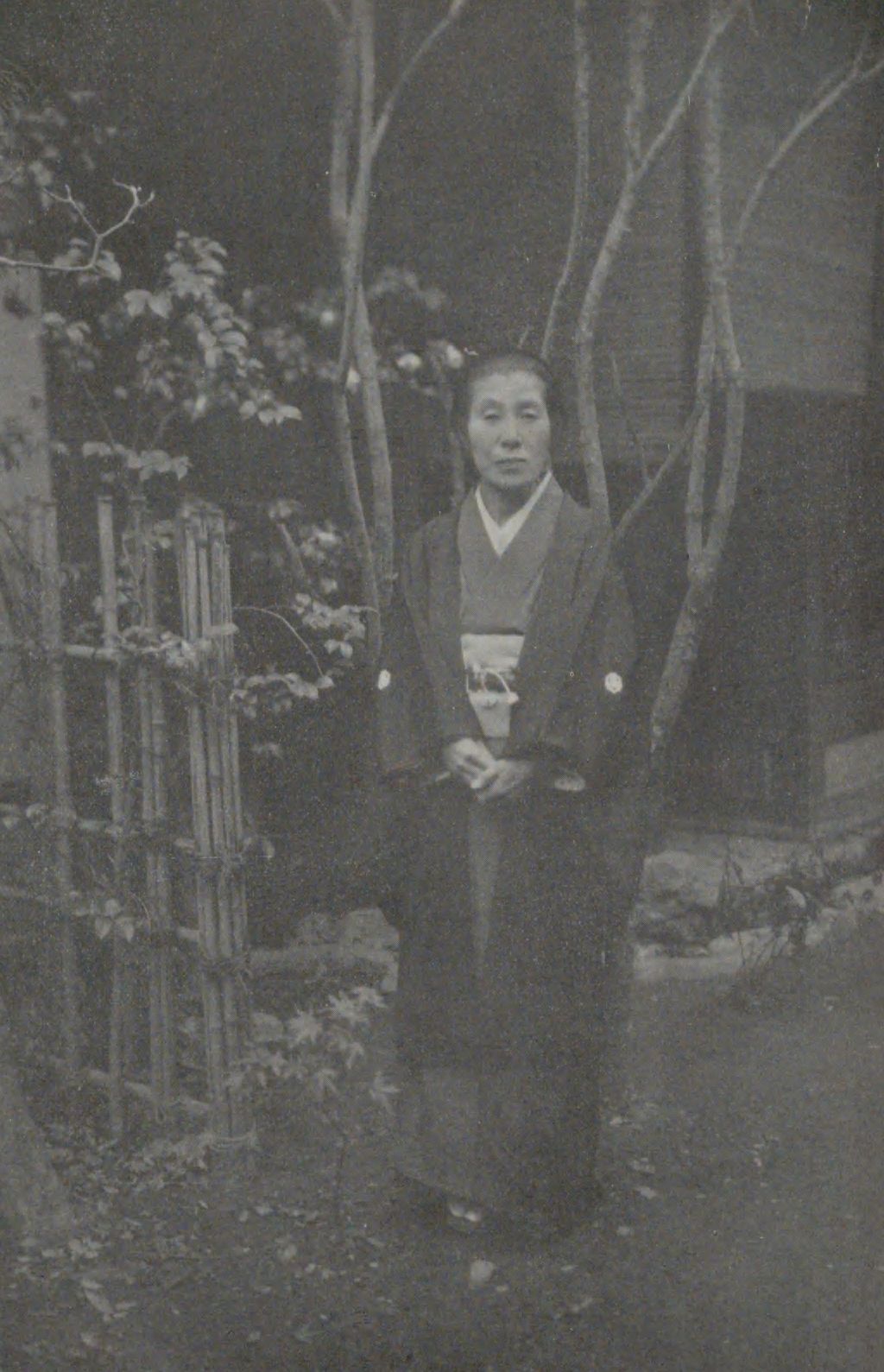
Uemura Shōen. Photograph date unknown. Source: National Diet Library. Resized for web display. Portrait record
 by Tom Gurney
Tom Gurney BSc (Hons) is an art history expert with over 20 years experience
Published on September 25, 2026 / Updated on September 25, 2026
Email: tomgurney1@gmail.com / Phone: +44 7429 011000
Uemura Shōen: a working life across three eras
Uemura Shōen lived from 1875 to 1949. She began drawing at the counter of her mother's Kyoto tea shop and ended her life as one of Japan's most honoured painters. The distance between those points is sometimes told as a simple victory over the obstacles faced by women artists. It is a substantial achievement, but the shorthand loses the work by which she made it possible: school and studio training, copies of old paintings and patterns, public exhibitions, commissions, the closure of a family business, teaching and learning within a painter's household, and continued production through war and evacuation. She did not simply inherit a timeless subject called the beautiful woman. She built a profession in which that subject could be revised, defended and made ambitious. [1] [2]
The surviving accounts do not all speak from the same vantage point. Shōen's essays were written after many of the childhood and painting events they recall. Museum objects give accession numbers, media and dates, but seldom describe what was felt at home. Later scholars interpret exhibition criticism and the social meaning of women's images. A biography can gain from all three without pretending that one cancels the others. In particular, the family's women, the teachers and the professional institutions should remain present as people and structures rather than become scenery behind the famous works. [3] [4] [5]
Contents
- Uemura Shōen: a working life across three eras
- Life at a glance
- The tea shop and the child's visual education
- Painting school, private studios and a first public award
- Three teachers and the labour of study
- A profession, a son and the turn of the century
- Bunten, criticism and a painter's place in Kyoto
- A difficult painting, followed by other work
- Look closely at Flame
- The 1930s: family memory and demanding public pictures
- Work, institutions and war in the 1940s
- Leaving Kyoto, receiving an honour and painting to the end
- What the life adds to the paintings
- Books on Japanese Art
Shōen was born 23 April 1875 in Kyoto's Shijō-Gokomachi area to Uemura Tahei and Nakako. Institutional records give her original name as Tsune (津禰), while the National Diet Library also records Tsuneko (常子), the form she uses for her childhood self in a later essay. The two forms refer to the same painter. Her father died before she was born. These details do not make her later art inevitable, but they explain why her descriptions of her mother's work and permission to learn art occupy such a large place in her own story. [6] [7] [3]
Life at a glance
- Life23 April 1875–27 August 1949
- BirthplaceKyoto
- TeachersSuzuki Shōnen, Kōno Bairei, Takeuchi Seihō
- Working placesKyoto and Nara
The tea shop and the child's visual education
Shōen remembered the tea business as a place full of images as well as customers. In her essay Those Days, she describes drawing on paper at the shop counter and looking at illustrated books that Nakako borrowed. She remembered Japanese theatrical prints, old books and the illustrations of Katsushika Hokusai with particular pleasure. Her account even follows how she borrowed shapes from the books and studied the hairstyles of girls around her. It is tempting to treat every remembered episode as a dated observation by a five-year-old. It is better to state what the evidence is: an adult painter telling readers which early visual experiences she believed mattered. That still offers a vivid route into her working eye. [3]
Nakako's role was practical. Shōen recalled being given paper, being allowed to buy prints, and later being permitted to enter painting school after primary education. The autobiographical warmth need not hide the shop's economic function. The household's tea trade helped support a girl's unusual training, while the child absorbed images in a busy commercial setting rather than an isolated art room. Hiroshima Prefectural Art Museum dates the closure of that family shop to 1903 and describes the change as her full professional independence. A painter who earned by exhibitions and commissions had to replace a family business's security with another kind of work. This is a more concrete account of independence than saying she “followed her dream.” [3] [9]
The oldest family stories in her essay reach back before her birth, including Nakako's memories of the 1864 Kyoto fire and changes to the shop's trade after the Meiji Restoration. They are valuable as what Shōen heard at home, not as eyewitness testimony from Shōen herself. Such memories also show how “old Kyoto” was not a fixed world waiting for a painter to depict it. The family had adapted its livelihood when politics, the court's move to Tokyo and the market changed. A girl growing up among prints, tea and old stories could see the past through objects and accounts rather than encounter it intact. This relation to a remembered past would remain important in her painting, though it cannot be reduced to one childhood cause. [3] [5]
Shōen's memory of illustrated books also connects the biography to the wider history of Japanese image circulation. A Hokusai illustration in a borrowed volume was not an original painting hanging in a protected collection; it was something a child could see, copy, return and ask to see again. She described buying prints and outlines from a nearby picture-book shop and watching hairstyles on real people. The meeting of printed images and observation is a specific form of education. It helps explain why later pictures might depend on careful research into old dress while retaining the posture of a living sitter. It does not prove that any particular mature work derives from a particular Hokusai plate. Her essay records a habit of looking, not an accession-level source list. [3]
Painting school, private studios and a first public award
Shōen entered the Hokushū division of Kyoto Prefectural Painting School in 1887. Art Platform Japan's detailed institutional biography says she was especially eager to learn figure painting but found the school's staged curriculum slower than she wanted. She also studied at the private school of Suzuki Shōnen, who taught at the public painting school. When Suzuki left his school position in 1888, she left too and formally joined his studio. Around that period she began to use the art name Shōen, given by Suzuki. The relation of public school and private studio matters: her training was not a simple choice between formal education and apprenticeship; she used both until one offered the work she sought. [1]
Her first widely noticed success came early. She showed Four Seasons of Beauties (《四季美人図》) at the Third Domestic Industrial Exposition in 1890, received a commendation and attracted the attention of Britain's Prince Arthur, Duke of Connaught, who purchased the painting. That royal purchase is an unusually specific connection to a British viewer, not evidence that the work then became an established part of a British public collection. Art Platform Japan says the present location of the 1890 picture is unknown. The young painter's opportunity lay in a public exposition, where an image made in a Kyoto studio could enter a much larger market for art and prestige. [1] [5]
There is a second Four Seasons of Beauties that must be kept separate. An 1892 painting of the same title was sent to the women's building at the 1893 Chicago World's Columbian Exposition under a Ministry of Agriculture and Commerce commission. The 1890 award and prince's purchase do not belong to the Chicago object simply because its title is identical. This distinction changes the life story. A teenaged award at a domestic exposition and a later government-backed appearance in a women's building across the Pacific were different tests of her work, with different audiences and institutional meaning. Their images and present locations need separate object-level confirmation before either can illustrate a page. [1] [5]
Three teachers and the labour of study
Shōen wanted a wider range of skills than one studio could offer. With Suzuki's permission, she entered Kōno Bairei's Shijō-school studio in 1893 while continuing her work. Bairei died in 1895. She then studied with his pupil Takeuchi Seihō. Art Platform Japan describes the contrast: the vigorous approach of Suzuki, the more yielding brushwork she found difficult in Bairei's studio, and Seihō's emphasis on sketching from life and developing each student's individual manner. That account avoids presenting the teachers as interchangeable names in a résumé. Each brought a different demand to which she had to respond. [1]
Mie Prefectural Art Museum's essay shows the breadth of the work behind this learning. Shōen made copies and abbreviated studies of older paintings, including Maruyama Ōkyo and other Edo-period pictures, but also examined early narrative scrolls, textiles, combs and hair ornaments. She studied historical customs and classical learning. Those activities are not just a picturesque artist's search for “traditional inspiration.” If a figure's hairstyle, sleeve, belt and posture have to belong to a chosen time and action, the painter needs a store of observed forms from which to decide. Copying and research supplied that store, while studies of living people let her test it against bodies. [5]
This three-teacher story also prevents a false account of stylistic inheritance. She did not merely receive a ready-made “Kyoto school” look. Mie identifies early historical compositions with rich colour and detailed settings, scenes of contemporary family or ceremonial life, and later tighter focus on an individual figure. Some types faded from her practice; others returned in altered form. An apprentice could study many models and still have to discover which problems were hers. That search happened while she continued to exhibit, not in a private interval before professional life began. [5] [1]
A profession, a son and the turn of the century
One of the most informative early pictures is Flowers of Life (《人生の花》), dated 1899 by Kyoto City Kyocera Museum. It shows a moment around a young bride and her attendant, with the space and clothing helping convey the tension of a life event. A related composition, In Full Bloom (《花ざかり》), won a silver prize at the 1900 joint painting exhibition and brought her wider recognition. The two titles appear together in museum scholarship, but they are not one object: the Kyoto painting has its own record, while Art Platform Japan lists the 1900 prize work's location as unknown. A biography may compare the moment they address, yet must not put the 1900 award under the 1899 museum image as if it were its label. [10] [1] [5]
Another title that later caused confusion entered her international history in 1900: a Mother and Child was shown at the Paris exposition. It is not the differently composed Mother and Child made in 1934 and held by the National Museum of Modern Art, Tokyo. The fact of an early public mother-and-child subject is useful in a life story, but it should not become a false exhibition history for the later museum painting. This is especially important when the biography turns to Nakako's death in 1934. The older title shows that maternal imagery did not begin that year; the later work has its own date, circumstances and object number. [11] [6]
Shōen's son, Uemura Shōkō, was born in 1902. He became a painter of birds and flowers, and his own son Atsushi later joined the family's artistic line. Yamatane Museum documents the three generations and identifies Shōkō as her eldest son. That gives the biography a reliable family relation and date without license to invent the details of Shōen's private partnership or marital status. Her livelihood now sat beside the work of raising a child. The tea shop's closure in 1903, recorded by Hiroshima Prefectural Art Museum, meant that her professional commissions and public reputation had to support that continuing life. [12] [9]
The new domestic and economic circumstances did not narrow all her subjects to family scenes. Mie points to early works that explored historic women, current customs, the look of marriage and even ordinary gatherings. A woman who drew figures from childhood was not confined to painting herself as a mother. At the same time, her family's labour mattered to the possibility of sustained study and professional risk. A responsible biography can make both points without forcing every image into autobiographical allegory. [5] [3]
Bunten, criticism and a painter's place in Kyoto
The first government-sponsored Bunten opened in 1907, and Shōen submitted Long Night (《長夜》). NDL also records Moon Shadow among the works that received attention in these years. The Bunten drew work from many regions and made it visible to judges and an urban public. Shōen was no longer only a promising Kyoto student; she worked in a national system that could confer authority and expose a picture to sharp criticism. Art Platform Japan records critics who acknowledged her technical skill while finding some compositions too dependent on polish and established ideas. That discomfort helped shape the context in which she sought more demanding subjects. [1] [6]
The social category of bijin-ga was itself contested. Popular audiences wanted images of women, but critics could dismiss them as attractive surfaces lacking invention. The ninth Bunten in 1915 even established a room for beauty pictures. Art Platform Japan sets Shōen beside her teacher Seihō and his pupil Tsuchida Bakusen, who also submitted figure paintings, and reads Daughter Miyuki (1914) and Hanagatami (1915) as experiments in character and inward life. The biography should not claim that an exhibition room forced her to invent emotion; it can show that she worked amid a debate about what such pictures could carry. [1]
In 1914 she had a Kyoto family house built. The Kyoto City heritage register identifies it as a building in which Shōkō later worked too. This small piece of material history matters: a professional painter needed a place for household life, models, sketches, commissions and finished work. It would be appealing to fill this section with a vintage photograph of the house, but the heritage-register picture has no identified commercial reuse permission and should remain research-only. The place can be named from the city document without claiming that any available modern photograph reproduces the rooms as they were in 1914. [13]
Her position within official exhibitions continued to improve. In 1916 she gained eikyū mukansa status, allowing Bunten submissions without ordinary jury review. She became a Teiten committee member in 1924 and an adviser in 1935. Those appointments should not be presented as a straight line of uninterrupted awards: criticism continued, she sometimes did not submit to the central exhibition, and paintings were made for other settings and patrons. They do show that a woman who had left the painting school as a teenager entered the administration and authority structure of Japanese art. [1] [5]
That structure brought obligations as well as status. A jury-free submission recognized an artist's standing, while membership and advice roles placed her near decisions about who and what would receive official attention. Meanwhile, a painter who increasingly received requests from patrons still had to manage deadlines and the identity of each picture. A commission to make Snow, Moon and Flowers lasted more than two decades before its 1937 completion. It is tempting to tell that span as a story of private procrastination, but the museum and APJ records establish only the length and endpoint, not every intervening cause. The safer inference is that major works could coexist with numerous exhibitions and commissions, each with different pressures and audiences. [1]
A difficult painting, followed by other work
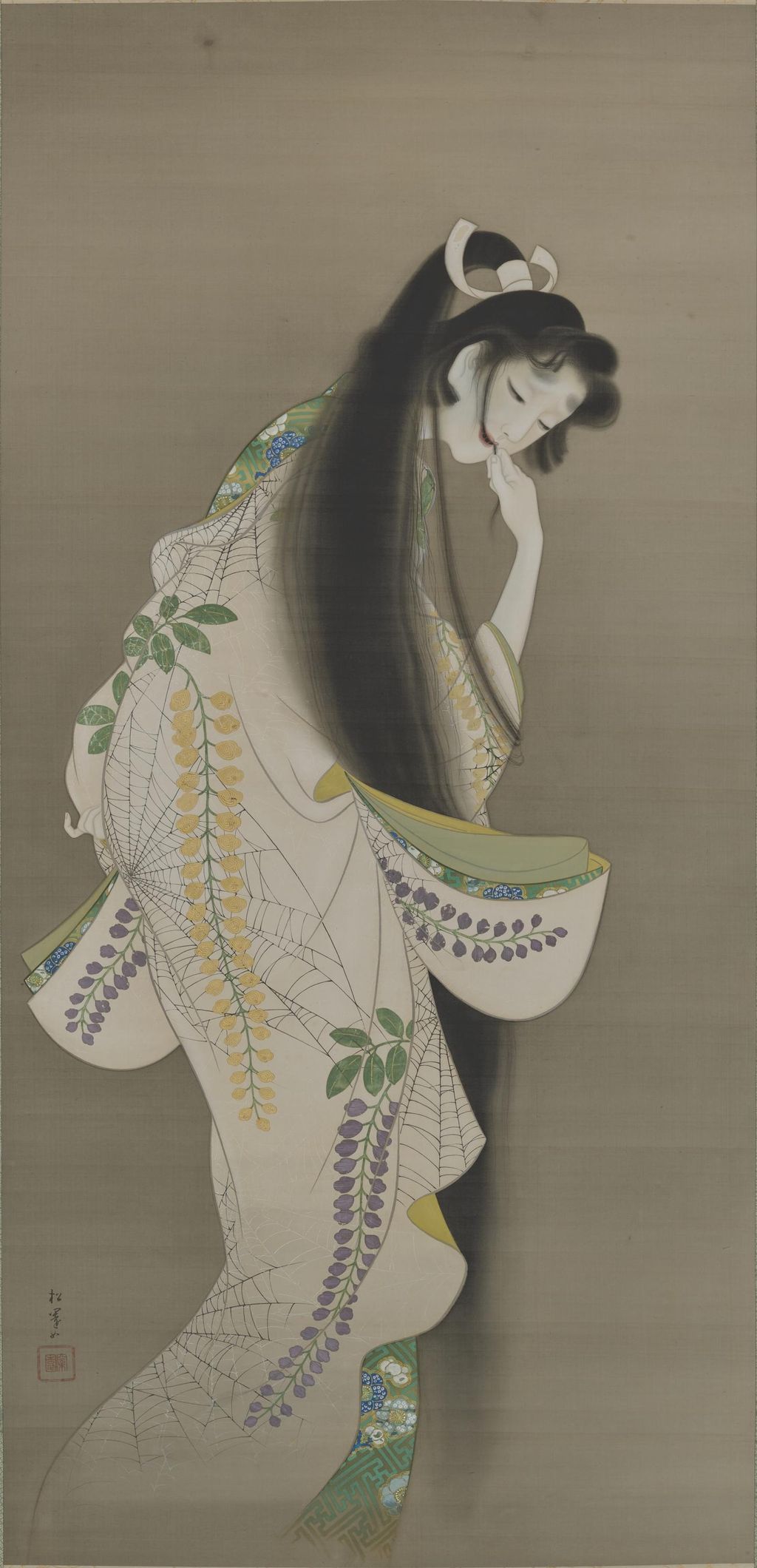
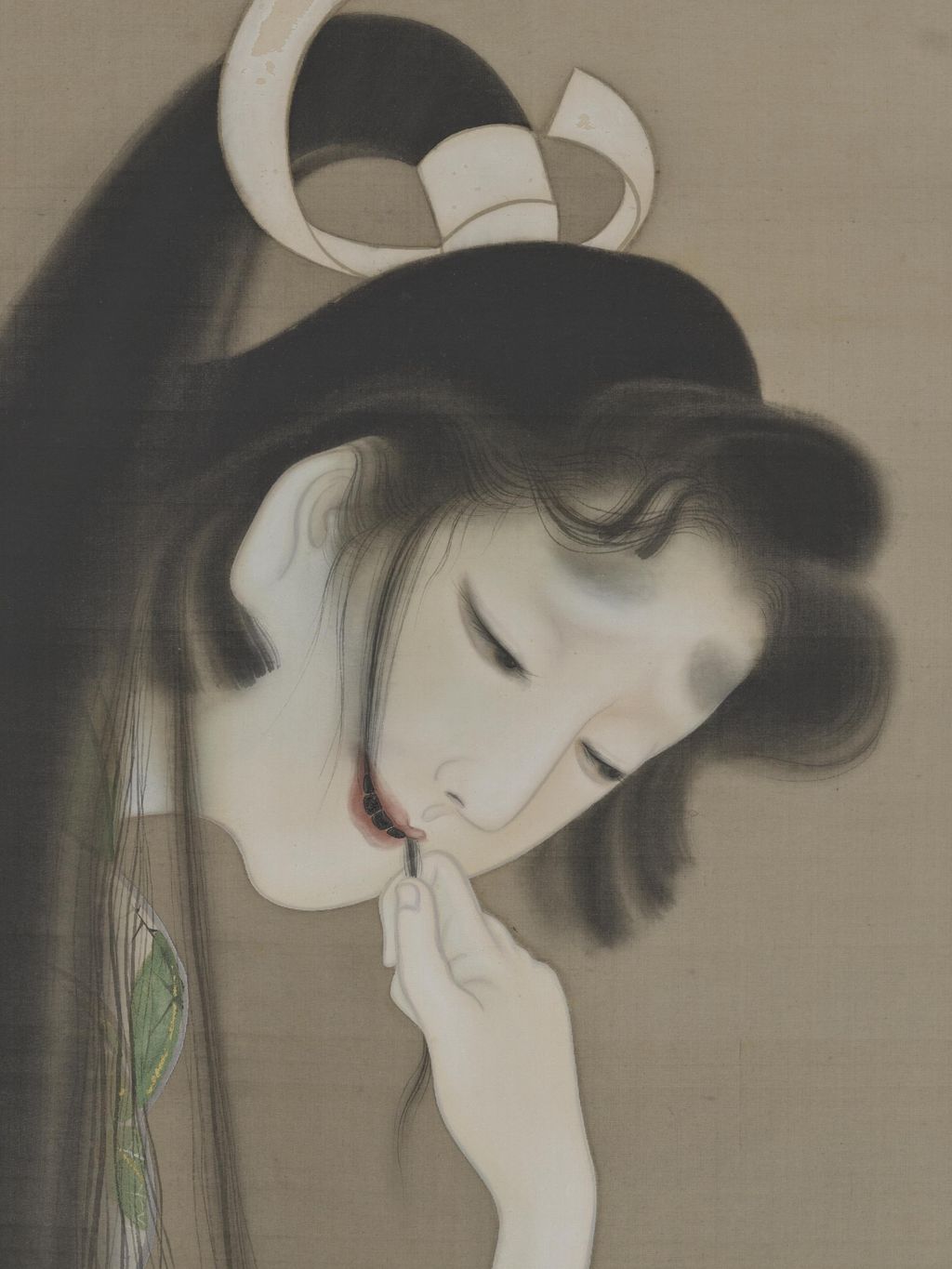
Flame (《焔》), dated 1918 and held by Tokyo National Museum as A-11098, marks a dramatic moment. Shōen used the jealous Lady Rokujō known through The Tale of Genji and Noh's Aoi no Ue; in a later essay she recalled asking the Noh performer Kongō Iwao about the eye of the jealous spirit and applying gold on the reverse of the silk at that place. In another essay she described making the work during a troubled time and feeling relief when it was done. That first-person evidence gives the life story a rare account of intellectual and physical making. It does not authorize a diagnosis of her health or an assumption that the painting simply records a personal quarrel. [14] [15] [16]
Look closely at Flame
Choose a number to compare the full painting with three ColBase details of the same object, A-11098.
Explained details
Eyes
Shōen recalled applying gold behind the eyes from the reverse of the silk after consulting a Noh performer. An ordinary JPEG is not technical analysis.
Source: ColBase, Tokyo National Museum. Object record. Detail resized for web display.
Robe and wisteria
Compare the sweep of hair with the fine wisteria lines on the robe; ColBase identifies the motif.
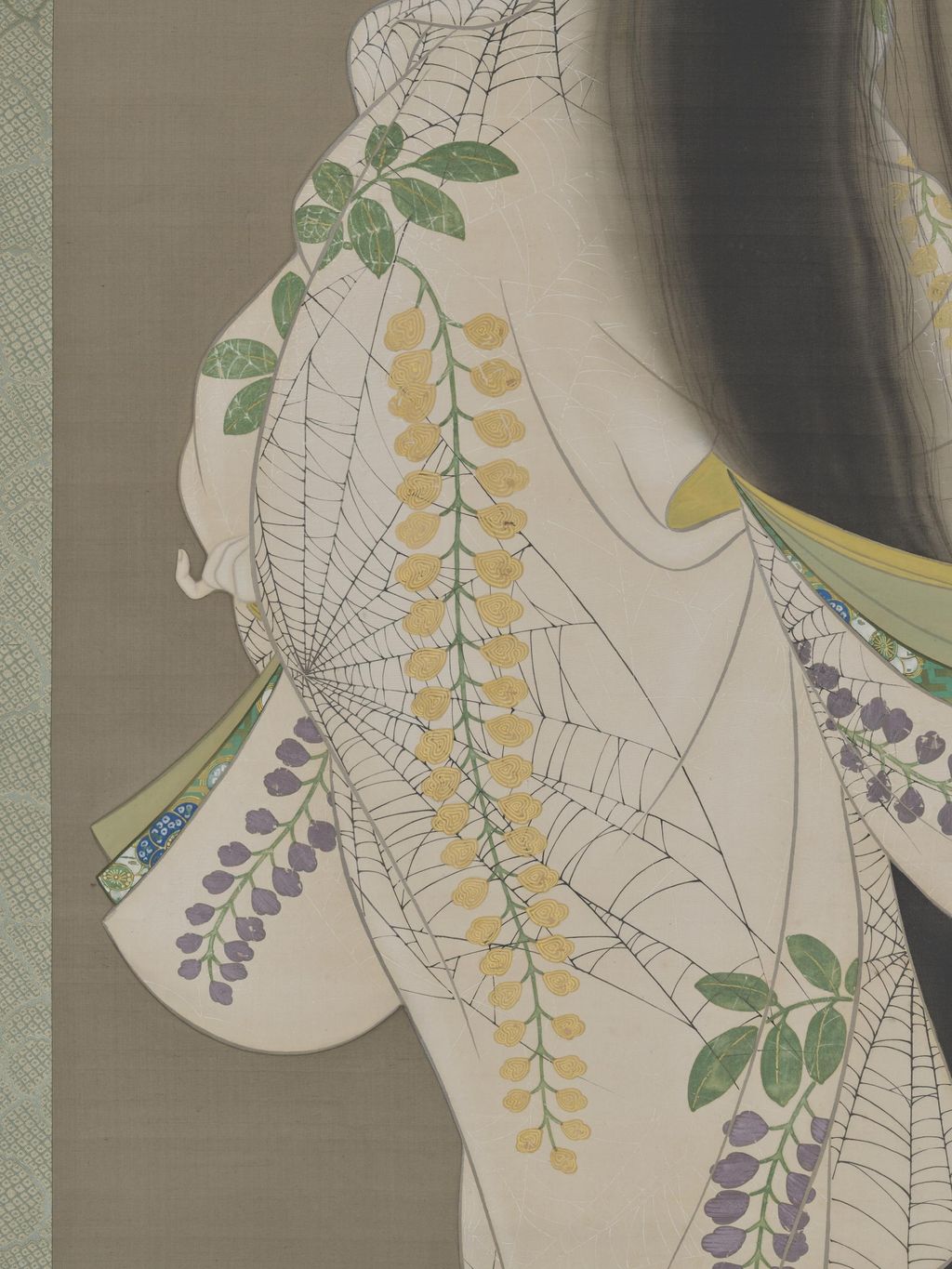
Source: ColBase, Tokyo National Museum. Object record. Detail resized for web display.
Spider web
The web is a garment motif. Return to the whole figure before assigning it a fixed psychological meaning.
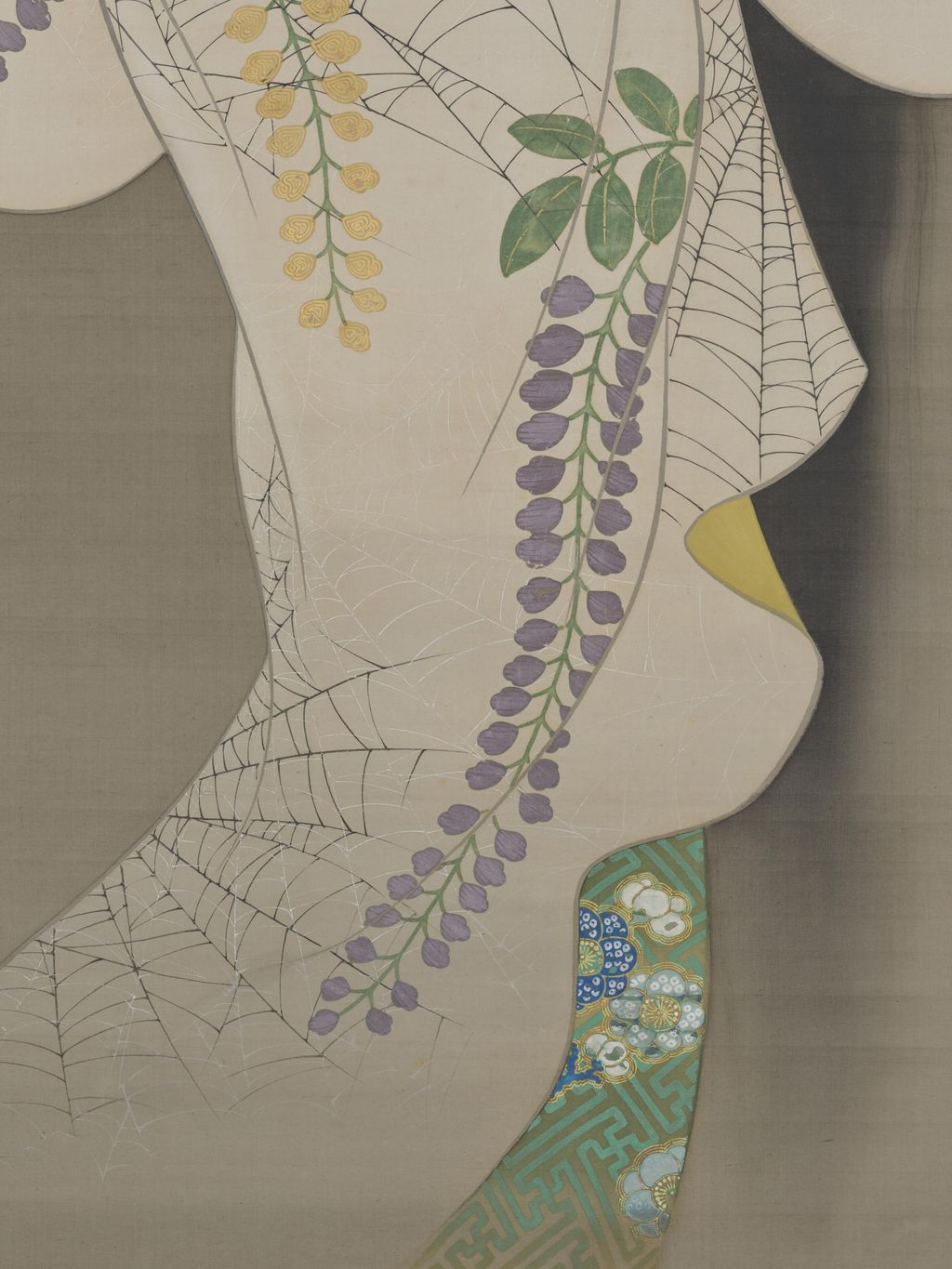
Source: ColBase, Tokyo National Museum. Object record. Detail resized for web display.
Her absence from several ensuing official exhibitions has sometimes been used to extend the “slump” into a long collapse. Mie museum scholar Ichirō Mōri weighs that idea against her own account of relief after finishing Flame, and notes that she also skipped other Bunten years. Nonparticipation in one venue is not a list of everything she did. Later works and commissions establish continuing activity. The biography should therefore follow the documented paintings rather than make a gap in one catalogue carry more psychological weight than it can. [5] [16]
Examples show the range after 1918. Yang Guifei (《楊貴妃》), dated 1922, took a historical Chinese figure; Waiting for the Moon (《待月》), 1926, uses a figure and architectural division to suggest duration and attention. Art Platform Japan treats these as continued experiments in detail and composition, not mere afterglow. Her professional standing was also strong enough to bring more commissions. None of this requires claiming that suffering ended at a fixed moment. It shows a painter continuing to seek what an image of a woman could do. [1] [17]
The 1930s: family memory and demanding public pictures
In 1932, Looking up at the Rainbow (《虹を見る》) took the form of a pair of two-panel screens. Its exact National Museum of Modern Art, Kyoto record matters for a biography as well as an art guide: the work proves that this mature period did not consist only of narrow vertical portraits. A pair of screens asks viewers to move across an expanse and follow the figures' shared attention. It also belongs to the years in which Shōen held established public rank yet kept testing subject and format. The presently reusable union-catalogue image is exactly 1024 × 709 pixels and carries an individual NoC-CR mark under current National Art Museums terms. [18] [19]
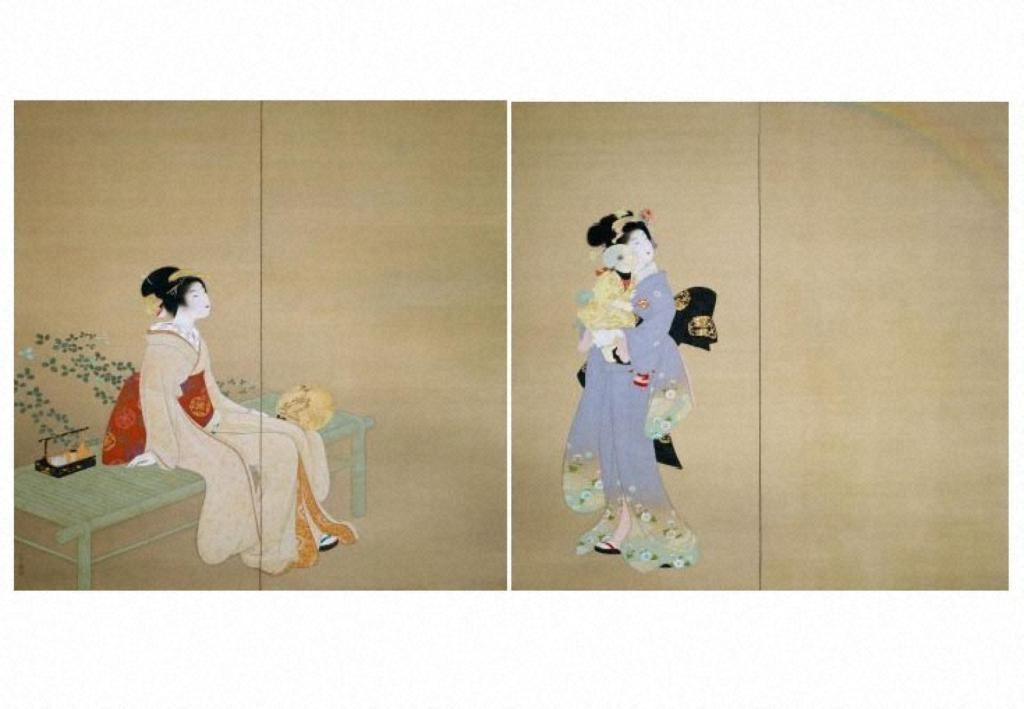
Nakako died in February 1934. Later that year Shōen submitted a new Mother and Child (《母子》) to the fifteenth Teiten; it is now National Museum of Modern Art, Tokyo JI0007, 168 × 115.5 cm. A cultural-heritage essay suggests a connection with mourning, and Shōen's own later writing explains how important her mother's labour had been to her. The documents point toward one another but are not interchangeable. The fact of the death is dated; the memorial reading is an interpretation; Shōen's essay speaks broadly of maternal themes. Neither makes the painted pair a literal portrait of Nakako and her daughter. The 1900 Paris Mother and Child remains a different composition and should not be illustrated or captioned as JI0007. [11] [20] [3]
The 1930s were also years of substantial commissioned and exhibition work. Jo no Mai (《序の舞》) of 1936 shows a young woman dancing Noh, and Shōen's own account gives unusually specific information: she used several models, including Shōkō's wife Taneko, changed a planned short-sleeved costume to long sleeves and sought inward resolution rather than a merely graceful pose. Snow, Moon and Flowers (《雪月花》) was finished in 1937 after a commission extending over twenty-one years and presented to Empress Teimei. The Noh-related Kusazoshi-arai Komachi followed in 1937, Kinuta in 1938. The last is dated 1938 by Yamatane Museum and the Japanese institutional chronology, despite a 1937 date in a British thesis. These works show a mature painter accepting varied tasks rather than spending the decade repeating Flame. [1] [16] [21]
Work, institutions and war in the 1940s
The years of war should not be absent from an account of Shōen's life. Art Platform Japan documents a 1941 morale visit to the China front with fellow painter Mitani Toshiko, and identifies Shizuka (《静》) as an entry in a 1944 battleship-donation painting exhibition. It also dates her membership in the Imperial Art Academy to 1941 and appointment as an Imperial Court Artist to 1944. These are institutional acts and public roles, not just backdrop to domestic pictures. They should be stated plainly. They do not, on their own, tell us everything she thought about the war or all the purposes for which viewers used her images. [1] [22]
There are serious scholarly questions about wartime femininity and apparently unpolitical art. Kaoru Kojima's British university study examines the reception of paintings such as Jo no Mai through the expectations of the 1930s and early 1940s. Asato Ikeda's The Politics of Painting, catalogued by the Smithsonian, includes a chapter on Shōen and wartime gender imagery. The latter's catalogue summary is a lead, not a chapter that has been read for this manuscript, so a detailed Ikeda argument should not be quoted from it. A sound biography can say that public institutions and viewers gave these pictures changing meanings, and point to the scholarship while keeping later interpretations separate from Shōen's stated choices. [4] [23]
Mie museum scholarship identifies a different late subject in Evening Dusk (《夕暮》), 1941, and Late Autumn (《晩秋》), 1943: women doing tasks such as sewing or domestic repair. The essay suggests that their ordinary labour can be read both in relation to Shōen's memory of Nakako and to a wartime climate in which domestic virtue was heavily charged. It also argues for the pictures' compositional ambition, especially how furniture, screens, straight edges and the body's curves shape space. This is not evidence that the war was harmless or that every domestic gesture was a coded political slogan. It is a reason to examine exact works and their audiences instead of dividing the 1940s into “war” and “art” as if they could not meet. [5]
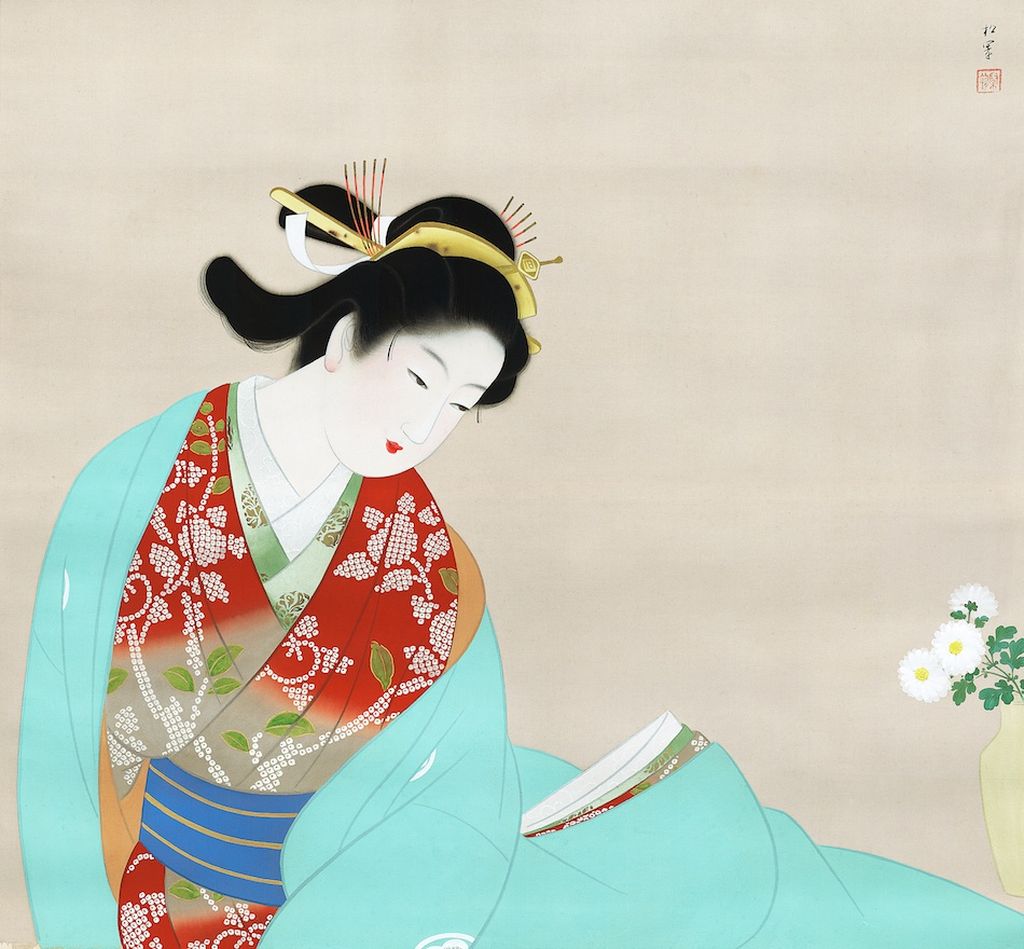
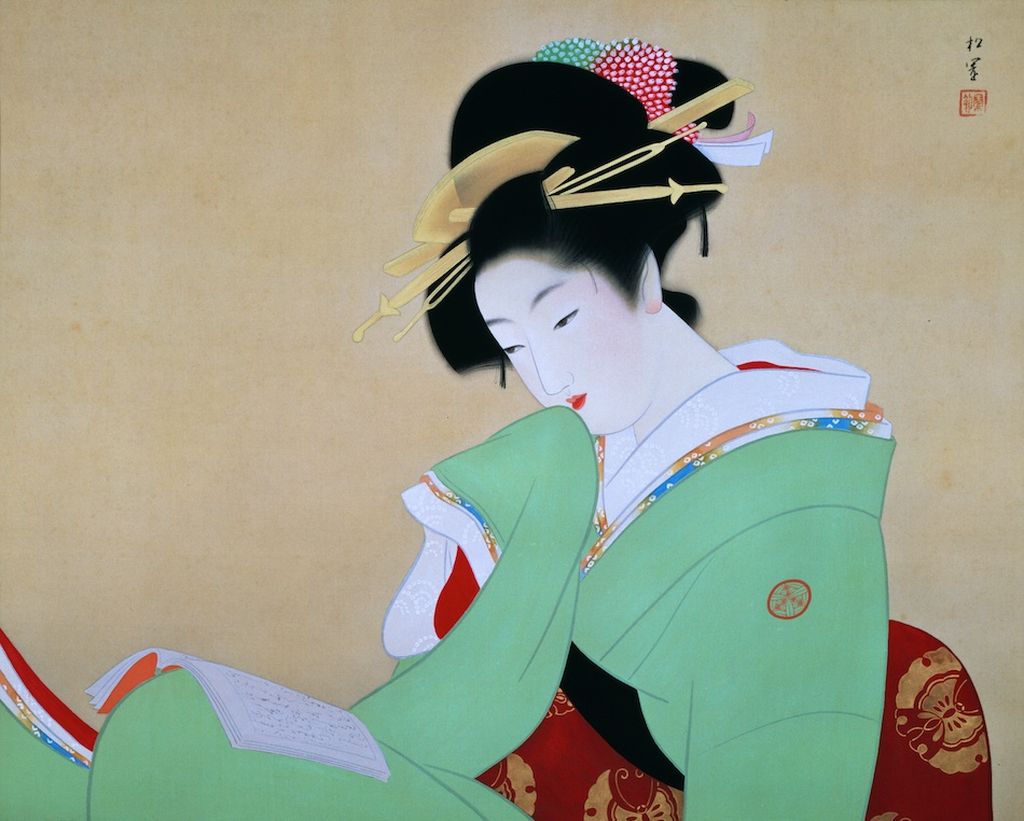
Leaving Kyoto, receiving an honour and painting to the end
As the Pacific War intensified, Shōen left Kyoto for her son Shōkō's Nara studio Reikin-sō (唳禽荘) in February 1945, according to Mie Prefectural Art Museum. She stayed in Nara after the war. This move is more than a line that says “she evacuated.” It changed the physical setting of an artist whose life and reputation had been rooted in Kyoto. Yet the surviving notes do not tell us the appearance of her room on every day of those years. A later photograph of a house or an unidentified outdoor portrait should not be presented as a period record of Reikin-sō without source and date checks. [5] [1]
In 1948 Shōen became the first woman to receive Japan's Order of Culture. The honour acknowledged a career that had traversed Meiji, Taishō and early Shōwa painting institutions. The phrase “first woman” is historically important, but it should not conceal those decades of specific labour or the uneven access that many other women painters experienced. Art Platform Japan notes both the barriers in the early modern art world and Shōen's own comments about other women artists. Her achievement did not mean that the structure surrounding her had become equal for all. [1] [2]
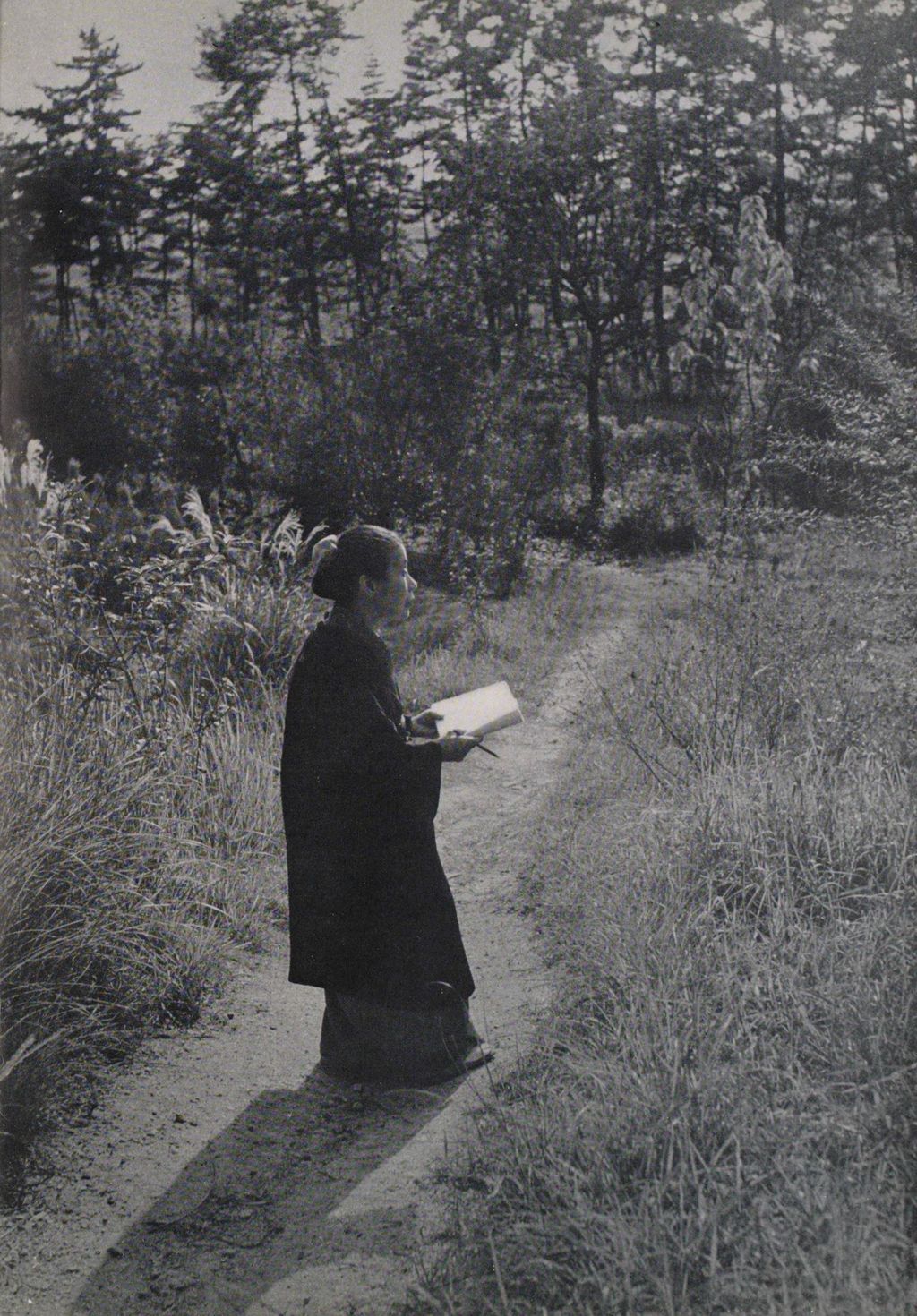
The honour also creates a risk for the last chapter of her life: describing her as if she had become a national emblem rather than a person still working. The Nara studio, the earlier Kyoto household and the dated 1949 painting keep the scale of the story human. No photograph currently cleared for the page shows Reikin-sō during her final residence, and none of the three NDL portraits can be attached to it by their metadata. The biography can use a map or a carefully sourced later-place photograph in a future revision, but it should not turn a conveniently available image into a false record of where she painted. This is exactly the kind of detail that changes a reader's trust in the whole account. [5] [26]
She continued to paint. Kyoto City Kyocera Museum identifies Early Summer Evening (《初夏の夕》), dated 1949, as her final work and lists it among the works of its 2021 retrospective. Art Platform Japan records that Shōen died at Reikin-sō on 27 August 1949. Tokyo's older research-institute obituary gives a disease, but an illness label is not the whole account of the last years. The dated final painting and continued exhibition activity are clearer measures of a painter still working. Its museum photograph remains at an image-rights gate; this biography need not substitute a later copy or an unrelated scene to make a closing picture. [26] [1] [27]
What the life adds to the paintings
Shōen's biography does not explain every look or gesture in her women by translating it into an episode from her household. It does, however, change what can be seen. The tea shop and borrowed illustrated books place early drawing in a working urban family. School, studios and expositions show how a craft became a profession. The two similarly titled Four Seasons of Beauties clarify the sequence from domestic prize to American exhibition. Closing the shop and raising Shōkō give professional independence a material meaning. Bunten criticism and later committee appointments reveal the changing public conditions under which a painting was made. Nakako's death, the Nara move and wartime roles put the last decades in an actual chronology. [3] [1] [9]
The objects remain distinct from that chronology. The artist home's close reading of Flame can be revisited with knowledge of its 1918 exhibition and her later memories. Jo no Mai can be seen as a painter's revised construction and as a work admired by audiences whose language changed with the 1930s. The 1934 Mother and Child can be set near Nakako's death without turning it into an unproved family portrait. Such distinctions make the life more demanding to tell, but they also let Shōen remain a painter who chose and altered her forms rather than a character whose pictures merely illustrate a fate. [15] [4] [11]
Frequently Asked Questions
She was born in Kyoto on 23 April 1875 and died in Nara on 27 August 1949. The National Diet Library and Art Platform Japan agree on those dates. Her original name appears as Tsune / 津禰 in several institutional records; NDL also records Tsuneko / 常子. [6] [1]
She began at Kyoto Prefectural Painting School in 1887, studied privately with Suzuki Shōnen and became his formal pupil after leaving the school in 1888. With his permission she added training under Kōno Bairei in 1893 and, after Bairei's death in 1895, under Takeuchi Seihō. [1]
Her son Uemura Shōkō was born in 1902 and became a painter known especially for birds and flowers. Her grandson Atsushi also painted. Museum records establish those relations; they do not establish every detail of her private household. [12]
No. Art Platform Japan distinguishes an 1890 painting that received a domestic exposition commendation and was bought by the Duke of Connaught from another work made in 1892 and sent to the 1893 Chicago exposition. The two title matches must not be merged. [1]
Art Platform Japan records a 1941 visit with Mitani Toshiko to the China front for慰問, a 1944 entry of Shizuka to a battleship-donation exhibition, and her 1944 appointment as Imperial Court Artist. Mie museum scholarship also examines paintings of ordinary work from this period. Her exact political intentions require more evidence than these public actions alone. [1] [5]
Discussion
Compare Shōen’s recollections, exact object records and later interpretations as you follow her life.
Reader Insights
What did Nakako’s tea shop and the three teachers each make possible?
How do the dates and records separate the two Four Seasons and two Mother and Child works?
How should documented public acts be separated from inferences about a painting?
Join the Conversation
Share a documented example or reliable source below, keeping observation separate from inference.
References
- Reiko Nakamura, “Uemura Shōen,” Art Platform Japan, Dictionary of Artists in Japan, posted 2023. Substantial institutional life, school/studio sequence, distinct early exhibition works, professional offices, wartime actions and last years; cited interpretations remain attributed.
- Kaoru Kojima, The Image of Woman as a National Icon in Modern Japanese Art: 1890s–1930s, University of the Arts London PhD, 2006, vol.1, §5.4, pp.132–140. Read scholarly interpretation of professional women and reception; its misdated Kinuta is corrected from Japanese museums.
- Uemura Shōen, 《あのころ》, Aozora Bunko, text from 青眉抄・青眉抄拾遺, Kōdansha 1976. First-person later memory of father, Nakako, tea shop, Hokusai books, hairstyles and painting school.
- Kaoru Kojima, UAL thesis, §5.4. Context for later national and wartime readings, not a production-image source.
- Ichirō Mōri, “Uemura Shōen's Artistic Career and Its Significance as Modern Painting,” Mie Prefectural Art Museum. Museum catalogue essay on family, copied sources, varied early works, exhibitions, wartime labour subjects and 1945 Nara move. Contains an obvious 1948 era typo; Gregorian year cross-checked.
- National Diet Library, “Uemura Shōen,” Portraits of Modern Japanese Historical Figures. Exact birth/death dates, 津禰/常子 names, 1900 Paris title, son and portraits.
- Kyoto City Kyocera Museum of Art, Flowers of Life / 《人生の花》. Exact 1899 object and biographical name form.
- National Diet Library portrait-image reuse terms. All exhibition portrait images public domain, commercial reuse permitted without application, source credit required.
- Hiroshima Prefectural Art Museum, Uemura Shōen retrospective page, 2003. Dates closure of the family leaf-tea shop to 1903; exhibition includes paintings, sketches, brushes and seals.
- Kyoto City Kyocera Museum of Art, Flowers of Life / 《人生の花》, 1899; APJ account of In Full Bloom, 1900 prize. Two related but distinct works.
- Agency for Cultural Affairs / MOMAT, 1934 Mother and Child object essay. Explicitly distinguishes the 1900 Paris composition and dates Nakako's death to February 1934.
- Yamatane Museum of Art, Uemura Shōen and Shōkō exhibition, 2022. Son (1902–2001), grandson Atsushi and holdings; images not licensed for this site.
- Kyoto City, heritage register, “Uemura family house,” p.15. Shōen built the Kyoto house in 1914; son later worked there. Register photograph is not a cleared site asset.
- ColBase, Uemura Shōen, Flame / 《焔》, A-11098. Tokyo National Museum, 1918, exact image and object source.
- Uemura Shōen, 《簡潔の美》, Aozora Bunko. Her account of Noh, Kongō Iwao and gold from behind the silk at the eyes.
- Uemura Shōen, 《作画について》, Aozora Bunko. Her accounts of Flame and Jo no Mai; later testimony, not a complete production log.
- Kyoto City Kyocera Museum of Art, Waiting for the Moon, 1926, text only; image rights not assumed.
- National Art Museums Japan, Looking up at the Rainbow / 《虹を見る》, record 150296, 1932 pair of two-panel screens, National Museum of Modern Art, Kyoto. Exact image source.
- National Art Museums Japan, May 2026 image-use terms. NoC-CR object-marked downloads with provider credit, URL and edit disclosure.
- Agency for Cultural Affairs, 1934 Mother and Child designation essay; Uemura Shōen, 《母への追慕》. Curatorial interpretation and separate first-person memory, not a literal sitter identification.
- Yamatane Museum, Kinuta collection entry, 1938, checked against APJ and TOBUNKEN. The museum's photograph is not a production asset.
- National Art Museums Japan, Shizuka / 《静》 union record, 1944, MOMAT. Object record is distinct from APJ's exhibition-history account; its download button did not yield a usable image.
- Smithsonian Libraries, Asato Ikeda, The Politics of Painting: Fascism and Japanese Art during the Second World War catalogue record. Publication lead with a Shōen chapter; chapter itself not inspected.
- Tokyo Fuji Art Museum, Making a Wish for a Long Life on Chrysanthemums / 《菊寿》, 06547, 1939, CC0 object image.
- Tokyo Fuji Art Museum, Beautiful Woman Reading a Book / 《美人観書》, 06546, c.1941, CC0 object image.
- Kyoto City Kyocera Museum of Art, 2021 Uemura Shōen retrospective. Identifies 1949 Early Summer Evening as final work and current holding.
- Tokyo National Research Institute for Cultural Properties, Uemura Shōen obituary/chronology. Older account of death and disease; name/date details cross-checked against NDL/APJ, including era typo.