


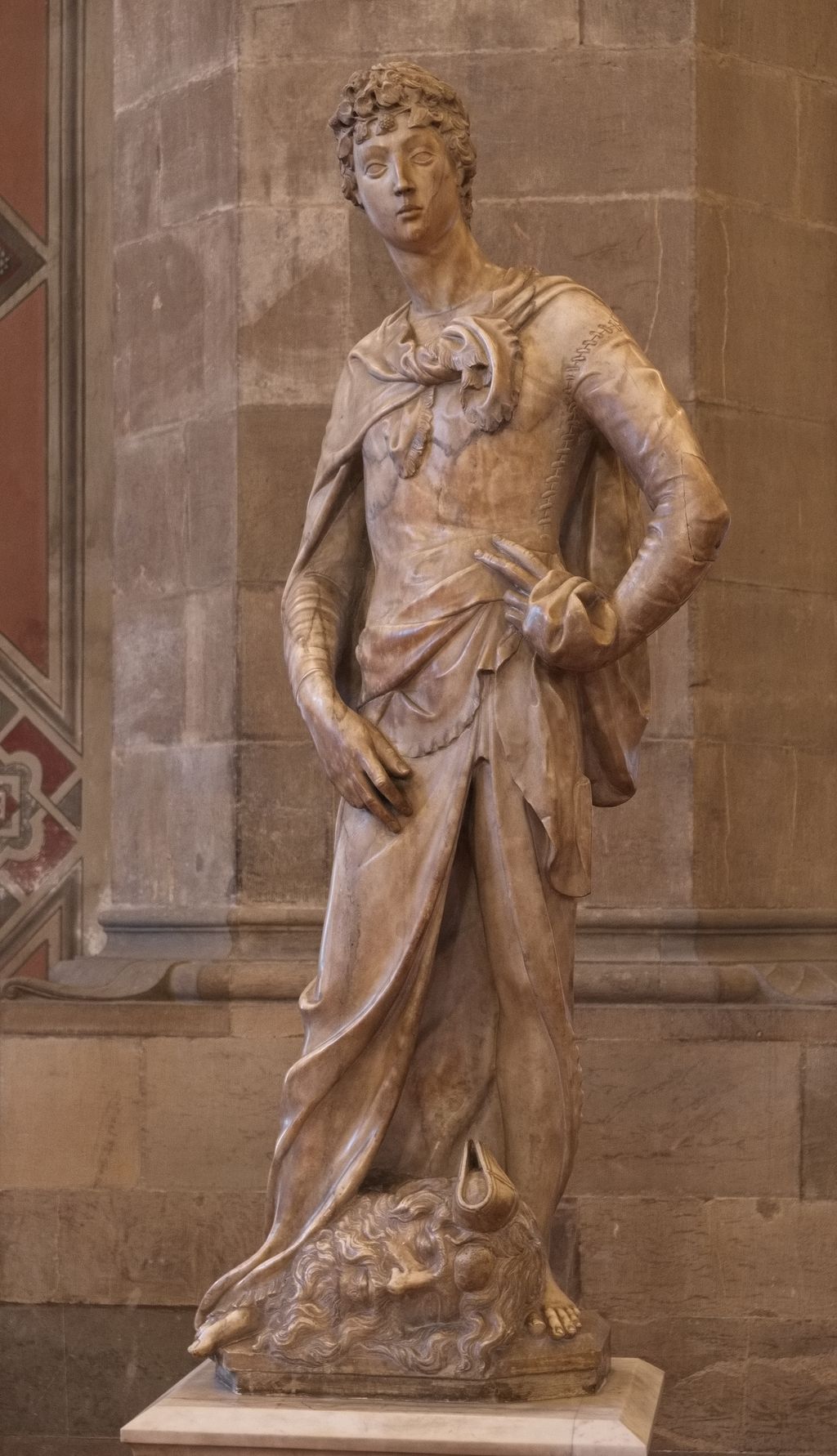
Donatello’s marble David with the head of Goliath in the Bargello. Armin Kleiner. Image source. CC BY-SA 4.0. Resized for the web.
 by Tom Gurney
Tom Gurney BSc (Hons) is an art history expert with over 20 years experience
Email: tomgurney1@gmail.com / Phone: +44 7429 011000
Goliath’s head lies so low in Donatello’s Marble David that the sweep of a cloak almost carries the eye past it. Look again and the curls at David’s feet resolve into a beard, a face turned upwards and a stone lodged in the giant’s forehead. Above him stands a barefoot youth in a close-fitting garment, one hand resting at his hip. The giant’s head tells us that the fight is over. The calm of the figure standing above it makes the violence feel all the further away. [1] [2]
Known also as David with the Head of Goliath or David Victorious, the statue is carved in white Carrara marble and stands 191.5 centimetres high. It is in the Museo Nazionale del Bargello in Florence, where it is catalogued as Sculpture 2. The dates usually given are 1408–09 for the carving and 1416 for work undertaken when the Florentine government acquired the figure. Those dates take us from the cathedral building works to the Palazzo della Signoria, today’s Palazzo Vecchio. How the statue was to be seen changed as much as where it stood. [1] [2] [3]
A hero in the folds of a cloak
In the biblical account, David is a shepherd who volunteers to face the Philistine champion Goliath. He refuses Saul’s armour, brings the giant down with his sling and cuts off his head with Goliath’s own sword. Donatello gives the viewer two clues of very different sizes. The severed head is almost as wide as the space between David’s feet. The sling’s pouch, which the V&A identifies just above the head, is easy to miss. Its straps are gone. Another stone remains visible inside it. The one in Goliath’s brow records the blow. Together the two stones evoke the brief action that produced this still scene. [2]
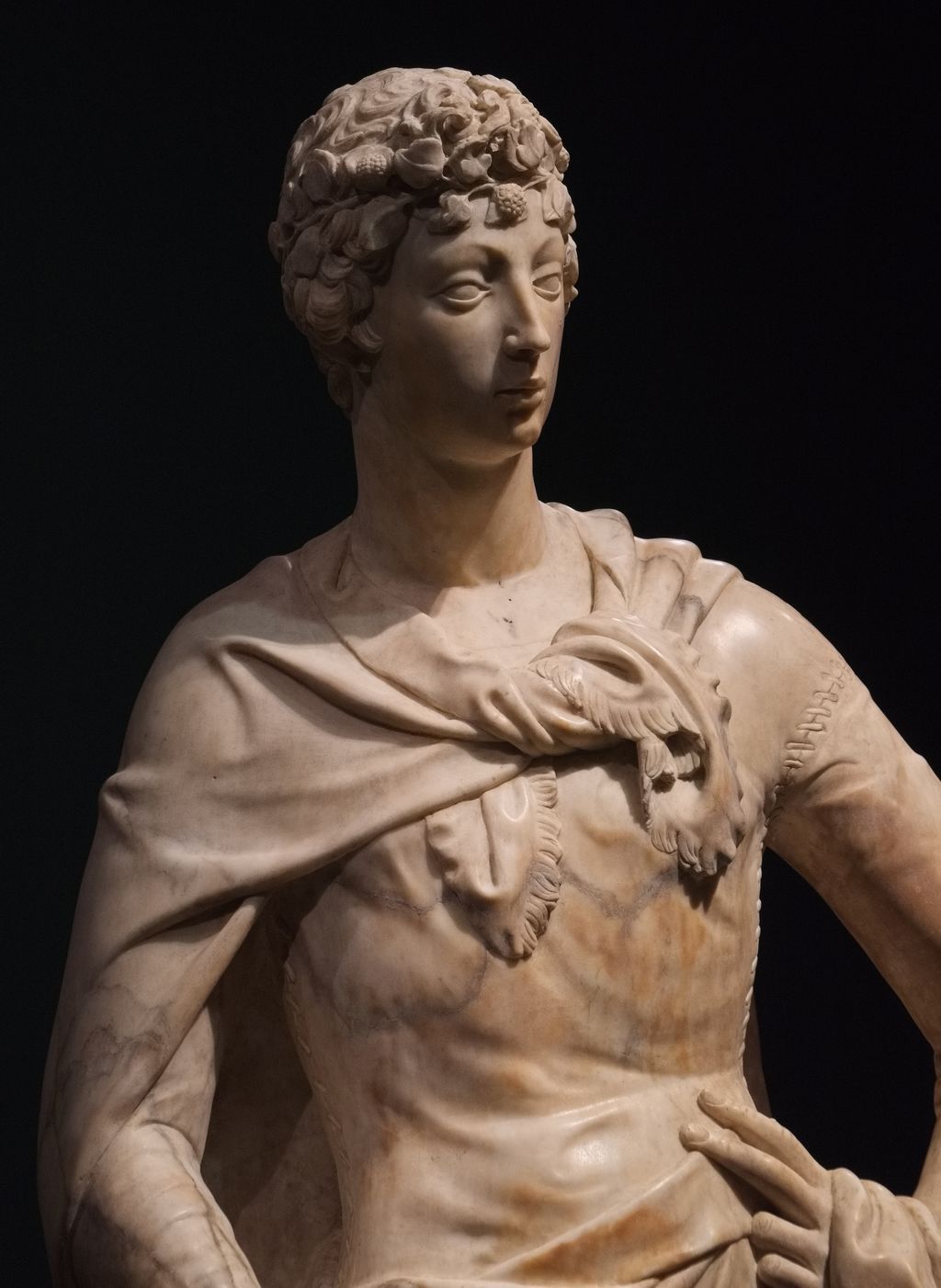
The upper part of the marble statue, including the cloak gathered at David’s chest. Armin Kleiner. Image source. CC BY-SA 4.0. Resized for the web.
Start with the fall of the cloth. The cloak bunches into a knot high on the chest. The folds spread over one shoulder before descending in a long sweep, then curling back near the base. Other marks in the marble describe a different fabric. The garment underneath hugs the arms and torso, and a line of tiny incisions suggests stitches at the side. The cloak catches light in broader ridges and casts deeper shadows where the folds double back. At the bottom, the light breaks into much smaller patches across the giant’s hair and beard. One piece of stone gives each surface its own texture. [1] [2]
The drapery also makes the stance readable. David settles his weight on his left leg, bends the other and angles his body gently to one side. The hand on the hip pushes the elbow out, opening a sharp angle in the outline. The other hand descends towards the thigh, where the fingers rest lightly against the cloth. The weight shift suggests the classical device known as contrapposto. The drawn-out curves of the cloak, the long neck and the delicate tilt of the head retain the grace of late Gothic sculpture. As the body settles onto one leg, the sweep of the folds keeps the figure in motion. [1] [2]
The face is small, youthful and comparatively smooth. At the base, Goliath’s heavy features emerge from much coarser waves of hair. The two heads give the unequal contest a scale of its own. With the giant reduced to a trophy and the youth almost at human height, the viewer has to imagine how tall the defeated man would have stood. The earlier Florentine fresco of David by Taddeo Gaddi in the Baroncelli Chapel shows that the young victor was already a recognisable subject. In that painting he holds up the head. On Donatello’s base, the trophy anchors an upright figure to the ground and asks the viewer to look twice. [1] [2] [4]
Annotated Details from Marble David
Select a number to jump to a detail of the sculpture.
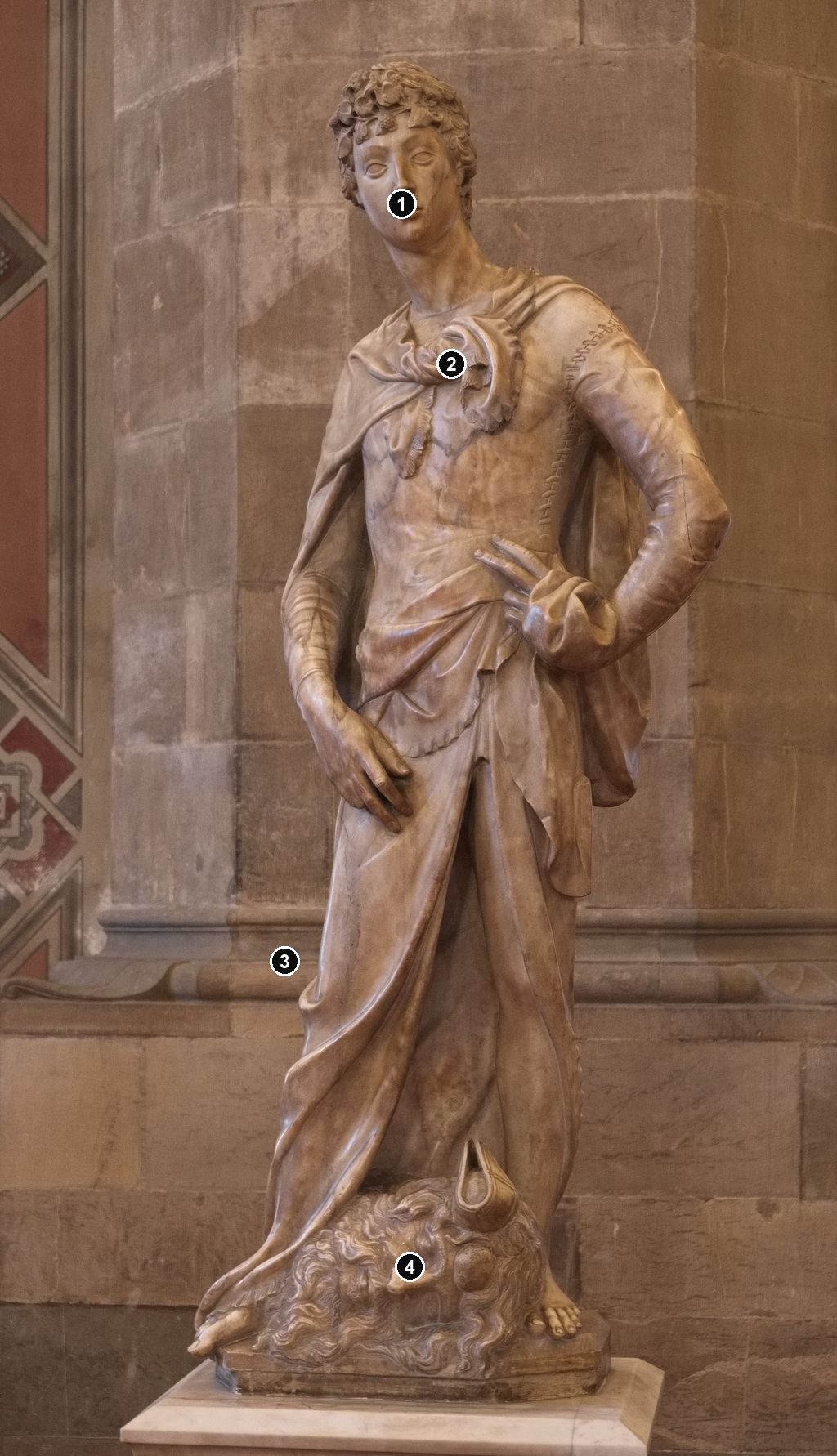
Details from MARBLE DAVID
Open a detail image to examine the surface more closely.
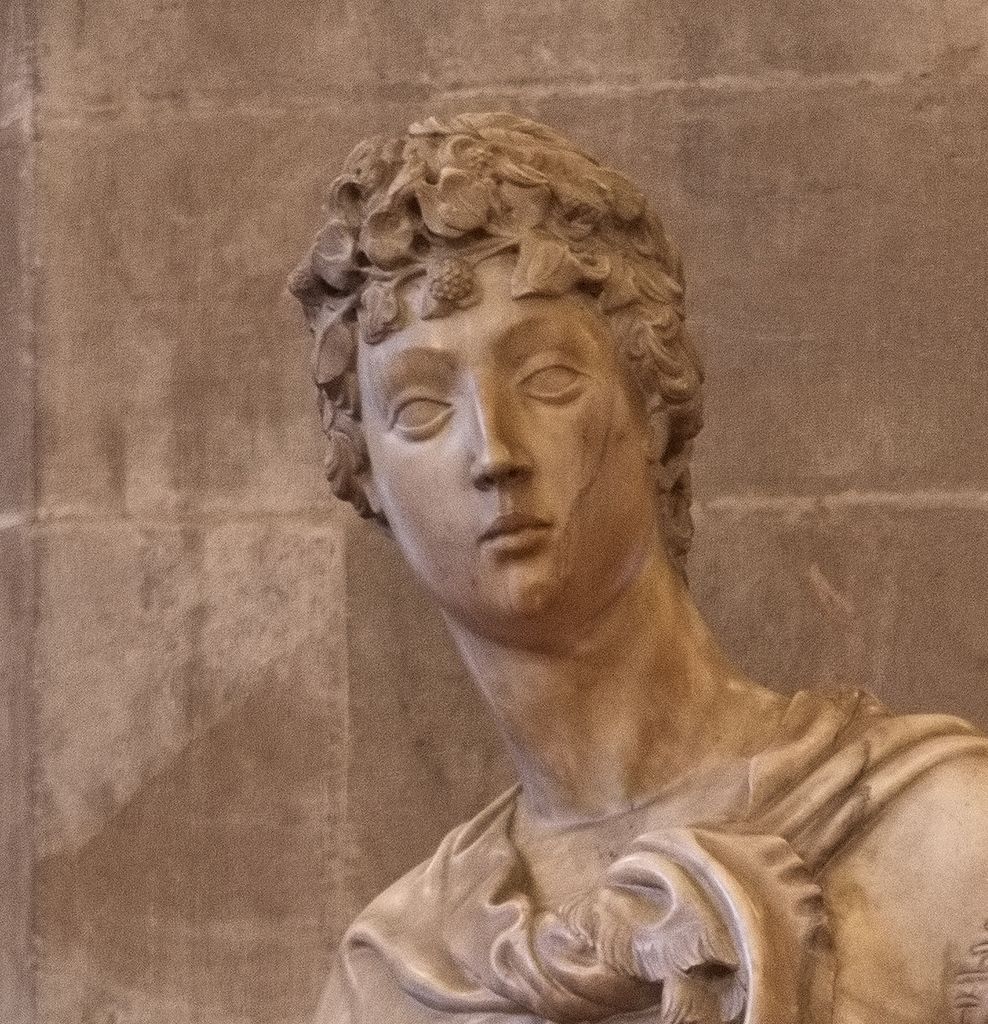
Turn of the head
David’s narrow face turns slightly to one side. The close curls and the sharp turn from jaw to neck register differently as the light changes.
Knot of the mantle
The mantle gathers just below the throat and then spreads across the upper body. Deep ridges lead the eye around the shoulder and down toward the hand.
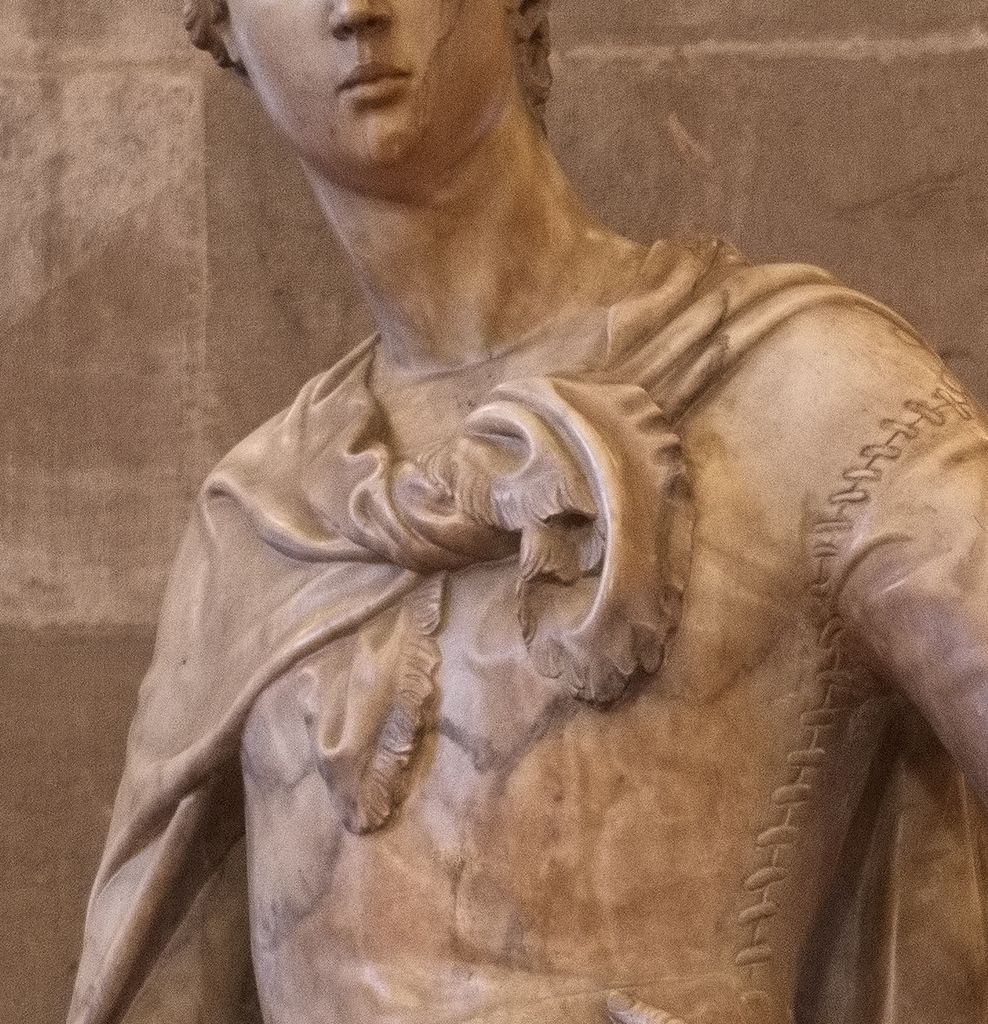
Fold across the leg
The outer edge of the hanging cloth bends back towards the leg. Fine folds inside that outline pull the eye down to the base.
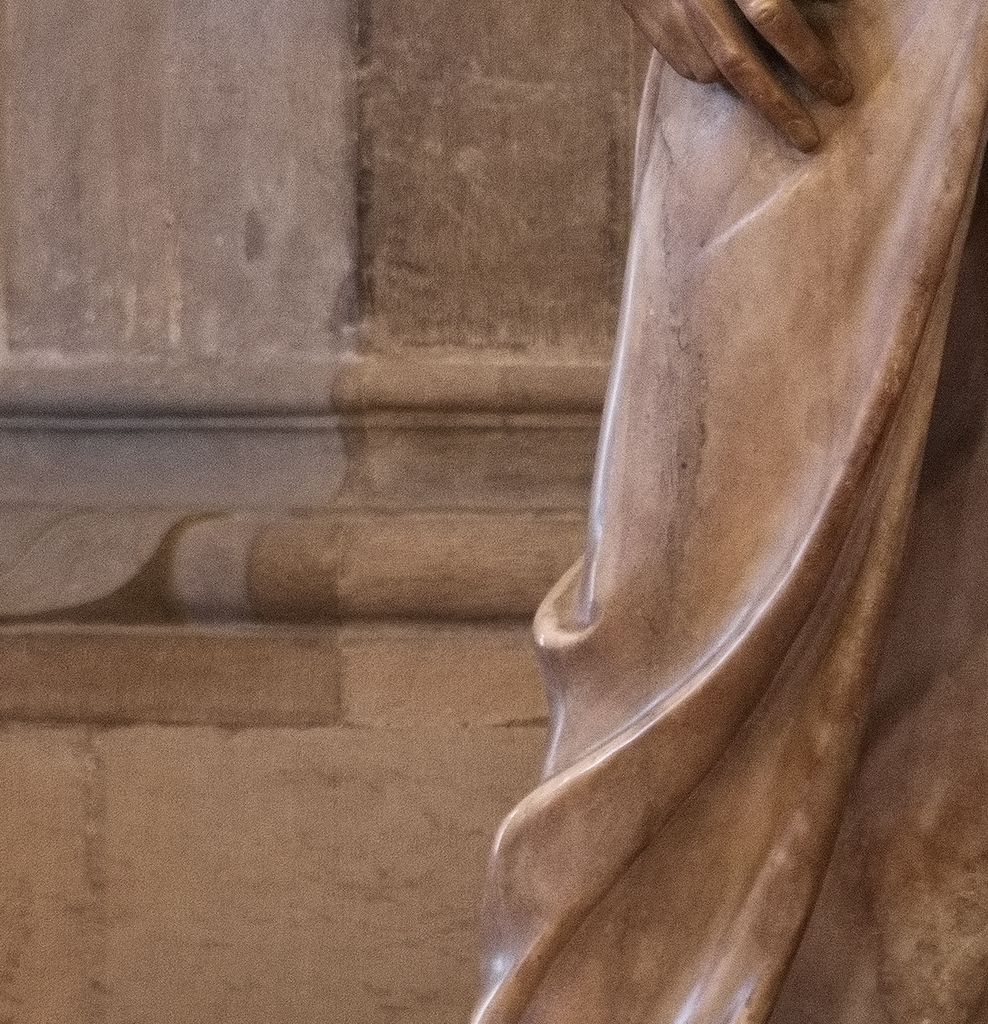
Goliath beneath the hem
Goliath’s head rises from the base beneath the falling cloth. The contrast between the heavy curls and the smooth lengths of the mantle makes the head easier to recognise.
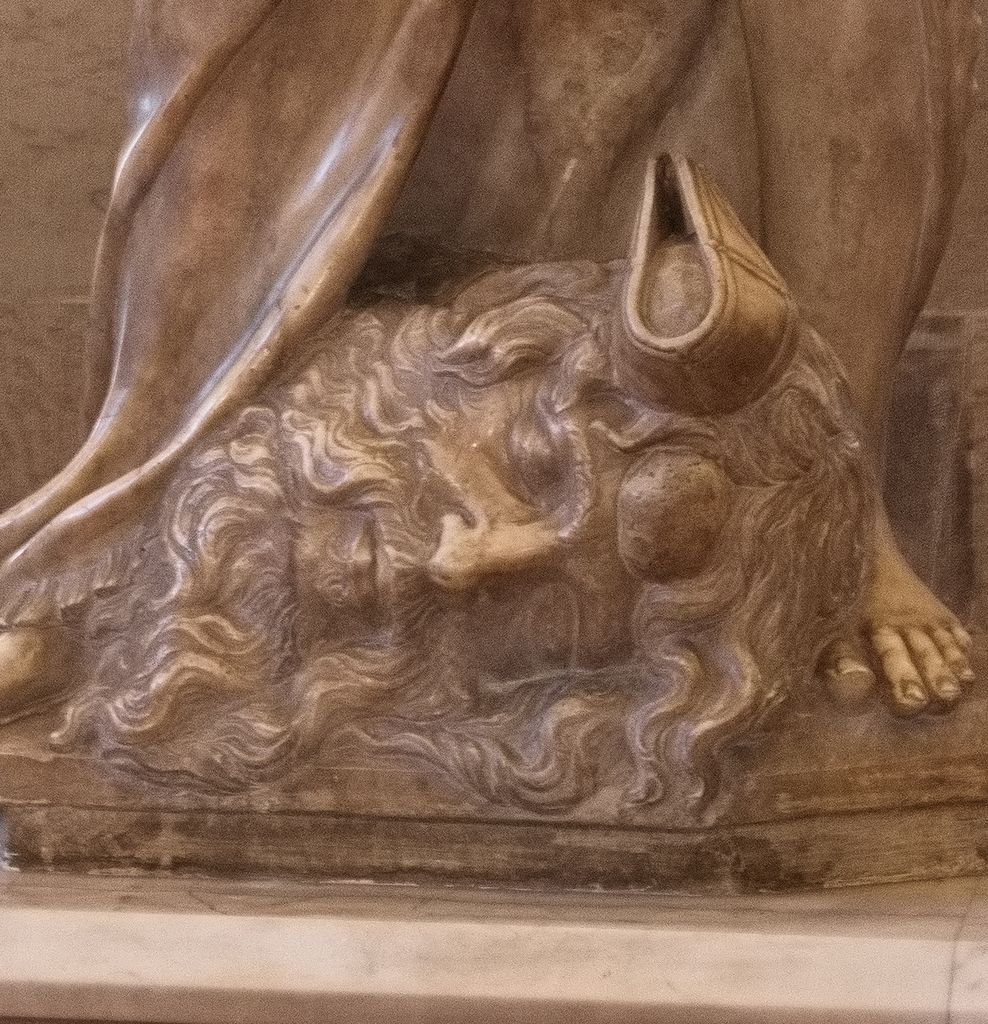
Annotated photograph and detail crops. Armin Kleiner. Image source. CC BY-SA 4.0. Resized, annotated and cropped from the original photograph.
A statue for the cathedral buttresses
In February 1408 the Opera del Duomo, the body responsible for the cathedral works, commissioned Donatello to make a marble David for the exterior of Santa Maria del Fiore. Nanni di Banco made an Isaiah for the same programme. The commissions called for figures about three and a quarter Florentine braccia tall, just under 1.9 metres and close to the height of the Bargello marble. Francesco Caglioti, Laura Cavazzini, Aldo Galli and Neville Rowley have shown that the instalments they associate with Donatello’s figure add up to the 100 florins recorded for a completed prophet in June 1409. In the accounts, the work can be described simply as a prophet or a figure. [5] [6] [7]
At street level, a statue this tall has an imposing presence. The intended position was more than twenty metres above the ground, on a buttress of one of the cathedral’s tribunes, the projecting sections around the future dome. Caglioti points out that the scale was comparable to figures in niches on Giotto’s bell tower. A niche supplies a frame and separates the figure from the wall behind it. Seen high up on a buttress, David’s long silhouette and thrust-out elbow might have registered first. The stitchwork, the sling and even the giant’s face would have been much harder to make out. The shape of the architecture and the viewer’s angle mattered as much as the height of the marble. [5] [6]
A July 1409 record orders the removal of a prophet from its high position. Either Donatello’s David or Nanni’s Isaiah could have been the figure tried there. The cathedral’s own catalogue identifies Nanni’s surviving statue as the Isaiah commissioned for the programme. Now inside the cathedral, it offers a companion piece at a distance that lets visitors see the expression on its youthful face. The Opera soon pursued a different scale on the exterior. Donatello made a Joshua in terracotta, now lost, approximately nine braccia tall. That was nearly three times the height allotted to the marble prophets. It gives an idea of how much larger a figure had to be to read against the architecture. [5] [6] [7]
What the documents say about 1412
The Bargello’s statue is widely identified with the early cathedral commission. Other scholars have found its close detail, the form of its base and its composition for viewing against a wall easier to explain as work planned for the palace. Volker Herzner argued that the original cathedral David and the statue that went to the palace in 1416 were separate works by Donatello. Caglioti’s 2024 study revisits one detail behind such arguments, the suggestion that only a projecting, angled base could fit the buttress. The available supports were substantially wider than the footprint of either marble prophet. The present base gives some purchase on how the sculpture is composed, while its shape alone gives little grounds for assigning it to one building. [1] [5] [8]
Much turns on a record of 12 August 1412 that names David alongside Donatello’s Saint John the Evangelist, a marble for the cathedral façade. The two works were at different stages. The cathedral paid for the completion of the Saint John in 1415, while the prophet in the earlier accounts had been assessed in June 1409. In his 2026 essay for the Museo dell’Opera del Duomo, Caglioti explains why the statues appear together in 1412. The 50 florins were set aside for decoration on the marble. The wording calls Donatello a painter for this job and keeps its payment separate from the costs of marble and carving. On that reading, the work planned in 1412 belonged to a new stage in the life of the earlier David. The document gives no detailed description of the ornament that reached the stone. [5] [6] [8]
How the Signoria presented its David
The palace transfer is documented in much greater detail. On 6 July 1416, after a request from the Signoria, the cathedral officials resolved to send the marble figure they held to the Palazzo dei Signori. An August payment covers the carrying of two marble brackets for the display. A further account records the transport of the statue itself and the cost of materials that included beaten gold and silver, pigments and supplies for glass inlay on the base and brackets. On 20 August the painter Giovanni di Guccio was paid to paint lilies on a blue ground on the wall where the figure stood. The palace installed the statue in the room now known as the Sala dei Gigli and formerly called the Sala dell’Orologio, or Clock Room. [1] [2] [4] [9]
On 27 August Donatello received five florins for work he and his assistants had done to complete and adapt the figure. The payment establishes that they worked on the figure and leaves the extent of their intervention open. One proposal is that Donatello removed a prophet’s scroll in David’s lowered hand and altered the cloak or base. Another is that the work concentrated on the lower part, where Goliath’s face and beard now reward close inspection. Scholars have pointed to a likeness between the giant’s richly cut features and the bearded Saint John the Evangelist, largely carved between 1413 and 1415. The resemblance makes the suggestion of work in 1416 worth considering. A stylistic likeness can suggest where to look without dating a particular cut in the stone. [1] [5] [6] [9]
The payments also change how we picture the palace setting. The modern display draws attention to the changing depth of the carving within a single colour of marble. Against a blue field of lilies, with metal leaf and glass decoration among the materials for the installation, the figure would have taken part in an ensemble that responded to light in several ways. The records give a firmer basis for picturing that richer setting than for assigning a particular colour or finish to an individual fold, a curl of the beard or a part of David’s body. [2] [9]
A biblical victory in a town hall
For the Florentine government, David’s victory offered a model of courage under divine protection. The inscription associated with the palace base made that connection explicit. In paraphrase, it promised God’s aid to those who fought bravely for their homeland, even against formidable enemies. The Latin survives in differing versions. Adrian Randolph notes that one manuscript speaks of God granting victory, while a late sixteenth-century transcription promises divine assistance. The V&A places the inscription by 1510. Whatever its precise wording, it gave the biblical encounter a civic audience and asked what the youth’s victory could mean for Florence. [1] [2] [4]
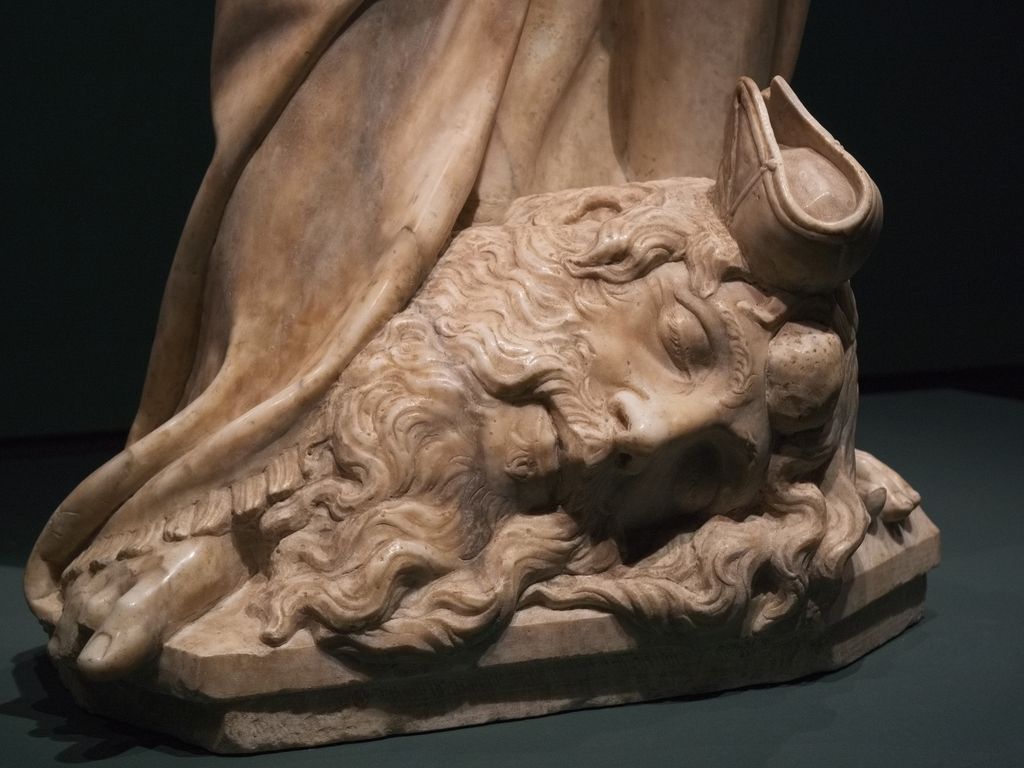
Goliath’s head and the stone in his brow, at the foot of the marble David. Armin Kleiner. Image source. CC BY-SA 4.0. Resized for the web.
Randolph connects the choice of hero to dangers fresh in Florentine memory, including those posed by Gian Galeazzo Visconti of Milan and Ladislaus of Naples. The biblical story lends itself to such a reading. A young shepherd defeats a champion whose size and equipment seemed to guarantee victory. The scale of the carved heads still makes that point without the inscription. In the government palace, the blue wall with its lilies and the words about defending one’s homeland made an association with Florence available each time an official or visitor looked at the figure. [4] [9]
Seeing the marble at the Bargello
The marble went from Palazzo Vecchio to the Uffizi in 1781 and to the Bargello in 1874. The Fondazione Federico Zeri’s catalogue brings together historical photographs of the statue, including a frontal photograph by the Alinari firm. In the Bargello’s reorganised Donatello Hall, the marble stands near Donatello’s Saint George, an early marble made for a niche at Orsanmichele. David’s angled elbow, tilted head and loose folds make a supple outline. George stands braced behind a tall shield that fills the lower part of his silhouette. [1] [10] [11]
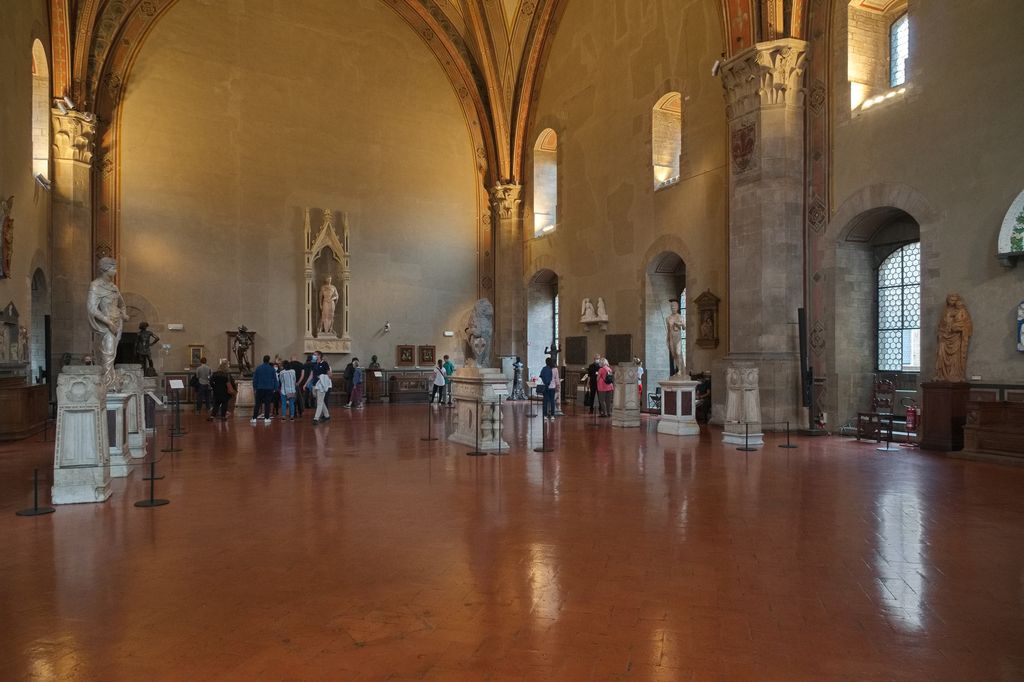
The marble David and its neighbours in a 2021 view of the Bargello’s Donatello Hall. Armin Kleiner. Image source. CC BY-SA 4.0. Resized for the web.
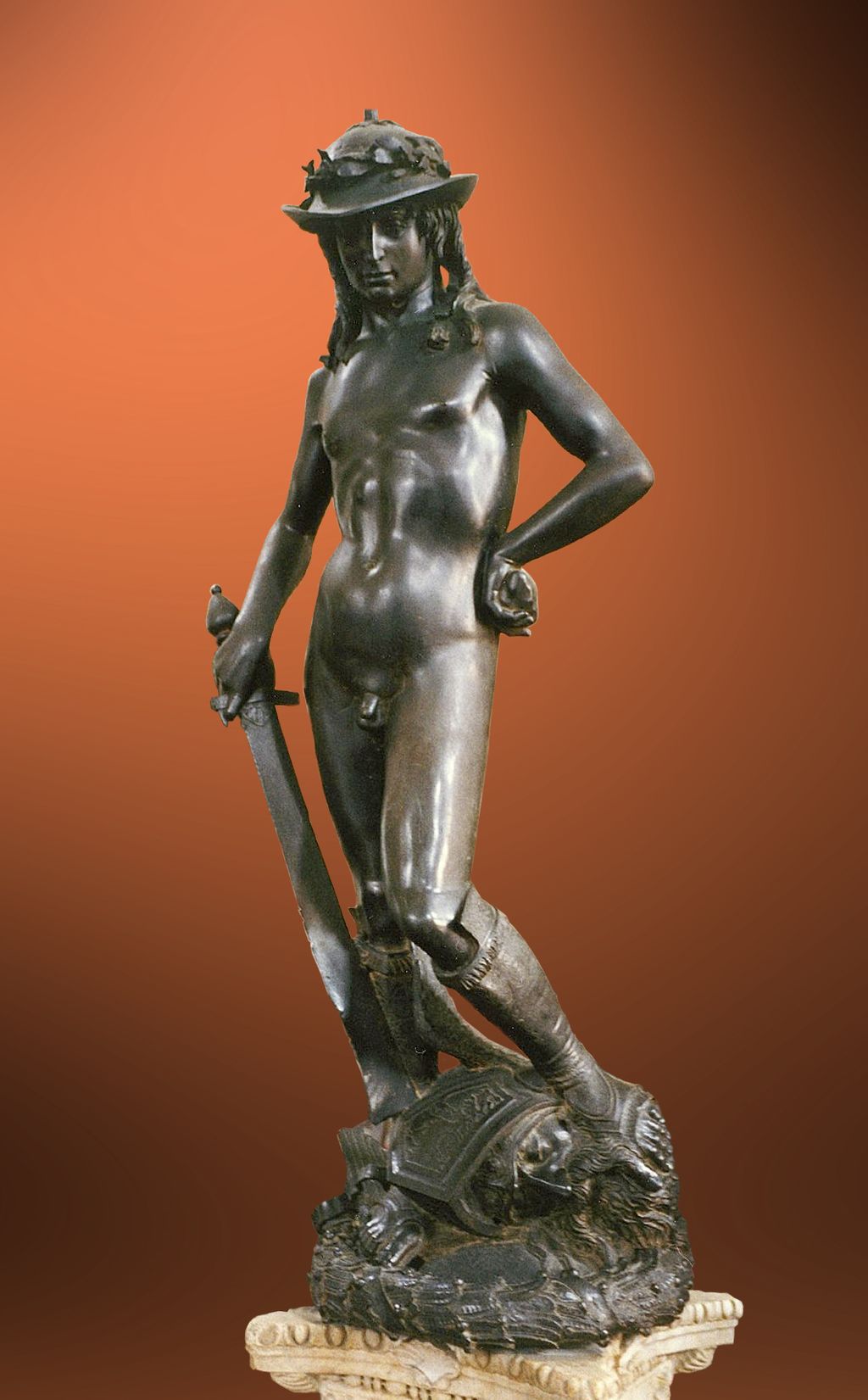
The bronze David stands in the same hall and rewards a different circuit. Both Davids turn their weight through one hip and place Goliath below. The marble’s clothing wraps the hero into a long, uninterrupted sweep. The bronze leaves his body exposed except for hat and boots, sets the sword in his lowered hand and gives Goliath a helmet. Its documented display in the Medici palace courtyard gave the familiar image a different audience. A further clothed marble, the David of the Casa Martelli, is a separate work now at the National Gallery of Art in Washington. [2] [4] [11] [12]
A century after the early cathedral commission, Michelangelo’s David was also intended for one of the cathedral’s buttresses. His figure stood more than five metres tall and was installed outside the entrance to Palazzo Vecchio in 1504. Michelangelo leaves the contest in the future, giving the viewer a figure poised to act. Donatello’s youthful victor, once destined for the same high architecture, carries the outcome in the space between his feet. Seen close up at the Bargello, the giant’s face and the two small stones turn a story of public victory back into the encounter between two people. [2] [6] [13]
Donatello sculpture directory
| Name | Date | Medium and record |
|---|---|---|
| Marble David | 1408–09, adapted 1416 | Carved Carrara marble Catalogue. |
| Saint John the Evangelist | c. 1409–15 | Carved marble Catalogue. |
| Saint Mark | 1411–13 | Carved Carrara marble Catalogue. |
| Saint George and its dragon relief | c. 1415–17 | Marble statue and marble relief Catalogue. |
| Marzocco | c. 1417–20 | Carved sandstone Catalogue. |
| Saint Louis of Toulouse, Florence | 1418–25 | Gilt bronze and mixed media Catalogue. |
| Pazzi Madonna | c. 1420s | Marble relief Catalogue. |
| Reliquary Bust of Saint Rossore | c. 1420s | Gilt bronze Catalogue. |
| The Prophet Jeremiah | 1420s–30s, disputed | Marble Catalogue. |
| Zuccone | c. 1420s–30s | Marble Catalogue. |
| Feast of Herod, Siena | 1420s | Gilded bronze relief Catalogue. |
| Ascension with Christ Giving the Keys to Saint Peter | c. 1428–30 | Marble relief Catalogue. |
| Cantoria | 1433–39 | Marble and mosaic Catalogue. |
| Amor-Atys | c. 1435–40 | Partly gilded bronze Catalogue. |
| Bronze David | c. 1435–40, disputed | Partly gilded bronze Catalogue. |
| Gattamelata | Installation agreement, 1453 | Bronze and stone Catalogue. |
| Santo altar | Mid-fifteenth century | Bronze and limestone ensemble Catalogue. |
| Chellini Madonna | Given in 1456 | Partly gilded bronze tondo Catalogue. |
| Penitent Magdalene | c. 1453–55 (Opera) | Poplar, stucco, pigments and gold Catalogue. |
| Judith and Holofernes | Late 1450s–early 1460s | Bronze with surviving gilding Catalogue. |
| Pulpit of the Passion | Late work and later assembly | Bronze reliefs, Donatello and collaborators Catalogue. |
| Bust traditionally called Niccolò da Uzzano | Fifteenth century | Painted terracotta, attribution disputed Catalogue. |
| Prato Cathedral exterior pulpit | Commissioned 1428; carved 1430s | Marble reliefs, Donatello and Michelozzo Catalogue. |
| Cavalcanti Annunciation | c. 1433–35 | Gilded sandstone and terracotta Catalogue. |
| Crucifix at Santa Croce | Early fifteenth century | Painted wood Catalogue. |
| Madonna of the Clouds | c. 1425–35 | Marble relief Catalogue. |
| Old Sacristy Doors | Fifteenth century | Two paired bronze doors Catalogue. |
| Resurrection Pulpit | Late work and later assembly | Bronze reliefs, Donatello and collaborators Catalogue. |
| Brancaccio tomb | 1420s | Donatello, Michelozzo and assistants, mixed materials Catalogue. |
| Saint John the Baptist, Venice | 1438 | Polychromed and gilded wood Catalogue. |
| Sacrifice of Isaac | Early fifteenth century | Donatello and Nanni di Bartolo, marble Catalogue. |
| Madonna of Via Pietrapiana | Mid-fifteenth century | Terracotta Catalogue. |
| Miracle of the Mule | Mid-fifteenth century | Gilded bronze panel for the Santo altar Catalogue. |
| Padua Crucifix | Mid-fifteenth century | Cast bronze Catalogue. |
| Dancing Spiritello, Bargello | Fifteenth century | Bronze Catalogue. |
| Young Prophet from the Porta della Mandorla | c. 1404–09 | White marble, attributed to Donatello Catalogue. |
| Prophet or Apostle from the Duomo north tribune | Early fifteenth century | White marble, possibly Donatello Catalogue. |
| Beardless Prophet | 1415–18 | White marble Catalogue. |
| Sibyl and Prophet of the Porta della Mandorla | 1422 | Carved marble heads for the portal Catalogue. |
| Faith, Siena baptismal font | 1420s | Gilded bronze figure Catalogue. |
| Hope, Siena baptismal font | 1420s | Gilded bronze figure Catalogue. |
| Feast of Herod, Lille | c. 1430 | Carrara marble relief Catalogue. |
| Piot Madonna | c. 1440–60 | Polychrome terracotta with glass and wax inlays Catalogue. |
| Carafa Horse Head | c. 1456–58 | Cast bronze Catalogue. |
| Pazzi Madonna workshop version, Louvre | c. 1450 | Polychrome gesso, Donatello’s workshop Catalogue. |
| Pazzi Madonna tondo, Rijksmuseum | c. 1425–50 | Plaster and stucco, after Donatello Catalogue. |
| Sprite | c. 1430–40 | Bronze, sculptor or metalsmith close to Donatello Catalogue. |
Discussion
Look again at the images and ideas explored in Marble David. These editorial prompts invite your observations.
Reader Insights
Which details of the marble David would remain clear to someone looking up from the street?
How would a blue wall patterned with lilies change the way you read the marble figure?
Join the Conversation
Share a detail, comparison or question about Marble David below.
References
- Ministero della Cultura, David con la testa di Golia, national catalogue no. 0900287035. View source.
- Victoria and Albert Museum, Donatello’s ‘David’. View source.
- Fondazione Palazzo Strozzi and Musei del Bargello, Donatello, The Renaissance, exhibition checklist, no. 1.1, 2022. View source.
- Adrian W. B. Randolph, Engaging Symbols: Gender, Politics, and Public Art in Fifteenth-Century Florence, Yale University Press, 2002, chapter 4, pp. 152–54 and note 110, pp. 318–19. View source.
- Francesco Caglioti, Laura Cavazzini, Aldo Galli and Neville Rowley, ‘Reconsidering the Young Donatello’, Jahrbuch der Berliner Museen 57, 2015 (published 2018), pp. 15–45, especially pp. 16–20. View source.
- Francesco Caglioti, ‘Donatello e l’Opera di Santa Maria del Fiore: il maestro, i colleghi, i seguaci’, Catalogo del Museo dell’Opera del Duomo, vol. 2, 2026, pp. 90–139, especially pp. 103–110. View source.
- Opera di Santa Maria del Fiore, Nanni di Banco, Profeta Isaia. View source.
- Francesco Caglioti, ‘Le mostre donatelliane del 2022 e i mal di pancia della critica accademica austro-tedesca’, Studi di Scultura 6, 2024, pp. 10–101, especially pp. 16–19. View source.
- Volker Herzner, ‘Regesti donatelliani’, Rivista dell’Istituto Nazionale d’Archeologia e Storia dell’Arte, third series, vol. 2, 1979, p. 177, nos. 44–47. View source.
- Fondazione Federico Zeri, Bardi Donato, David, photographic catalogue record no. 65711 and the linked Alinari frontal view. View source.
- Musei del Bargello, Museo Nazionale del Bargello: riapre al pubblico il Salone di Donatello. View source.
- National Gallery of Art, Washington, The David of the Casa Martelli, collection record. View source.
- Galleria dell’Accademia di Firenze, Il David di Michelangelo. View source.
- Opera del Duomo, Donatello and the Opera del Duomo. View source
- Ministero della Cultura, David with the Head of Goliath, Bargello bronze. View source
- Save Venice, Donatello’s Equestrian Monument to Gattamelata. View source
- Opificio delle Pietre Dure, L’ultimo Donatello. View source
More DONATELLO Sculptures
Marble David
Armin Kleiner. Image source. CC BY-SA 4.0. Resized for the web.
Bronze David
Patrick A. Rodgers. Image source. CC BY-SA 2.0. Resized for the web.
Cantoria
Erik Drost. Image source. CC BY 2.0. Resized for the web.
Gattamelata
Chris Light. Image source. CC BY-SA 4.0. Resized for the web.
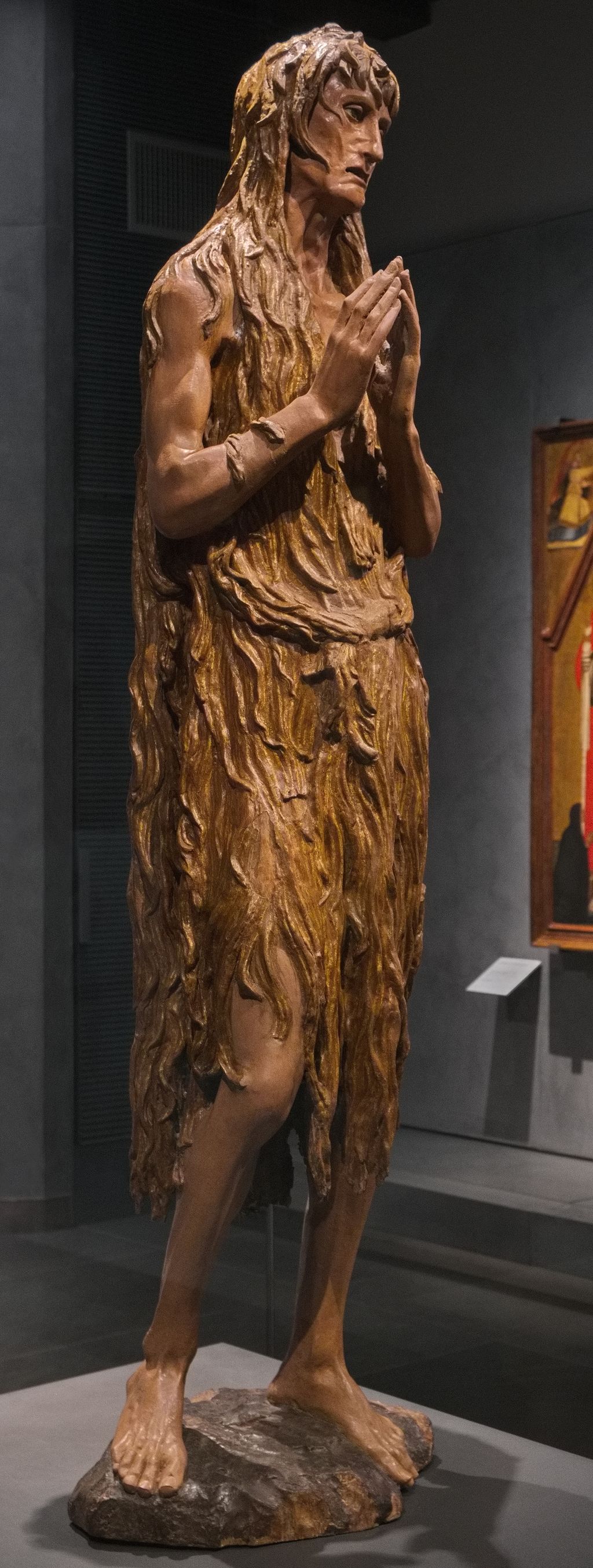
Penitent Magdalene
Armin Kleiner. Image source. CC BY-SA 4.0. Resized for the web.
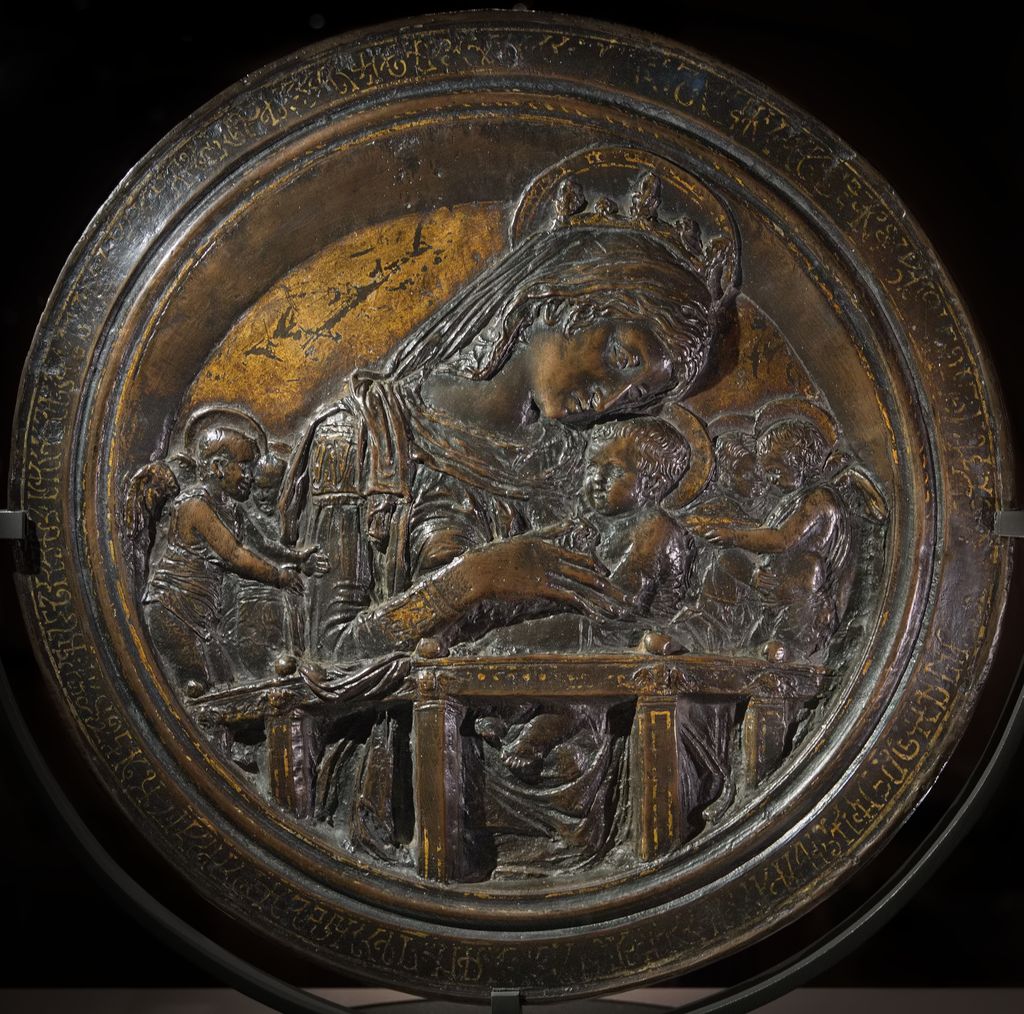
Chellini Madonna
Armin Kleiner. Image source. CC BY-SA 4.0. Resized for the web.
