by Tom Gurney
Tom Gurney BSc (Hons) is an art history expert with over 20 years experience
Published on July 14, 2026 / Updated on July 16, 2026
Email: tomgurney1@gmail.com / Phone: +447429011000
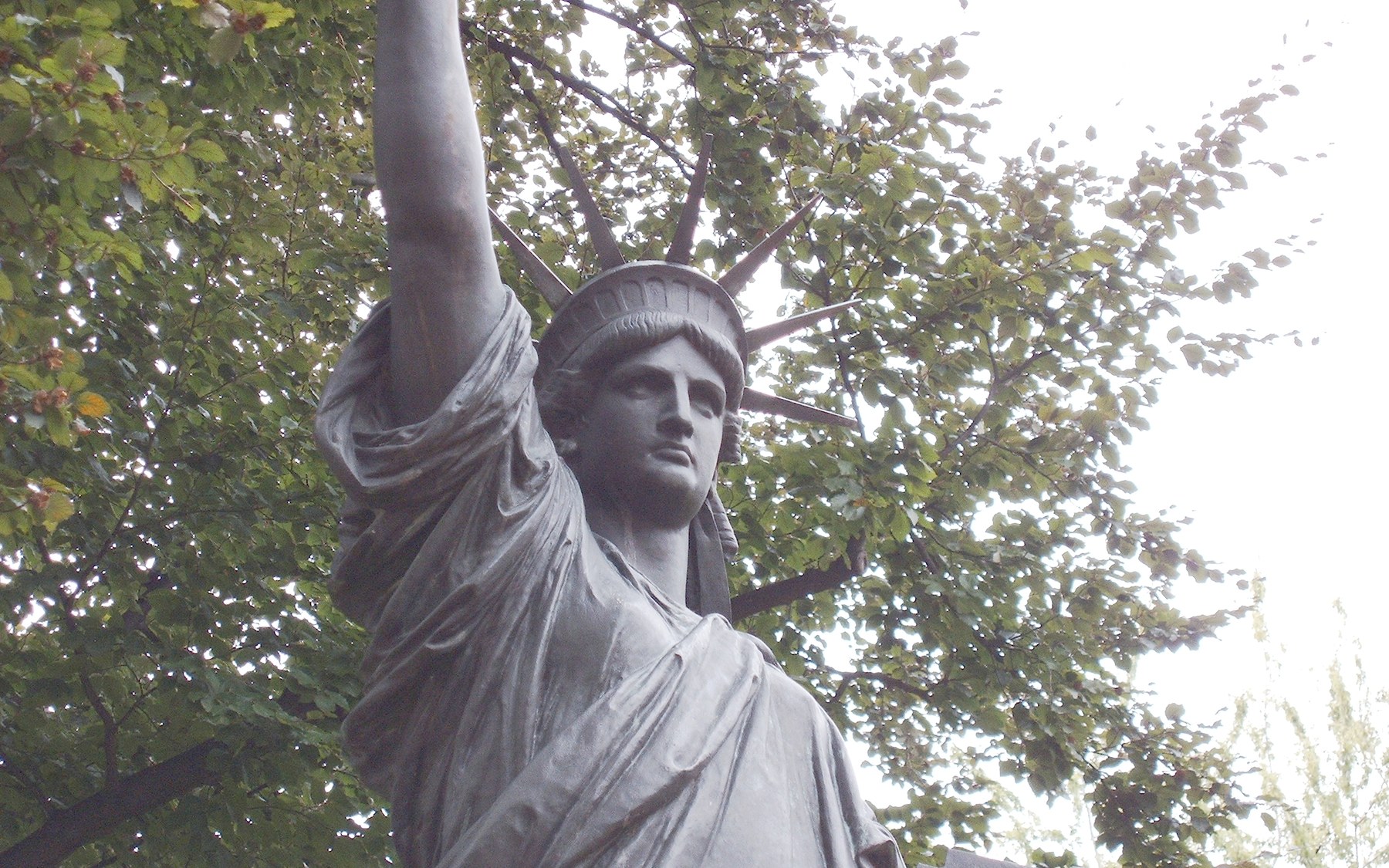
Liberty Enlightening the World, Jardin du Luxembourg, 2009-10-10 001.JPG by Frédéric Auguste Bartholdi; CC BY-SA 2.0 via Wikimedia Commons. Cropped for TheHistoryOfArt.org. · Image source
What to expect
Auguste Bartholdi: Liberty Enlightening the World is an upcoming Musée d'Orsay exhibition in Paris, scheduled from 15 September 2026 to 31 January 2027. The official Orsay page frames it around the 250th anniversary of the United States Declaration of Independence, celebrated in 2026, and around Bartholdi's most famous project: the Statue of Liberty. The exhibition is accompanied by a separate virtual reality experience, A Statue for Liberty, Bartholdi's Dream, from Paris to New York, but this page treats the museum exhibition as the core record.
The subject is more complex than one monument. Orsay presents Auguste Bartholdi as a major figure in nineteenth-century French sculpture and the creator of several emblematic works, with Liberty Enlightening the World as the most internationally recognised. The statue was planned as a gift from France to the United States, initially intended to commemorate the centenary of American independence in 1876, and was finally inaugurated in 1886. That ten-year delay is useful: it reminds visitors that monuments are not just ideas, but engineering, fundraising, diplomacy, fabrication, transport and installation.
The Orsay listing uses Bartholdi's 1889 Liberté, made with Thiébaut frères, as its visible artwork anchor. That is a helpful scale shift. Most people know the Statue of Liberty as a colossal outdoor landmark in New York Harbor. A museum exhibition can bring the subject back to models, reductions, workshop processes, bronze, casting, allegory, political symbolism and the French sculptural culture from which the monument emerged.
Why it matters
The strongest reason to include this page is that Bartholdi connects sculpture to international public memory. The Statue of Liberty is one of the most reproduced images in the world, but that familiarity can make it disappear as an artwork. Orsay's exhibition gives readers a chance to see it again as a nineteenth-century project: designed by a French sculptor, bound to republican symbolism, dependent on transatlantic collaboration and built through the technologies and ambitions of its age.
The anniversary frame also matters. In 2026, the United States' 250th anniversary gives the statue renewed visibility, but Orsay's Paris perspective changes the emphasis. This is not only an American national symbol seen from America. It is also a French work, a diplomatic gift, a public sculpture, a feat of modern construction and an object whose meaning has shifted with migration, liberty, democracy, protest and commemoration. The page should therefore help readers resist a purely postcard version of the monument.
The exhibition is valuable for the Musée d'Orsay cluster because it widens the museum beyond painting. Orsay is often introduced through Impressionism, Post-Impressionism and nineteenth-century modern life on canvas. Bartholdi adds sculpture, monuments, decorative metalwork, public space and the relation between museum objects and urban landmarks. That broadens the visitor route while staying firmly inside the nineteenth century.
What to look for
Begin with scale. A monument exists in more than one size before it becomes a landmark. Models, reductions, casts, fragments, drawings and photographs can all carry the larger idea in different ways. Ask how a small or medium-sized object suggests colossal ambition. Does it simplify form? Emphasise silhouette? Clarify gesture? Preserve surface detail? Or turn a civic monument into something closer to a collectible sculpture?
Then look at allegory. Liberty is represented as a female figure, but allegorical figures are never neutral. Torch, tablet, drapery, crown, stance and upward movement all help translate an abstract political idea into a body. A visitor should ask what kind of liberty the sculpture makes visible. Is it serene, commanding, maternal, republican, theatrical, modern, ancient, French, American or universal? The answer may change depending on whether the object is seen as sculpture, monument, gift, symbol or tourist image.
Materials are another route. Bronze and large-scale metalwork have their own language. Casting, joins, patina, surface finish, engineering supports and fabrication partners matter. The name Thiébaut frères in the Orsay object credit is a reminder that sculpture is rarely only the sculptor's solitary hand. Foundries, engineers, workshops and fabricators make public monuments possible. Looking for that collaborative labour can make the exhibition richer than a biography of Bartholdi alone.
Finally, consider the journey from Paris to New York. The parallel virtual reality experience exists because the statue's story is spatial: studio, workshop, exhibition, shipment, assembly, pedestal, harbor, skyline and national memory. The museum exhibition can supply the art-historical frame, while the immersive experience may help visitors imagine the technological and logistical drama. The two should be related, but not collapsed into one page.
How it fits Orsay and Paris
This page strengthens the Musée d'Orsay record by adding a major public-sculpture and Franco-American route beside the Cassatt, Sargent and Renoir pages. Cassatt and Sargent show transatlantic artistic careers; Bartholdi shows a transatlantic object. Renoir and Cassatt keep Orsay close to Impressionism and works on paper; Bartholdi makes the museum's sculpture and monument culture more visible.
For Paris planning, this is an upcoming autumn-winter 2026 exhibition and may be especially useful for visitors interested in the United States anniversary, public sculpture, the Statue of Liberty, French republican imagery or the engineering of monuments. It should also pair naturally with Orsay's sculpture galleries and with other Paris sites connected to nineteenth-century public art. Readers should check Orsay's official source before travelling for tickets, accessibility, timed entry and any details about booking the separate VR experience.
The page also creates future internal-link territory around sculpture, bronze casting, public monuments, allegory, France and the United States, political symbols, the history of the Statue of Liberty, and the relationship between museum objects and urban landmarks. It fits Tom's future-feature interests in materials, international influence and the way artistic ideas travel across boundaries.
Image and rights note
The underlying Bartholdi subject is historic, so public-domain routes may be possible. The official Orsay listing, however, uses an image of Bartholdi and Thiébaut frères' Liberté credited to Musée d'Orsay, RMN-Grand Palais and Patrice Schmidt, and that credit route should not be treated as automatically reusable. The VR experience uses contemporary production imagery with higher rights caution. This page remains image-free until a reviewed source and credit route is selected.
How to use this page
Because Auguste Bartholdi: Liberty Enlightening the World is upcoming, the page should help a reader decide whether to plan a future trip or watch for reviews and final venue details. The most reliable fixed details are the venue, dates, broad subject, media and official source link. The interpretive notes help place the exhibition in art-historical context: what kind of show it is, why it may matter, and which artists or topics are worth exploring next.
It is marked as a major exhibition in this guide, so it should be useful for readers choosing between several possible museum visits.
Looking notes
For a visitor, the most useful approach is to look for patterns rather than isolated highlights. With Auguste Bartholdi, Statue of Liberty, Liberty Enlightening the World, France and the United States, American independence, public sculpture, monument, Thiébaut frères, Franco-American gift, 250th anniversary of the United States Declaration of Independence, ask how the exhibition frames the subject: as biography, period survey, focused theme, collection display or reassessment. With media such as sculpture, monument, bronze, public art, model, immersive experience, nineteenth-century sculpture, decorative arts, pay attention to changes of scale, surface, lighting, material and display sequence, because those details are often lost in online listings.
The guide avoids over-specific claims where the public source does not yet support them. If a museum has not published a full object list, it is better to stay clear about what is confirmed than to imply certainty.
Who it is best for
Auguste Bartholdi: Liberty Enlightening the World is most likely to help readers who are already interested in Auguste Bartholdi, Statue of Liberty, Liberty Enlightening the World, France and the United States, American independence, public sculpture, monument, Thiébaut frères, Franco-American gift, and 250th anniversary of the United States Declaration of Independence, but it may also be useful for visitors building a wider route around Musée d'Orsay in Paris. If time is limited, use this page to decide whether the subject fills a gap in your knowledge, whether it connects to artists you already follow, and whether the official venue information makes the visit practical.