by Tom Gurney
Tom Gurney BSc (Hons) is an art history expert with over 20 years experience
Published on August 12, 2026 / Updated on August 12, 2026
Email: tomgurney1@gmail.com / Phone: +447429011000
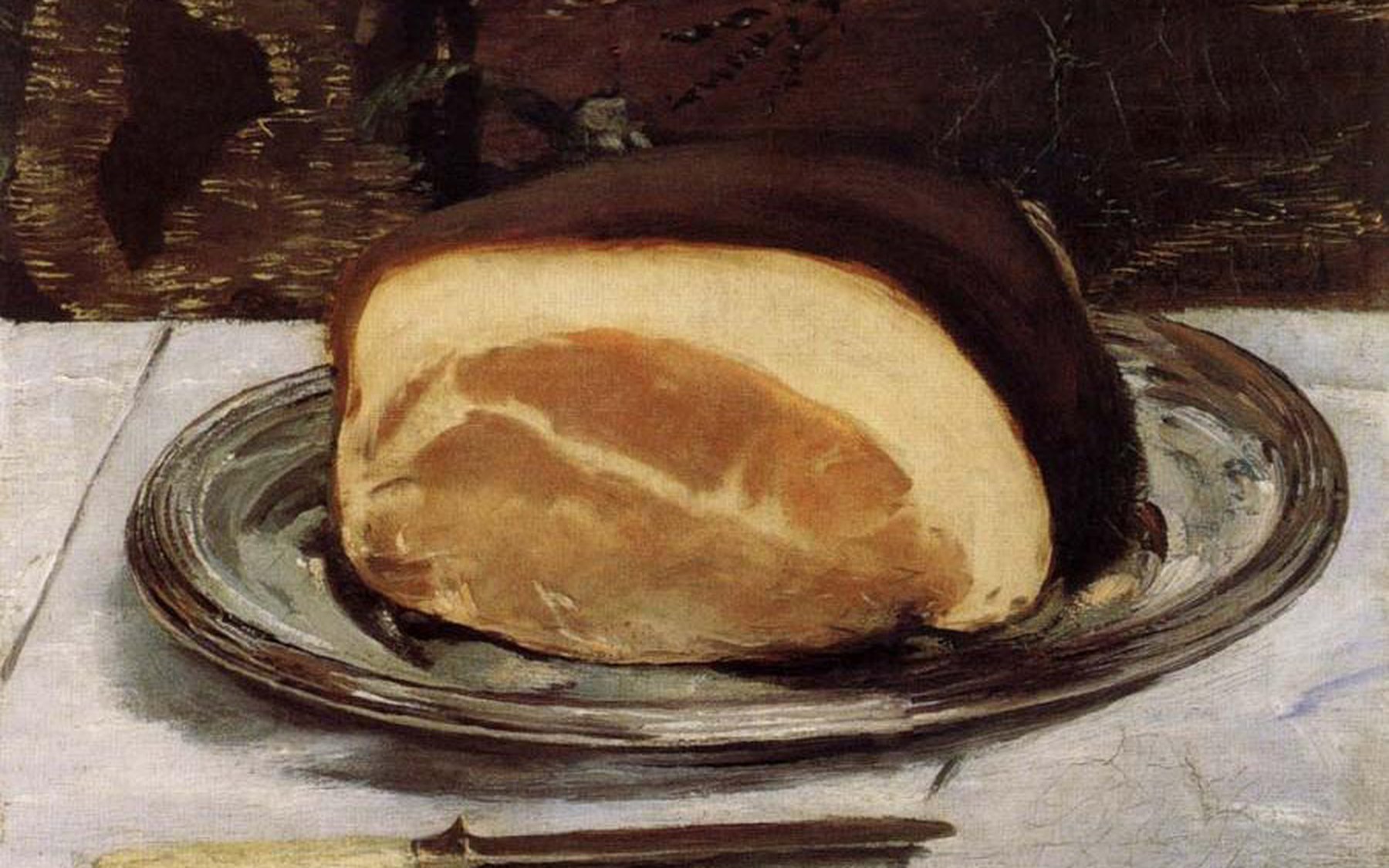
Édouard Manet, The Ham, c. 1875; public-domain image via Wikimedia Commons. Cropped for TheHistoryOfArt.org. · Image source
What the display brings together
Drawing Inspiration is a focused display of thirteen drawings at The Burrell Collection in Glasgow. The official event record names Jean-Auguste-Dominique Ingres, Edouard Manet and Jean-Francois Millet among the artists and describes drawing as a way of seeing, making and reflecting on the world. That is the right scale for the page: this is not a large survey or a complete history of European draftsmanship, but a small group designed for slow comparison.
The public listing did not provide a complete checklist when this guide was prepared. That limits object-by-object claims, but it does not make the exhibition slight. Drawing often reveals decisions more directly than a finished painting. A line can search for a contour, change direction, darken under repeated pressure or stop before a form is resolved. Blank paper remains active. Erasure and correction can record thought rather than conceal it.
Drawing as observation and thought
The exhibition's three-part framing - seeing, making and reflecting - helps distinguish several purposes that can coexist on one sheet. An artist may draw to understand a body, landscape or object; to test a composition before working in another medium; to preserve a fleeting pose; to communicate an idea to a workshop; or to create an independent work intended for close viewing. Without a checklist, it would be unsafe to assign those functions to particular exhibited sheets, but they provide useful questions in the gallery.
Start with pressure and pace. A careful contour and a rapid notation ask for different kinds of attention. Look for repeated lines around a hand or face, changes in the angle of a limb, blocks of shading and areas left untouched. These marks can show an artist negotiating between what is seen, what is remembered and what the image needs.
Paper also matters. Its colour, texture, size and condition shape the drawing, while chalk, graphite, ink or wash produce different relationships between line and tone. Museum lighting for works on paper is usually restrained because the materials are vulnerable. The lower light is part of the conservation environment, not a barrier to the experience; allow time for the eye to adjust.
Three named artists, three useful routes
Ingres is a natural route into the authority of line. His drawings are often associated with controlled contour, precise observation and the tension between an apparently effortless outline and long discipline. Rather than looking only for polish, notice where a line grows firmer, where a face is described with minimal means and where fabric or background receives less attention than the sitter.
Millet opens a different path. His art is closely associated with rural life, labour and repeated observation of bodies at work. In a drawing context, the important question is not simply whether the subject is a peasant or landscape, but how posture, weight and gesture make labour legible. A few strokes can establish the bend of a back or the relation between a figure and the ground.
Manet can lead toward modern life and economy of notation. His drawings and works on paper often make the viewer aware of selection: which features need to be fixed, which can remain suggestive and how a modern subject can be conveyed without exhaustive finish. Any specific sheet in this display must be checked against the official label, but the broader comparison is productive. Ingres, Millet and Manet show that drawing is not one style shared by successive generations. It is a flexible practice shaped by different artistic problems.
How to look at thirteen works
A small display rewards a second circuit. On the first pass, establish the range of scale, media and subject. On the second, choose two drawings that solve a similar problem differently: two figures, two uses of shadow or two ways of describing space. Compare the distance at which they become legible. A drawing that looks sparse from across the room may become dense at close range, while a highly finished sheet may depend on its overall silhouette.
Labels can clarify artist, date, material and function, but look before reading everything. Ask where the eye enters the page, which mark carries the greatest weight and whether the sheet feels complete. Then use the label to test that impression. If a drawing is preparatory, consider what remains unresolved; if it is independent, ask how it creates a finished experience without the colour and scale of painting.
Planning the visit
Drawing Inspiration runs from 1 September to 26 November 2026 and the official listing describes it as free, with a viewing slot to be booked. Check Glasgow Life immediately before travelling because availability and museum opening arrangements can change. The display can sit naturally within a first Burrell visit, but the wider collection deserves several hours in its own right.
For a coherent route, pair the drawings with works on paper and nineteenth-century French art elsewhere in the museum, then use the visible stores and making-focused displays to think about conservation and material. The Glasgow art guide treats Pollok Country Park as a substantial half-day rather than a quick add-on to a city-centre itinerary.
How to use this page
Because Drawing Inspiration is upcoming, the page should help a reader decide whether to plan a future trip or watch for reviews and final venue details. The most reliable fixed details are the venue, dates, broad subject, media and official source link. The interpretive notes help place the exhibition in art-historical context: what kind of show it is, why it may matter, and which artists or topics are worth exploring next.
It is listed as a recommended exhibition rather than a headline major show, so the main value is a focused subject, strong venue context or a useful route into related artists.
Looking notes
For a visitor, the most useful approach is to look for patterns rather than isolated highlights. With Jean-Auguste-Dominique Ingres, Edouard Manet, Jean-Francois Millet, drawing as observation, drawing as reflection, ask how the exhibition frames the subject: as biography, period survey, focused theme, collection display or reassessment. With media such as drawing, works on paper, pay attention to changes of scale, surface, lighting, material and display sequence, because those details are often lost in online listings.
The guide avoids over-specific claims where the public source does not yet support them. If a museum has not published a full object list, it is better to stay clear about what is confirmed than to imply certainty.
Who it is best for
Drawing Inspiration is most likely to help readers who are already interested in Jean-Auguste-Dominique Ingres, Edouard Manet, Jean-Francois Millet, drawing as observation, and drawing as reflection, but it may also be useful for visitors building a wider route around The Burrell Collection in Glasgow. If time is limited, use this page to decide whether the subject fills a gap in your knowledge, whether it connects to artists you already follow, and whether the official venue information makes the visit practical.