by Tom Gurney
Tom Gurney BSc (Hons) is an art history expert with over 20 years experience
Published on July 14, 2026 / Updated on July 16, 2026
Email: tomgurney1@gmail.com / Phone: +447429011000
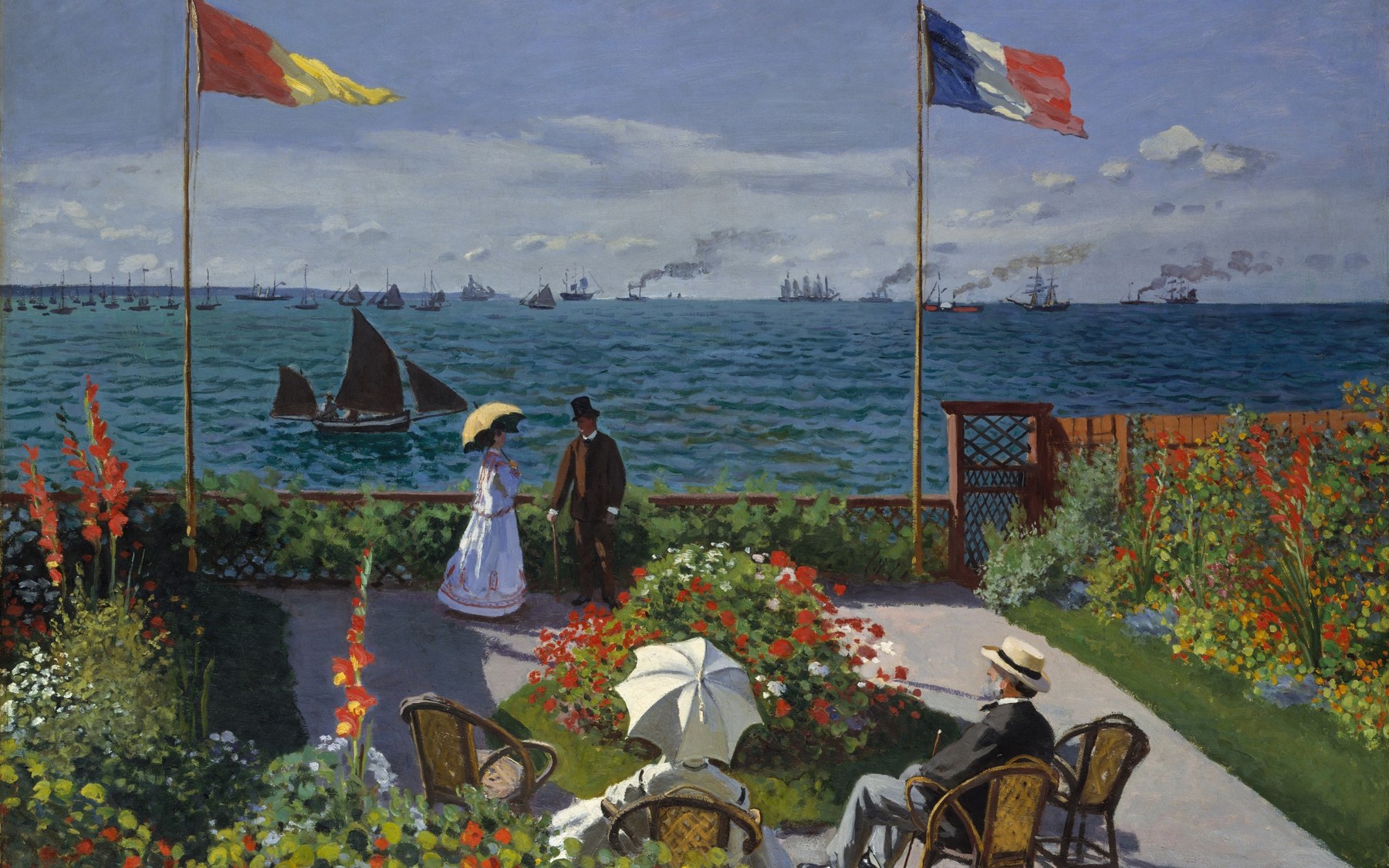
Claude Monet - Jardin à Sainte-Adresse.jpg by Claude Monet; Public domain via Wikimedia Commons. Cropped for TheHistoryOfArt.org. · Image source
What to expect
French Impressionism from the Museum of Fine Arts Boston was a National Gallery of Victoria exhibition at NGV International in Melbourne, shown from 6 June to 5 October 2025 as part of Melbourne Winter Masterpieces. Because it has now closed, this page is an archive record rather than a current ticket page. It remains important because it gives the new Australia cluster a strong first art-historical anchor: a major Impressionist exhibition developed by the Museum of Fine Arts, Boston, in partnership with NGV.
The official NGV archive states that the exhibition presented more than 100 paintings from MFA Boston's Impressionist holdings. It charted the trajectory of Impressionism and Post-Impressionism in late nineteenth-century France, bringing together works by Claude Monet, Pierre-Auguste Renoir, Edgar Degas, Camille Pissarro, Edouard Manet, Mary Cassatt, Berthe Morisot, Paul Signac and Alfred Sisley. That scale makes the page more than a local Melbourne archive listing. It is a record of a major international loan project built from one of the most important American Impressionist collections.
NGV's page describes the exhibition as moving through ten thematic sections and using scenography inspired by grand nineteenth-century East Coast American collectors' residences, as well as spaces loved by the artists themselves. That is a useful curatorial frame. The show was not only about French paintings in Australia. It was also about how French modern art entered American collections, how private interiors shaped the experience of Impressionist painting, and how Melbourne audiences encountered those works through NGV's exhibition design.
Why it mattered
The strongest reason to preserve this page is that it starts the Australia section with a globally legible but locally specific exhibition. Impressionism is one of the clearest through-lines in the current museums batch, already connected to Orsay, the National Gallery in London, MFA Boston, LACMA and the Art Institute of Chicago. NGV adds a southern-hemisphere route into that same story. The exhibition shows how a French avant-garde movement, collected in Boston, could become a Melbourne Winter Masterpieces event.
The MFA Boston partnership is especially important. American collectors helped shape the survival, fame and display of Impressionist art outside France. NGV's archive names East Coast American collector interiors as part of the exhibition's scenographic inspiration. That lets the page connect artistic innovation with collecting culture. Monet, Renoir or Cassatt do not arrive as isolated geniuses only. They arrive through salons, independent exhibitions, dealers, collectors, museums and international loans.
The exhibition also mattered because it brought women Impressionists into the visible artist list. Mary Cassatt and Berthe Morisot are not supporting names in this context. They are central to any serious account of Impressionism's social and formal range. Cassatt's printmaking, domestic subjects and transatlantic life, and Morisot's handling of private space, leisure and modern womanhood, prevent the exhibition from being reduced to Monet and Renoir alone.
What to look for in the archive record
Begin with the difference between Impressionism and Post-Impressionism. NGV framed the show around both, so a reader should expect a progression rather than a single style label. Impressionism often centres on outdoor light, broken brushwork, modern leisure, urban change and direct sensory experience. Post-Impressionism asks what happens next: structure, colour intensity, symbolic charge, optical systems and more self-conscious pictorial construction.
Then compare subject types. Landscape, city views, portraits, studio scenes, interiors, theatre, water, gardens and domestic moments each ask different things of paint. A river scene can test reflection and atmosphere. A portrait can test social presence. A theatre or urban scene can make modern looking feel public and unstable. An interior can turn collecting, taste and private life into part of the painting's meaning.
Brushwork is another route. The artists named by NGV do not all paint in the same way. Monet's surfaces, Degas's cropping, Pissarro's structure, Renoir's figure groups, Manet's modern directness, Cassatt's compositional intelligence, Morisot's touch and Signac's later colour systems create different answers to the problem of modern painting. A useful archive page should keep that variety alive.
Finally, think about Melbourne as the viewing context. A major Impressionist exhibition in Australia changes geography. It asks how European and American collection histories are received by audiences far from the original Parisian sites and Boston collector homes. That distance is part of the exhibition's value.
How it fits Melbourne and Australia
This page adds Australia to the guide through a concrete venue and exhibition rather than a generic country summary. NGV International becomes the first Australian museum page in the section, and Melbourne becomes the first Australian location page. That is the right scale for the initial expansion: one major venue, one strong archive exhibition, and a foundation for later Australian art, design, Indigenous art and wider Melbourne coverage.
For current travel planning, the exhibition has ended. Readers should not use this page for tickets or opening hours. Its value is retrospective and connective: it shows NGV's ability to host major international loan exhibitions and gives the Melbourne page a serious art-historical starting point. Future live NGV exhibitions can build on this foundation.
The page has useful reader interest for Monet, Renoir, Degas, Pissarro, Manet, Cassatt, Morisot, Signac, Sisley, Impressionism, Post-Impressionism, collecting history, MFA Boston, NGV International and the movement of French modern art through American and Australian museums.
Image and rights note
The underlying Impressionist works are largely historic, so public-domain routes may be possible. However, the NGV archive uses MFA Boston photography and exhibition imagery with explicit rights language, and catalogue, lender and press images may carry separate restrictions. This page remains image-free until a reviewed source and credit route is selected.
How to use this page
Because French Impressionism from the Museum of Fine Arts Boston has ended, the page should function as an archive record and a route into related artists, works and venues. The most reliable fixed details are the venue, dates, broad subject, media and official source link. The interpretive notes help place the exhibition in art-historical context: what kind of show it is, why it may matter, and which artists or topics are worth exploring next.
It is marked as a major exhibition in this guide, so it should be useful for readers choosing between several possible museum visits.
Looking notes
For a visitor, the most useful approach is to look for patterns rather than isolated highlights. With Museum of Fine Arts Boston, National Gallery of Victoria, Claude Monet, Pierre-Auguste Renoir, Edgar Degas, Camille Pissarro, Édouard Manet, Mary Cassatt, Berthe Morisot, Paul Signac, Alfred Sisley, Impressionism, Post-Impressionism, East Coast American collectors, Melbourne Winter Masterpieces, ask how the exhibition frames the subject: as biography, period survey, focused theme, collection display or reassessment. With media such as painting, impressionist painting, post-impressionist painting, landscape painting, portraiture, urban scene, studio scene, printmaking context, pay attention to changes of scale, surface, lighting, material and display sequence, because those details are often lost in online listings.
The guide avoids over-specific claims where the public source does not yet support them. If a museum has not published a full object list, it is better to stay clear about what is confirmed than to imply certainty.
Who it is best for
French Impressionism from the Museum of Fine Arts Boston is most likely to help readers who are already interested in Museum of Fine Arts Boston, National Gallery of Victoria, Claude Monet, Pierre-Auguste Renoir, Edgar Degas, Camille Pissarro, Édouard Manet, Mary Cassatt, Berthe Morisot, Paul Signac, Alfred Sisley, Impressionism, Post-Impressionism, East Coast American collectors, and Melbourne Winter Masterpieces, but it may also be useful for visitors building a wider route around National Gallery of Victoria in Melbourne. If time is limited, use this page to decide whether the subject fills a gap in your knowledge, whether it connects to artists you already follow, and whether the official venue information makes the visit practical.