


 by Tom Gurney
Tom Gurney BSc (Hons) is an art history expert with over 20 years experience
Published on July 14, 2026 / Updated on July 16, 2026
Email: tomgurney1@gmail.com / Phone: +447429011000
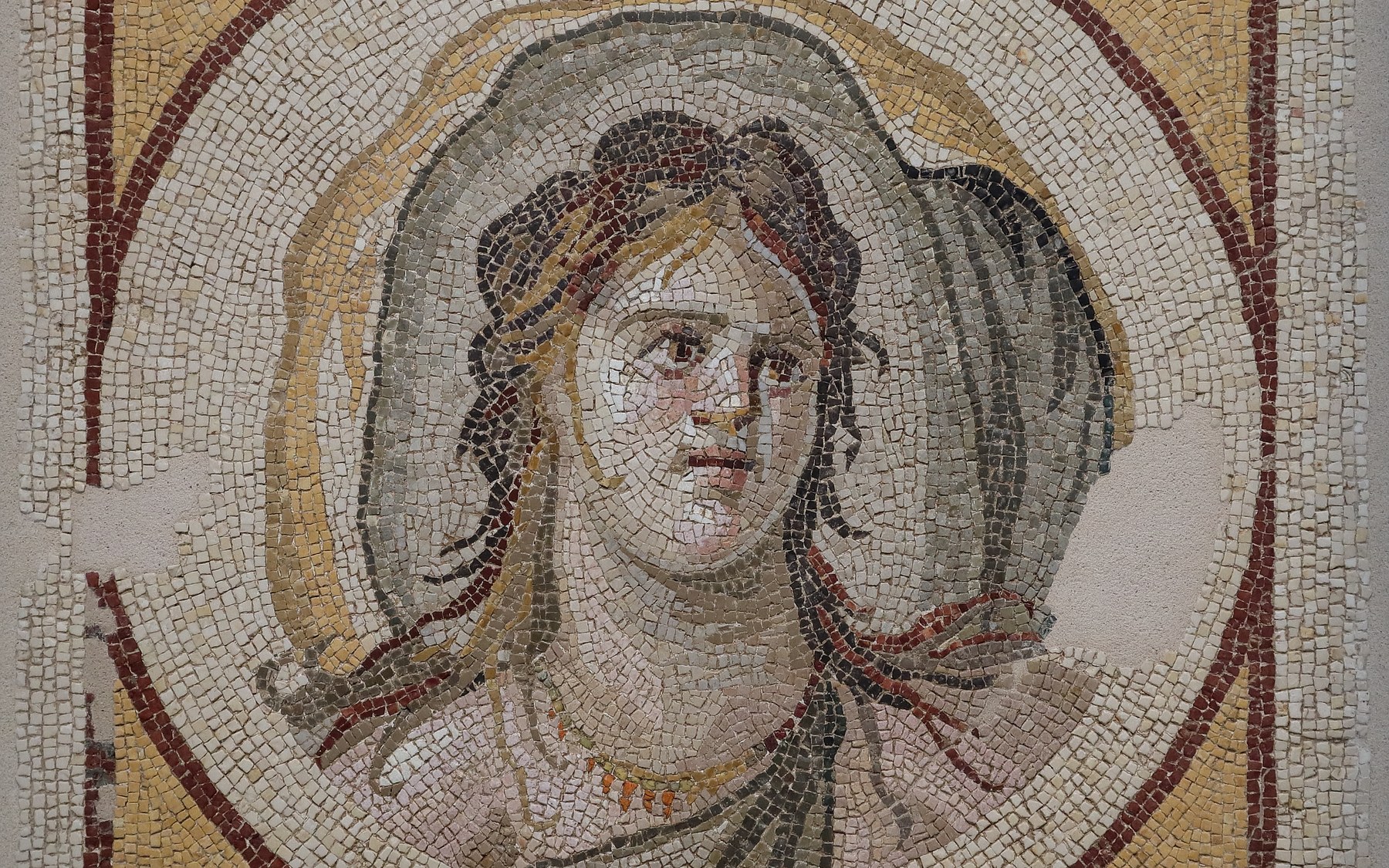
Personnification féminine - mosaïque (MND 1951 Ma 3460) - Louvre.jpg by Unknown creator; Public domain via Wikimedia Commons. Cropped for TheHistoryOfArt.org. · Image source
What to expect
The Mediterranean World: The Collection from the Louvre was a Tokyo Metropolitan Art Museum exhibition in Ueno Park, shown from 20 July to 23 September 2013. Because it has long since closed, this page is an archive record rather than a current visit-planning page. It is included because the official Tokyo Metropolitan Art Museum archive gives the Japan cluster a verified Louvre collection route, and because no current official Tokyo Metropolitan Art Museum page for a separate Louvre Egypt exhibition could be confirmed.
The official museum page describes the exhibition as a special presentation of more than 200 works from the Louvre, introducing the Mediterranean's historical and geographical breadth over 4,000 years. The title is broader than Egypt, and the public page should respect that. It was not an Egypt-only show. It presented the Mediterranean as a zone of crossing, exchange and movement between western and eastern cultures, using objects from all eight Louvre departments: sculpture, craft, painting and other media gathered into a wide civilisational story.
Ancient Egypt still matters to the record. The Tokyo archive notes a lecture on ancient Egyptian art by Jean-Luc Bovot of the Louvre, while Louvre object histories and collection context show how Egyptian material belongs within larger Mediterranean routes. The page therefore works best as a careful Louvre-in-Tokyo archive: useful for ancient Mediterranean and Egypt-related context, but not mislabelled as a dedicated Louvre Egypt exhibition.
Why it mattered
The strongest reason to preserve this page is that it shows how a major European collection travelled to a Japanese public museum before the current Orsay/Tokyo partnership. Tokyo Metropolitan Art Museum is now entering the guide through What a Wonderful World, an upcoming Orsay collection exhibition. The 2013 Louvre archive gives that relationship a longer background. Ueno was already a place where French national collections could be translated into a Japanese exhibition context.
The exhibition also matters because it presented the Louvre beyond the familiar painting-museum stereotype. The Louvre is often reduced internationally to the Mona Lisa, French royal history or the great Paris palace. A Mediterranean collection exhibition changes the emphasis. It points toward archaeology, antiquities, Islamic art, decorative arts, sculpture, trade, conquest, religion, diplomacy and material culture. That makes it a better foundation for Tokyo coverage than a famous-picture route alone.
The official page's stress on all eight Louvre departments is especially useful. A visitor encountering a museum through special exhibitions can easily forget that large collections are not divided by modern national stories only. The Mediterranean cuts across Egypt, Greece, Rome, the Near East, Islam, Europe and North Africa. It is a sea, a trade route, a border, a meeting place and a historical engine. An exhibition built from the Louvre can show that complexity through objects rather than through maps alone.
What to look for in the archive record
Begin with exchange. The Mediterranean is not a single civilisation but a region of contact. Objects move, motifs migrate, materials travel and political power changes hands. A sculpture, vessel, textile, painting or ornament can carry more than one cultural history. The useful question is not only where an object was made, but how it participated in routes of trade, religion, conquest, taste or collecting.
Then look at the role of the Louvre itself. A Louvre exhibition in Tokyo does not simply present Mediterranean history; it presents Mediterranean history as gathered, classified and interpreted by a French national museum. That matters. European museums hold ancient and non-European material through histories of excavation, scholarship, diplomacy, acquisition and empire. A good archive page should leave room for those questions without turning a visitor guide into a provenance essay.
Ancient Egypt should be treated as part of that larger story. Egyptian material often arrives in popular exhibitions through monumentality, tombs, hieroglyphs, mummies or the idea of mystery. The more useful route is to ask how Egyptian objects relate to the Mediterranean world: Nile and sea routes, Greek and Roman Egypt, religious exchange, luxury materials, funerary traditions and later European Egyptology. The Louvre's Egyptian department is central to that history, but it is not the whole exhibition.
Finally, consider the public programme. The official Tokyo page lists lectures on the Louvre, the Mediterranean and ancient Egyptian art. That suggests the show was not only a display of attractive objects, but an educational project. For a Japanese audience, the exhibition offered a concentrated encounter with the Louvre as a global collection, while also connecting to music, lectures and cultural diplomacy around France and the Mediterranean.
How it fits Tokyo and Japan
This page strengthens Tokyo Metropolitan Art Museum as a new venue in the guide by giving it an archived Louvre route alongside the upcoming Orsay route. Together, those records show the museum as a platform for major international collection exhibitions. That is a useful identity for the page: not a collecting museum summary yet, but a venue guide shaped by significant temporary exhibitions in Ueno Park.
For Tokyo planning today, the 2013 exhibition is historical only. It should not be used for tickets, opening hours or live display planning. Its value is contextual: it helps readers see that Tokyo Metropolitan Art Museum has a history of hosting major loan exhibitions from European museums, and it gives the Japan country page a stronger archive foundation than one upcoming Orsay page alone.
The page also has future reader interest for the Louvre, ancient Egypt, Mediterranean art, Greek and Roman antiquities, Islamic art, museum collecting, cultural exchange, Ueno Park and international travelling exhibitions. It can support future evergreen features on how artistic ideas and objects move across boundaries, especially when the guide later adds more Japanese museum pages.
Image and rights note
The underlying ancient and historic objects are generally promising from an artist-copyright perspective, but exhibition images are not automatically reusable. Tokyo Metropolitan Art Museum poster images, Louvre object photographs, RMN or GrandPalaisRmn distribution credits, catalogue images and lender photography all require source and credit review. This page remains image-free until a reviewed source route is selected.
How to use this page
Because The Mediterranean World: The Collection from the Louvre has ended, the page should function as an archive record and a route into related artists, works and venues. The most reliable fixed details are the venue, dates, broad subject, media and official source link. The interpretive notes help place the exhibition in art-historical context: what kind of show it is, why it may matter, and which artists or topics are worth exploring next.
It is marked as a major exhibition in this guide, so it should be useful for readers choosing between several possible museum visits.
Looking notes
For a visitor, the most useful approach is to look for patterns rather than isolated highlights. With Musée du Louvre, Mediterranean world, ancient Egypt, ancient Greece, ancient Rome, Islamic art, decorative arts, Jean-Luc Martinez, Jean-Luc Bovot, Tokyo Metropolitan Art Museum, cultural exchange, Louvre collections in Japan, ask how the exhibition frames the subject: as biography, period survey, focused theme, collection display or reassessment. With media such as sculpture, decorative arts, painting, craft, antiquities, ancient mediterranean objects, islamic art, museum collection exhibition, pay attention to changes of scale, surface, lighting, material and display sequence, because those details are often lost in online listings.
The guide avoids over-specific claims where the public source does not yet support them. If a museum has not published a full object list, it is better to stay clear about what is confirmed than to imply certainty.
Who it is best for
The Mediterranean World: The Collection from the Louvre is most likely to help readers who are already interested in Musée du Louvre, Mediterranean world, ancient Egypt, ancient Greece, ancient Rome, Islamic art, decorative arts, Jean-Luc Martinez, Jean-Luc Bovot, Tokyo Metropolitan Art Museum, cultural exchange, and Louvre collections in Japan, but it may also be useful for visitors building a wider route around Tokyo Metropolitan Art Museum in Tokyo. If time is limited, use this page to decide whether the subject fills a gap in your knowledge, whether it connects to artists you already follow, and whether the official venue information makes the visit practical.
_-_Louvre.jpg)