by Tom Gurney
Tom Gurney BSc (Hons) is an art history expert with over 20 years experience
Published on July 14, 2026 / Updated on July 16, 2026
Email: tomgurney1@gmail.com / Phone: +447429011000
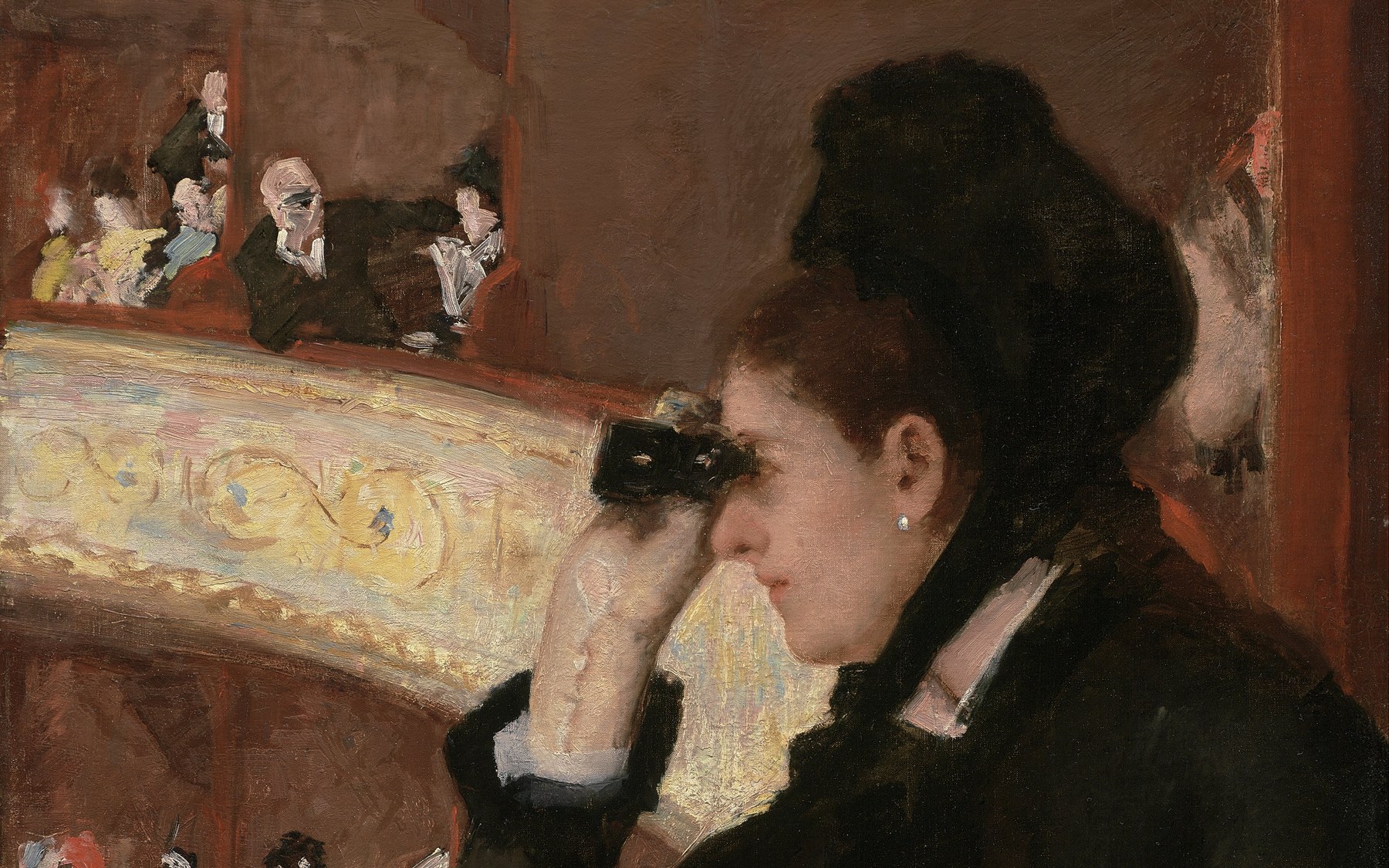
Mary Stevenson Cassatt - In the Loge - Google Art Project.jpg by Mary Cassatt; Public domain via Wikimedia Commons. Cropped for TheHistoryOfArt.org. · Image source
What to expect
Mary Cassatt: Being independent is an upcoming Musée d'Orsay exhibition in Paris, scheduled from 6 October 2026 to 31 January 2027. It marks the centenary of Cassatt's death and, according to Orsay's dedicated page, will be the first major exhibition in France's national museums devoted to her. That fact alone gives the page a strong reason to exist. Cassatt was a central figure in Impressionism, lived in France for decades, and helped shape a transatlantic modern art world, yet French institutional recognition on this scale has been slow to arrive.
The exhibition is substantial. Orsay states that it comprises almost 80 paintings, pastels and prints covering the whole of Cassatt's career. It also draws on unpublished letters and previously underused sources, while bringing together rarely shown works from European public and private collections and American paintings and pastels seldom seen outside the United States. That makes the exhibition more than a familiar Impressionist name attached to a seasonal show. It is a major reassessment of how Cassatt built an independent identity across Europe and America.
The title's idea of independence should be read broadly. Orsay quotes Cassatt's proud statement that she could live alone and loved to work. The exhibition uses a chrono-thematic structure to examine independence as a guiding principle: artistic independence, financial and domestic independence, independence from narrow gender expectations, and independence from any single national label. Cassatt described herself as American, but made her career in France, studied Old Masters in Europe, exhibited with the Impressionists and helped American collectors understand modern French painting.
Why go
The strongest reason to go is that Cassatt is still too often softened into one subject: mothers and children. Those images are important, but they are not sentimental decorations. They are formally ambitious works about touch, looking, intimacy, labour, privacy, bodies and the social life of women. A major Orsay exhibition can place those pictures beside portraits, prints, early works and later experiments so that the familiar subjects become more demanding.
Cassatt's independence also changes the standard Impressionist story. She was not simply an American visitor welcomed into a Parisian circle. She became an active member and pillar of the Impressionist group, worked closely around Degas, developed remarkable printmaking, and built a life in which professional work was not secondary to domestic expectation. That matters because Impressionism is often narrated through male sociability: cafés, studios, dealers, exhibitions and arguments. Cassatt forces a different view of modernity, one built from women's spaces, transatlantic mobility, private work and public ambition.
The transatlantic scale is another reason to prioritise the show. Orsay's page notes collaboration with the National Portrait Gallery in London and the Museum of Fine Arts in Boston. That fits the wider exhibition batch neatly, because the guide already includes Cassatt's Chicago centenary exhibition and other US museum routes. The Paris page can therefore become the European anchor for Cassatt in this cluster, while Boston and Chicago show how her reputation and work continue to move across American collections.
What to look for
Begin with chronology, but do not let biography flatten the art. Cassatt's early works and portraits of people close to her can show how travel, family, social position and Old Master study shaped her. Then look for how she transforms those foundations. Independence is not only a theme in the labels; it should be visible in decisions about format, viewpoint, cropping, colour, posture, print technique and the refusal to make women merely ornamental.
Then compare paintings, pastels and prints. Cassatt's colour prints are essential to understanding her experimental intelligence. They use flattened space, pattern, cropping and tonal control in ways often connected to Japanese printmaking, while remaining alert to daily acts such as bathing, dressing, reading or caring for a child. In a museum like Orsay, where painting can easily dominate, the prints should be treated as central rather than supplementary.
Look closely at the mother-and-child works. The best route is to ask how Cassatt organises touch and attention. A mother may hold a child, wash a child, support a child or look away from the viewer, but the painting is rarely only about sweetness. It may be about bodily labour, concentration, fatigue, protection, class, intimacy or the construction of private space. Cassatt often turns an apparently everyday subject into a sophisticated problem of composition.
The exhibition should also make viewers think about collecting and geography. Works from American collections rarely shown outside the United States will return to Paris, where Cassatt made much of her career. That movement matters. It can show how an artist's reputation is divided between places: French modernism, American identity, European training, US collecting and modern museum memory.
How it fits Orsay and Paris
This page strengthens the Musée d'Orsay cluster because Cassatt belongs naturally to the museum's core story while also challenging it. Orsay is one of the great museums for Impressionism and nineteenth-century modernity, but a Cassatt exhibition asks who gets to stand at the centre of that story. It adds gender, print culture, American identity and transatlantic collecting to the usual route through Manet, Monet, Renoir, Degas, Cézanne and Van Gogh.
For Paris planning, this is likely to be one of Orsay's major autumn-winter 2026 exhibitions. It should appeal to readers interested in Impressionism, women artists, American art in Europe, works on paper, intimate modern life and the social structures behind artistic independence. Readers should check the Orsay source before travelling for tickets, timed entry, access arrangements, catalogue details and any object rotations.
The page also has useful reader interest. It can later connect to Mary Cassatt, Impressionism, Degas, Renoir, Paris, printmaking, Japanese influence, mother-and-child imagery, women artists and transatlantic collecting. Those links should be added only where the destination page gives readers a real next step.
Image and rights note
The image prospects are promising because Cassatt died in 1926 and many underlying works are historic. The Orsay page currently uses Jeune fille au jardin with an RMN-Grand Palais credit, which should not be reused casually without reviewing terms. Partner and lender images may have their own restrictions. This page remains image-free until a reviewed source and credit route is selected, and any representative Cassatt image should not be described as an exhibited work unless the official source or object record confirms it.
How to use this page
Because Mary Cassatt: Being independent is upcoming, the page should help a reader decide whether to plan a future trip or watch for reviews and final venue details. The most reliable fixed details are the venue, dates, broad subject, media and official source link. The interpretive notes help place the exhibition in art-historical context: what kind of show it is, why it may matter, and which artists or topics are worth exploring next.
It is marked as a major exhibition in this guide, so it should be useful for readers choosing between several possible museum visits.
Looking notes
For a visitor, the most useful approach is to look for patterns rather than isolated highlights. With Mary Cassatt, Impressionism, American women artists, transatlantic modernity, independence, Degas, Old Masters, mothers and children, colour prints, National Portrait Gallery, MFA Boston, ask how the exhibition frames the subject: as biography, period survey, focused theme, collection display or reassessment. With media such as painting, pastel, print, works on paper, portraiture, impressionist painting, colour print, pay attention to changes of scale, surface, lighting, material and display sequence, because those details are often lost in online listings.
The guide avoids over-specific claims where the public source does not yet support them. If a museum has not published a full object list, it is better to stay clear about what is confirmed than to imply certainty.
Who it is best for
Mary Cassatt: Being independent is most likely to help readers who are already interested in Mary Cassatt, Impressionism, American women artists, transatlantic modernity, independence, Degas, Old Masters, mothers and children, colour prints, National Portrait Gallery, and MFA Boston, but it may also be useful for visitors building a wider route around Musée d'Orsay in Paris. If time is limited, use this page to decide whether the subject fills a gap in your knowledge, whether it connects to artists you already follow, and whether the official venue information makes the visit practical.