by Tom Gurney
Tom Gurney BSc (Hons) is an art history expert with over 20 years experience
Published on July 14, 2026 / Updated on July 16, 2026
Email: tomgurney1@gmail.com / Phone: +447429011000
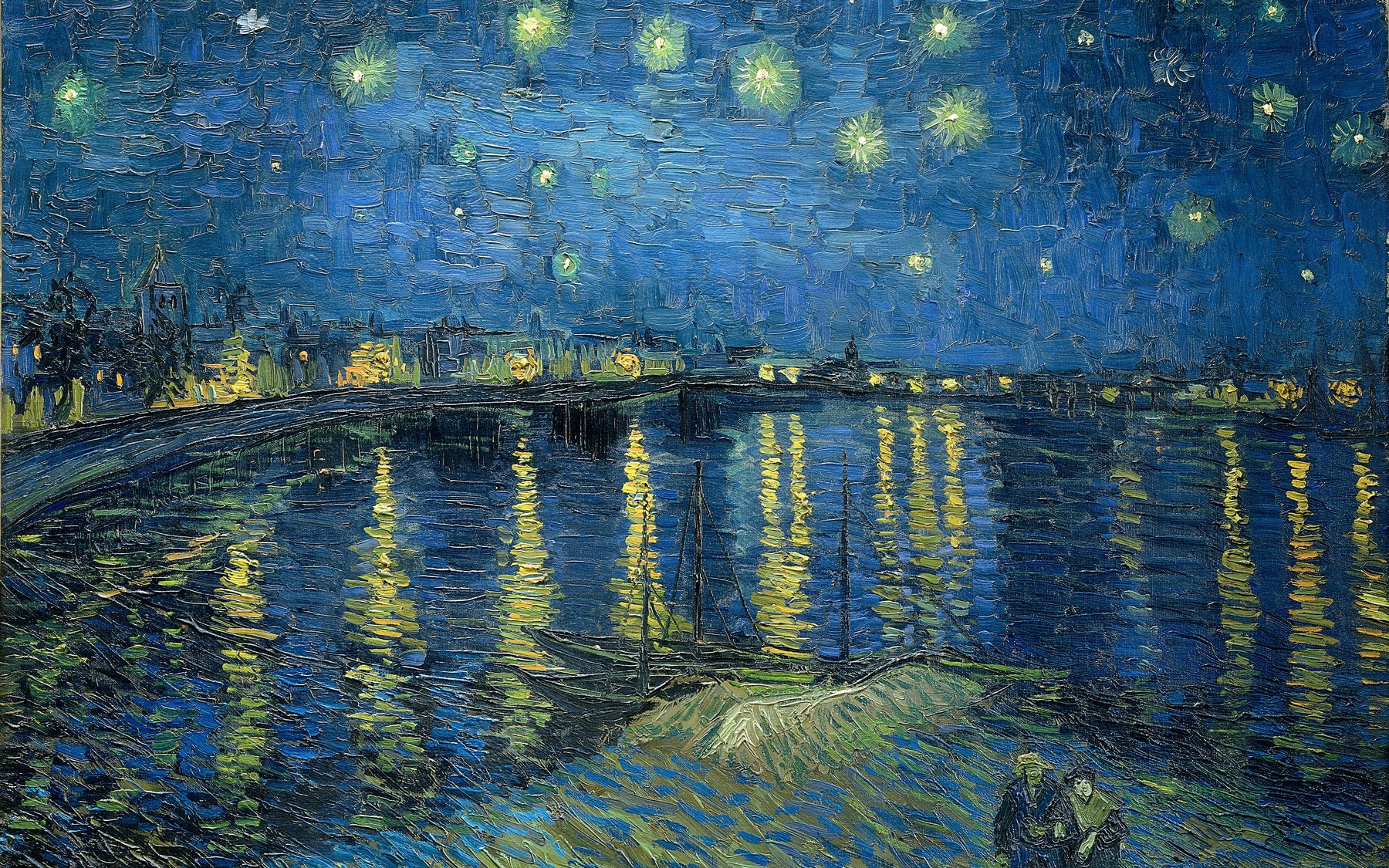
Starry Night Over the Rhone.jpg by Vincent van Gogh; Public domain via Wikimedia Commons. Cropped for TheHistoryOfArt.org. · Image source
What to expect
What a Wonderful World: Masterpieces from the Musée d'Orsay is an upcoming exhibition at Tokyo Metropolitan Art Museum, scheduled from 14 November 2026 to 28 March 2027. The official Musée d'Orsay page presents it as an off-site exhibition in partnership with Tokyo Metropolitan Art Museum, with booking handled through the Tokyo venue. That distinction matters for planning: this is an Orsay collection project, but the visit belongs in Tokyo, in Ueno Park, not in Paris.
The exhibition takes Musée d'Orsay masterpieces and frames them around the second half of the nineteenth century, when industrial change, shifting social customs and new urban experiences transformed modern life. Orsay's page places the show around themes such as the industrial revolution, urban renewal, leisure, interiors and Parisian nightlife. The title sounds broad and inviting, but the underlying subject is precise: how artists turned the modern world into images of work, pleasure, uncertainty, theatre, intimacy and spectacle.
The exhibition's public anchor is Vincent van Gogh's La nuit étoilée, or Starry Night, from the Musée d'Orsay collection. Orsay presents the show as a rare opportunity in Japan to see selected works from its holdings. For this guide, the page is valuable not because it simply exports famous French art abroad, but because it lets the Japan cluster begin with a genuine cross-border museum event: a Paris collection interpreted for a Tokyo audience.
Why it matters
The strongest reason to include this page is that it widens the whole museums and exhibitions section geographically while staying close to the batch's art-historical centre. Orsay is one of the core venues in the guide, and nineteenth-century modernity is one of the strongest existing themes. By following Orsay material to Tokyo, the page creates a Japan entry point without forcing a thin local page or a rights-risky contemporary show.
The show also provides a useful way into modern life as a subject. The industrial revolution and Haussmann's rebuilding of Paris did not only change streets and transport. They changed the conditions of looking. Railway stations, boulevards, cafés, theatres, private interiors and urban crowds became subjects in their own right. A painting, photograph, sculpture or decorative object could register new rhythms of movement, new habits of leisure and new forms of public identity.
Orsay's own source names a wide range of media: paintings, sculptures, decorative arts and photography. That is important because modern life was never only a painting problem. Interiors were made through furniture, textiles, objects, lighting and taste. Public leisure was shaped by architecture, costume, print culture and performance. Photography changed how cities and people could be recorded. The exhibition should help visitors see nineteenth-century art as a network of media rather than a sequence of famous canvases.
What to look for
Begin with the relation between joy and change. The title's "wonderful world" should not be read as simple optimism. Nineteenth-century modernity produced excitement, movement, consumption, theatricality and new forms of pleasure, but it also produced displacement, crowding, anonymity and sharper social contrasts. A useful visit should ask how each work handles that tension. Is the modern world celebrated, observed, staged, softened or made strange?
Then look for setting. Orsay's themes point toward railways, renewed urban spaces, interiors and nightlife. These are not neutral backgrounds. A railway station changes time and distance. A boulevard changes public behaviour. A theatre turns looking into entertainment and social display. A private interior can reveal class, gender, collecting and taste. If the exhibition places works across those settings, visitors can use the rooms as a map of modern experience.
Van Gogh's La nuit étoilée should be approached carefully. It is a high-recognition anchor, but the page should not reduce the whole exhibition to a single painting. The stronger route is to ask why this particular work can stand for late nineteenth-century intensity: night, movement, colour, emotional pressure, landscape and modern visual memory. Seen among other Orsay works, it may feel less isolated and more connected to a wider world of modern sensation.
Also watch for Tokyo's role as host. A travelling collection exhibition changes meaning when it crosses languages and audiences. French nineteenth-century modernity shown in Japan becomes part of a different museum culture, with different expectations around Impressionism, Van Gogh, Paris and Western art history. That does not make the objects less French; it makes their reception more international.
How it fits Tokyo and Japan
This page adds Japan to the guide through a concrete exhibition, a real venue and a practical city route. Tokyo Metropolitan Art Museum sits in Ueno Park, one of Tokyo's most useful museum areas, so the location page can begin with a compact plan rather than trying to cover the whole city at once. That is the right shape for a first Japan entry: one anchor venue, one strong exhibition and one manageable cultural district.
The exhibition also strengthens Tokyo Metropolitan Art Museum as a venue page because it gives the museum an immediate reason to exist in the guide. It is not yet a full evergreen collection guide, but it can support exhibition-led planning, official-venue links and future improvement into Ueno Park institutions. Later Japan coverage can add Tokyo National Museum, National Museum of Western Art, Mori Art Museum, Artizon Museum or Kyoto routes when verified pages are ready.
The page has strong reader interest for Vincent van Gogh, Musée d'Orsay, Impressionism, Post-Impressionism, Paris modern life, photography, interiors, theatre, railways, Haussmann's Paris, Japanese reception of Western art and international travelling exhibitions. It also fits Tom's future-feature ideas around movement timelines and the movement of artistic ideas across national boundaries.
Image and rights note
The underlying nineteenth-century Orsay works are generally promising for clearly licensed sourcing, but this exhibition still needs careful image review. Van Gogh's La nuit étoilée, Orsay object photographs, GrandPalaisRmn images, Tokyo Metropolitan Art Museum publicity, lender images and exhibition graphics may carry specific source and credit requirements. This page remains image-free until a reviewed source and credit route is selected.
How to use this page
Because What a Wonderful World: Masterpieces from the Musée d'Orsay is upcoming, the page should help a reader decide whether to plan a future trip or watch for reviews and final venue details. The most reliable fixed details are the venue, dates, broad subject, media and official source link. The interpretive notes help place the exhibition in art-historical context: what kind of show it is, why it may matter, and which artists or topics are worth exploring next.
It is marked as a major exhibition in this guide, so it should be useful for readers choosing between several possible museum visits.
Looking notes
For a visitor, the most useful approach is to look for patterns rather than isolated highlights. With Vincent van Gogh, La nuit étoilée, Musée d'Orsay, Tokyo Metropolitan Art Museum, Édouard Papet, Natsuko Ohashi, Degas, Paris Opera, Haussmann, industrial revolution, railway, modern life, joie de vivre, Parisian nightlife, ask how the exhibition frames the subject: as biography, period survey, focused theme, collection display or reassessment. With media such as painting, sculpture, decorative arts, photography, interior scene, modern-life painting, impressionism, urban scene, theater scene, pay attention to changes of scale, surface, lighting, material and display sequence, because those details are often lost in online listings.
The guide avoids over-specific claims where the public source does not yet support them. If a museum has not published a full object list, it is better to stay clear about what is confirmed than to imply certainty.
Who it is best for
What a Wonderful World: Masterpieces from the Musée d'Orsay is most likely to help readers who are already interested in Vincent van Gogh, La nuit étoilée, Musée d'Orsay, Tokyo Metropolitan Art Museum, Édouard Papet, Natsuko Ohashi, Degas, Paris Opera, Haussmann, industrial revolution, railway, modern life, joie de vivre, and Parisian nightlife, but it may also be useful for visitors building a wider route around Tokyo Metropolitan Art Museum in Tokyo. If time is limited, use this page to decide whether the subject fills a gap in your knowledge, whether it connects to artists you already follow, and whether the official venue information makes the visit practical.