 by Tom Gurney
Tom Gurney BSc (Hons) is an art history expert with over 20 years experience
Published on April 30, 2026 / Updated on April 30, 2026
Email: tomgurney1@gmail.com / Phone: +44 7429 011000
Jean-François Millet's Shepherdess Paintings
Jean-François Millet's shepherdess paintings form one of the most poetic parts of his work. These images show young women watching flocks, seated in fields, standing alone in open landscapes or pausing in moments of quiet reflection.
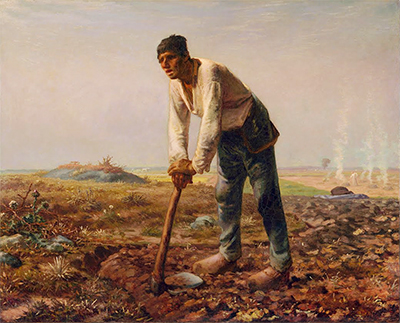
Millet returned to the shepherdess theme because it allowed him to combine rural labour with solitude, stillness and spiritual calm. These works are less physically forceful than Man with a Hoe or The Sower, but they share the same respect for ordinary rural life.
This hub consolidates Millet's many shepherdess-related subjects into one stronger page, helping avoid thin individual pages for closely related works.
- Artist:Jean-François Millet
- Theme:Shepherdesses and rural solitude
- Movement:Realism / Barbizon School
- Subjects:Shepherdesses, flocks, fields, seated rural figures
- Related Themes:Peasant life, rural labour, Barbizon landscape
Why Millet Painted Shepherdesses
The shepherdess was an ideal subject for Millet because she belonged naturally to the rural world while also offering a quieter, more contemplative mood than field labourers or harvesters.
In these works, Millet often shows the figure alone or near a flock. The mood is calm, but not sentimental. The shepherdess remains a worker, responsible for animals and tied to the land.
This balance between labour and contemplation gives the theme its appeal.
Shepherdess and Her Flock
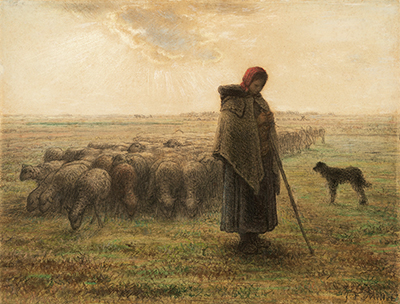
Millet's shepherdess-and-flock compositions typically show a young woman standing or seated in the countryside, surrounded by sheep. The flock creates a broad horizontal rhythm, while the shepherdess often becomes the still vertical centre of the scene.
These paintings connect the human figure directly to the landscape. The shepherdess is not placed in nature as decoration; she belongs to its daily routine.
Seated Shepherdess Paintings
Millet also painted seated shepherdesses, often shown resting on rocks or in open fields. These works emphasise pause and inwardness. The figure may appear tired, thoughtful or absorbed in the quiet of the landscape.
Such paintings are valuable because they show Millet's ability to create emotional depth from minimal action.
Young Shepherdess and La Petite Bergère
Works such as Young Shepherdess and La Petite Bergère focus on youth, rural responsibility and the everyday role of girls and women in agricultural life.
Rather than keeping these as several thin separate pages, they can be discussed together as variations on a recurring Millet theme.
How These Works Fit Millet's Career
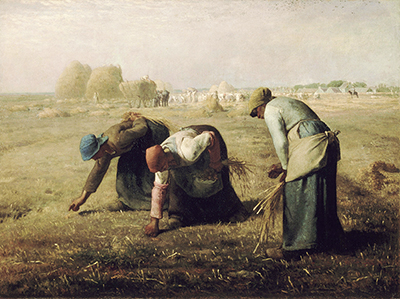
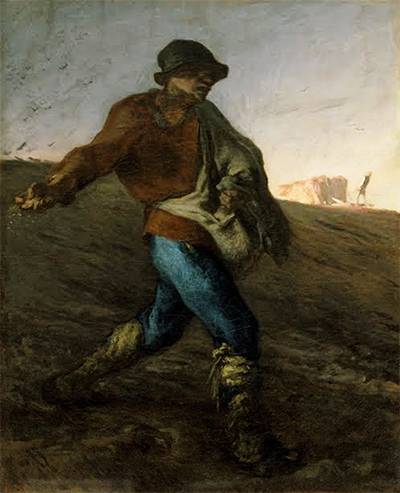
The shepherdess paintings should be understood alongside Millet's broader interest in peasant life. They are quieter than The Gleaners and less dramatic than The Sower, but they contribute to the same artistic vision.
Millet repeatedly showed rural figures as serious, dignified and emotionally meaningful. The shepherdess paintings are among his clearest images of rural solitude.
For related pages, see Millet's peasant life paintings, work and labour paintings and the main Millet paintings hub.
FAQs
Millet painted shepherdesses because they allowed him to explore rural labour, solitude and the quiet dignity of peasant life.
Yes. Millet's shepherdess paintings belong to his Realist interest in ordinary rural people, even when the mood is quieter and more poetic.
They represent rural solitude, responsibility, labour and the close relationship between people, animals and landscape.