 by Tom Gurney
Tom Gurney BSc (Hons) is an art history expert with over 20 years experience
Published on August 14, 2026 / Updated on August 14, 2026
Email: tomgurney1@gmail.com / Phone: +44 7429 011000
Nymphs Finding the Head of Orpheus: Introduction
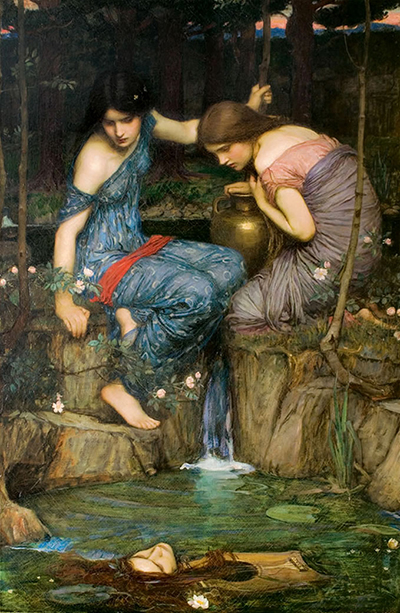
Two nymphs bend over a dark pool. Beneath their faces floats the severed head of Orpheus beside his lyre, still beautiful after the violence that destroyed him. John William Waterhouse does not paint the murder. He paints discovery: the instant when looking recognises that a tranquil surface contains death.
Signed in 1900 and exhibited at the Royal Academy in 1901, Nymphs Finding the Head of Orpheus transforms the end of Ovid's great musician into a scene of quiet shock. The nymphs do not recoil theatrically. They lean closer. Their attention draws the spectator into an image where compassion, horror and aesthetic attraction cannot be separated.
At a Glance
- ArtistJohn William Waterhouse (1849–1917)
- TitleNymphs Finding the Head of Orpheus
- Date1900
- MediumOil on canvas
- DimensionsApproximately 149 × 99 cm [1]
- Current statusPrivate collection
- First exhibitedRoyal Academy, London, 1901 [2]
- Literary sourceThe death of Orpheus in Ovid's Metamorphoses, Book 11 [3]
- SubjectTwo water nymphs discover the poet's severed head and lyre in a pool or river
- Known preparatory worksAn oil sketch of the left nymph, a two-figure oil study, a study of Orpheus's head and lyre, compositional drawings and a now-unlocated drawing with stronger expressions [2]
- Related Waterhouse paintingsThe Siren and A Mermaid (both c.1900), Hylas and the Nymphs (1896) and later poolside figures
- Important comparisonGustave Moreau's Orpheus (1865), in which a Thracian girl contemplates the head resting on a lyre [4]
Contents
- Introduction
- Discovery Instead of Dismemberment
- Orpheus Before His Death
- The Singing Head and Lyre in Ovid
- The Nymphs as Witnesses
- Beauty and the Ethics of Looking
- The Dark Pool
- Preparatory Studies
- Gustave Moreau and Symbolist Orpheus
- The Head and Lyre as a Double Portrait
Discovery Instead of Dismemberment
Orpheus's death is physically extreme. Ovid describes Thracian women attacking the poet, their weapons initially softened by his music before noise and fury overcome song. His body is torn apart and scattered. [3]
Waterhouse removes every attacking figure and every moment of struggle. Violence reaches the picture only through its result: one head separated from its absent body.
This choice protects the canvas from crowded brutality while making absence disturbing. Viewers cannot see where the rest of Orpheus lies. The pool has received one recognisable fragment and transformed it into an image.
Discovery transfers drama from killer to witness. The nymphs did not cause the event; their faces and bodies show what it means to encounter its aftermath.
The temporal delay also makes contemplation possible. In a dismemberment scene, action would dominate. Here shock expands into sustained looking.
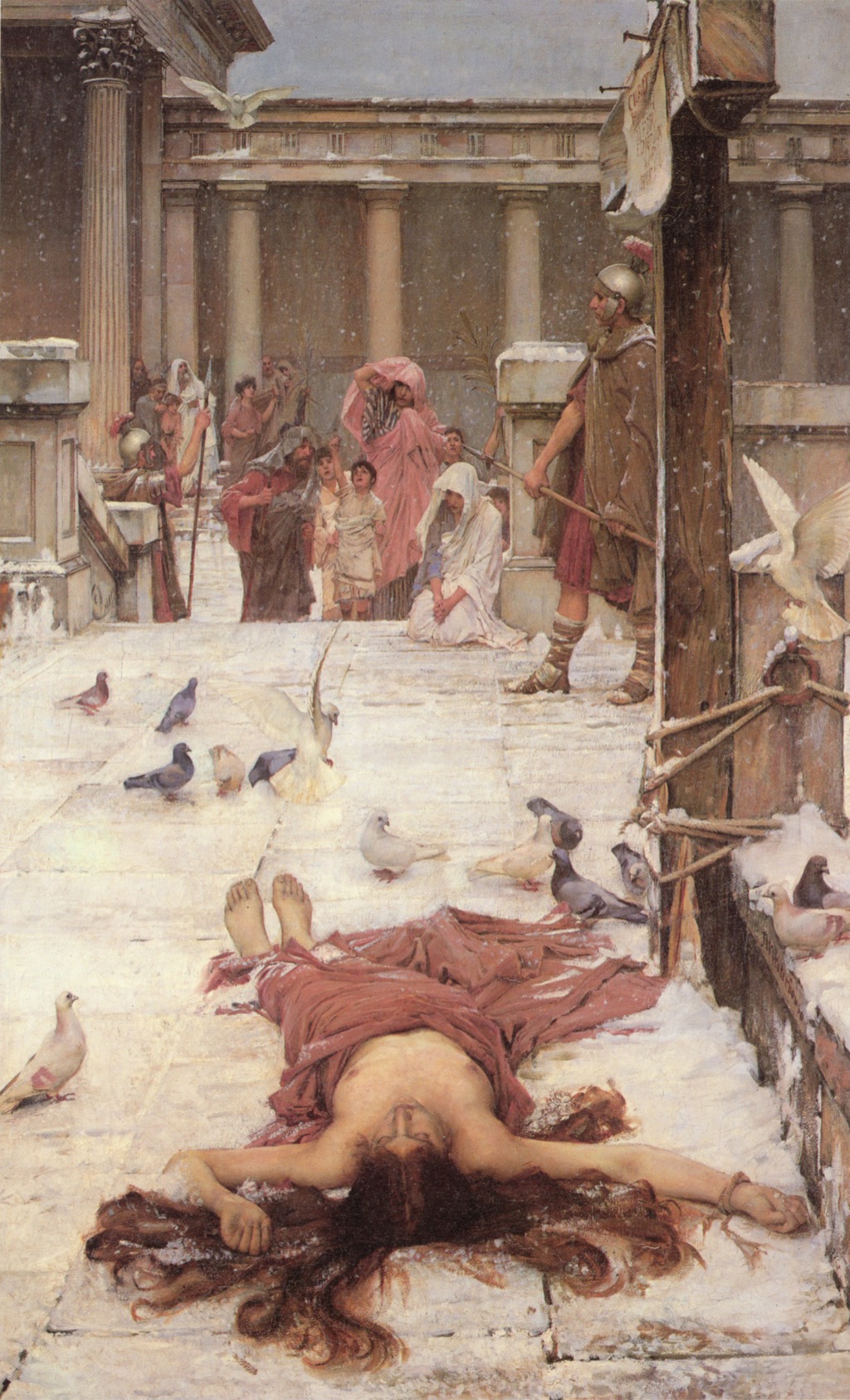
Waterhouse used a similar strategy in Saint Eulalia, where execution is over and response enters through snow and dove. In the Orpheus painting, response belongs to living women and the continuing presence of art.
Orpheus Before His Death
Orpheus is the supreme musician of Greek myth, able to move animals, trees, stones and the powers of the Underworld through song. His marriage to Eurydice ends when she dies from a snakebite.
He descends among the dead and persuades the rulers of the Underworld to release her on condition that he does not look back before they reach the upper world. He turns too soon and loses her again.
The death in Book 11 follows this failed recovery and Orpheus's withdrawal from other women. Ovid's Ciconian or Thracian women attack after one identifies him as the man who has scorned them. [3]
This background matters because the floating head is not simply a gruesome relic. It belongs to a poet already associated with love beyond death and art powerful enough to cross natural boundaries.
Waterhouse does not include Eurydice. Her absence makes the head's continued isolation especially poignant. Orpheus will ultimately be reunited with her shade in Ovid, but the painted interval remains before that consolation. [3]
The nymphs recognise or respond to the object without restoring narrative order. They cannot reassemble the body or reverse the murder. Their role is witness.
The Singing Head and Lyre in Ovid
Ovid says that the river Hebrus receives Orpheus's head and harp or lyre. As they float, the lifeless tongue continues to utter mourning, the instrument answers, and the riverbanks echo the lament. [3]
Waterhouse includes head and instrument together, making the literary miracle visible without needing an inscription for sound. Their physical companionship preserves poet and music after the body has been destroyed.
The myth sends them from the Hebrus to the sea and finally to Methymna on Lesbos. Apollo protects the head from a serpent, while Orpheus's shade reaches the Underworld and finds Eurydice. [3]
The painting appears to condense or imaginatively relocate this journey. It shows a dark enclosed pool with nymphs at the edge, not a geographical map of river, sea and Lesbos. Exact identification of the water would be false precision.
The continuing song is central even though Waterhouse cannot make it audible. The nymphs' concentrated attention may be a response to sound as well as sight.
Lyre and head also resist separation between artist and work. The murdered singer remains beside the material means of song. Violence has broken the body but not the relation.
The Nymphs as Witnesses
The two nymphs occupy the upper part of the vertical canvas and incline towards the water. Their faces are similar enough to create harmony but distinct in angle and response.
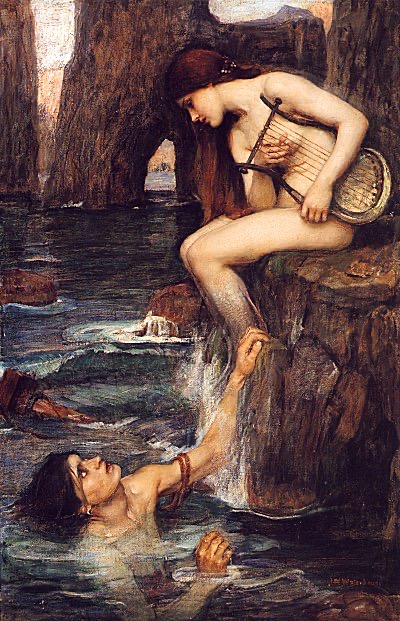
They are water beings within their own environment, so the pool is not dangerous to them as it is to Hylas or the sailor in The Siren. Their vulnerability is emotional rather than physical.
Waterhouse avoids extreme gestures. Hands, shoulders and lowered gazes communicate concern without turning the women into a chorus of screaming horror.
An earlier or now-unlocated drawing apparently explored more frightened expressions and poses. The finished painting moderates them. [2] This is valuable evidence that restraint was designed, not accidental.
The nymphs' beauty initially attracts attention away from the severed head. Christie's notes that viewers tend to notice them first and last, while their gazes lead down to the disturbing centre. [2]
That structure makes them guides and buffers. They show where to look and provide a compassionate human-like response through which horror can be approached.
Yet their calm also risks aestheticising death. The picture's dreamlike stillness can make violent aftermath pleasurable. Waterhouse builds this ethical tension into the act of discovery.
Beauty and the Ethics of Looking
Orpheus's head remains idealised. Water, death and dismemberment do not visibly deform it. The face can resemble a sleeping or dreaming figure until the missing body is understood.
Beauty carries the myth's claim that art survives the artist, but it also conceals violence. Viewers may admire before recognising what they see.
The nymphs model a sustained, compassionate gaze rather than repulsion. Their closeness suggests that looking can honour the dead. At the same time, the body has become an object held for contemplation.
Waterhouse's late work repeatedly places beautiful women above male danger or death: nymphs draw Hylas into water, a siren sings above a sailor, and here nymphs discover what other women have destroyed. The relation changes from cause to witness, but gendered looking remains central.
The head also resembles a work of art: detached, preserved in beauty and separated from ordinary life. The painting can therefore be read as a meditation on how culture treats artists after death.
Such a reading is supported by the Orpheus tradition and fin-de-siècle Symbolist interest, but it should not be presented as a private statement from Waterhouse. No cited letter records his complete intention.
The strongest interpretation remains visual. Our gaze follows the nymphs', reaches the head and must decide whether aesthetic pleasure can coexist with recognition of violence.
The Dark Pool
The vertical format creates two stacked worlds. Living nymphs occupy bank and air; Orpheus occupies water. Their faces descend while his face rises or floats.
Water both reveals and separates. Its surface allows the head to be seen but makes touch, depth and movement uncertain.
The pool is dark enough to function like a mirror without returning a complete reflection. Faces, foliage and floating forms approach one another within it.
Rock and vegetation make the edge intimate rather than monumental. The myth arrives in a place that could otherwise support quiet bathing or gathering water.
The lyre gives the pool another geometry. Its constructed lines contrast with organic head, hair and plants, ensuring that viewers identify not only a death but a musician.
Colour concentrates on flesh, garments and small natural accents against dark water. The head can emerge slowly from the lower field, repeating the delayed discovery experienced by the nymphs.
No cited conservation report supplies pigment or underdrawing evidence for the final canvas. Technical discussion should remain with visible organisation and documented studies.
Preparatory Studies
Waterhouse prepared the composition extensively. A surviving oil sketch isolates the left nymph on a canvas measuring 45.7 × 30.5 cm. [2]
Christie's describes how that study develops face and flesh more fully than surrounding fabric and landscape. It records Waterhouse building emphasis from expression outward. [2]
Other known preparations include a large two-figure oil sketch, a separate oil study of Orpheus's head floating near a singing robin, and drawings in Waterhouse sketchbooks at the Victoria and Albert Museum. [2]
The robin in the head study creates an explicit living counterpart to the dead singer: bird song continues near the poet's silent or miraculous mouth. The final picture does not require that extra emblem because the nymphs carry attention.
The preparatory record shows decisions about emotion as well as pose. Stronger horror was reduced into sympathy and absorption. [2]
This process contradicts the idea that Waterhouse merely repeated one ideal female face. He adjusted body, gaze and degree of finish to organise a particular encounter.
It also connects the painting to The Siren. Related poolside ideas could develop into a living sailor looking up or a severed poet seen below. Waterhouse explored a family of visual relations rather than one fixed story.
Gustave Moreau and Symbolist Orpheus
Gustave Moreau's Orpheus (1865) shows an elaborately dressed Thracian girl holding or contemplating the poet's head as it rests on his lyre. The Musée d'Orsay describes the image as a melancholy encounter between wise maiden and the result of Maenad frenzy. [4]
Christie's proposes that Waterhouse probably knew Moreau's painting through visits to the Musée du Luxembourg in Paris. [2] The comparison is strong, but “probably” should remain visible because no cited artist statement confirms the moment of influence.
Moreau brings head, lyre and woman into close sculptural contact. Waterhouse places them in water and doubles the female witnesses, increasing spatial distance.
Both reject the dismemberment itself in favour of contemplative aftermath. Both make the poet's beautiful head the sign of artistic survival.
Late nineteenth-century Symbolists were drawn to Orpheus as the artist destroyed by a world unable or unwilling to receive him. Waterhouse's image belongs to that atmosphere even while retaining his own natural setting and characteristic female figures. [2]
The painting is therefore not only a classical illustration. It is a modern image of what happens when song outlives its singer and becomes available to later witnesses.
The Head and Lyre as a Double Portrait
Waterhouse gives Orpheus two forms of identity: face and instrument. The head makes him recognisable as a person; the lyre identifies the vocation for which myth remembers him.
Neither is complete alone. A severed head without the lyre could belong to an anonymous victim. A floating lyre without the head could record loss at a distance. Together they make artistic death particular.
Their pairing also answers Ovid's account, in which voice and instrument continue the lament and the riverbanks reply. [3] The miracle depends upon relation rather than isolated relic.
The lyre has survived violence better than the body. Its constructed frame remains whole while Orpheus has been dismembered. Yet it cannot play itself in ordinary physical terms. Myth transfers agency from hand to continuing song.
Waterhouse does not show spectral fingers or visibly vibrating strings. The nymphs' attention allows viewers to imagine sound without mechanical explanation.
The head's orientation towards the open air preserves the mouth as a source. Hair spreads in water and makes flesh resemble surrounding natural forms, but face and lips remain distinct.
This double portrait also resembles the way posthumous reputation works. A person is remembered through likeness and surviving work. Biography and art travel together after the living body has disappeared.
The image is not a neutral celebration of immortality. To become an emblem of song, Orpheus has first been reduced to the part associated with voice and to the instrument associated with performance. Cultural memory preserves by selecting.
The nymphs discover exactly that selection. They do not encounter the whole lover who descended for Eurydice or the whole body destroyed by the Maenads. They receive the poet as posterity will receive him.
Waterhouse thereby makes the myth self-reflexive without requiring a coded manifesto. A painting preserves the beautiful image of a poet whose own art survives bodily death.
Women Who Kill and Women Who Mourn
The myth divides female figures into sharply different roles. Thracian women or Maenads destroy Orpheus; Eurydice is the beloved he cannot restore; nymphs and dryads mourn him; Waterhouse's two nymphs discover the remains. [3]
A careless reading can collapse all these women into one threatening feminine force. The painting insists upon difference. Its nymphs respond with concern to violence performed by others.
Ovid's narrative has its own gendered hostility. Orpheus rejects women after losing Eurydice, and the attackers answer perceived scorn with collective dismemberment. Later artists inherited a story in which male artistic identity and female frenzy could be opposed dramatically.
Waterhouse avoids painting frenzy. This removes the spectacular Maenad body and gives visual authority to female compassion instead.
The nymphs' gaze is active but not possessive in the manner of the killers. They do not touch or carry the head in the finished scene. They witness before deciding what should happen to it.
Their water nature also changes the relation between female beauty and male death familiar from Hylas and the Nymphs or The Siren. Here the women at the pool are not established causes of danger.
This distinction is essential to Waterhouse's range. Recurrent female types do not automatically carry recurrent moral roles. Similar faces can belong to seducer, victim, witness, lover or deity.
The painting nevertheless displays the nymphs' beauty more generously than the dead man's body. Viewers may be drawn to them first, as Christie's observes. [2] Compassion and aesthetic diversion coexist.
That structure raises a difficult question: do the beautiful witnesses help us confront violence, or help us avoid it? Waterhouse leaves the head visible enough that avoidance cannot be complete.
The women finally become intermediaries between the male poet and later audience. Their act of looking begins the cultural afterlife that the painting itself continues.
Water as Route, Archive and Reflective Surface
In Ovid, water carries head and lyre from the Hebrus to the sea and Lesbos. [3] It is not merely the place where remains happen to be found; it transports the song beyond the site of murder.
Waterhouse's pool appears more enclosed than that long route, but the literary movement remains implicit. The objects have arrived from elsewhere and may continue beyond the pictured moment.
Water protects and exposes at once. It keeps the head from ordinary burial, preserving it in view, while separating it from the nymphs on the bank.
The dark surface also acts like an archive without labels. Violence has deposited an object that must be interpreted by whoever encounters it.
Reflection can double forms and make boundaries uncertain. The nymphs lean over a medium capable of returning their own faces near Orpheus's. Witness and victim occupy one visual field without sharing one physical space.
This is different from Narcissus's pool, where reflection traps attention in the self. Here looking into water discovers another person's fate.
It is also different from the water of Hylas and the Nymphs, which conceals the depth into which the youth will vanish. Orpheus's head remains on the surface, refusing complete disappearance.
In The Siren, water is hostile to the sailor and native to the singer. In the Orpheus painting, it is medium of posthumous transmission. Waterhouse repeats a setting while changing its narrative ethics.
These distinctions prevent one universal claim that “water means death” in his art. It can threaten, reflect, carry, separate, preserve or transform depending upon the source.
The pool's darkness is therefore not empty gloom. It gives the myth a material through which art passes from destroyed creator to future audience.
Artistic Immortality and Its Cost
Ovid's most extraordinary claim is that mutilation does not silence Orpheus. The dead tongue and lyre continue mourning, and the landscape answers. [3]
This can be read as artistic immortality: song escapes the body and survives the people who tried to end it. Christie's situates Waterhouse's picture within Symbolist enthusiasm for Orpheus as a misunderstood or persecuted creative figure. [2]
Immortality is not presented as uncomplicated victory. Orpheus survives only as fragment, sound and story. The myth cannot give Eurydice back to the living world or undo his murder.
The nymphs' discovery shows that survival requires reception. A song unheard would have no cultural afterlife. Their attention completes what the continuing voice begins.
Waterhouse's spectators occupy the same position. We receive Orpheus through Ovid, Moreau, Waterhouse and later reproduction. Each transmission preserves while altering.
The finished painting itself was privately owned, and access to it has depended on exhibition and publication. Material survival does not guarantee continual public visibility.
Preparatory studies complicate the idea of one immortal image. Waterhouse tried different expressions, groupings and details before the composition settled. What survives as the definitive scene is one choice among several documented possibilities. [2]
The picture also beautifies the cost of art's survival. Orpheus's face remains ideal, the nymphs are graceful and the pool dreamlike. Violence enters a form designed for admiration.
This may be the work's deepest unease. Culture honours destroyed artists by making compelling objects from their suffering. The act can resist oblivion and still consume pain aesthetically.
Waterhouse offers no simple defence. He gives Orpheus witnesses who look with sympathy, then places us behind them to decide what kind of audience we will become.
Orpheus Within Waterhouse's Year of the Sea
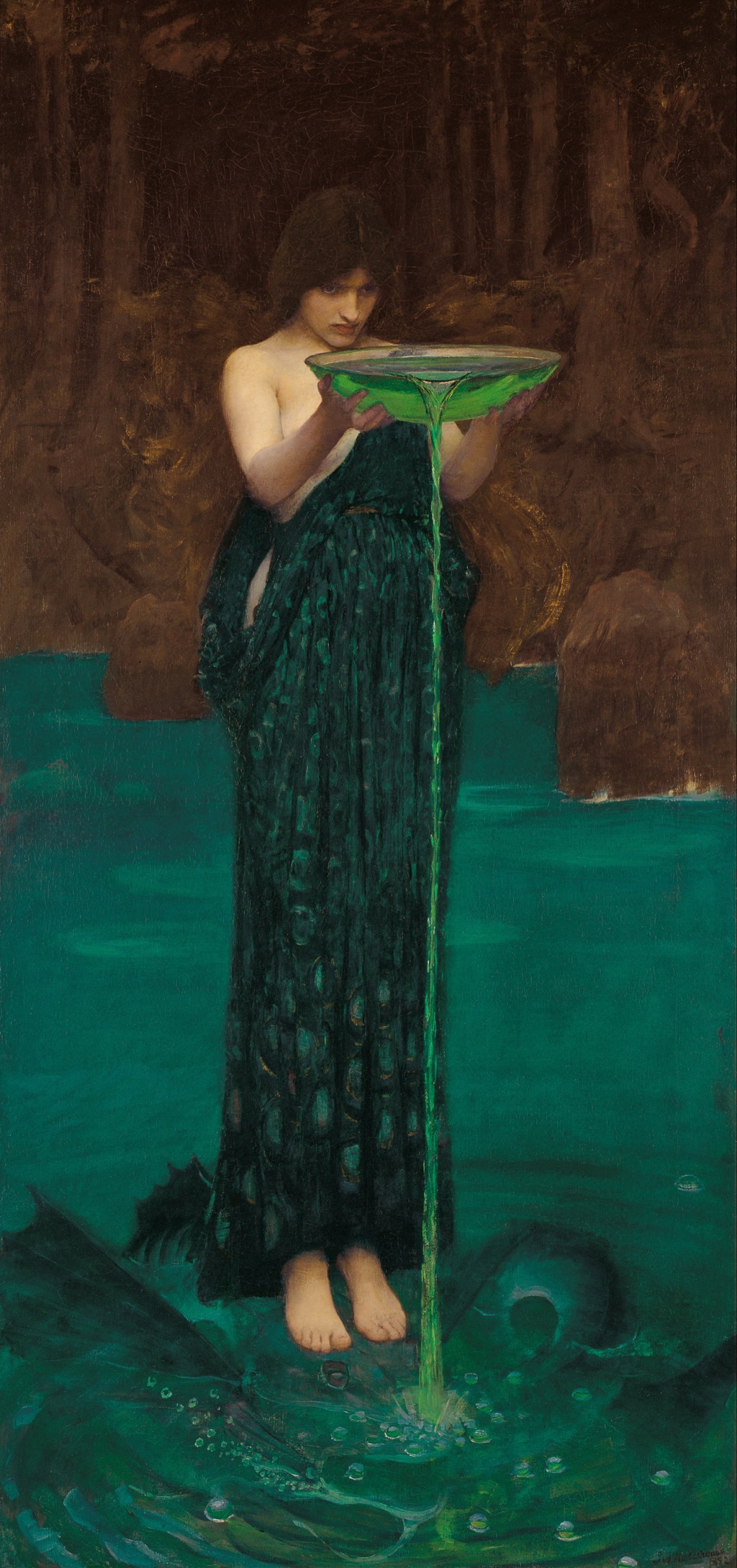
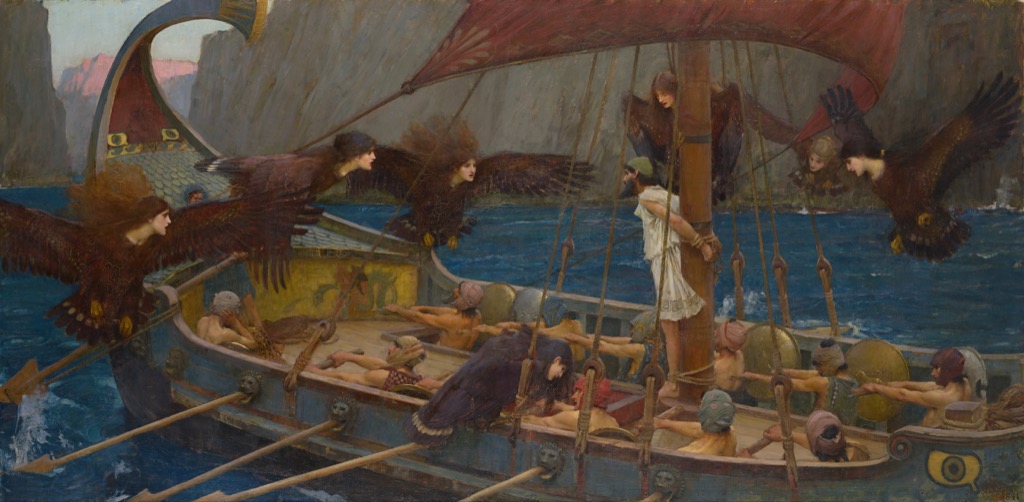
Around 1900, Waterhouse completed or developed A Mermaid, The Siren and Nymphs Finding the Head of Orpheus. The cluster is more than a repetition of attractive women by water.
Each painting assigns song and death differently. The mermaid sings alone without a visible listener; the siren sings to a sailor who may die because he listens; Orpheus continues singing after listeners have killed him.
The direction of looking also changes. The mermaid is absorbed in her own ritual, siren and sailor exchange gazes, and the nymphs look down upon a male artist who cannot return their look in ordinary life.
Water carries possibility in A Mermaid, immediate danger in The Siren and posthumous transmission in Nymphs Finding the Head of Orpheus.
These differences show why motif should not be mistaken for meaning. Hair, instrument, pool and exposed rock recur because Waterhouse could reorganise them around new narrative problems.
The Orpheus painting is the most explicitly about art. Instrument and surviving voice make music itself the subject of violence and endurance.
It is also the most contemplative. No seduction occurs and no living man struggles. The decisive action belongs to recognition.
Seen beside the other marine works, the nymphs' compassion becomes clearer. Female inhabitants of water need not be uniformly fatal. Waterhouse's imaginative sea contains solitude, predation and witness.
Exhibition and Ownership
Waterhouse signed the finished painting in 1900 and exhibited it at the Royal Academy in 1901. [2] Separating those dates avoids the assumption that exhibition year must equal completion year.
The canvas is privately owned. Published sources have associated it with the collection of Sir Tim Rice, but current ownership should not be inferred beyond the latest reliable record. [1]
Its approximate dimensions are widely given as 149 × 99 cm. [1] The substantial scale makes the nymphs more than decorative miniatures and the floating head an object encountered bodily.
The preparatory works have separate provenances and dimensions. The 45.7 × 30.5 cm left-nymph sketch is not a reduced version of the complete painting; it is a study focused on one figure. [2]
The painting's private status makes those public auction and exhibition records especially important. They provide evidence of preparation and reception that a permanent institutional object page would otherwise consolidate.
Its position in the 1901 Academy also placed ancient myth beside contemporary portraiture and history painting at a moment when Waterhouse's poetic subjects remained distinctive even as broader taste changed.
How to Look at the Painting
Begin with the nymphs and follow their gazes. Waterhouse designs discovery as a route.
Identify the lyre before the head if possible. The instrument turns an anonymous death into Orpheus.
Notice how little the women recoil. Their restraint is a finished decision supported by preparatory evidence. [2]
Compare the head's ideal beauty with knowledge of dismemberment. The gap between them is the painting's ethical difficulty.
Finally imagine sound: Ovid's head and lyre continue lamenting as they float. The silent canvas depends upon a song remembered from text. [3]
Related Pages
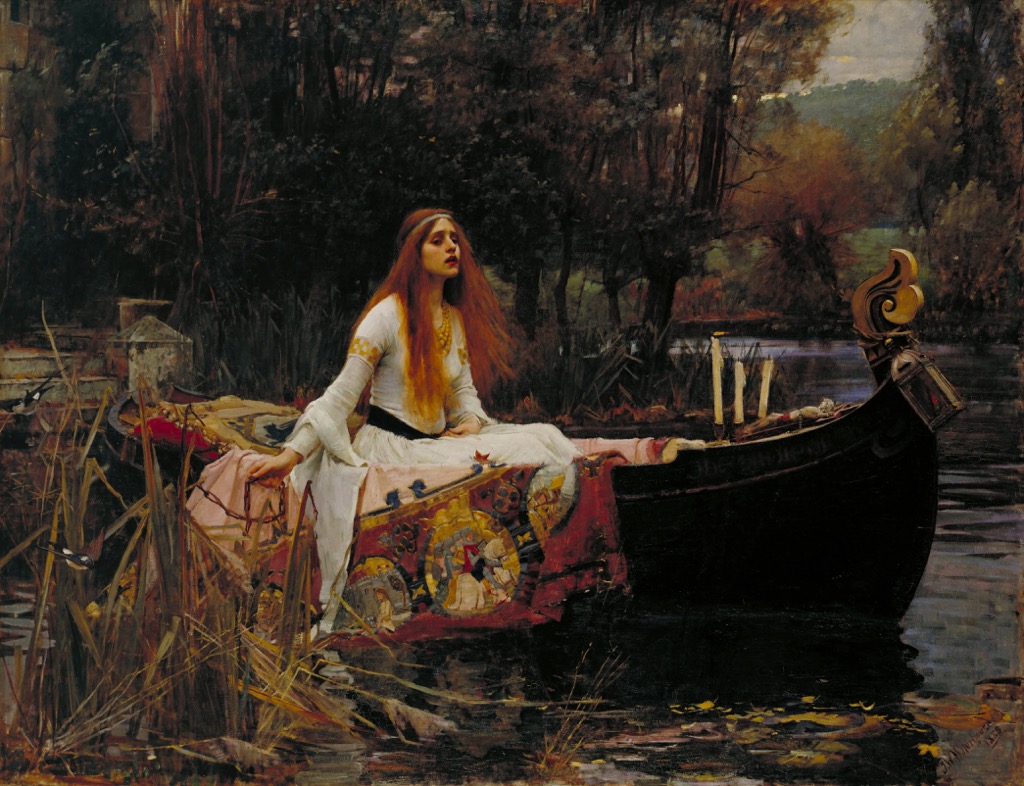
- The Lady of Shalott: Compare Waterhouse's best-known literary composition.
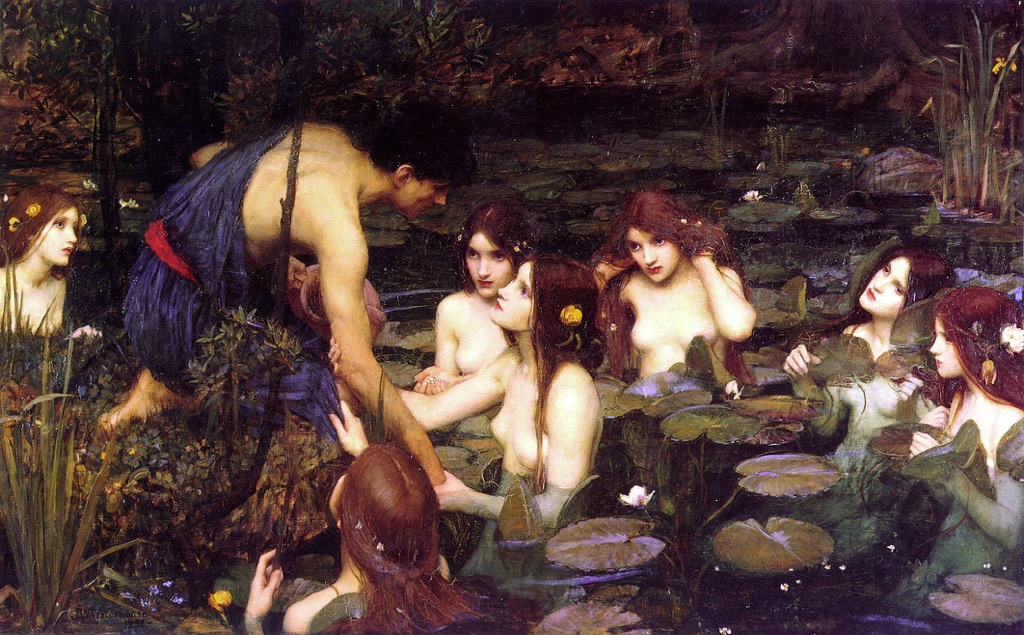
- Hylas and the Nymphs: Compare another major mythological scene.
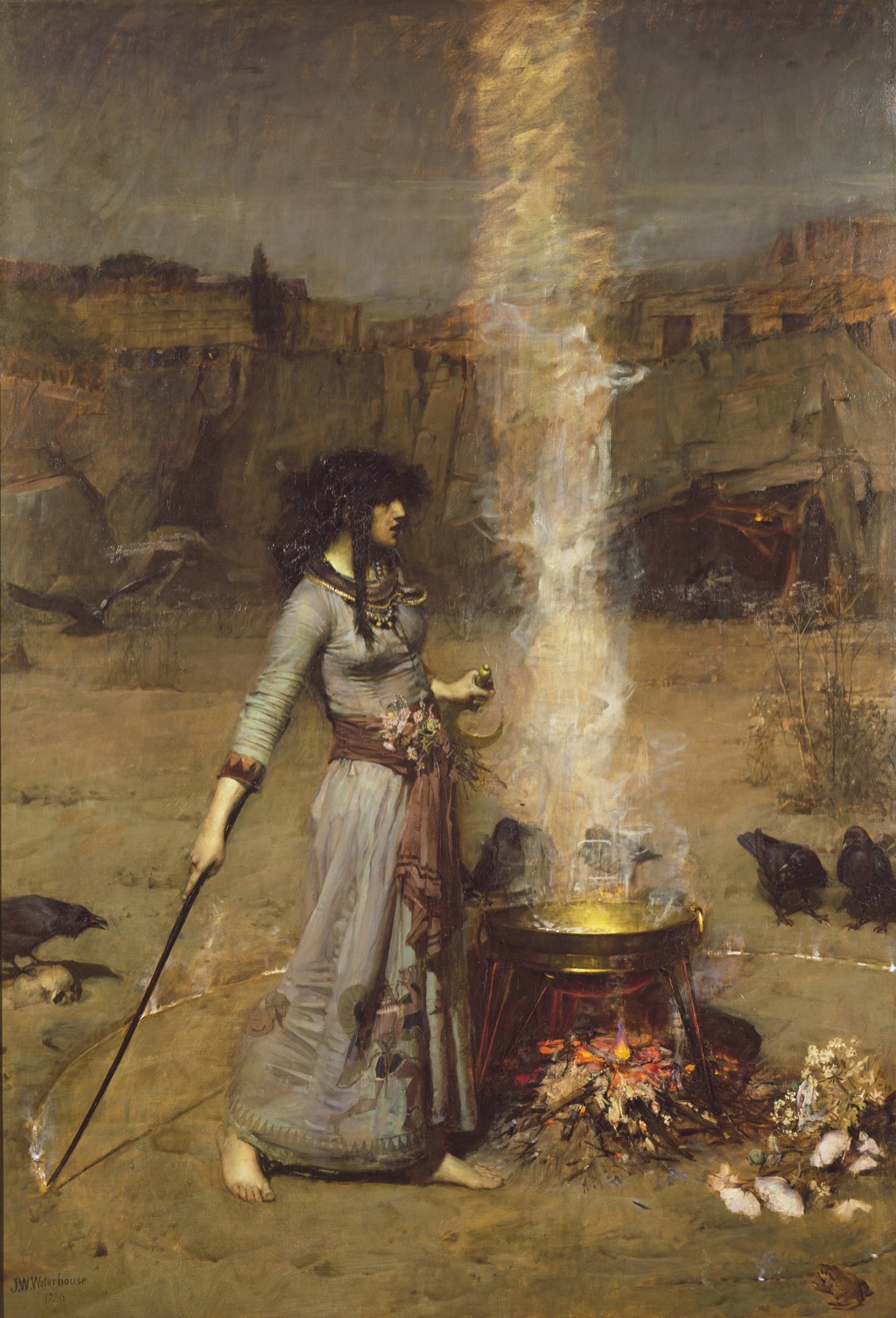
- The Magic Circle: Compare Waterhouse's treatment of ritual and symbolism.
Frequently Asked Questions
Orpheus was the greatest musician of Greek myth, able to charm living beings, stones and the powers of the Underworld. He is also known for the failed attempt to bring Eurydice back from death. [3]
In Ovid, Thracian women attack after he rejects women following Eurydice's second loss. Noise and frenzy overcome the protective power of his music, and they tear him apart. [3]
Ovid says the lifeless tongue and floating lyre continued their lament as the Hebrus carried them towards the sea and Lesbos. [3]
No. Waterhouse shows water nymphs discovering the result. They are witnesses, not the attacking Thracian women.
It was signed in 1900 and shown at the Royal Academy in 1901. [2]
It is in a private collection. Preparatory studies also survive in separate private and public records. [2]
Discussion
Waterhouse makes discovery more important than murder. The nymphs cannot repair Orpheus, but their attention refuses the erasure his killers intended. They become the first audience after death.
That role mirrors our own. We look at a beautiful fragment, know the violence behind it and continue to receive the song through an artwork made centuries after the myth. Nymphs Finding the Head of Orpheus is troubling because it makes survival and objectification inseparable: the poet endures as voice, image and severed head.
Reader Insights
Which visible detail most changes the way you read this page?
Which source or comparison helps the work feel less familiar and more specific?
What question would you bring back to the painting after reading?
Join the Conversation
Share your reading of this page below.
References
- Wikimedia Commons. “John William Waterhouse, Nymphs Finding the Head of Orpheus, 1900,” object metadata for the finished canvas and dimensions. View source
- Christie's. “John William Waterhouse, Nymphs finding the head of Orpheus: a sketch of the nymph at the left,” object record and catalogue essay discussing the finished painting, preparatory works, subject and Royal Academy exhibition. View source
- Ovid. Metamorphoses, Book 11, “Death of Orpheus,” Perseus Digital Library. View source
- Musée d'Orsay. “Gustave Moreau, Orphée,” collection record and interpretation of the 1865 painting. View source