 by Tom Gurney
Tom Gurney BSc (Hons) is an art history expert with over 20 years experience
Published on August 14, 2026 / Updated on August 14, 2026
Email: tomgurney1@gmail.com / Phone: +44 7429 011000
Portrait of Miss Claire Kenworthy: Introduction
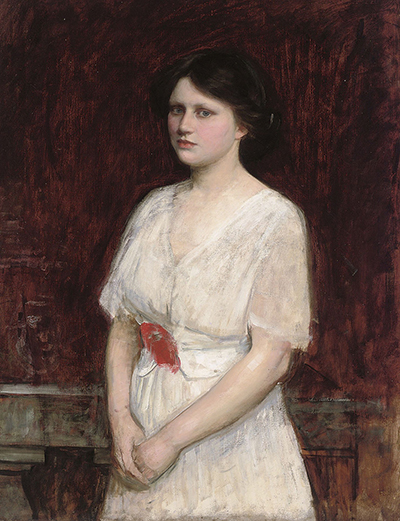
John William Waterhouse’s Portrait of Miss Claire Kenworthy presents a young woman in a white dress against a dark, loosely described setting. The restrained palette and half-length format make this a quieter work than his celebrated mythological paintings, yet the portrait rewards the same close attention to gesture, surface and the boundary between an individual presence and a carefully composed image. [1]
Christie’s identifies Claire as Waterhouse’s niece by marriage. The canvas remained with the Kenworthy family by descent before appearing at Sotheby’s in 1996, giving the identification an unusually firm family and provenance basis. [1] Its exact date is less secure: it is commonly placed broadly between about 1884 and 1900 rather than assigned to one documented sitting. [2]
At a Glance
- ArtistJohn William Waterhouse (1849–1917)
- TitlePortrait of Miss Claire Kenworthy, Half Length, in a White Dress [1]
- Short titlePortrait of Miss Claire Kenworthy
- DateUndated; commonly placed about 1884–1900 [2]
- MediumOil on canvas [1]
- Dimensions88.9 × 68.5 cm (35 × 27 in) [1]
- CollectionPrivate collection [1]
- SitterClaire Kenworthy, Waterhouse’s niece by marriage [1]
- ProvenanceBy descent in the Kenworthy family; sold Sotheby’s, London, 5 June 1996, lot 130 [1]
- Subject typeFamily portrait
Contents
- Introduction
- Claire Kenworthy and the Family Record
- A Portrait Rather Than a Character
- White Dress, Dark Ground
- Face, Pose and Expression
- Finish and Painterly Economy
- Dating an Undated Canvas
- Portraiture Within Waterhouse’s Career
- Family Possession and Later Provenance
- The Ethics of Looking at a Family Portrait
Claire Kenworthy and the Family Record
The sitter’s name is central to the painting’s modern identity. Christie’s describes Claire Kenworthy as the artist’s niece by marriage and records that the portrait descended in the Kenworthy family. [1] Those two facts reinforce one another: the family relationship explains the commission or sitting, while continued family ownership helps preserve the sitter’s name.
The wording “niece by marriage” is important. It indicates a connection through Waterhouse’s wife, Esther Kenworthy Waterhouse, rather than a blood relationship to the artist. Esther came from a family whose members and connections appear at several points in Waterhouse’s personal and artistic life. Claire belongs to that network, but she should not be confused with Esther herself or with other named sitters in the Waterhouse circle.
Nor should Claire be conflated with Margaret Henderson, later Mrs Charles Schreiber. The two portraits circulate separately, with different titles, formats and histories. Repetition across image databases can blur such distinctions, especially when several Waterhouse portraits show women in pale dresses or subdued settings. Here the auction record and family descent provide the safest identification. [1]
The title preserves formal Victorian usage: “Miss Claire Kenworthy” places unmarried status alongside personal and family name. That convention can make the sitter seem socially classified before she is individually encountered. The painting complicates the label by giving her a sustained visual presence.
Little secure biographical information about Claire is supplied by the published object record. That absence should not be filled with invented dates, accomplishments or anecdotes. A responsible page can say that she belonged to the Kenworthy family, sat to her uncle by marriage and remained named within the work’s provenance. Beyond that boundary, the canvas itself becomes the primary evidence.
This is not a deficiency. Portraits often preserve a face more successfully than a life story. The gap encourages careful distinction between what the painting shows, what the title records and what later viewers may wish to know.
A Portrait Rather Than a Character
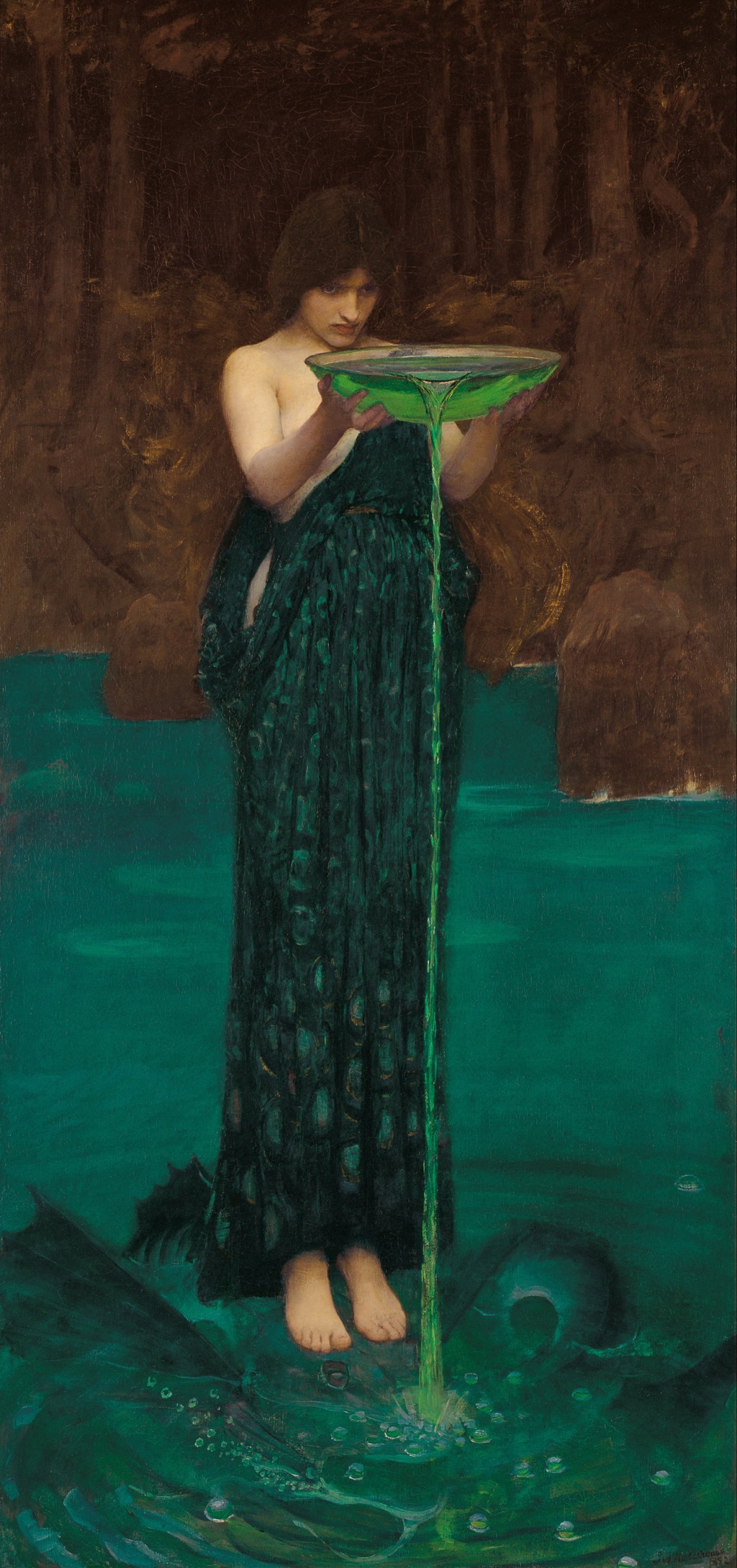
Waterhouse is best known for figures called Circe, Ophelia, Pandora, Lamia or the Lady of Shalott. Those women reach viewers through inherited stories. Their names invite narrative expectations before the image is examined.
Claire Kenworthy’s portrait works differently. Its title does not assign her a literary role. She is not shown with a cup, mirror, spindle, musical instrument or other attribute that converts likeness into myth.
The distinction matters because Waterhouse’s recognizable type—the pale face, concentrated gaze and carefully modelled hair—can tempt viewers to turn every sitter into a “Waterhouse heroine.” Claire is better approached first as a relative who participated in making a portrait.
Sitting is itself an activity. It requires time, bodily stillness and repeated attention. Even a family portrait is not a transparent glimpse of ordinary life. Artist and sitter negotiate clothing, pose, expression, lighting and the degree of finish.
Claire’s image therefore combines individual likeness with pictorial design. Waterhouse had to make her recognizable to people who knew her while also creating a coherent arrangement for viewers who did not.
The absence of narrative props intensifies this task. Interest must come from the relation among face, dress and surrounding darkness rather than an unfolding incident.
This relative simplicity can expose Waterhouse’s portrait method more clearly than a story painting. He cannot rely on a famous poem to create emotional gravity. Instead, slight turns of head and body carry the image.
The portrait also helps resist a narrow account of his career. Academic painters depended upon a wider practice than their best-known exhibition pictures suggest. Portraits, studies and family works developed skills of observation that could later be transformed within elaborate compositions.
Claire’s individuality should nonetheless remain primary. She is not valuable only as rehearsal for someone fictional.
White Dress, Dark Ground
Christie’s full title singles out the sitter’s white dress. [1] The description is not incidental: the garment occupies much of the canvas and establishes its strongest tonal contrast.
White is never merely blank in oil paint. Folds require cooler and warmer greys, reflected colour and shifts of opacity. A dress can appear luminous only because shadow and surrounding darkness make its light areas active.
The dark ground isolates Claire without locating her in a fully described room. That economy directs attention towards face and clothing while avoiding competing furniture or architecture.
It also makes the portrait seem suspended between domestic presence and studio construction. We recognise a person rather than a place.
The garment may suggest youth, refinement and social presentation, but it should not be assigned a ceremonial purpose without evidence. Nothing in the published title identifies it as a wedding dress, confirmation dress or costume.
Its pale mass gives the lower half of the composition breadth. The face, smaller and warmer, becomes a concentrated point above it.
Waterhouse can then vary edge. Parts of the dress may be sharply separated from the background, while other contours soften into shadow. Such changes prevent the figure from looking cut out and create a sense of atmosphere around the body.
White clothing also tests the reproduction. Bright digital images may flatten subtle modelling, while dark reproductions can swallow the background and exaggerate the dress’s contrast. Exact colour claims should therefore be modest unless made before the original under controlled light.
The structure remains legible across reproductions: pale clothing advances, the dark field recedes and the face mediates between them.
This limited arrangement is far removed from Waterhouse’s flower-filled late canvases. It demonstrates that he could create visual interest through tonal concentration rather than botanical abundance.
Face, Pose and Expression
Claire is shown half length, a format that allows facial description while preserving enough of the torso to communicate bearing. [1] It is more socially complete than a head study and more intimate than a full-length society portrait.
The viewer’s encounter is shaped by the angle of her body and eyes. A frontal face would produce direct symmetry; a slight turn introduces reserve and depth.
Expression in painted portraiture cannot be reduced to one emotion. A closed mouth or steady gaze may appear thoughtful, shy, poised or solemn depending upon the viewer’s expectations.
It is safer to describe the composure than diagnose Claire’s inner state. She holds herself for the painter. The duration of the sitting is condensed into an expression that appears momentary.
Waterhouse’s modelling gives the face greater finish than peripheral areas. This hierarchy reflects both optical attention and portrait purpose: recognition depends chiefly on facial proportion and relation.
Hair frames the head and provides a transition into the background. Where the white dress makes a strong silhouette, hair can merge more gently with surrounding tone.
The result balances presence and privacy. Claire is available to view—portraiture necessarily makes her visible—but she is not narratively exposed.
This restraint separates the work from scenes in which Waterhouse asks a model to embody fear, enchantment or crisis. A portrait need not turn the sitter into an emotional spectacle.
The image also reminds us that likeness is collaborative but asymmetrical. Claire provided face, body and time; Waterhouse selected the final painted form. The surviving title restores her name to that process.
Modern viewers cannot verify the exact likeness without photographs or other secure portraits. The family’s retention of the canvas nevertheless indicates that it functioned as a portrait within the community most able to judge it. [1]
Finish and Painterly Economy
Waterhouse’s paintings can combine highly resolved heads and hands with freely handled backgrounds or drapery. In a portrait, such variation is not evidence of negligence. It distributes attention.
The face asks for measured transitions because tiny changes can alter identity. The background needs only enough variation to keep darkness alive.
The dress stands between these demands. Its main folds describe body and pose; secondary passages can remain suggestive.
This hierarchy turns finish into meaning. Claire’s face is not simply one object among many. It is the work’s centre of recognition.
Visible brushwork can also preserve the time of making. A smooth surface hides separate touches; a freer passage lets viewers sense decisions accumulating.
Because the work is privately owned, close technical claims about ground, underdrawing or pigments should await conservation examination. Reproduction alone cannot establish Waterhouse’s exact sequence.
What can be said is that the composition uses economy. It withholds elaborate setting, literary symbol and multi-figure action.
Economy does not mean simplicity of effect. The artist must sustain interest within a narrow range and prevent the pale dress from becoming a featureless shape.
Portraiture also demands control over resemblance. In a mythological picture, a changed feature may alter beauty or expression; in a family portrait, it may alter identity.
Waterhouse’s success lies in combining these pressures. The painting is sufficiently composed to stand as art and sufficiently particular to remain Claire Kenworthy.
That balance may explain why the work stayed in family hands. It could operate as both valued likeness and evidence of kinship with a prominent artist.
Dating an Undated Canvas
The painting does not carry a securely published date in Christie’s catalogue entry. [1] WikiArt gives the broad range about 1884–1900 and places it in a private collection. [2]
A range is preferable to false precision. It admits that dating may rest on style, Claire’s apparent age and Waterhouse’s career rather than a dated inscription or exhibition record.
The earliest boundary falls within the period when Waterhouse was moving from archaeological classical subjects towards more intimate and increasingly naturalistic figures. The latest falls near the turn of the century, after his mature literary manner was established. [3]
That span is substantial. It covers changes in handling, palette and the artist’s public reputation.
Stylistic dating can narrow possibilities, but it is vulnerable to circular reasoning. If a portrait appears “mature,” it is assigned later; that assigned date is then used as evidence of mature style.
Family documents, inscriptions or a dated photograph would offer stronger control. None is cited in the public auction record. [1]
Claire’s genealogy might eventually help if her birth date and appearance at particular ages are securely established, though apparent age in a portrait remains imprecise.
The page should therefore use “undated” prominently and present the broader proposal as a proposal.
This does not reduce the work’s interest. Uncertainty can become part of the art-historical question: where does an intimate portrait belong within a career reconstructed mainly from exhibited subject paintings?
It also prevents the portrait from being used as a fixed chronological marker for other works.
Future archival or technical research may improve the date. Until then, honest breadth is a form of accuracy.
Portraiture Within Waterhouse’s Career
Waterhouse trained and exhibited within the Royal Academy system, becoming an Associate in 1885 and a Royal Academician in 1895. [3] His public identity rested on ambitious figure paintings, but portrait practice remained relevant.
Family and commissioned portraits required observation without the shelter of literary distance. The sitter or relatives could evaluate resemblance directly.
These works also reveal different social relations. A named portrait records an encounter with an individual; an anonymous study may preserve only a model’s appearance; a subject picture converts the posed body into a fictional character.
Confusing those categories can erase history. A woman portrayed under her own name should not automatically be labelled a recurring studio model, and a recurring model should not be assigned the sitter’s biography without proof.
Claire’s family status may have changed the atmosphere of the sitting. Familiarity could permit ease, but it might also increase the pressure to achieve a likeness acceptable to relatives.
The work belongs beside the portrait of Esther Kenworthy Waterhouse and portraits of other documented sitters, not only beside images that resemble its face type.
It also offers a counterweight to the idea of one interchangeable “Waterhouse woman.” Shared features may reflect the artist’s aesthetic preferences and method, yet a portrait asserts that at least some faces belonged to named lives.
Waterhouse’s narrative art often stages an instant of looking: a heroine sees a reflection, an approaching figure or a forbidden object. In Claire’s portrait the important look is more basic—the exchange among sitter, painter and eventual viewer.
Her expression does not need a story. Its sustained ambiguity is part of portraiture’s power.
The page can therefore link to Waterhouse’s biography, models-and-sitters guide and portrait of Esther while keeping Claire’s identity locally controlled.
Family Possession and Later Provenance
Christie’s states that the portrait passed by descent in the Kenworthy family. [1] That concise provenance has unusual interpretive weight.
Family ownership supports the sitter’s identification and suggests the painting retained personal significance outside public exhibition culture.
It may also explain why the work is less familiar than Royal Academy showpieces. Paintings held privately can disappear from view for generations even when their creator is famous.
The next published event is its sale at Sotheby’s in London on 5 June 1996 as lot 130. [1] The record then leads to the Christie’s sale listing from 2009.
Auction appearances change a family object into a publicly documented market object. Cataloguing supplies measurements, medium and provenance while photography makes the image accessible to wider audiences.
The market record does not by itself reveal why relatives retained or sold the painting. Such motives should not be invented.
Nor does a sale estimate determine artistic importance. Price reflects date, condition, attribution, provenance, demand and circumstances as well as aesthetic judgement.
The private collection status limits access to direct examination. It increases the importance of retaining exact auction information and avoiding claims that require physical inspection.
Provenance gaps should also remain visible. “By descent” may compress several transfers within a family, and a later private collection may not be named.
Even so, the continuous association is stronger than the histories of many anonymous studies from Waterhouse’s studio sale. Claire’s name did not have to be reconstructed solely from facial resemblance.
Her portrait demonstrates how family memory can preserve information that exhibition catalogues omit. It also shows how easily that information could have been lost once the painting entered the wider market.
The Ethics of Looking at a Family Portrait
A portrait gives later viewers access that the sitter could not fully anticipate. Claire may have expected relatives and visitors to see the work, not a global audience examining a digital reproduction.
That distance calls for restraint. Visual description is appropriate; unsupported psychological biography is not.
Terms such as “melancholy,” “innocent” or “romantic” can sound natural because they recur in writing about Victorian women. They may tell us more about modern viewing habits than about Claire.
The white dress especially invites idealisation. It can become a shorthand for purity or bridal status even when the object record supports neither claim.
Better interpretation begins with material relations: pale fabric against darkness, a half-length body, the angle of the head and the distribution of finish.
From there, viewers can ask how Waterhouse turns a relative into a public image without pretending to recover her private thoughts.
Naming Claire is ethically important because it resists reducing her to “a girl.” Yet a name is not permission to invent the remainder of her life.
The portrait survives at the meeting point of intimacy and art history. Its family provenance brings us unusually close to its original social function, while its current private location reminds us that access remains partial.
That partiality is not an obstacle to be overcome through speculation. It is part of the work’s historical condition.
Related Pages
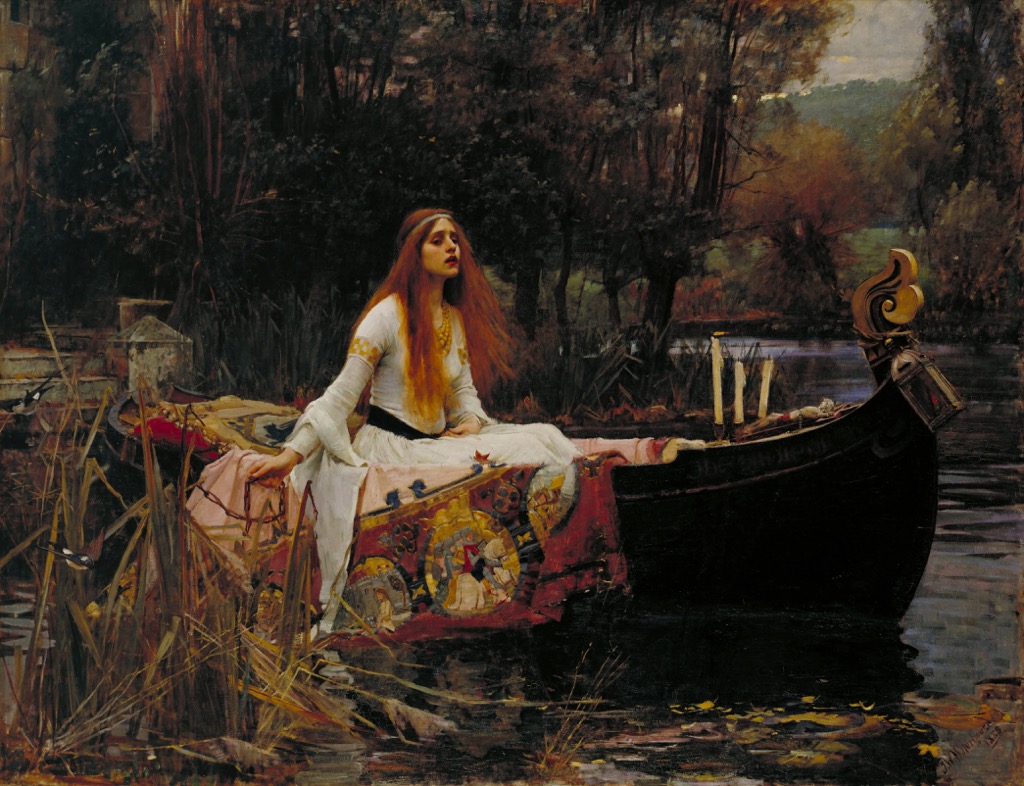
- The Lady of Shalott: Compare Waterhouse's best-known literary composition.
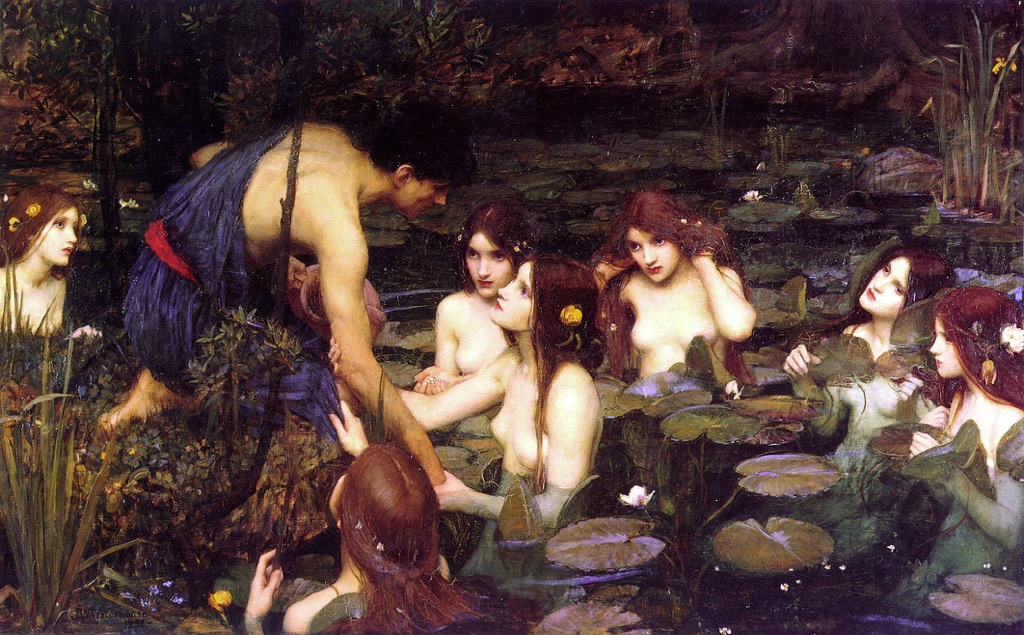
- Hylas and the Nymphs: Compare another major mythological scene.
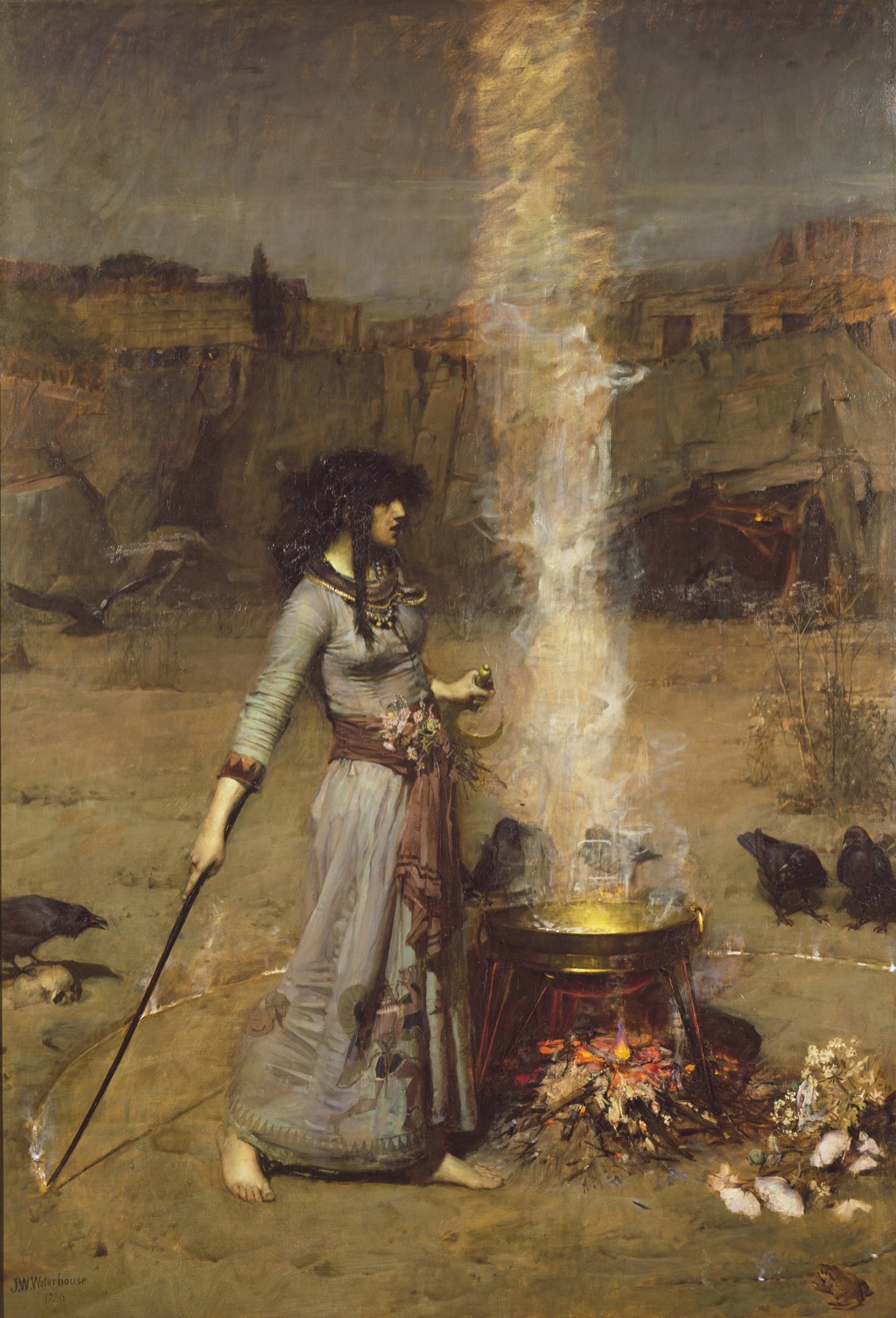
- The Magic Circle: Compare Waterhouse's treatment of ritual and symbolism.
Frequently Asked Questions
Christie’s identifies her as John William Waterhouse’s niece by marriage. Published object information does not provide a full biography. [1]
It is undated. A broad date of about 1884–1900 is commonly given, but no exact year should be treated as established. [1] [2]
Oil on canvas, measuring 88.9 × 68.5 cm. [1]
The dress is a major compositional element, but no documented ceremonial or symbolic reason for it is known.
No. Claire Kenworthy and Margaret Henderson, later Mrs Charles Schreiber, are separately identified sitters with distinct portraits.
Discussion
Portrait of Miss Claire Kenworthy asks for a different kind of attention from Waterhouse’s mythological paintings. There is no inherited story to decode and no supernatural crisis to resolve. A family relationship, a named sitter and a limited tonal arrangement carry the work.
Its strongest documentary feature is the union of title and provenance. Claire’s identity travelled with the canvas through the Kenworthy family and into the auction record. Its largest uncertainty is the date, which should remain broad until stronger evidence emerges.
Reader Insights
Which visible detail most changes the way you read this page?
Which source or comparison helps the work feel less familiar and more specific?
What question would you bring back to the painting after reading?
Join the Conversation
Share your reading of this page below.
References
- Christie’s, “John William Waterhouse, R.A., R.I. (1849–1917), Portrait of Miss Claire Kenworthy, half length, in a white dress,” lot record, including medium, dimensions, relationship and provenance. View source.
- WikiArt, “Portrait of Miss Claire Kenworthy,” secondary object summary and broad proposed date range. View source.
- Royal Academy of Arts, “John William Waterhouse RA,” artist record and Academy career. View source.