 by Tom Gurney
Tom Gurney BSc (Hons) is an art history expert with over 20 years experience
Published on August 14, 2026 / Updated on August 14, 2026
Email: tomgurney1@gmail.com / Phone: +44 7429 011000
Portrait of Mrs Charles Schreiber: Introduction
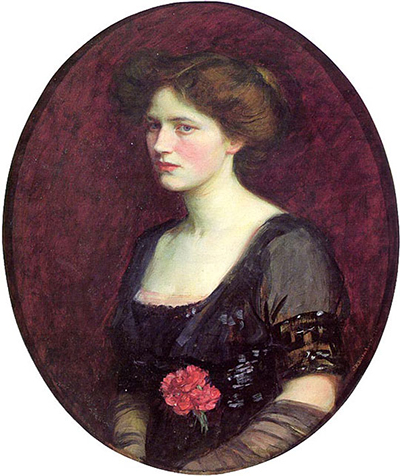
John William Waterhouse’s 1912 portrait of Mrs Charles Schreiber places a woman in a black dress within an oval canvas, relieved by pale skin and a single bright flower. Its compressed format and dark harmony differ from the expansive literary scenes with which Waterhouse is most closely associated. The painting is a society portrait, but its stillness and concentrated colour make it recognisably part of his late art. [1]
The sitter was Margaret Henderson, who married Charles Shuldham Schreiber in 1900. [2] [3] Restoring her birth name matters: “Mrs Charles Schreiber” follows a historical convention that identifies a married woman through her husband, whereas Margaret had her own family history and occupied a particular social and cultural world.
At a Glance
- ArtistJohn William Waterhouse (1849–1917)
- TitlePortrait of Mrs Charles Schreiber [1]
- Date1912 [1]
- MediumOil on canvas [1]
- Dimensions76 × 64 cm [1]
- FormatOval, half length [1]
- CollectionPrivate collection / present location not publicly identified [1]
- SitterMargaret Henderson Schreiber (1879–1946) [2]
- HusbandCharles Shuldham Schreiber, married 10 November 1900 [2]
- Subject typeFormal portrait
Contents
- Introduction
- Margaret Henderson Becomes Mrs Schreiber
- The Henderson and Schreiber Setting
- An Oval Portrait
- Black Dress and Flower
- Pose, Gaze and Social Presentation
- Waterhouse as a Portrait Painter in 1912
- The Sitter and the Artist’s Patrons
- Names, Evidence and Women’s Identity
- A Late Portrait’s Quiet Drama
Margaret Henderson Becomes Mrs Schreiber
The sitter was born Margaret Henderson in 1879, a daughter of Alexander Henderson, later the first Baron Faringdon, and Jane Ellen Davis. [2] She married Charles Shuldham Schreiber on 10 November 1900 and died in 1946. [2]
These facts establish that the portrait’s title records her married identity. By 1912 she had been Mrs Charles Schreiber for twelve years.
The historical form can be useful because it matches catalogues and inscriptions, but it has a cost. Margaret’s given name disappears, while her husband’s full name replaces it.
A modern manuscript should preserve the established artwork title and identify the woman clearly as Margaret Henderson Schreiber. Doing both makes the work findable without repeating the erasure as biography.
Her name also prevents confusion with Waterhouse’s other family and society portraits. She was not Claire Kenworthy, Esther Waterhouse or an anonymous professional model.
Nor should her life be reconstructed from expression. The canvas documents how Margaret and Waterhouse chose to present her in 1912; it does not reveal her complete character.
The identification has wider relevance because the Henderson family formed part of Waterhouse’s patronage network. That relationship helps place the portrait within the social structures through which artists obtained commissions and pictures entered private houses.
Margaret was about thirty-three when the painting was made. The portrait represents an adult married woman, not the vaguely youthful literary type often called a “Waterhouse girl.”
This correction changes the language appropriate to the image. “Woman,” “sitter” and “Margaret” are more accurate than “maiden” or “heroine.”
The Henderson and Schreiber Setting
Margaret’s father, Alexander Henderson, built a substantial business and collecting profile before being raised to the peerage as Baron Faringdon. The family’s houses and cultural connections placed art within a world of wealth, display and patronage. [2] [3]
Charles Schreiber belonged to another established family. Margaret and Charles developed the gardens at Marlesford in Suffolk, where their household became associated with formal design, planting and country-house culture. [3]
This environment offers useful context for the portrait’s commission. A Waterhouse canvas could function as a likeness, a family possession and a work by a leading Royal Academician.
It would be reductive, however, to make Margaret only evidence of class. Portraiture addresses an individual even when social status shapes dress, format and ownership.
The black garment communicates formality without requiring ostentatious display. The oval format reduces setting and concentrates attention on the sitter.
Country-house context may also affect how the picture was originally seen. It probably entered an interior containing family portraits, furnishings and collected works rather than an isolated white gallery.
Its scale—76 by 64 centimetres—makes it substantial but not monumental. [1] It could sustain presence at domestic viewing distance.
The Henderson connection has caused some online descriptions to blur Margaret’s identities and dates. Secure genealogical information should be separated from sales lore and visual inference. [2]
The Suffolk garden history is valuable for understanding the Schreibers’ household, but it does not prove that the flower in Waterhouse’s portrait came from Marlesford or carries a private garden reference. [3]
Context should illuminate possibility without inventing anecdote.
An Oval Portrait
The oval is the portrait’s most decisive structural feature. [1] It removes corners and brings the boundary close to head, shoulders and torso.
Rectangular paintings can imply an environment beyond the figure. An oval tends to declare that the person herself is the field of attention.
Its curved edge also encourages a continuous movement around the composition. Shoulder, sleeve and surrounding darkness respond to the enclosing arc.
The form has a long history in portrait miniatures, family likenesses and decorative interiors. Waterhouse adopts that tradition without turning the painting into an imitation of an earlier century.
The oval can make the sitter seem framed even before an external frame is added. It transforms the canvas boundary into part of the design.
Margaret appears half length. The viewer receives face, upper body, dress and flower, but not the full architectural or domestic setting that a larger society portrait might provide.
This concentration creates intimacy, although the presentation remains formal. Proximity is pictorial, not evidence of personal familiarity between viewer and sitter.
The format also controls black. Dark dress and background might merge into a broad area, but the oval prevents that darkness from spreading indefinitely.
Within it, face and flower act as distinct lights. The composition can be understood as three linked zones: the pale face, the dark garment and the coloured bloom.
Their proportions matter more than detailed furniture or landscape. Waterhouse’s late skill lies in keeping a limited arrangement active.
The oval is therefore not merely a decorative novelty. It determines how Margaret’s body, the surrounding dark and the viewer’s attention are organised.
Black Dress and Flower
Margaret wears black, a colour that can carry many social meanings but should not automatically be read as mourning. [1] Without a documented occasion, black is best understood first as a formal visual choice.
It gives the face exceptional prominence. Warm flesh tones and highlights become more vivid against the dress.
Black oil paint is rarely one undifferentiated substance. Folds, textures and reflected light require subtle shifts. A dark garment can disclose the body through changes that a reproduction may compress.
The flower supplies a second focus. Its warmer colour interrupts the near-monochrome arrangement and draws attention towards the hand or bodice area.
Because the species is not securely identified in the public object record, elaborate flower symbolism would be unsafe. Even if it is a rose, Victorian associations varied with colour, context and source.
The flower can be interpreted structurally without decoding it as a secret message. It is organic where the dress is controlled, small where the garment is broad and coloured where the surrounding field is dark.
It also introduces impermanence. Portrait paint aims to preserve Margaret’s appearance, while a cut bloom visibly belongs to a short life.
Waterhouse often used flowers in mythological paintings to suggest season, sensuality, transformation or danger. In this portrait, the flower need not carry an imported myth.
Its strongest meaning arises locally: Margaret holds or wears a living accent within formal presentation.
The contrast may also have suited the portrait’s intended interior. A single coloured passage can remain legible at a distance and bring visual warmth to a dark ensemble.
The painting thereby avoids both severe monochrome and lavish costume display. Its elegance comes from restriction.
Pose, Gaze and Social Presentation
A formal portrait is an act of presentation. Margaret’s posture, expression and clothing were selected for the image that would survive.
Her half-length pose provides enough bodily information to convey composure. The oval discourages broad gesture, so small adjustments of shoulder, head and hand become important.
The gaze establishes relation. Whether she looks directly towards the viewer or slightly aside, the painted eyes create a meeting that Waterhouse has designed.
It is tempting to describe such expressions as melancholy, proud or remote. Those labels may be plausible responses, but they are not biographical facts.
Stillness in a portrait partly reflects the conditions of sitting. The artist needs continuity across sessions, and the sitter sustains a pose.
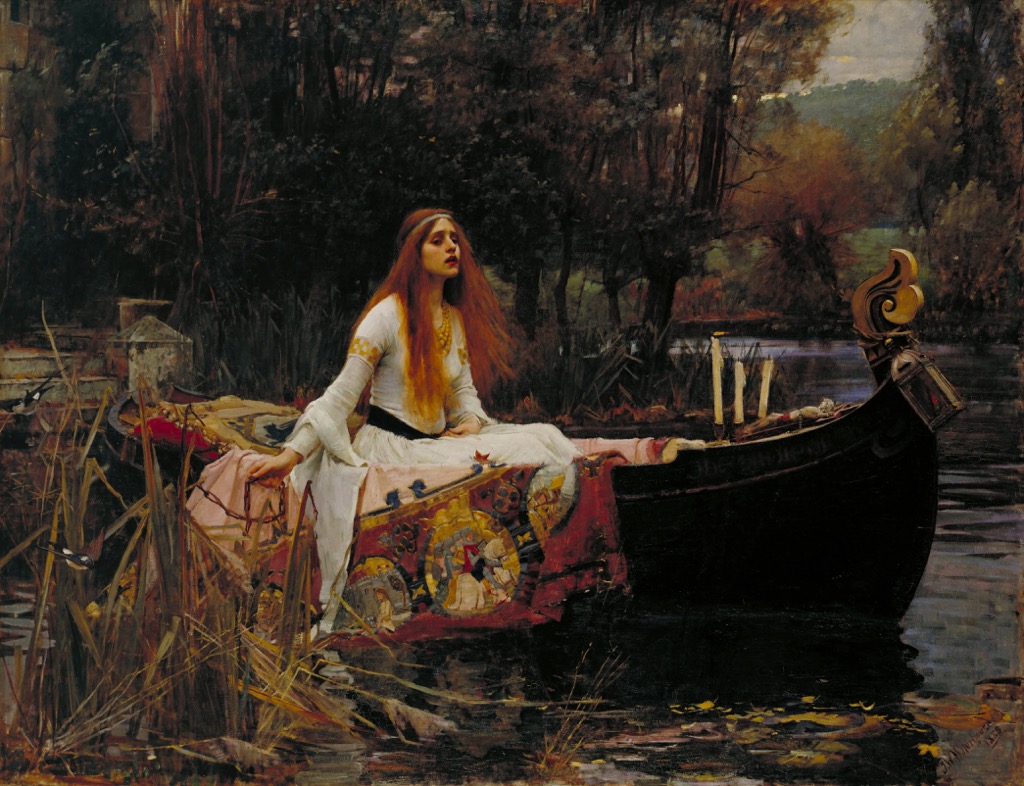
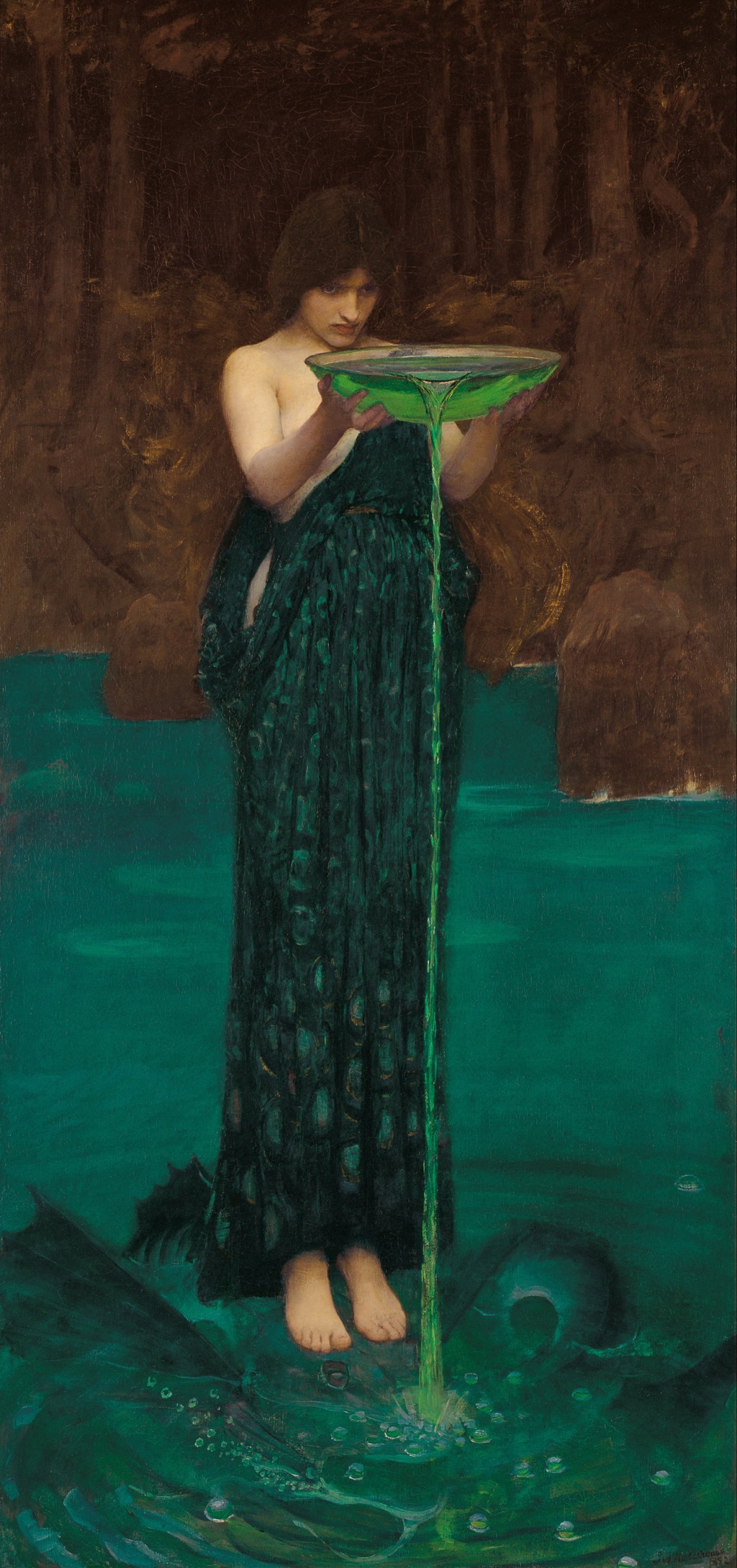
Waterhouse turns that practical stillness into dignity. There is no need for the theatrical alarm of Circe Invidiosa or the narrative absorption of The Lady of Shalott.
Margaret’s identity is already enough to justify the canvas. She does not need to become someone from literature.
At the same time, Waterhouse’s idealising habits cannot disappear entirely. Selection of light, angle and finish mediates the individual likeness.
The portrait’s social function depends upon this dual success. Family and acquaintances must recognise Margaret, while the painting must offer a durable, composed version of her.
The dark palette may convey maturity and authority. Yet it should not be turned into a fixed statement about temperament.
Portraiture preserves appearance through conventions. Understanding those conventions lets viewers respect both the sitter’s individuality and the picture’s constructed nature.
Waterhouse as a Portrait Painter in 1912
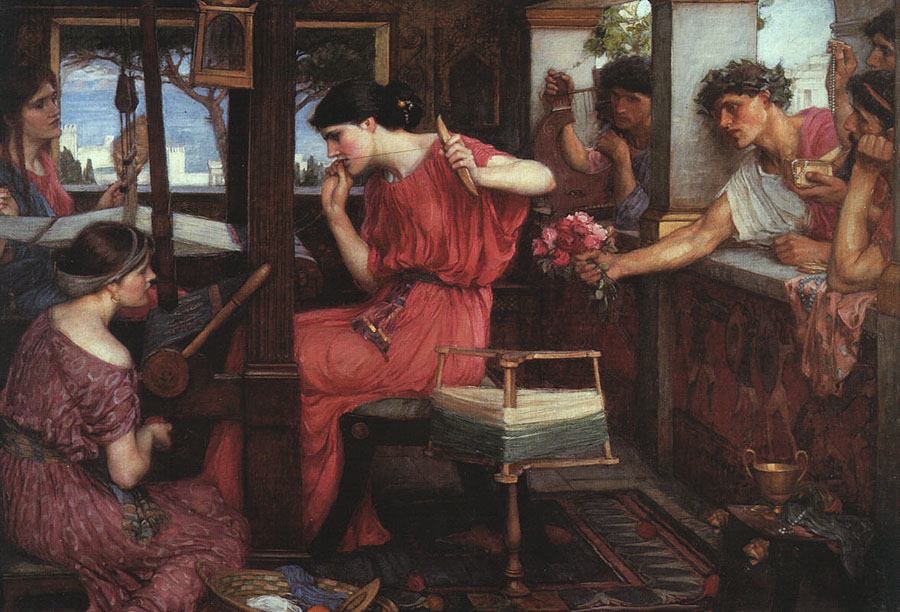
In 1912 Waterhouse was an established Royal Academician near the end of his career. The same year he exhibited Penelope and the Suitors and the portrait of Miss Betty Pollock at the Royal Academy, showing that portraiture and literary subject painting continued side by side. [4]
This chronological proximity is revealing. Margaret’s restrained oval and the densely staged Penelope could emerge from the same studio practice.
Both require attention to costume, surface and the expressive potential of a woman’s pose. Their purposes, however, are distinct.
Penelope belongs to Homeric narrative and must remain recognisable through loom and suitors. Margaret belongs to contemporary society and must remain recognisable as herself.
Portrait painting could sharpen skills used elsewhere: facial modelling, flesh against cloth, hands near symbolic objects and the calibration of eye contact.
Subject painting could in turn enrich portraits by giving Waterhouse experience in strong tonal design and concentrated emotional address.
The exchange should not make Margaret a disguised heroine. It demonstrates continuity of craft across genres.
Late Waterhouse is sometimes imagined only through lush gardens and mythic women. The 1912 portrait shows him responding to a commission with deliberate compression.
Its darkness also complicates any simple account of an increasingly colourful late style. Artists can pursue different solutions simultaneously.
Because the picture remains privately owned, conservation data are not widely available. Claims about exact pigments, revisions or underdrawing should be withheld.
Visual evidence supports a broader observation: Waterhouse could command an oval portrait through shape, tone and a single chromatic accent.
The Sitter and the Artist’s Patrons
The Henderson family’s relationship with Waterhouse extends beyond one portrait. Patronage was rarely a single isolated transaction; introductions, family connections and existing collections could lead to commissions and purchases.
Margaret’s portrait belongs within that network. Her identity helps reconstruct who lived with Waterhouse’s art and why certain pictures remained privately held.
Patronage influences art without mechanically determining it. A commission establishes expectations about likeness, scale and presentation, but the artist still makes visual choices.
The sitter is also more than a passive recipient. Margaret had to agree to dress, pose and the sustained process of sitting. Her acceptance of the final image may be undocumented, yet her participation was essential.
Financial and social records often preserve the patron more readily than the model. In Margaret’s case, the title preserves her only through her husband, while genealogy restores her birth identity.
That recovery can alter how viewers understand the commission. Rather than an abstract “Mrs Schreiber,” we encounter a Henderson daughter within two connected families.
The gardens associated with Charles and Margaret at Marlesford indicate shared investment in designed surroundings. [3] It is appealing to relate that interest to the flower in the portrait, but no direct link is documented.
What can be said is that flowers, gardens and art all belonged to the visual culture of their household.
Waterhouse’s own late paintings repeatedly place women among cultivated blossoms. Margaret’s flower touches that larger practice while staying within portrait convention.
The relation between patron and artist can therefore be read at two scales: the concrete commission and the broader taste they inhabited.
Neither requires a secret narrative. Social history already supplies a rich account of how the picture came to exist.
Names, Evidence and Women’s Identity
Artwork titles are historical evidence, but they are not neutral. “Mrs Charles Schreiber” tells us how Margaret was publicly classified in marriage.
It does not tell us her given name, birth family or full life. Those must be recovered elsewhere. [2]
The title should remain unchanged in cataloguing because changing it could detach the page from auction, exhibition and image records. The surrounding prose can correct its limitations.
This approach differs from silently renaming the painting Margaret Henderson. That might appear emancipatory, but it would create a title not documented as Waterhouse’s.
Good art history can hold both forms together: the authoritative artwork title and the sitter’s restored identity.
It should also distinguish knowledge levels. Margaret’s birth and marriage dates are genealogical claims supported by records; her emotion in 1912 is not available from the canvas alone.
Women in late Victorian and Edwardian portraiture are often discussed through beauty, dress and husbands. Those subjects matter, but they do not exhaust identity.
Margaret participated in country-house and garden culture, belonged to a significant patronage family and lived until 1946. [2] [3] The portrait represents one carefully selected moment within that longer life.
Its flower will fade symbolically; Margaret’s painted face appears fixed. Yet the person continued to age, act and change beyond the oval.
Recognising that difference prevents the portrait from becoming a total biography.
It also restores a useful ethical modesty. Viewers can attend closely to what Waterhouse made without claiming complete possession of the woman he painted.
A Late Portrait’s Quiet Drama
Waterhouse’s famous canvases often turn on danger: poisoned cups, fatal mirrors, irresistible songs or approaching death. The portrait’s drama is quieter.
It emerges from visual opposition. The oval encloses; black cloth absorbs; face and flower return light.
The sitter is both socially presented and personally withheld. We can see her appearance but not hear her voice.
The painting’s concentrated design makes that condition visible. There is no elaborate setting to pretend that we know her world in full.
Late style here is not a matter of unfinished dissolution or luxuriant surface. It is the confidence to reduce.
The flower prevents reduction from becoming austerity. It introduces freshness, asymmetry and a living colour beside formal black.
Margaret’s adult composure provides the human centre. She neither acts out a story nor withdraws into anonymity.
Seen beside Waterhouse’s other 1912 works, the portrait expands our sense of his range. He could stage Penelope under siege at a loom, paint adolescent Betty Pollock before a lily pond and contain Margaret Schreiber within a dark oval.
Each woman requires a different interpretive contract. Penelope is fictional, Betty and Margaret historical; Betty was fourteen, Margaret an adult married sitter; their backgrounds perform different tasks.
Quality and consistency depend upon preserving those distinctions rather than applying one generic account of feminine beauty.
The quiet portrait then becomes indispensable evidence. It shows Waterhouse adapting familiar strengths—face, fabric, flower and gaze—to the obligations of an individual likeness.
Portrait and Public Record
The contrast between the painting’s specificity and its limited public record is instructive. Margaret’s appearance is presented with confidence, yet the work’s later ownership, original commission papers and detailed exhibition history are not readily available.
Private ownership can produce this imbalance. An image may be reproduced widely while the physical canvas remains inaccessible to most scholars. Captions then circulate faster than documentation, and a mistaken collection or sitter identification can become difficult to remove.
For that reason, the manuscript uses the modest formulation “private collection” rather than attaching the portrait to a public museum without an accession record. [1]
The same caution applies to technique. A good reproduction supports analysis of the oval design, dark dress and flower, but it cannot reveal stretcher labels, changes beneath the paint or the exact condition of the surface.
Future conservation or archival research might establish who commissioned the work, where it first hung and whether Waterhouse made preparatory drawings. Until then, those remain questions rather than narrative gaps to fill.
The secure facts are already meaningful: a named adult sitter, a documented year, an oval oil and a family connected to Waterhouse’s patronage world. Precision does not require completeness.
Related Pages
- The Lady of Shalott: Compare Waterhouse's best-known literary composition.
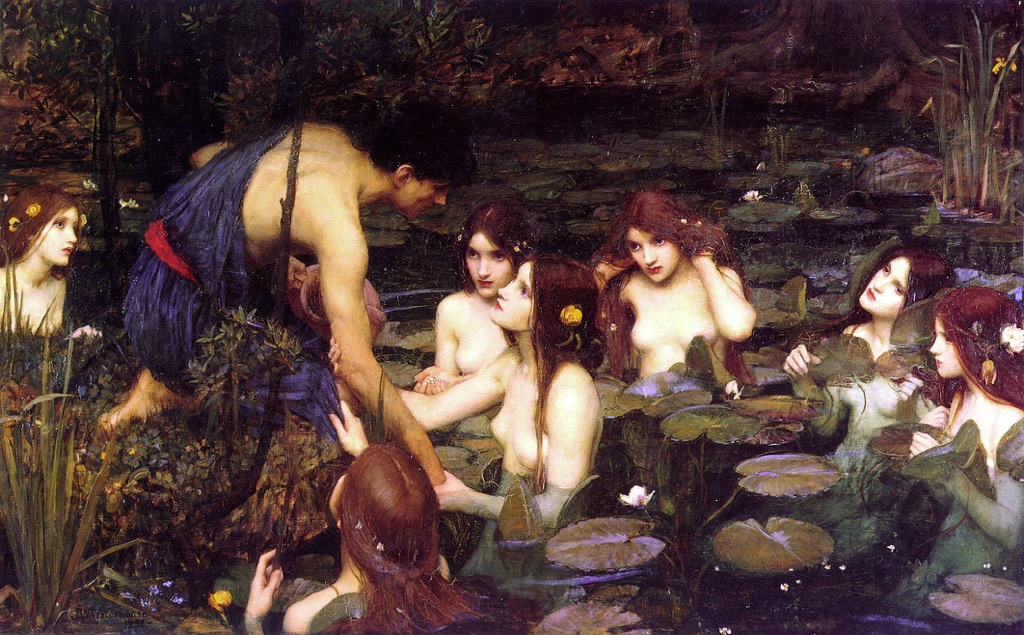
- Hylas and the Nymphs: Compare another major mythological scene.
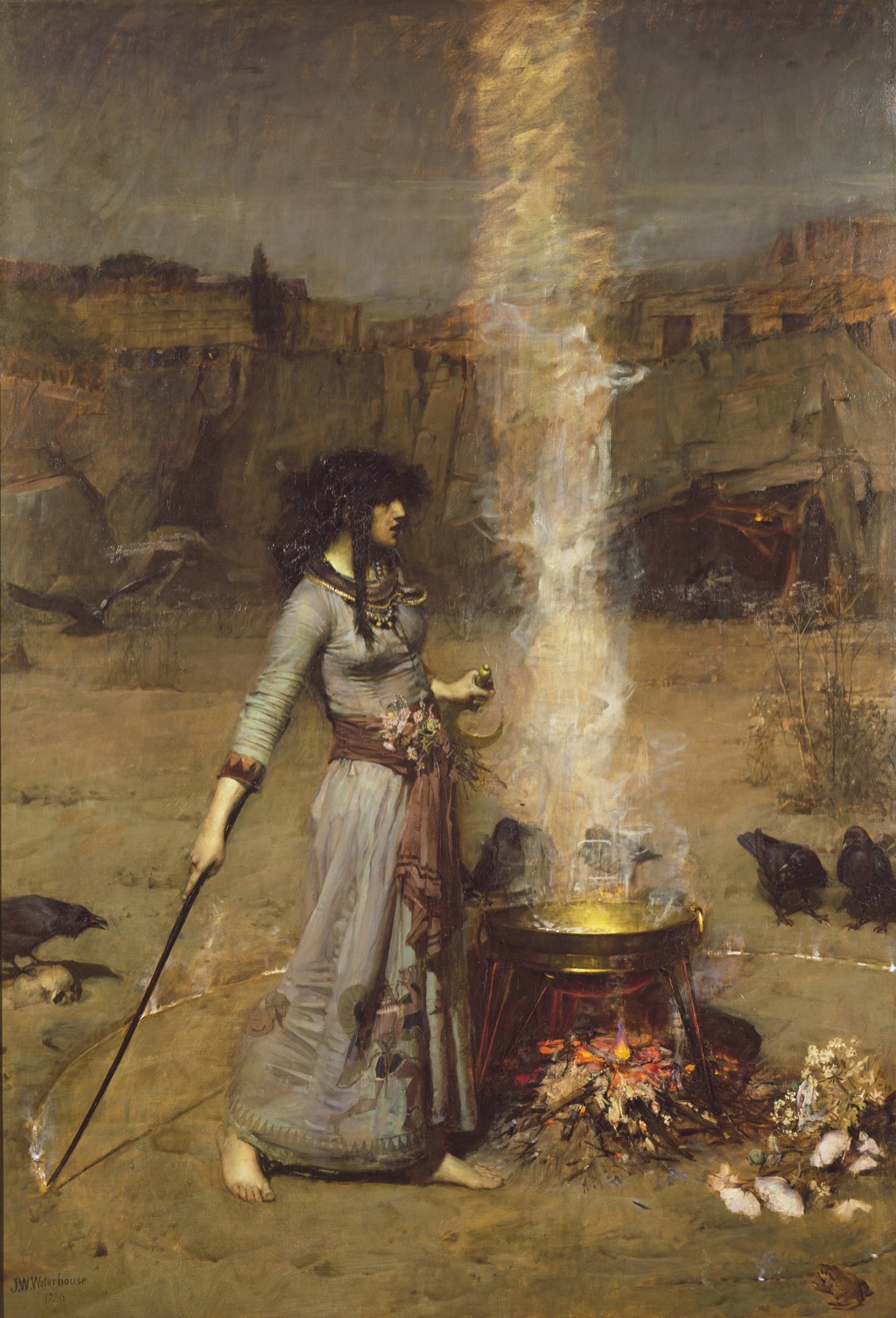
- The Magic Circle: Compare Waterhouse's treatment of ritual and symbolism.
Frequently Asked Questions
She was Margaret Henderson Schreiber (1879–1946), daughter of Alexander Henderson and Jane Ellen Davis. She married Charles Shuldham Schreiber in 1900. [2]
The work is dated 1912. [1]
Oil on canvas, 76 × 64 cm, in an oval format. [1]
No documented mourning occasion is attached to the work. Black should first be understood as formal dress and a major tonal element.
No specific symbolic meaning is documented. It functions visibly as a small organic and coloured contrast to the black dress.
Its present location is not publicly identified and it is generally listed as privately owned. [1]
Discussion
Portrait of Mrs Charles Schreiber is most precise when its apparent simplicity is preserved. Margaret Henderson Schreiber sits within an oval, wearing black and accompanied by a flower. Those facts support an analysis of tone, format and social presentation without the need to invent a literary role or private emotion.
Recovering Margaret’s name is equally important. It places the conventional title within the history of marriage and patronage while recognising the sitter as an adult individual. The Henderson and Schreiber contexts explain how such a portrait could enter a private cultural world, but they do not replace the person at its centre.
Reader Insights
Which visible detail most changes the way you read this page?
Which source or comparison helps the work feel less familiar and more specific?
What question would you bring back to the painting after reading?
Join the Conversation
Share your reading of this page below.
References
- Wikimedia Commons, “John William Waterhouse: Portrait of Mrs Charles Schreiber,” object summary recording date, medium, dimensions, oval format and private location. View source.
- Darryl Lundy, The Peerage, “Margaret Henderson,” sourced genealogical summary, including parentage, marriage and life dates. View source.
- Suffolk Gardens Trust, “Marlesford and the Schreibers,” research newsletter on Charles and Margaret Schreiber’s family and garden context. View source.
- Royal Academy of Arts, Exhibition of the Royal Academy of Arts (1912), catalogue context for Waterhouse’s works exhibited that year. View source.