 by Tom Gurney
Tom Gurney BSc (Hons) is an art history expert with over 20 years experience
Published on June 19, 2020 / Updated on October 27, 2026
Email: tomgurney1@gmail.com / Phone: +44 7429 011000
Green River Cliffs, Wyoming: Introduction
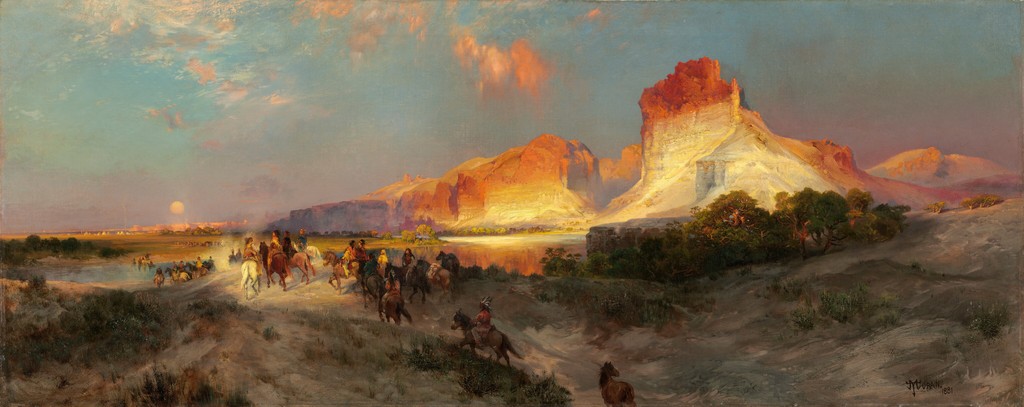
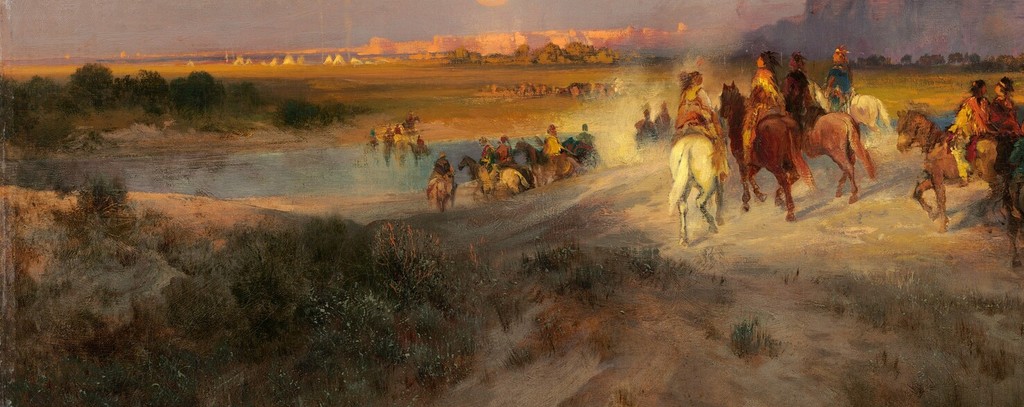
Thomas Moran’s Green River Cliffs, Wyoming is an oil on canvas dated 1881, now in the National Gallery of Art. Its long, low format sets a procession of riders beneath brilliant cliffs. The landscape appears spacious and remote, yet the subject came from a place Moran first reached by railway. That relationship between modern access and a deliberately selected view is central to the picture. [1]
The painting is a distinct version within a subject he revisited repeatedly. It should not be confused with the Amon Carter Museum’s 1874 Cliffs of Green River or Crystal Bridges’ 1878 Green River, Wyoming. Here, a glowing central wall, a winding human movement and a broad sky create a panorama whose effect depends on their different scales.
At a Glance
- ArtistThomas Moran
- TitleGreen River Cliffs, Wyoming
- Date1881
- MediumOil on canvas
- Canvas63.5 × 157.5 cm (25 × 62 in.)
- CollectionNational Gallery of Art
- Accession2011.2.1
- CreditGift of the Milligan and Thomson Families
- First encounter with Green River1871
Where this work sits in Moran’s career
The Chasm of the Colorado
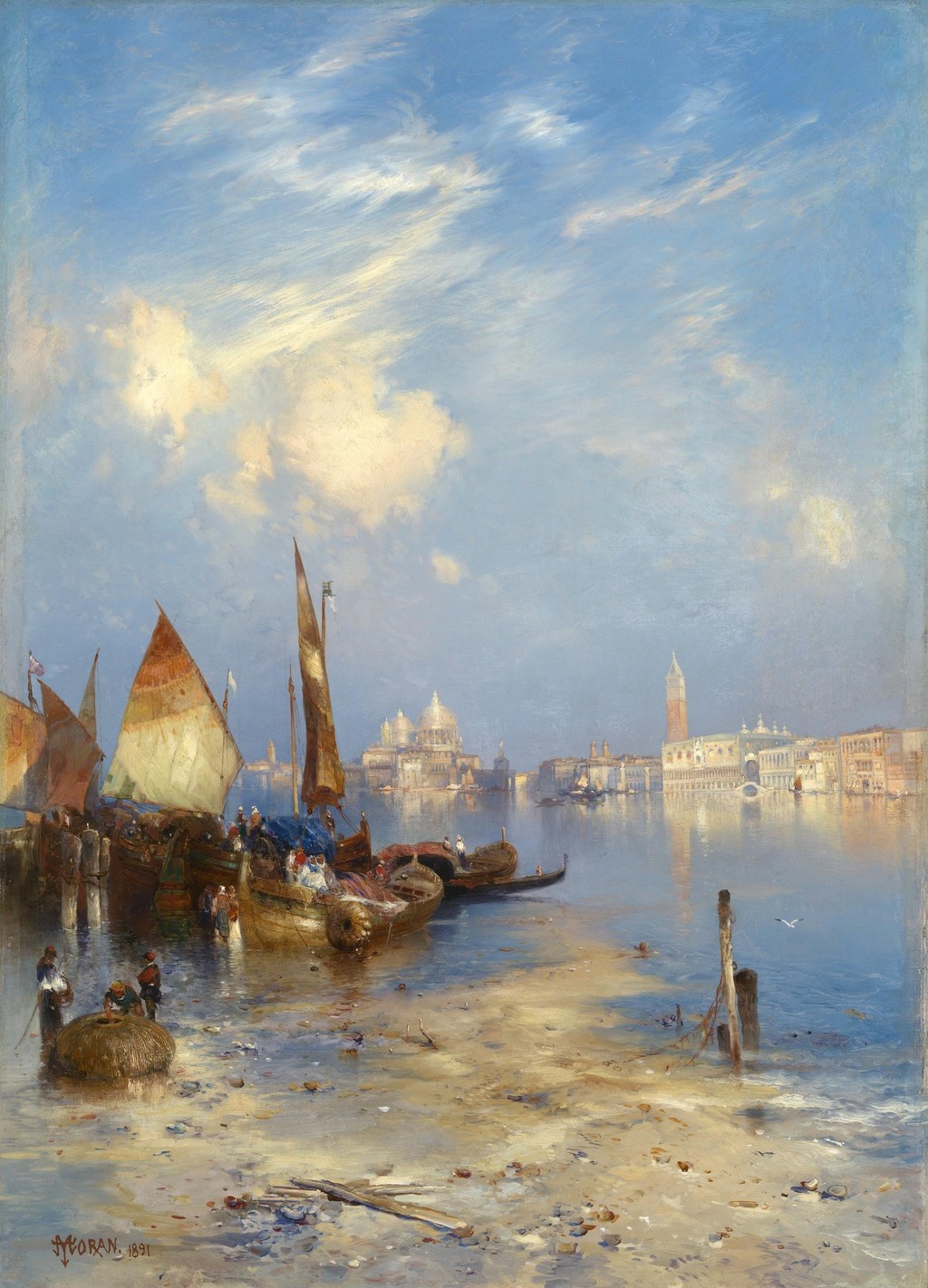
1873–1874; completed in 1874A View of Venice
1891Point Lobos, Monterey, California
1912, signed and datedContents
- A landscape encountered on the way west
- The panorama and its unequal halves
- How the riders create depth
- Light, colour and the apparent solidity of rock
- The river's connecting role
- What a railway photograph reveals
- Idealisation and contemporary belief
- Three works, three different arrangements
- A date within an established western career
- The collection record and the picture's identity
A landscape encountered on the way west
Moran reached Green River in 1871 while travelling towards the Yellowstone survey. The railway gave him access to a western landscape unlike the Pennsylvania river valleys he had painted earlier. A small study bears his later inscription identifying it as his first sketch made in the West. The National Gallery catalogue places that encounter before his arrival with Hayden’s party in Montana. [2]
Green River was therefore an important subject within the journey even though Yellowstone was its principal destination. Cliffs and isolated buttes could be recorded before the artist reached the geysers and canyon. He collected material that remained useful after returning east. The 1881 canvas belongs to this continuing development, rather than being a painting completed at the roadside in 1871.
The distinction between visit and finished work matters. A date on a canvas identifies that particular object, while a field study records another stage in the artist’s experience. Ten years separated the first western encounter from this painting. During that interval Moran had developed major public canvases and an extensive body of western images.
His success did not depend solely on finding a new place. It also depended on converting observations into pictures suited to exhibition, collecting and reproduction. Green River offered forms that could be rearranged across several formats. A butte, a strip of water and an open foreground could support very different balances of mass and distance.
Annotated Details from Green River Cliffs, Wyoming
Compare these details with the full composition. The numbered overview and crops come from the same original image.
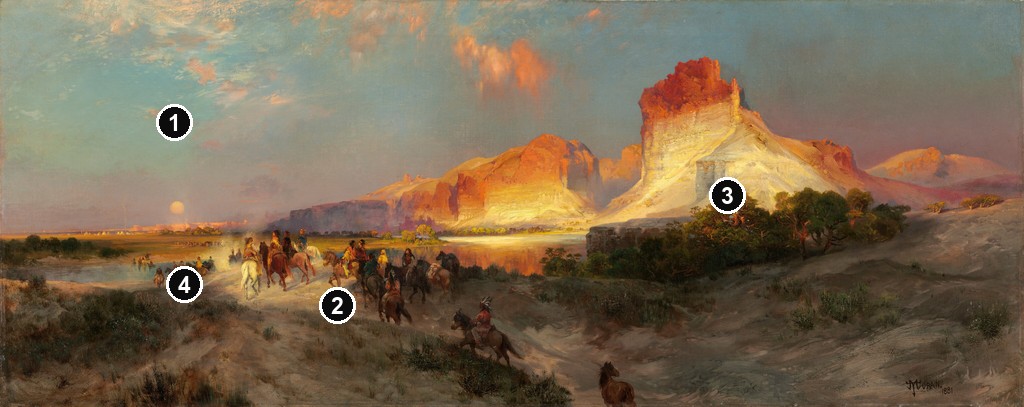
Details from GREEN RIVER CLIFFS, WYOMING
Open a detail to see it more closely.
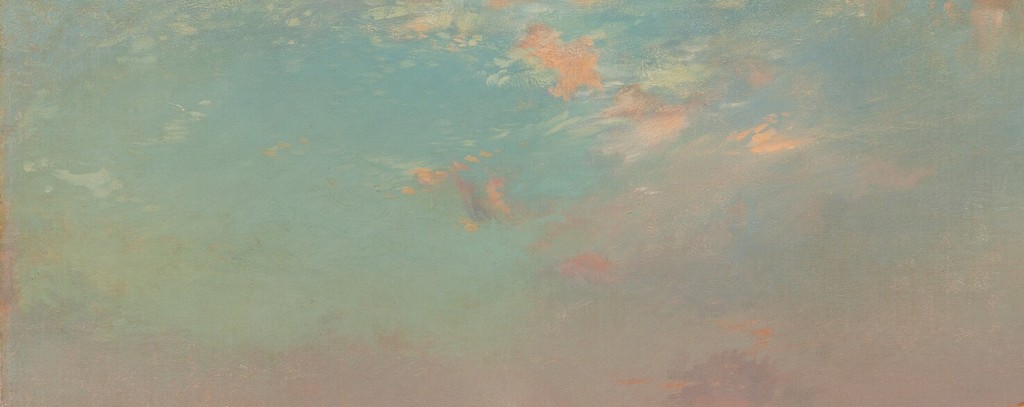
Open sky to the left
Scattered warm cloud breaks the blue-grey sky. Its open expanse contrasts with the crowded passage of riders and the tall cliffs to the right.
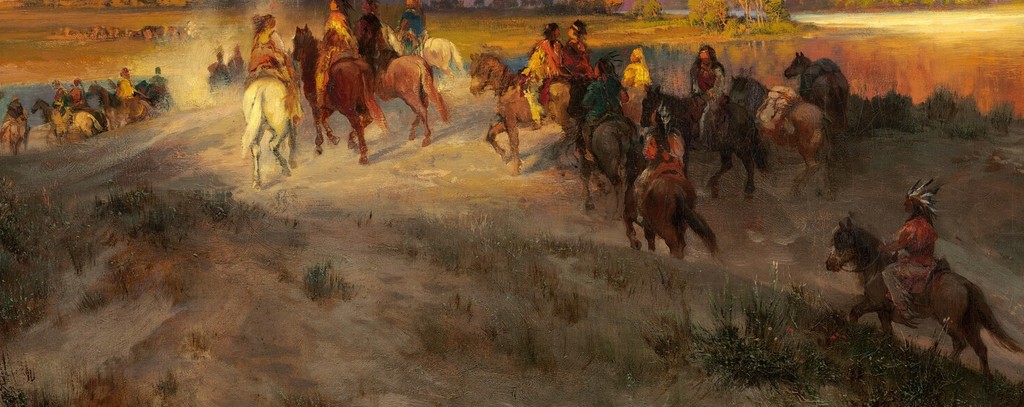
How the riders create depth
The procession begins near the lower edge and winds away towards the river. Individual horses are largest nearest the spectator. Further along, riders overlap and become smaller, until the group breaks into a less distinct band. This change supplies a readable scale within a landscape whose rock formations could otherwise be difficult to measure.
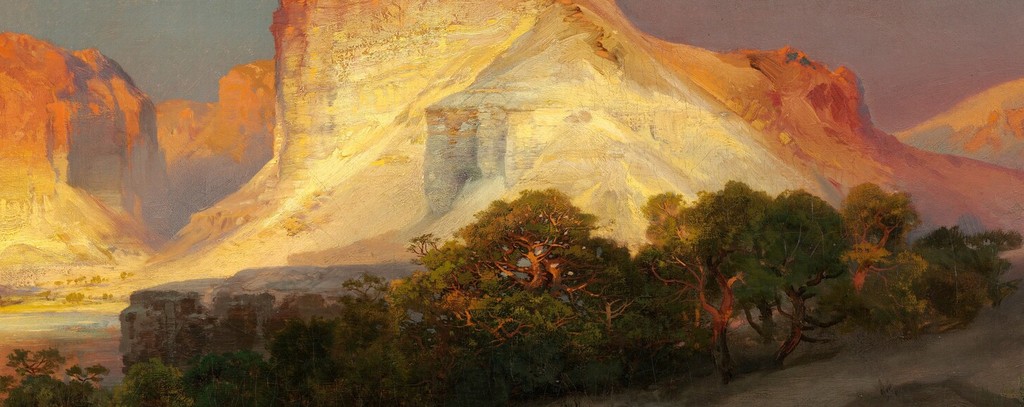
Light, colour and the apparent solidity of rock
The rock is luminous because Moran sets warm and pale passages against darker areas. Reddish upper edges contrast with a cream-coloured face; cooler grey planes interrupt the brightness. Colour helps divide the formation into surfaces with different orientations. The cliff consequently appears substantial rather than merely brightly outlined.
The river's connecting role
Water lies across the middle distance and turns towards the left. Its calm surface differs from the rough ground and sharply broken rock. The river provides a horizontal interval where reflections and open colour replace the more complicated foreground forms. It gives the eye a temporary release from the procession and vegetation.
The panorama and its unequal halves
The width is the first organising fact. The canvas extends much further sideways than vertically. It allows the eye to move along the skyline while still concentrating attention on one dominant cliff. Its proportions make a broad sweep possible without requiring every part of the view to carry equal visual weight.
The right half holds the strongest mass of rock. A high formation rises above its lower neighbours, with a dark reddish top and a pale face beneath. Sloping material at its base joins it to the land beside the river. Those transitions prevent the cliff from appearing as an isolated cut-out placed against the sky.
On the left, the landscape opens into lower forms and a distant horizon. The round light near that horizon is small compared with the cliff, but clear against the quieter sky. The contrast between open distance and concentrated rock gives the two halves different tasks. One offers breadth; the other supplies the picture’s monumental presence.
The foreground also divides its work. Riders and animals occupy the central and left passages, while dark shrubs and a low rock shelf gather on the right. Open ground lies between these elements. The viewer is not immediately pressed against a wall of detail, but can enter the space through a succession of smaller forms.
A panorama can encourage a continuous scan, yet Moran interrupts it. The large cliff holds attention, the bright water catches it below, and the procession draws it across the lower part. Looking becomes a sequence of returns. The breadth contains several connected focal areas rather than one uniform display of scenery.
How the riders create depth
The procession begins near the lower edge and winds away towards the river. Individual horses are largest nearest the spectator. Further along, riders overlap and become smaller, until the group breaks into a less distinct band. This change supplies a readable scale within a landscape whose rock formations could otherwise be difficult to measure.
The route is not drawn as an uninterrupted line. Bodies, dust, vegetation and uneven ground partly conceal it. That makes the movement feel distributed through the terrain rather than laid on top of it. The viewer has to connect separated passages to understand where the riders are going.
Warm clothing and horses stand against cooler river and distant land. Small coloured accents give the human group visibility without making it compete equally with the cliff. The procession is active, but the landscape remains the dominant physical presence. Its movement measures the land and gives the composition a direction.
The nearest horse is partly cut by the bottom edge. That cropping brings the route into the spectator’s immediate space, suggesting that the procession continues beyond the frame. Far away, small triangular forms suggest an encampment. Together these details create a pictured social world, although they do not establish a documented journey by identifiable individuals.
Moran’s representations of Indigenous people should be read as choices within the painting. Clothing and grouping cannot supply a reliable identification of a named community from the reproduction alone. Nor does their appearance demonstrate that the artist witnessed this particular procession. The scene’s narrative clarity is an artistic effect, not an independent record of an event.
Light, colour and the apparent solidity of rock
The rock is luminous because Moran sets warm and pale passages against darker areas. Reddish upper edges contrast with a cream-coloured face; cooler grey planes interrupt the brightness. Colour helps divide the formation into surfaces with different orientations. The cliff consequently appears substantial rather than merely brightly outlined.
Its face contains horizontal markings as well as upright breaks. The horizontal bands suggest layered structure, while the vertical divisions make the surface irregular. Both are visible pictorial features. Naming an exact geological unit would require other evidence, and the painted marks should not be treated as a measured geological diagram.
The distant cliffs are cooler and less sharply separated. Their reduced contrasts allow them to recede even though their silhouettes remain important. Nearer rocks can therefore appear more solid without every distant feature disappearing. Moran uses difference in clarity to extend space across a relatively shallow height of canvas.
Warm light also travels beyond the main cliff. It touches cloud and distant land, and appears in the river’s reflection. Those repetitions connect the upper and lower portions of the picture. The foreground’s more subdued earth provides a base against which the illuminated middle distance can seem unusually bright.
This is a useful place to distinguish colour effects from claims about materials. A digital image allows discussion of visible relationships, but it does not identify pigments or prove the present condition of the surface. The picture’s yellow, red and cooler passages can be compared without inventing a conservation history.
The river's connecting role
Water lies across the middle distance and turns towards the left. Its calm surface differs from the rough ground and sharply broken rock. The river provides a horizontal interval where reflections and open colour replace the more complicated foreground forms. It gives the eye a temporary release from the procession and vegetation.
The reflection below the illuminated cliff helps join the two banks visually. It does not reproduce every edge with equal precision. Instead, broad warm passages bring the rock’s colour into the lower half. That relationship makes the water part of the overall lighting arrangement, rather than a separate decorative strip.
The river also supplies a destination for the movement of the riders. Their route approaches its edge and carries attention along it towards the distance. Water and human movement therefore reinforce one another. The landscape can be understood through an implied passage across it, as well as through the stationary shapes of its cliffs.
Nothing in that effect requires the composition to be a complete map. The painting offers enough spatial connection to feel coherent, but not enough information to reconstruct every bank or route beyond the frame. A convincing pictorial space and a comprehensive geographical record are different achievements.
Watch: Thomas Moran
Choose a film to explore the artist’s work, its interpretation and its wider setting.
The painting that inspired a National Park
A close discussion of Moran’s landscape and its relationship to the idea of Yellowstone.
Watch on YouTubeWhat a railway photograph reveals
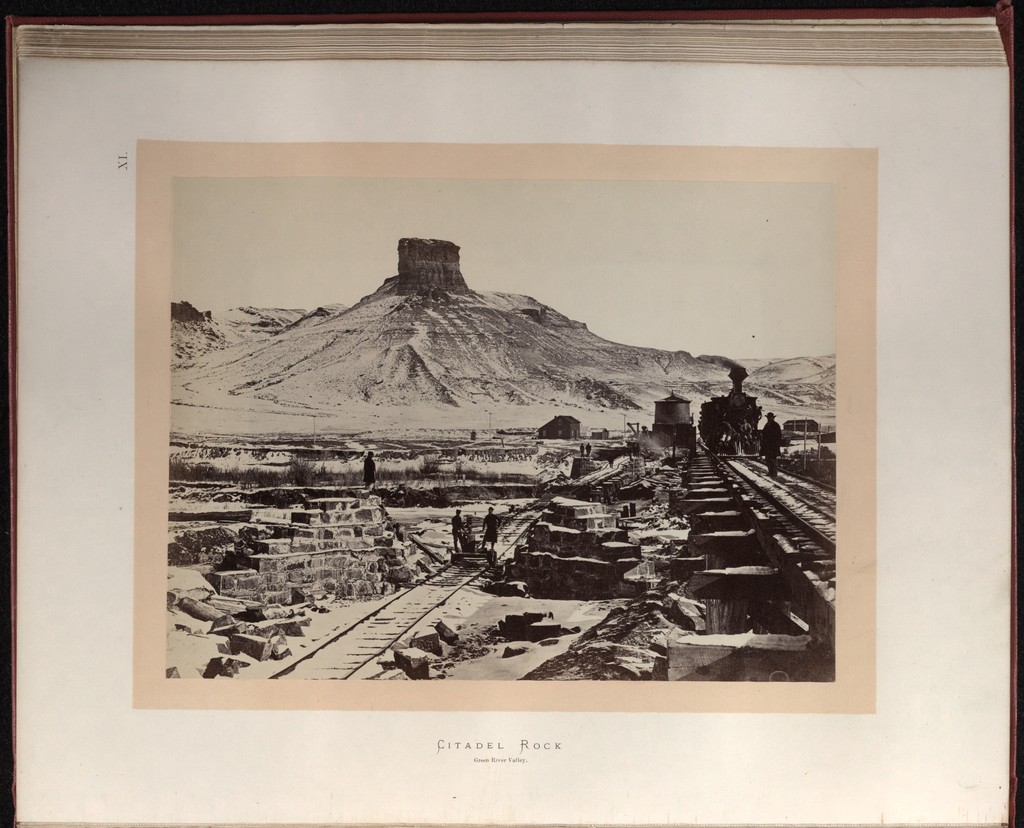
Andrew Joseph Russell’s Citadel Rock, Green River Valley offers a striking comparison. The Library of Congress item record dates the photograph to about 1869. Its reproduction shows track, a locomotive, workers, bridge construction and buildings below a prominent rock formation. The industrial structures are not small accidental additions; they organise much of the foreground. [3]
The photograph’s tracks converge into the distance and direct the eye towards the locomotive. Timber, masonry and the people standing nearby make the work of construction tangible. Citadel Rock remains imposing above them. The image holds geological scale and modern engineering within the same view.
Moran’s canvas replaces that kind of foreground with riders, vegetation and open land. The comparison makes his selection visible. Rail transport helped him reach the subject, while the completed painting gives viewers a landscape without visible railway infrastructure. The two observations can be held together without pretending that his picture shows everything that was there.
The photographs discussed in the catalogue are dated 1868, while the Library of Congress gives this item an approximate 1869 date. The caption should follow the particular item used. Nor should Russell’s viewpoint be declared identical to Moran’s. The comparison concerns representations of the Green River setting, rather than proving a one-to-one match between every rock and camera position.
A photograph also makes choices. Russell selected a station, framed the scene and recorded people arranged within it. Its evidential value does not require treating it as a view without authorship. It gives direct visual evidence of railway work, while Moran’s painting gives evidence of how a landscape could be remade for a different pictorial purpose.
Idealisation and contemporary belief
In Sheldon’s American Painters, published in 1879, Moran described his approach as directed towards idealisation. The statement predates this canvas and explains a general artistic priority. It does not identify every change he made to the Green River composition, but it provides a relevant context for a view shaped through selection. [4]
A contemporary response reproduced in the National Gallery catalogue shows how persuasive such a picture could be. S. G. W. Benjamin praised the harmony of greys and reds and accepted the scene as true to nature. He described the chief rock through the image of a great fortress. The passage was published in 1882 and records a viewer’s response, rather than verifying the painted event. [2]
Benjamin’s conviction is revealing precisely because the picture is carefully constructed. Colour could make unfamiliar formations credible, and the procession could make the foreground narratively accessible. For a distant viewer, those qualities might encourage confidence in the whole scene. Artistic persuasion and documentary certainty were easy to merge.
The catalogue’s modern discussion instead emphasises the removal of railway structures and the romanticised human group. These are interpretations grounded in comparison with historical evidence. They do not make close attention to the painting unnecessary. The arrangement through which the view becomes persuasive remains visible in its light, figures and distribution of space.
Three works, three different arrangements
The Cliffs of Green River in the Amon Carter Museum is dated 1874 and painted on canvas. Its broad river occupies much of the lower right, while riders gather on the left and one moves through the water. The principal cliff rises above that crossing. Water and reflected light have greater foreground prominence than in the National Gallery version. [5]
Crystal Bridges’ Green River, Wyoming is an oil on panel dated 1878. Its particularly low, extended arrangement spreads the river and rocks across the view. The procession lies nearer the right foreground and travels away through a different distribution of masses. The current museum record identifies the support and date; older contradictory descriptions should not replace them. [6]
The 1881 canvas uses its length to balance the brilliant right-hand rock against the open left horizon. The river lies further back than in the Carter picture, and the larger procession supplies a strong diagonal through the foreground. Comparing these structures shows how the same geographical material could become distinct paintings.
The sequence does not establish a simple progression from inaccurate to accurate. Each version makes selections and produces its own relation between spectacle, movement and distance. Differences in support and format also affect how the images are encountered. A familiar title needs the date, medium and collection beside it if the comparison is to remain clear.
A date within an established western career
The 1881 date places the painting after the two large canyon canvases had brought Moran exceptional public attention. He was revisiting an early western subject as an established professional, with experience of turning travel material into images for several audiences. The picture’s broad format belongs to that continuing practice rather than to a beginner’s first attempt to record an unfamiliar place. [2]
It also precedes the 1884 building of the East Hampton studio. The familiar association between Moran and that home should not make every mature western picture a product of its rooms. Separating the dates of journey, painting and residence gives a more useful account of the career. A scene first encountered in 1871 could remain artistically productive through changing places of work.
The collection record and the picture's identity
The National Gallery identifies the painting with accession 2011.2.1 and credits the Milligan and Thomson Families’ gift. Its inscription records the 1881 date. Those facts distinguish the object from related canvases even when older exhibition titles use similar Green River wording. [1]
Collection history can help explain where a painting has circulated, but it should not be used to infer an undocumented commission or a viewer’s private reaction. Nor does a museum’s ownership promise a permanent display location. The secure identity supplies a foundation for looking, rather than a substitute for it.
What remains most striking is the cooperation of unequal elements. The cliff is vast and still; the riders are small and moving; the river reflects rather than asserts a solid mass. Moran brings them into one sustained field of light. The result makes the landscape appear immediately convincing while leaving its historical selections available for closer examination.
Artworks directory
Selected documented works and distinct versions. This directory is not a comprehensive catalogue raisonné. Dates and media retain the distinctions explained in the articles and museum records.
| Name | Date | Medium |
|---|---|---|
| An Arizona Sunset near the Grand Canyon | Date not securely established | Oil painting |
| Autumn Afternoon, the Wissahickon by Thomas Moran | 1864 | Oil on canvas |
| Cascade Falls, Yosemite | Commonly catalogued as 1905 | Catalogued as oil on canvas |
| The Chasm of the Colorado | 1873–1874; completed in 1874 | Oil on canvas, currently mounted on aluminium |
| Children of the Mountain | 1866 in the current museum title; 1867 in the 1997 National Gallery catalogue | Oil on canvas |
| Cliffs of Green River | 1874 | Oil on canvas |
| Cliffs of the Upper Colorado River, Wyoming Territory | 1882 | Oil on canvas |
| East Hampton, Long Island , also captioned Easthampton, L.I | 1897 | Oil on canvas laid on board, according to the reproduction record |
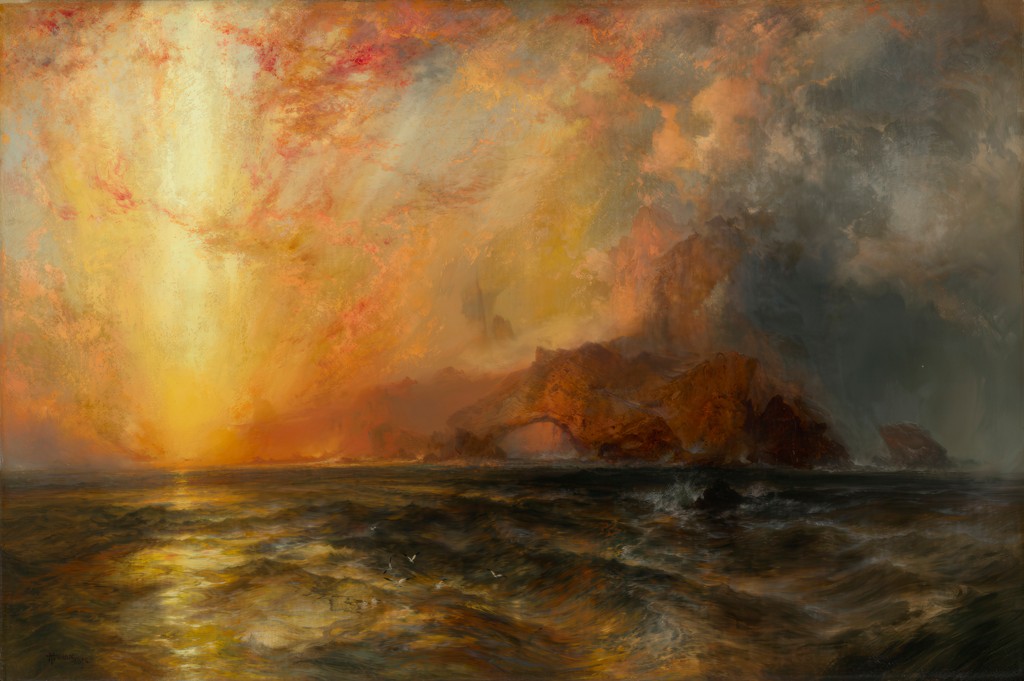
| Fiercely the red sun descending, Burned his way along the heavens | 1875–76 | Oil on canvas |
| Forest Scene | 1870 | Oil on canvas |
| Grand Canyon of the Colorado River | 1892 and 1908 | Oil on canvas |
| Green River Cliffs, Wyoming | 1881 | Oil on canvas |
| Green River, Wyoming | 1878 | Oil on panel |
| The Juniata, Evening | 1864 | Oil on canvas |
| Mosquito Trail, Rocky Mountains of Colorado | 1875 in the 1997 National Gallery exhibition catalogue | Watercolour |
| Mountain of the Holy Cross | 1875 | Oil on canvas |
| The Much Resounding Sea | 1884 | Oil on canvas |
| Point Lobos, Monterey, California | 1912, signed and dated | Oil on canvas |
| Shoshone Falls on the Snake River | 1900 | Oil on canvas |
| Summit of the Sierras | 1872/75, as catalogued by the Art Institute of Chicago | Gouache over graphite on cream laid paper |
| The Teton Range | 1897 | Oil on canvas |
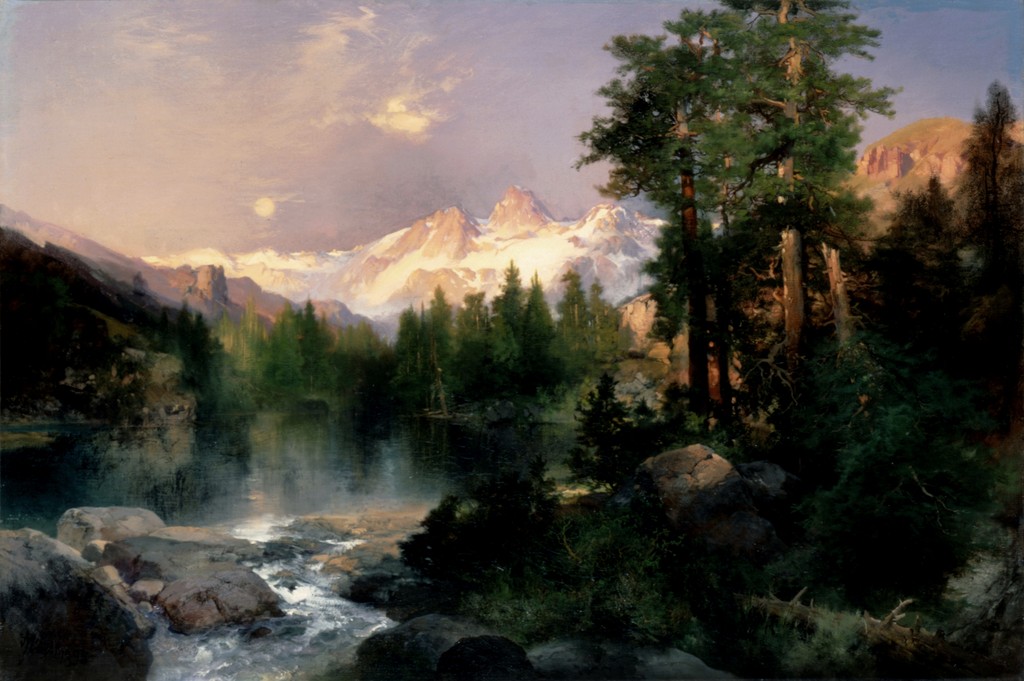
| The Three Tetons | 1895 | Oil on canvas |
| Tower Falls, Yellowstone | 1872 | Watercolour and gouache over graphite on blue laid paper |
| A View of Venice | 1891 | Oil on canvas |
| The Grand Canyon of the Yellowstone | 1872 | Oil on canvas, currently recorded as mounted on aluminium |
| Mountain of the Holy Cross, Colorado (etching) | 1888 | Etching, roulette and aquatint |
| The Resounding Sea (etching) | 1880 | Etching |
| The Much Resounding Sea (later etching) | 1886 in heading; 1888 on plate | Etching, drypoint and roulette |
| Tower Falls (Prang print) | c. 1875; portfolio issued 1876 | Chromolithograph |
| Shoshone Falls (early watercolour) | 1874 | Watercolour |
| Venice (watercolour) | 1888 | Watercolour over graphite |
Frequently Asked Questions
The National Gallery dates this canvas to 1881. Moran first encountered the Green River landscape during his western journey in 1871.
It belongs to the National Gallery of Art, accession 2011.2.1, with the credit Gift of the Milligan and Thomson Families.
No. The Carter canvas is dated 1874. Crystal Bridges also records a separate 1878 oil on panel titled Green River, Wyoming.
The railway helped him reach Green River, but he selected a view without its visible structures. Historical photographs make that difference clear; the canvas is not a complete record of the town.
No particular procession or named community is established by the painting. The riders belong to Moran’s pictorial arrangement and should not be treated as a verified record of an event.
Discussion
Compare Moran’s foreground with Russell’s railway photograph. How does each image direct your attention, and what changes when the route through the land is made by riders rather than railway tracks?
Reader Insights
Editorial prompts for close looking and discussion.
Compare Moran’s foreground with Russell’s railway photograph. How does each image direct your attention, and what changes when the route through the land is made by riders rather than railway tracks?
Which source or image helps you assess the interpretation?
How does this page compare with the related works linked above?
Join the Conversation
Share your reading of this page below.
References
- National Gallery of Art, Green River Cliffs, Wyoming, 1881, object identity, inscription and collection record.
- Nancy K. Anderson and contributors, Thomas Moran, 1997, pp. 48–50, 131 and selected chronology; Benjamin’s 1882 response read in the catalogue transcription.
- Library of Congress, Andrew Joseph Russell, Citadel Rock, Green River Valley, c. 1869, photographic item record.
- G. W. Sheldon, American Painters, 1879, Moran chapter, especially p. 125.
- Amon Carter Museum of American Art, Cliffs of Green River, 1874.
- Crystal Bridges Museum of American Art, Green River, Wyoming, 1878.
- Splash image source.
Green River Cliffs, Wyoming, 1881. National Gallery of Art, Gift of the Milligan and Thomson Families. Image source. Public domain; NGA Open Access. Resized only; complete source image retained.
- Splash image source.
Citadel Rock, Green River Valley, circa 1869. Railway bridge construction shows the industrial landscape omitted from many Moran paintings. Andrew J. Russell / Library of Congress, LC-DIG-ppmsca-03147. Image source. No known restrictions on publication. Resized only; complete source image retained.
- Splash image source.
Green River Cliffs, Wyoming, 1881. National Gallery of Art, Gift of the Milligan and Thomson Families. Image source. Public domain; NGA Open Access. Numbered circles added to the overview; details cropped from the original reproduction. No colour adjustment or sharpening.
- Splash image source.
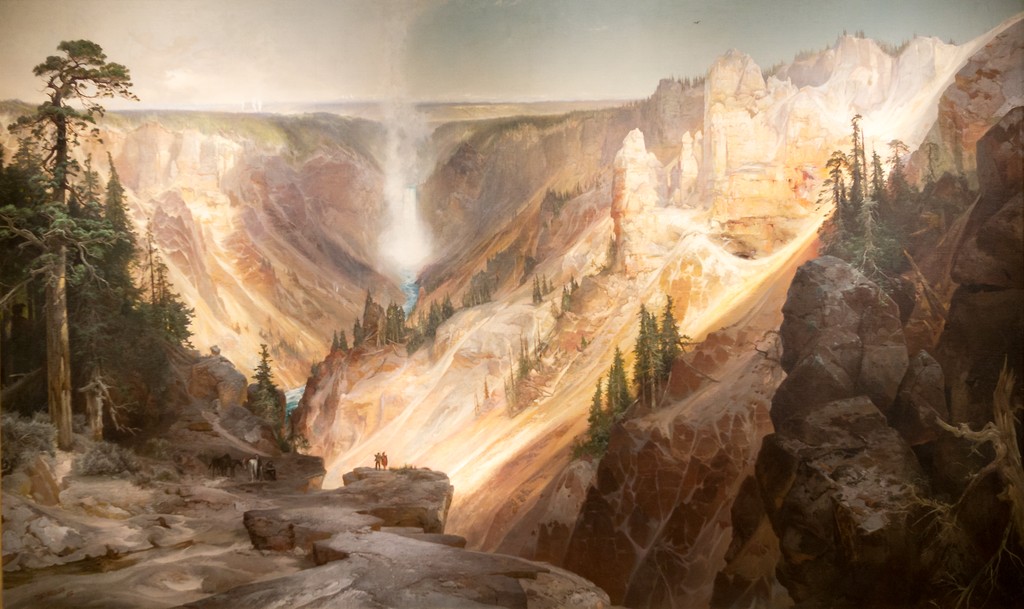
The Grand Canyon of the Yellowstone, 1872. Wuselig / Wikimedia Commons, CC BY-SA 4.0; U.S. Department of the Interior Museum painting. Image source. CC BY-SA 4.0; also marked PD-Art. Outer museum frame cropped; resized. Painted composition retained; photographic perspective unchanged. This image derivative is available under the same licence.
- Splash image source.
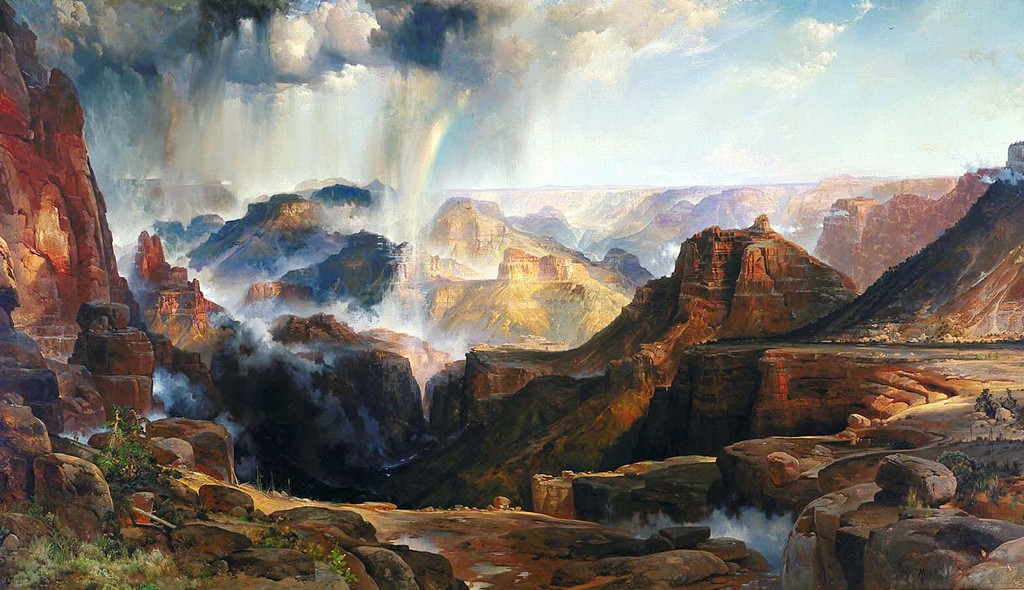
The Chasm of the Colorado, 1873–1874. U.S. Department of the Interior Museum; faithful reproduction via Smithsonian American Art Museum / Wikimedia Commons. Image source. Public Domain Mark; faithful two-dimensional reproduction. Resized only; complete source image retained.
- Splash image source.
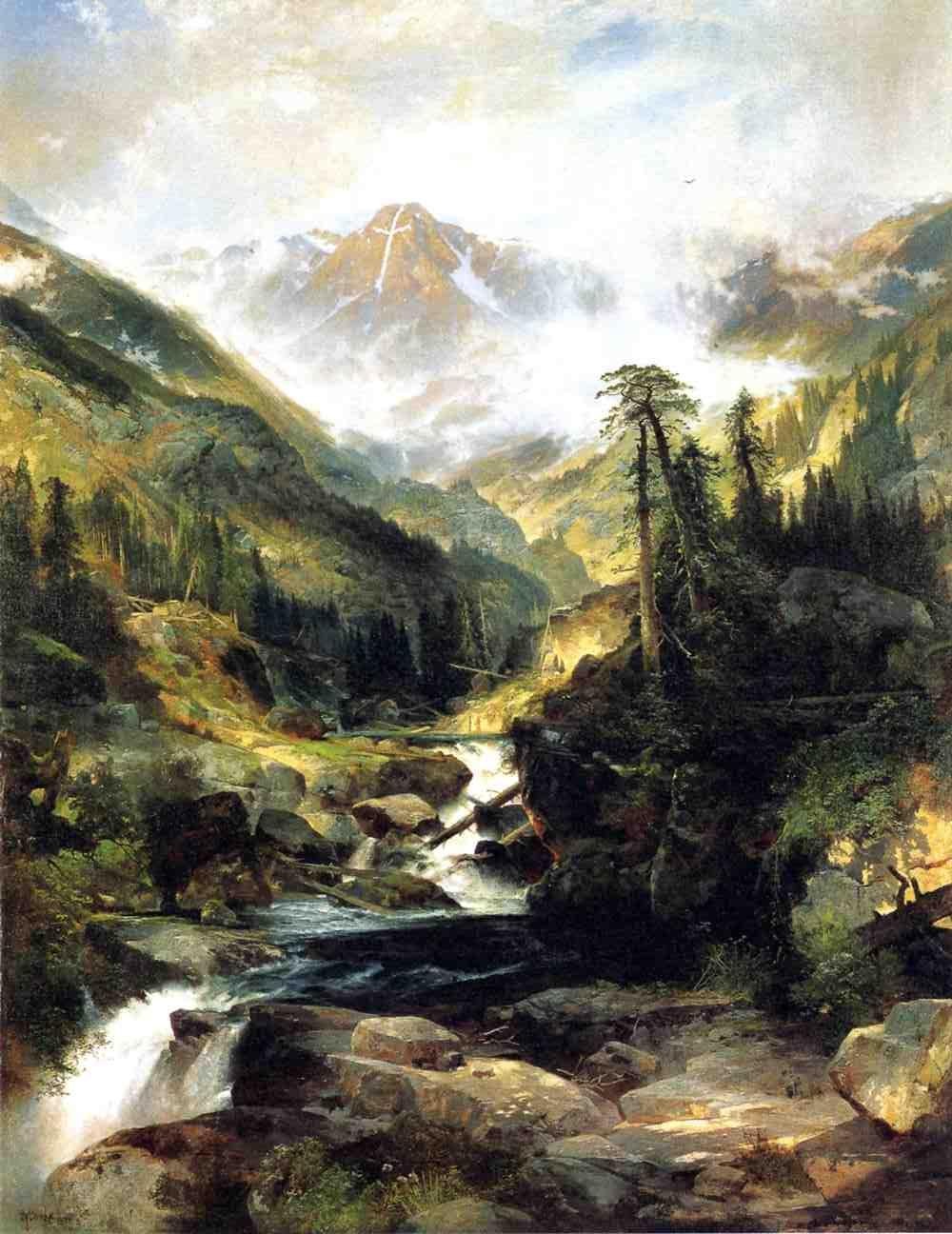
Mountain of the Holy Cross, 1875. Autry Museum of the American West; faithful reproduction via Wikimedia Commons. Image source. Public Domain Mark; faithful two-dimensional reproduction. Resized only; complete source image retained.
- Splash image source.
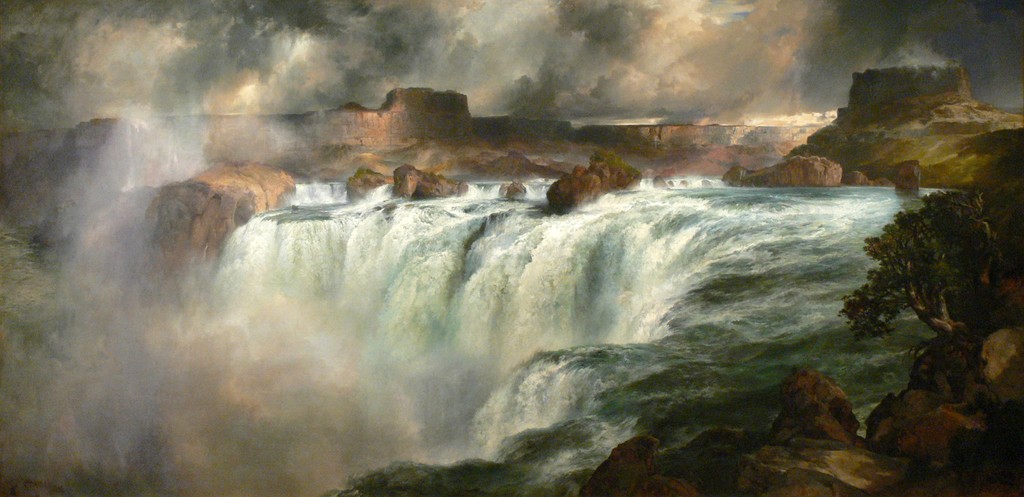
Shoshone Falls on the Snake River, 1900. Wolfgang Sauber / Wikimedia Commons, CC BY-SA 3.0; Gilcrease Museum painting. Image source. CC BY-SA 3.0; also marked PD-Art. Resized only; complete source image retained. This image derivative is available under the same licence.
- Splash image source.
Green River Cliffs, Wyoming, 1881. National Gallery of Art, Gift of the Milligan and Thomson Families. Image source. Public domain; NGA Open Access. Resized only; complete source image retained.
- Splash image source.
A View of Venice, 1891. Smithsonian American Art Museum, Transfer from the U.S. Department of the Interior, National Park Service, 1968.120.1. Image source. Free to use; Smithsonian Open Access. Resized only; complete source image retained.
- Splash image source.
The Three Tetons, 1895. The White House Collection, Gift of C. R. Smith; faithful reproduction via Wikimedia Commons. Image source. Public Domain Mark; faithful reproduction of a two-dimensional public-domain work. Resized only; complete source image retained.