 by Tom Gurney
Tom Gurney BSc (Hons) is an art history expert with over 20 years experience
Published on June 19, 2020 / Updated on October 27, 2026
Email: tomgurney1@gmail.com / Phone: +44 7429 011000
Thomas Moran Quotes: Introduction
Thomas Moran's statements about art place observation and invention beside one another. He defended the careful study of nature, yet rejected the idea that a painting should simply reproduce a place. He also described himself as an impressionist while distancing himself from the contemporary school of Impressionism. These apparent tensions become clearer when his words are read in their original settings.
The selections below come principally from two historical publications: G. W. Sheldon's American Painters of 1879, which reports Moran's statements, and Knowledge a Prime Requisite in Art, published under Moran's name in Brush and Pencil in April 1903. The latter is identified in its original footnote as a portion of an interview. It should not be described as a private letter or an independently recorded speech. [1] [2]
At a Glance
- Main sourcesAmerican Painters, 1879; Brush and Pencil, April 1903
- TopicsObservation, idealisation, knowledge, skill, impression and sustained work
- AttributionSheldon reports the earlier statements; the 1903 publication carries Moran's byline and identifies an interview excerpt
- Reading principleA quotation's surrounding argument matters as much as its memorable wording
Contents
- Observation and invention
- What topography meant in this argument
- Knowledge behind the hand
- Skill as a means
- His use of impressionist
- Originality and repeated work
- An evaluation of an individual painting
- Reading his words beside the pictures
Observation and invention
“I place no value upon literal transcripts from Nature.”
Reported by G. W. Sheldon, 1879, p. 125. [1]
This is a forceful statement, but its continuation prevents a simple interpretation as indifference to nature. Moran explains that nature provides the material from which a picture is constructed. He is rejecting literal transcription as the sufficient purpose of art, while retaining the importance of what the artist observes.
The distinction concerns arrangement. A painter can recognise a rock, a particular quality of colour or an atmospheric effect and still change their relationships within the finished image. The visible parts may be grounded in study even when the complete composition does not reproduce one unaltered view.
“My general scope is not realistic; all my tendencies are toward idealization.”
Reported by Sheldon, 1879, p. 125. [1]
The original uses the spelling “idealization”. Moran's explanation links it with the aim of conveying an impression of a region. It is a statement about the kind of picture he wants to make, rather than permission to attribute every difference between a canvas and a photograph to carelessness.
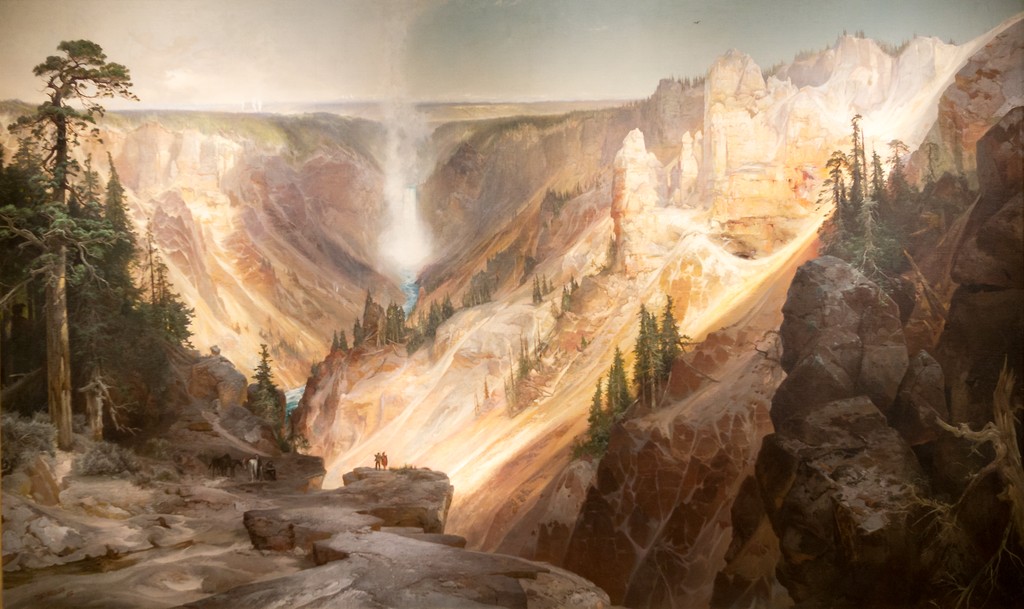
His Grand Canyon of the Yellowstone offers a particularly relevant comparison because he names that work in the surrounding passage. He describes the colour that impressed him and the rearrangement of forms. The quotation therefore has an artwork context, not merely the status of a general motto.
What topography meant in this argument
“Topography in art is valueless.”
Reported by Sheldon, 1879, p. 125. [1]
Read alone, the sentence can sound like a dismissal of all accuracy. The following discussion is more particular. Moran says that relationships among features need not be preserved literally, while also defending his close attention to the rocks. He distinguishes the organisation of a painting from the reproduction of a place as a place.
That distinction explains why a convincing foreground and a rearranged panorama can coexist. A rock's visible structure may receive painstaking attention while its position serves the overall composition. The artist's declared aim is to communicate the region's character through a picture, rather than to supply a geographical plan.
The sentence should therefore prompt a question when looking at his western canvases: what has been made clear, and what has been changed to make the image work? It does not settle every individual case. Establishing a particular alteration still requires comparison with evidence concerning that painting and its site.
Knowledge behind the hand
“In art, as in any profession, knowledge is power.”
**Published under Moran's name in Brush and Pencil, April 1903, p. 14.** [2]
The opening statement develops into an argument about judgement. Moran lists rocks, trees, atmosphere, torrents and birds among the things a landscape painter needs to know. His attention extends beyond the convenient outlines of a scene. He treats knowledge as the basis from which artistic liberties can be taken intelligently.
“Eyesight is nothing unless backed by brains.”
The same interview excerpt, p. 14. [2]
The memorable phrasing belongs to that argument. Seeing supplies material, but knowledge helps the artist decide what to do with it. The statement links perception with thought; it does not suggest that the eye can be dispensed with. Moran's defence of invention remains attached to familiarity with the subject.
Read beside the 1879 comments, the 1903 passage gives a fuller account of his position. Literal copying is insufficient, but so is invention without study. The finished image depends on both the artist's experience of nature and the decisions made in transforming that experience into a composition.
Skill as a means
“Technical skill is only a means to an end”
**An excerpt from a longer sentence, Brush and Pencil, April 1903, p. 16.** [2]
Moran continues by connecting skill's value with its application to a worthy subject. The quoted fragment is not his entire sentence, and it should not be presented as one. Its emphasis falls on purpose: accomplished handling must contribute to something beyond a demonstration of handling alone.
This helps explain his concern with an immediately apprehended impression. A landscape may contain elaborate details, but the spectator should also experience their relationship as a picture. The individual passages need to serve the larger effect. His argument allows close work and a strong overall impression to support one another.
It is also an opinion expressed by an artist with particular standards. Readers need not accept it as a universal rule for all art. Its value here lies in clarifying the priorities Moran publicly defended and in providing questions to bring to his own work.
Watch: Thomas Moran
Choose a film to explore the artist’s work, its interpretation and its wider setting.
The painting that inspired a National Park
A close discussion of Moran’s landscape and its relationship to the idea of Yellowstone.
Watch on YouTubeHis use of impressionist
“I am an impressionist, but I do not belong to the accepted school of impressionism.”
The interview excerpt, April 1903, p. 16. [2]
The second half of the sentence is essential. Moran uses the term to defend the communication of an impression produced by nature, then criticises the contemporary school associated with the word. Quoting only his opening declaration would remove the qualification he makes immediately afterwards.
His statement therefore does not establish membership of French Impressionism. It reveals a disagreement over the meaning of impression and the methods by which an artist should convey it. The same word can be used as a claim about personal purpose and as the name of a movement from which the speaker distances himself.
The passage also shows how strongly Moran argued for his own standards. His criticism should be identified as his position, rather than adopted as a neutral verdict on other painters. Reading it historically makes room for both his convictions and the approaches he opposed.
Originality and repeated work
“Constant work is the only thing to make the original genius.”
The interview excerpt, April 1903, p. 16. [2]
Moran places this sentence within a distinction between being born with ability and developing that ability. Inspiration alone is insufficient in his account. Work gives the supposed gift its practical expression. The emphasis falls on sustained application rather than a single moment of revelation.
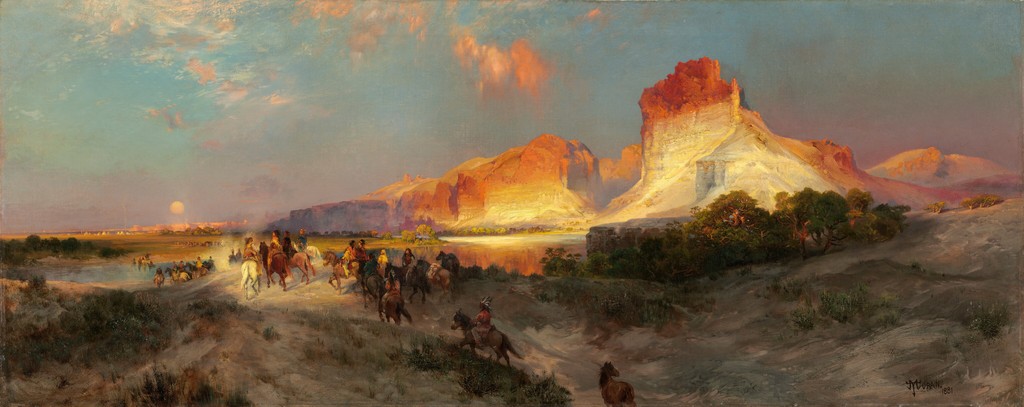
The statement is useful beside an artist's repeated return to a subject. Several Green River paintings, for example, invite comparison of format, atmosphere and the arrangement of cliffs. Recurrence can provide opportunities to make different decisions. The quotation does not prove how every canvas was produced, but it helps explain why continued work mattered to Moran's public account of artistic development.
It also gives a different emphasis from the popular image of the landscape painter suddenly overwhelmed by scenery. A powerful encounter may supply an impulse; the work of constructing an image continues afterwards. Moran's own language directs attention towards that continuing activity.
An evaluation of an individual painting
The Terra Foundation reports Moran's description of Autumn Afternoon, the Wissahickon as his best picture up to that point. This comes through the foundation's account of his Opus List, rather than an autograph independently reproduced here. It concerns an early work and a judgement made within a developing career. [3]
The phrase's time limit matters. An artist calling a work the best so far is not declaring it the finest achievement of his whole life. The statement records an assessment at a particular stage. Read that way, it adds something to the wooded stream and reflected light without becoming an unsupported ranking of all Moran's paintings.
Reading his words beside the pictures
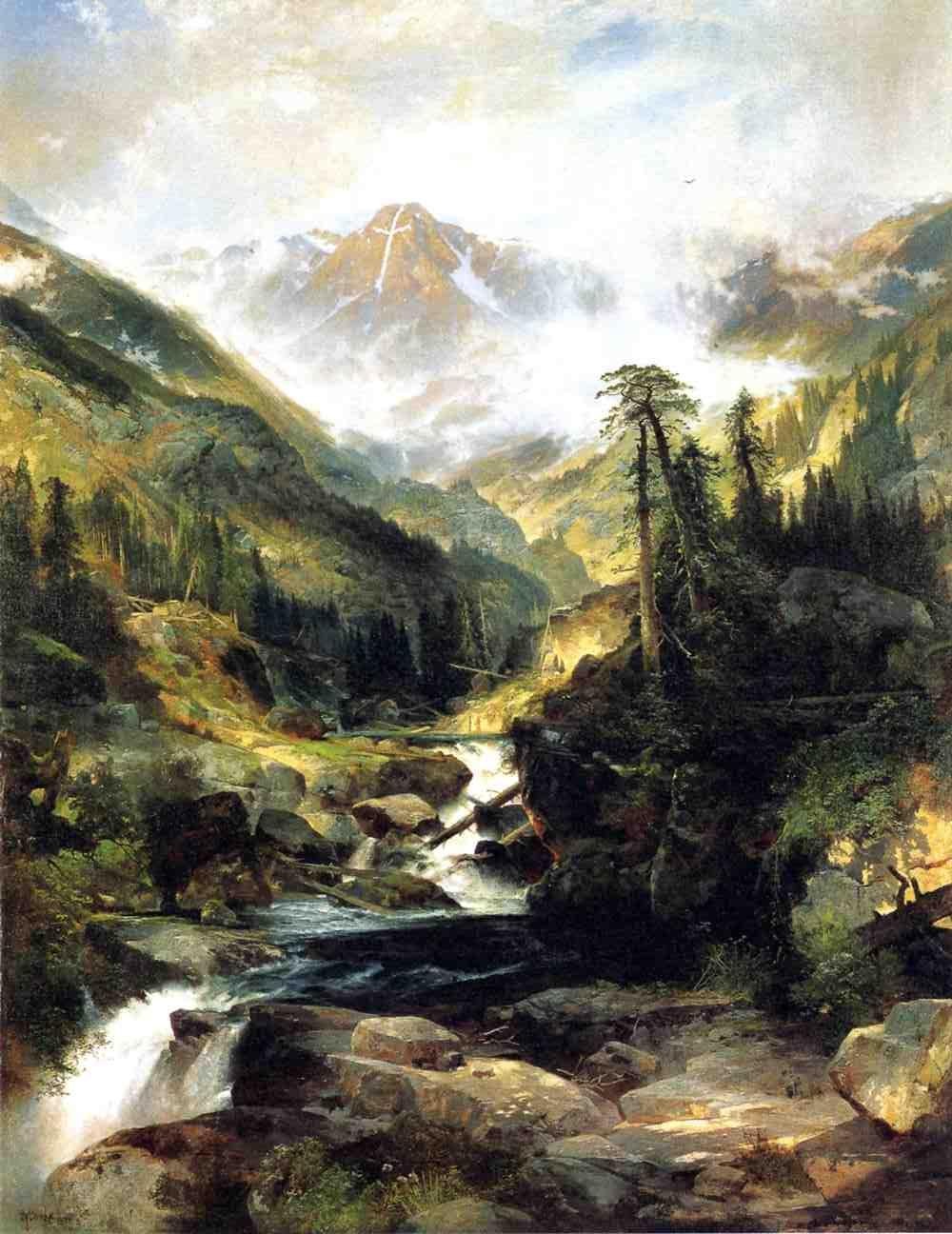
These statements are most useful as starting points for looking. In The Mountain of the Holy Cross, examine how the foreground's detailed rocks relate to the mountain's commanding position. In a Green River view, compare an illuminated cliff with the smaller elements arranged below it. Ask how each part contributes to the larger impression.
The published words do not replace that encounter. They describe priorities, defend choices and sometimes express sharp opinions. Their historical sources make them available for scrutiny, while the paintings allow the viewer to test how convincingly those priorities take visual form. Moran's language becomes more revealing when its memorable sentences remain connected with that continuing act of looking.
Artworks directory
Selected documented works and distinct versions. This directory is not a comprehensive catalogue raisonné. Dates and media retain the distinctions explained in the articles and museum records.
| Name | Date | Medium |
|---|---|---|
| An Arizona Sunset near the Grand Canyon | Date not securely established | Oil painting |
| Autumn Afternoon, the Wissahickon by Thomas Moran | 1864 | Oil on canvas |
| Cascade Falls, Yosemite | Commonly catalogued as 1905 | Catalogued as oil on canvas |
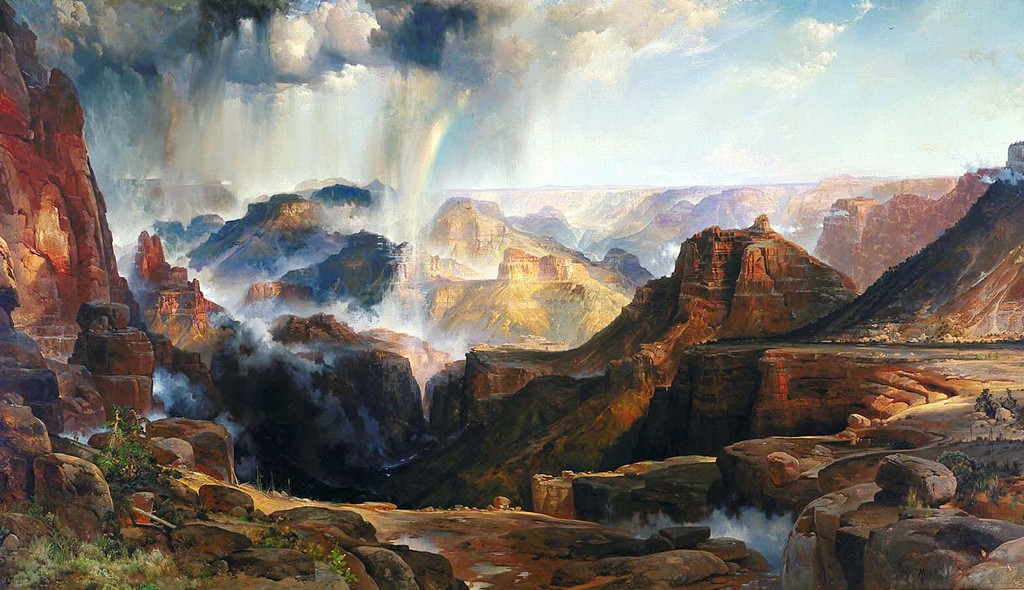
| The Chasm of the Colorado | 1873–1874; completed in 1874 | Oil on canvas, currently mounted on aluminium |
| Children of the Mountain | 1866 in the current museum title; 1867 in the 1997 National Gallery catalogue | Oil on canvas |
| Cliffs of Green River | 1874 | Oil on canvas |
| Cliffs of the Upper Colorado River, Wyoming Territory | 1882 | Oil on canvas |
| East Hampton, Long Island , also captioned Easthampton, L.I | 1897 | Oil on canvas laid on board, according to the reproduction record |
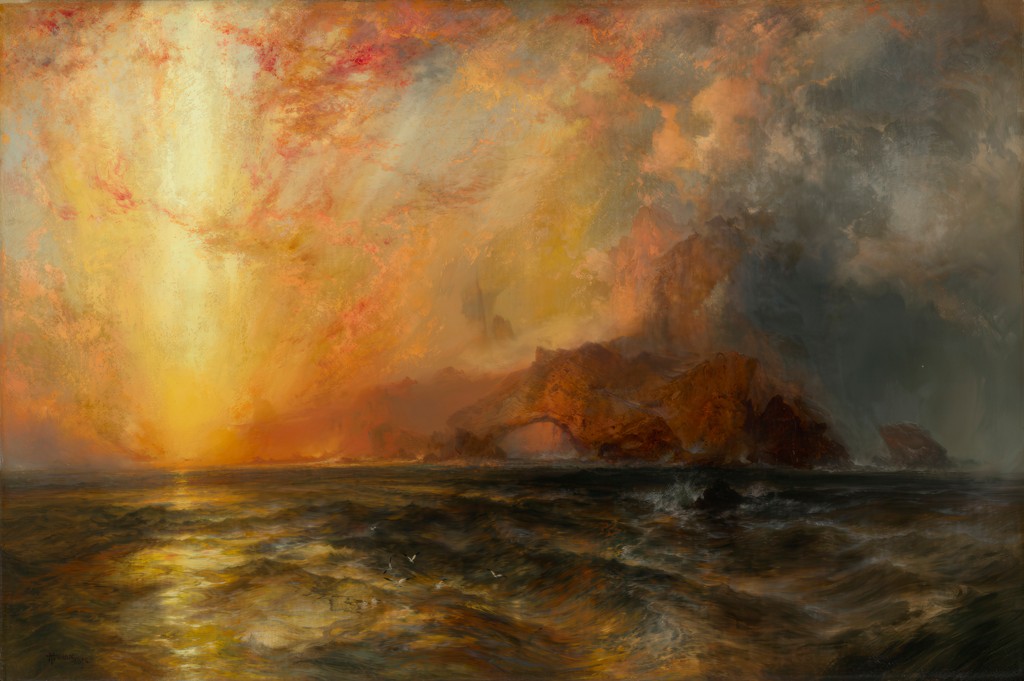
| Fiercely the red sun descending, Burned his way along the heavens | 1875–76 | Oil on canvas |
| Forest Scene | 1870 | Oil on canvas |
| Grand Canyon of the Colorado River | 1892 and 1908 | Oil on canvas |
| Green River Cliffs, Wyoming | 1881 | Oil on canvas |
| Green River, Wyoming | 1878 | Oil on panel |
| The Juniata, Evening | 1864 | Oil on canvas |
| Mosquito Trail, Rocky Mountains of Colorado | 1875 in the 1997 National Gallery exhibition catalogue | Watercolour |
| Mountain of the Holy Cross | 1875 | Oil on canvas |
| The Much Resounding Sea | 1884 | Oil on canvas |
| Point Lobos, Monterey, California | 1912, signed and dated | Oil on canvas |
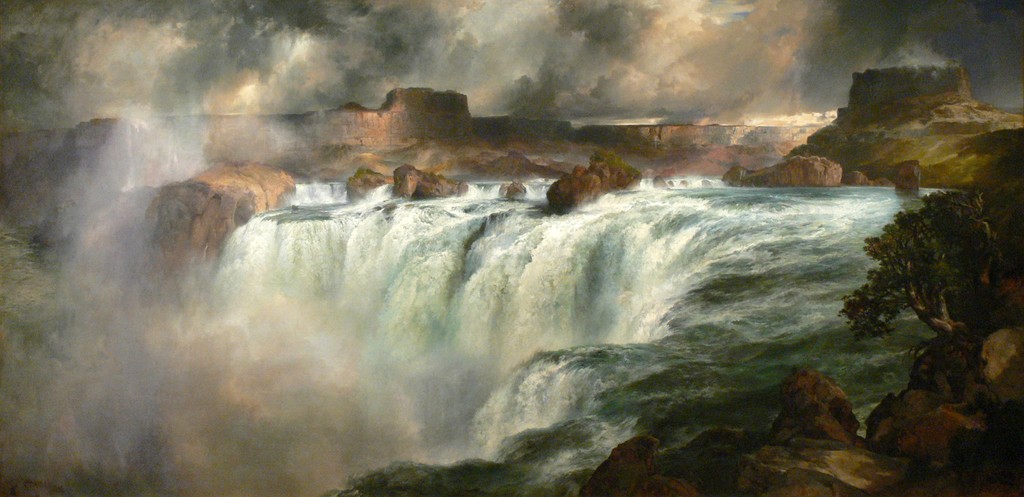
| Shoshone Falls on the Snake River | 1900 | Oil on canvas |
| Summit of the Sierras | 1872/75, as catalogued by the Art Institute of Chicago | Gouache over graphite on cream laid paper |
| The Teton Range | 1897 | Oil on canvas |
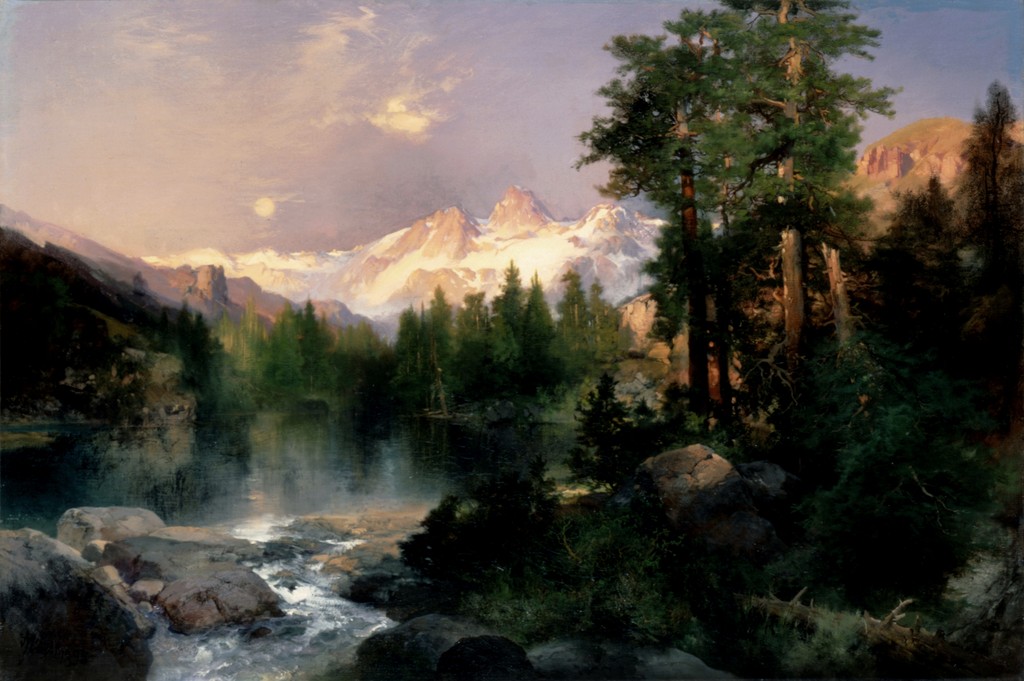
| The Three Tetons | 1895 | Oil on canvas |
| Tower Falls, Yellowstone | 1872 | Watercolour and gouache over graphite on blue laid paper |
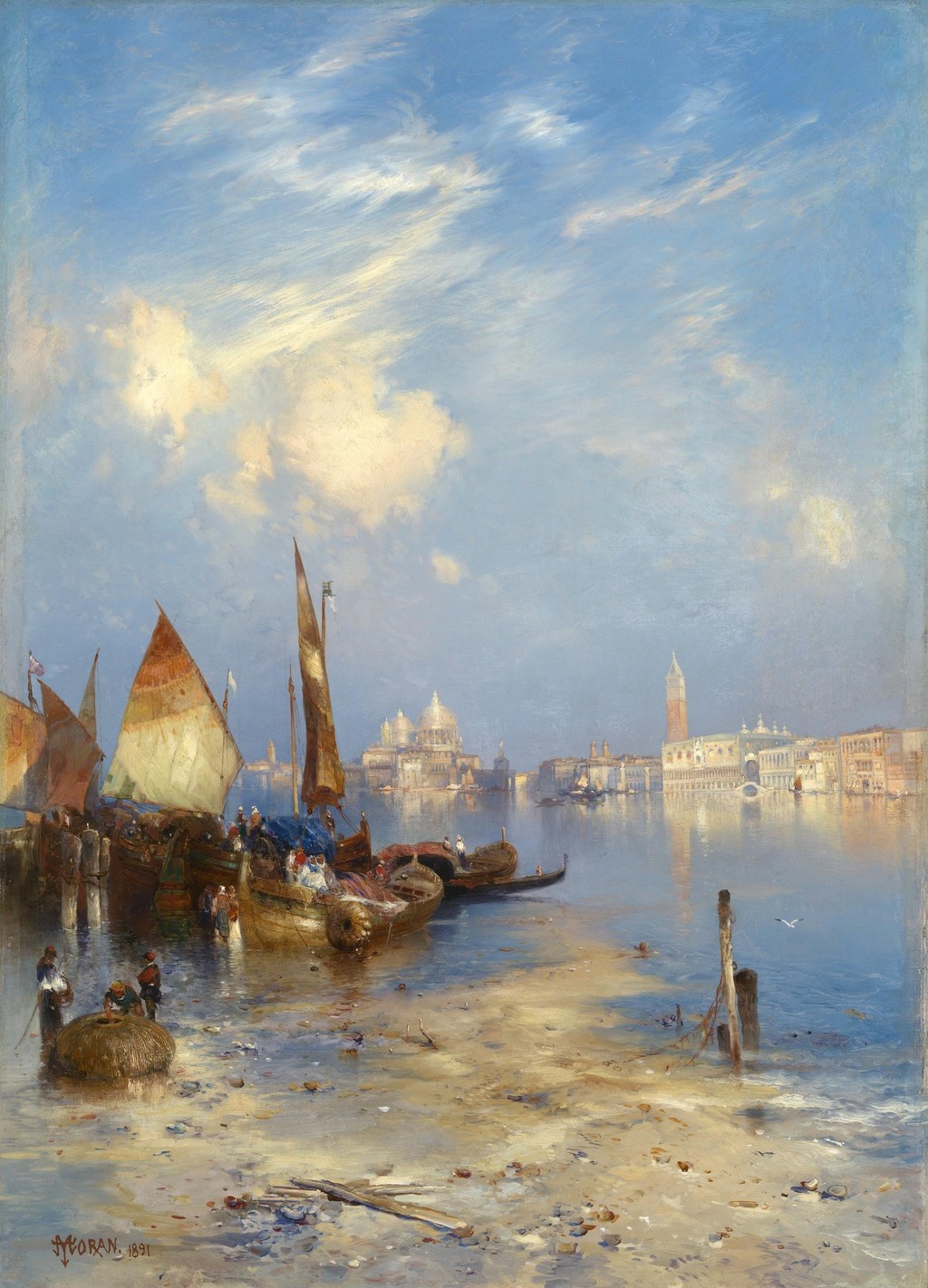
| A View of Venice | 1891 | Oil on canvas |
| The Grand Canyon of the Yellowstone | 1872 | Oil on canvas, currently recorded as mounted on aluminium |
| Mountain of the Holy Cross, Colorado (etching) | 1888 | Etching, roulette and aquatint |
| The Resounding Sea (etching) | 1880 | Etching |
| The Much Resounding Sea (later etching) | 1886 in heading; 1888 on plate | Etching, drypoint and roulette |
| Tower Falls (Prang print) | c. 1875; portfolio issued 1876 | Chromolithograph |
| Shoshone Falls (early watercolour) | 1874 | Watercolour |
| Venice (watercolour) | 1888 | Watercolour over graphite |
Frequently Asked Questions
The principal sources are Sheldon's American Painters of 1879 and the interview excerpt published under Moran's name in Brush and Pencil in April 1903.
No. His argument against literal transcription is accompanied by a defence of detailed knowledge and observation.
The 1903 statement explicitly distances him from the accepted school of Impressionism. His use of the word concerns his own account of communicating an impression.
Its footnote identifies it as a portion of an interview. It should be cited in that form.
The museum-reported evaluation is limited to the best picture up to that point in his career.
Discussion
Choose one statement and one painting. Which visible choices help explain the words, and which parts of the picture make their meaning more complicated? Consider observation and arrangement together.
Reader Insights
Editorial prompts for close looking and discussion.
Choose one statement and one painting. Which visible choices help explain the words, and which parts of the picture make their meaning more complicated?
Consider observation and arrangement together.
How does this page compare with the related works linked above?
Join the Conversation
Share your reading of this page below.
References
- G. W. Sheldon, American Painters, D. Appleton and Company, 1879, Thomas Moran chapter, pp. 122–126; selected statements on p. 125 and continuation on p. 126.
- Thomas Moran, Knowledge a Prime Requisite in Art, Brush and Pencil, vol. 12, April 1903, pp. 14–16; identified as a portion of an interview.
- Terra Foundation for American Art, Autumn Afternoon, the Wissahickon, collection interpretation and reported Opus List evaluation.
- Splash image source.
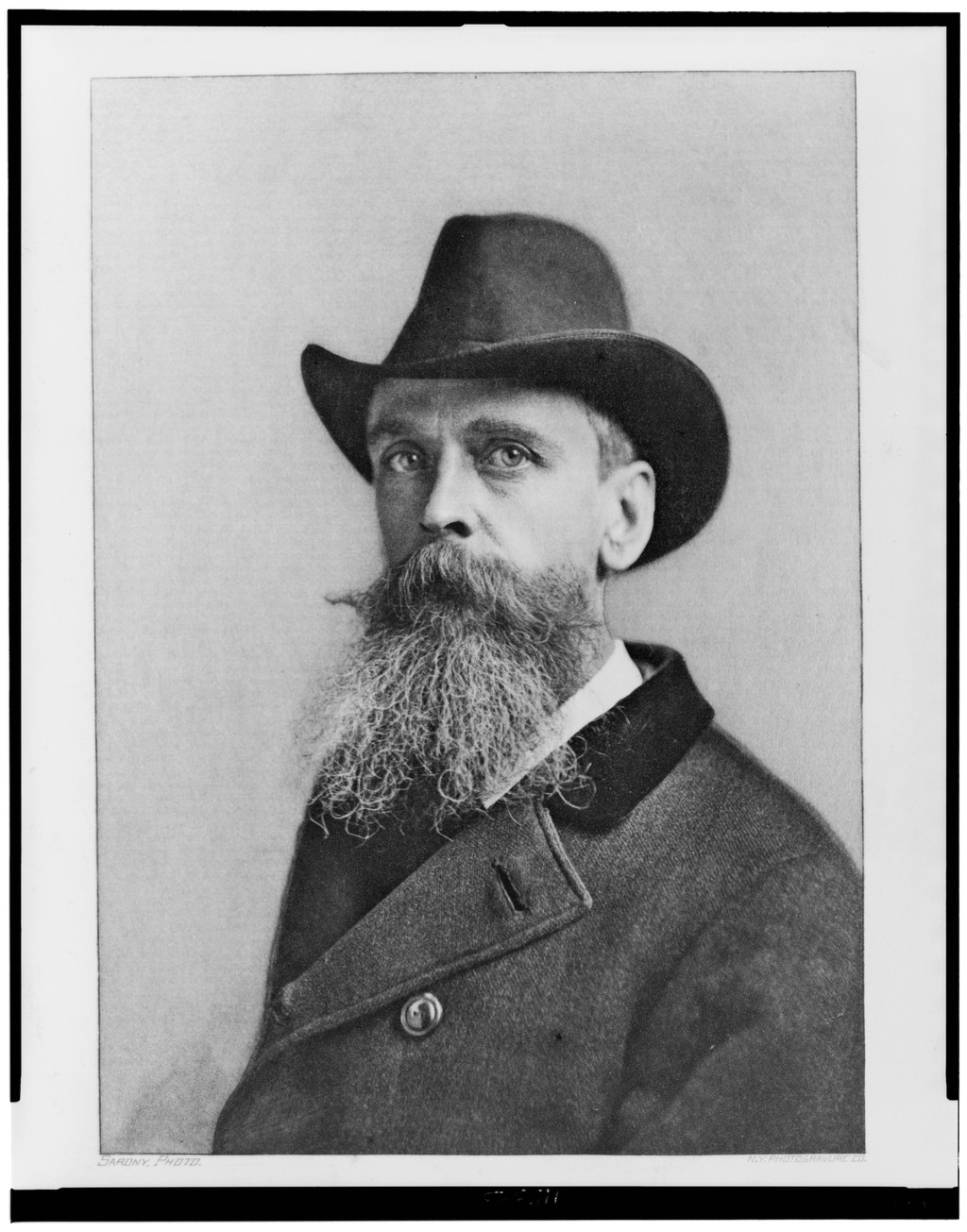
Portrait of Thomas Moran, between 1890 and 1896. Napoleon Sarony / Library of Congress. Image source. No known restrictions on publication. Resized only; complete source image retained.
- Splash image source.
The Grand Canyon of the Yellowstone, 1872. Wuselig / Wikimedia Commons, CC BY-SA 4.0; U.S. Department of the Interior Museum painting. Image source. CC BY-SA 4.0; also marked PD-Art. Outer museum frame cropped; resized. Painted composition retained; photographic perspective unchanged. This image derivative is available under the same licence.
- Splash image source.
The Chasm of the Colorado, 1873–1874. U.S. Department of the Interior Museum; faithful reproduction via Smithsonian American Art Museum / Wikimedia Commons. Image source. Public Domain Mark; faithful two-dimensional reproduction. Resized only; complete source image retained.
- Splash image source.
Mountain of the Holy Cross, 1875. Autry Museum of the American West; faithful reproduction via Wikimedia Commons. Image source. Public Domain Mark; faithful two-dimensional reproduction. Resized only; complete source image retained.
- Splash image source.
Shoshone Falls on the Snake River, 1900. Wolfgang Sauber / Wikimedia Commons, CC BY-SA 3.0; Gilcrease Museum painting. Image source. CC BY-SA 3.0; also marked PD-Art. Resized only; complete source image retained. This image derivative is available under the same licence.
- Splash image source.
Green River Cliffs, Wyoming, 1881. National Gallery of Art, Gift of the Milligan and Thomson Families. Image source. Public domain; NGA Open Access. Resized only; complete source image retained.
- Splash image source.
A View of Venice, 1891. Smithsonian American Art Museum, Transfer from the U.S. Department of the Interior, National Park Service, 1968.120.1. Image source. Free to use; Smithsonian Open Access. Resized only; complete source image retained.
- Splash image source.
The Three Tetons, 1895. The White House Collection, Gift of C. R. Smith; faithful reproduction via Wikimedia Commons. Image source. Public Domain Mark; faithful reproduction of a two-dimensional public-domain work. Resized only; complete source image retained.