 by Tom Gurney
Tom Gurney BSc (Hons) is an art history expert with over 20 years experience
Published on June 19, 2020 / Updated on October 27, 2026
Email: tomgurney1@gmail.com / Phone: +44 7429 011000
Thomas Moran Drawings: Introduction
Thomas Moran's drawings connect the experience of a landscape with the decisions that make a picture. A notebook page can preserve a contour, a place name or a colour reminder; a more developed sheet can organise light and shade for a later image. Drawing was useful at several stages, rather than belonging only to the moment before an artist began to paint.
The exhibition presentation for The Poetry of Place emphasises the relationship between Moran's field drawings, studio work and memory. Its selection includes different kinds of works on paper, encouraging a view of his practice that extends beyond the monumental western oils. A sketch's intimacy can reveal choices that a finished panorama brings together on a much larger scale. [1]
At a Glance
- UsesObserving form, recording reminders, developing compositions and preparing printed images
- Materials represented in the recordsGraphite, ink wash, watercolour and gouache
- Case studyColburn's Butte, developed through several images in 1873–74
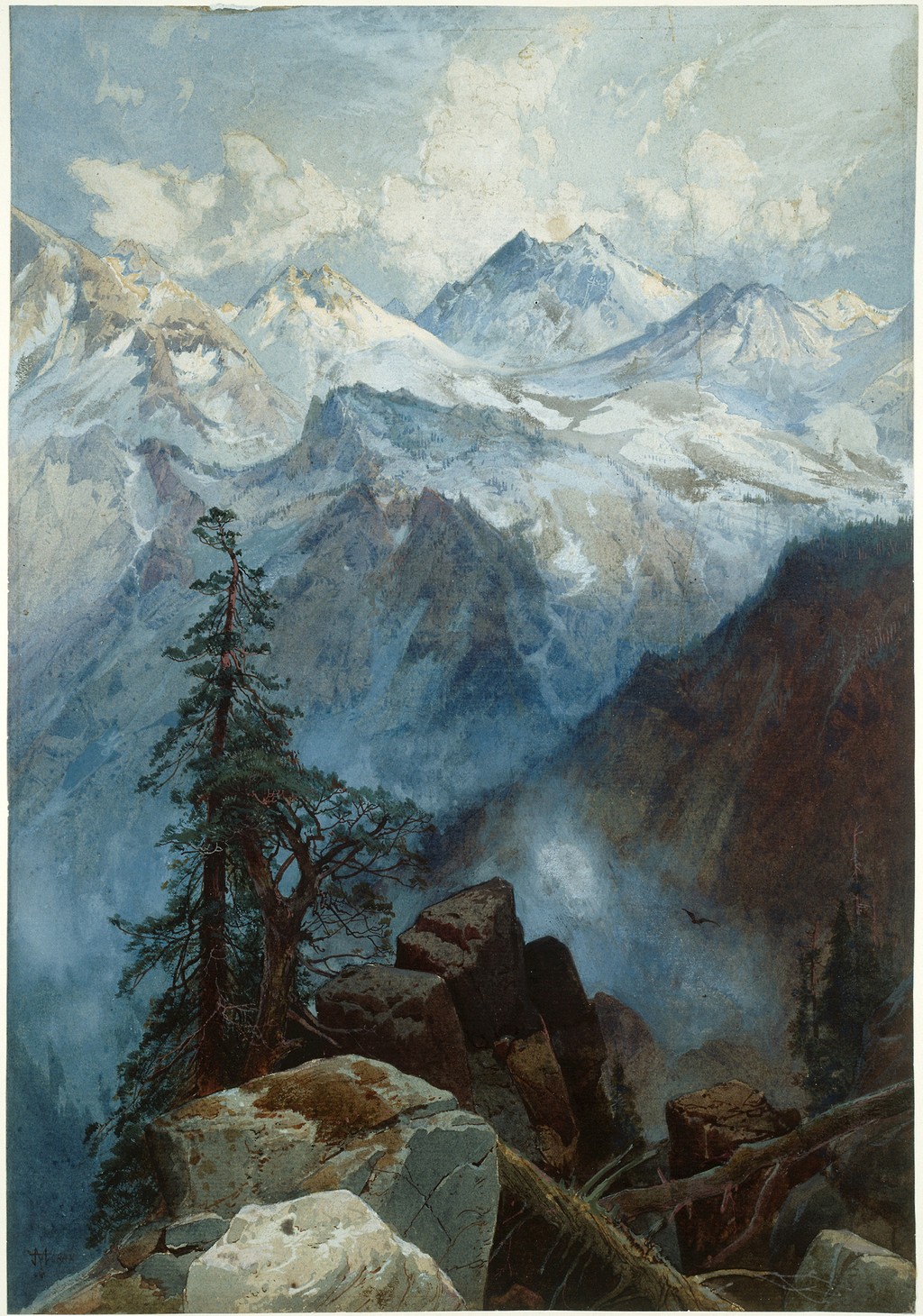
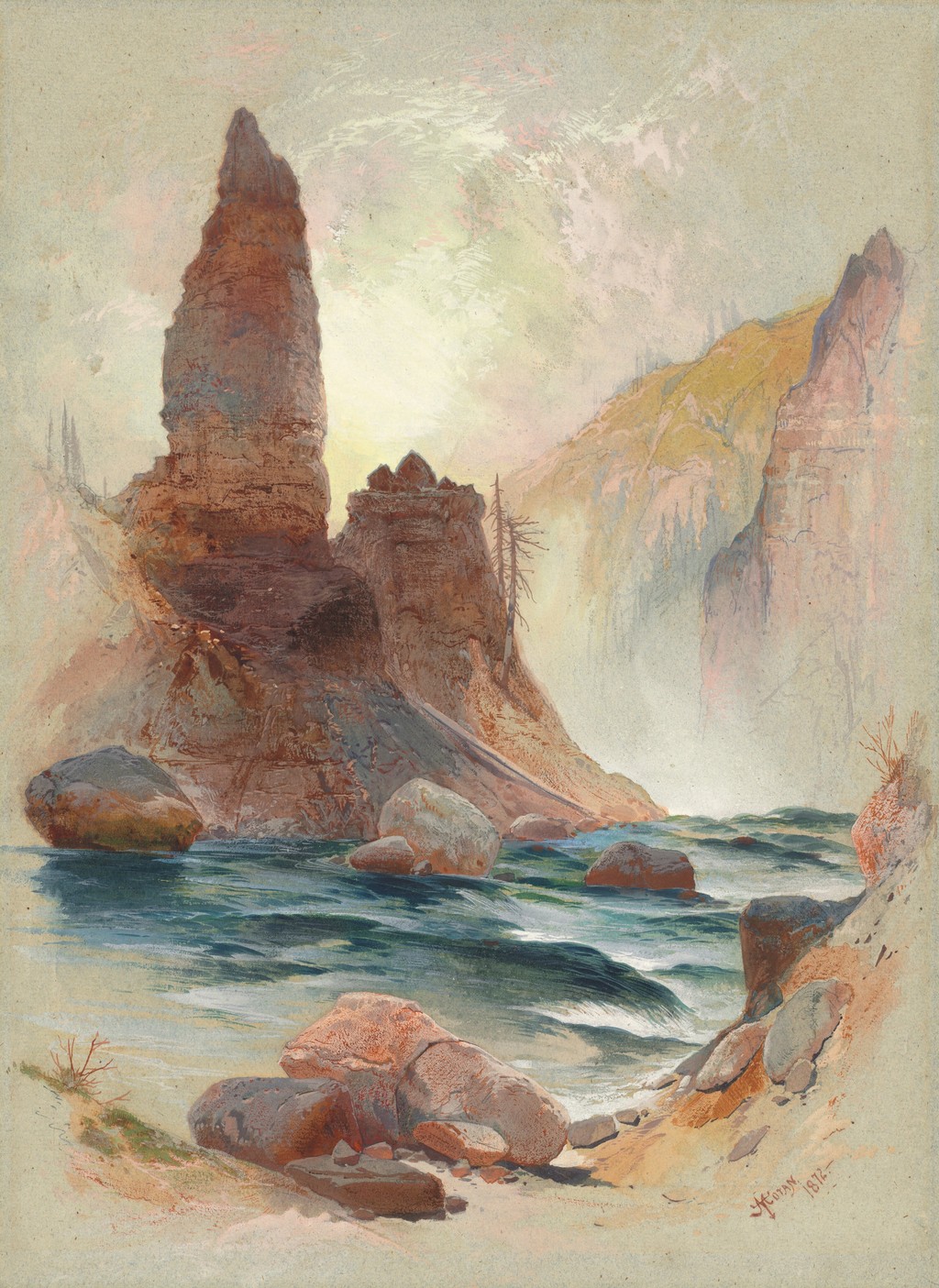
- Illustrated examplesTower at Tower Falls, Yellowstone and Summit of the Sierras, both coloured works with documented graphite foundations
- Related pagesWatercolours and Prints
Contents
- Learning to think through an image
- A notebook can record several kinds of information
- From Colburn's Butte to a printed composition
- Drawing beneath colour
- Summit of the Sierras as a developed sheet
- Knowledge and artistic liberties
- The effect of scale
- Reading a drawing closely
Learning to think through an image
Moran's early engraving apprenticeship and study of prints formed part of his artistic education. The Frick exhibition presentation describes his work in his brother Edward's studio and his attention to reproduced Old Masters, followed by study of Turner's paintings in England. These experiences involved looking at how another artist organised a subject, not simply identifying what that subject was. [1]
A drawn or printed image can make that organisation especially apparent. Edges separate one form from another; dark passages give weight; gaps allow the eye to move through the scene. The relationship between marks and a convincing space can be studied without relying on the full colour range of an oil painting.
For a landscape artist, those decisions matter before and during the making of a coloured image. A mountain may have a recognisable outline yet occupy an awkward position within the sheet. Drawing allows the artist to consider its size, placement and relationship with adjacent forms. Observation supplies a motif; arrangement gives that motif a pictorial role.
A notebook can record several kinds of information
Kevin J. Avery's study of Colburn's Butte describes a pencil image in Moran's lined notebook, associated with his 1873 journey through southern Utah. Alongside the forms, Moran recorded a place name, a July date and a reminder of dark red sandstone. Words and drawn marks preserved different aspects of the subject. [2]
The colour note supplies information that a graphite outline cannot carry by itself. The date connects the page with a journey, while the named feature helps identify what attracted attention. Together, these elements make the notebook useful for more than a general recollection that the landscape contained striking rocks.
Yet the inscription does not settle every question about the drawing's making. Avery considers whether the image might have involved memory, noting its position among other pages. His proposal shows why a date and place label should be read carefully: they locate a subject within a working record, but do not automatically prove that every mark was made while the artist stood directly before it.
This leaves the page valuable without requiring it to function as an unaltered visual report. A quick record can concentrate on the feature most important to its maker and treat surrounding land more briefly. Differences in attention are part of what a viewer can learn from the sheet.
From Colburn's Butte to a printed composition
Avery traces a sequence involving the notebook drawing, a watercolour, a graphite-and-ink-wash design and the wood engraving published in The Aldine in 1874. The later design changes the arrangement: a rider appears in the foreground, clouds become more forceful and the principal butte receives greater prominence. This is Avery's reconstruction from the surviving works and documents, rather than a universal formula for every Moran image. [2]
The sequence illustrates how drawing can have different jobs. The notebook preserves selected information; a wash design considers the distribution of darker and lighter masses; a printed version makes the arrangement available to readers. The same subject passes through media that ask for different decisions about emphasis and legibility.
Adding a rider changes more than the number of things represented. A small figure can establish scale, introduce direction and connect the foreground with a larger formation. Dark trees or clouds can similarly direct attention towards a chosen area. A developed drawing therefore participates in the conception of the image, rather than merely copying an earlier coloured version.
The case also makes the distinction between artist and reproductive process useful. A magazine engraving is a printed object made through additional work, not the original notebook sheet distributed unchanged. Comparing the stages reveals both continuity of subject and transformation of the picture's effect.
Drawing beneath colour
The National Gallery of Art identifies Tower at Tower Falls, Yellowstone, dated 1872, as watercolour and gouache over graphite on blue laid paper. That record establishes a combination of materials. The work is a coloured sheet with a drawing foundation, rather than a graphite-only study or an image of the whole waterfall. [3]
In the finished image, the principal rock formation rises strongly above the water. Its vertical shape gives the composition a clear focus, while surrounding forms and atmosphere establish depth. The material description allows the viewer to recognise drawing's place within the work without assigning every visible edge to a particular graphite stroke.
The distinction matters because layers can become visually inseparable in a reproduction. A dark boundary may involve coloured handling as well as an underlying line. The museum record identifies the materials; the image shows their combined effect. Neither requires pretending that the entire preparatory drawing can be recovered from the surface by sight alone.
Summit of the Sierras as a developed sheet
The Art Institute of Chicago records Summit of the Sierras as gouache over graphite on cream laid paper, dated 1872/75. Its narrow, upright format contains a close foreground of trees and rocks, a deep opening and successive pale peaks. The support and medium distinguish it from an oil canvas. [4]
The composition rewards attention to the relations drawing helps establish. A tall foreground tree occupies one side of the opening; nearer rocks give the spectator a point of entry; peaks form an uneven succession above. The eye moves through overlaps rather than encountering one isolated mountain outline.
Colour and atmosphere then alter the firmness of those forms. Darker near passages contrast with lighter distant ones, while cloud partly obscures the upper landscape. A developed sheet can combine a strong underlying arrangement with effects that soften its boundaries. Calling it simply a sketch would say little about that completed visual experience.
The example also warns against using drawing and watercolour as interchangeable names. A work may contain graphite and coloured paint together, but its particular material record still matters. Recognising the combination is more informative than forcing every work on paper into one broad category.
Watch: Thomas Moran
Choose a film to explore the artist’s work, its interpretation and its wider setting.
The painting that inspired a National Park
A close discussion of Moran’s landscape and its relationship to the idea of Yellowstone.
Watch on YouTubeKnowledge and artistic liberties
In the 1903 interview excerpt Knowledge a Prime Requisite in Art, Moran argues that familiarity with rocks, trees, atmosphere and other aspects of a landscape enables an artist to take liberties intelligently. Study and invention belong to the same account of practice. He does not present observation as something finished pictures can simply dispense with. [5]
Drawing offers one way to connect those priorities. A note made about a rock's shape can later support a changed arrangement; a remembered contrast can contribute to a larger field of light and shade. The recorded element remains useful even when its eventual place in the composition differs from the first encounter.
This helps explain why an apparently abbreviated page can deserve close study. Its economy may reveal what the artist needed to retain. A finished panorama distributes attention across many forms, while a working sheet can make a particular contour or relation conspicuous through selection.
The effect of scale
The Chicago Summit sheet measures 36 × 25 cm. Its extent encourages close examination: the spectator can move between the tree, foreground stone and distant peaks within a comparatively small field. That encounter differs from standing before a monumental western oil, where the whole arrangement may first be grasped from farther away. [4]
Moving from a small image to a larger one would involve more than making every mark bigger. The relative importance of a contour or a dark mass changes with viewing distance. A brief notation can preserve a useful relationship, while a developed composition has to sustain that relationship across its own format. The small sheet is therefore worth studying on its terms, alongside any documented connection with a larger work.
Reading a drawing closely
Begin with the whole sheet. Notice where the strongest marks gather, where the paper remains comparatively open and whether the composition gives one feature priority. These relationships often explain more than immediately trying to identify every small object. The drawn image is an arrangement of attention as well as a record of things.
Then consider words, dates and labels. They can explain what visual marks alone leave uncertain, as the sandstone colour reminder does in the Colburn's Butte case. Preserve the difference between an artist's inscription and a later collection title. Each belongs to the object's history, but they are not necessarily the same kind of evidence.
Finally, compare a related coloured or printed image when one is securely identified. Look for a changed proportion, added figure, darker cloud or newly opened foreground. Avoid treating resemblance alone as proof that one sheet was the direct preparatory source for another. A documented sequence supports a stronger conclusion than a shared motif.
Moran's drawings become especially interesting through these distinctions. They can preserve a first emphasis, support continued work or constitute a developed image in their own right. Their scale invites a close encounter with decisions that larger paintings transform into expansive public spectacles.
Selected works on paper
These coloured works include graphite beneath watercolour or gouache. They are not presented as uncoloured drawings.
Artworks directory
Selected documented works and distinct versions. This directory is not a comprehensive catalogue raisonné. Dates and media retain the distinctions explained in the articles and museum records.
| Name | Date | Medium |
|---|---|---|
| An Arizona Sunset near the Grand Canyon | Date not securely established | Oil painting |
| Autumn Afternoon, the Wissahickon by Thomas Moran | 1864 | Oil on canvas |
| Cascade Falls, Yosemite | Commonly catalogued as 1905 | Catalogued as oil on canvas |
| The Chasm of the Colorado | 1873–1874; completed in 1874 | Oil on canvas, currently mounted on aluminium |
| Children of the Mountain | 1866 in the current museum title; 1867 in the 1997 National Gallery catalogue | Oil on canvas |
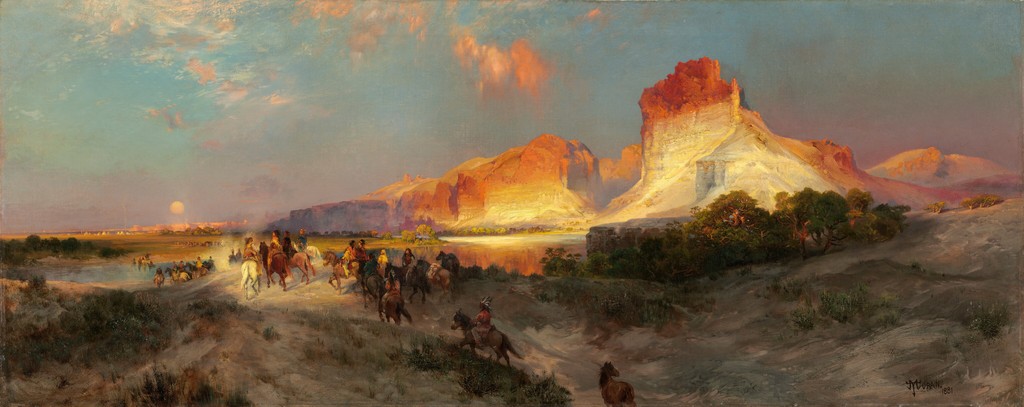
| Cliffs of Green River | 1874 | Oil on canvas |
| Cliffs of the Upper Colorado River, Wyoming Territory | 1882 | Oil on canvas |
| East Hampton, Long Island , also captioned Easthampton, L.I | 1897 | Oil on canvas laid on board, according to the reproduction record |
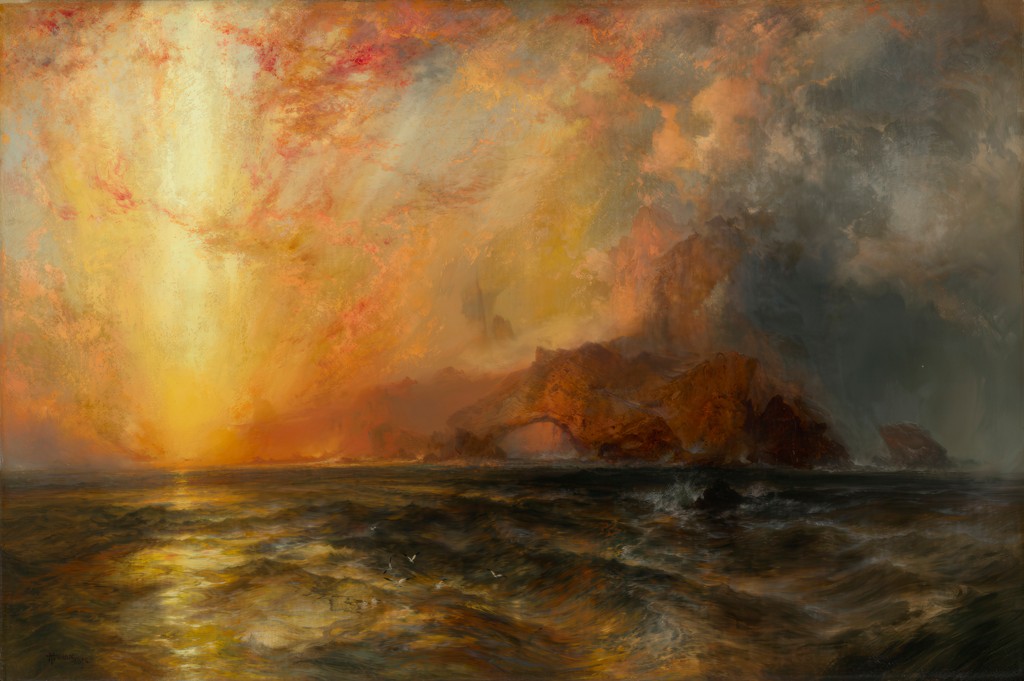
| Fiercely the red sun descending, Burned his way along the heavens | 1875–76 | Oil on canvas |
| Forest Scene | 1870 | Oil on canvas |
| Grand Canyon of the Colorado River | 1892 and 1908 | Oil on canvas |
| Green River Cliffs, Wyoming | 1881 | Oil on canvas |
| Green River, Wyoming | 1878 | Oil on panel |
| The Juniata, Evening | 1864 | Oil on canvas |
| Mosquito Trail, Rocky Mountains of Colorado | 1875 in the 1997 National Gallery exhibition catalogue | Watercolour |
| Mountain of the Holy Cross | 1875 | Oil on canvas |
| The Much Resounding Sea | 1884 | Oil on canvas |
| Point Lobos, Monterey, California | 1912, signed and dated | Oil on canvas |
| Shoshone Falls on the Snake River | 1900 | Oil on canvas |
| Summit of the Sierras | 1872/75, as catalogued by the Art Institute of Chicago | Gouache over graphite on cream laid paper |
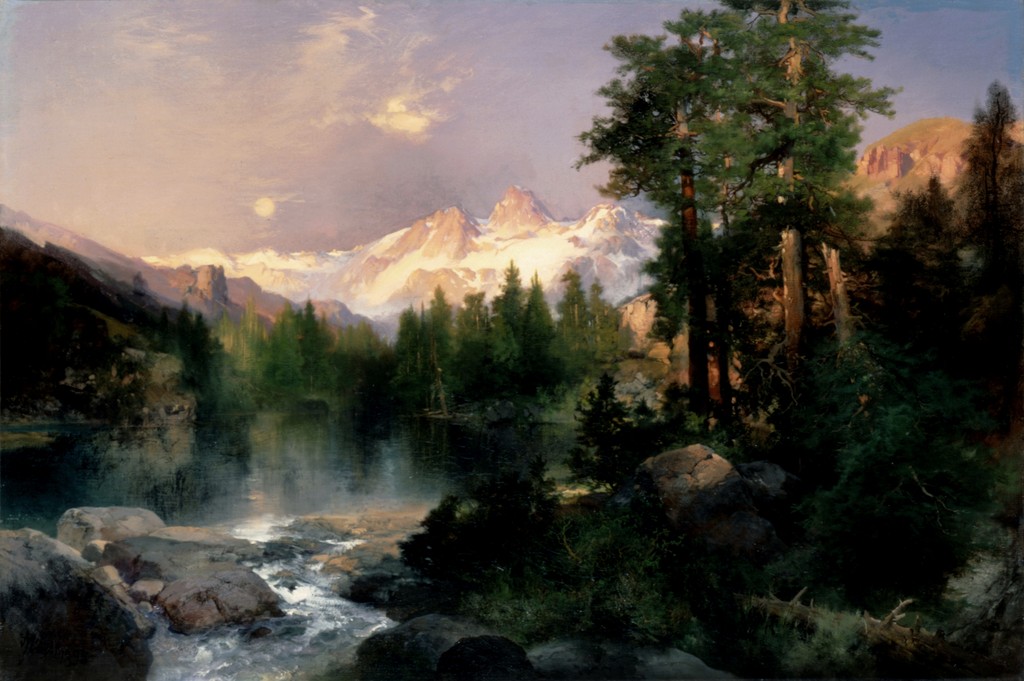
| The Teton Range | 1897 | Oil on canvas |
| The Three Tetons | 1895 | Oil on canvas |
| Tower Falls, Yellowstone | 1872 | Watercolour and gouache over graphite on blue laid paper |
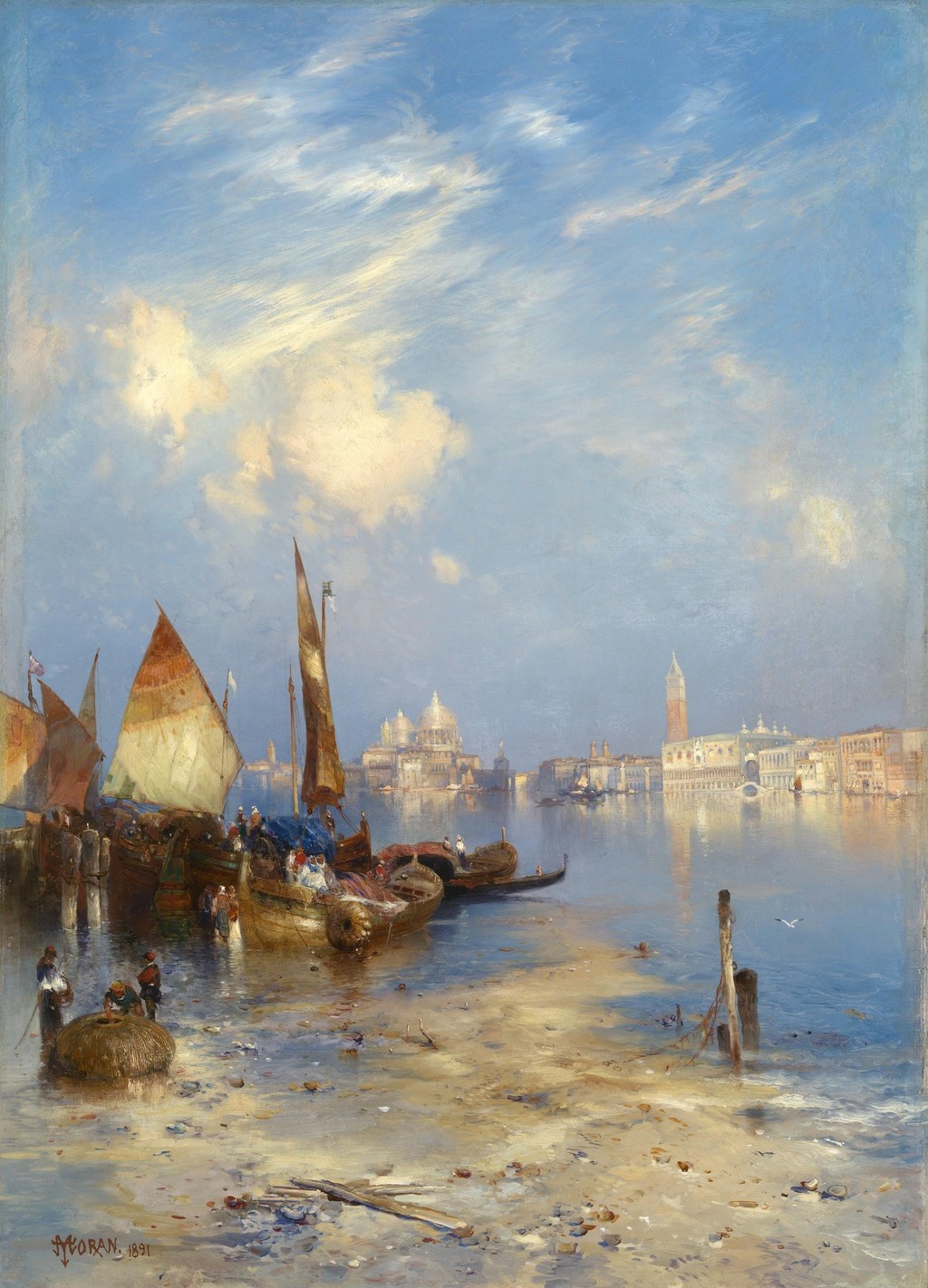
| A View of Venice | 1891 | Oil on canvas |
| The Grand Canyon of the Yellowstone | 1872 | Oil on canvas, currently recorded as mounted on aluminium |
| Mountain of the Holy Cross, Colorado (etching) | 1888 | Etching, roulette and aquatint |
| The Resounding Sea (etching) | 1880 | Etching |
| The Much Resounding Sea (later etching) | 1886 in heading; 1888 on plate | Etching, drypoint and roulette |
| Tower Falls (Prang print) | c. 1875; portfolio issued 1876 | Chromolithograph |
| Shoshone Falls (early watercolour) | 1874 | Watercolour |
| Venice (watercolour) | 1888 | Watercolour over graphite |
Frequently Asked Questions
No such general rule is established. The Colburn's Butte study includes a scholarly question about memory, and developed images could involve later work.
Words could preserve colour information that a graphite drawing alone could not convey. Avery describes such a sandstone reminder in the 1873 notebook.
No. The NGA records watercolour and gouache over graphite on blue laid paper.
No. The particular medium matters. The Art Institute's Summit of the Sierras, for example, is recorded as gouache over graphite.
Avery identifies changes in the developed design, including a rider and altered emphasis on the principal formation.
Discussion
Compare a working note with a developed image. Which information appears worth preserving, and which relationships are changed to organise the picture? How do written reminders affect your reading of the drawn marks?
Reader Insights
Editorial prompts for close looking and discussion.
Compare a working note with a developed image. Which information appears worth preserving, and which relationships are changed to organise the picture?
How do written reminders affect your reading of the drawn marks?
How does this page compare with the related works linked above?
Join the Conversation
Share your reading of this page below.
References
- The Frick Art & Historical Center, The Poetry of Place: Works on Paper by Thomas Moran from the Gilcrease Museum, 2001 exhibition presentation and excerpt from Donna Gustafson's essay, Resource Library.
- Kevin J. Avery, Thomas Moran's Colburn's Butte, South Utah: Forgotten Landmark of a Lost Friendship, Metropolitan Museum Journal 44, 2009, selected notebook and image-development discussion, pp. 185–192.
- National Gallery of Art, Tower at Tower Falls, Yellowstone, 1872, object 2012.93.1.
- Art Institute of Chicago, Summit of the Sierras, object metadata, 1872/75, 1965.852.
- Thomas Moran, Knowledge a Prime Requisite in Art, Brush and Pencil, April 1903, pp. 14–16, interview excerpt.
- Splash image source.
Summit of the Sierras, 1872/75, gouache over graphite on cream laid paper. Art Institute of Chicago, Gift of Mrs. Byron Harvey, 1965.852. Image source. Public Domain Mark; faithful reproduction; AIC record is_public_domain true. Resized only; complete source image retained.
- Splash image source.
Tower at Tower Falls, Yellowstone, 1872. This is the rock-formation study, distinct from views centred on the waterfall. National Gallery of Art, Florian Carr Fund. Image source. Public domain; NGA Open Access. Resized only; complete source image retained.
- Splash image source.
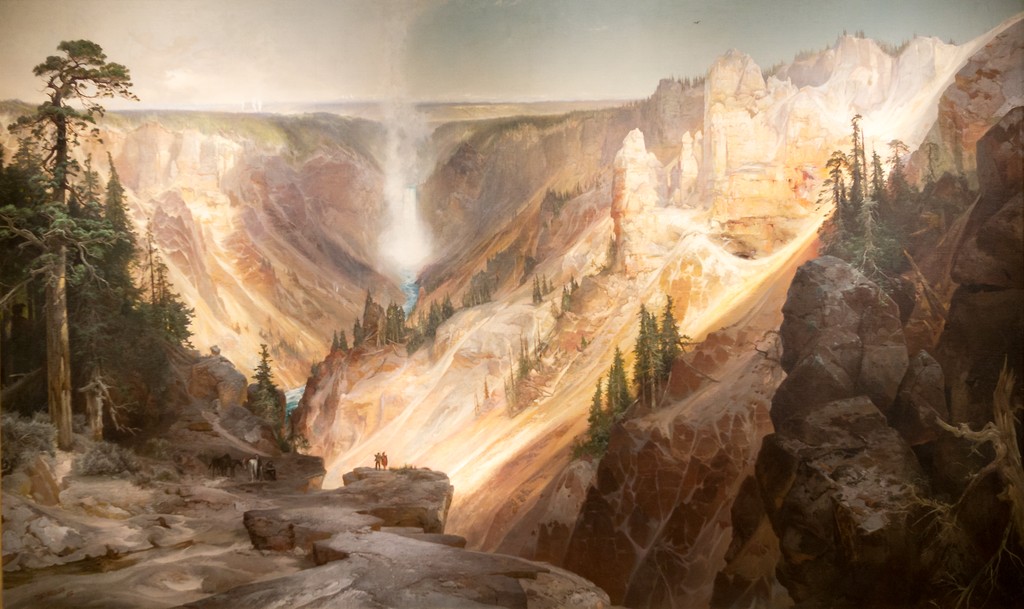
The Grand Canyon of the Yellowstone, 1872. Wuselig / Wikimedia Commons, CC BY-SA 4.0; U.S. Department of the Interior Museum painting. Image source. CC BY-SA 4.0; also marked PD-Art. Outer museum frame cropped; resized. Painted composition retained; photographic perspective unchanged. This image derivative is available under the same licence.
- Splash image source.
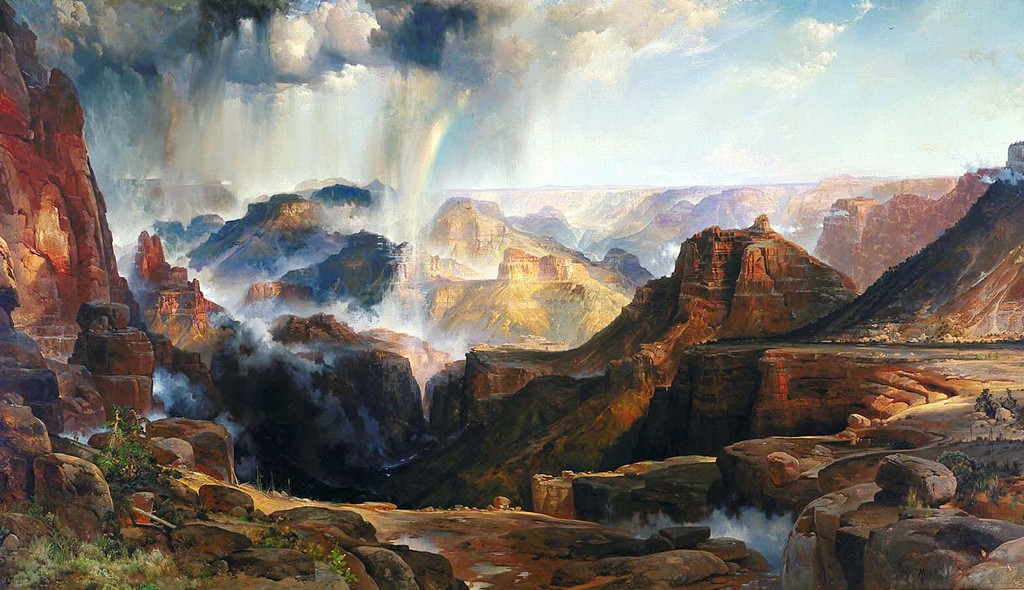
The Chasm of the Colorado, 1873–1874. U.S. Department of the Interior Museum; faithful reproduction via Smithsonian American Art Museum / Wikimedia Commons. Image source. Public Domain Mark; faithful two-dimensional reproduction. Resized only; complete source image retained.
- Splash image source.
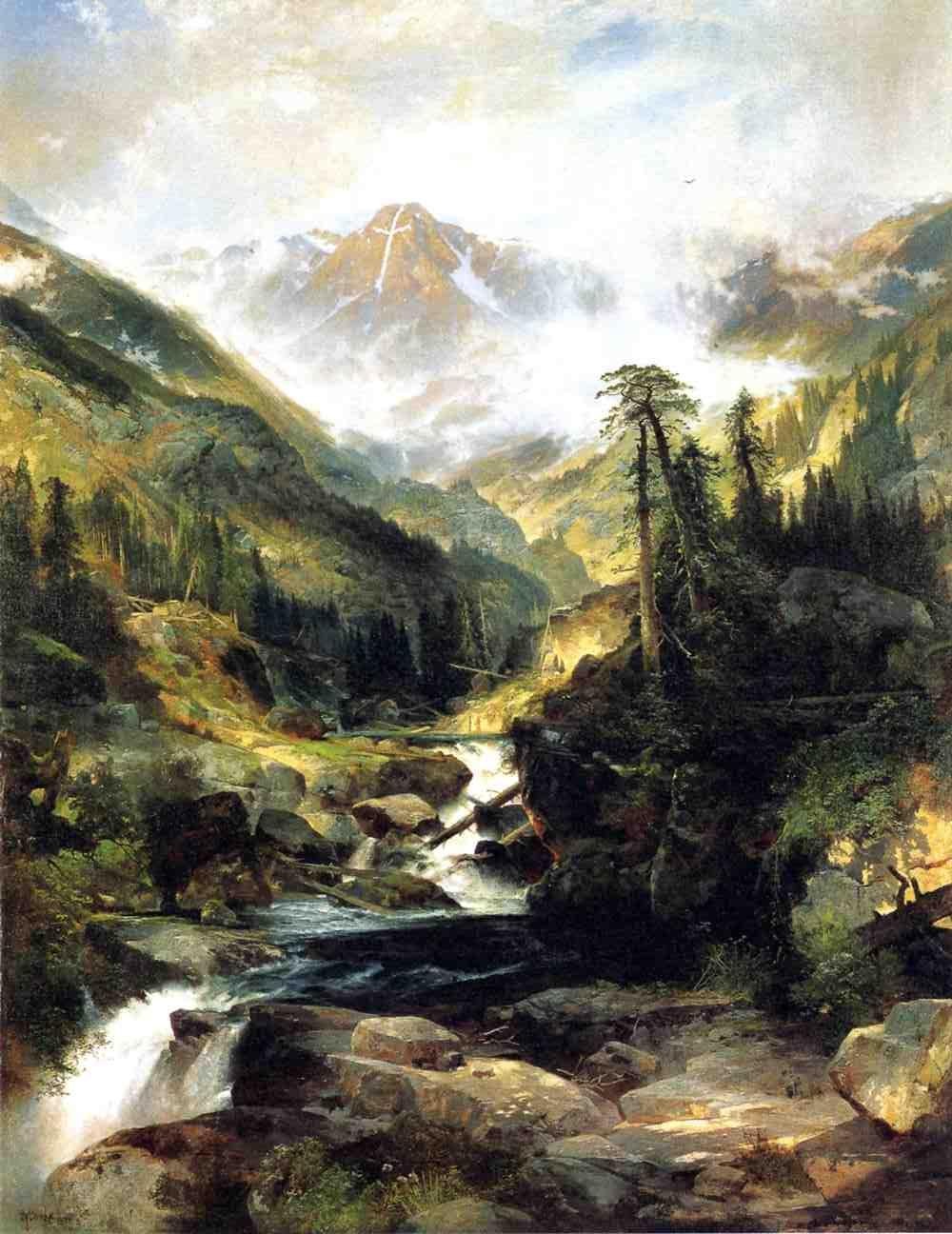
Mountain of the Holy Cross, 1875. Autry Museum of the American West; faithful reproduction via Wikimedia Commons. Image source. Public Domain Mark; faithful two-dimensional reproduction. Resized only; complete source image retained.
- Splash image source.
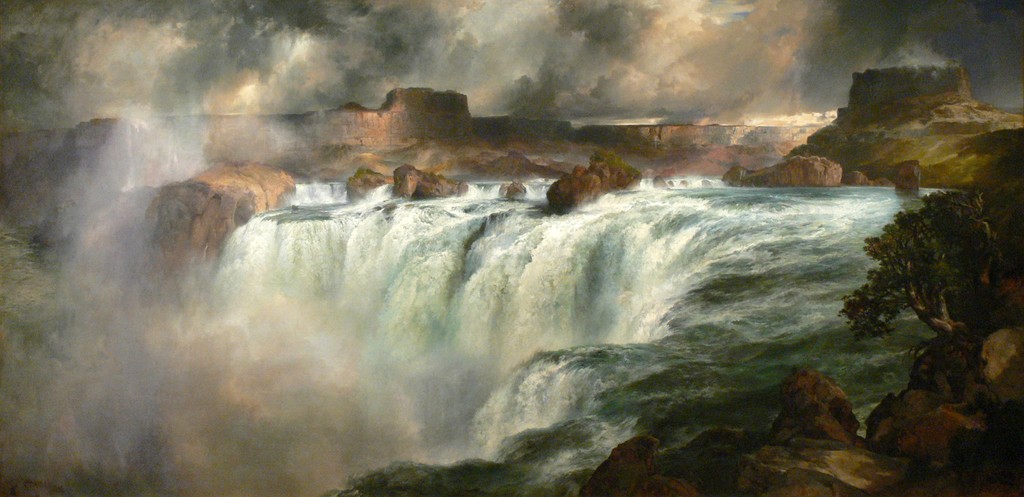
Shoshone Falls on the Snake River, 1900. Wolfgang Sauber / Wikimedia Commons, CC BY-SA 3.0; Gilcrease Museum painting. Image source. CC BY-SA 3.0; also marked PD-Art. Resized only; complete source image retained. This image derivative is available under the same licence.
- Splash image source.
Green River Cliffs, Wyoming, 1881. National Gallery of Art, Gift of the Milligan and Thomson Families. Image source. Public domain; NGA Open Access. Resized only; complete source image retained.
- Splash image source.
A View of Venice, 1891. Smithsonian American Art Museum, Transfer from the U.S. Department of the Interior, National Park Service, 1968.120.1. Image source. Free to use; Smithsonian Open Access. Resized only; complete source image retained.
- Splash image source.
The Three Tetons, 1895. The White House Collection, Gift of C. R. Smith; faithful reproduction via Wikimedia Commons. Image source. Public Domain Mark; faithful reproduction of a two-dimensional public-domain work. Resized only; complete source image retained.