by Tom Gurney
Tom Gurney BSc (Hons) is an art history expert with over 20 years experience
Published on June 19, 2020 / Updated on August 11, 2026
Email: tomgurney1@gmail.com / Phone: +44 7429 011000
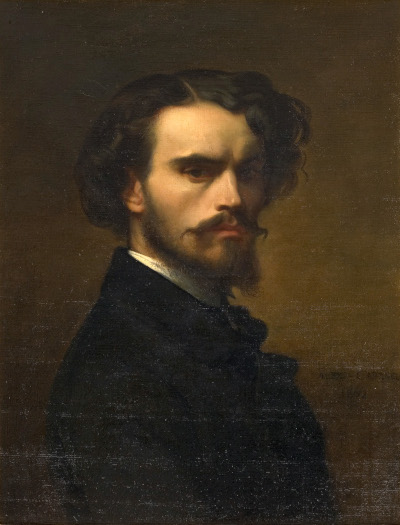
Cabanel's early Self Portrait, listed by the Musee Fabre as Portrait de l'artiste par lui-meme (a 29 ans), gives the cluster a biographical anchor: the ambitious young painter before the full weight of Salon fame, professorship and official success.
What is Cabanel's Self Portrait?
The Musee Fabre records the painting as an oil on canvas made around 1849-1852, measuring 60.5 by 46.5 cm without its frame. Like Albayde, it entered the museum through Alfred Bruyas's 1868 gift. That provenance matters because Bruyas was not just collecting images; he was building a gallery of modern artistic identity.
In the portrait, Cabanel presents himself with restraint. There is no theatrical mythological setting, no dramatic fallen angel, no sea-born goddess. Instead, the drama is professional self-fashioning: a young painter constructing an image of seriousness, discipline and cultivated presence.
Why it belongs in the Cabanel biography
The portrait helps humanize an artist often treated as an emblem of official Academic taste. When paired with the biography, it lets readers see Cabanel at the threshold between formation and fame. He had already passed through the academic route of Paris and Rome, but the great public triumph of The Birth of Venus still lay ahead.
That makes the painting a quiet counterweight to the larger works. It asks readers to think about ambition before celebrity and about the public persona a nineteenth-century artist needed to cultivate.
Close-reading notes
- Scale: The modest dimensions encourage face-to-face reading rather than Salon spectacle.
- Expression: Cabanel's controlled look supports a persona of seriousness and self-command.
- Provenance: Alfred Bruyas's gift links the portrait to a major Montpellier collecting network.
- Cluster role: The page gives visitors a visual biography link before they move to the major mythological and tragic paintings.
Discussion
Self Portrait by Alexandre Cabanel rewards slow looking because Cabanel often balances immaculate academic finish against uneasy emotional subjects.
Reader Insights
How does the young Cabanel's self-presentation change the way we read the polished authority of his later paintings?
How does this page change when you read it beside Cabanel's Salon career, his Montpellier connections and the institutional expectations of French Academic painting?
Which visual detail or source note should future revisions explain more fully for readers comparing Cabanel's major works?
Join the Conversation
Share a close-looking observation, source note or comparison that would help other readers understand this Cabanel page.