by Tom Gurney
Tom Gurney BSc (Hons) is an art history expert with over 20 years experience
Email: tomgurney1@gmail.com / Phone: +44 7429 011000
What is Eos?
Eos is Edwin Landseer's full-length portrait of Prince Albert's favourite greyhound. Queen Victoria commissioned it as a Christmas present for her husband, and Albert first saw it as a surprise in December 1841. The Royal Collection identifies the painting as signed and dated 1841, oil on canvas, and assigns it the number RCIN 403219. The support measures 111.8 by 142.9 centimetres.[1]
Those facts separate the physical picture from several related objects and stories. This is not the smaller sculpture of Eos, not Thomas Landseer's engraving, and not the other 1841 painting in which the dog appears with the infant Princess Royal. Nor is it simply an ideal image of a greyhound. The animal had a name, a sex, an owner and a history before Landseer painted her. Eos was female, and she had already lived with Albert in Germany before coming to Britain for his marriage to Victoria in 1840.[2]
The portrait presents her standing across a broad horizontal canvas. Her black-and-white body occupies the centre; her raised head turns towards the left; her long legs support a narrow waist and deep chest. Behind her, scarlet cloth produces a saturated field of colour. Albert himself is absent, but his top hat, gloves and ivory-topped cane remain. The Royal Collection describes Eos as poised and alert, guarding these possessions.[1] “Guarding” is a useful institutional reading, yet it should not be mistaken for direct access to the dog's intention. The painting shows proximity between Eos and the objects. It does not show what she thinks about them.
That distinction is important because Eos encourages narrative without depicting an event. A viewer can imagine an owner about to enter, a departure delayed, or a dog waiting beside familiar things. None of those incidents appears. There is no Albert, servant, leash, door opening, outdoor view or visible walk. Landseer instead constructs a portrait around an absence: the dog's body is fully present, while Albert is indicated by things that have touched or dressed his body.
The gift history makes this arrangement especially pointed. Victoria did not commission a formal portrait of Albert and add Eos as an accessory. She made Albert's companion the principal sitter, then allowed his private belongings to occupy the subordinate role. The result is at once an animal portrait, an intimate image of a marriage and a carefully staged still life of ownership. Each level can be seen, but each must be kept distinct from claims that the evidence cannot support.
At a Glance
This work across Edwin Landseer’s career
The Cat's Paw
c. 1824 [4]The Hunting of Chevy Chase
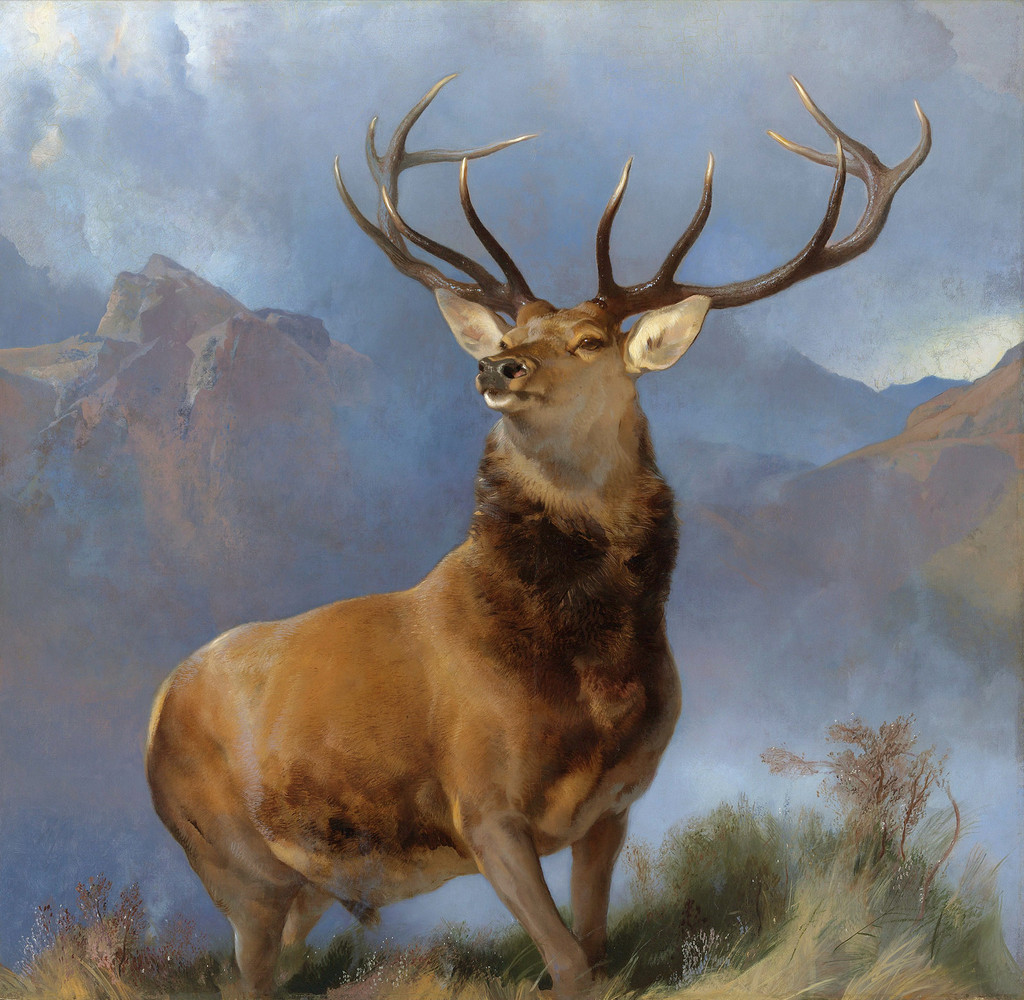
1825–26 [5]The Monarch of the Glen
about 1851 [9]Contents
- What is Eos?
- Eos before the portrait
- The Christmas commission and surprise
- A greyhound across a horizontal canvas
- Head, coat, legs and tail
- Scarlet cloth and tiled floor
- Hat, gloves, cane and the absent prince
- Stool, chair and the limits of the room
- A secret commission, carefully sourced
- Royal Academy no. 266 in 1842
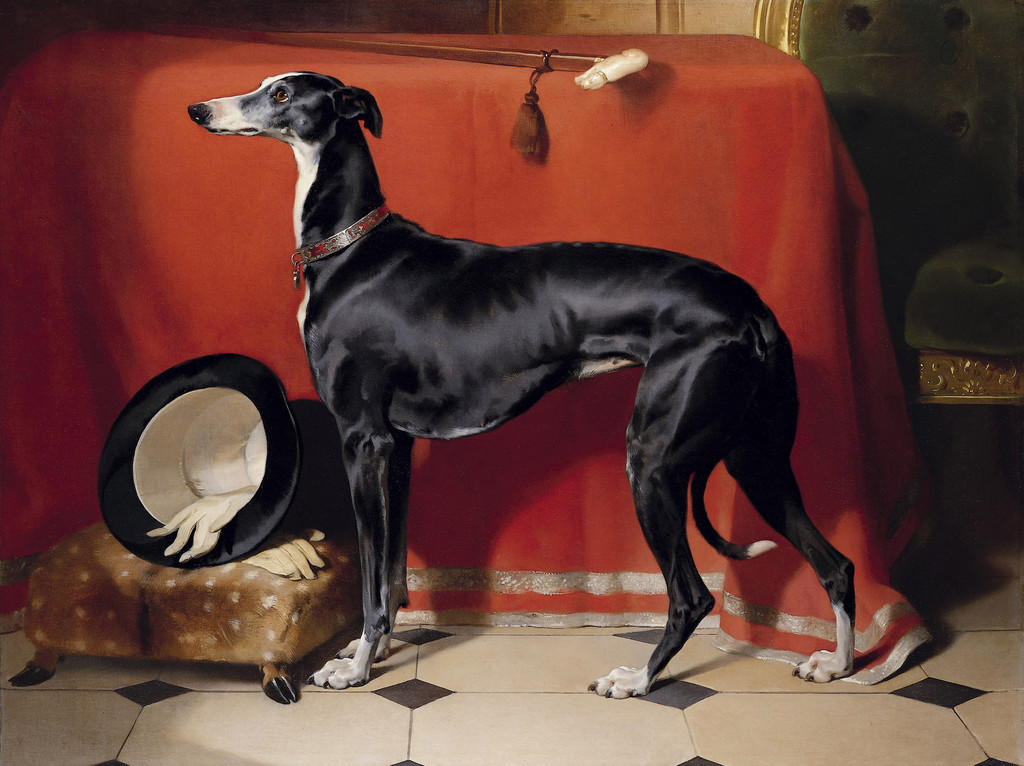
Eos. Royal Collection. Image source. Public domain.
Eos before the portrait
Eos enters the written record before Victoria and Albert married. In a letter sent from Gotha on 31 December 1839, Albert answered Victoria's enquiry about the dog with the phrase “my faithful, but not disinterested Eos”.[12] He then described a recognisable set of habits: sleeping near the stove, becoming friendly when plum-cake was present, disliking an exercise involving a stick, enjoying hunting, and appearing proud in relation to other dogs.[12]
The date changes the value of this often repeated passage. It is not Victoria remembering a royal pet after years of marriage, and it is not an undated comment manufactured to explain Landseer's image. Albert wrote it in Germany, before the wedding and before the 1841 commission. The words establish that Victoria knew about Eos and that Albert could joke about a long-familiar companion. They do not supply a complete or neutral account of canine character. Affectionate correspondence turns habits into comedy; it does not function as a behavioural assessment.
One editorial note in the 1938 edition calls Eos an Italian greyhound. That label conflicts with the 1842 Royal Academy title, the Royal Collection's current identification and the full-sized dog represented in the painting. The historical and object records control: Eos was a greyhound, not an Italian greyhound.[1][12][13]
Royal Collection Trust says that Eos accompanied Albert to Britain when he married Victoria in 1840; another of its accounts explains that he sent his beloved companion ahead as he prepared to travel.[2][14] Either formulation keeps the essential sequence intact. Eos belonged to Albert's life before he became the Queen's husband. Her arrival therefore carried part of his existing household and emotional world into the new marriage.
The name itself refers to the Greek goddess of dawn.[14] That classical association is biographically interesting, but it does not automatically turn the 1841 painting into an allegory of sunrise. There is no dawn landscape, mythological figure or documented symbolic programme. The name identifies the sitter; the picture's meaning still has to be built from the commission, the objects and what can actually be seen.
The Christmas commission and surprise
Victoria knew Albert's attachment to Eos and commissioned Landseer to make the portrait as a Christmas gift. The Royal Collection's present account calls it a full-length portrait and states that it was presented to Albert at Christmas.[1] Victoria's journal supplies the recipient's reaction. On 24 December 1841 she recorded a large life-size picture of Eos among her presents, noted that Albert was delighted, and wrote that it “came as a complete surprise”.[1]
The journal fixes more than a charming anecdote. It identifies Victoria as the giver, Albert as the recipient, Landseer as the artist, the dog as Eos, the work as large and the effect as successful secrecy. It also distinguishes this canvas from Landseer's Victoria, Princess Royal, with Eos. That separate painting was given to Albert on his birthday, 26 August 1841.[15] The present work is the Christmas portrait.
No checked contract, fee, account or exact order date accompanies the public record. Nor does a surviving schedule explain how many sittings Eos gave or how Landseer moved from studies to the large canvas. It is therefore safer to speak of a commission completed in 1841 than to invent a precise studio timetable. The surprise is documented; the entire process is not.
The scale matters within the gift. At 111.8 by 142.9 centimetres, the canvas does not offer a small private keepsake. Eos appears at an imposing bodily scale, with enough room for the whole dog, substantial furnishings and Albert's accessories.[1] Victoria's word “life-size” should be understood as a contemporary description of presence, not as a measurement from which Eos's exact height can be calculated.
The composition also avoids the overt ceremony expected from many royal portraits. There are no robes of state, insignia, architectural view or human face. The intimate facts of Albert's appearance—hat, gloves, cane—are detached from him and set beside the animal he loved. Such objects can suggest a fashionable prince without turning the picture into a formal likeness. They make personal recognition possible for the recipient while leaving the dog visually dominant.
Because Albert was not meant to know about the work, the picture had two audiences from the start. It was a private surprise designed for someone able to recognise every sitter and possession, yet it was also a highly finished Landseer that could enter public exhibition. The next year's Royal Academy display confirms that the intimate gift was not confined to domestic sight.[13][16]
A greyhound across a horizontal canvas
Eos stands almost parallel to the picture surface. Her head and forequarters occupy the left half; the ribcage, waist and hindquarters move across the centre and right; the tail curls downward before turning back. This lateral arrangement lets the viewer read the breed's long structure without reducing the dog to a rigid diagram.
The head rises above the line of the back, giving the silhouette its principal vertical accent. The neck then descends into the shoulders and deep chest, while the underside draws sharply upward towards the flank. Over the rear body, the back makes a controlled arch before meeting powerful hind legs. Landseer balances extension and compression: the forelegs are comparatively straight, the rear joints bend, and the tail adds a loose counter-curve.
A present-day Greyhound standard describes a long head and neck, deep chest, well-cut-up flanks, a slightly arched loin, long legs and a low-set tapering tail.[17] These terms help name forms that are visible in Landseer's portrait. They do not certify Eos's pedigree, health or conformity to a modern show ideal. A standard last updated in 2025 cannot be used as if it were Albert's kennel record.
The dog's placement makes stillness active. Her paws are planted, but the raised head and asymmetrical legs prevent the stance from becoming an immobile heraldic emblem. One foreleg appears to take a little more weight; the hindquarters gather energy through their angles; the tail's bend keeps the body's long axis from ending abruptly. It is possible to call the pose poised because balance is visible. It is not possible to predict her next action.
Eos also mediates between the shallow foreground and the deep red field. Her feet touch a patterned floor near the picture's lower edge, while much of the torso passes in front of the cloth. She is neither isolated against an empty ground nor absorbed into a fully described room. The body joins separate zones—floor, scarlet textile, dark furniture and green chair—into one continuous composition.
That arrangement explains why the portrait can feel ceremonial without depending on human regalia. Landseer gives the animal the spatial authority normally granted to a standing person. The dog is not pushed into a corner as a sign of fidelity beside an owner. She possesses the central interval herself.
Head, coat, legs and tail
The head is seen close to profile but not reduced to a flat outline. Eos raises her narrow muzzle and turns left, so one warm brown eye becomes visible. A white blaze travels down the face and broadens around the muzzle. The black nose terminates that pale passage, while the darker crown and cheek return the head to the main colour of the body.
One ear folds softly beside the skull. Its droop offsets the straight upper edge of the muzzle and the taut length of the neck. It may tempt a viewer to imagine listening, but no source of sound appears. The ear is first a change of contour and texture. Likewise, the visible eye can be described as directed left; it cannot establish that Eos has recognised someone outside the frame.
The collar is the most concentrated ornament on the dog. Red material, pale or metallic decoration and a hanging fastening interrupt the black neck. Its colour links Eos to the cloth behind her while its smaller details establish that this is an owned, adorned animal rather than an anonymous hound. The exact metals and the function of every pendant element are not identified by the checked public record, so visual precision should stop before jewellery becomes invented heraldry.
White markings divide the body strategically. They run from muzzle and throat into the chest, return at the lower legs and paws, and touch the tail's tip. The largest black areas cover neck, back and flanks. This distribution clarifies anatomy: pale forelegs can be followed against the floor and red backdrop, while the white chest separates the neck from the nearer shoulder.
Landseer represents sheen through narrow lights and broad transitions rather than painting the black coat as one unbroken shape. The effect is especially clear along the neck, ribcage and upper hindquarters. A digital reproduction can show this represented lustre, but it cannot tell us the composition of a black pigment, the order of layers, or the present state of varnish.
The legs establish contact with the floor. Each paw occupies its own patch of the geometric pattern, and small differences in angle stop the stance from becoming mechanically paired. The hind legs are more complicated, folding beneath the pelvis and then straightening to the paws. They make the rear half appear ready to bear or transfer weight without proving imminent movement.
The tail is a final act of drawing. It descends from the hindquarters, narrows steadily and curls back beneath itself. Its white tip makes the end legible against the darker floor and nearby forms. Instead of extending the animal into a single straight line, the curve returns the eye towards the body.
These details produce individuality without granting access to thought. Eos's coat pattern, collar, ear, eye, paws and tail distinguish her as a particular sitter. They do not require the viewer to assign pride, patience, loyalty or longing. Recognition begins with form.
Scarlet cloth and tiled floor
The most forceful colour in the painting does not belong to Eos. Scarlet cloth spreads across the table or support behind her and drops towards the floor. Its folds are broad enough to avoid becoming decorative noise, yet varied enough to keep the red from reading as a flat painted wall.
Against this field, the dog's black coat gains definition and the white throat and legs become unusually bright. Red also recurs at the collar, joining the animal to the setting in a small, precise accent. The dark hat repeats the coat's black, while pale gloves answer the dog's white markings. These visual echoes connect living body and personal possessions without proving that Landseer assigned each colour a symbolic meaning.
The lower zone is cooler and more geometric. Cream tiles or floor units are punctuated by black diamonds. Their diagonals establish an orderly surface beneath Eos's vertical legs. The pattern also prevents the foreground from becoming an empty strip: each paw meets a visible grid whose recession gives the standing body room.
It would be easy to call the floor marble and the scarlet cloth velvet. Neither material is established by the selected technical record. “Patterned tiled floor” and “scarlet cloth” preserve what the image supports. Such restraint is not a loss of description. It keeps colour, fold, contrast and geometry available without pretending that a photograph has supplied fibre or stone analysis.
The red field can suggest splendour, domestic ceremony or royal display, but it is not a throne-room document. Only a fragment of furniture and a chair indicate an interior. Landseer withholds the architectural cues that would fix the setting. The room functions as a designed stage for Eos and Albert's things.
Hat, gloves, cane and the absent prince
Albert's top hat rests on a low rectangular footstool at the left. Pale gloves are placed both within the hat and across the spotted cover beside it. Higher and farther back, an ivory-topped cane lies along the table, its dark cord or tassel hanging over the edge. Royal Collection Trust identifies the gloves as leather and all three object groups as the Prince's possessions.[1]
Their arrangement creates a portrait without a human body. A hat corresponds to head and public appearance; gloves imply hands; the cane extends the absent owner's reach. Yet these are not laid out in the rough order of discarded clothing. They are separated and displayed so that each remains legible. The dog stands among signs of Albert rather than amid accidental clutter.
This is why the picture can be read as an indirect portrait of the Prince. The inference does not depend on Eos symbolising him or behaving like a gentleman. It depends on recognisable ownership. Albert's body is missing, but objects shaped for his body are close to his companion. The intimate connection would have been immediate to the original recipient.
The Royal Collection goes further by describing Eos as guarding the possessions.[1] That wording suits her alert stance and proximity, but it remains an interpretation. No intruder approaches and no defensive action occurs. The dog may look outward from the arrangement without guarding in a narrative sense. Reporting the Collection's reading and then returning to visible relations is more exact than converting it into an unseen incident.
The inherited idea that Eos waits for a servant to take her walking is especially fragile. It explains the cane, hat and gloves by supplying a missing human routine, but the canvas offers no servant, doorway or leash. The objects might prepare for departure, recall return, or simply characterise Albert through possessions selected for the portrait. The painting leaves temporal direction open.
Nor are these items documented as expensive presents from notable figures. Their elegance belongs to appearance and use, not to an established gift history. Describing them as personal accessories is enough. They locate Eos within Albert's life without requiring a story about their purchase.
The footstool adds another bodily substitute. Its spotted covering and hoof-shaped feet repeat animal pattern and anatomy beneath a portrait of a living animal. No checked statement from Landseer fixes the stool's intended symbolism. Visually, the pale irregular surface makes the black hat and gloves easy to read, while the carved feet echo the four planted legs nearby.
Absence, then, is organised rather than empty. Albert is not lost from the picture; he is distributed among hat, gloves, cane, dog and the recipient's own recognition. The composition turns ownership into a form of presence while allowing Eos to remain the only living figure shown.
Stool, chair and the limits of the room
Only selected furnishings survive around that central relationship. The stool occupies the lower left, partly underneath Eos's head. The large scarlet-covered support rises behind it. At upper right, a green upholstered chair with gold-coloured carved edges enters the frame, while dark cloth or shadow closes the far side.
These fragments create richness without mapping a particular room. The chair is cropped, the table's full construction is hidden, and no wall, window or door supplies an address. Even though the finished painting later hung in Albert's Dressing Room, the represented interior should not automatically be identified as that room. Historical display location and painted setting are different kinds of evidence.
The partial chair also keeps the upper right from becoming a blank dark corner. Its green provides a subdued complement to the scarlet cloth and introduces a vertical structure behind the dog's hindquarters. The gilt or gold-coloured carving answers smaller bright touches in collar and cane. These relations can be followed without identifying the chair's maker, owner or precise style.
Nothing supports the inherited claim that large pictures hang behind Eos. The dark area does not resolve into framed paintings, and the scarlet field is cloth rather than a view into a gallery. Likewise, the floor pattern does not prove a named palace apartment. Landseer supplies enough furniture to establish cultivated domestic space, then removes the human occupant whose room it might be.
That selectivity strengthens the absent-owner reading. A fully documented interior could compete with Eos by asking viewers to identify architecture and furnishings. Here the dog and portable possessions remain the principal evidence. The room is socially suggestive but geographically withheld.
A secret commission, carefully sourced
The journal proves that Victoria succeeded in surprising Albert. A separate story attempts to explain how Landseer obtained some of the Prince's accessories without revealing the commission. Royal Collection Trust says that the artist is said to have borrowed Albert's hat and gloves without his knowledge, causing some panic among personal servants when the Prince wanted to go out and they could not be found.[1]
The phrase “is said” should remain attached to that account. The checked traceable version appears in James A. Manson's biography of 1902, more than sixty years after the painting. Manson writes that Victoria wanted Albert's hat and gloves introduced into the composition and sent them to Landseer's studio. A groom then arrived on horseback because the Prince had asked for those very items, which had to be returned without exposing their removal.[18]
This version is more precise than a vague story about staff frantically searching the palace, but precision does not make it contemporary. Manson does not turn the event into a letter, inventory or dated household entry. His account belongs to the painting's later biography. It may preserve a real episode; it may also have acquired shape through repetition. The responsible approach is to tell readers where the story appears and let the primary journal carry the firm conclusion: Albert was genuinely surprised.
The difference between sources also controls the objects named. Manson mentions hat and gloves. The cane is certainly visible, and the Royal Collection identifies it as ivory-topped, but the checked 1902 passage does not say that it was sent or urgently retrieved.[1][18] Adding it to the groom's errand would make the anecdote tidier at the cost of accuracy.
Used cautiously, the story illuminates the problem of a surprise portrait. Albert's belongings were recognisable enough to matter, yet access to them risked revealing Victoria's plan. It also shows how the accessory still life became central to later retellings. Viewers wanted to know not merely what the objects meant, but how they reached Landseer.
The story does not explain Eos's sittings, the design's development or the order in which Landseer painted. Nor does it show that the composition records the moment when Albert asked to go outside. It concerns the acquisition and return of two props. Keeping that narrow scale allows the anecdote to add human comedy without taking control of the canvas.
Royal Academy no. 266 in 1842
The private Christmas present entered public view at the Royal Academy the following year. Dafforne's published list gives the exact entry: no. 266, “Eos, a favourite Greyhound, the property of H.R.H. Prince Albert”.[13] The Royal Academy's modern chronicle dates the exhibition from 2 May to 23 July 1842 and records 1,409 works by 747 artists.[16]
The catalogue wording preserves a different emphasis from the current short title. It names breed and owner, making the picture intelligible to visitors who did not share the royal household's familiarity with Eos. “The property of” also confirms that the painting's recipient and the dog's owner were the same person. It does not reveal where the work hung in the Academy, what Victoria paid, or how individual visitors reacted.
One contemporary review offers a limited reception witness. On 7 May 1842, The Spectator discussed three portraits of pet dogs and monkeys made for the Queen and Prince as a group. The writer praised their “marvellous truth and power” but warned that dexterous handling could descend into “superficial imitation and smoothness”.[19] The article does not name Eos within that sentence. Its mixture of admiration and reservation belongs collectively to the royal animal portraits, not exclusively to this dog.
The same review says Landseer had six pictures, whereas Dafforne's catalogue list gives seven entries for 1842.[13][19] That discrepancy is a reminder that a review may select or miscount while an exhibition list serves a different purpose. It should not be solved by forcing one source to perform the other's task.
By 1880, Frederic George Stephens wrote about Eos specifically. He called the animal a “model of grace”, considered the picture's refinement unusually suited to its subject, and treated that refinement as bound up with what he saw as a defect of over-civilisation in Landseer's art.[20] The judgement exposes a period association between greyhound elegance, court culture and artistic finish. It does not establish that Eos herself embodied a social class or that refinement was objectively a fault.
Together these records show a work crossing audiences. At Christmas it depended on Albert's private recognition; at the Academy it was named through breed and royal ownership; later criticism made its polish part of a debate about Landseer's strengths and limitations. Public visibility did not erase the intimate origin, but it changed the terms in which the animal could be read.
Thomas Landseer's 1843 print
The next stage of that public life was reproductive. The Metropolitan Museum of Art records an 1843 mixed-method engraving on chine collé made by Thomas Landseer after Edwin's painting. Henry Gache is also named as an artist and Thomas McLean as publisher. The Met's impression is a proof before letters, object 52.588.4.[21]
Its plate measures 55.2 by 68.5 centimetres and its sheet 57.8 by 71.8 centimetres.[21] These dimensions are substantial for a print, but still change the encounter with Eos. A unique oil over a metre high becomes an image carried by paper, tone and incised or worked marks. Colour relations that organise the painting—scarlet against black, green against red, cream against dark floor diamonds—must be translated into value.
The print preserves the standing profile, furnishings and possessions, allowing viewers who never entered the Academy or palace to know the composition. Stephens later thought Thomas had engraved it “faultlessly”.[20] That is a critic's assessment, not a technical identity between media. Engraving inevitably rebuilds oil paint through a different surface and set of marks.
The Met record also resists an exaggerated account of popularity. It establishes makers, publisher, date, material, dimensions and one state. It does not provide edition size, retail price, sales totals or a complete map of distribution.[21] The print is strong evidence that the image was deliberately reproduced, but not a numerical measure of every audience it reached.
Rights remain object-specific too. The status of a Met impression applies to that paper object and its photograph. It does not automatically determine permission for a Royal Collection photograph of the oil. Title and composition can connect objects historically while their makers, media, custodians and image terms remain separate.
The Prince's Dressing Room
Royal Collection Trust states that Eos hung in the Prince's Dressing Room at Buckingham Palace.[2] A later photograph provides unusually concrete support. A glass-plate negative dated about 1870–73, RCIN 2084378, shows two nearly identical views of the room and identifies Landseer's portrait of Eos among the paintings at the right.[15]
The negative is later than Albert's death in 1861. It cannot prove the exact date on which the canvas first entered the room, or that every item remained in one position throughout his lifetime. It does prove that the portrait was historically associated with his private apartment and remained displayed there in a later arrangement.
Royal Collection Trust notes that the coated side of the plate was photographed, making the image appear laterally reversed; a print from the negative survives as RCIN 2103830.[15] That technical fact matters when using the photograph as spatial evidence. The old room image is not an unmediated view and should not be compared left-for-right without correction.
Placement in the Dressing Room completes the absent-owner structure in a way the painted setting alone cannot. Albert received a portrait of his dog accompanied by his possessions, then lived with the picture in a room devoted to dressing and personal preparation. The association is compelling, though the exact hanging decision is not recorded in the selected sources.
The painting therefore moved between private and public conditions without becoming only one or the other. It was a Christmas surprise and a room furnishing, an Academy exhibit and the source for an engraving. Its intimacy was not secrecy after 1841; rather, personal recognition remained embedded within an image designed to withstand wider looking.
Eos in the royal household and after death
The Christmas portrait was one part of Eos's visual presence in the royal household. Landseer's separate Victoria, Princess Royal, with Eos shows the infant with her feet resting near or on the greyhound's muzzle. Royal Collection Trust records that picture as completed in 1841 and given to Albert on 26 August. A journal entry of 21 June describes the child patting Eos and the dog behaving gently.[15]
That evidence should not be made to explain the standing portrait's psychology. It shows that Eos was a known participant in family life and that Landseer represented her more than once. The dog's relation to the infant belongs to another composition with its own pose, purpose and accession number. Here it matters principally because it confirms that the Christmas image was a portrait of a repeatedly observed individual.
Eos died in July 1844. Victoria wrote of Albert's distress and remembered a companion of ten and a half years.[14] The length of attachment reaches back well before the marriage, reinforcing what the 1839 letter already shows. Eos was not a fashionable animal acquired to decorate the British court. Her life bridged Albert's Coburg past and his household with Victoria.
The response to her death continued through sculpture. Royal Collection Trust identifies John Francis's bronze model Eos, about 1844, as RCIN 98163. In October, Victoria and Albert watched Francis work on a large model intended for a statue over the grave; in November, Victoria recorded that Albert directed details and worked on it himself.[14] Life-size bronzes were later placed at Windsor and Osborne.[14]
This afterlife should remain distinct from Landseer's authorship. Francis was the sculptor, and Albert's participation belongs to the modelling history. The memorial may derive its remembered form from Eos and from the culture surrounding her portrait, but the bronze model is not a three-dimensional section of Landseer's canvas.
The death record also changes how the painting could be experienced after 1844. In 1841, the standing dog was a surprise likeness of a living companion. Thereafter it became a durable image of a body no longer present. Albert's hat, gloves and cane continued to indicate an absent man, while Eos herself acquired a second kind of absence beyond the frame.
It would be easy to turn that sequence into a universal story about Victorian pet grief. The evidence is more specific and more valuable. A named couple repeatedly documented one dog's place in their lives; Victoria commissioned a major portrait; Albert helped shape a grave memorial. The strength lies in those recorded acts, not in making every nineteenth-century owner feel the same way.
What the technical and image record cannot prove
The secure material statement is concise: Eos is an oil painting on canvas, signed and dated 1841, measuring 111.8 by 142.9 centimetres, RCIN 403219.[1] The selected public pages do not provide a condition report, conservation history or technical examination.
No responsible description can therefore identify the canvas weave, ground, underdrawing, pigments, layer sequence, glazes, varnish history, lining, stretcher changes or retouching. Nor can a digital photograph establish where paint is abraded, cracked or restored. Apparent sheen may belong partly to Landseer's representation, partly to the painted surface and partly to photographic lighting or processing.
The current Royal Collection-derived file used for close looking is 2,000 by 1,496 pixels. Its embedded metadata points to a larger digitisation and names the Royal Collection, while also carrying restrictive “Single use” language. Wikimedia Commons applies a separate public-domain rationale to its hosted faithful reproduction.[22] Those positions should not be collapsed into one automatic permission statement.
Both local JPEGs show the same complete painting. The smaller 400 by 298 file serves the route, Paintings page and production search. The larger 1,024 by 764 file is called “Eos in Detail”, but it is not a detail crop. It repeats the entire composition at a larger pixel size, with modest edge, colour and encoding differences. Its filename is a production error to be corrected carefully when image source, rights, credit and replacement behaviour are reconciled.
The larger local image is also wrapped in an inherited retail affiliate link. That wrapper says nothing about the painting's history and should not survive the later rebuild. Removing it, renaming or replacing files, and synchronising the artwork page, Paintings card and search image are implementation actions rather than evidence for the present account.
The gap is clear. The available images are sufficient to identify the object and discuss composition. They are not a conservation file or a settled publication licence. Knowing what a reproduction cannot prove protects both the painting's material history and the future use of its image.
How to look at Eos now
Begin with the long body before reading the accessories. Follow the white muzzle into the dark head, down the black neck to the white chest, along the ribcage and tucked flank, and over the arched rear body to the curving tail. Notice how each paw meets the geometric floor and how the raised head prevents a static profile from becoming a diagram.
Next, look at colour. The scarlet cloth is not merely background; it makes the black coat legible and sends a smaller red echo to the collar. White markings answer the pale gloves. Hat and coat share darkness, while black floor diamonds carry that darkness into the foreground. The chair's green and gilded edge close the composition without displacing Eos.
Only then assemble Albert from what he has left behind. The hat suggests head and public dress, the gloves hands, and the cane bodily movement. None is being used. The owner appears through possession, and the dog remains the sole living figure. That arrangement can imply guarding or waiting, but it does not require either story.
Now bring in the Christmas evidence. Victoria commissioned a large surprise likeness of the animal Albert had described from Gotha two years earlier. His delight is recorded, while the late story of a groom retrieving hat and gloves explains—perhaps accurately, but not contemporaneously—one practical cost of secrecy.[1][12][18]
The Academy and engraving widen the view. No. 266 publicly named the sitter through breed and royal ownership; Thomas Landseer's 1843 print translated the image for paper.[13][21] The later Dressing Room photograph returns it to personal space, showing the canvas among objects and pictures surrounding the absent Prince.[15]
Finally, resist the urge to make Eos perform a human moral. Her individuality does not depend on being converted into loyalty, nobility or aristocratic pride. Landseer gives enough evidence elsewhere: the specific black-and-white pattern, decorated collar, folded ear, warm eye, narrow waist and unforced tail. Albert's letter and Victoria's records then attach those forms to a life.
Eos lasts because it joins direct recognition to calculated absence. A particular greyhound occupies the canvas with bodily authority. Her owner is nowhere visible, yet his possessions make him imaginable. The gift could surprise him precisely because it held together what he already knew intimately: his dog, his things and the affectionate attention of the person who commissioned their portrait.
Artworks directory
This directory gathers works discussed in the articles, including drawings, original etchings and prints after Landseer. It is not a complete catalogue of every drawing, version, plate or impression. Distinct media are kept separate; uncertain dates are left blank. Linked titles open individual articles.
| Name | Date | Medium |
|---|---|---|
| A Bellowing Stag | Drawing | |
| A Deerhound | 1826 | Painting |
| A Distinguished Member of the Humane Society | 1838 | Painting |
| A Highland Breakfast | 1834 | Painting |
| A Highland Landscape | c. 1830 | Painting |
| A Highland Shepherd's Home | Painting | |
| A Horse, Goat and Bull | 1811 | |
| A Hunting Horse | Drawing | |
| A Jack in Office | Painting | |
| A Lion Disturbed at His Repast | Painting | |
| A Random Shot | Painting | |
| A Scene at Abbotsford | Painting | |
| Adversity | Painting | |
| Alexander and Diogenes | exhibited 1848 | Painting |
| Alpine Mastiffs Reanimating a Distressed Traveler | 1820 | Painting |
| Contending Group after Nature | Drawing | |
| Copy after Rubens's Wolf and Fox Hunt | c. 1824–26 | Painting |
| Dash | Painting | |
| Deer and Deer Hounds in a Mountain Torrent ('The Hunted Stag') | c. 1832 / exhibited 1833 | Painting |
| Deer Family | ||
| Dignity and Impudence | 1839 | Painting |
| Dog Resting Upon a Couch | Drawing | |
| Eos | 1841 | Painting |
| Favourites, the Property of H.R.H. Prince George of Cambridge | 1834–35 | Painting |
| Her Majesty Sketching at Loch Laggan | ||
| High Life | 1829 / exhibited 1831 | Painting |
| Highland Lassie | Drawing | |
| Isaac van Amburgh and his Animals | 1839 | Painting |
| Lady Godiva's Prayer | Painting | |
| Laying Down the Law | 1840 | Painting |
| Lion Defending Its Prey | c. 1840 | Painting |
| Lioness | Drawing | |
| Little Strollers | ||
| Low Life | 1829 / exhibited 1831 | Painting |
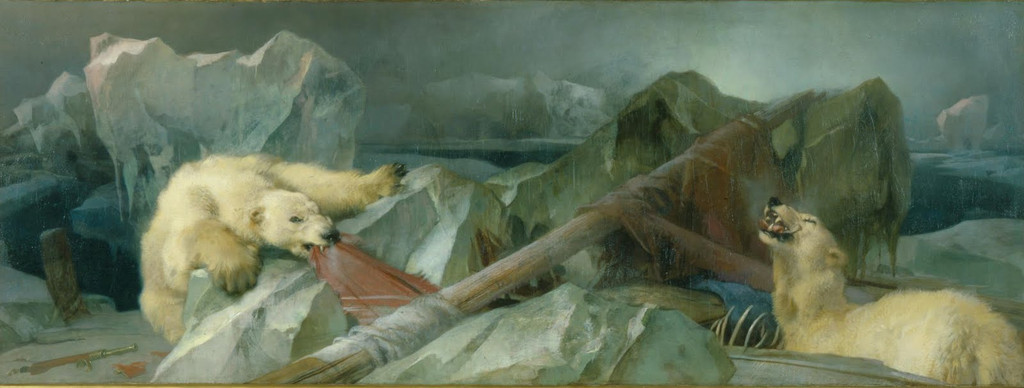
| Man Proposes, God Disposes | 1864 | Painting |
| Nell Gwynne / Diana Vernon | Painting | |
| Neptune | ||
| No Hunting Till the Weather Breaks | Painting | |
| Otterhounds | Drawing | |
| Peace | Painting | |
| Pensioners | Painting | |
| Portrait of a Mule | Painting | |
| Portrait of Mr Van Amburgh, as He Appeared with His Animals at the London Theatres | 1846–47 | Painting |
| Portraits of a Pointer Bitch and Puppy | Painting | |
| Pray Let Me Out | ||
| Prosperity | Painting | |
| Ptarmigan in a Landscape | by 1833 | Painting |
| Queen Victoria and Prince Albert at the Bal Costumé of 12 May 1842 | 1842–46 | Painting |
| Queen Victoria at Loch Laggan | Painting | |
| Queen Victoria at Osborne | 1865–67 | Painting |
| Queen Victoria landing at Loch Muick | Painting | |
| Rat-catching | 1823 | |
| Reclining Lion | Drawing | |
| Reclining Lion, From Back | Drawing | |
| Rent-day in the Wilderness | 1855–68 | Painting |
| Return from Deer Stalking | 1839 | |
| Royal Sports on Hill and Loch | Painting | |
| Sam Lovill, Porter at the Royal Academy | Drawing | |
| Scene from A Midsummer Night's Dream | 1848–51 | Painting |
| Scene in the Highlands, with portraits of the Duchess of Bedford, the Duke of Gordon and Lord Alexander Russell | Painting | |
| Scottish Highlands, Lochs and Figures | Drawing | |
| Shoeing | exhibited 1844 | Painting |
| Sleeping Bloodhound | exhibited 1835 | Painting |
| Spaniel and Rabbit | Painting | |
| Stag at Bay | 1866 | Sculpture |
| Stag at Bay | 1846 | Painting |
| Studies of a staghound and the head of a stag for painting ‘The Hunting of Chevy Chase’ | Drawing | |
| Study for Alpine Mastiffs Reanimating a Distressed Traveler | Drawing | |
| Study for the Monkey in The Cat's Paw | Drawing | |
| Study of a Dog | Drawing | |
| Study of a herding dog facing right | Drawing | |
| Study of the horse of Selene, from the East pediment of the Parthenon | Drawing | |
| Suspense | Painting | |
| Taking a Buck | ||
| The Arab Tent | c. 1865–66 | Painting |
| The Barn | Drawing | |
| The Best Run of the Season | ||
| The Cat's Paw | c. 1824 | Painting |
| The Cavalier’s Pets | ||
| The Challenge | Painting | |
| The Chase | Drawing | |
| The Connoisseurs: Portrait of the Artist with Two Dogs | 1865 | Painting |
| The Death of a Stag in Glen Tilt | Painting | |
| The Drive—Shooting Deer in the Pass | Painting | |
| The Drover's Departure | Painting | |
| The Highland Shepherd’s Dog | 1824; portfolio issue 1848 | |
| The Honourable Mrs Norton | Painting | |
| The Hunting of Chevy Chase | 1825–26 | Painting |
| The Illicit Highland Whisky Still | Painting | |
| The Keeper John Crerar with his Pony | Painting | |
| The Larder Invaded | ||
| The Lion-Dog of Malta | ||
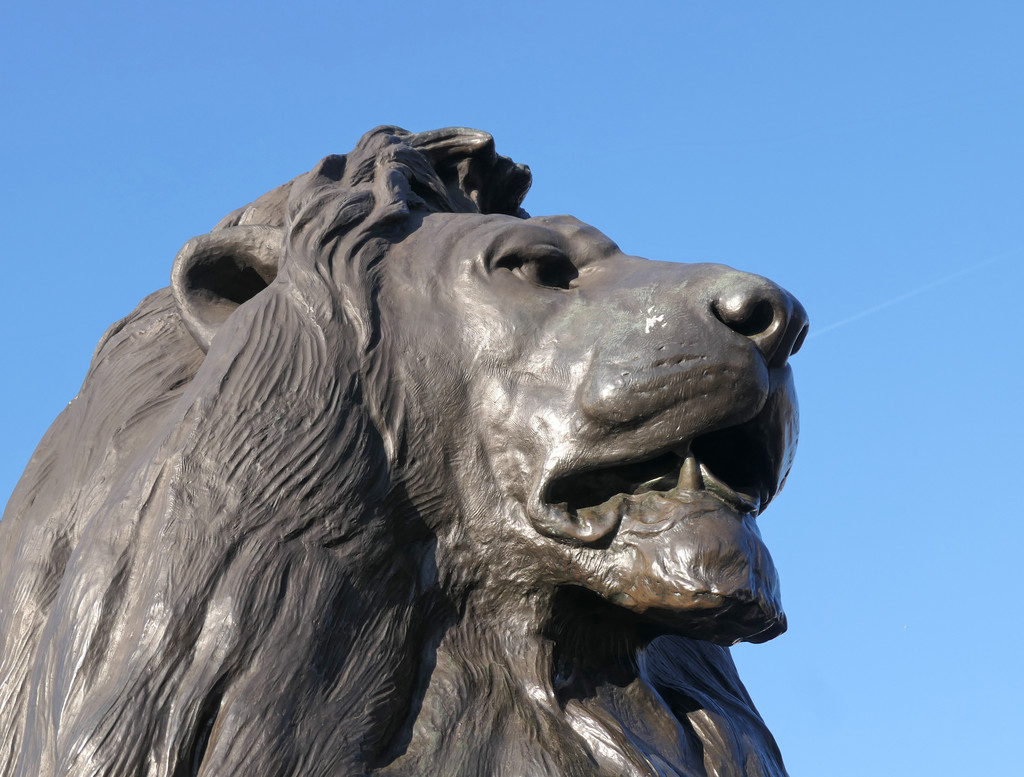
| The Lions at the Base of Nelson's Column | 1867 | Sculpture |
| The Monarch of the Glen | about 1851 | Painting |
| The Mountain Torrent | ||
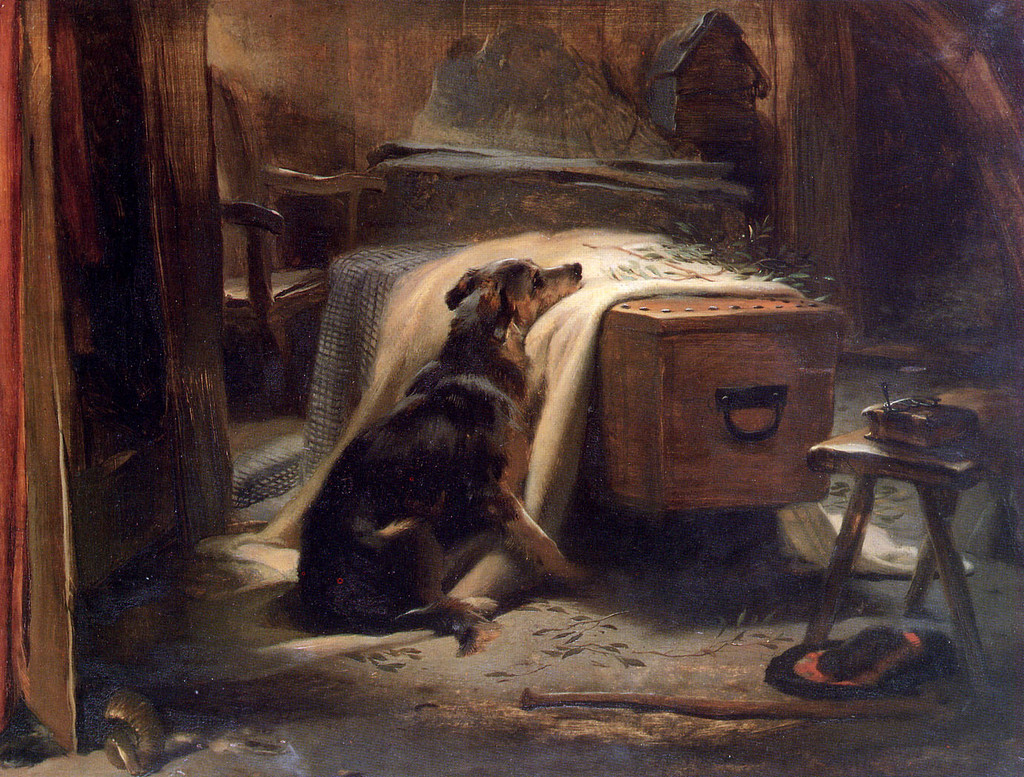
| The Old Shepherd's Chief Mourner | 1837 | Painting |
| The Sanctuary | 1842 | Painting |
| The Stricken Deer | Painting | |
| The Twa Dogs | Painting | |
| Time of Peace | ||
| Two stags running | Drawing | |
| Victoria, Princess Royal, with Eos | Painting | |
| View of Glenfeshie | Painting | |
| War | Painting | |
| White Horse in a Stable | Painting | |
| Windsor Castle in Modern Times | 1841–43 | Painting |
| Woburn Abbey Game Card | 1825; portfolio issue 1848 |
Discussion
Use the article’s images and evidence to develop your own reading of Eos.
Reader Insights
Which detail is most revealing when you consider “What is Eos?”?
How does the evidence in “Eos before the portrait” affect your reading of Eos?
What further question would you bring to “How to look at Eos now”?
Join the Conversation
Share a detail, comparison or question about Eos below.
References
- Royal Collection Trust, Sir Edwin Landseer, Eos, signed and dated 1841, RCIN 403219, object and “Victoria and Albert: Gifts Exchanged” records: and View source 1. View source 2.
- Royal Collection Trust, Eos, “Royal Pets”, Albert's 1839 description, 1840 journey, Christmas commission and Prince's Dressing Room: View source.
- National Gallery of Art, Alpine Mastiffs Reanimating a Distressed Traveler. View source.
- Minneapolis Institute of Art, The Cat's Paw. View source.
- Birmingham Museums Trust, The Hunting of Chevy Chase. View source.
- Victoria and Albert Museum, The Old Shepherd's Chief Mourner. View source.
- Tate, Dignity and Impudence. View source.
- Royal Collection, Eos. View source.
- National Galleries of Scotland, The Monarch of the Glen. View source.
- Royal Holloway, University of London, Man Proposes, God Disposes. View source.
- Trafalgar Square / Greater London Authority, The Lions at the Base of Nelson's Column. View source.
- Kurt Jagow, ed., E. T. S. Dugdale, trans., Letters of the Prince Consort, 1831–1861, London: John Murray, 1938, pp. 46–47, Albert to Queen Victoria, Gotha, 31 December 1839: and View source 1. View source 2.
- James Dafforne, Pictures by Sir Edwin Landseer, Royal Academician, with Descriptions and a Biographical Sketch of the Painter, 1873, printed p. 81, Royal Academy list for 1842, no. 266: View source.
- Royal Collection Trust, John Francis, Eos, c.1844, RCIN 98163, and Garrard & Co, Eos, c.1840–60, RCIN 51024, death and memorial records: and View source 1. View source 2.
- Royal Collection Trust, Prince Consort's Dressing Room, Buckingham Palace, c.1870–73, RCIN 2084378, and Victoria, Princess Royal, with Eos, RCIN 2084685 after RCIN 401548: and View source 1. View source 2.
- Martin Postle, “1842: Snowstorm and Sanctuary”, The Royal Academy of Arts Summer Exhibition: A Chronicle, 1769–2018, Paul Mellon Centre and Royal Academy of Arts, 2018: View source.
- Royal Kennel Club, current Greyhound breed standard, last updated 1 August 2025: View source.
- James A. Manson, Sir Edwin Landseer, R.A., 1902, printed pp. 107–08: View source.
- The Spectator, “Fine Arts”, 7 May 1842, collective review of Landseer's royal pet portraits: View source.
- Frederic George Stephens, Sir Edwin Landseer, 1880, printed p. 85: View source.
- Metropolitan Museum of Art, Thomas Landseer after Sir Edwin Henry Landseer, Eos, 1843, mixed-method engraving on chine collé, 52.588.4: View source.
- Wikimedia Commons, Royal Collection-derived file record for Eos, RCIN 403219, image source, embedded metadata and public-domain rationale: View source.
- Splash image, Eos. Royal Collection. Image source. Public domain.
- Navigation image, One of the bronze lions at Nelson’s Column: modelled by Edwin Landseer and cast by Carlo Marochetti. Photograph by Amanda Slater. CC BY-SA 2.0. Image source. CC BY-SA 2.0. Resized.