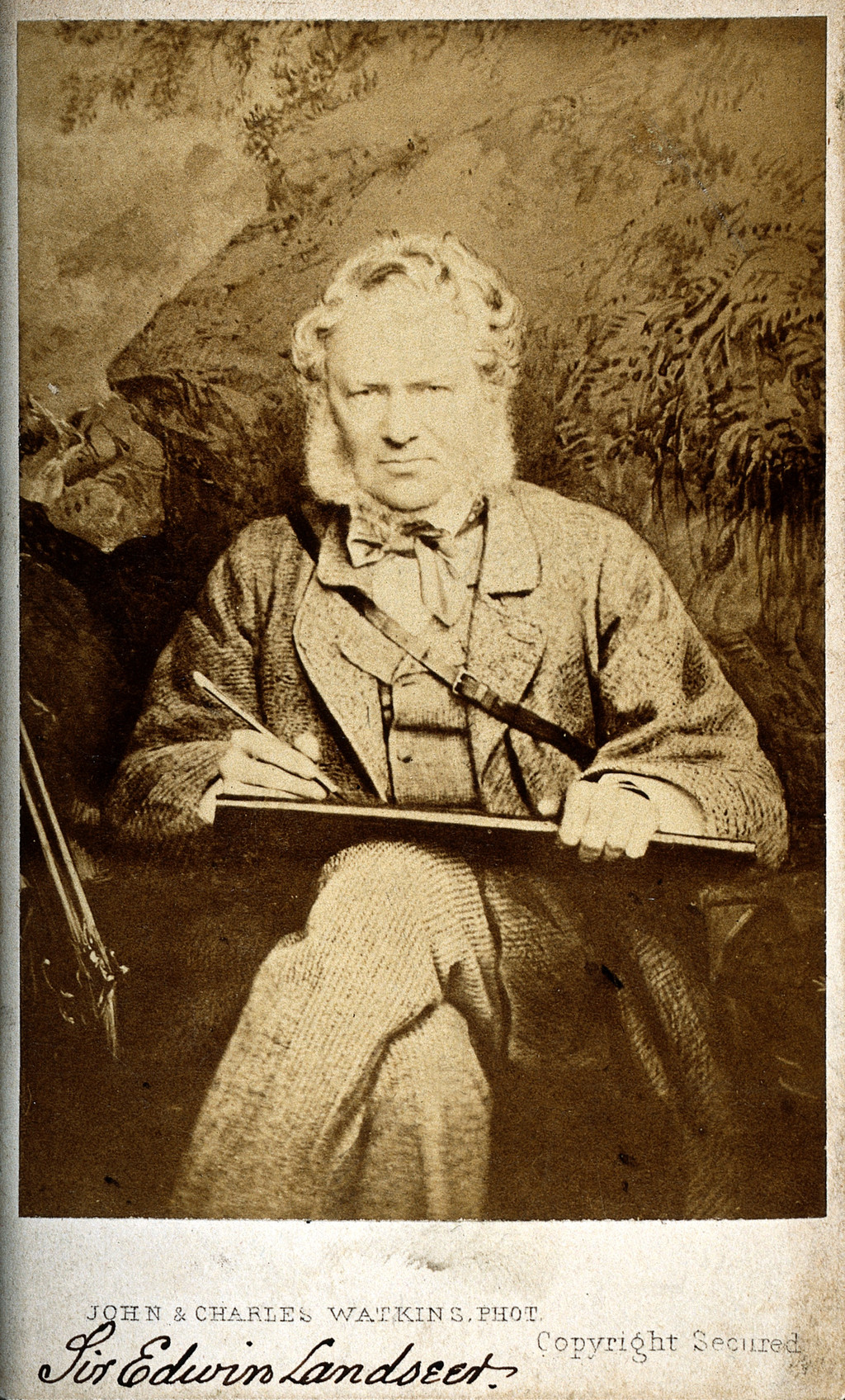
 by Tom Gurney
Tom Gurney BSc (Hons) is an art history expert with over 20 years experience
Email: tomgurney1@gmail.com / Phone: +44 7429 011000
Writings and Authenticated Quotations: Introduction
A quotation needs an address. Before a sentence can illuminate Sir Edwin Henry Landseer, it needs a speaker, an occasion and a route back to the document or witness that preserves it. Without those particulars, an elegant line is only a claim about his words. Repetition can make the claim familiar, but not secure.
Landseer did not leave a single, readily searchable volume of artistic theory. His written trace is scattered through letters to patrons, fellow artists, friends and family; notes accompanied by sketches; archive catalogues; and passages copied by later biographers. Some institutions identify physical letters without publishing their wording. Some early books print wording but no longer make the original document easy to locate. Memoirs add remarks remembered from conversation. These forms must not be treated as interchangeable.[1][2]
The reward for caution is a more interesting voice. Securely transmitted letters show a young painter negotiating delivery and subject matter, a celebrated artist managing courtly demands, a friend offering condolence, and an older man trying to describe work under severe bodily strain. They are not timeless maxims. Each sentence belongs to a relationship.
At a Glance
- EvidenceLetters, journals and contemporary records [1][2]
- ReadingLandseer’s words distinguished from attributed testimony [1]
- ArchiveNational Gallery Archive, NGA1/6 [2]
Contents
- What survives as Landseer’s writing
- Six levels of documentary confidence
- The young painter writes about work
- Delay, invitation and the limits of a catalogue
- A private sentence from the Palace
- Friendship and professional regard
- Work and bodily distress in the 1860s
- When Frith remembers a saying
- Victoria and Albert are different voices
- Paraphrase is not quotation
What survives as Landseer’s writing
Landseer’s correspondence is dispersed among public collections and private or family archives. The National Gallery catalogues a series under `NGA1/6`, once grouped as undated letters, while noting that dated material also occurs elsewhere in the archive. Item descriptions mention arrangements to meet William Boxall and a request for support for William Wells’s membership of the Athenaeum. The descriptions establish that the letters exist and indicate their business, but they do not print their complete text.[2]
The Metropolitan Museum of Art holds a letter of 8 August 1848 addressed simply to “My Lord”. Its record supplies author, date, material, measurements, credit line and object number: pen and ink on writing paper, 18.3 by 11.3 centimetres, 53.643.1. Yet the same record says that no image is available. Nothing entitles a reader to invent the salutation’s addressee or the letter’s content.[3]
Other catalogues reveal different parts of the network. The Morgan Library describes a three-page letter to the artist Thomas Christmas from 1818. Its summary joins a changed journey, work on a bull painting, sport with a gun and dog, family news and reluctance to leave the country. The Folger Shakespeare Library preserves a two-leaf letter sent from Chillingham Castle in 1838, probably to John Martin, concerning Landseer’s delayed return to London. Royal Museums Greenwich groups letters to Clarkson Stanfield, dated between 1842 and 1852, that include invitations, a sealing wafer and tiny sketches of a boat and a dog.[4][5][6]
These records resist the image of a writer producing polished declarations for posterity. They show correspondence doing ordinary work: changing plans, apologising, inviting, discussing pictures and keeping social ties alive. They also show why handwriting is more than text. An address panel can help identify a recipient; a postmark can date an undated sheet; a postscript can introduce new business; a marginal animal can be part of the exchange rather than decoration.
The National Library of Ireland adds another warning about survival. Its catalogue describes an album of letters from Landseer to Julia Leslie, dated from 1860 to 1873, later assembled with photographs, cuttings and twentieth-century notes. The album is both a group of Landseer letters and a later act of collecting. Its present order need not reproduce the sequence in which every sheet was written, received or first kept.[7]
Six levels of documentary confidence
“Authenticated” does not mean that every problem has vanished. It means that the route to the wording is visible enough for its limits to be judged. Six levels are useful.
First comes an original letter or a clear institutional facsimile. Handwriting, revisions, spacing, address and sequence can then be examined together. Even here, a difficult word may remain uncertain and the writer’s account may be partisan.
Second is a holding institution’s record that prints a transcript or a precisely delimited extract. The institution can control author, date, physical identity and collection history while making its editorial intervention visible.
Third is an accountable scholarly transcription. It should identify the document and, where possible, repository and call number. A reader then knows that the words have passed through an editor, but also knows where that decision can be checked.
Fourth is an early printed transcription. It may preserve a letter that is otherwise hard to reach, yet punctuation may have been regularised, parts may have been omitted and the current location may be unstated. The historian who printed it must remain in the chain.
Fifth is remembered speech. A named witness can offer valuable evidence, but memory is not shorthand taken at the moment. The responsible form is “Frith remembered Landseer saying”, not simply “Landseer wrote”.
Sixth is the unattributed quotation compilation. It may help locate a phrase to investigate. It cannot authenticate itself. Ten sites copying one another still amount to one unsupported trail.
This ladder also runs in two directions. The Met record is strong evidence for the identity of a physical letter but gives no quotable sentence.[3] A Victorian biography may give many sentences while leaving the original’s whereabouts obscure. Authority over the object and access to its words are related, not identical.
The distinction matters because archives are working systems. A call number is not ornamental proof; it is an instruction for finding an item. The National Art Library explains how readers request special-collection material, consult it in supervised rooms and obtain copies subject to condition and rights. Citing a reference responsibly is therefore the beginning of verification, not a substitute for opening the document.[8]
The young painter writes about work
One of the most informative early passages appeared in Frederick G. Stephens’s 1880 study. Stephens said that a copy of Landseer’s letter, formerly owned by Dawson Turner, was in the Anderdon Collection of Royal Academy catalogues in the British Museum Print Room. He thought it was addressed to W. W. Simpson. That chain is already more precise than a free-floating quotation, but it also introduces two qualifications: Stephens consulted a copy, and his recipient identification was an inference.[9]
The letter is dated 12 August 1818. Landseer apologises for detaining pictures, hopes Simpson will like Brutus, and reports that it had been considered “the best thing I have done on so small a scale”. The phrase is useful because its work is modest and specific. It reports reception of one picture while helping to reassure a waiting owner; it is not a universal declaration about small painting.[9]
After signing, Landseer adds another task: “I think you left the subject to my choice”. The postscript records an element of artistic agency inside a patron’s transaction. It does not prove that Landseer always chose his subjects. Stephens also describes a lively sketch of a greyhound chasing a hare at the foot of the sheet. Landseer’s accompanying note says that this was not the proposed subject. Text and drawing play against the temptation to treat every animal sketch as a commission design.[9]
The Morgan’s letter to Thomas Christmas belongs to the same year but serves a different relationship. Its catalogue summary combines the expected day of return, work in the country, a particular painting ground, shooting and greetings from Landseer’s sister Jane. Here the painter’s working life is not separated into art, travel, family and recreation. A letter carries them together because one friend can understand all four.[4]
These early documents complicate the conventional picture of effortless precocity. They do not deny early success. They reveal the practical labour around it: pictures are detained, delivered and assessed; a next subject remains open; travel changes; materials are discussed. The young artist writes not to formulate a grand aesthetic system but to keep work and relationships moving.
Stephens reports a later exchange concerning White Horse in a Stable. The painting, made in Landseer’s early period for the Honourable H. Pierrepont, had disappeared and was found in a hayloft many years later. In 1842 Landseer sent it on with a letter. According to Stephens, he identified it as his first white horse and chose not to retouch it because its early manner should remain separate from his older hand. That report is not a full transcription, but it records an artist judging the historical integrity of his own work.[9]
Delay, invitation and the limits of a catalogue
Delay recurs across the letters without yielding one simple character judgement. The Folger’s 1838 record says Landseer would not be in London until the end of October and apologised for making his likely recipient wait. The sheet had travelled from Chillingham Castle and was later pasted into a copy of The Seven Ages of Shakspeare. That physical history links a practical apology, a place associated with Landseer’s country visits and a collector’s decision to preserve the letter inside a book.[5]
The Greenwich letters to Stanfield present the opposite movement: instead of explaining absence, Landseer proposes company. One invitation concerns a boat trip with William Wells and includes small pictures of boat and dog; another mentions a woman whom Stanfield might like to meet. The archive record does not publish Landseer’s sentences, so it would be wrong to turn the summary into direct speech. It does, however, demonstrate that his letters could be invitations and visual jokes as well as business notices.[6]
The National Gallery series makes a similar point at larger scale. Meetings, club membership and practical arrangements appear beside dated letters filed in other groups. Older archive organisation survives in the description of `NGA1/6` as a set once treated as undated. A modern catalogue does not merely store facts about Landseer. It records how custodians have sorted, separated and redescribed the evidence.[2]
The disciplined response to these entries is not disappointment. Knowing what is absent prevents false intimacy. The Met’s “My Lord” remains unidentified on the public record; the words remain unread. That is a positive boundary. Documentary history advances as much by stating what cannot yet be quoted as by presenting a striking line.[3]
A private sentence from the Palace
The best-known authenticated complaint comes from an unfinished letter to Lady Abercorn in the early 1840s. Vanessa Remington prints it while examining Victoria and Albert’s relations with artists; later scholarship identifies the National Art Library document as `MSL/1962/1316/192`. Landseer wrote that he remained “occupied at the Palace” and called Victoria “all whim and fancy”. The surviving transcription continues beyond the form usually repeated online, referring after a dash to the prince and queen.[10]
Three pieces of context change the sentence. It is private, addressed to a socially connected correspondent, rather than a public assessment. It is unfinished, so its final rhetorical direction is unknown. It concerns work at the Palace during a period when royal direction and revision could be demanding. The phrase can therefore document irritation and unequal negotiation. It cannot carry Landseer’s whole relationship with Victoria.
That relationship extended across decades of commissions, acquisitions, lessons, gifts, visits, incomplete projects and repeated dealings. A complaint can be genuine without being permanent. It may ask its recipient for sympathy, sharpen a moment for comic effect, or release pressure that the writer manages differently in official contact. None of those possibilities cancels the words; they keep the words inside a communicative act.[1][10]
The abbreviated version also demonstrates what punctuation can imply. A full stop after “fancy” makes a clipped verdict look complete. Knowledge that the document continues—and that the letter itself remained unfinished—turns apparent finality back into a fragment of an exchange. Authentication is not only finding the right words. It is refusing to let typography pretend that more is settled than the document permits.
Friendship and professional regard
Letters show Landseer’s professional world from within. William Wells appears as patron, travelling companion and the candidate whose Athenaeum membership Landseer hoped Boxall would support. Clarkson Stanfield receives invitations. Thomas Christmas receives mixed news of work and country life. Thomas Hyde Hills later becomes the friend to whom Landseer can report health, money and practical difficulty. These names are not background decoration: they identify what each letter can reasonably be doing.[2][4][6]
A short condolence printed by Leslie Ward provides a different register. It is dated 21 November 1859 and addressed to Ward’s father, the painter E. M. Ward. The visible body begins after an ellipsis, so the opening has already been cut. Landseer assures Ward that few among the mourners could have “appreciated his genius or respected him more as a good man”. The omitted beginning means this cannot be treated as a complete letter, but the remaining words still join artistic esteem to moral regard.[11]
The sentence gains force from its address. It is not Landseer defining genius in the abstract. It is consolation offered to a bereaved artist about another artist known to them. Its warmth belongs to professional kinship and mourning. Removing those relations would turn an act of care into a generic quotation about greatness.
The Greenwich invitations add material lightness to that network. Thumbnail sketches and a surviving wafer remind us that some of Landseer’s correspondence made social presence through image, seal and handwriting. A printed transcript can preserve wording; it cannot fully preserve the scale of a dog drawn beside an invitation or the way a postscript occupies the page. Documentary reading attends to both language and object.[6]
Work and bodily distress in the 1860s
Late letters are among the most powerful and most easily misused. They describe fatigue, pain, disturbed sleep, weakness and difficulty working. They are direct evidence that Landseer experienced and reported those conditions. They are not a licence to diagnose him retrospectively from a selection of sentences.
Sir Walter Gilbey printed letters that were then in the possession of Walter Hills, nephew of Landseer’s close friend Thomas Hyde Hills. Writing from Kinrara House on 7 October 1866, Landseer reported repeated days in the deer forest and acknowledged having “taken too much out of my already weak condition”. He added, “I can’t keep my hand steady”. Gilbey’s surrounding account says the letter also described a wreck involving the Duke of Sutherland’s yacht. Adventure, exertion, bodily alarm and manual control occupy the same report.[12]
A second letter to Hills, dated 16 October, describes an exceptionally long wet day after a nine-mile ride to the ground, followed by the return journey. Landseer records the physical price after killing a stag near evening. The detail prevents a simple story of passive decline. He was choosing and attempting strenuous activity while also recognising that it exceeded his condition. That does not make the suffering self-inflicted in any comprehensive sense; it shows the immediate circumstances he chose to tell Hills.[12]
James A. Manson prints a letter from Balmoral to Landseer’s sister Jessie in June 1867. Before the line that became famous, Landseer describes poor appetite, cold rain, inability to get out, tiredness from drawing, attention from the doctor at the castle and permission to dine with the royal family. Only then does he write, “Flogging would be mild compared to my sufferings”, followed by sleeplessness, cramp, faintness and extreme weakness.[13]
The inherited quotation is therefore authentic through Manson’s printed transcription, but incomplete as an account. Detached from the letter, it may sound like melodramatic wit. Restored to the sequence, it is an attempt to make severe distress imaginable to a sister. The comparison conveys intensity; it does not name a cause.
Manson also prints or paraphrases further letters: a 1867 note from Dingwall about aching joints and lumbago, a precisely dated communication to Hills on 11 March 1869, another of 5 June, and later reports for which he gives only relative chronology. Their vocabulary moves among obligation, impaired work, sleep, tiredness and uncertainty about condition. Responsible citation retains those differences rather than assembling them into one seamless last statement.[13]
Nor should suffering erase labour. The same record shows Landseer continuing to draw or paint in spells, sending studies, thinking about pictures and judging his capacity. “Continued to work” does not mean that illness was slight; “reported severe illness” does not prove that every late object is compromised in the same way. Letters supply dated experiences, not a universal condition report for the art.
When Frith remembers a saying
Manson also prints the most durable of Landseer’s self-deprecating remarks. “If people only knew as much about painting as I do,” he reportedly said, “they would never buy my pictures.” Its chain is not a letter. Manson says that the painter W. P. Frith, who knew Landseer, heard him say it while depreciating his own powers.[13]
That is evidence, but of remembered conversation. Manson does not give the date, room, company or response. Frith’s memory was transmitted through Manson’s prose years after Landseer’s death. The sentence may preserve Landseer’s exact wit; it may preserve its shape more than every word. It can be quoted because the witness chain is visible, not because memory has become an autograph.
Interpretation must remain equally modest. The remark could express genuine doubt, social comedy, weariness with popularity or calculated self-mockery before a friend. It does not prove that Landseer believed his pictures worthless. A successful joke often depends on the audience knowing that its literal proposition is unstable.
The correct label—remembered speech—adds meaning rather than diminishing the sentence. It places Landseer in company, performing an answer before another painter, instead of imagining him composing a private creed for later quotation books.
Victoria and Albert are different voices
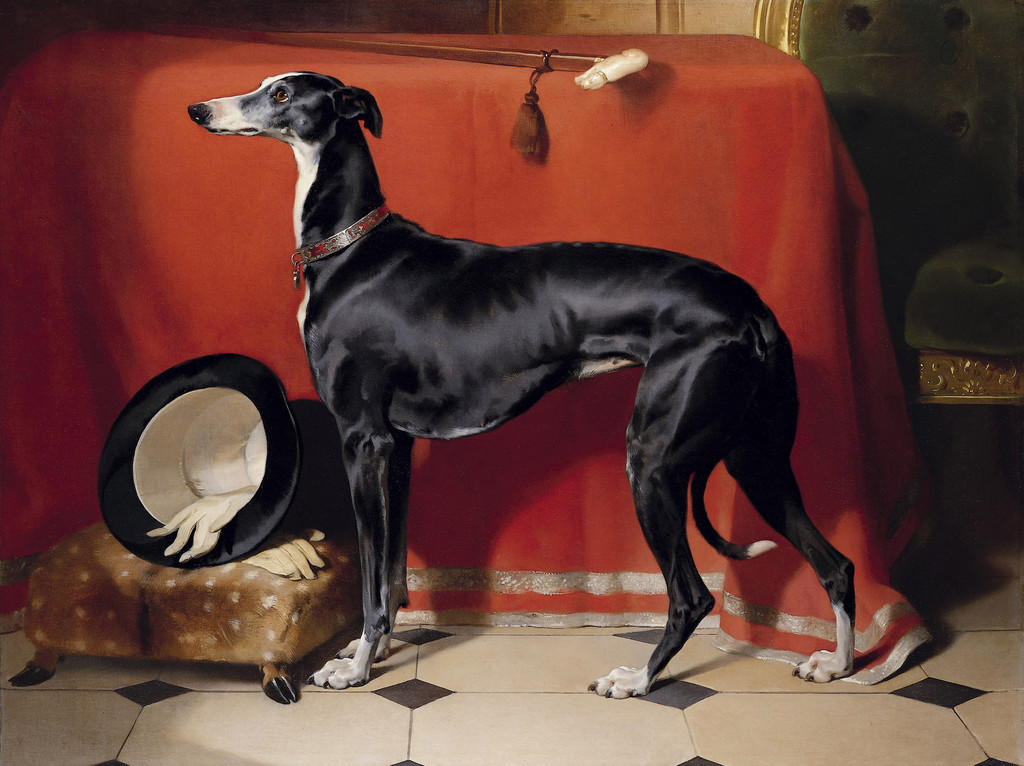
Primary words about Landseer need not be Landseer’s words. The Royal Collection’s account of Eos makes the distinction unusually clear. It identifies a long character sketch of the greyhound as Prince Albert’s description to his future wife. The same account separately quotes Queen Victoria’s journal entry about presenting Landseer’s life-size portrait of Eos to Albert at Christmas 1841.[14]
An inherited attribution gave Albert’s dog description to Victoria. The institution’s record corrects the author. This matters beyond a name beneath a blockquote: Albert writes as the dog’s owner describing her habits, while Victoria writes as commissioner and giver recording the success of a surprise. Their positions inside the history of the painting are different.
Victoria’s journal says that the gift delighted Albert and “it came as a complete surprise”. This is authenticated wording about the reception of a Landseer commission, dated 24 December 1841. It is valuable precisely because it is Victoria’s voice, not because it can be absorbed into a page of Landseer sayings.[14]
The distinction is a basic test. Ask whether the subject of a sentence is also its speaker. A quotation about a Landseer picture may belong to a monarch, patron, critic, friend or cataloguer. Primary evidence gains, rather than loses, force when the person speaking is correctly located.
Paraphrase is not quotation
The National Portrait Gallery’s extended record for John Ballantyne’s studio portrait offers another instructive boundary. It says that Landseer sent Ballantyne an angry note demanding withdrawal of the picture because it revealed the unfinished designs for the Nelson lions. Ballantyne replied; the portrait came down; and the correspondence was later printed in E. Quayle’s 1967 book.[15]
The NPG account establishes the dispute and directs readers to the publication. It does not reproduce Landseer’s note. Its description of tone belongs to the cataloguer’s summary. Putting that summary in quotation marks would create words that the public record never claims Landseer used.
This distinction is especially important online, where a concise museum paragraph may sit beside a person’s name and be copied as if it were personal testimony. Institutional prose is citable secondary evidence. It becomes neither a contemporary witness nor a fellow artist’s remark simply because it describes one.
The proper public sentence is therefore that the NPG reports Landseer demanded withdrawal. The precise language of the demand must wait for the printed correspondence or the underlying letters. Restraint keeps open a future route to greater precision.[15]
What ellipses and brackets can hide
Editorial marks are small but consequential. An ellipsis announces missing words, although older books do not always explain who omitted them or why. The Ward condolence begins with an ellipsis, so its opening cannot be recovered from that page. Quoting the remaining body as complete would erase the editor’s warning.[11]
The Palace sentence demonstrates another kind of omission. A popular form stops after the complaint about “whim and fancy”. Scholarly transcription shows a continuation. Even when the omitted words do not reverse the complaint, truncation changes its cadence and makes an unfinished note look like a finished verdict.[10]
Square brackets normally mark words added by an editor to make grammar or identity clear. They become dangerous when they build a continuous claim from fragments. One widely circulated Landseer passage about the Nelson lions mixes brackets, repeated ellipses, references to photographs and casts, and a concluding claim about national defence. Without the complete document, date and editorial source, no reader can tell how distant the joined phrases were, whether the grammar belonged to Landseer, or whether the added words narrowed or enlarged his meaning.
The responsible response is not to remove the brackets and smooth the prose. It is to decline the quotation until its document is found. A polished composite can be less truthful than an awkward fragment because fluency conceals the editor’s labour.
Spelling and capitalisation need similar care. A private writer may capitalise “Castle”, “Queen” or “Studio” inconsistently. A Victorian editor may silently regularise punctuation. Optical character recognition can introduce fresh errors when a scan is converted to searchable text. A reliable modern rendering should preserve meaningful historic features, correct only demonstrable mechanical corruption and state when wording comes through a printed intermediary.
These cautions do not require pages of symbols around every phrase. They require modest claims: quote briefly, paraphrase the surroundings, name the chain, and avoid pretending that editorial tidiness is the original document.
What the familiar quotation list cannot support
Several sayings attributed to Landseer sound plausible because they match familiar pictures of him: the sociable guest wanting air and a view, the Highland visitor overwhelmed by scenery, the ill older artist meditating in his studio. Plausibility may explain why a line spreads. It does not identify where it began.
Exact-phrase searches for the bedroom statement, “Every day finds me weaker”, the dismissal of an unnamed Frenchman, the remark about Ireland and several late-studio sayings return circular quotation pages rather than a letter, recipient, date, archive reference or accountable edition. They cannot be published here as Landseer’s exact words. The same decision applies to the hostile “heartless flattering humbug” fragment because it lacks even the identity of the person being attacked.
The Highland sentence about “stern sincerity” has acquired a secondary trail, but the available repetition does not recover a primary document or a complete responsible transcription. A phrase can have a footnote and still lack a sufficient chain if that footnote points only to another retelling.
The heavily edited Nelson passage fails for a different reason. Its brackets advertise an unseen hand constructing grammar around gaps. Without the source, the quotation cannot tell readers which nouns, verbs and claims actually stood together. Moving it to a page about the lions would not solve the problem; that would merely relocate unsupported wording.
Rejection should be understood narrowly. It does not declare that Landseer never wanted fresh air, admired the Highlands, complained about a Frenchman or struggled in his studio. It says that these precise sentences cannot presently bear quotation marks under his name. Documented letters already provide firmer evidence for travel, work, complaint and ill health without borrowing certainty from an anonymous list.
Three blank quotation blocks require no interpretive rescue. Empty typography is not lost testimony. The long biographical paragraph once presented as a quotation “about” Landseer is also excluded: it is institutional summary, not the words of a named academic or fellow artist. Categories should describe the evidence they contain.
A reader’s authentication test
Before repeating a Landseer quotation, ask eight questions.
- Who speaks? Separate Landseer from Victoria, Albert, Frith, a biographer and a modern institution.
- What kind of evidence carries the words? An original letter, scholarly transcription, early printed extract and remembered conversation are not equivalent.
- To whom, or on what occasion? Recipient and audience help explain whether the sentence apologises, jokes, complains, comforts or instructs.
- When and where? A dated Balmoral letter has different limits from an undated saying recalled at a dinner.
- What is missing? Look for ellipses, brackets, an incomplete opening, a lost ending or a catalogue summary standing in for text.
- Who edited the version being read? Preserve Stephens, Gilbey, Manson, Remington or another transcriber in the citation chain.
- Can the reference be followed? A stable object number, archive code, call number or precise edition makes checking possible.
- Does the interpretation exceed the sentence? A complaint is not a whole relationship; a symptom is not a diagnosis; a joke is not necessarily a creed.
The test will sometimes end with “not yet”. That is a useful result. It directs attention towards a reading room, printed edition or holding institution instead of rewarding the first confident repetition. Archives remain open to correction as letters are catalogued, digitised, reattributed or read more closely.[2][7][8]
Landseer’s authenticated words form a smaller collection than the familiar online list, but they reveal more. The 1818 letter places choice beside obligation. The Palace fragment shows friction inside patronage. Invitations and condolence recover friendship. The Hills and Jessie letters give bodily distress a time, place and addressee. Frith’s memory preserves a social performance rather than a private inscription.
Read in that way, quotation is not a shortcut to character. It is an encounter with a document, a witness and the distance between them. The sentence matters, but so do the hands through which it reached us.
Artworks directory
This directory gathers works discussed in the articles, including drawings, original etchings and prints after Landseer. It is not a complete catalogue of every drawing, version, plate or impression. Distinct media are kept separate; uncertain dates are left blank. Linked titles open individual articles.
| Name | Date | Medium |
|---|---|---|
| A Bellowing Stag | Drawing | |
| A Deerhound | 1826 | Painting |
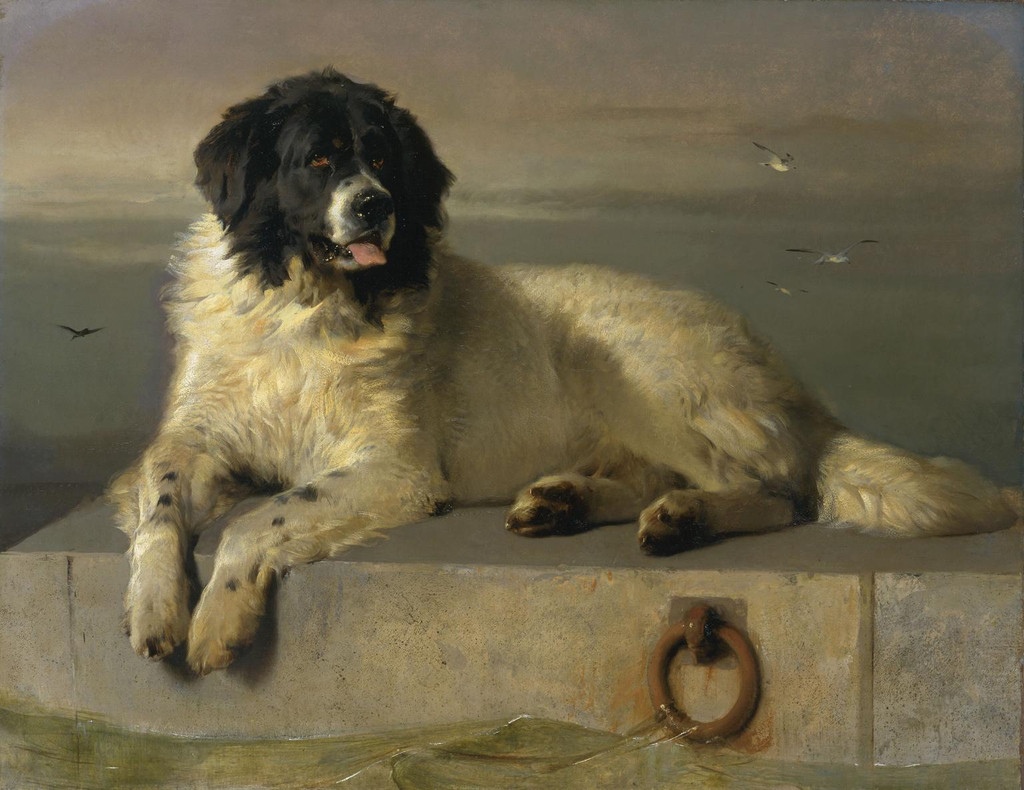
| A Distinguished Member of the Humane Society | 1838 | Painting |
| A Highland Breakfast | 1834 | Painting |
| A Highland Landscape | c. 1830 | Painting |
| A Highland Shepherd's Home | Painting | |
| A Horse, Goat and Bull | 1811 | |
| A Hunting Horse | Drawing | |
| A Jack in Office | Painting | |
| A Lion Disturbed at His Repast | Painting | |
| A Random Shot | Painting | |
| A Scene at Abbotsford | Painting | |
| Adversity | Painting | |
| Alexander and Diogenes | exhibited 1848 | Painting |
| Alpine Mastiffs Reanimating a Distressed Traveler | 1820 | Painting |
| Contending Group after Nature | Drawing | |
| Copy after Rubens's Wolf and Fox Hunt | c. 1824–26 | Painting |
| Dash | Painting | |
| Deer and Deer Hounds in a Mountain Torrent ('The Hunted Stag') | c. 1832 / exhibited 1833 | Painting |
| Deer Family | ||
| Dignity and Impudence | 1839 | Painting |
| Dog Resting Upon a Couch | Drawing | |
| Eos | 1841 | Painting |
| Favourites, the Property of H.R.H. Prince George of Cambridge | 1834–35 | Painting |
| Her Majesty Sketching at Loch Laggan | ||
| High Life | 1829 / exhibited 1831 | Painting |
| Highland Lassie | Drawing | |
| Isaac van Amburgh and his Animals | 1839 | Painting |
| Lady Godiva's Prayer | Painting | |
| Laying Down the Law | 1840 | Painting |
| Lion Defending Its Prey | c. 1840 | Painting |
| Lioness | Drawing | |
| Little Strollers | ||
| Low Life | 1829 / exhibited 1831 | Painting |
| Man Proposes, God Disposes | 1864 | Painting |
| Nell Gwynne / Diana Vernon | Painting | |
| Neptune | ||
| No Hunting Till the Weather Breaks | Painting | |
| Otterhounds | Drawing | |
| Peace | Painting | |
| Pensioners | Painting | |
| Portrait of a Mule | Painting | |
| Portrait of Mr Van Amburgh, as He Appeared with His Animals at the London Theatres | 1846–47 | Painting |
| Portraits of a Pointer Bitch and Puppy | Painting | |
| Pray Let Me Out | ||
| Prosperity | Painting | |
| Ptarmigan in a Landscape | by 1833 | Painting |
| Queen Victoria and Prince Albert at the Bal Costumé of 12 May 1842 | 1842–46 | Painting |
| Queen Victoria at Loch Laggan | Painting | |
| Queen Victoria at Osborne | 1865–67 | Painting |
| Queen Victoria landing at Loch Muick | Painting | |
| Rat-catching | 1823 | |
| Reclining Lion | Drawing | |
| Reclining Lion, From Back | Drawing | |
| Rent-day in the Wilderness | 1855–68 | Painting |
| Return from Deer Stalking | 1839 | |
| Royal Sports on Hill and Loch | Painting | |
| Sam Lovill, Porter at the Royal Academy | Drawing | |
| Scene from A Midsummer Night's Dream | 1848–51 | Painting |
| Scene in the Highlands, with portraits of the Duchess of Bedford, the Duke of Gordon and Lord Alexander Russell | Painting | |
| Scottish Highlands, Lochs and Figures | Drawing | |
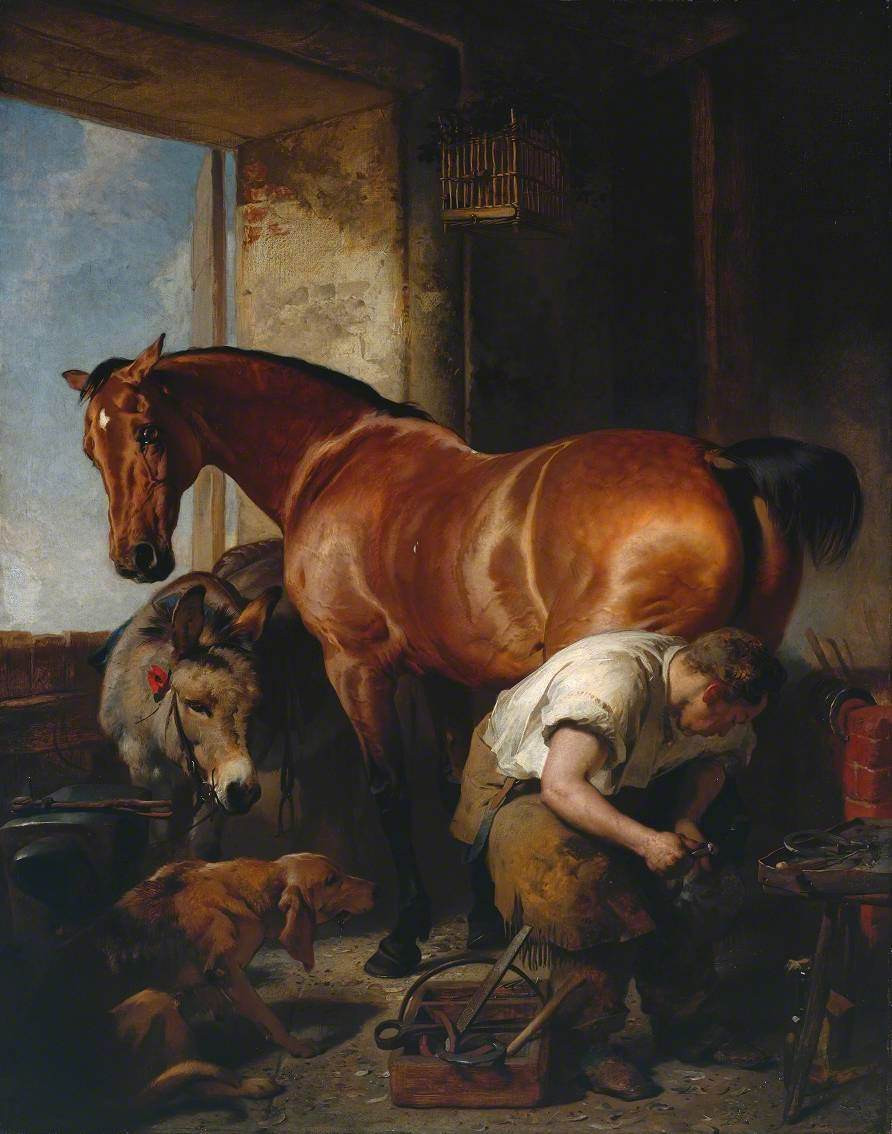
| Shoeing | exhibited 1844 | Painting |
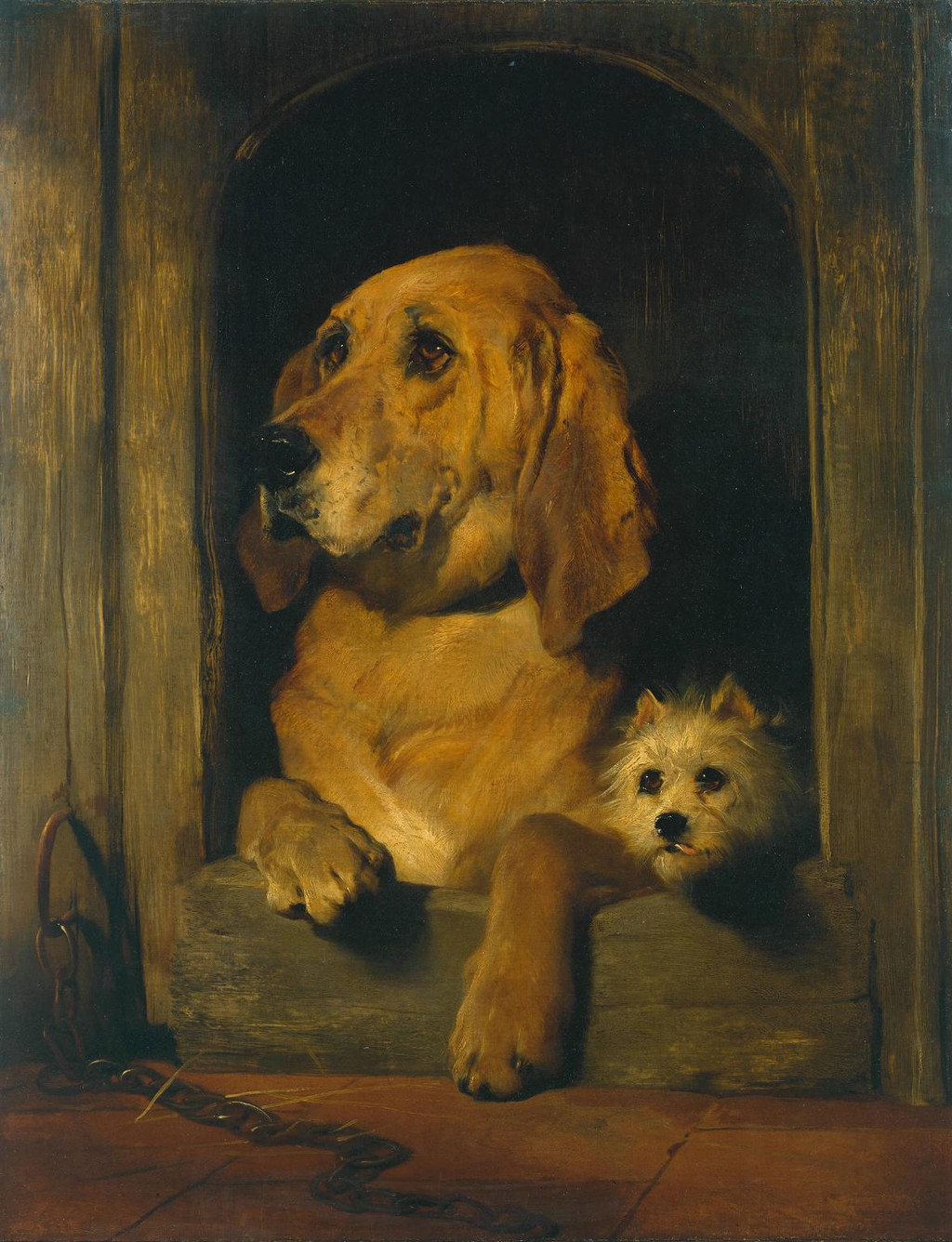
| Sleeping Bloodhound | exhibited 1835 | Painting |
| Spaniel and Rabbit | Painting | |
| Stag at Bay | 1866 | Sculpture |
| Stag at Bay | 1846 | Painting |
| Studies of a staghound and the head of a stag for painting ‘The Hunting of Chevy Chase’ | Drawing | |
| Study for Alpine Mastiffs Reanimating a Distressed Traveler | Drawing | |
| Study for the Monkey in The Cat's Paw | Drawing | |
| Study of a Dog | Drawing | |
| Study of a herding dog facing right | Drawing | |
| Study of the horse of Selene, from the East pediment of the Parthenon | Drawing | |
| Suspense | Painting | |
| Taking a Buck | ||
| The Arab Tent | c. 1865–66 | Painting |
| The Barn | Drawing | |
| The Best Run of the Season | ||
| The Cat's Paw | c. 1824 | Painting |
| The Cavalier’s Pets | ||
| The Challenge | Painting | |
| The Chase | Drawing | |
| The Connoisseurs: Portrait of the Artist with Two Dogs | 1865 | Painting |
| The Death of a Stag in Glen Tilt | Painting | |
| The Drive—Shooting Deer in the Pass | Painting | |
| The Drover's Departure | Painting | |
| The Highland Shepherd’s Dog | 1824; portfolio issue 1848 | |
| The Honourable Mrs Norton | Painting | |
| The Hunting of Chevy Chase | 1825–26 | Painting |
| The Illicit Highland Whisky Still | Painting | |
| The Keeper John Crerar with his Pony | Painting | |
| The Larder Invaded | ||
| The Lion-Dog of Malta | ||
| The Lions at the Base of Nelson's Column | 1867 | Sculpture |
| The Monarch of the Glen | about 1851 | Painting |
| The Mountain Torrent | ||
| The Old Shepherd's Chief Mourner | 1837 | Painting |
| The Sanctuary | 1842 | Painting |
| The Stricken Deer | Painting | |
| The Twa Dogs | Painting | |
| Time of Peace | ||
| Two stags running | Drawing | |
| Victoria, Princess Royal, with Eos | Painting | |
| View of Glenfeshie | Painting | |
| War | Painting | |
| White Horse in a Stable | Painting | |
| Windsor Castle in Modern Times | 1841–43 | Painting |
| Woburn Abbey Game Card | 1825; portfolio issue 1848 |
Discussion
Use the article’s images and evidence to develop your own reading of Writings and Authenticated Quotations.
Reader Insights
Which detail is most revealing when you consider “What survives as Landseer’s writing”?
How does the evidence in “Six levels of documentary confidence” affect your reading of Writings and Authenticated Quotations?
What further question would you bring to “A reader’s authentication test”?
Join the Conversation
Share a detail, comparison or question about Writings and Authenticated Quotations below.
References
- Richard Ormond, with Joseph Rishel and Robin Hamlyn, Sir Edwin Landseer, Philadelphia Museum of Art / Tate Gallery / Rizzoli, 1981, ISBN 0-87633-044-8.
- National Gallery Archive, Edwin Landseer correspondence, NGA1/6, with the National Archives discovery hierarchy for NGA1. and View source 1. View source 2.
- Metropolitan Museum of Art, Sir Edwin Henry Landseer, Letter from Edwin Landseer to “My Lord”, 8 August 1848, pen and ink on writing paper, 53.643.1. View source.
- Morgan Library & Museum, Sir Edwin Henry Landseer, Autograph letter signed to Thomas Christmas, 1818, MA 4500. View source.
- Folger Shakespeare Library, Sir Edwin Henry Landseer, Autograph letter signed from Edwin Landseer, Wooler, to John Martin, 20 September 1838, PR2803 .M32 Cage, after p. 32. View source.
- Royal Museums Greenwich, Letters from Sir Edwin Landseer, painter, to Clarkson Stanfield, 11 May 1842–5 January 1852, STN/5/58. View source.
- National Library of Ireland, Correspondence to Julia Leslie from Edwin Landseer, 1860–73, MS 49,495/1167. View source.
- Victoria and Albert Museum, National Art Library: collections, consultation and copying information. View source.
- Frederick G. Stephens, Sir Edwin Landseer, third edition, London: Sampson Low, Marston, Searle & Rivington, 1880, especially pp. 40–45 in the printed edition. View source.
- Vanessa Remington, “Queen Victoria, Prince Albert and their relations with artists”, in Victoria & Albert: Art & Love, Royal Collection, 2010; Ann Poulson, Queen Victoria and the visual culture of femininity, King’s College London, 2015, p. 142, citing National Art Library MSL/1962/1316/192. and View source 1. View source 2.
- Leslie Ward, Forty Years of “Spy”, London: Chatto & Windus, 1915, pp. 4–5. View source.
- Sir Walter Gilbey, Animal Painters of England from the Year 1650, volume 2, London: Vinton & Co., 1900, pp. 63–67. View source.
- James A. Manson, Sir Edwin Landseer, R.A., London: Walter Scott Publishing Co., 1902, especially pp. 168–77. View source.
- Royal Collection Trust, Sir Edwin Landseer, Eos, 1841, RCIN 403219, with Queen Victoria’s journal entry for 24 December 1841. and and View source 1. View source 2. View source 3.
- National Portrait Gallery, John Ballantyne, Sir Edwin Landseer, c. 1865, NPG 835, extended catalogue record. View source.
- Splash image, Sir Edwin Landseer, photographed by John & Charles Watkins. Wellcome Collection, V0028607. Image source. CC BY 4.0. Resized.
- Navigation image, One of the bronze lions at Nelson’s Column: modelled by Edwin Landseer and cast by Carlo Marochetti. Photograph by Amanda Slater. CC BY-SA 2.0. Image source. CC BY-SA 2.0. Resized.